Pennsylvania Dissolution Package to Dissolve Corporation
What is this form?
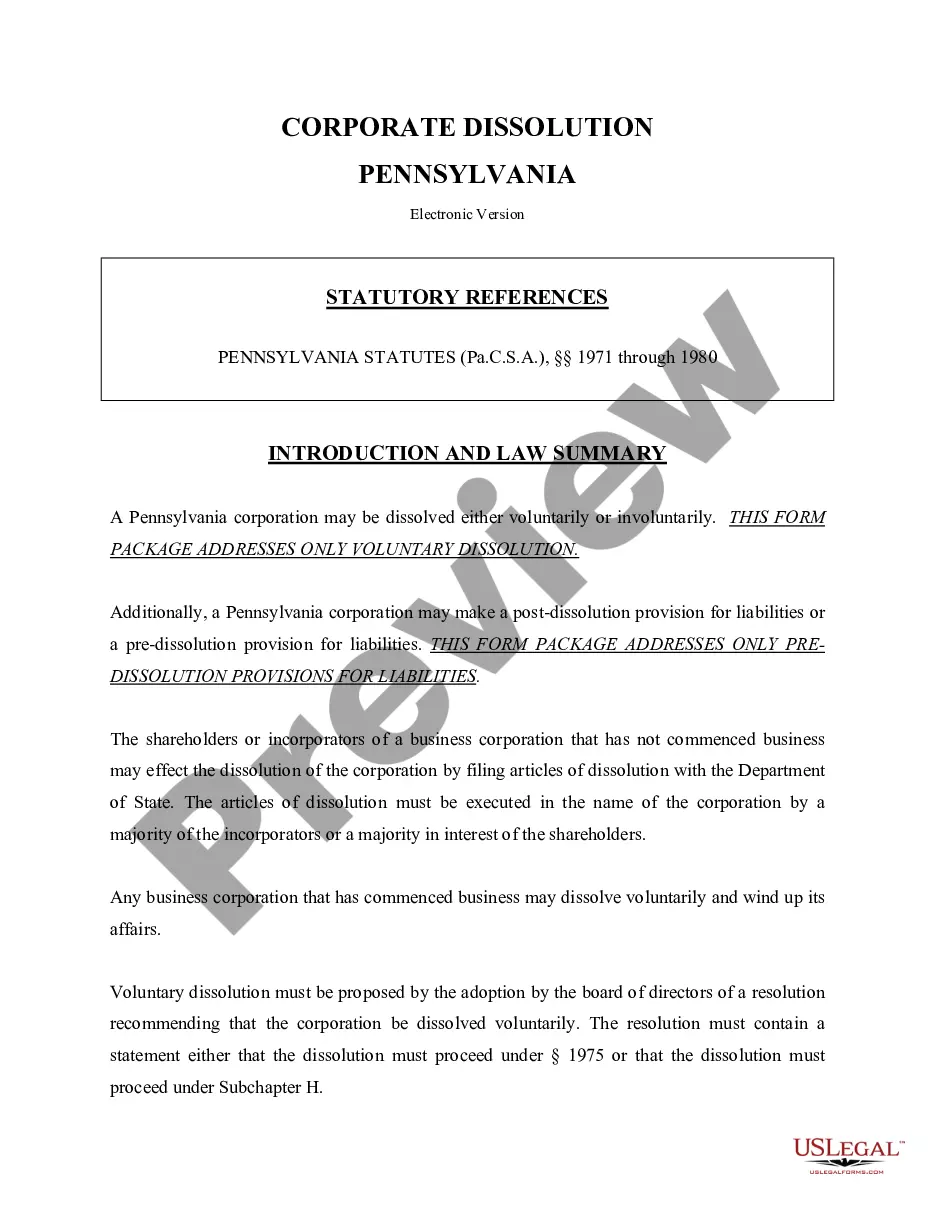
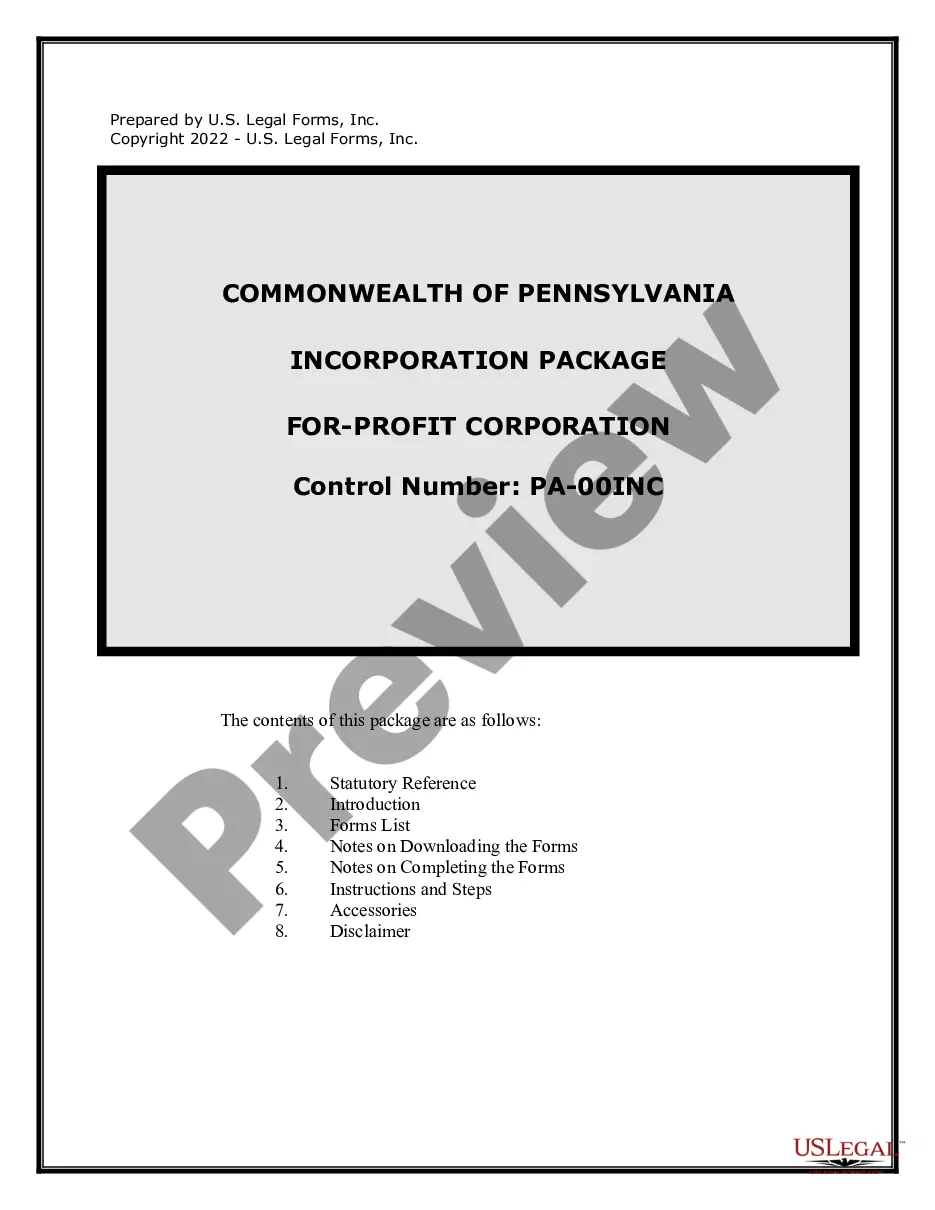
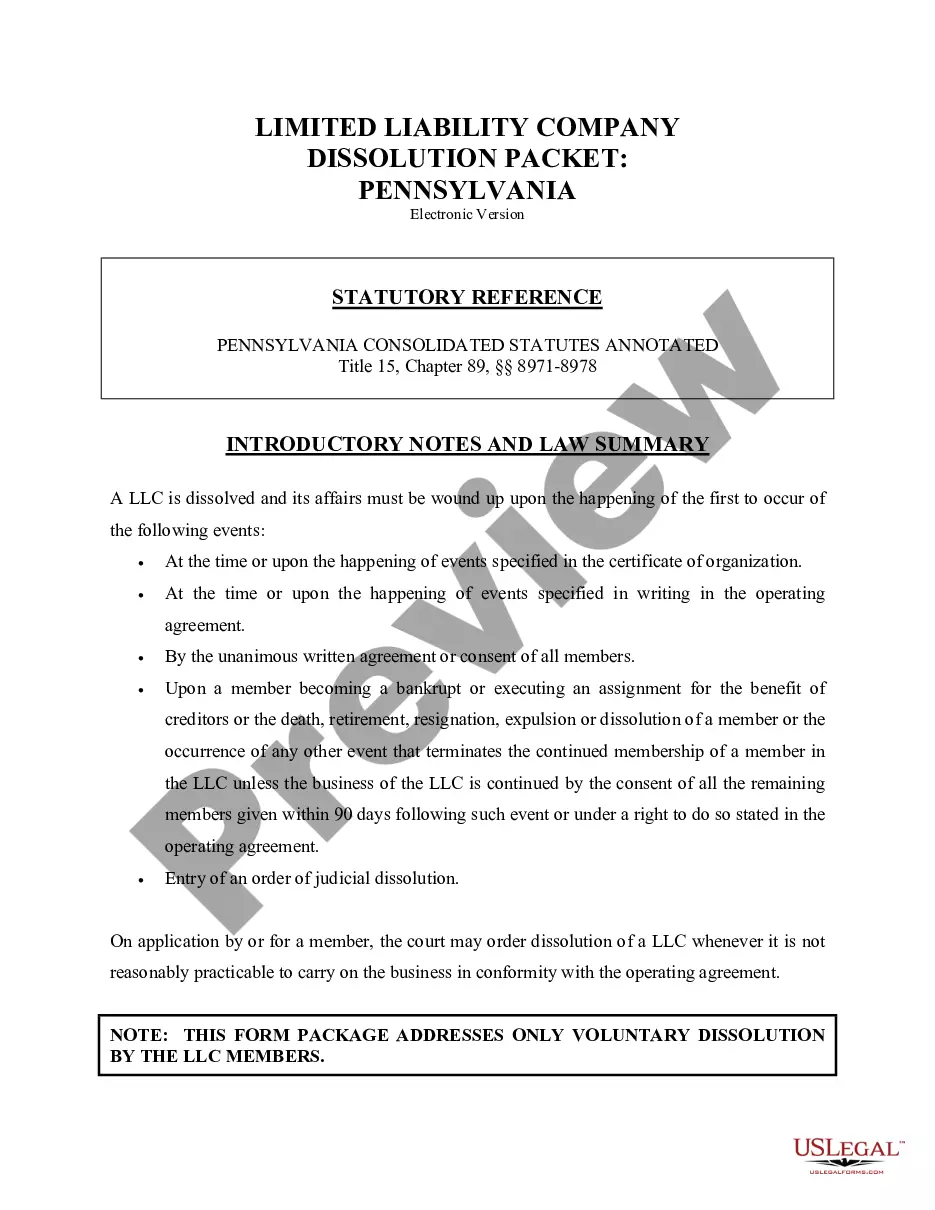
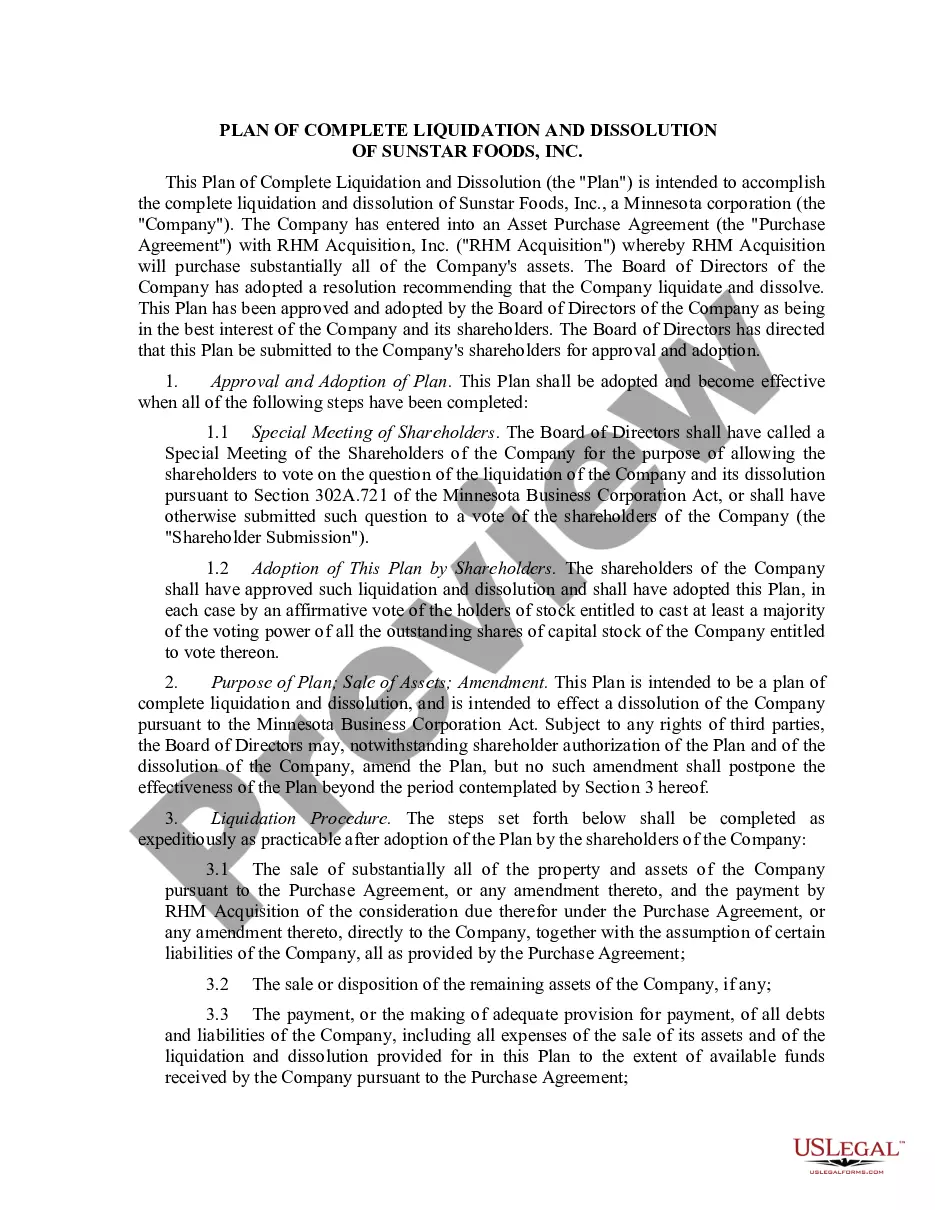
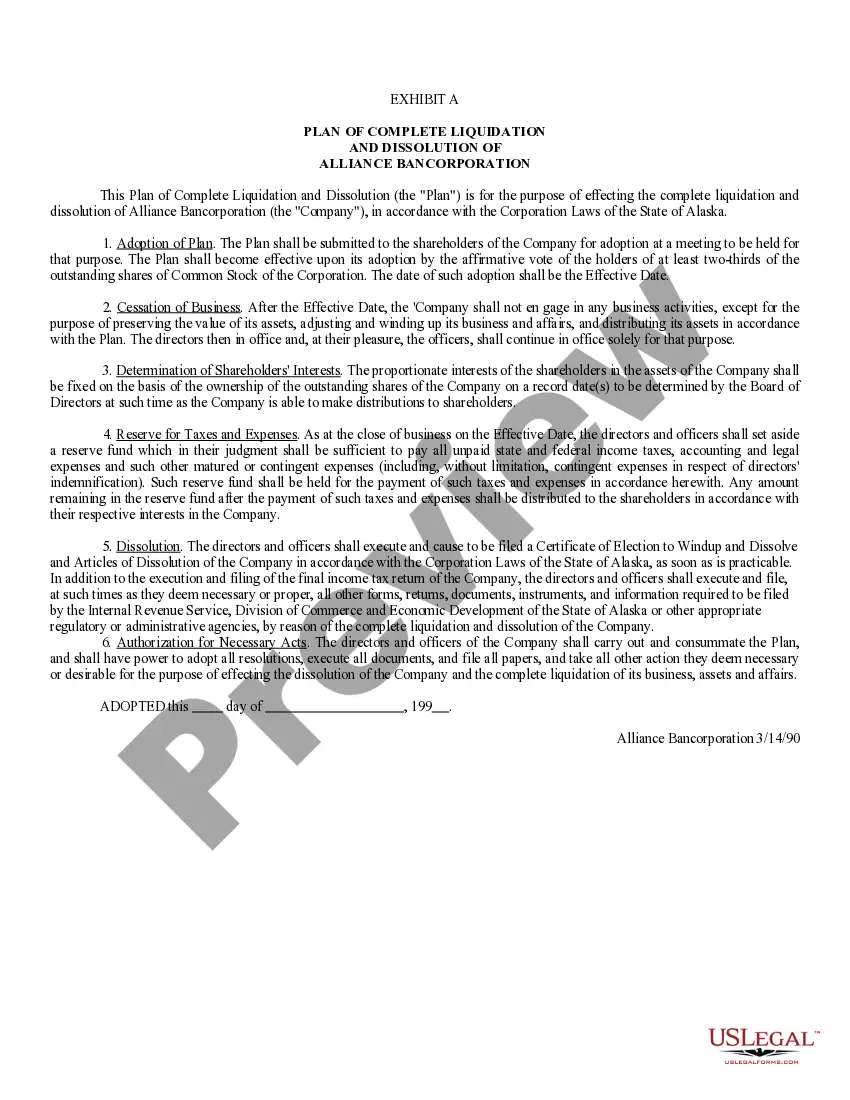
The Pennsylvania Dissolution Package to Dissolve Corporation is a comprehensive set of legal forms designed to facilitate the voluntary dissolution of a corporation in Pennsylvania. It guides corporations through the necessary steps to legally conclude operations, including managing liabilities and distributing assets. This package is essential for corporations that have decided to cease business activities and ensures compliance with state statutes during the dissolution process.
Main sections of this form
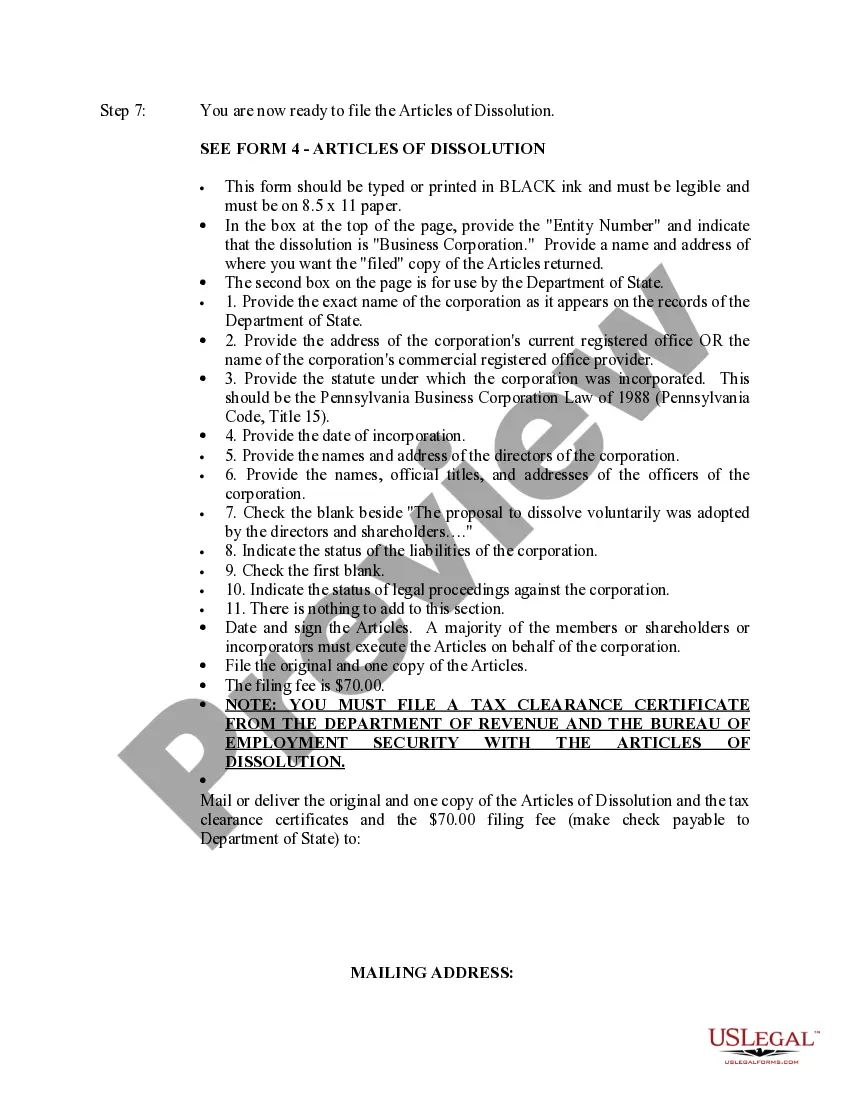
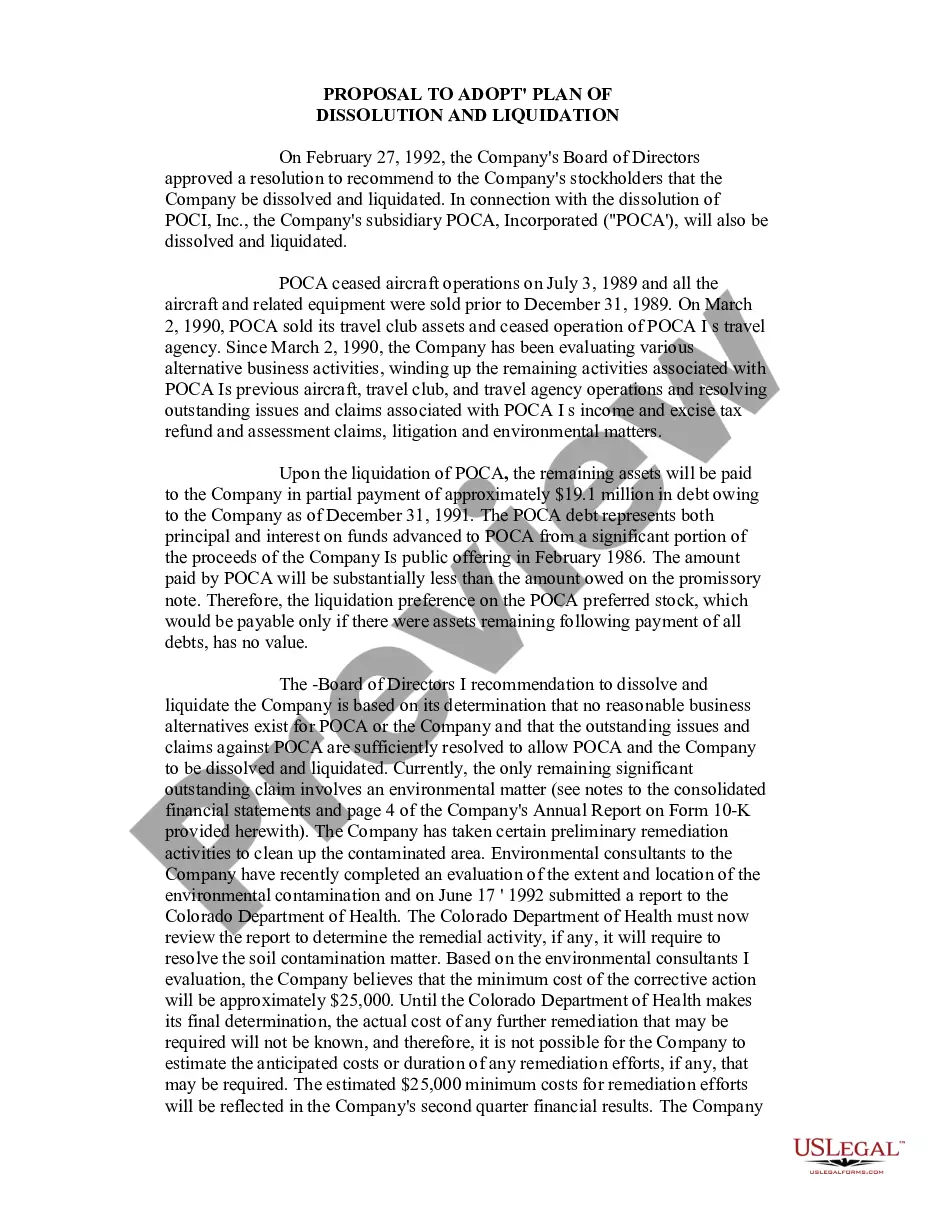
- Articles of Dissolution: The primary document required to formally dissolve a corporation.
- Docketing Statement: A necessary filing to accompany the Articles of Dissolution.
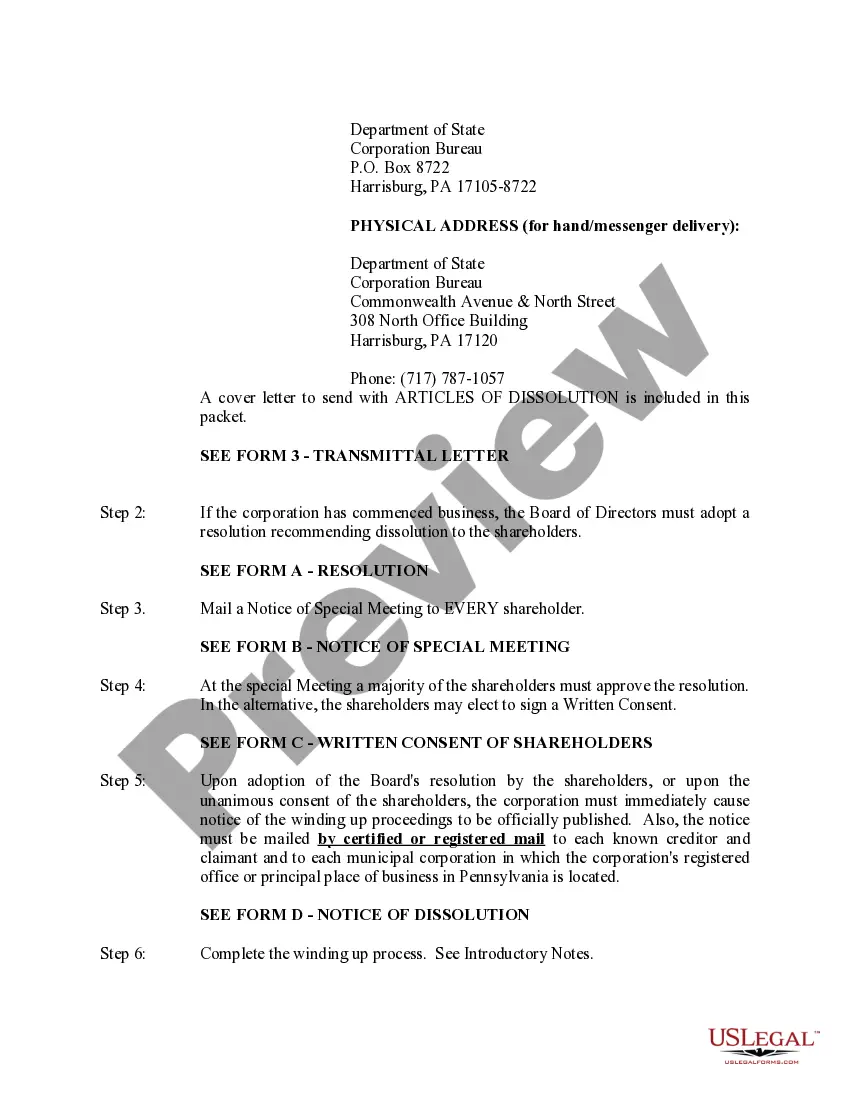
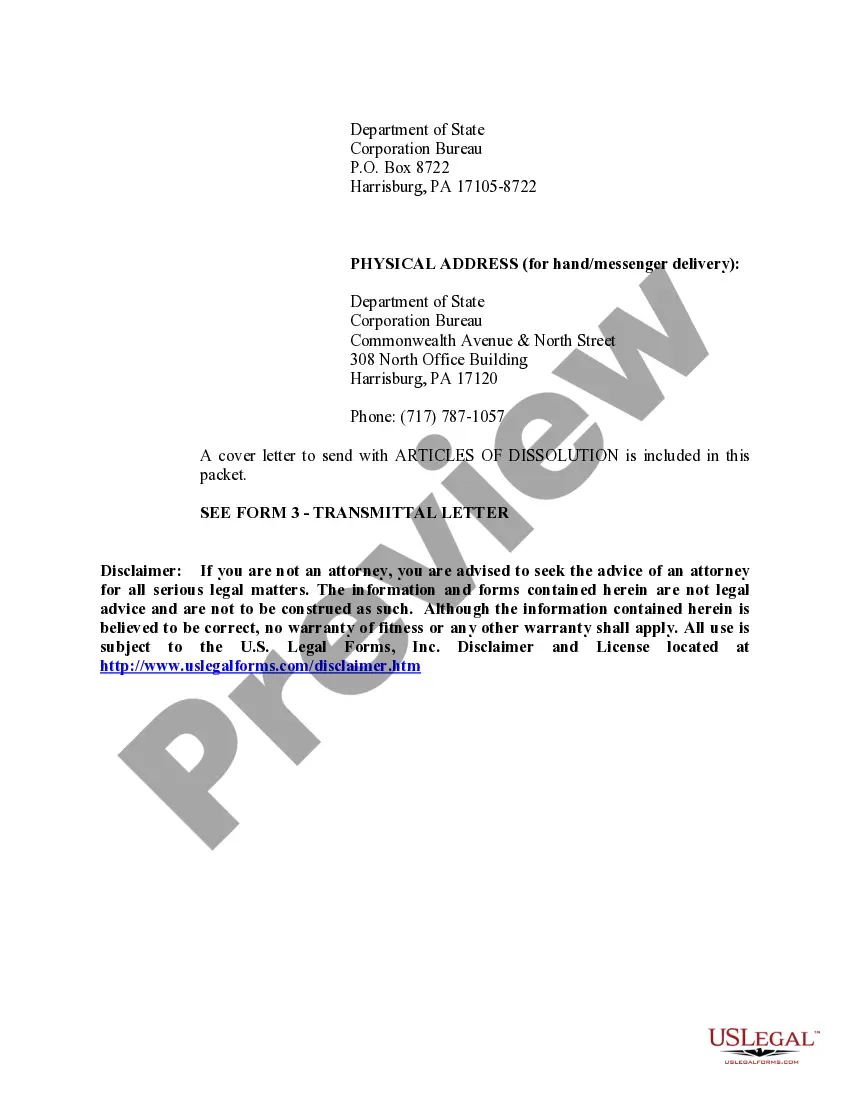
- Transmittal Letter: A cover letter for submitting the dissolution forms to the Department of State.
- Notice of Special Meeting: A notice to shareholders regarding the meeting to vote on dissolution.
- Written Consent: A document for shareholders to agree to the dissolution if a meeting is not held.
- Notice of Intent: A formal notification regarding the corporation's decision to dissolve.



When to use this form
This form package should be used when shareholders or incorporators of a Pennsylvania corporation decide to dissolve the corporation voluntarily. Situations may include a decision to cease operations, changing market conditions, or the return of capital to shareholders after winding up corporate affairs. The form helps ensure that all legal requirements are met during the dissolution process.
Who needs this form
- Shareholders of a corporation looking to dissolve their business.
- Incorporators of an inactive corporation that never commenced business.
- Corporate officers or directors responsible for managing corporate affairs during dissolution.
- Legal representatives assisting corporations with the dissolution process.
Completing this form step by step
- Identify whether the corporation has commenced business to determine the appropriate steps.
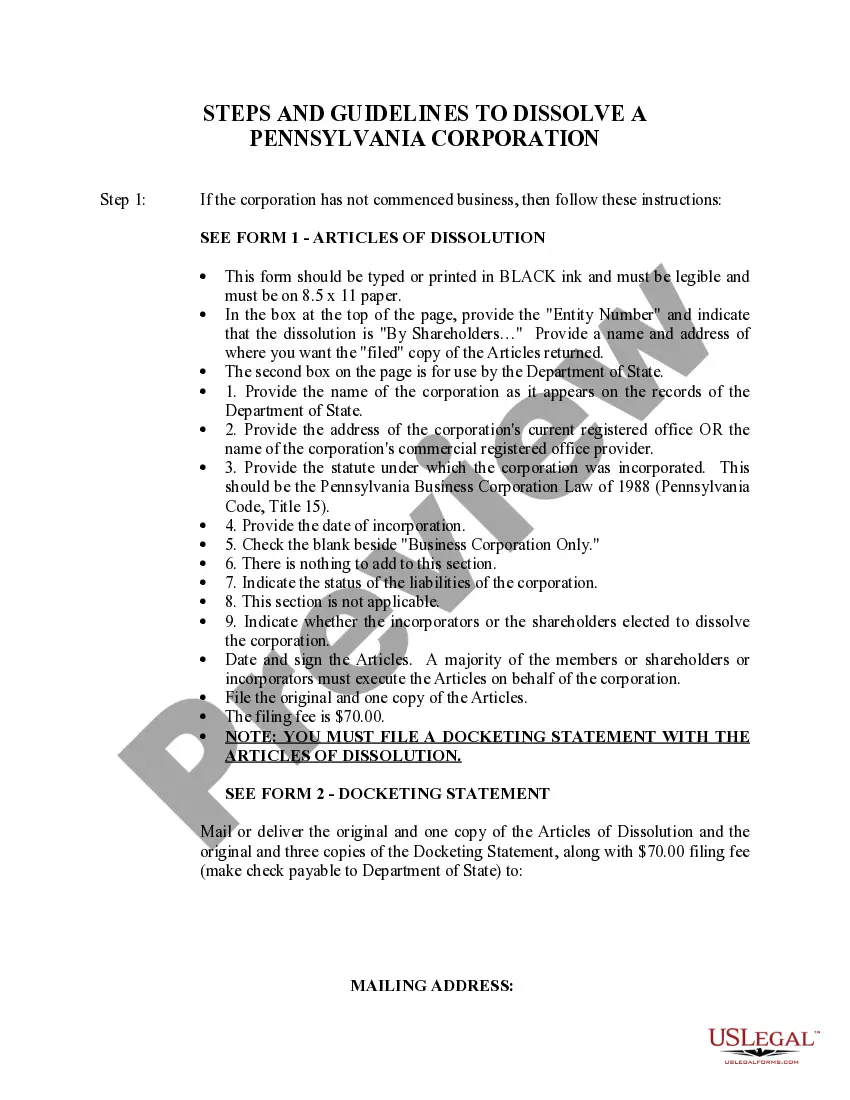
- Complete the Articles of Dissolution by providing the required information about the corporation.
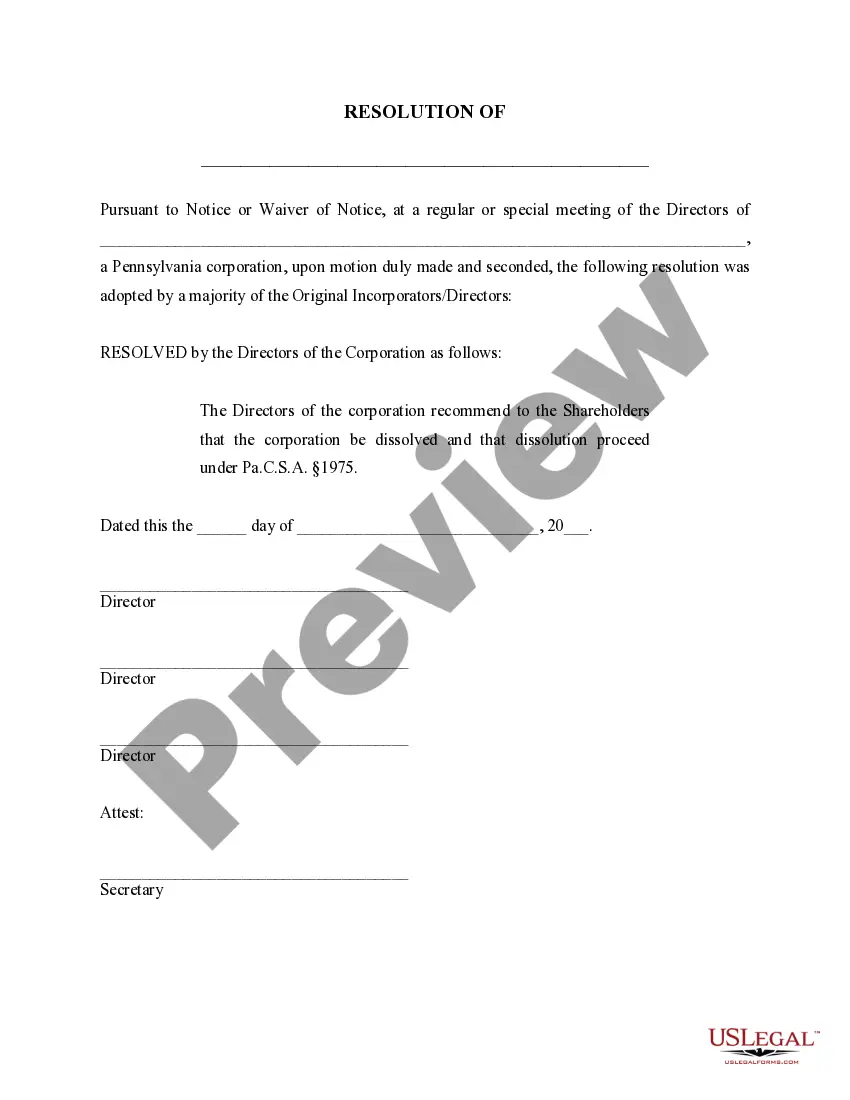
- Obtain necessary approvals from the board of directors and shareholders.
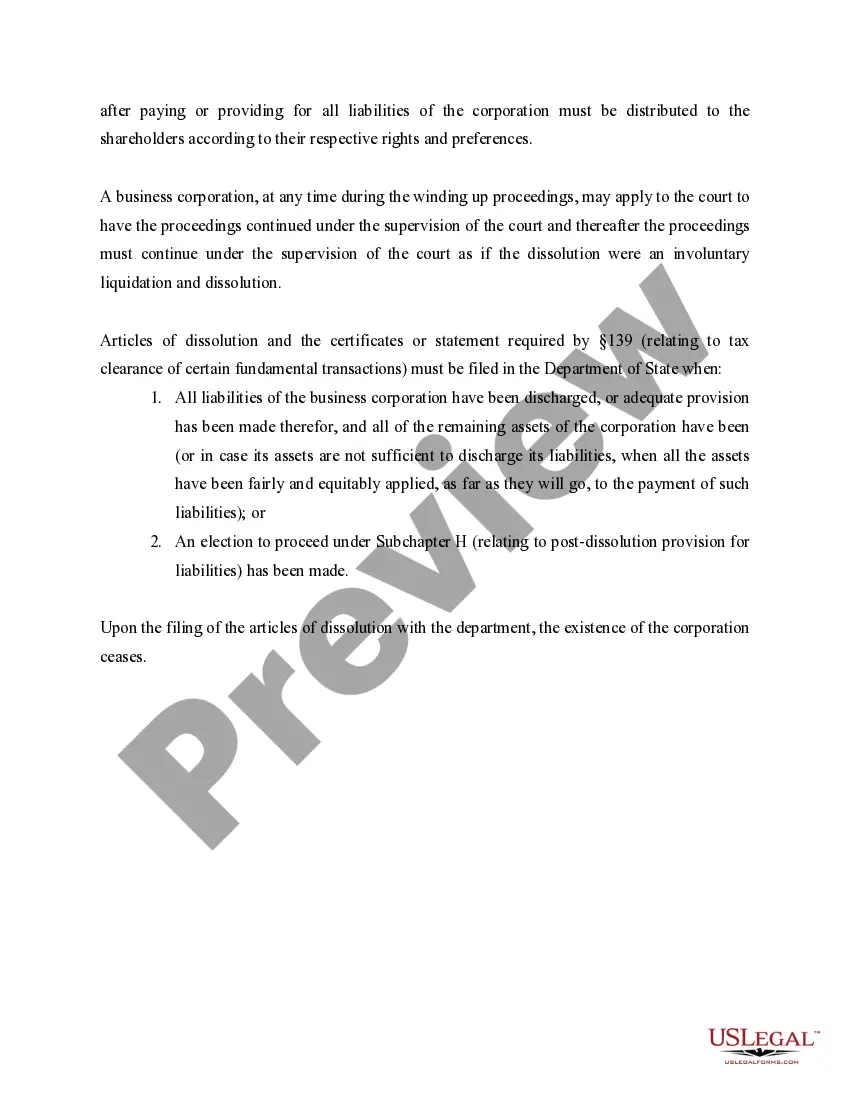
- File the Articles of Dissolution and Docketing Statement with the Department of State along with the required fees.
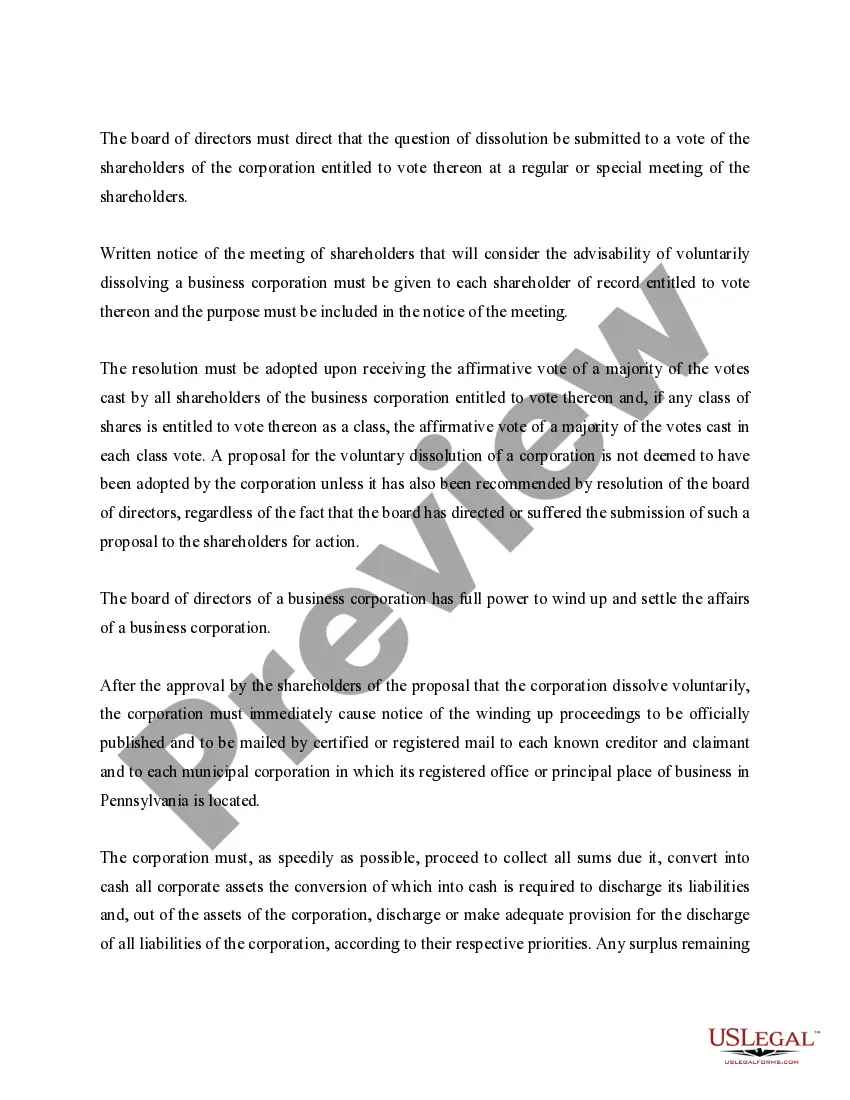
- Notify all known creditors and publish the notice of dissolution as required by Pennsylvania law.
Notarization requirements for this form
This form does not typically require notarization to be legally valid. However, some jurisdictions or document types may still require it. US Legal Forms provides secure online notarization powered by Notarize, available 24/7 for added convenience.
Get your form ready online
Our built-in tools help you complete, sign, share, and store your documents in one place.
Make edits, fill in missing information, and update formatting in US Legal Forms—just like you would in MS Word.
Download a copy, print it, send it by email, or mail it via USPS—whatever works best for your next step.
Sign and collect signatures with our SignNow integration. Send to multiple recipients, set reminders, and more. Go Premium to unlock E-Sign.
If this form requires notarization, complete it online through a secure video call—no need to meet a notary in person or wait for an appointment.
We protect your documents and personal data by following strict security and privacy standards.

Make edits, fill in missing information, and update formatting in US Legal Forms—just like you would in MS Word.

Download a copy, print it, send it by email, or mail it via USPS—whatever works best for your next step.

Sign and collect signatures with our SignNow integration. Send to multiple recipients, set reminders, and more. Go Premium to unlock E-Sign.

If this form requires notarization, complete it online through a secure video call—no need to meet a notary in person or wait for an appointment.

We protect your documents and personal data by following strict security and privacy standards.
Common mistakes
- Failing to secure necessary shareholder approval before initiating the dissolution process.
- Omitting required information in the Articles of Dissolution, leading to processing delays.
- Not providing timely notice to creditors and stakeholders about the dissolution.
Why use this form online
- Convenience of completing and filing forms from any location.
- Instant access to legal templates that are up-to-date and compliant with current laws.
- Editability, allowing users to customize the forms to fit their specific needs.
Key takeaways
- The Pennsylvania Dissolution Package is essential for the voluntary dissolution of a corporation in Pennsylvania.
- Complete each required form accurately to avoid delays in processing.
- Notify all stakeholders, including shareholders and creditors, as part of the winding up process.
Looking for another form?
Form popularity
FAQ
Failing to dissolve the corporation allows third parties to continue to sue the corporation as if it is still in operation. A judgment might mean that shareholders use the money received from distributed assets when the corporation closed down to satisfy judgments against the corporation.
An inactive business is a business that still exists but has no activity, which means no business transactions during a specific year.Even if the business has no income, it may still be considered active for tax purposes. There are many reasons a business may become inactive.
Dissolve the Legal Entity (LLC or Corporation) with the State. An LLC or Corporation needs to be officially dissolved. Pay Any Outstanding Bills. You need to satisfy any company debts before closing the business. Cancel Any Business Licenses or Permits. File Your Final Federal and State Tax Returns.
In most states, to keep a corporation active, the owners must file annual reports and income tax returns. They may have to pay annual fees as well. Failure to do these things can render the corporation inactive. A corporation may also voluntarily become inactive by ceasing to do business.
Step 1: Corporation or LLC action. Step 2: Filing the Certificate of Dissolution with the state. Step 3: Filing federal, state, and local tax forms. Step 4: Notifying creditors your business is ending. Step 5: Settling creditors' claims.
After dissolution, you cannot use the funds remaining in your business bank account for new business. LLC members no longer have the authority to conduct business or do anything that would indicate that the LLC is still active. Your bank account can cover only essential winding up affairs.
When a corporation is dissolved, it no longer legally exists and, in most cases, its debts disappear as well. State laws usually give additional time beyond the dissolution for creditors to file suits for failure to pay any corporate debts or for the wrongful distribution of corporate assets.
After a company is dissolved, it must liquidate its assets. Liquidation refers to the process of sale or auction of the company's non-cash assets.Assets used as security for loans must be given to the bank or creditor that extended the loan, or you must pay off the loan before selling such assets.