Pennsylvania Heirship Affidavit - Descent
Understanding this form
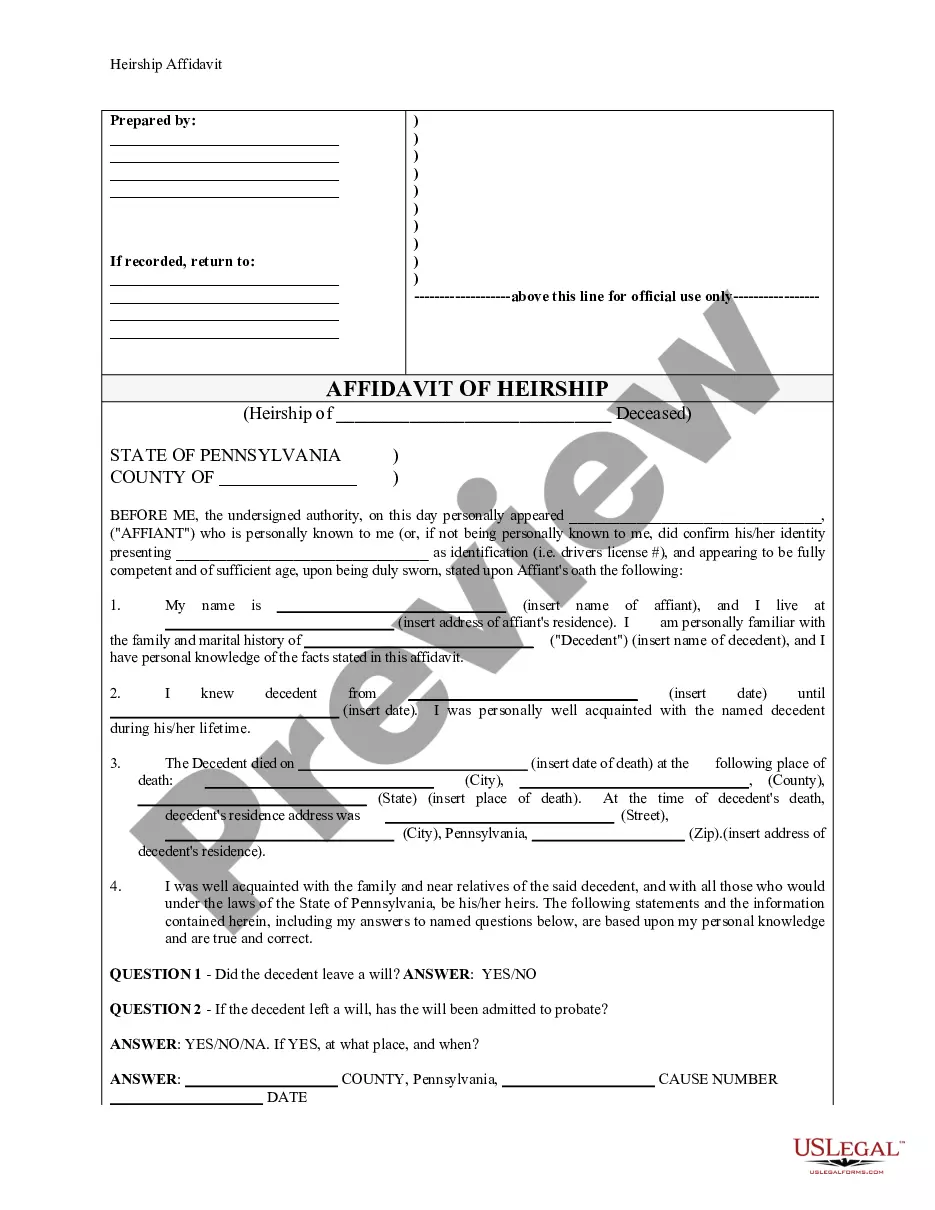
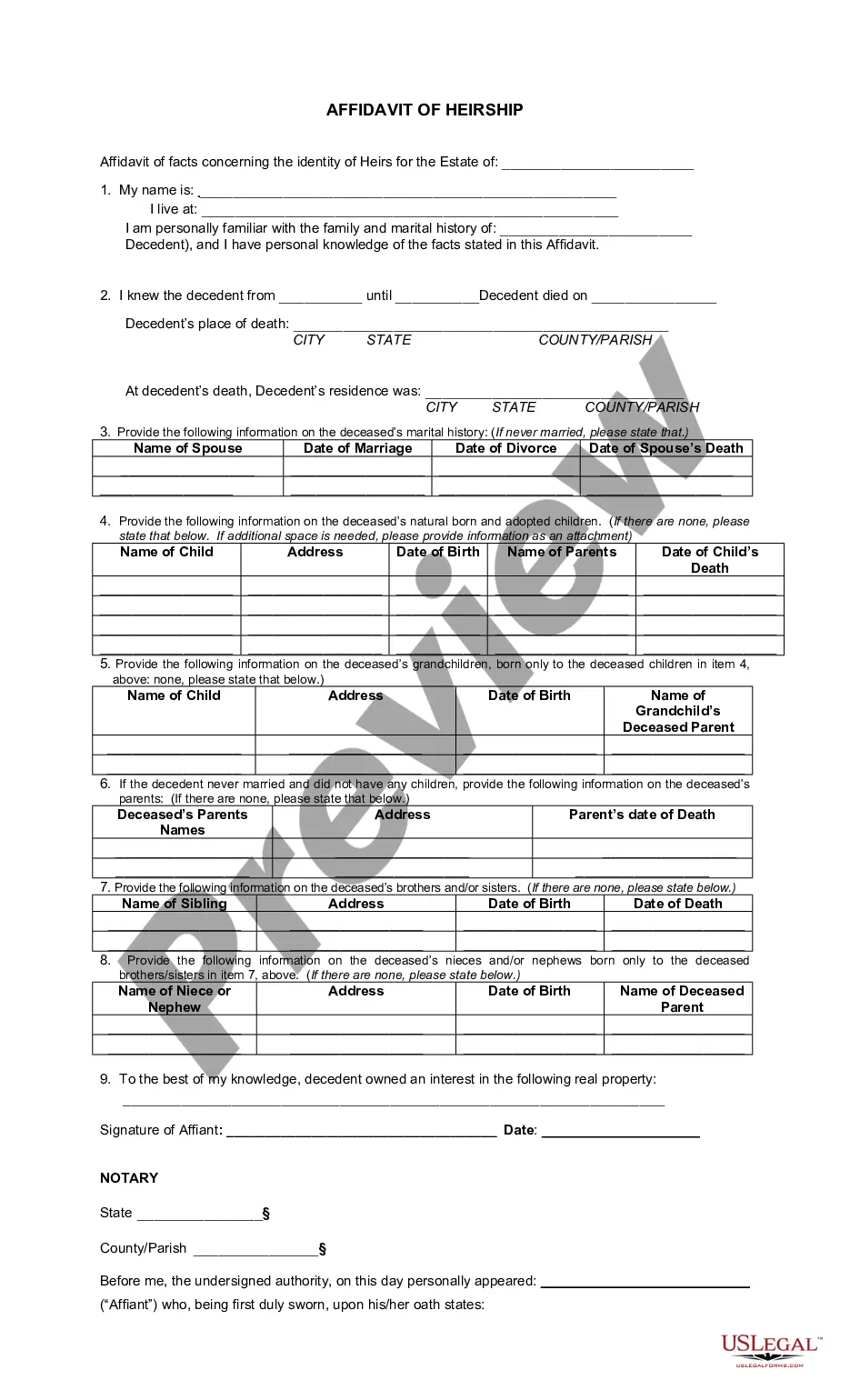
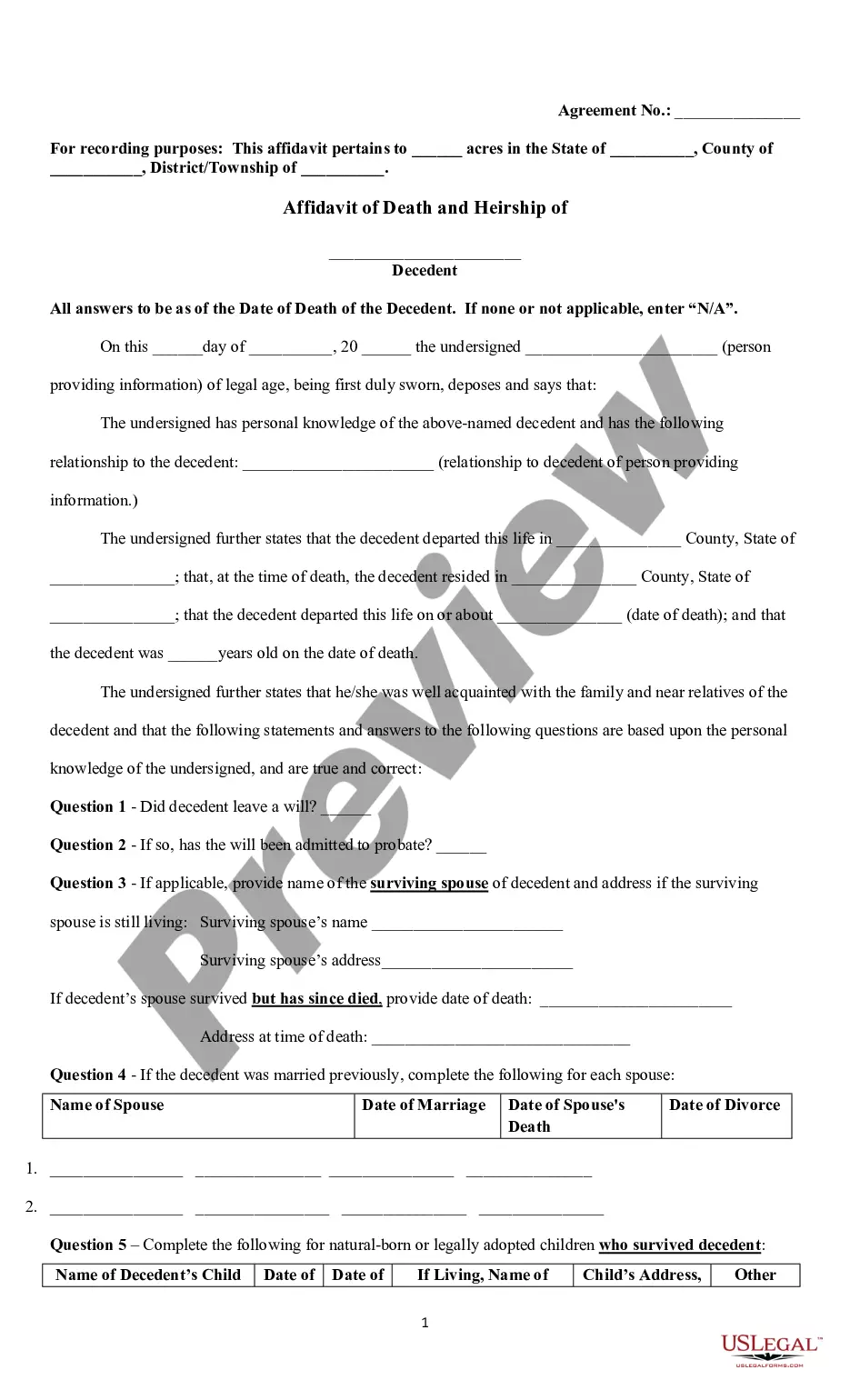
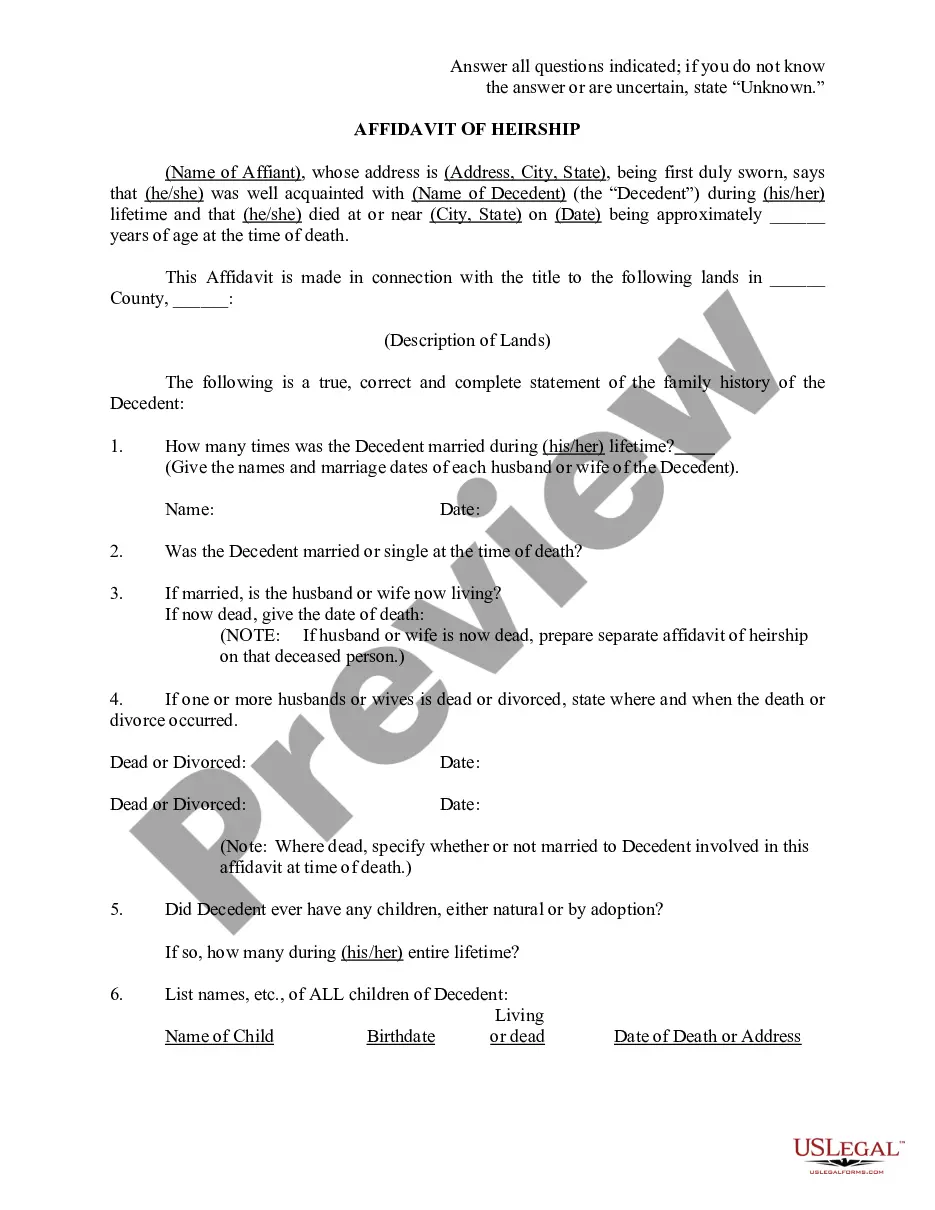
The Heirship Affidavit - Descent is a legal document that allows an individual to declare the heirs of a deceased person. Its primary purpose is to establish the rightful ownership of both personal and real property. Unlike a will, which outlines a person's wishes regarding asset distribution, an heirship affidavit serves as a sworn statement identifying heirs, especially in cases where the deceased has no will. This form can be recorded in official land records as necessary.
Form components explained
- Name and address of the affiant.
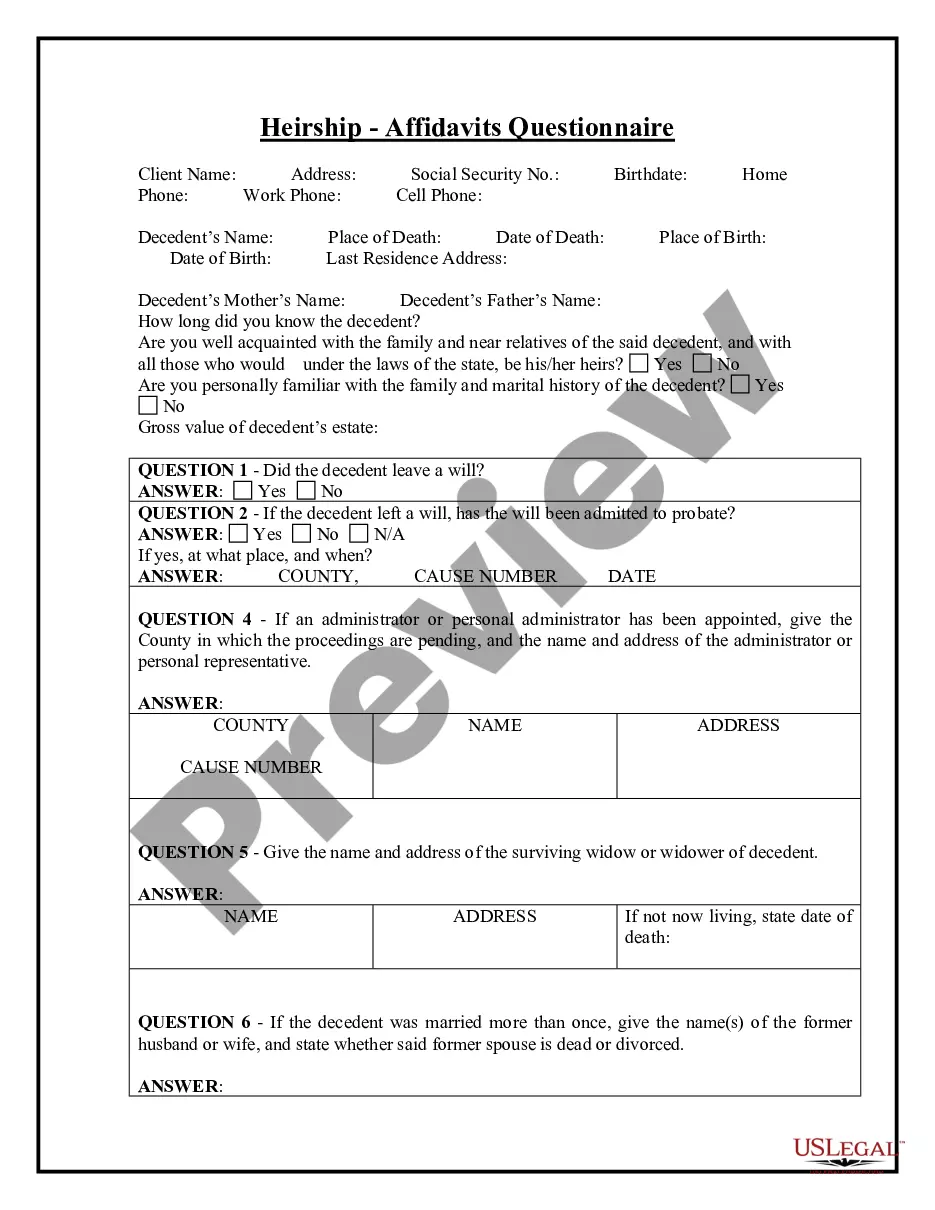
- Details about the deceased, including their name, date of death, and last known residence.
- Information on whether the deceased left a will and its probate status.
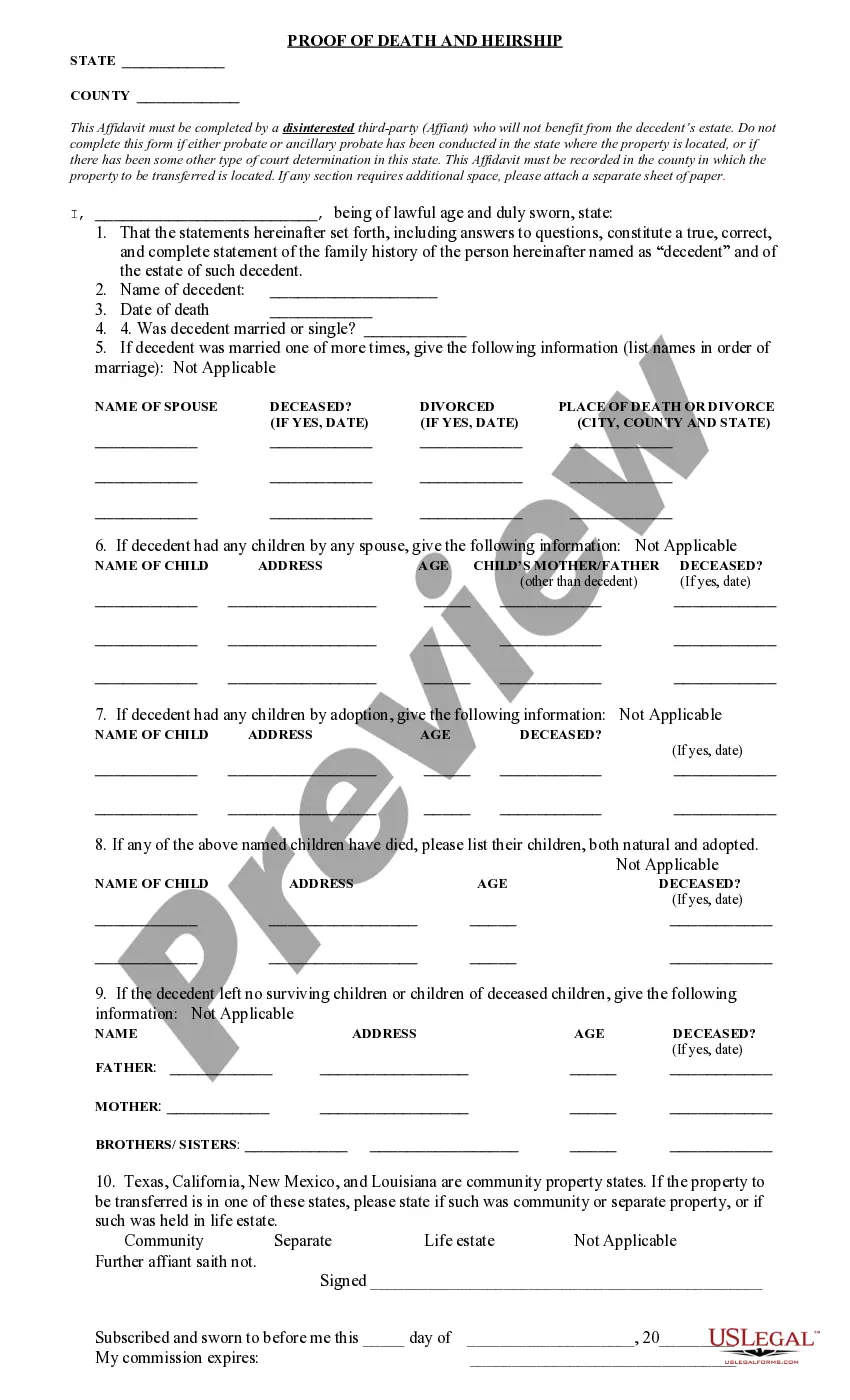
- Names and addresses of surviving family members and heirs.
- Affiant's relationship to the deceased.
- Properties owned by the deceased requiring confirmation.


Situations where this form applies
This form is essential in situations where an individual dies without a will, leaving behind property that needs to be transferred to the rightful heirs. For example, if a person passes away and their only surviving relative wishes to sell the inherited property, an heirship affidavit is needed to legally establish ownership before the sale can occur.
Who can use this document
This form is intended for:
- Individuals who need to identify heirs for a deceased person who left no will.
- Surviving relatives or friends of the deceased who are knowledgeable about their family history.
- Anyone involved in the transfer or sale of real estate owned by the deceased.
Instructions for completing this form
- Enter the full name and address of the affiant at the beginning of the form.
- Provide detailed information about the deceased, including their name, date of death, and residence.
- Respond to the series of questions concerning the will, probate status, and surviving heirs.
- List the names and addresses of all surviving family members, including children and spouses.
- Sign the affidavit in the presence of a notary public to validate the document.
Does this document require notarization?
Yes, this form must be notarized to be legally valid. Notarization verifies the identities of the individuals involved and the authenticity of the document. US Legal Forms offers integrated online notarization, ensuring 24/7 availability through secure video calls, making it easy to complete the process without the need to travel.
Get your form ready online
Our built-in tools help you complete, sign, share, and store your documents in one place.
Make edits, fill in missing information, and update formatting in US Legal Forms—just like you would in MS Word.
Download a copy, print it, send it by email, or mail it via USPS—whatever works best for your next step.
Sign and collect signatures with our SignNow integration. Send to multiple recipients, set reminders, and more. Go Premium to unlock E-Sign.
If this form requires notarization, complete it online through a secure video call—no need to meet a notary in person or wait for an appointment.
We protect your documents and personal data by following strict security and privacy standards.

Make edits, fill in missing information, and update formatting in US Legal Forms—just like you would in MS Word.

Download a copy, print it, send it by email, or mail it via USPS—whatever works best for your next step.

Sign and collect signatures with our SignNow integration. Send to multiple recipients, set reminders, and more. Go Premium to unlock E-Sign.

If this form requires notarization, complete it online through a secure video call—no need to meet a notary in person or wait for an appointment.

We protect your documents and personal data by following strict security and privacy standards.
Common mistakes to avoid
- Failing to include all necessary heirs and relatives.
- Incomplete information regarding the deceasedâs property.
- Not having the document signed by a notary public.
- Providing incorrect dates related to the deceased's life events.
- Omitting to mention whether the decedent had debts or other financial matters that may affect inheritance.
Benefits of completing this form online
- Convenience of downloading and filling out the form at your own pace.
- Easy access to reliable templates drafted by licensed attorneys.
- Editability, allowing for adjustments as necessary before finalizing the document.
Legal use & context
- The Heirship Affidavit is essential for legally acknowledging rightful heirs when no will is present.
- It is commonly accepted in Pennsylvania and could be challenged if not completed correctly.
- This document can be used in court or during property transactions to establish legal title.
Looking for another form?

Form popularity
FAQ
The family exemption is a right given to specific individuals to retain or claim certain types of a decedent's property in accordance with Section 3121 of the Probate, Estate and Fiduciaries Code. For decedents dying after Jan. 29, 1995, the family exemption is $3,500.
Use Life Insurance: Life insurance is generally exempt from PA Inheritance Tax. Your heirs will inherit a tax-free (income tax free, inheritance tax free, estate tax free) liquid asset. Lifetime Gifting: Making a gift during your lifetime reduces the inheritance tax on your estate.
1. This form should be completed by someone other than an Heir. This person should be someone who is familiar with the family history of the deceased (decedent), and who will obtain no benefit from the Estate. The person who fills out the form is referred to as the AFFIANT.
What property is subject to inheritance tax? All real property and all tangible personal property of a resident decedent, including but not limited to cash, automobiles, furniture, antiques, jewelry, etc., located in Pennsylvania at the time of the decedent's death is taxable.
While federal estate taxes and state-level estate or inheritance taxes may apply to estates that exceed the applicable thresholds (for example, in 2021 the federal estate tax exemption amount is $11.7 million for an individual), receipt of an inheritance does not result in taxable income for federal or state income tax
Property owned jointly between husband and wife is exempt from inheritance tax, while property inherited from a spouse, or from a child aged 21 or younger by a parent, is taxed a rate of 0%. Inheritance tax returns are due nine calendar months after a person's death.
Affidavit must be filed by the new owner with the assessor for the city or township where the property is located within 45 days of the transfer.
Step 1 At the top, write in the name of the decedent. Step 2 Under Section 1, write in the date of birth, the date of death, the residential address of decedent. Step 3 In Section 2, check the box that describes you as the person filling out the affidavit.
A fee of $15 for the first page and $4 for each additional page is common. Ask if you can file the two affidavits of heirship as one document. Some counties let you file the two affidavits of heirship as one document if the decedent and property descriptions are the same.