Oregon Last Will and Testament Package
What is this form package?
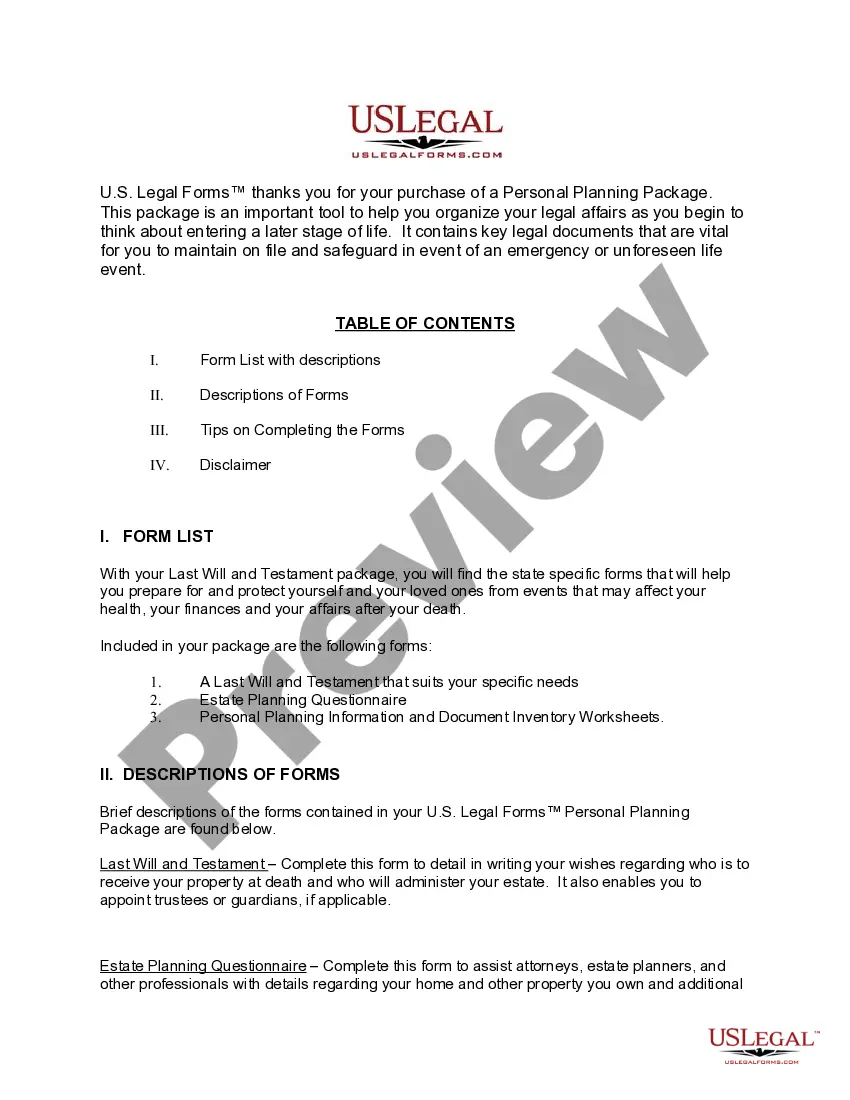
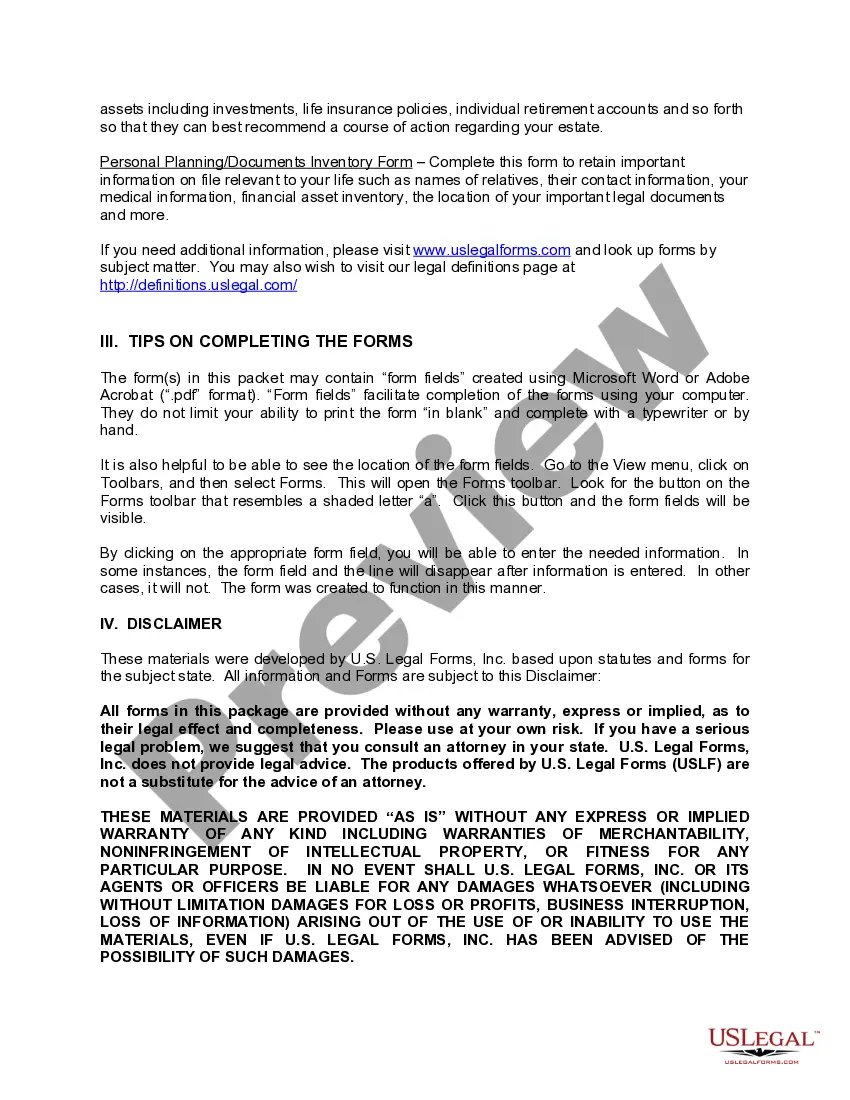
The Oregon Last Will and Testament Package is a comprehensive set of legal documents designed to help individuals create a legally binding will tailored to their specific needs. This package stands out by including various essential forms, such as an estate planning questionnaire and personal planning information worksheets, ensuring that users have all necessary tools to manage their estate efficiently. Additionally, you will receive a completed sample of the Will for download at no extra cost, making this package user-friendly for those unfamiliar with legal documentation.
Forms included in this package
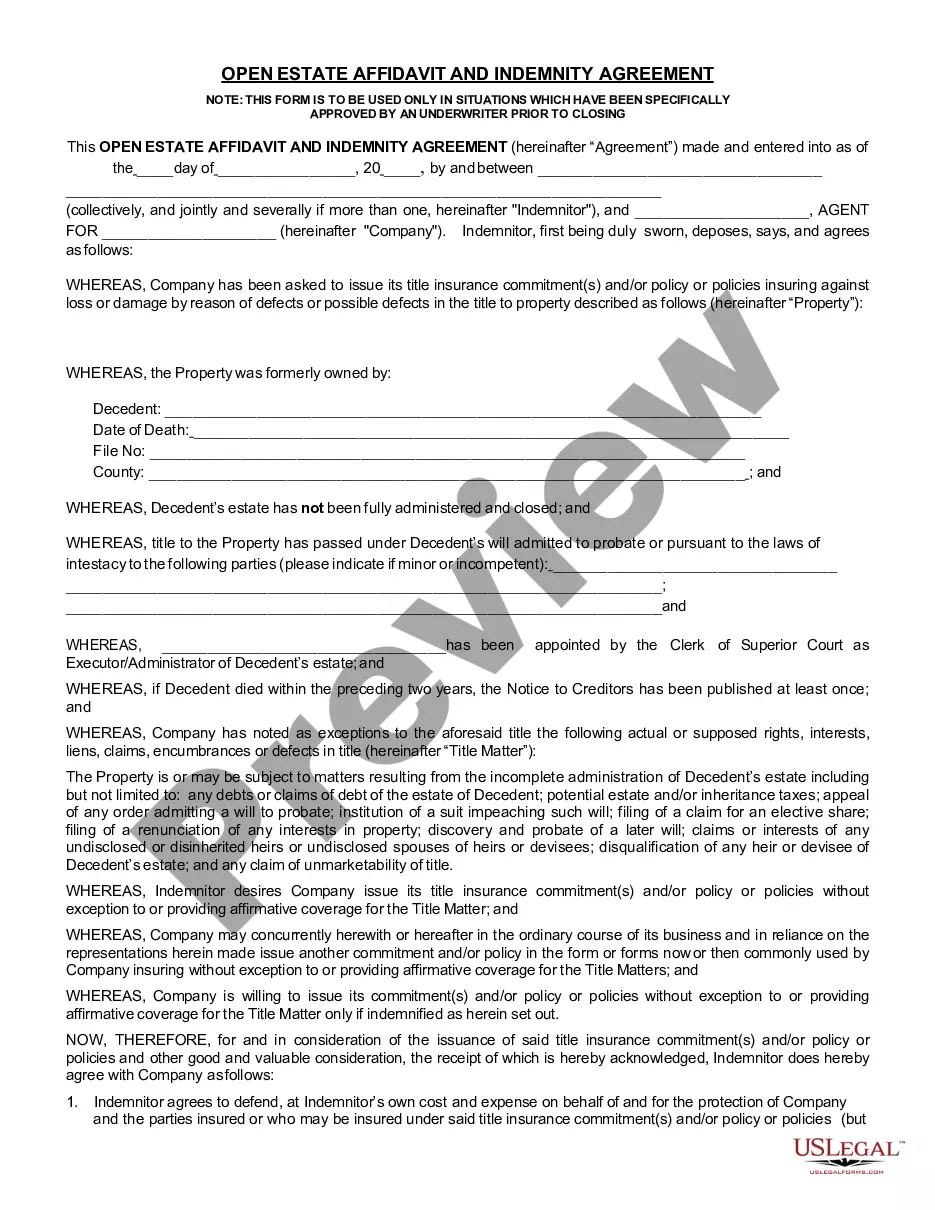

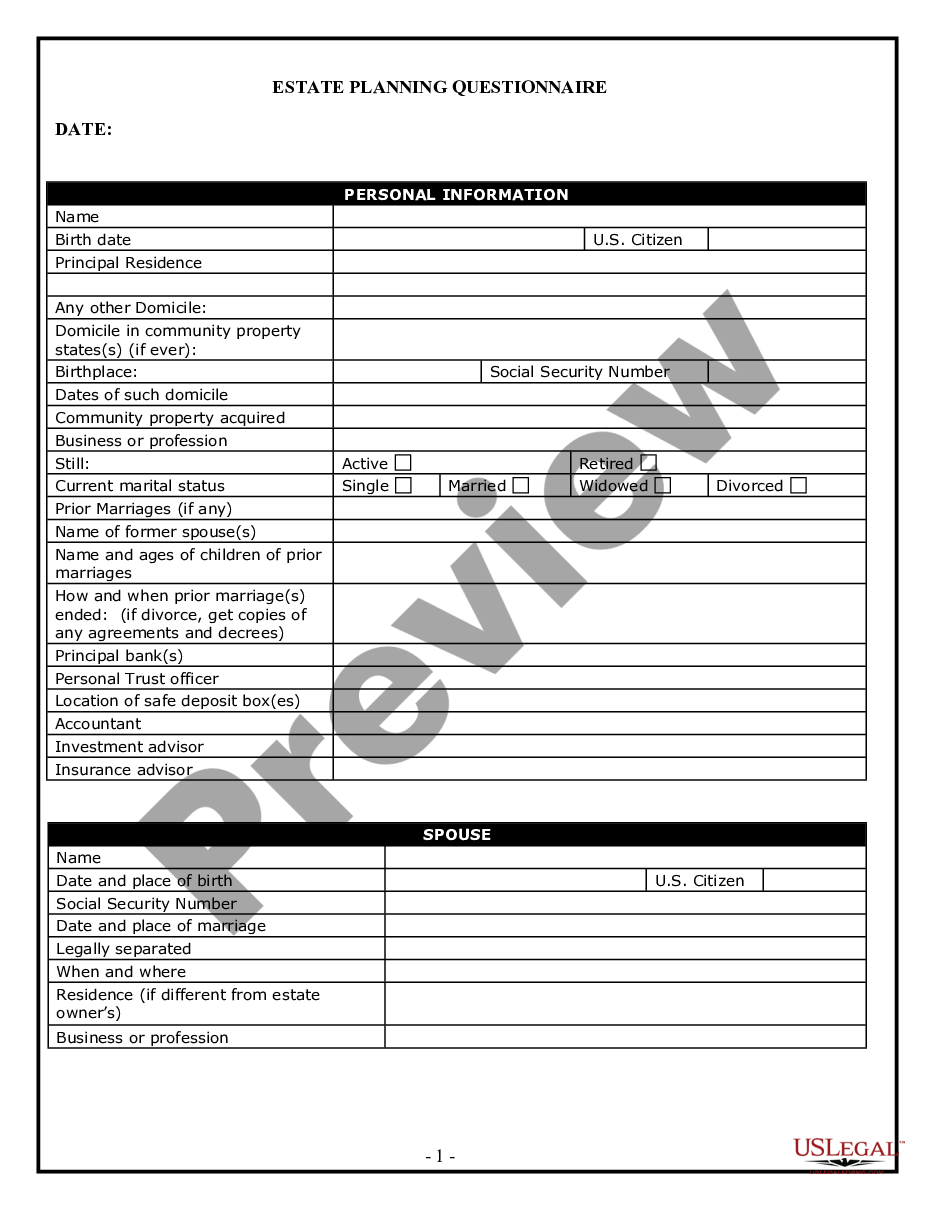
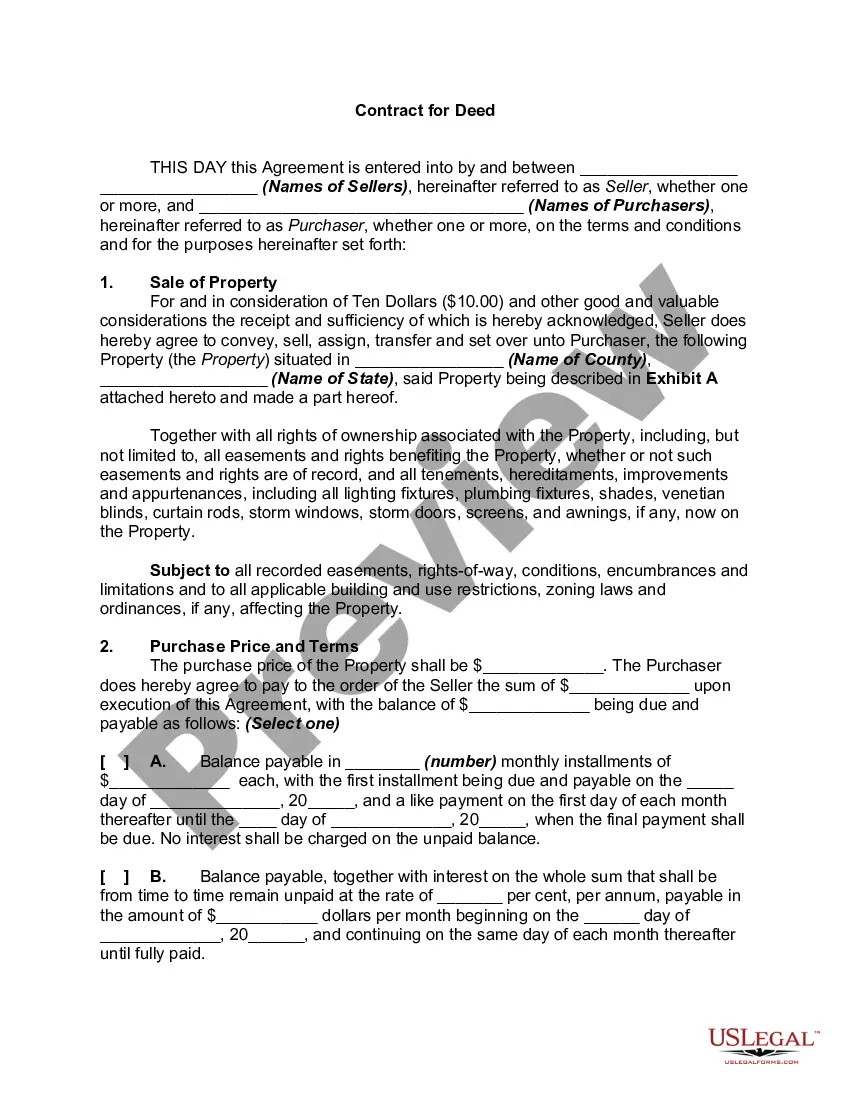
When to use this document
This package is beneficial in various situations, including:
- Creating a will for the first time.
- Updating an existing will due to changes in personal circumstances such as marriage, divorce, or the birth of a child.
- Planning your estate to ensure that your assets are distributed according to your wishes after your passing.
- Gathering important personal and financial information for future reference or legal consultations.
Who this form package is for
- Individuals creating their first will.
- People needing to update existing legal documents due to changing life circumstances.
- Anyone looking to have a clearer understanding of their estate planning needs.
- Residents of Oregon who require state-specific legal forms.
Completing these forms step by step
- Review all included forms and their instructions carefully.
- Complete the Estate Planning Questionnaire to provide detailed information about your assets.
- Fill out the Personal Planning Information and Document Inventory Worksheets to catalog important information.
- Select and complete the Last Will and Testament based on your specific situation.
- Have the completed paperwork reviewed for accuracy before finalizing it.
Notarization details for included forms
Some forms in this package require notarization to be legally valid. US Legal Forms provides secure online notarization powered by Notarize, allowing you to complete the process through a verified video call, available 24/7.
Get your form ready online
Our built-in tools help you complete, sign, share, and store your documents in one place.
Make edits, fill in missing information, and update formatting in US Legal Forms—just like you would in MS Word.
Download a copy, print it, send it by email, or mail it via USPS—whatever works best for your next step.
Sign and collect signatures with our SignNow integration. Send to multiple recipients, set reminders, and more. Go Premium to unlock E-Sign.
If this form requires notarization, complete it online through a secure video call—no need to meet a notary in person or wait for an appointment.
We protect your documents and personal data by following strict security and privacy standards.

Make edits, fill in missing information, and update formatting in US Legal Forms—just like you would in MS Word.

Download a copy, print it, send it by email, or mail it via USPS—whatever works best for your next step.

Sign and collect signatures with our SignNow integration. Send to multiple recipients, set reminders, and more. Go Premium to unlock E-Sign.

If this form requires notarization, complete it online through a secure video call—no need to meet a notary in person or wait for an appointment.

We protect your documents and personal data by following strict security and privacy standards.
Avoid these common issues
- Failing to update the will after major life events.
- Not providing enough detail in the Estate Planning Questionnaire.
- Overlooking the importance of signatures and witnesses.
- Missing sections in the Personal Planning Information Worksheet.
Benefits of completing this package online
- Instant access to legal documents without the need for an attorney's appointment.
- Editable forms that allow users to tailor their wills to specific requirements.
- Convenience of completing forms at your own pace and from home.
- Access to a completed sample of the will enhances understanding and accuracy.
Looking for another form?
Form popularity
FAQ
The Oregon Last Will and Testament Package is a bundled set of Oregon-specific forms to help create a legally binding will. It includes an estate planning questionnaire, personal planning information worksheets, and a completed sample of the Will for download. Use it when drafting your first will, updating an existing document, or organizing estate information for future planning.
Not necessarily. The package provides a guided, self-help set of Oregon-specific forms to prepare a will, but it is not a substitute for legal advice. A licensed attorney can offer tailored guidance for complex estates or to ensure full alignment with Oregon law.
Choosing between a will and a trust depends on goals and assets. This package focuses on creating a will and does not create a trust. For substantial or complex estates, or long-term asset management, consulting an attorney can help determine whether a trust should complement or replace a will.
A common mistake is failing to keep the will up to date after life events. This package helps mitigate that by providing an estate planning questionnaire and personal planning worksheets to capture current wishes, plus a sample Will to guide formatting, reducing misstatements or outdated provisions.
This package is designed for individuals creating their first will, those updating existing documents after life changes like marriage or children, and Oregon residents seeking a clear, organized approach to estate planning. It provides a questionnaire, worksheets, and a downloadable Will sample to guide the process.
This package bundles multiple documents in one purchase, not just a single form. It includes an estate planning questionnaire, personal planning information worksheets, and a completed Will sample, helping users gather information, organize assets, and draft a will in one Oregon-focused package.