Oregon Access Easement
What is this form?
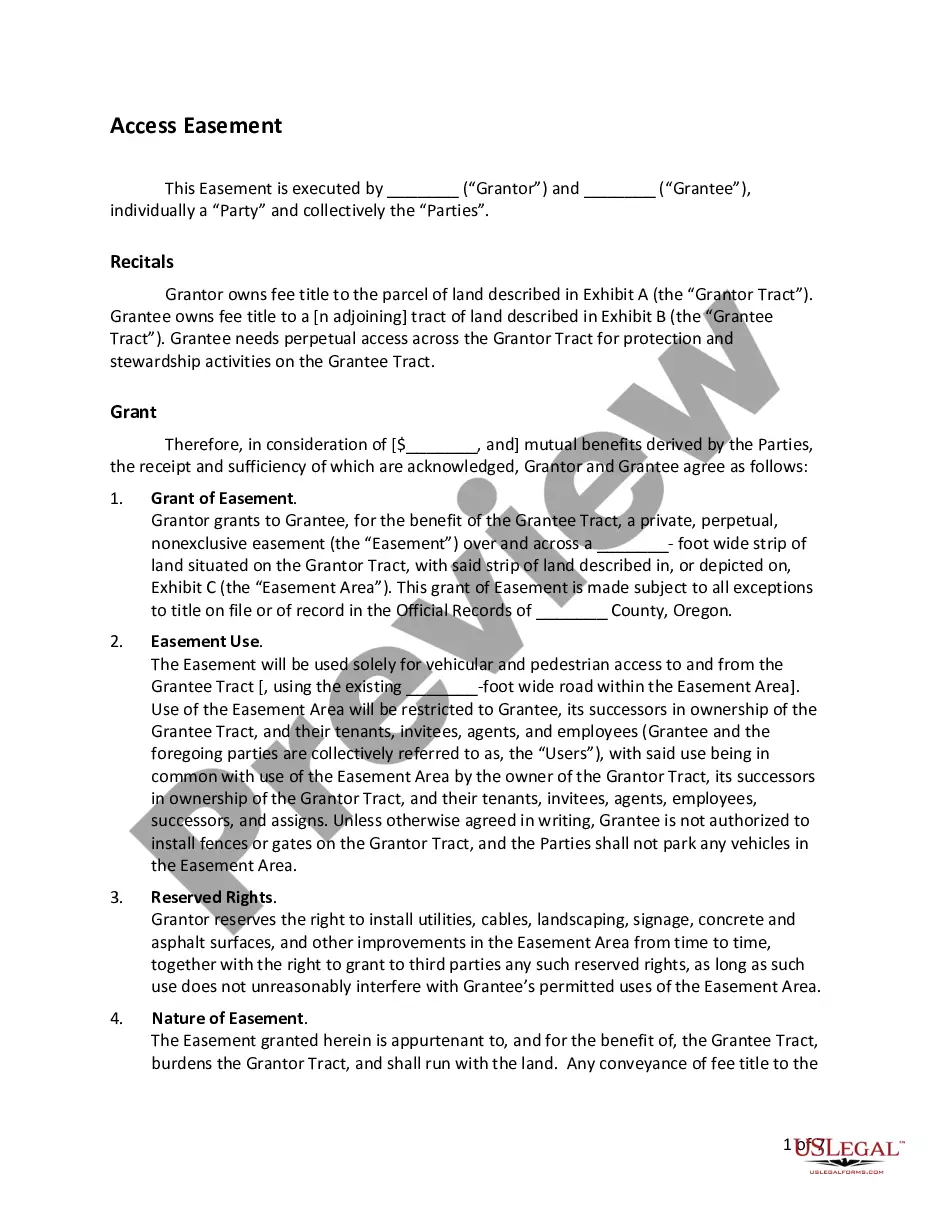
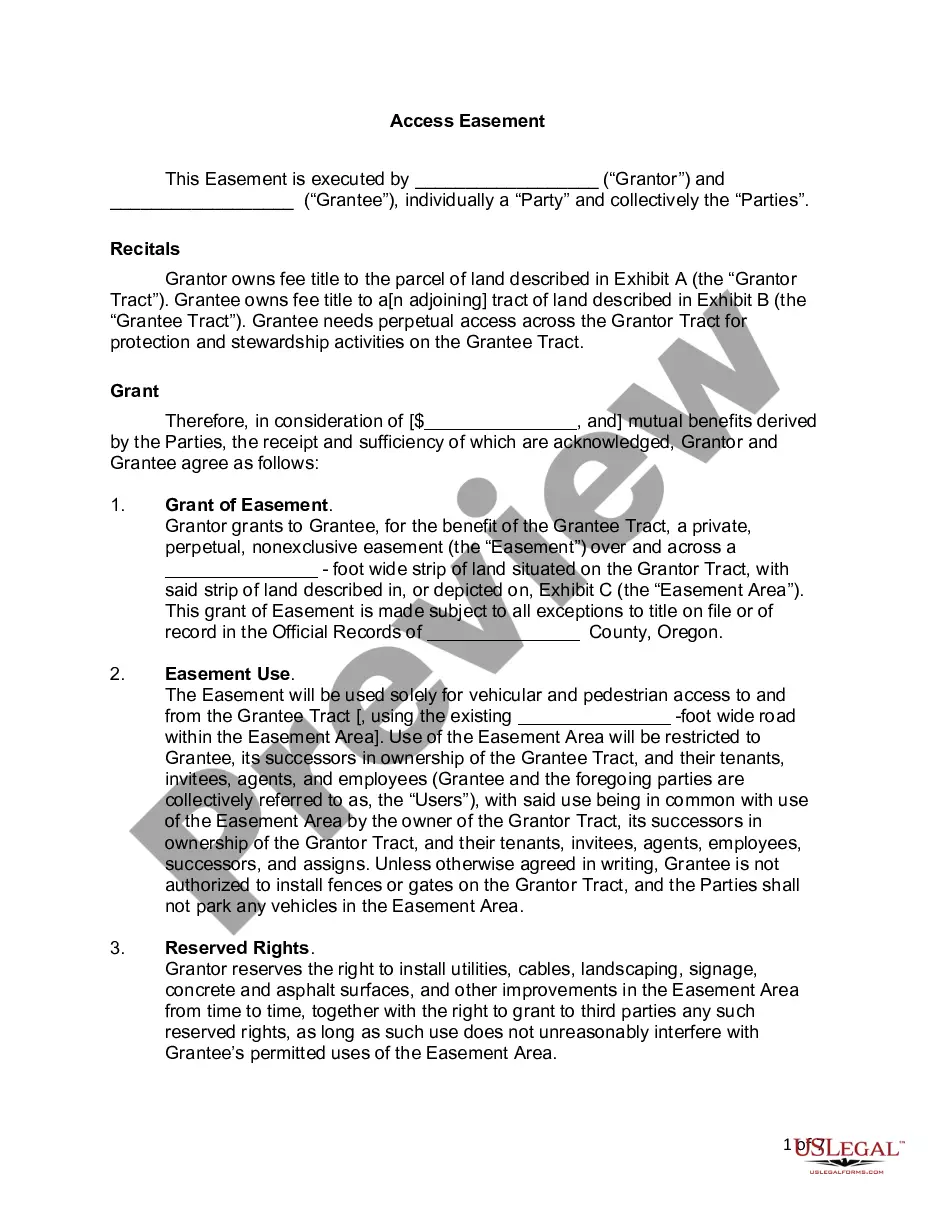
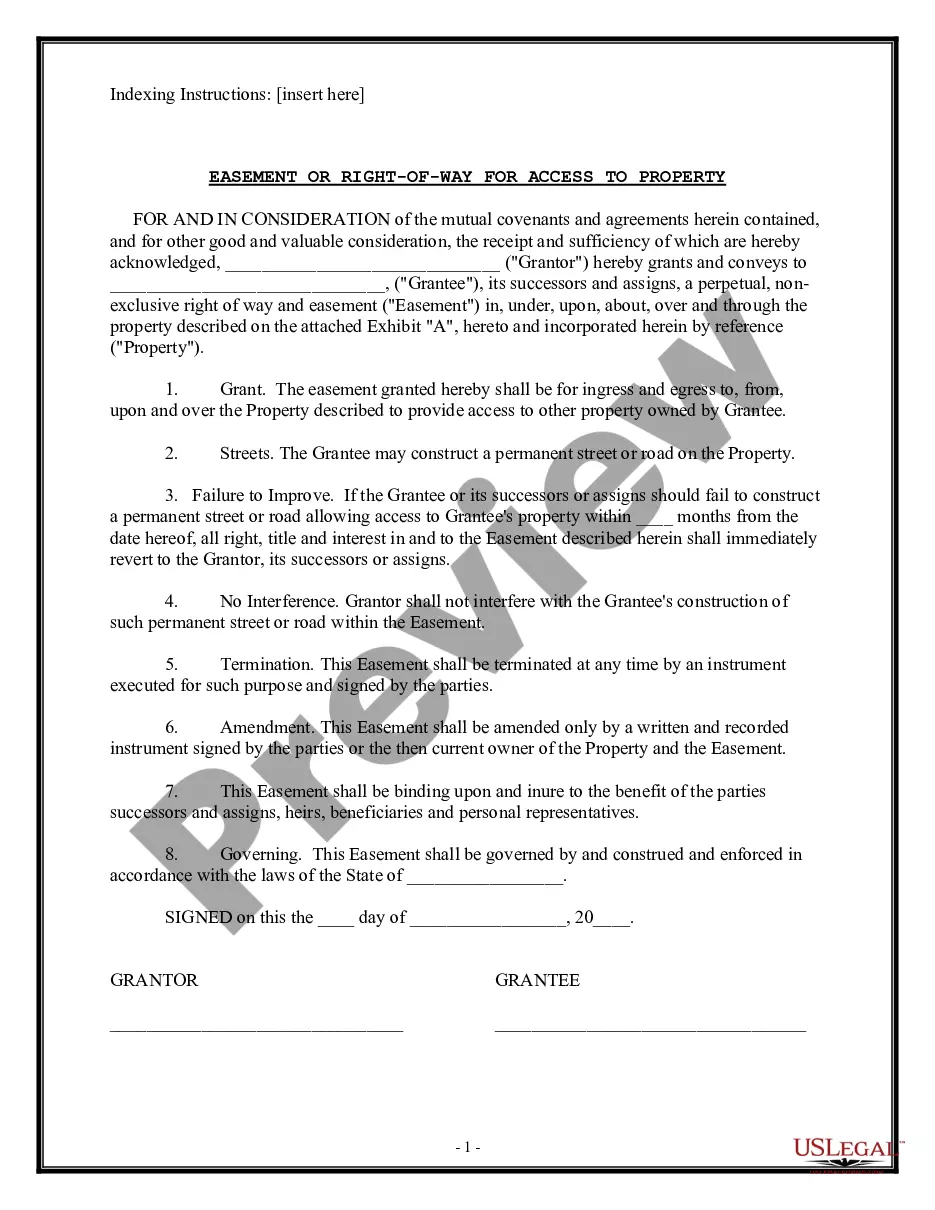
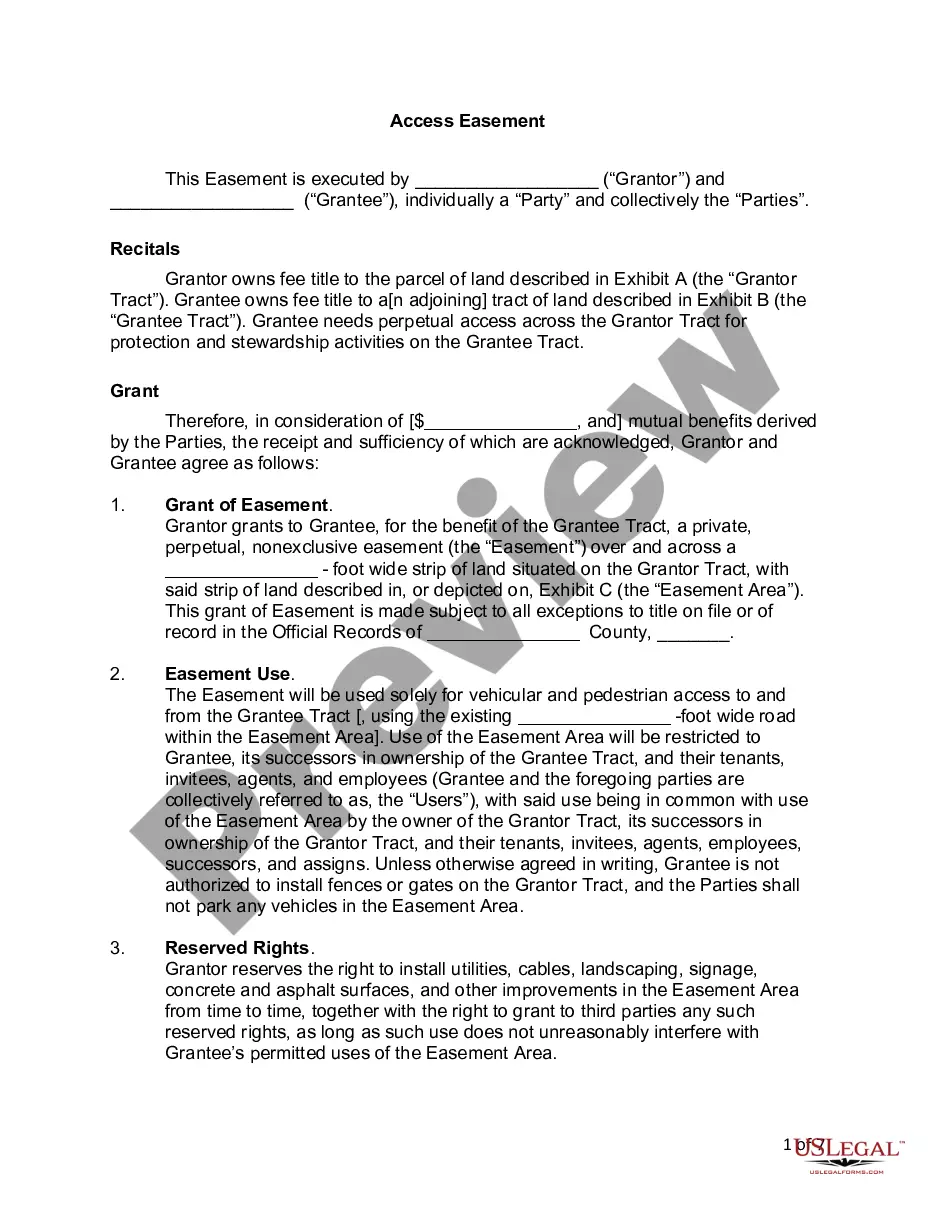
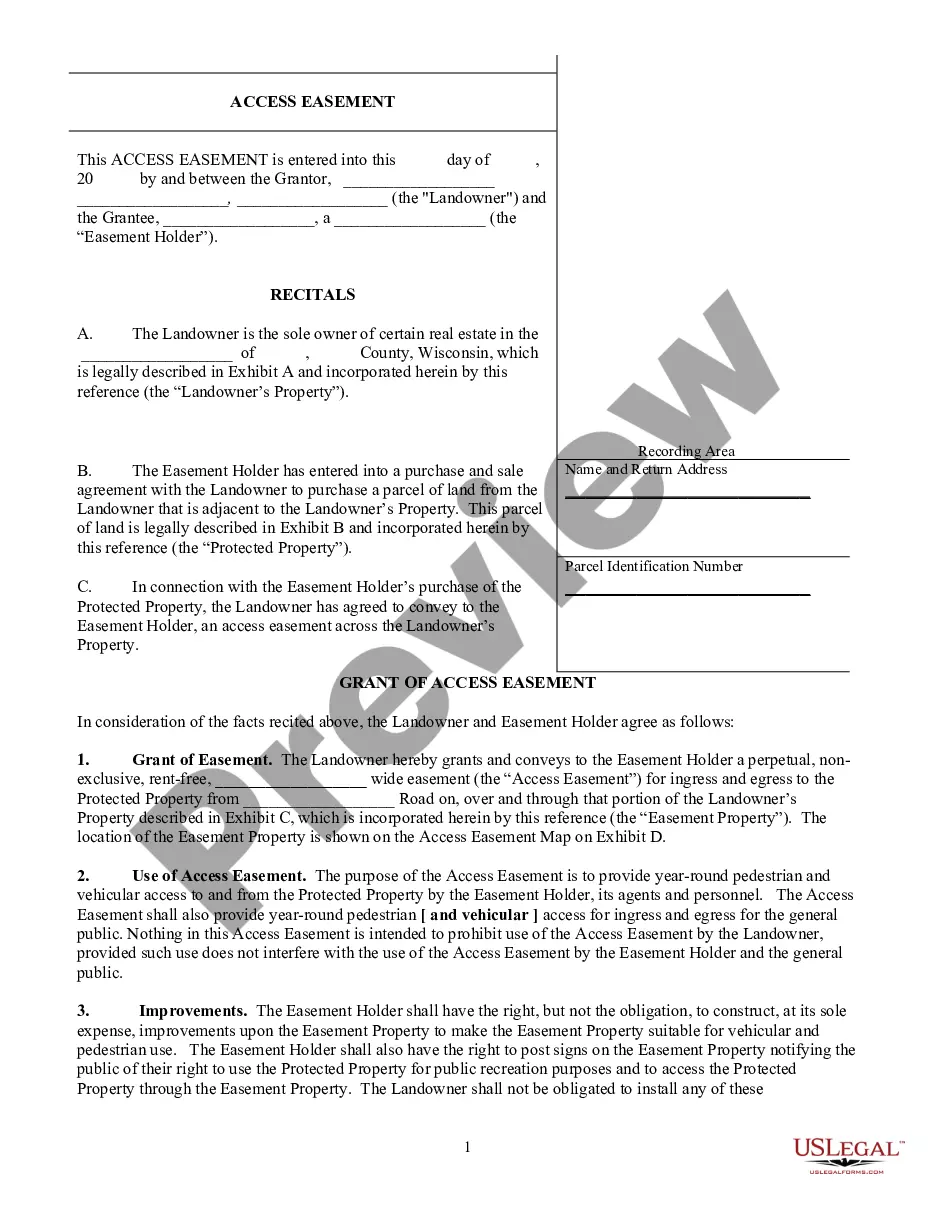
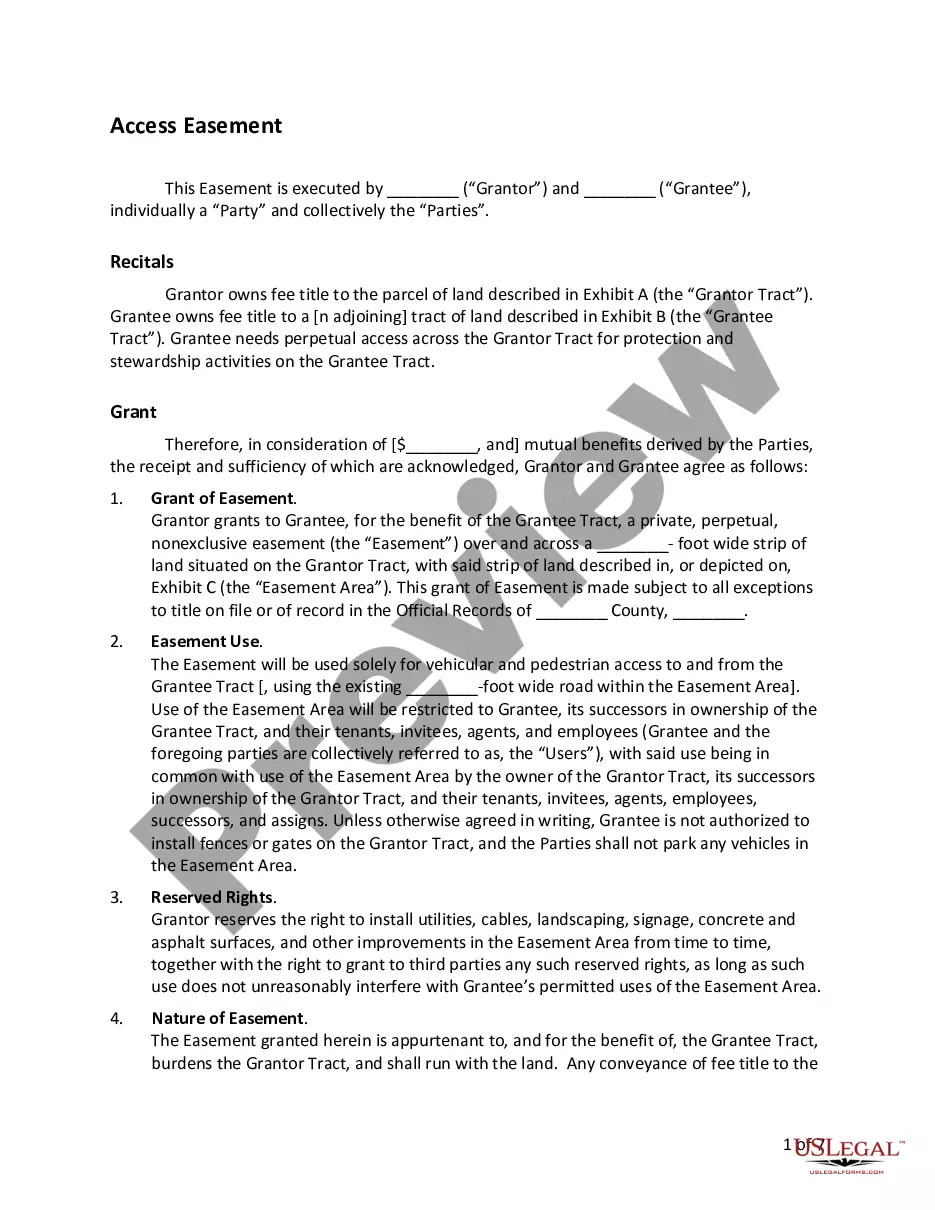
The Access Easement form is a legal agreement that allows one party (the Grantee) to use a specified area of land owned by another party (the Grantor) for particular purposes. This form is different from other property agreements because it does not grant possession, improvement, or the right to sell the land. Instead, it provides a defined access route, typically for vehicles or pedestrians, ensuring that the Grantee can reach their adjoining property effectively and legally.
Key components of this form
- Parties involved: Identifies the Grantor and Grantee.
- Description of parcels: Details the properties involved, including the Grantor Tract and Grantee Tract.
- Grant of Easement: Specifies the easement's terms, including its width and the allowed uses.
- Easement Use: Clarifies that the easement is limited to access for the Grantee and associated users.
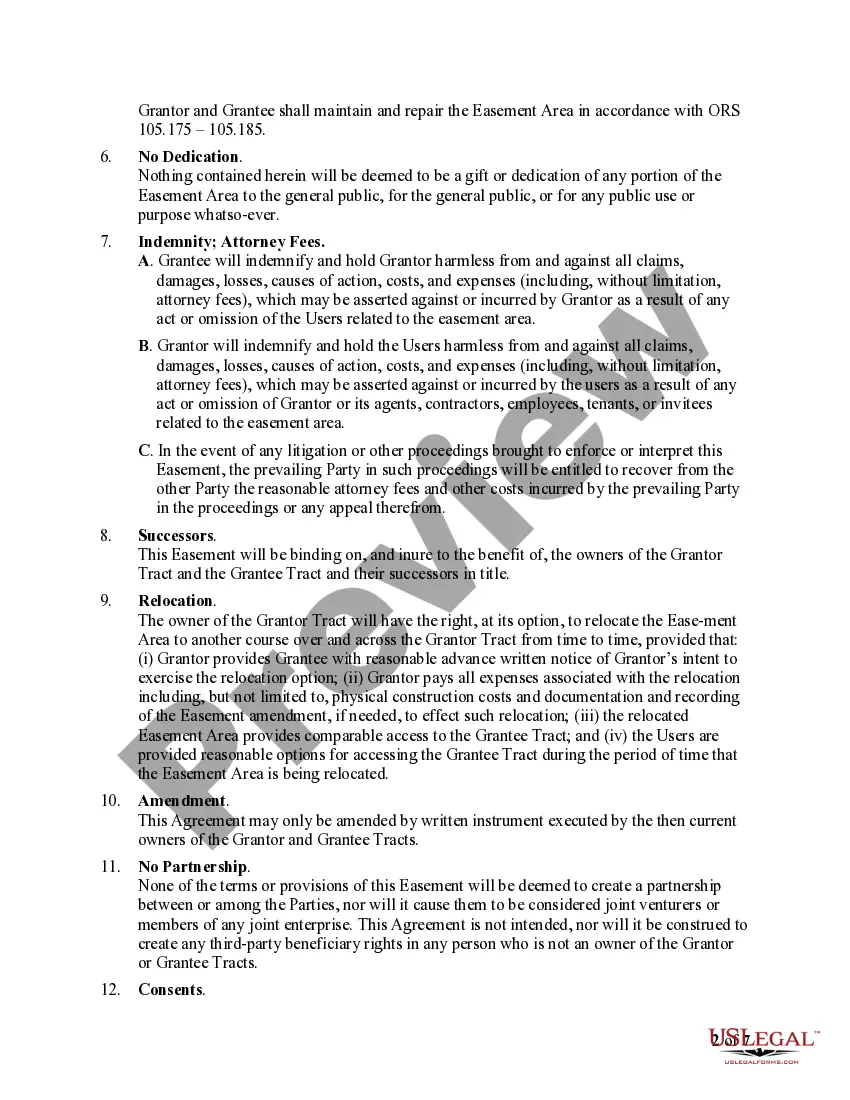
- Maintenance and repair obligations: Outlines responsibilities for both parties regarding upkeep of the easement area.
- Indemnity clauses: Includes provisions for liability in case of claims or damages related to the easement.
Situations where this form applies
This form is necessary when a property owner (Grantor) allows access over their land to another property owner (Grantee) for specific, limited purposes, such as to ensure ingress and egress to the Granteeâs property. It is useful in situations where the Grantee's land is accessible only through another's property and is typically employed in rural or semi-rural settings where road access is limited.
Who should use this form
- Property owners: Individuals or entities needing legal access to their land across someone else's property.
- Land developers: Developers looking to ensure legal access for future projects.
- Real estate professionals: Agents and brokers facilitating transactions involving properties with limited access.
- Legal advisors: Attorneys assisting clients in establishing access rights for land use.
Steps to complete this form
- Identify the parties involved by filling in the names of the Grantor and Grantee.
- Clearly describe the properties by referencing and including the descriptions in Exhibits A and B.
- Specify the easement area dimensions and function in Exhibit C.
- Enter any agreed compensation or considerations, if applicable.
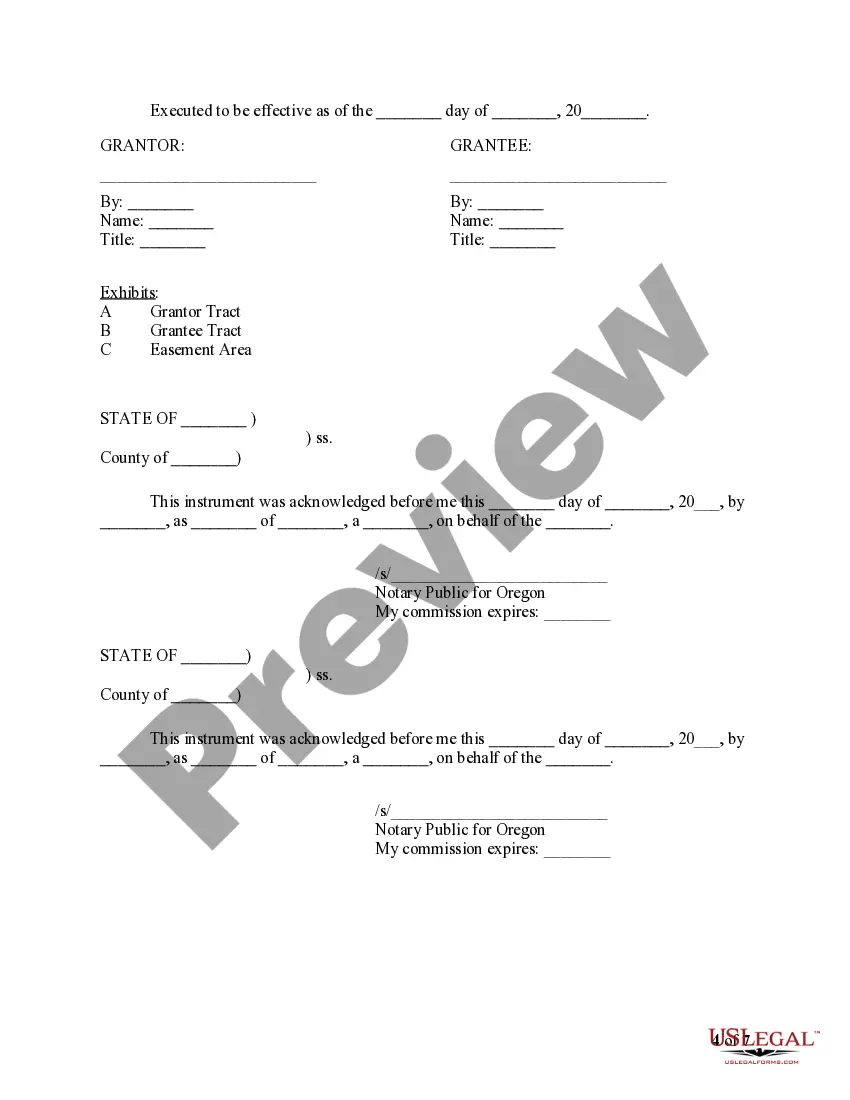
- Have both parties sign and date the document in the designated sections, followed by obtaining notarization if required.
Is notarization required?
Yes, this form must be notarized to be legally valid. The notarization confirms the identities of the parties involved and ensures that the agreement was entered into voluntarily. US Legal Forms offers integrated online notarization services, available 24/7, through secure video calls, making the process convenient and efficient.
Get your form ready online
Our built-in tools help you complete, sign, share, and store your documents in one place.
Make edits, fill in missing information, and update formatting in US Legal Forms—just like you would in MS Word.
Download a copy, print it, send it by email, or mail it via USPS—whatever works best for your next step.
Sign and collect signatures with our SignNow integration. Send to multiple recipients, set reminders, and more. Go Premium to unlock E-Sign.
If this form requires notarization, complete it online through a secure video call—no need to meet a notary in person or wait for an appointment.
We protect your documents and personal data by following strict security and privacy standards.

Make edits, fill in missing information, and update formatting in US Legal Forms—just like you would in MS Word.

Download a copy, print it, send it by email, or mail it via USPS—whatever works best for your next step.

Sign and collect signatures with our SignNow integration. Send to multiple recipients, set reminders, and more. Go Premium to unlock E-Sign.

If this form requires notarization, complete it online through a secure video call—no need to meet a notary in person or wait for an appointment.

We protect your documents and personal data by following strict security and privacy standards.
Avoid these common issues
- Failing to clearly define the easement area, which can lead to disputes.
- Not including all necessary parties, which may invalidate the agreement.
- Skipping the notarization step, if it is required based on local laws.
- Neglecting to specify the purpose of the easement, creating ambiguity.
Why use this form online
- Convenient access: Download and complete the form from anywhere at any time.
- Editability: Easily make changes as needed before finalizing the document.
- Reliability: Forms are created by licensed attorneys, ensuring legal compliance.
Looking for another form?

Form popularity
FAQ
The holders of an interest in any easement shall maintain the easement in repair.
Right of Way: The most common type of easement, it provides for access to the dominant estate over the servient estate. Utility: Allows for wires, cable, or pipes to be strung over, placed upon, or buried under the servient estate.
Can You Build on an Easement? Yes, you can usually build on a property easement, even a utility easement. Yet if you value peace of mind over everything else, not building on that easement is the best way to go. The dominant estate owning the easement may need to access the easement.
Affirmative easements are the most common. They allow privileged use of land owned by others. Negative easements are more restrictive. They limit how land is used.
The holders of an interest in any easement shall maintain the easement in repair.
An easement is a nonpossessory interest in the land of another that entitles the easement holder to limited use of another's land without interference. ORS 105.170 (1). An easement holder is a person with a legal right to use the easement and may include the owner of the land across which the easement passes.
Oregon Termination of Easement Information This document allows the owner of the land, burdened by the access and the party that benefits from the access, to sign an agreement releasing the property from such access, under the premises the benefiting party no longer needs access.