Oregon Access Easement
What is this form?
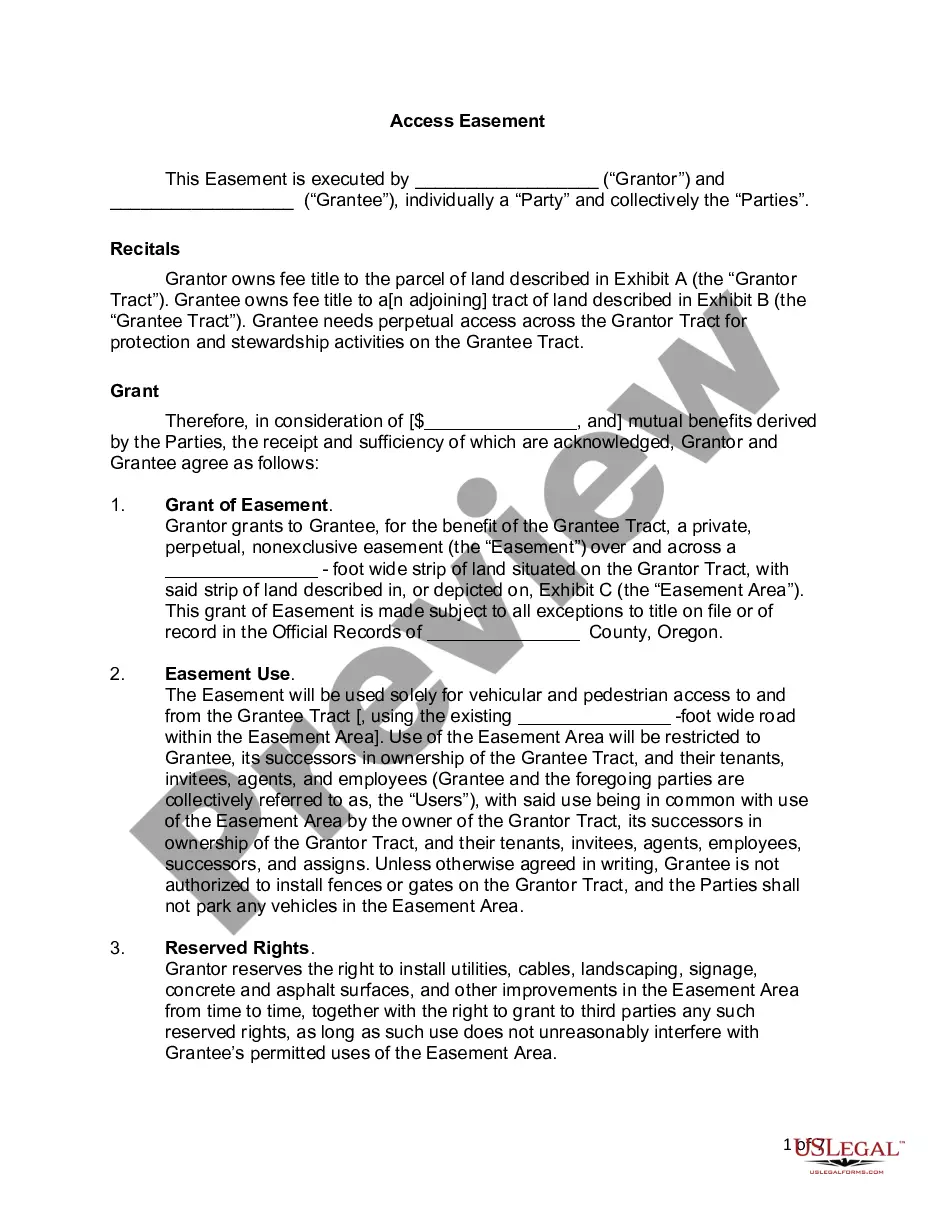
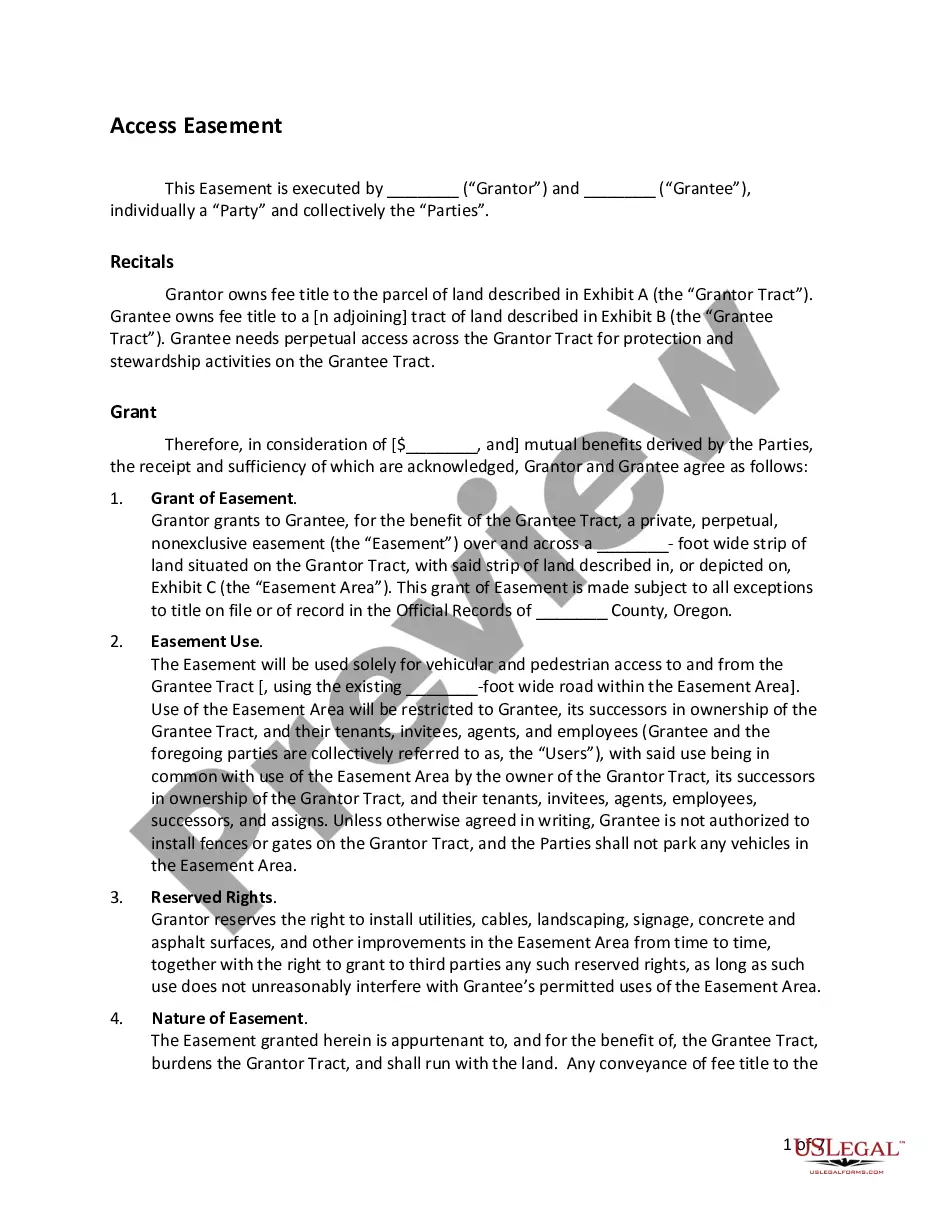
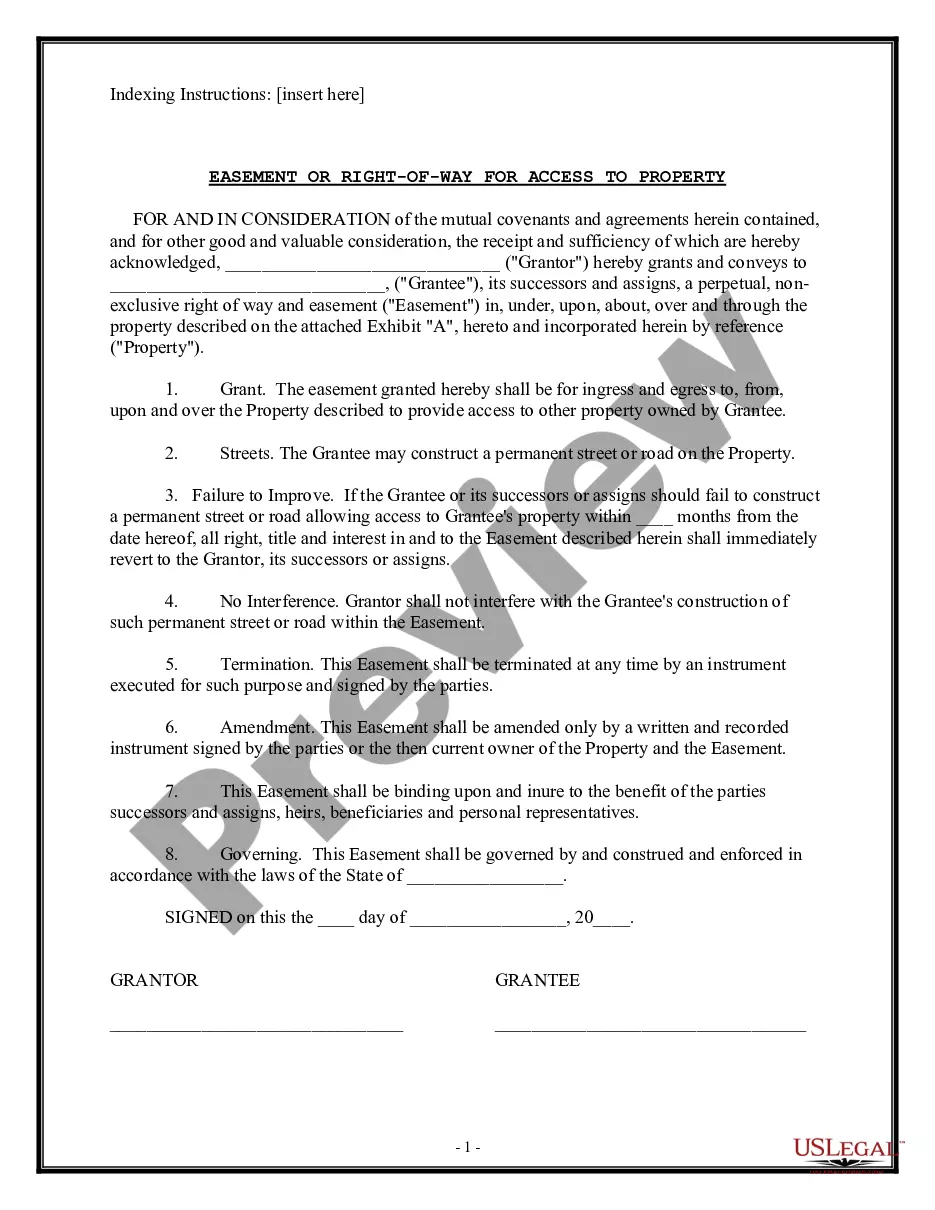
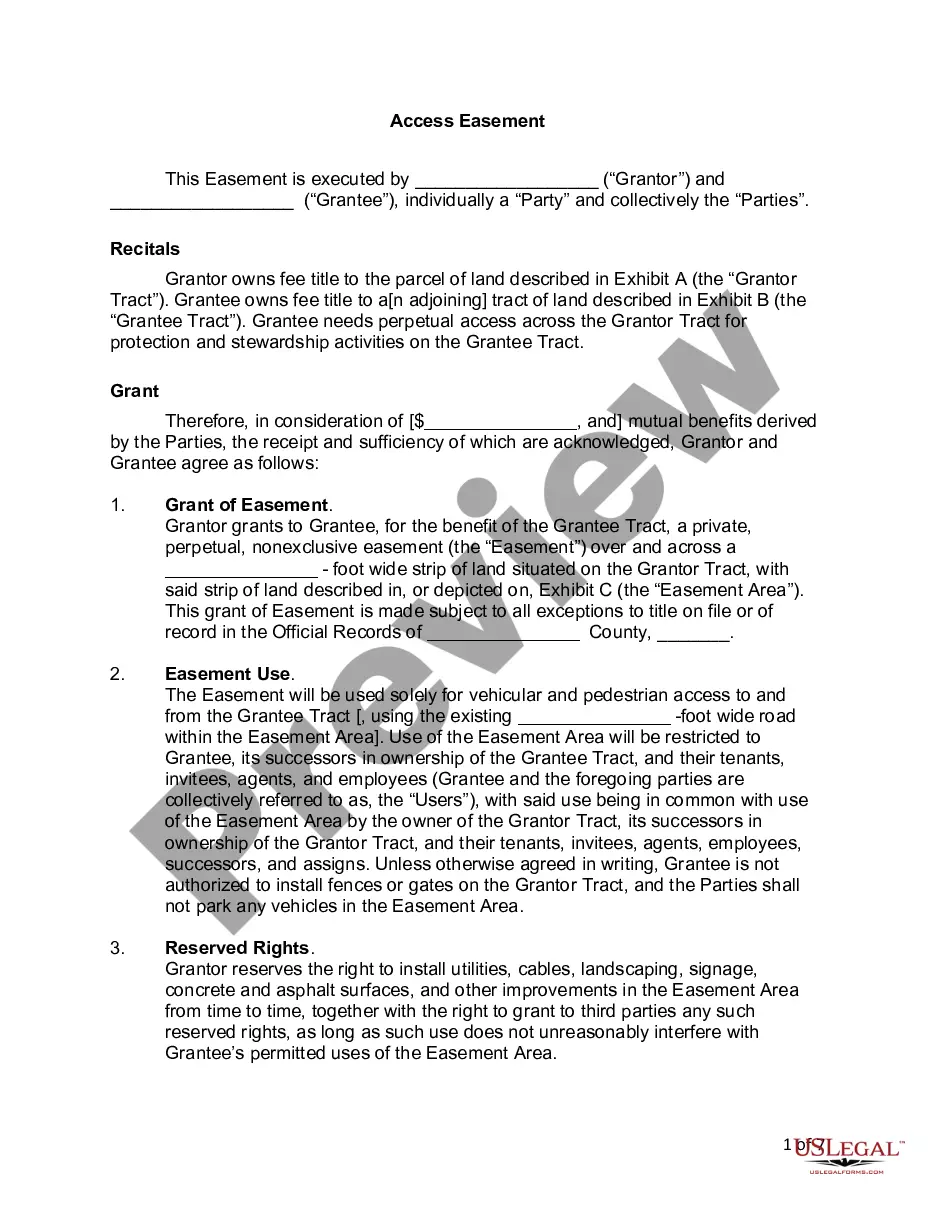
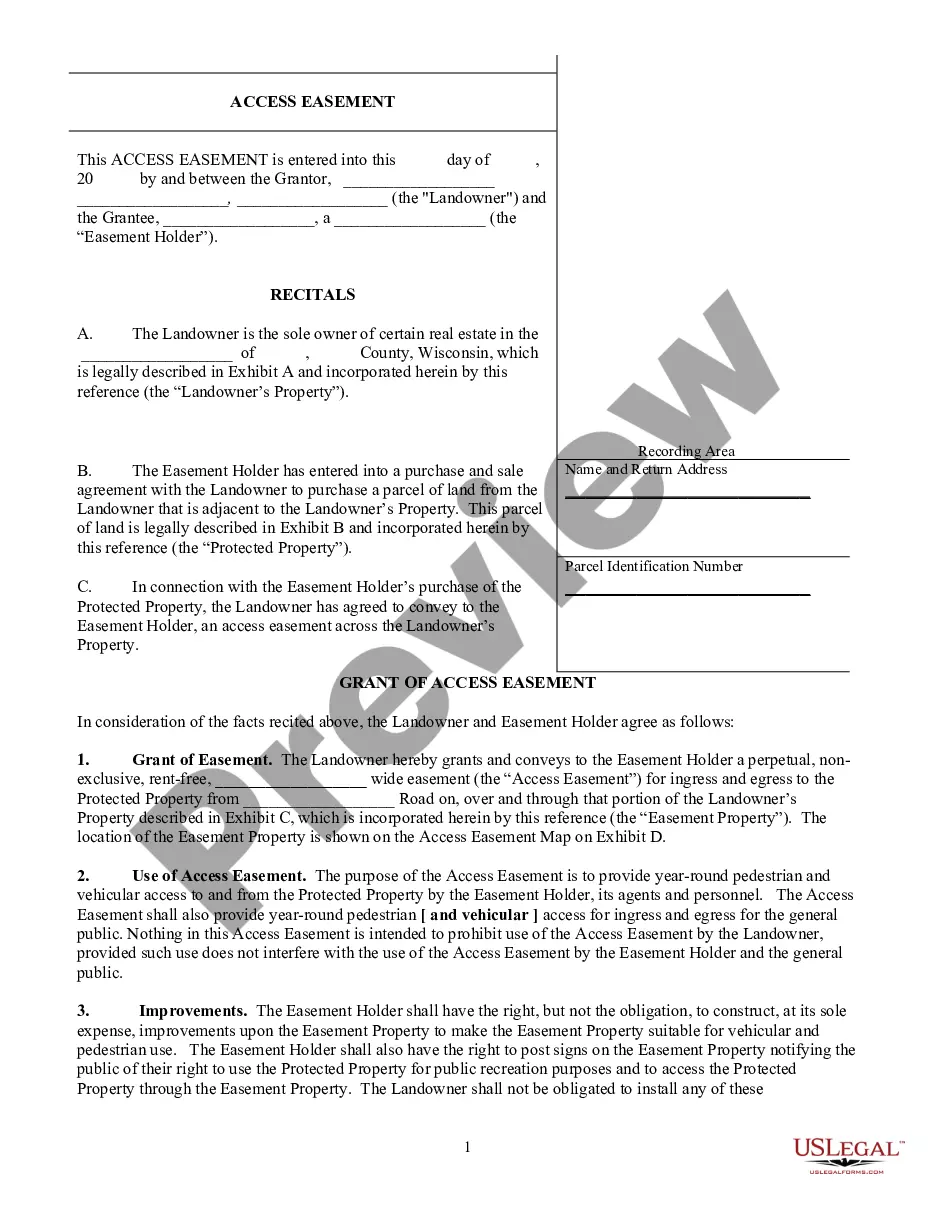
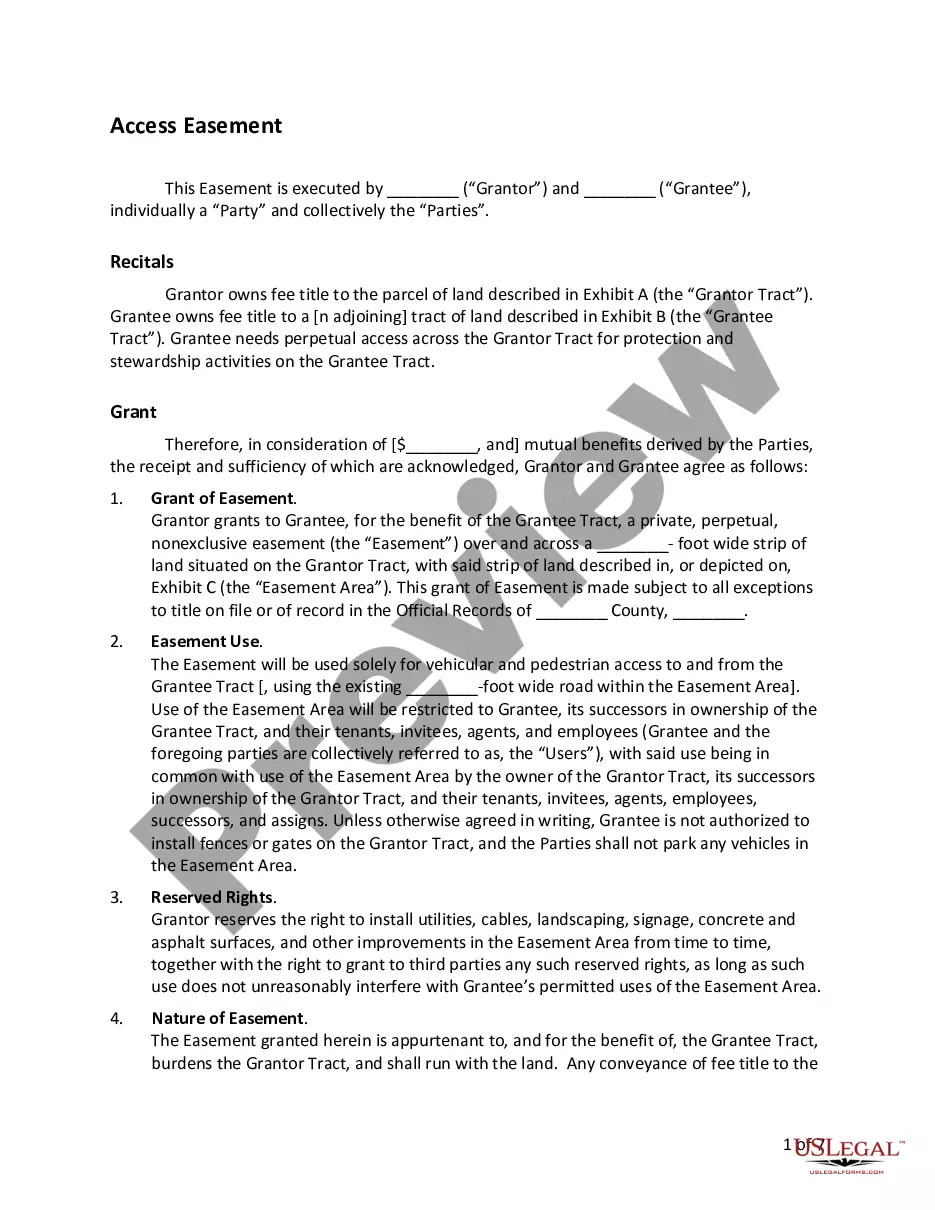
This Access Easement form is an agreement that allows one party to use a specific portion of another party's land for a limited purpose, without transferring ownership or possession of the property. Unlike a lease or rental agreement, this easement grants rights solely for access purposes, making it a useful tool for property owners seeking to ensure passage rights across their land for the benefit of adjacent property owners.
Main sections of this form
- Parties Involved: Names and descriptions of the Grantor (landowner) and Grantee (property user).
- Easement Area: Specification of the land portion being accessed, including dimensions and path.
- Permitted Use: Clear definition of the easement's intended use, such as for pedestrian or vehicular access.
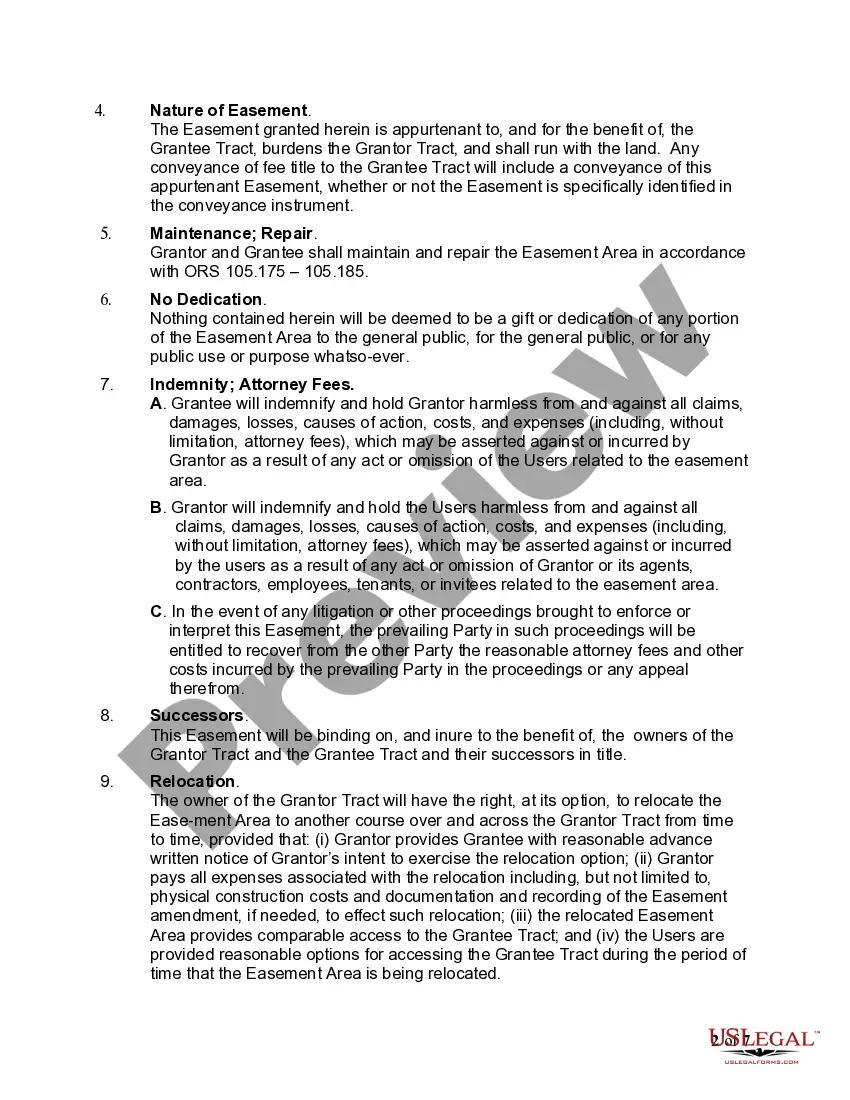
- Reserved Rights: Grantor retains the right to make improvements or installations within the easement area, provided it does not interfere with the Grantee's use.
- Indemnification Clause: Terms detailing liability and responsibility for damages or injuries occurring on or near the easement area.
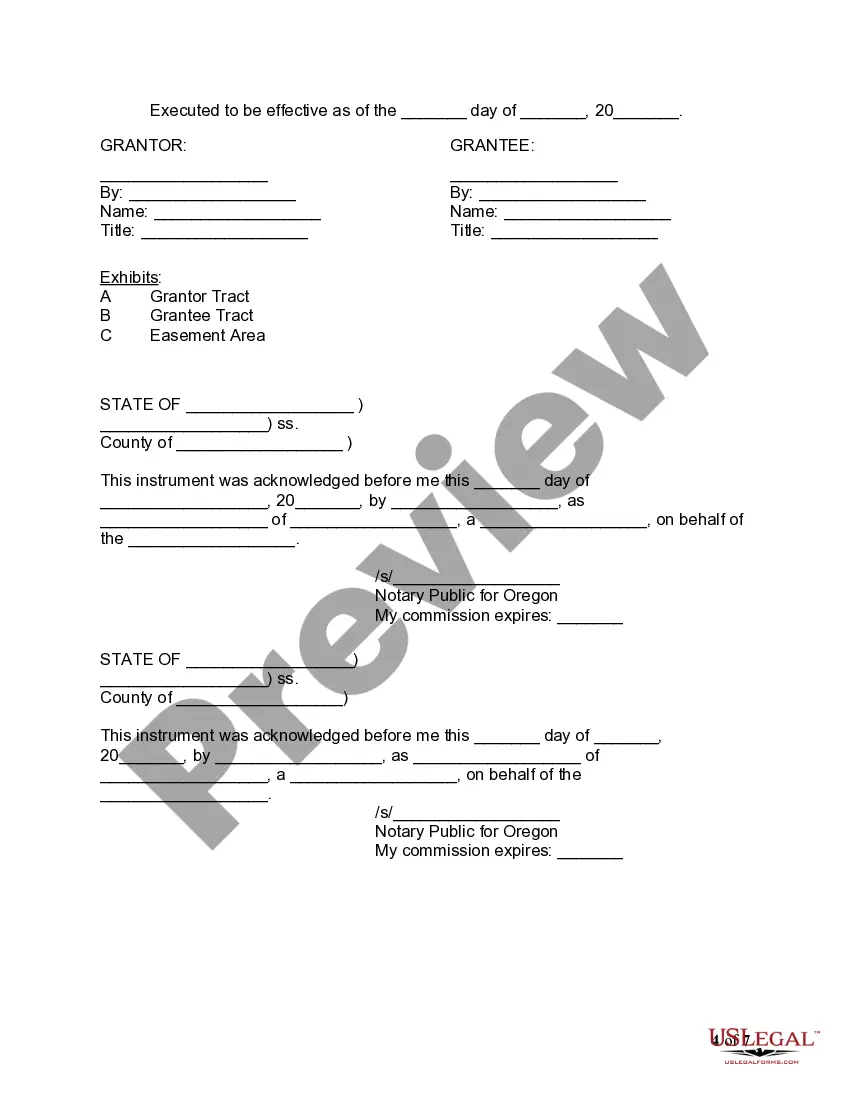
When this form is needed
This form should be used when the owner of a property (Grantor) needs to grant a neighboring property owner (Grantee) access to their land for specific activities, such as maintenance or resource management. It is particularly useful in scenarios where direct access is required for stewardship activities, and proper legal documentation is necessary to protect the interests of both parties.
Intended users of this form
- Property Owners: Grantors who wish to allow neighboring property owners defined access across their land.
- Developers: Individuals or organizations needing to establish legal access to land parcels for development or environmental management.
- Real Estate Professionals: Realtors assisting clients in property transactions that require easement agreements.
How to prepare this document
- Identify the parties: Fill in the names of the Grantor and Grantee along with their respective addresses.
- Specify the property: Define the Grantor Tract and Grantee Tract as outlined in the exhibits to the form.
- Describe the easement area: Indicate the width and location of the easement area as mentioned in the agreement.
- Outline the intended use: Clearly state how the easement area will be used, including any limitations or specific conditions.
- Include terms on maintenance and indemnification: Ensure both parties understand their responsibilities regarding maintenance and liabilities.
Notarization guidance
No, this form does not typically require notarization unless specified by local law. However, having it notarized can add an extra layer of authenticity and may be required for certain transactions.
Get your form ready online
Our built-in tools help you complete, sign, share, and store your documents in one place.
Make edits, fill in missing information, and update formatting in US Legal Forms—just like you would in MS Word.
Download a copy, print it, send it by email, or mail it via USPS—whatever works best for your next step.
Sign and collect signatures with our SignNow integration. Send to multiple recipients, set reminders, and more. Go Premium to unlock E-Sign.
If this form requires notarization, complete it online through a secure video call—no need to meet a notary in person or wait for an appointment.
We protect your documents and personal data by following strict security and privacy standards.

Make edits, fill in missing information, and update formatting in US Legal Forms—just like you would in MS Word.

Download a copy, print it, send it by email, or mail it via USPS—whatever works best for your next step.

Sign and collect signatures with our SignNow integration. Send to multiple recipients, set reminders, and more. Go Premium to unlock E-Sign.

If this form requires notarization, complete it online through a secure video call—no need to meet a notary in person or wait for an appointment.

We protect your documents and personal data by following strict security and privacy standards.
Mistakes to watch out for
- Failing to properly identify the easement area, leading to potential disputes over usage.
- Not clearly defining the permitted uses, which can cause misunderstandings between parties.
- Overlooking to obtain necessary signatures or notarization, which may render the agreement unenforceable.
Advantages of online completion
- Convenience: Access the form from anywhere, anytime, and make edits easily before downloading.
- Reliability: Ensure that the form has been drafted by licensed attorneys, reducing the risk of legal errors.
- Cost-effective: Save on legal fees by using a trusted template instead of hiring an attorney for a simple easement agreement.
Looking for another form?
Form popularity
FAQ
An easement is a nonpossessory interest in the land of another that entitles the easement holder to limited use of another's land without interference. ORS 105.170 (1). An easement holder is a person with a legal right to use the easement and may include the owner of the land across which the easement passes.
The holders of an interest in any easement shall maintain the easement in repair.
An easement is a nonpossessory interest in the land of another that entitles the easement holder to limited use of another's land without interference. ORS 105.170 (1). An easement holder is a person with a legal right to use the easement and may include the owner of the land across which the easement passes.
Can You Build on an Easement? Yes, you can usually build on a property easement, even a utility easement. Yet if you value peace of mind over everything else, not building on that easement is the best way to go. The dominant estate owning the easement may need to access the easement.
Depending on the circumstances and how the easement was created, it is generally the responsibility of the dominant tenement to maintain the easement site in the same way they would manage the rest of the attached land. There is generally no obligation for the servient tenement to maintain the right of carriageway.
Oregon Termination of Easement Information This document allows the owner of the land, burdened by the access and the party that benefits from the access, to sign an agreement releasing the property from such access, under the premises the benefiting party no longer needs access.
Right of Way: The most common type of easement, it provides for access to the dominant estate over the servient estate. Utility: Allows for wires, cable, or pipes to be strung over, placed upon, or buried under the servient estate.