Oregon Petitioner's Respondent's Affidavit Responding to Motion to Modify
About this form
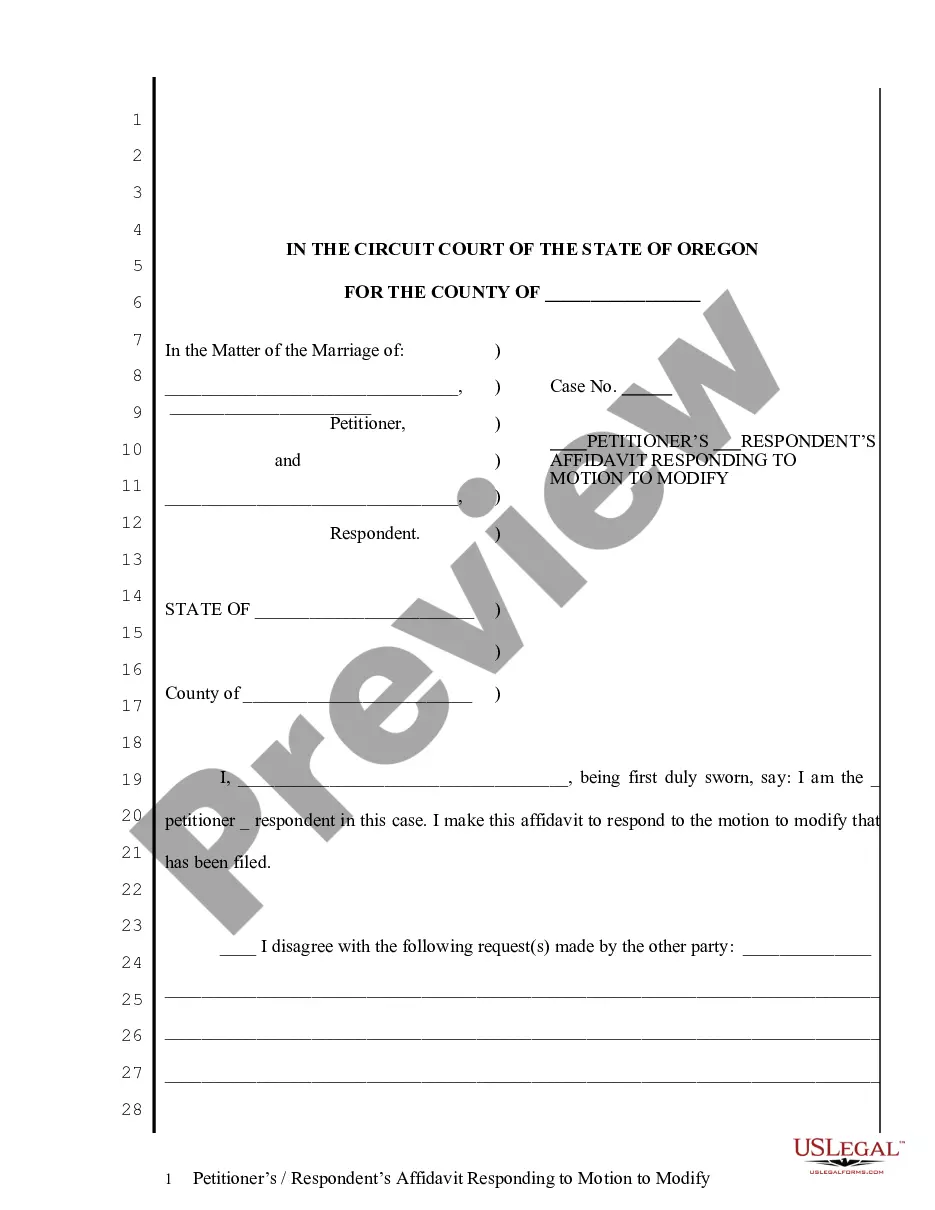
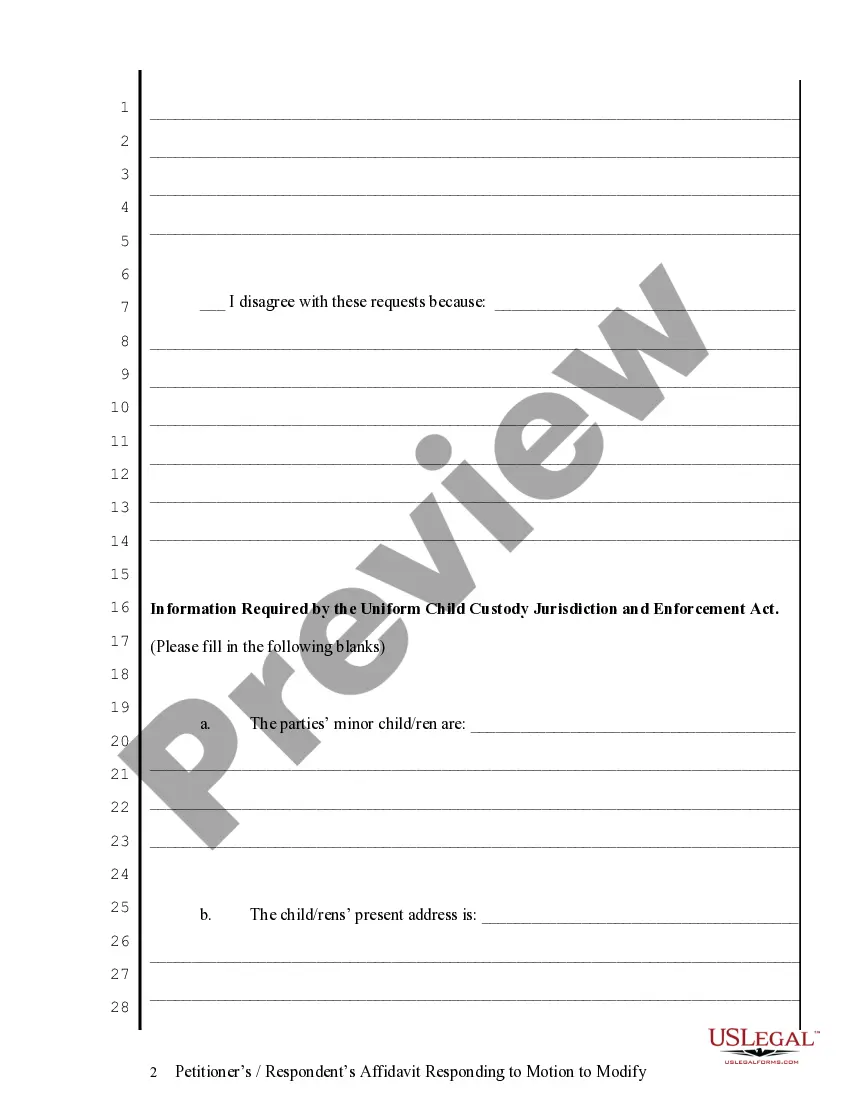
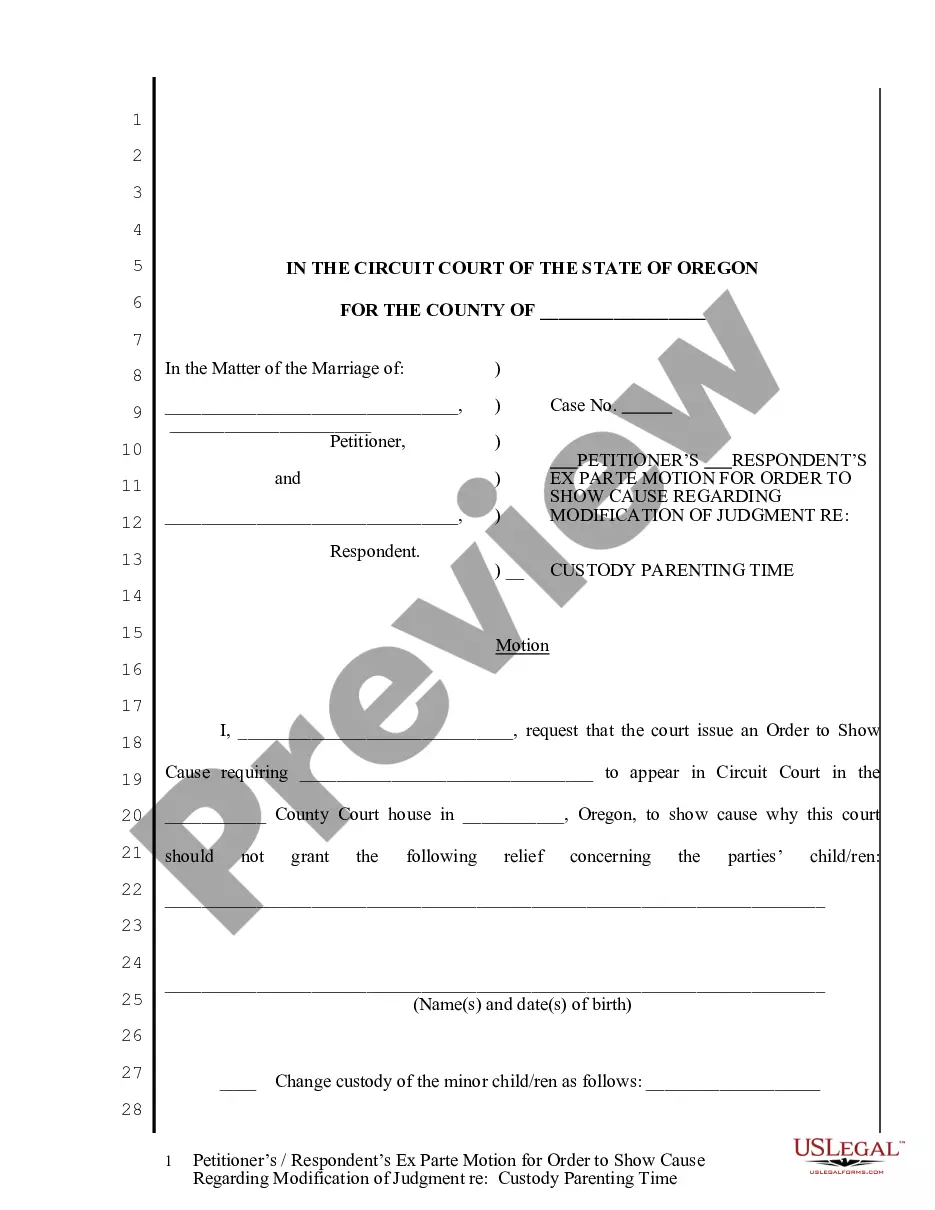
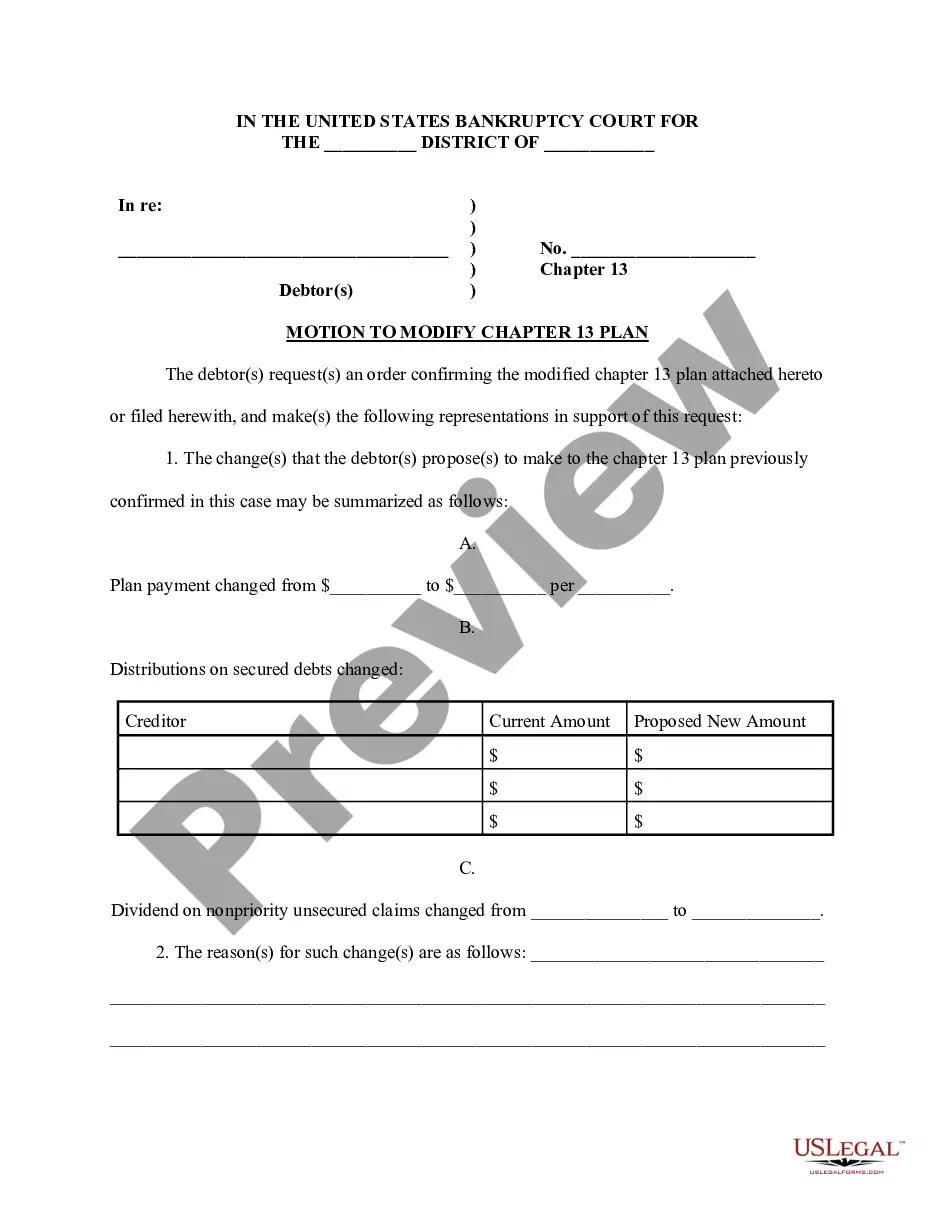
The Petitioner's Respondent's Affidavit Responding to Motion to Modify is a legal document used in family law cases. It serves as a formal response to a motion requesting changes to existing custody or support orders. This affidavit requires the affiant to provide information pertinent to the Uniform Child Custody Jurisdiction and Enforcement Act, distinguishing it from other affidavits that might not address such jurisdictional matters.
Form components explained
- Identifies the parties involved (petitioner and respondent) and the case number.
- Details the affiantâs agreement or disagreement with the requested modifications.
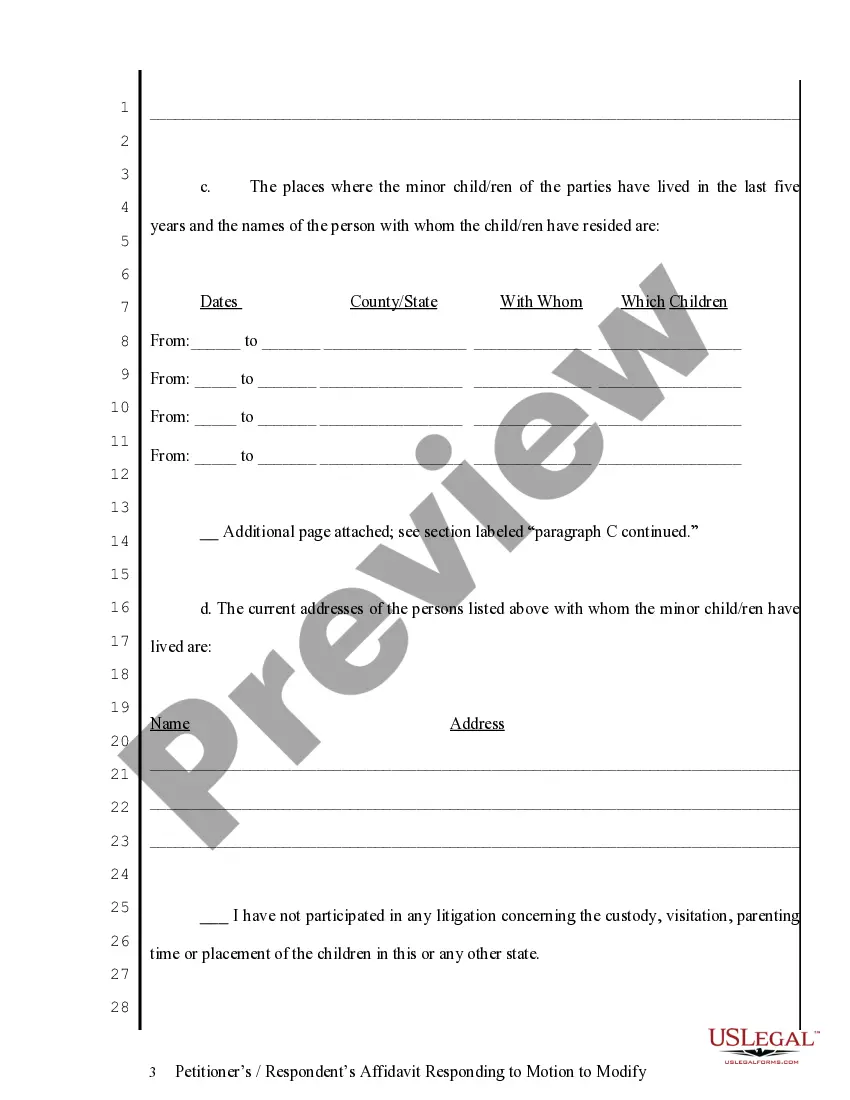
- Collects information about the minor child/ren, including current and past addresses.
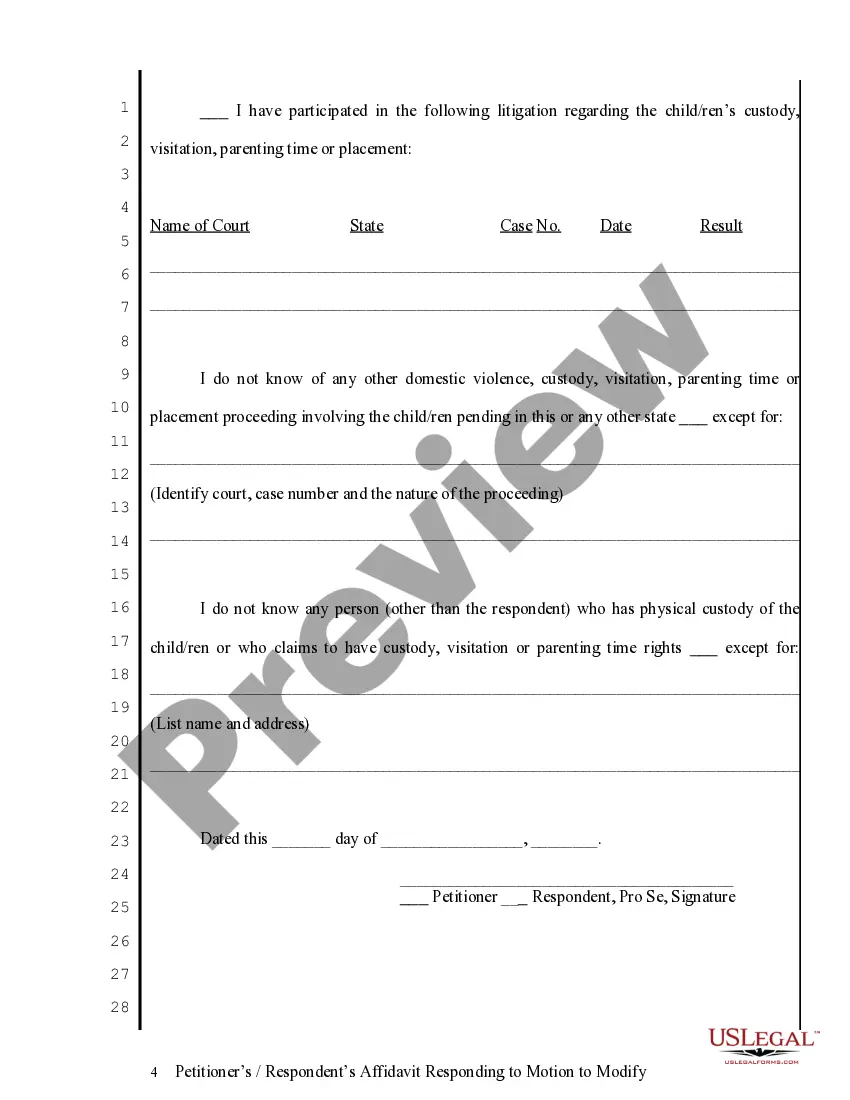
- Requires disclosure of any prior custody or visitation litigation involving the minor child/ren.
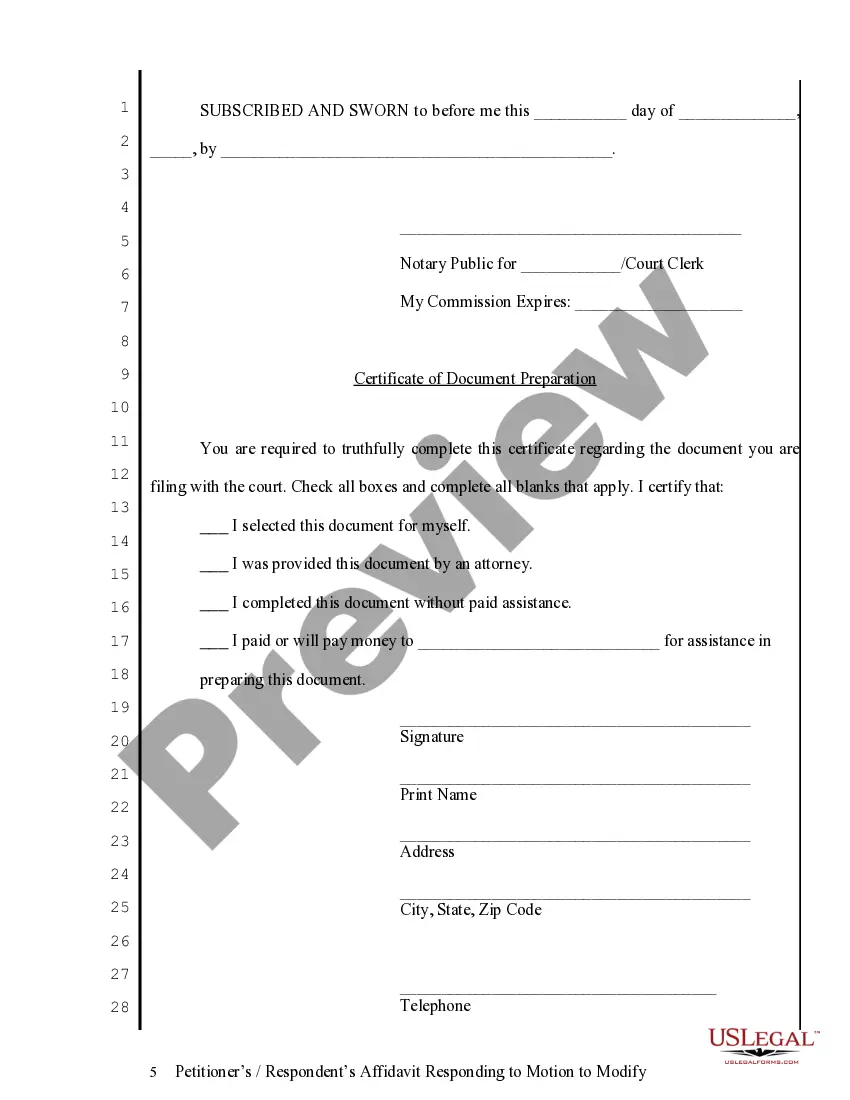
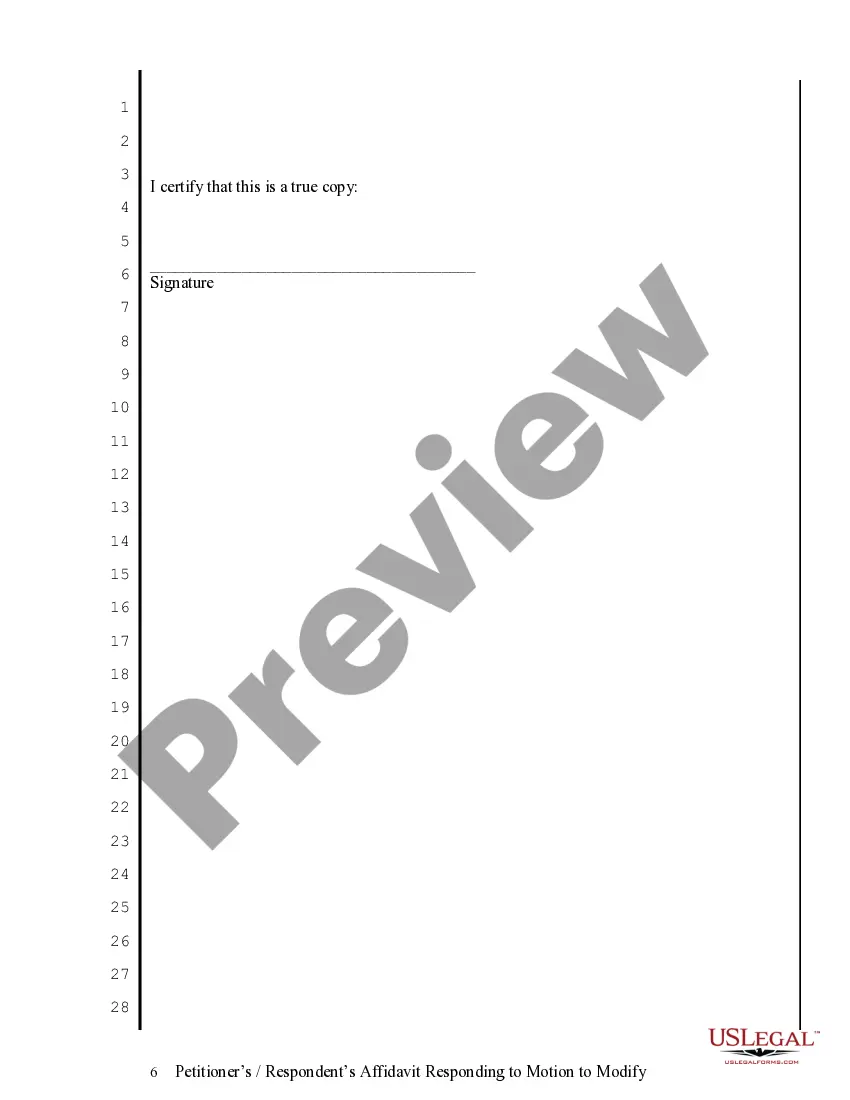
- Includes a certificate of document preparation outlining who assisted with the form's completion.
When this form is needed
This affidavit is necessary when a respondent needs to formally contest a motion to modify custody, visitation, or support agreements. It may be utilized during family court proceedings where changes are being proposed to existing arrangements for minor children. Utilizing this affidavit can help ensure that your perspective is formally recognized in the court's decision-making process.
Who can use this document
- Individuals responding to a motion to modify custody or support orders.
- Respondents who need to document their position regarding the requested changes.
- Those involved in custody or visitation disputes under the jurisdiction of Oregon courts.
Steps to complete this form
- Identify yourself as the petitioner or respondent in the case.
- Clearly state your agreement or disagreement with the motions made by the other party.
- Provide complete information about the minor child/ren, including their addresses and living history.
- Disclose any prior litigation regarding custody or visitation concerning the children.
- Sign and date the affidavit in the presence of a notary public or court clerk.
Notarization guidance
Yes, this form must be notarized to be legally valid. This ensures the authenticity of the signatures and the information provided. US Legal Forms offers integrated online notarization, available 24/7, allowing for secure video calls with a notary public without the need to travel.
Get your form ready online
Our built-in tools help you complete, sign, share, and store your documents in one place.
Make edits, fill in missing information, and update formatting in US Legal Forms—just like you would in MS Word.
Download a copy, print it, send it by email, or mail it via USPS—whatever works best for your next step.
Sign and collect signatures with our SignNow integration. Send to multiple recipients, set reminders, and more. Go Premium to unlock E-Sign.
If this form requires notarization, complete it online through a secure video call—no need to meet a notary in person or wait for an appointment.
We protect your documents and personal data by following strict security and privacy standards.

Make edits, fill in missing information, and update formatting in US Legal Forms—just like you would in MS Word.

Download a copy, print it, send it by email, or mail it via USPS—whatever works best for your next step.

Sign and collect signatures with our SignNow integration. Send to multiple recipients, set reminders, and more. Go Premium to unlock E-Sign.

If this form requires notarization, complete it online through a secure video call—no need to meet a notary in person or wait for an appointment.

We protect your documents and personal data by following strict security and privacy standards.
Typical mistakes to avoid
- Failing to provide complete information about the minor child/ren's past addresses.
- Not specifying which requests you disagree with in the affidavit.
- Omitting prior litigation instances, which can impact the court's consideration.
- Neglecting to have the document notarized when required.
Advantages of online completion
- Easy to complete with guided fields and prompts.
- Access to legal forms drafted by licensed attorneys for accuracy and compliance.
- Convenient download options, granting control over printing and filing.
- Edit and fill the form at your own pace, reducing the chance of errors.
Looking for another form?

Form popularity
FAQ
Oregon Custody Law Does Not Favor Either Parent Fathers' rights in Oregon are viewed as equal to mothers' rights. Instead, according to Oregon custody law, courts largely base their decisions on what is in the best interests of the child.
Children are not allowed to decide, only the court can modify visitation/parenting plans. Children over 14 are considered to have some maturity ad the court may listen to their testimony but generally speaking the court frowns on parents...
What is contempt of court? Contempt of court is a declaration by a judge that you have disobeyed a court order. The court order may describe and mandate a set parenting plan, spousal and child support payments, and more. If any part of the court order is disobeyed that person can be punished.
Fill out your court forms. Have your forms reviewed. Make at least 2 copies of all your forms. File your forms with the court clerk. Get your court date or mediation date. Serve your papers on the other parent. File your Proof of Service.
Both parents can agree or either parent can file a motion to modify. For one parent to change custody or support he or she must show that there has been a substantial change of circumstances since the last custody or support order. The change in custody or parenting time must also be in the best interest of the child.
The Oregon Court of Appeals reversed. Noting that contempt is not a crime, and a finding of contempt - even a punitive contempt - is not a conviction, the Court held that contempt of court adjudication is not an offense or conviction within the meaning of ORS 137.225(6).
Fill out your court forms. Have your forms reviewed. Make at least 2 copies of all your forms. File your forms with the court clerk. Serve your papers on the other parent. File your Proof of Service. Go to your court hearing.
Depending on the infraction, contempt of court consequences can include fines, compensatory visitation, a modification to the custody arrangement, and in some instances even jail time. In most cases, if someone is held in contempt, the court will first give them the opportunity to make amends for the violation.
The legal definition of an unfit parent is when the parent through their conduct fails to provide proper guidance, care, or support. Also, if there is abuse, neglect, or substance abuse issues, that parent will be deemed unfit.