Retail Internet Site Agreement
About this form
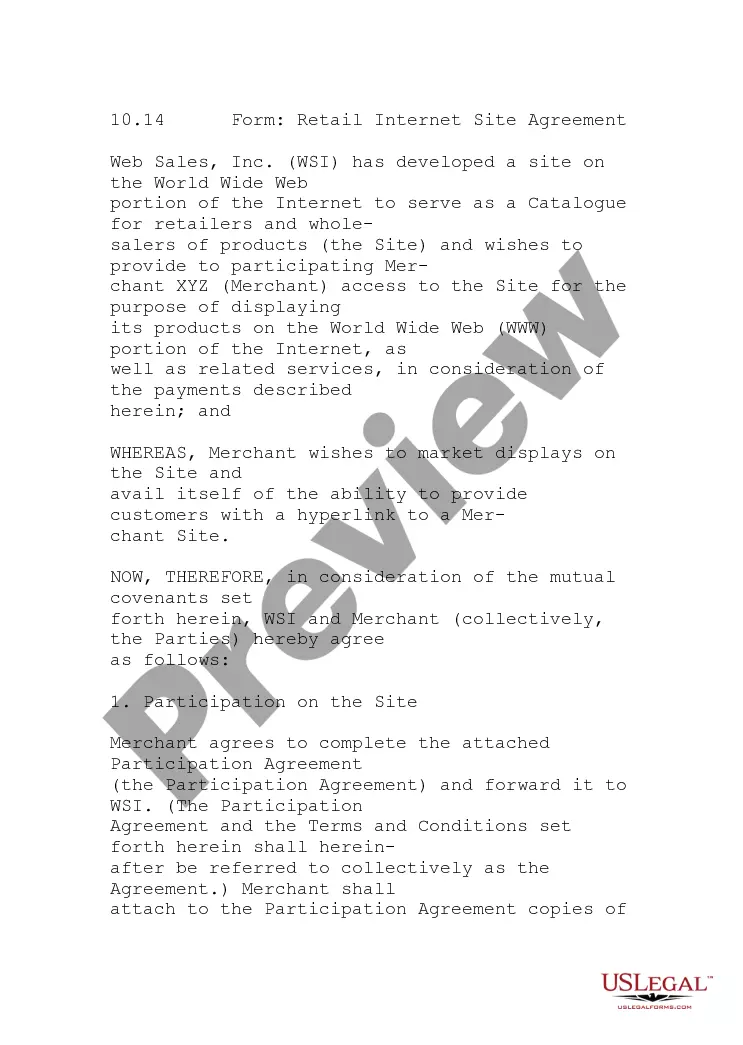
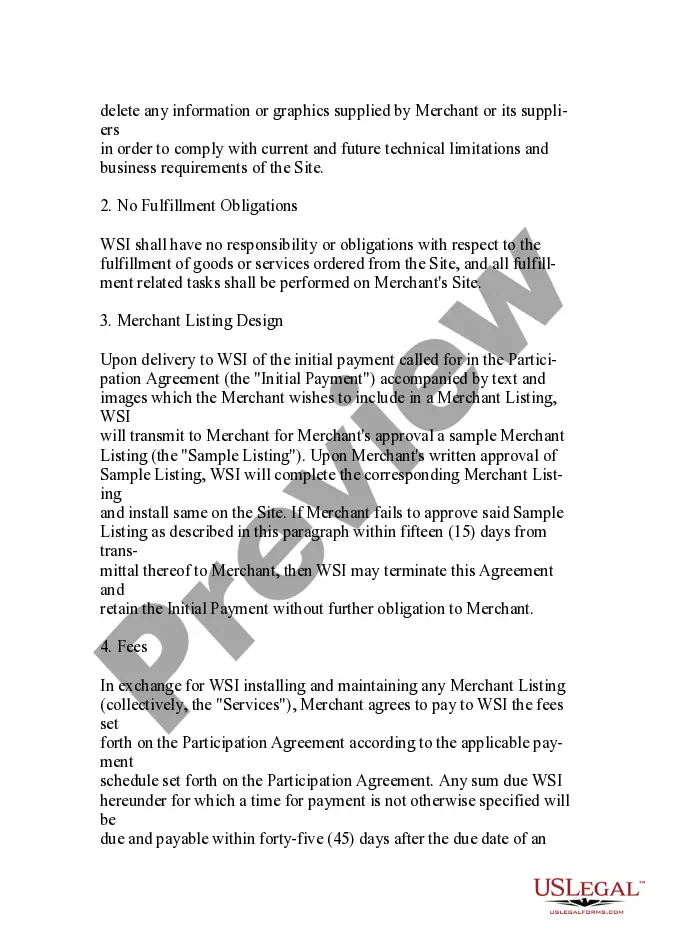
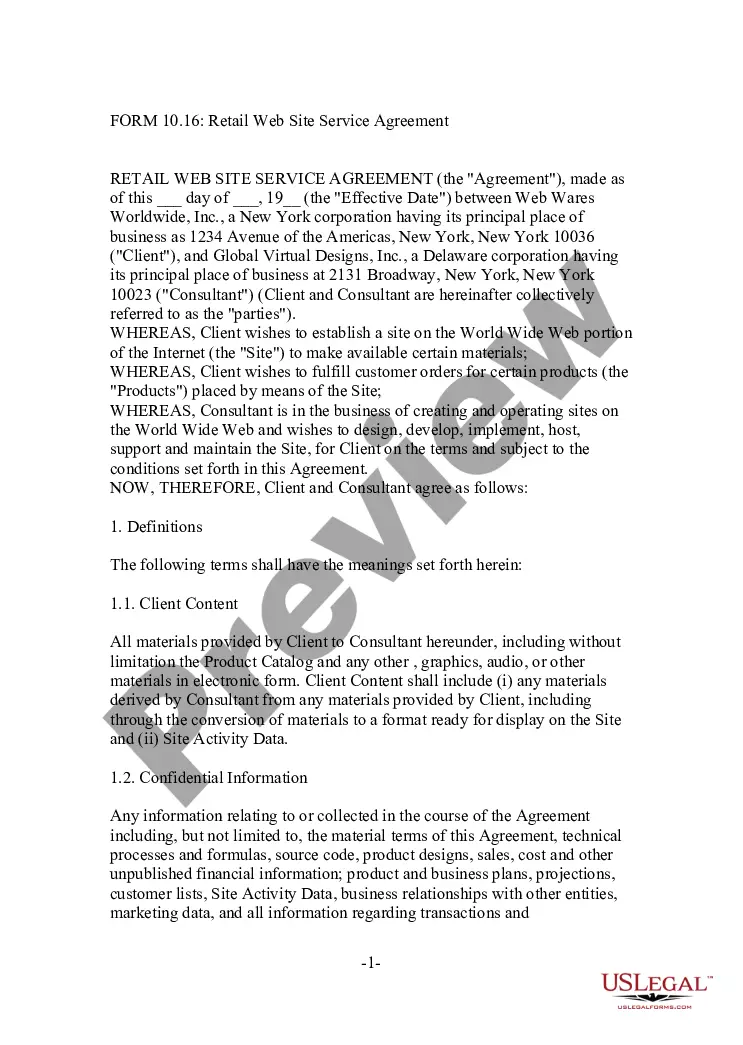
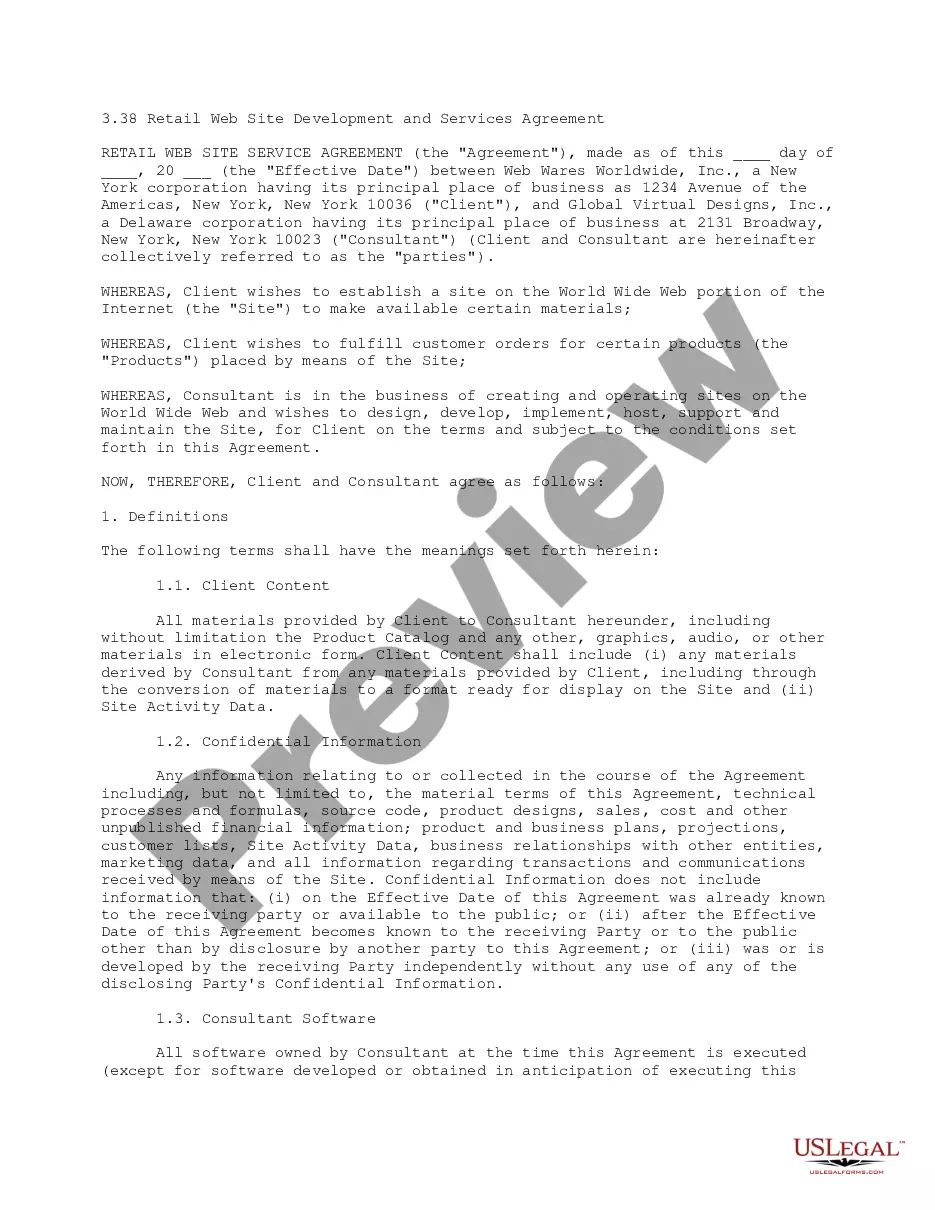
The Retail Internet Site Agreement is a legal document that governs the relationship between Web Sales, Inc. (WSI) and a participating merchant. It outlines the terms under which the merchant can showcase their products online through WSI's platform. This form helps streamline the process of listing products on the internet and provides a framework for the mutual obligations of both parties, ensuring clarity in the terms of service. Unlike more generic agreements, this specialized form is tailored for internet and technology businesses, allowing for adaptability based on specific needs.
What’s included in this form
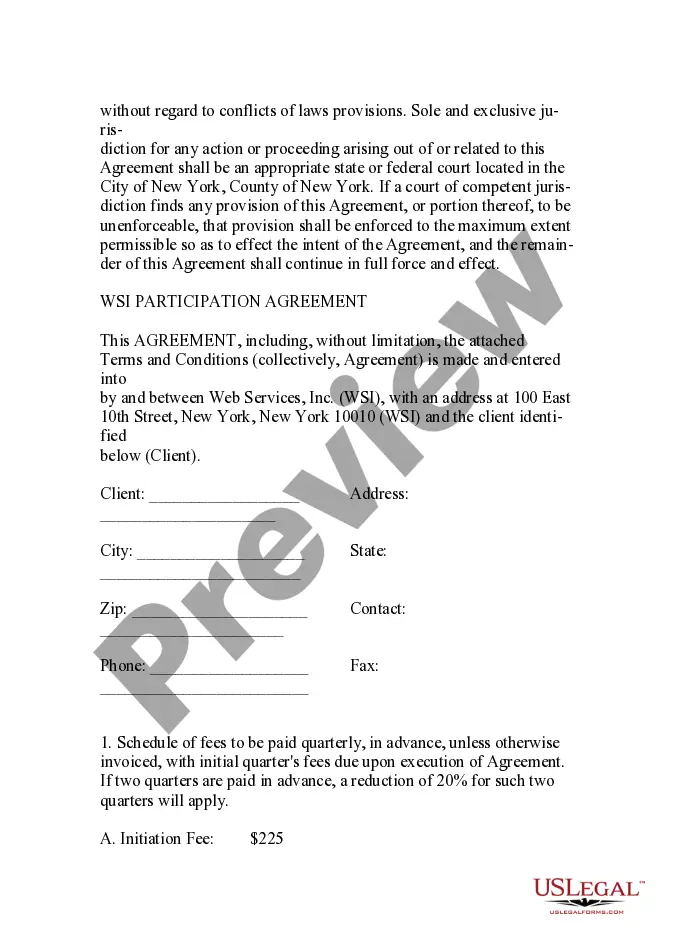
- Participation Agreement: Details the merchant's commitment and provides a space to attach product listings.
- No Fulfillment Obligations: Specifies that WSI is not responsible for order fulfillment.
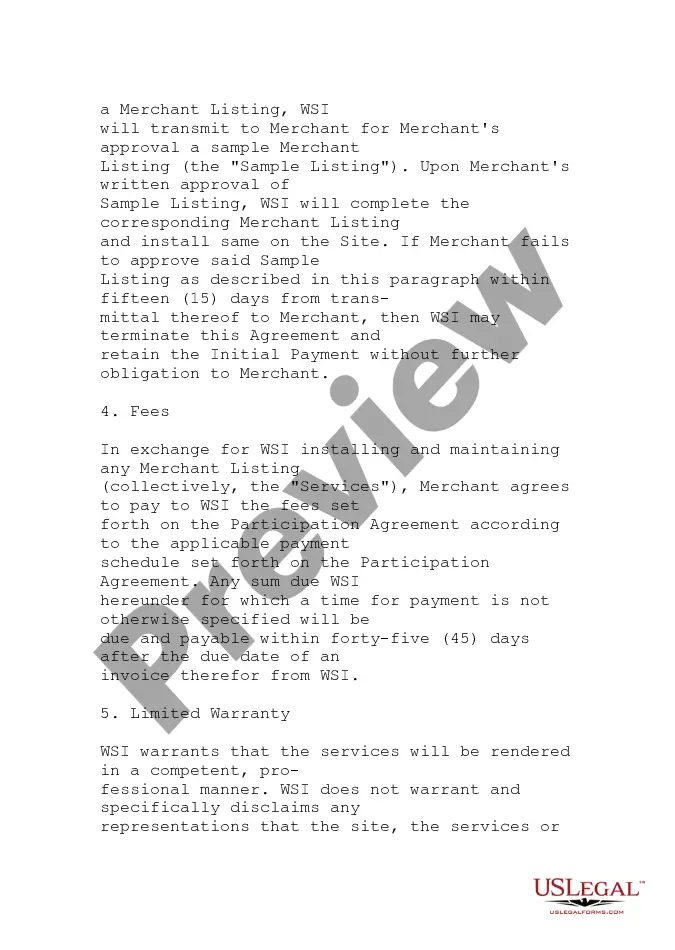
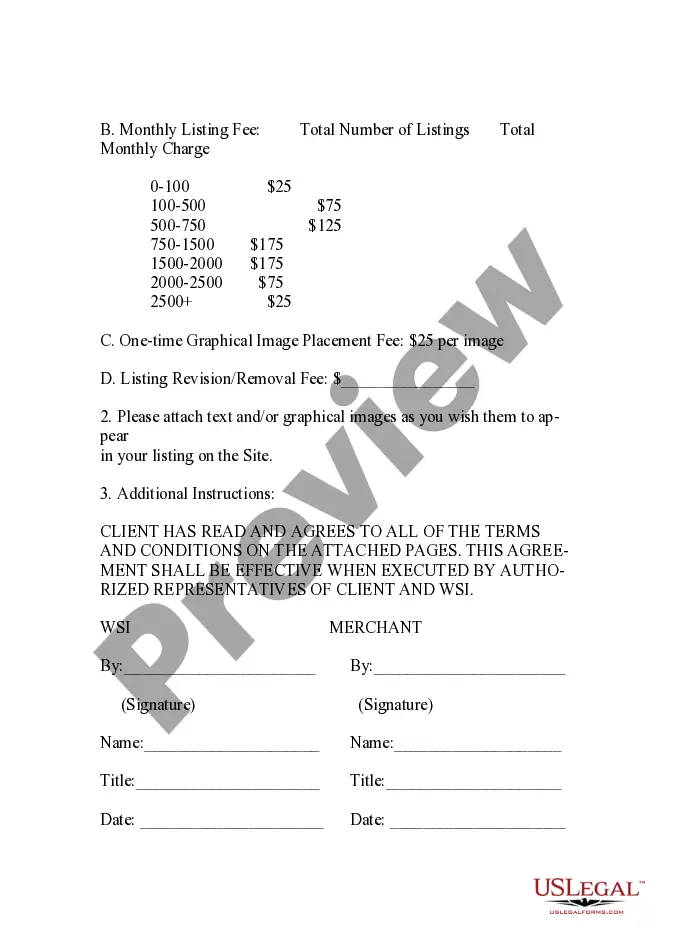
- Fee Structure: Outlines the financial obligations of the merchant to WSI, including initiation and monthly listing fees.
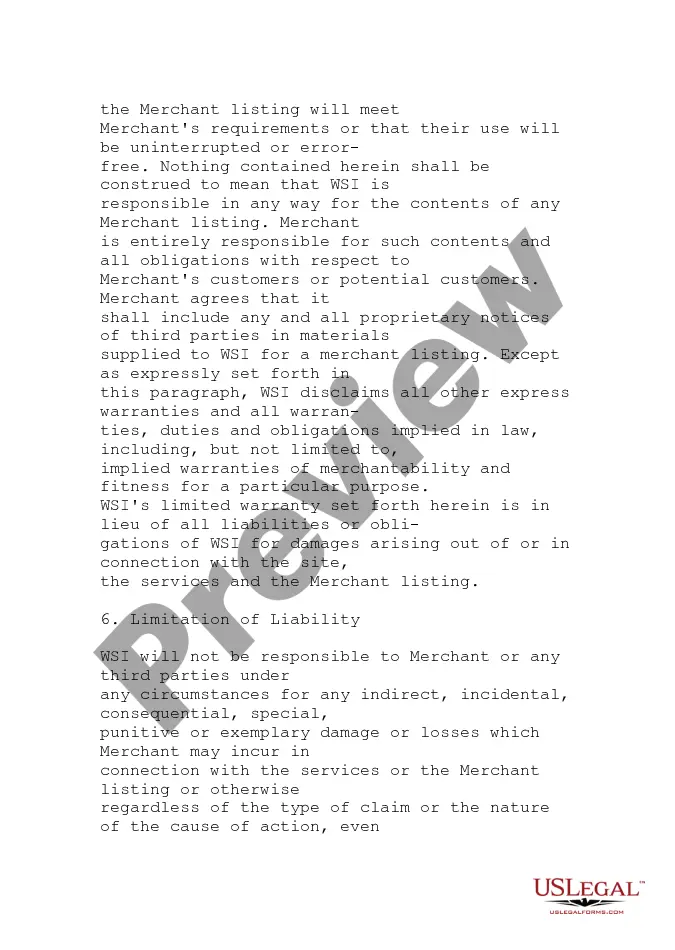
- Limited Warranty: Defines the scope of services and disclaims additional responsibilities by WSI.
- Confidentiality Clause: Ensures that user data remains private and not disclosed to third parties.
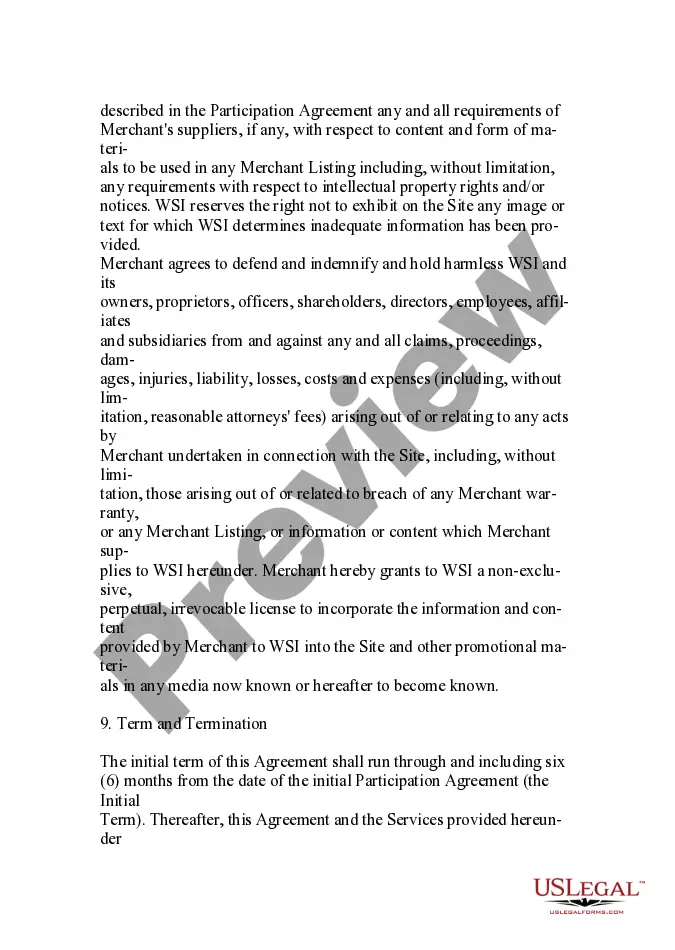
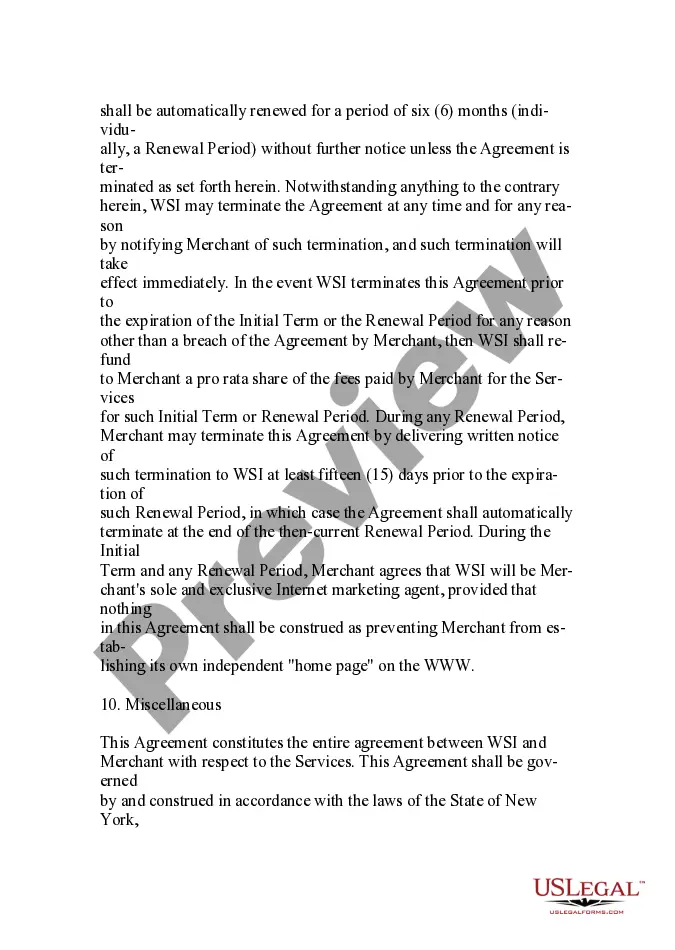
- Termination Terms: Describes the duration of the agreement and conditions under which it may be terminated.
When this form is needed
This form is essential for businesses that wish to leverage an existing online platform to market their products. Merchants should use this agreement when they want to gain visibility on the internet without the burden of managing online sales architecture themselves. It is particularly useful for retailers looking to reach a wider audience or wholesalers wanting to showcase their product catalog online.
Intended users of this form
- Retailers seeking to display their products online without creating their own e-commerce site.
- Wholesalers who want to make their product offerings accessible to potential buyers via the internet.
- Businesses looking to benefit from a streamlined advertising and sales process through an established online network.
- Any merchant that wishes to formalize an agreement with WSI regarding the usage of its internet site for marketing purposes.
Instructions for completing this form
- Identify the parties involved: Fill in the details of WSI and the Merchant.
- Attach the Participation Agreement: Include the necessary product listings and graphics as required.
- Specify the fees: Enter the agreed-upon fees according to the Participation Agreement structure.
- Review the Sample Listing: Approve or request modifications to the sample listing as transmitted by WSI.
- Sign and date the agreement: Ensure all representatives from both parties sign to validate the contract.
Does this document require notarization?
Notarization is not commonly needed for this form. However, certain documents or local rules may make it necessary. Our notarization service, powered by Notarize, allows you to finalize it securely online anytime, day or night.
Get your form ready online
Our built-in tools help you complete, sign, share, and store your documents in one place.
Make edits, fill in missing information, and update formatting in US Legal Forms—just like you would in MS Word.
Download a copy, print it, send it by email, or mail it via USPS—whatever works best for your next step.
Sign and collect signatures with our SignNow integration. Send to multiple recipients, set reminders, and more. Go Premium to unlock E-Sign.
If this form requires notarization, complete it online through a secure video call—no need to meet a notary in person or wait for an appointment.
We protect your documents and personal data by following strict security and privacy standards.

Make edits, fill in missing information, and update formatting in US Legal Forms—just like you would in MS Word.

Download a copy, print it, send it by email, or mail it via USPS—whatever works best for your next step.

Sign and collect signatures with our SignNow integration. Send to multiple recipients, set reminders, and more. Go Premium to unlock E-Sign.

If this form requires notarization, complete it online through a secure video call—no need to meet a notary in person or wait for an appointment.

We protect your documents and personal data by following strict security and privacy standards.
Avoid these common issues
- Failing to provide complete product listings or graphics with the Participation Agreement.
- Not reviewing the Sample Listing within the stipulated time, which could lead to contract termination.
- Overlooking the fee schedule and missing payment deadlines, which can result in late fees.
- Ignoring the confidentiality clause, which can lead to unintentional data breaches.
Advantages of online completion
- Convenience: Easily accessible for download and completion at any time, without the need for in-person meetings.
- Flexibility: The form allows for customization to fit specific business needs.
- Time-saving: Streamlines the process of listing products online, allowing merchants to focus on sales.
- Cost-effective: Reduces the need for extensive legal consultations by providing a template drafted by professionals.
Legal use & context
- The Retail Internet Site Agreement is enforceable as a standard contract in business transactions.
- Each party must adhere to the terms outlined to ensure proper legal standing.
- This agreement provides clarity regarding liability and responsibilities in an online retail environment.
Main things to remember
- The Retail Internet Site Agreement is essential for merchants wishing to advertise products online efficiently.
- Understanding the fee structure and compliance with timelines is crucial to maintain the agreement.
- Confidentiality and liability clauses protect both WSI and the merchant's interests.
- This adaptable form can be utilized by various types of businesses across multiple jurisdictions.
Looking for another form?
Form popularity
FAQ
Display your Terms and Conditions agreement in the following places, where applicable: Via a static link to your website footer. In a menu within your mobile app (typically in an About, Legal, Info menu) On your "Create Account" or similar type of page.
Writing Your Terms and Conditions. Start with a statement regarding the acceptance of your terms and conditions. Your very first paragraph should always be an acceptance of terms clause. This clause ensures that your users understand that by using your service they are accepting the terms and conditions.
A brief introduction. The effective date. Jurisdiction/governing law. Link to your Privacy Policy. Contact information. Limitation of liability and disclaimer of warranties. Rules of conduct. User restrictions.
Limitations of liability. Intellectual property/trademark protection. Pricing and payment terms, including shipping, returns, exchanges and cancellations. Product information. Dispute resolution.
Step 1: Decide on your niche. Step 2: Choose between dropshipping or holding your own products. Step 3: Brainstorm a business name and register your domain name. Step 4: Choose products to sell. Step 5: Create your website with an online store builder. Step 6: Set up a company and get a sales tax ID.
Limitations of liability. Intellectual property/trademark protection. Pricing and payment terms, including shipping, returns, exchanges and cancellations. Product information. Dispute resolution.
A Privacy Policy explains to your users how you'll be using their personal data, what steps you've taken to keep it safe, and how they can exercise their rights over their personal data.Terms & Conditions set out what's expected from both you and your users.
A brief introduction. The effective date. Jurisdiction/governing law. Link to your Privacy Policy. Contact information. Limitation of liability and disclaimer of warranties. Rules of conduct. User restrictions.
Terms and Conditions Overview While most websites seem to have one, there's actually no legal requirement for defining Terms and Conditions.These pages can limit your liability should a customer take you to court, as well as protect your rights to the content contained in your website.