Oregon Brick Mason Contract for Contractor
About this form
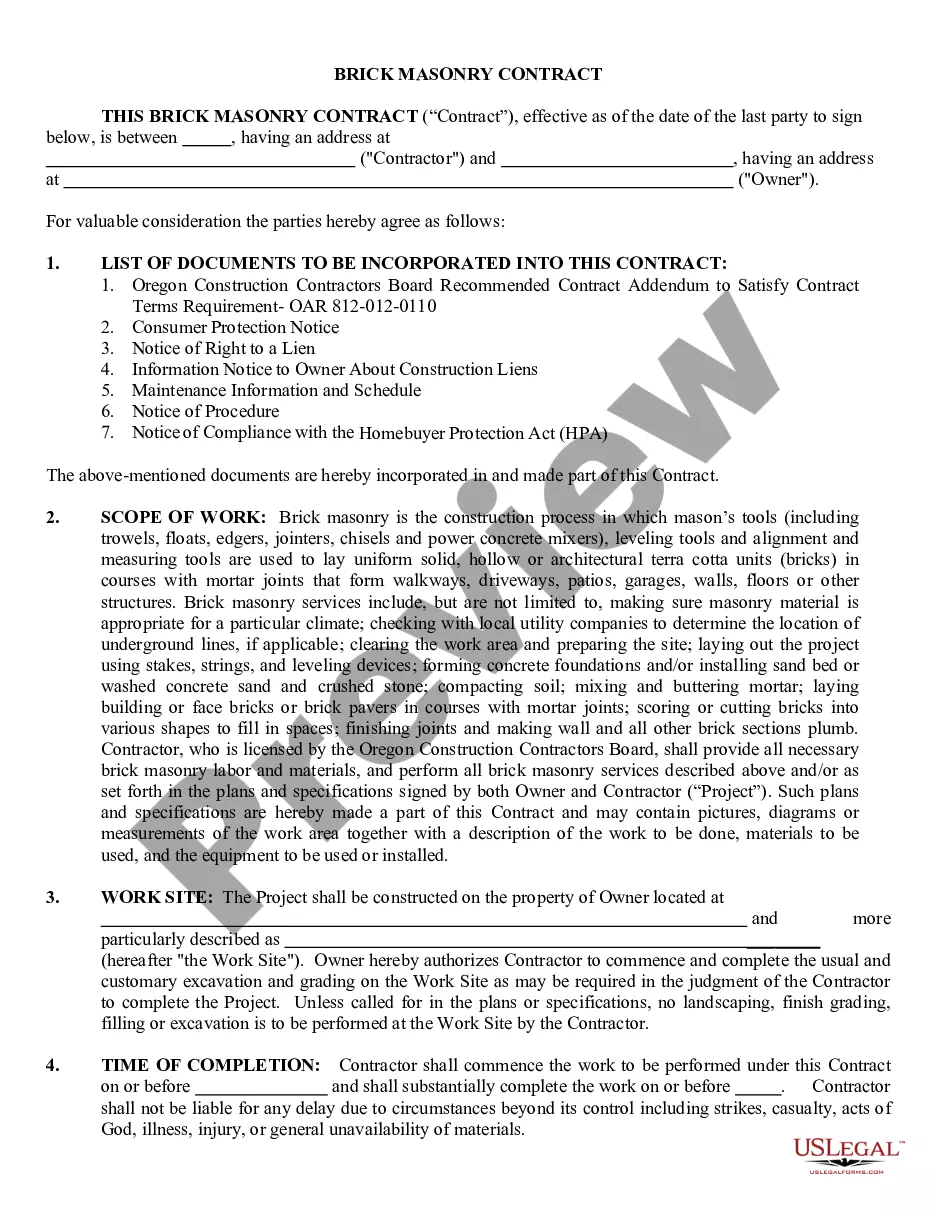
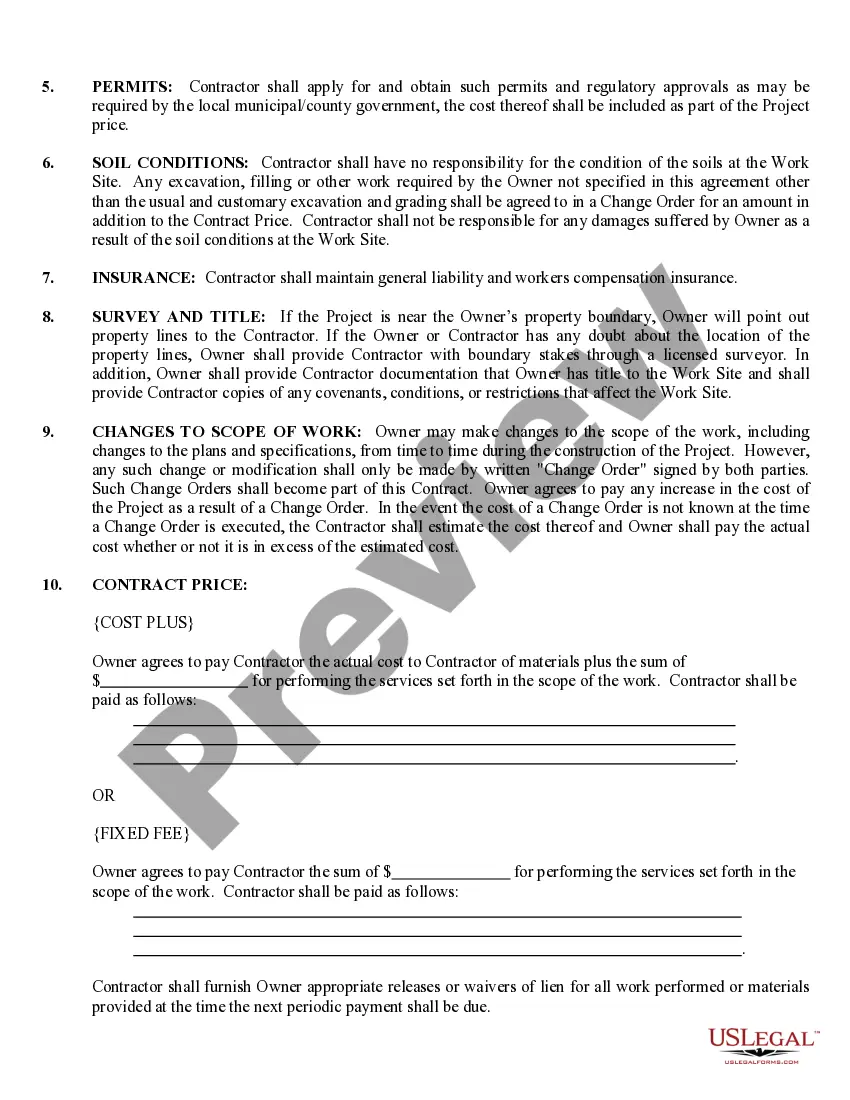
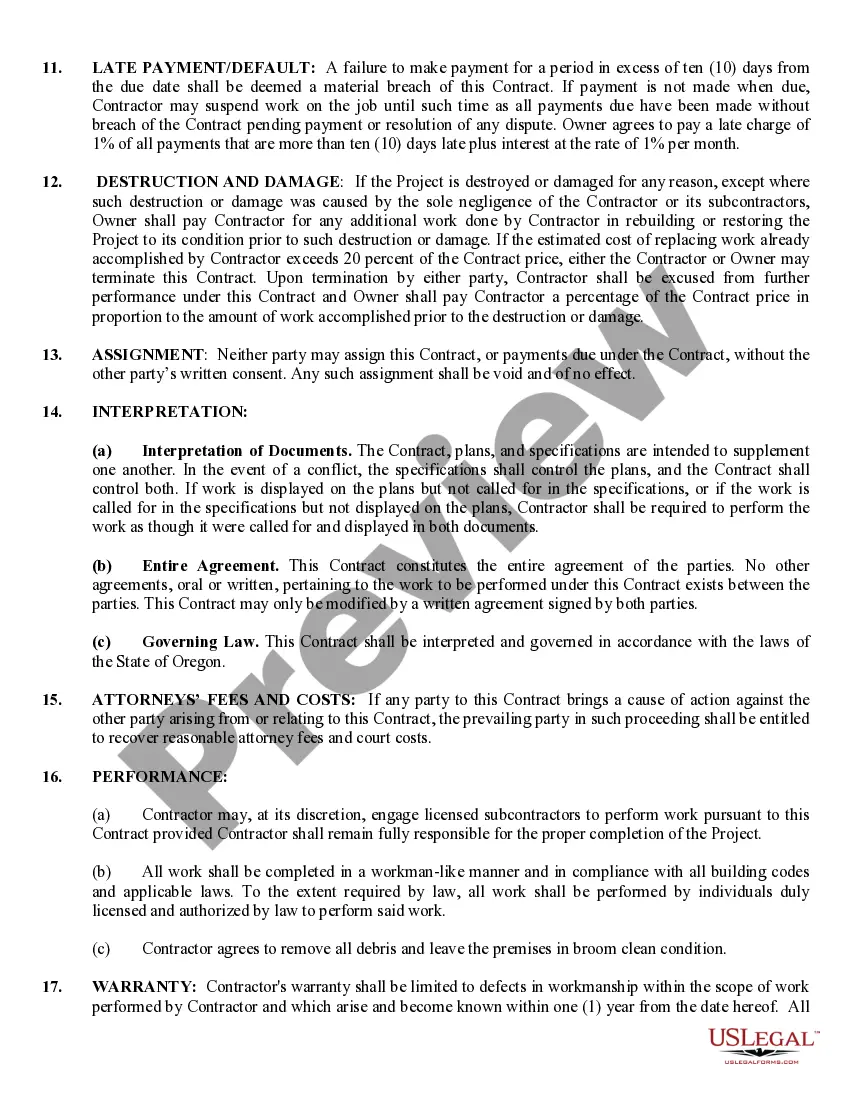
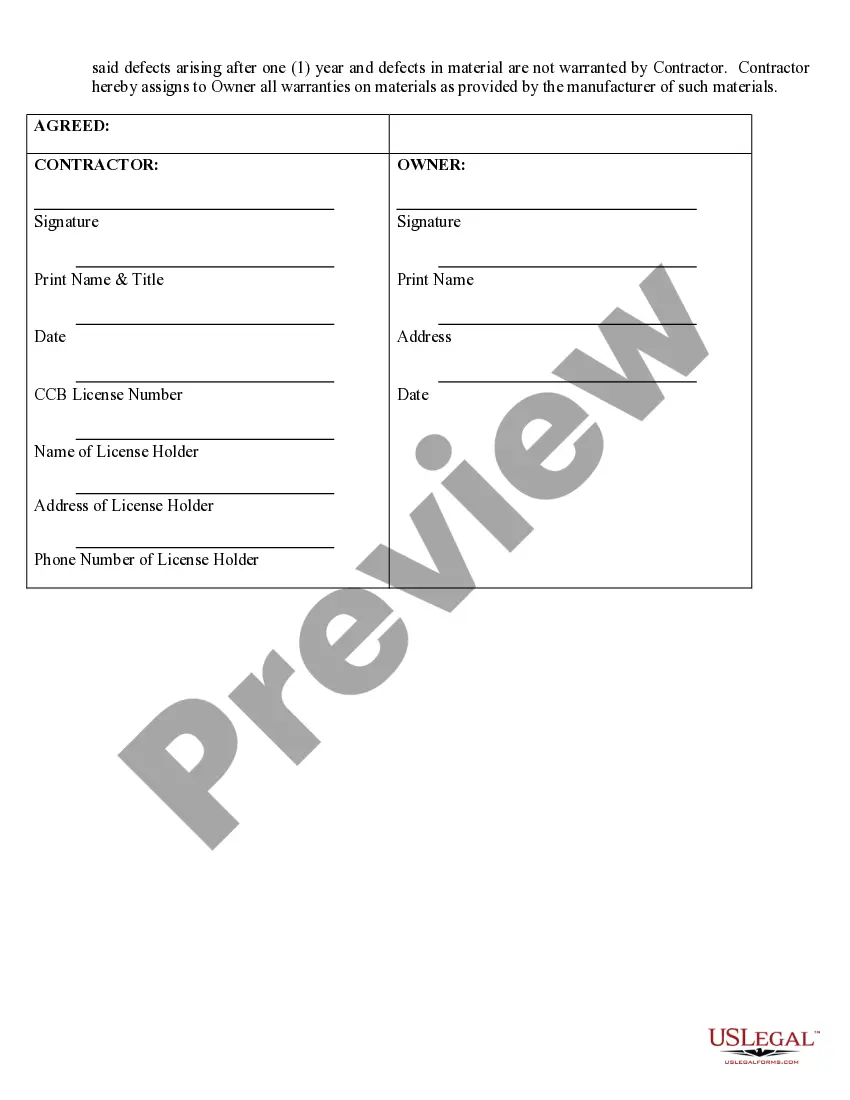
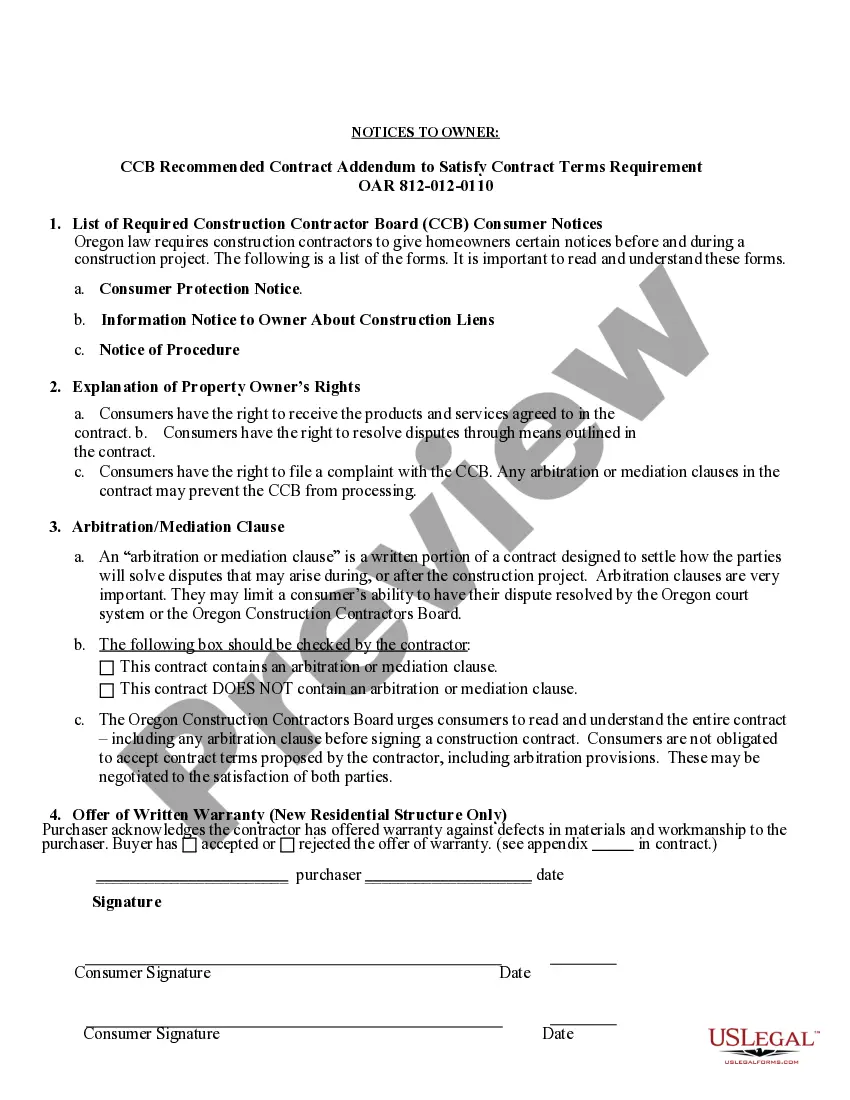
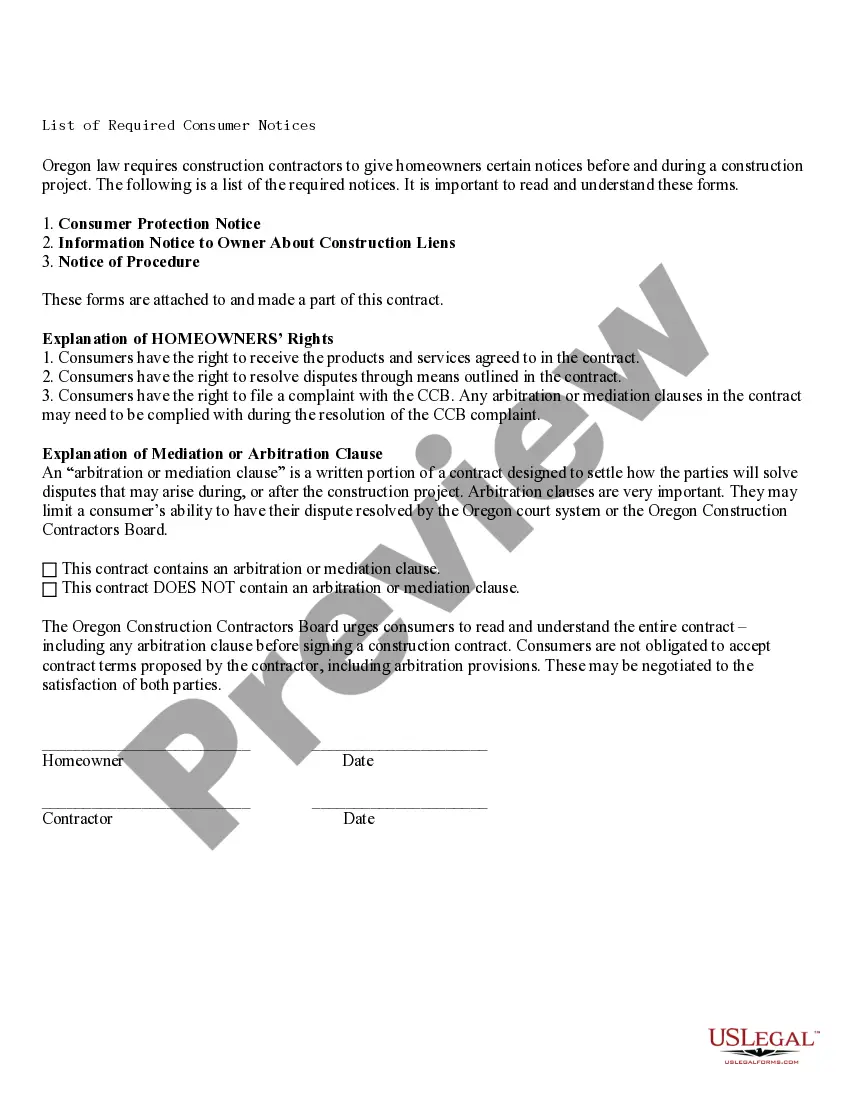
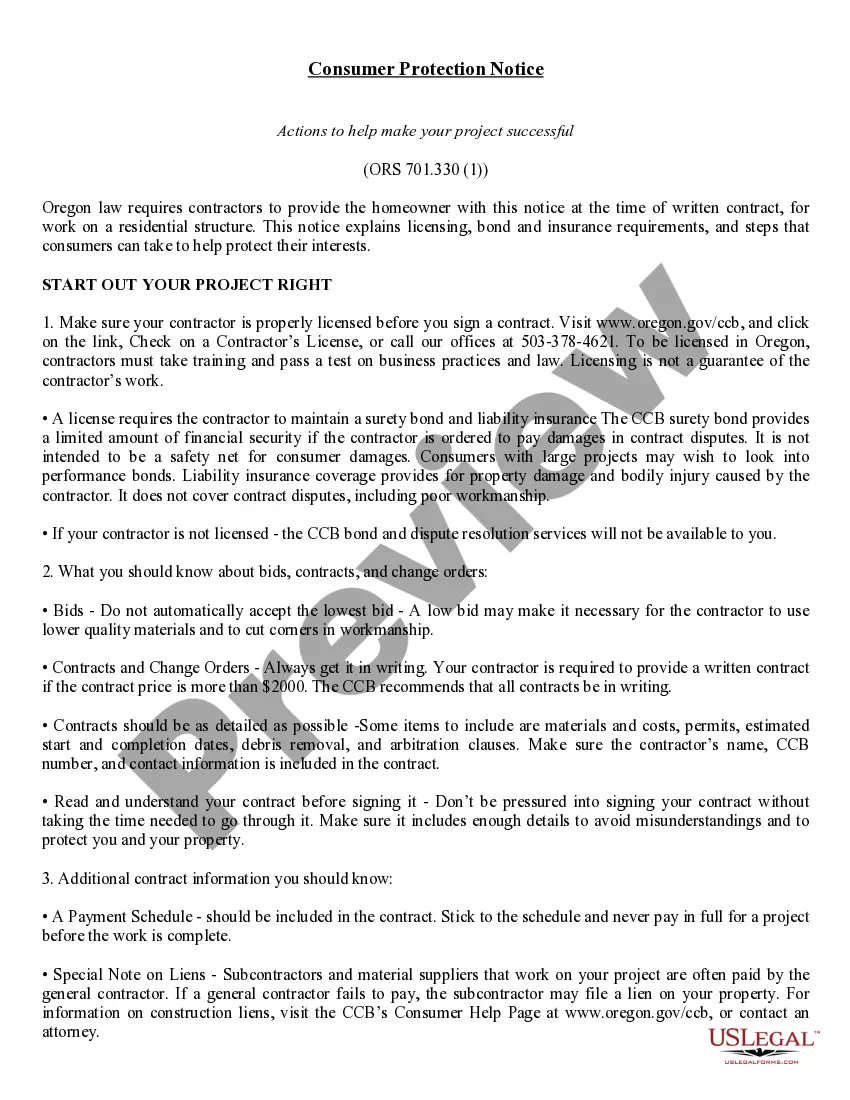
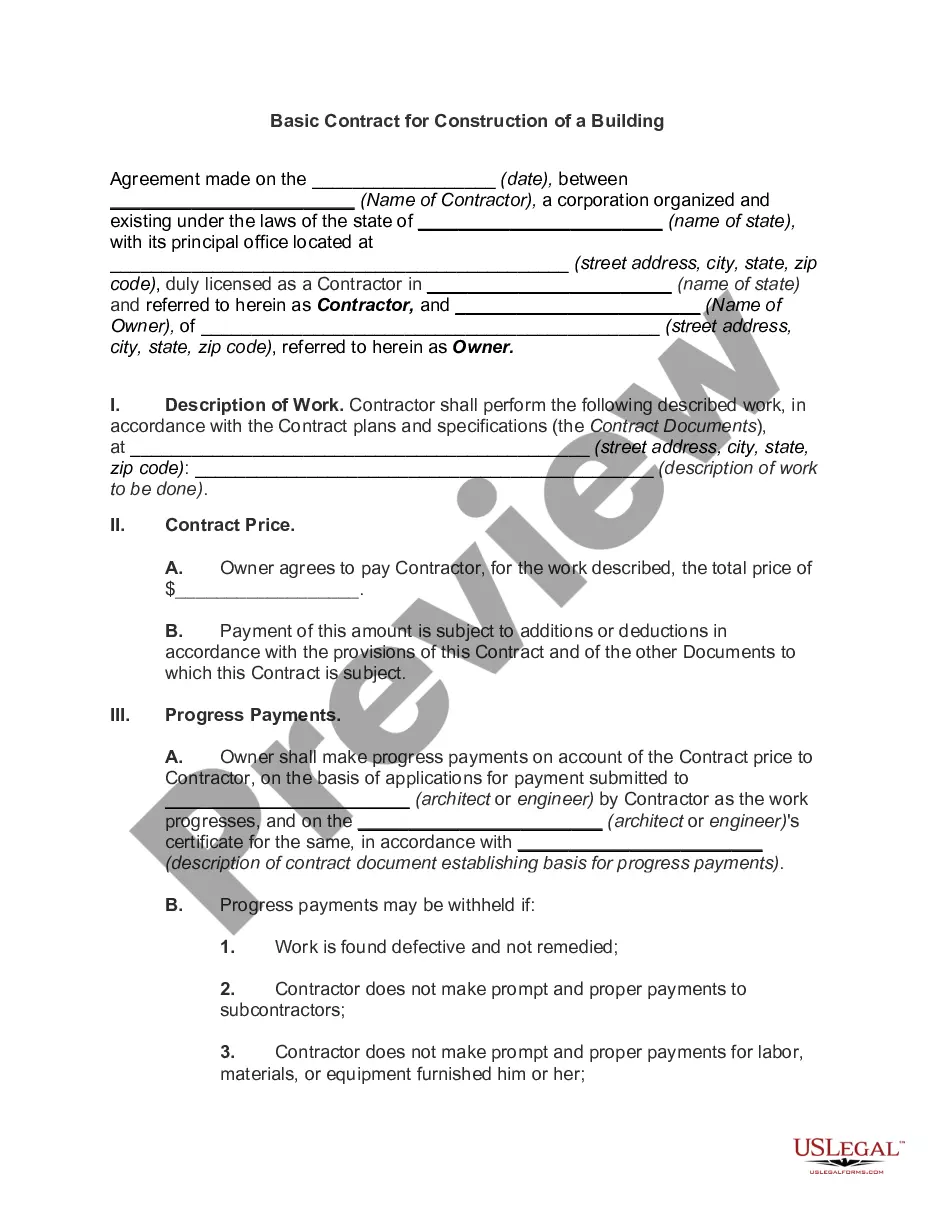
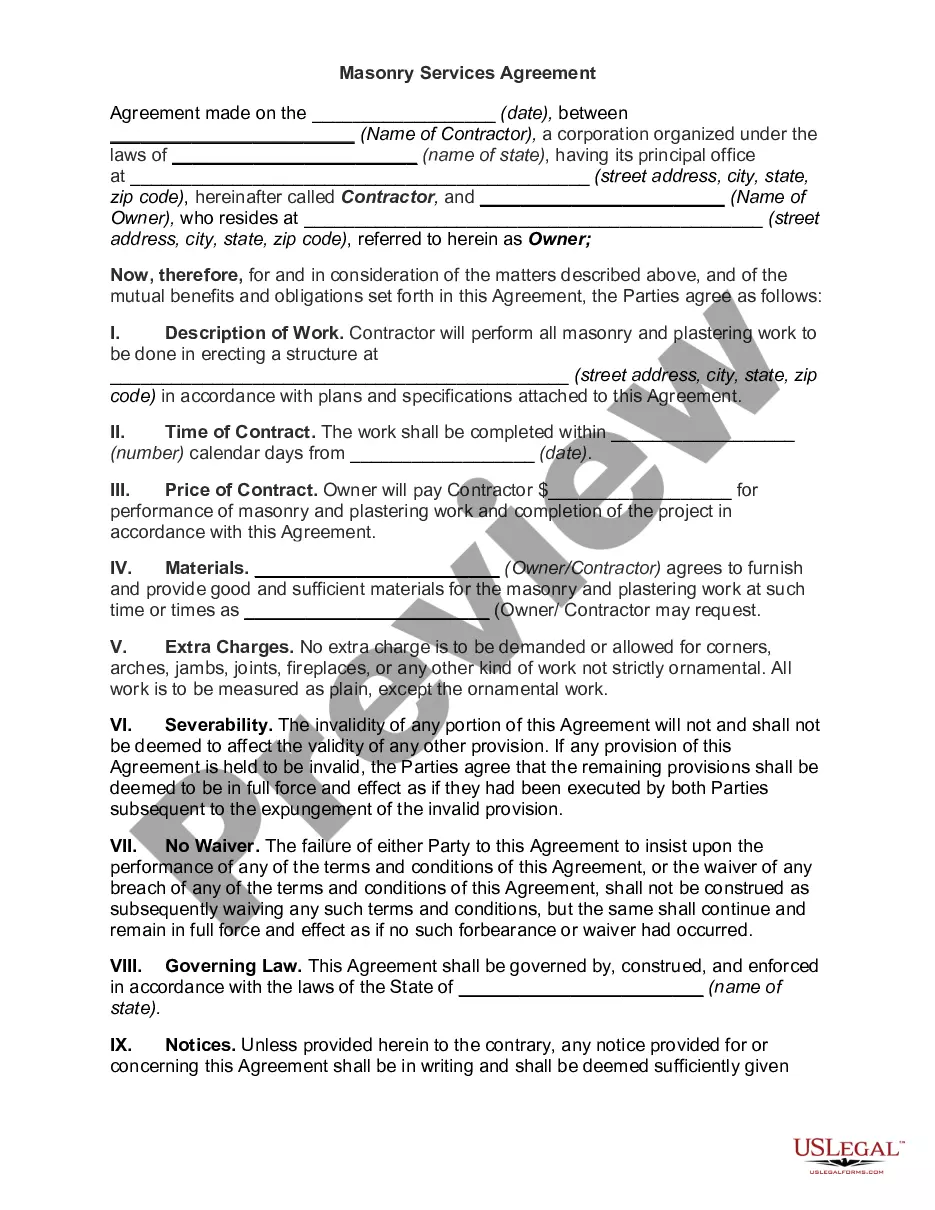
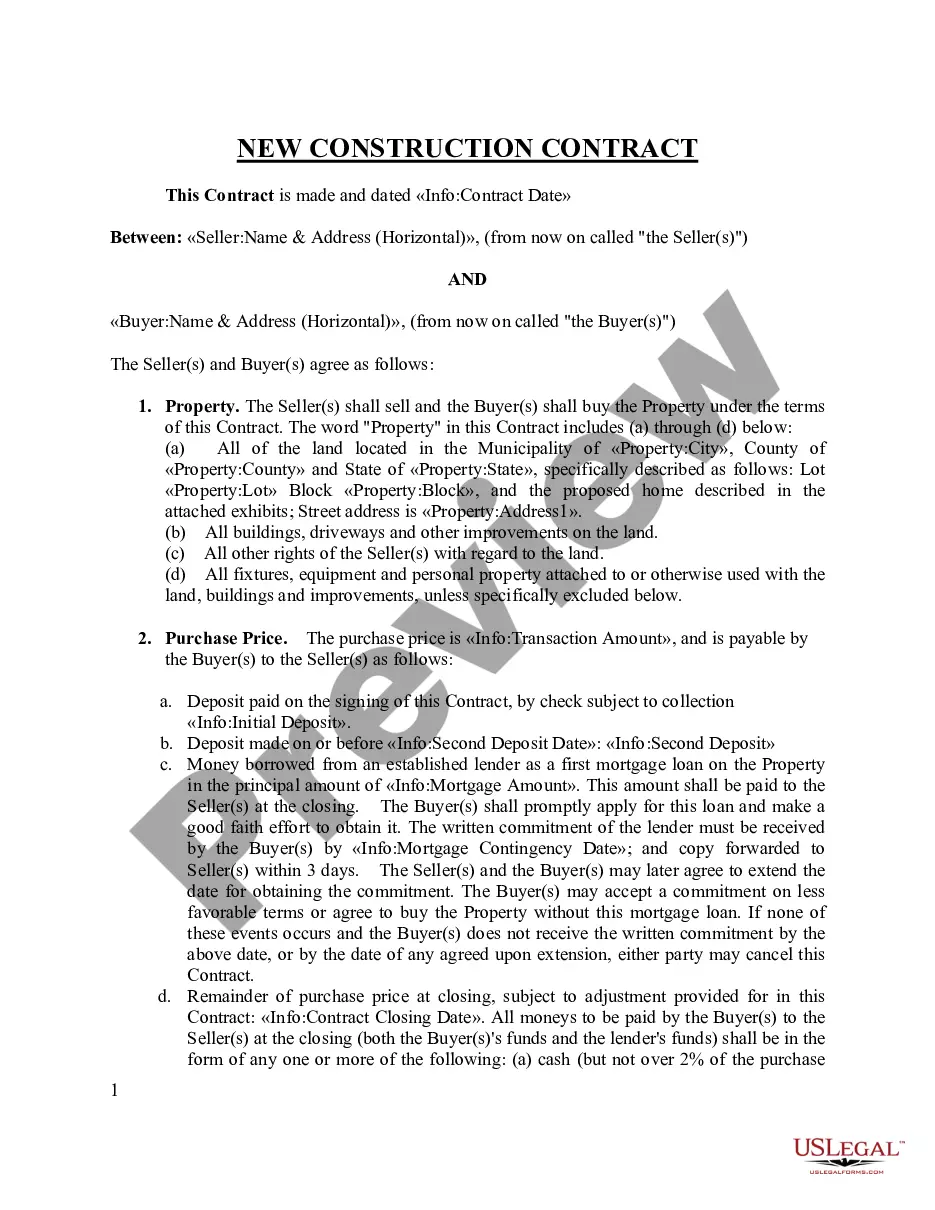
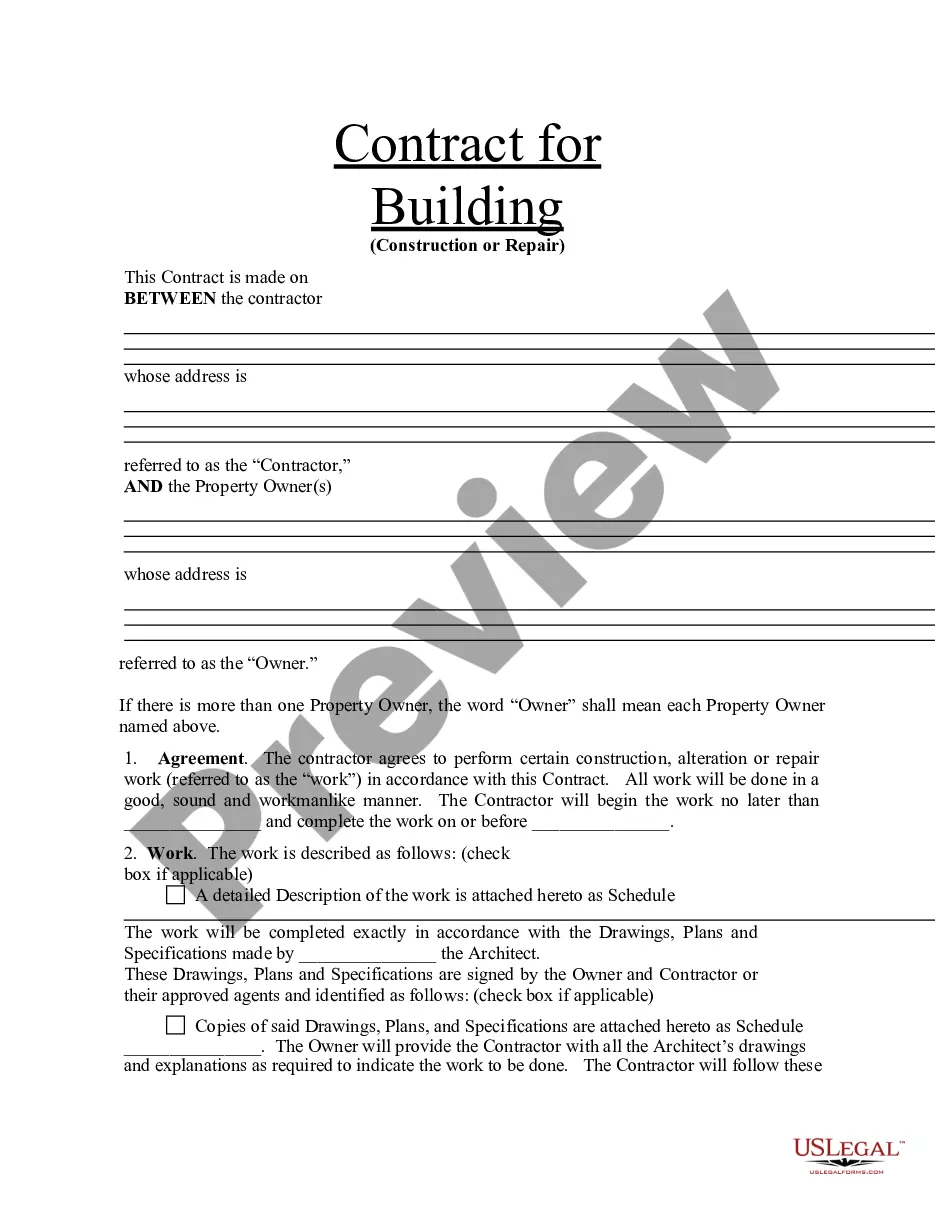
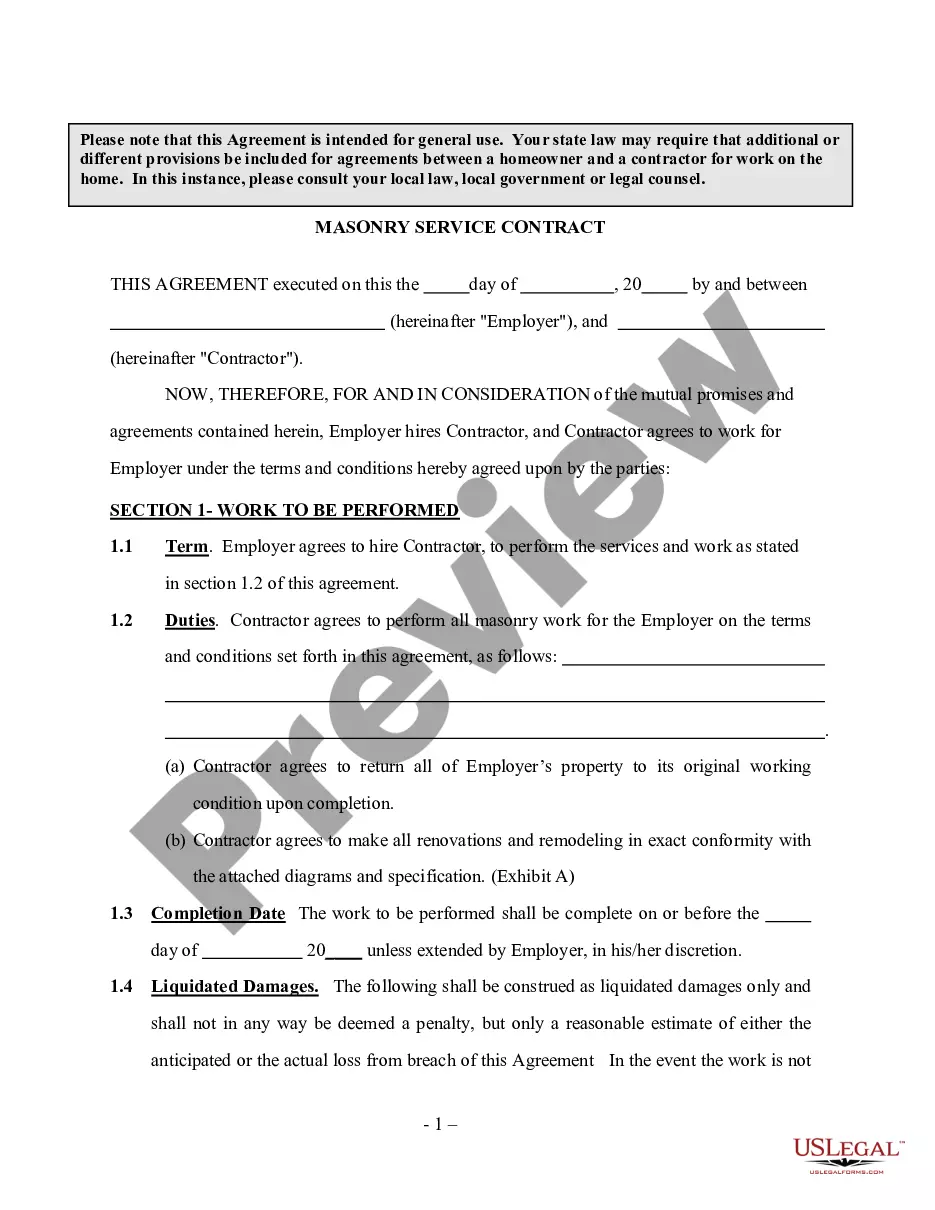
The Brick Mason Contract for Contractor is a legally binding agreement tailored for brick masonry projects, establishing the terms of engagement between brick mason contractors and property owners. This contract may involve either a fixed fee or a cost-plus payment arrangement. It includes provisions regarding change orders, worksite details, warranties, and insurance, ensuring compliance with Oregon state laws. Unlike other construction contracts, this form specifically addresses the unique aspects of brick masonry work, making it essential for both contractors and property owners involved in such projects.
What’s included in this form
- Scope of work including detailed descriptions of brick masonry tasks.
- Provisions for permits and regulatory approvals required by local authorities.
- Insurance requirements, including general liability and workers' compensation.
- Change order procedures for modifications to the work scope.
- Late payment terms and consequences for defaulting on payments.
- Warranties related to workmanship and definitions of defects covered.

When to use this form
This form is used when a property owner intends to hire a brick mason contractor for various masonry projects, such as constructing walkways, garages, or walls. It should be utilized when the project price exceeds a certain threshold, typically when detailed agreements about work, materials, and payment structures are necessary. It is essential for safeguarding the interests of both parties, especially in case of changes to the project or disputes regarding payment and workmanship.
Who needs this form
- Brick masonry contractors looking to establish a clear contractual agreement.
- Property owners who want to ensure that all aspects of the masonry work are documented and agreed upon.
- Individuals or companies involved in home construction or renovation projects requiring specific masonry work.
- Real estate professionals managing properties that will undergo masonry improvements.
Steps to complete this form
- Identify the parties involved by entering the names and contact information of both the contractor and the property owner.
- Specify the scope of work by detailing the masonry services to be provided, including project specifications and materials.
- Include payment terms, indicating whether the agreement is cost-plus or a fixed fee.
- Complete the sections regarding permits and insurance coverage to outline the responsibilities of each party.
- Enter any specific change order procedures that will be followed during the project.
- Have both parties sign and date the contract to finalize the agreement.
Does this document require notarization?
This form does not typically require notarization unless specified by local law. However, it is recommended to check local regulations to verify whether notarization is necessary for your specific situation.
Get your form ready online
Our built-in tools help you complete, sign, share, and store your documents in one place.
Make edits, fill in missing information, and update formatting in US Legal Forms—just like you would in MS Word.
Download a copy, print it, send it by email, or mail it via USPS—whatever works best for your next step.
Sign and collect signatures with our SignNow integration. Send to multiple recipients, set reminders, and more. Go Premium to unlock E-Sign.
If this form requires notarization, complete it online through a secure video call—no need to meet a notary in person or wait for an appointment.
We protect your documents and personal data by following strict security and privacy standards.

Make edits, fill in missing information, and update formatting in US Legal Forms—just like you would in MS Word.

Download a copy, print it, send it by email, or mail it via USPS—whatever works best for your next step.

Sign and collect signatures with our SignNow integration. Send to multiple recipients, set reminders, and more. Go Premium to unlock E-Sign.

If this form requires notarization, complete it online through a secure video call—no need to meet a notary in person or wait for an appointment.

We protect your documents and personal data by following strict security and privacy standards.
Common mistakes to avoid
- Failing to specify the full scope of work can lead to misunderstandings later.
- Neglecting to include detailed payment and change order provisions.
- Not verifying the required local permits before starting the project.
- Ignoring insurance requirements, which can leave both parties unprotected.
Why complete this form online
- Convenient access to ready-made templates drafted by licensed attorneys.
- Editable sections allow for customization to meet specific project needs.
- Immediate download options enhance efficiency in commencing masonry projects.
- Compliance with state laws ensures legal enforceability of the contract terms.
Legal use & context
- The Brick Mason Contract serves as a binding agreement that protects both the contractor and property owner during the construction process.
- Adhering to Oregon's legal requirements ensures that the contract is enforceable and provides legal recourse in case of disputes.
- Including specific clauses regarding change orders and warranties further strengthens the legal standing of the contract.
What to keep in mind
- Utilize the Brick Mason Contract to establish clear terms between property owners and contractors.
- Ensure all project details, payment terms, and legal obligations are included in the contract.
- Consult the contract throughout the project to avoid potential disputes and ensure compliance with Oregon laws.
Looking for another form?


Form popularity
FAQ
Yes, absolutely. Starting work without a signed contract means that your position isn't clear, or even worse it's weak.It also means that the contract is legally enforceable and will be able to support you if you decide to take legal action.
Both parties should sign the contract, and both should be bound by the terms and conditions spelled out in the agreement. In general that means the contractor will be obliged to provide specified materials and to perform certain services for you. In turn, you will be required to pay for those goods and that labor.
Get it in writing. Keep it simple. Deal with the right person. Identify each party correctly. Spell out all of the details. Specify payment obligations. Agree on circumstances that terminate the contract. Agree on a way to resolve disputes.
If you run a small business that hires 1099 contractors, also known as independent contractors, it is vital that you have them sign an independent contractor contract. This is because there is a significant gray area between who is classified as an independent contractor and who is classified as an employee.
In order to cancel the transaction, the consumer must send the notice of cancellation form, or some other written statement indicating the intent to cancel the contract, to the creditor at the address stated on the notice. This notice need only state the consumer's intention to cancel the transaction.
Name of contractor and contact information. Name of homeowner and contact information. Describe property in legal terms. List attachments to the contract. The cost. Failure of homeowner to obtain financing. Description of the work and the completion date. Right to stop the project.
#1: Review Your Bid. #2: Review Complete Plans. #3: Review All Specifications. #4: Visit the Job Site. #5: Review the Job Schedule. #6: Complete a Project Checklist. #7: Verify Project Funding. #8: Read Complete Contract.
Identifying/Contact Information. Title and Description of the Project. Projected Timeline and Completion Date. Cost Estimate and Payment Schedule. Stop Work Clause and Stop Payment Clause. Act of God Clause. Change Order Agreement. Warranty.
Timeframe or key milestones of the project; hours of work; deliverables of the project; and. way the business will pay the contractor for their services.