Oklahoma Noncontinuing & General Garnishee's Answer Affidavit
Understanding this form
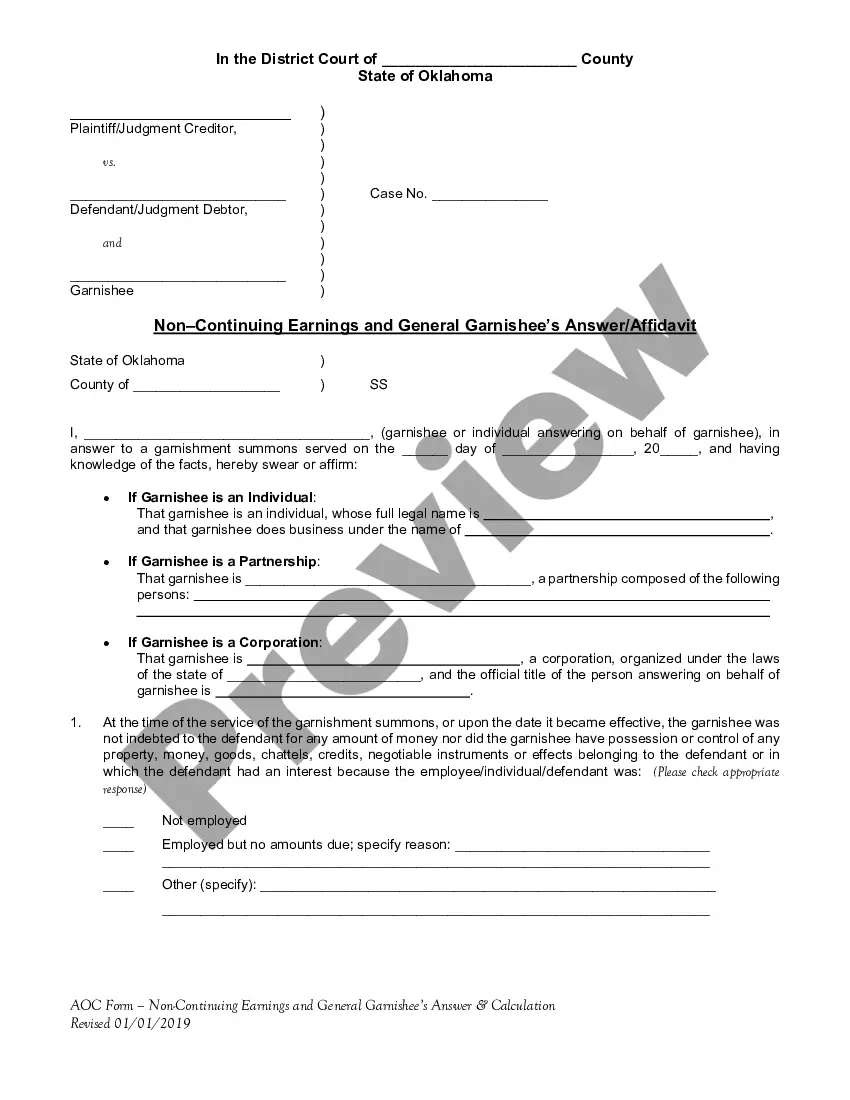
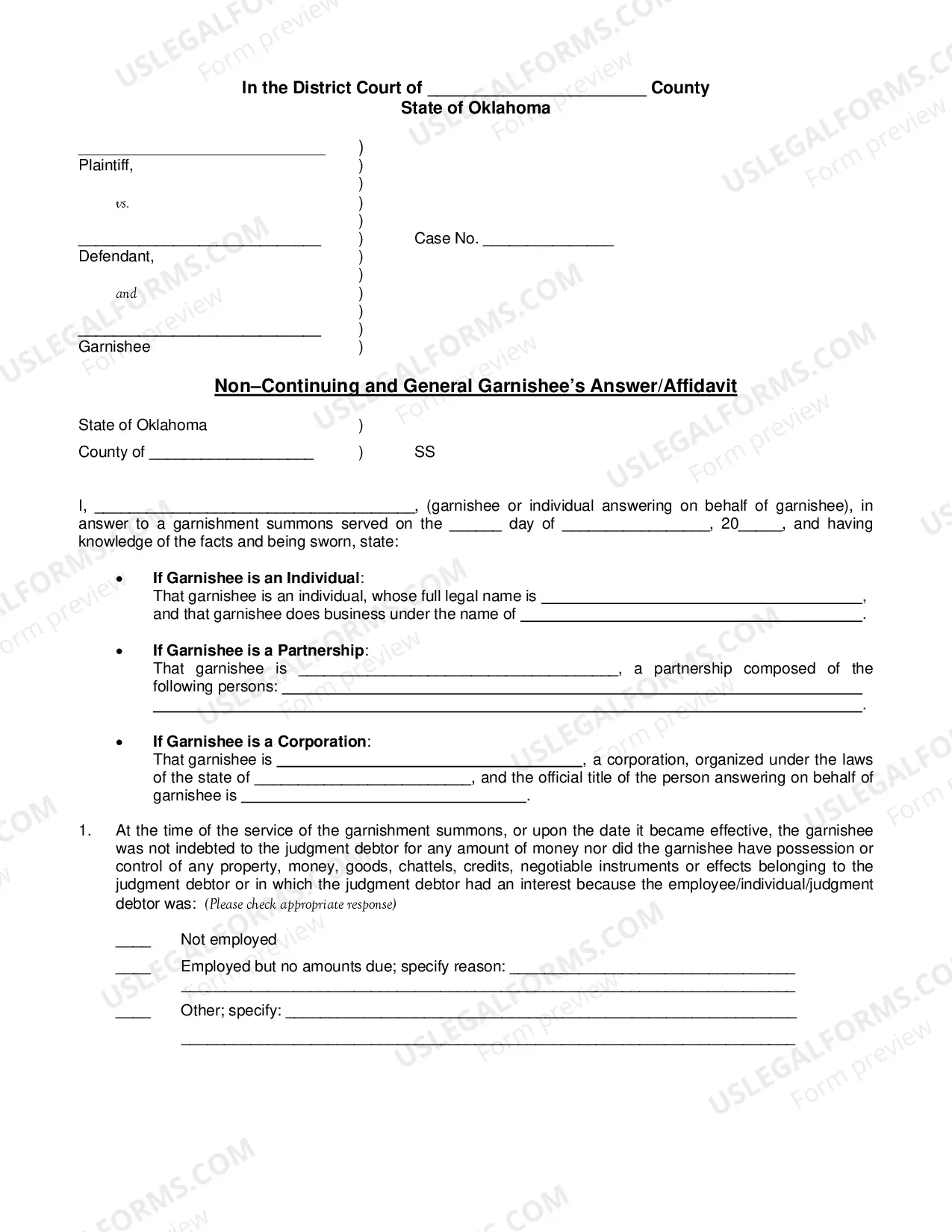
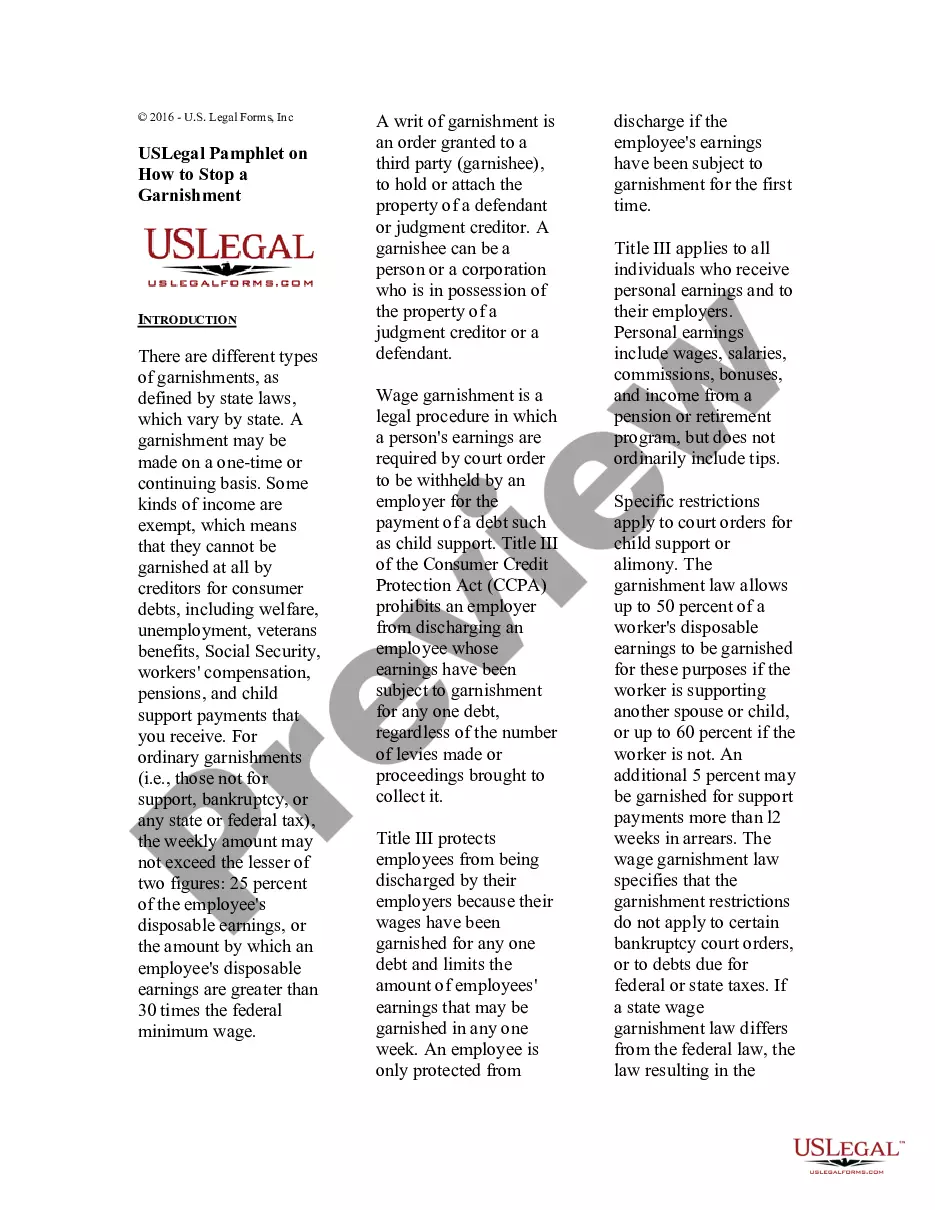
The Noncontinuing & General Garnishee's Answer Affidavit is an official form used in Oklahoma to respond to a garnishment summons. It allows the garnisheeâtypically an employer or financial institutionâto declare any debts owed to a judgment debtor and identify any property in their possession. This form is crucial for complying with court orders regarding garnishment and differs from other garnishment forms by being specifically designed for noncontinuing garnishments.
What’s included in this form
- Identification of the garnishee and their business status (individual, partnership, or corporation).
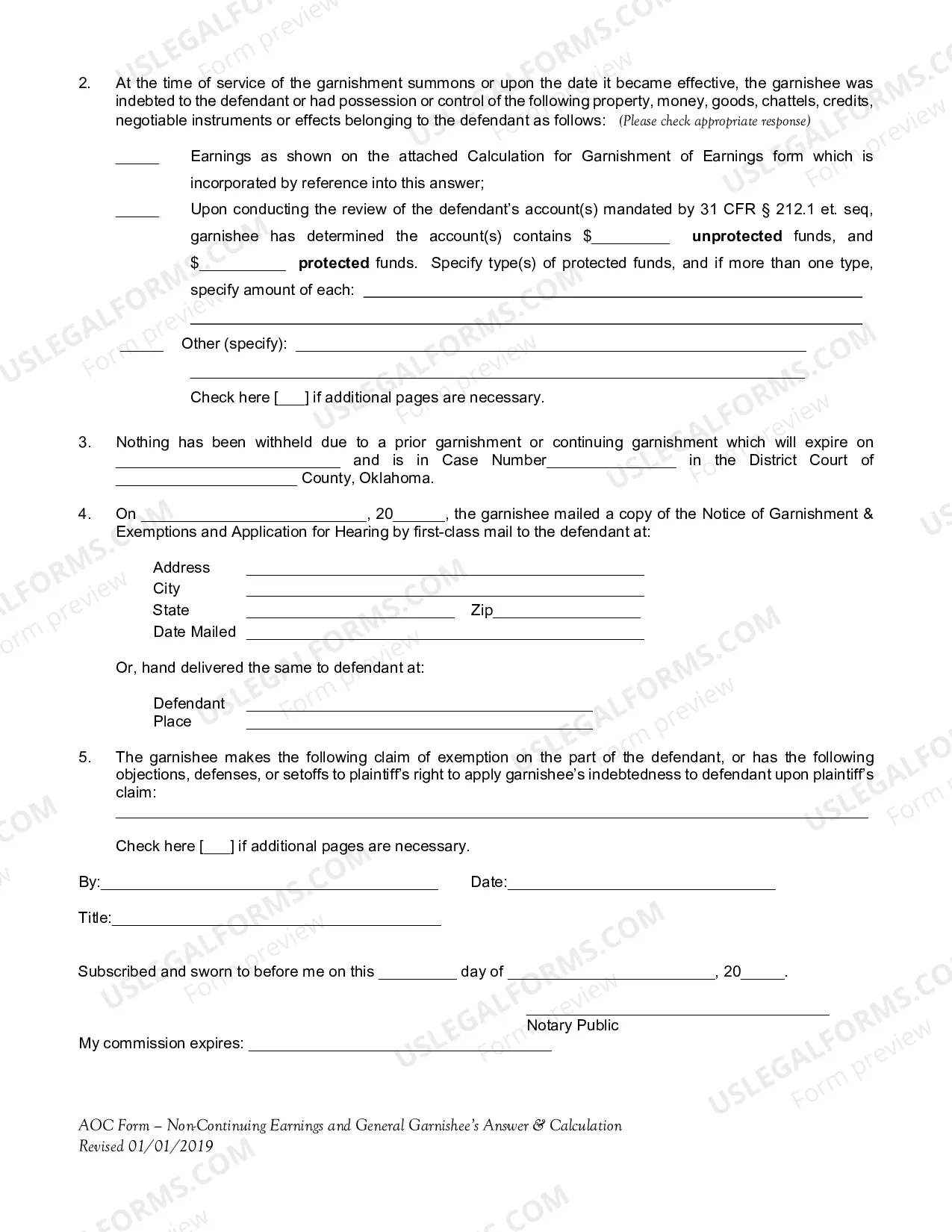
- Declaration of whether the garnishee owes money or has property belonging to the judgment debtor.
- Details regarding any exemptions or claims related to the garnishment.
- Proof of service indicating that the judgment debtor received notice of the garnishment.
- Signature and notarization section confirming the accuracy of the affidavit.
When this form is needed
This form should be used when a garnishee has received a garnishment summons concerning a judgment debtor. It is applicable in cases where an individual or entity needs to respond to a court order about the money or property they may owe to, or possess on behalf of, the judgment debtor. This can occur in various situations, such as wage garnishments, bank account levies, or property seizures.
Who needs this form
The following parties should use this form:
- Employers who have received a garnishment summons related to an employee's wages.
- Financial institutions that hold accounts belonging to a judgment debtor.
- Any individual or entity served with a garnishment summons involving debts owed to a judgment debtor.
Steps to complete this form
- Identify the parties involved, including the judgment debtor and the garnishee.
- Declare whether the garnishee owes any debts to the judgment debtor or possesses any of their property.
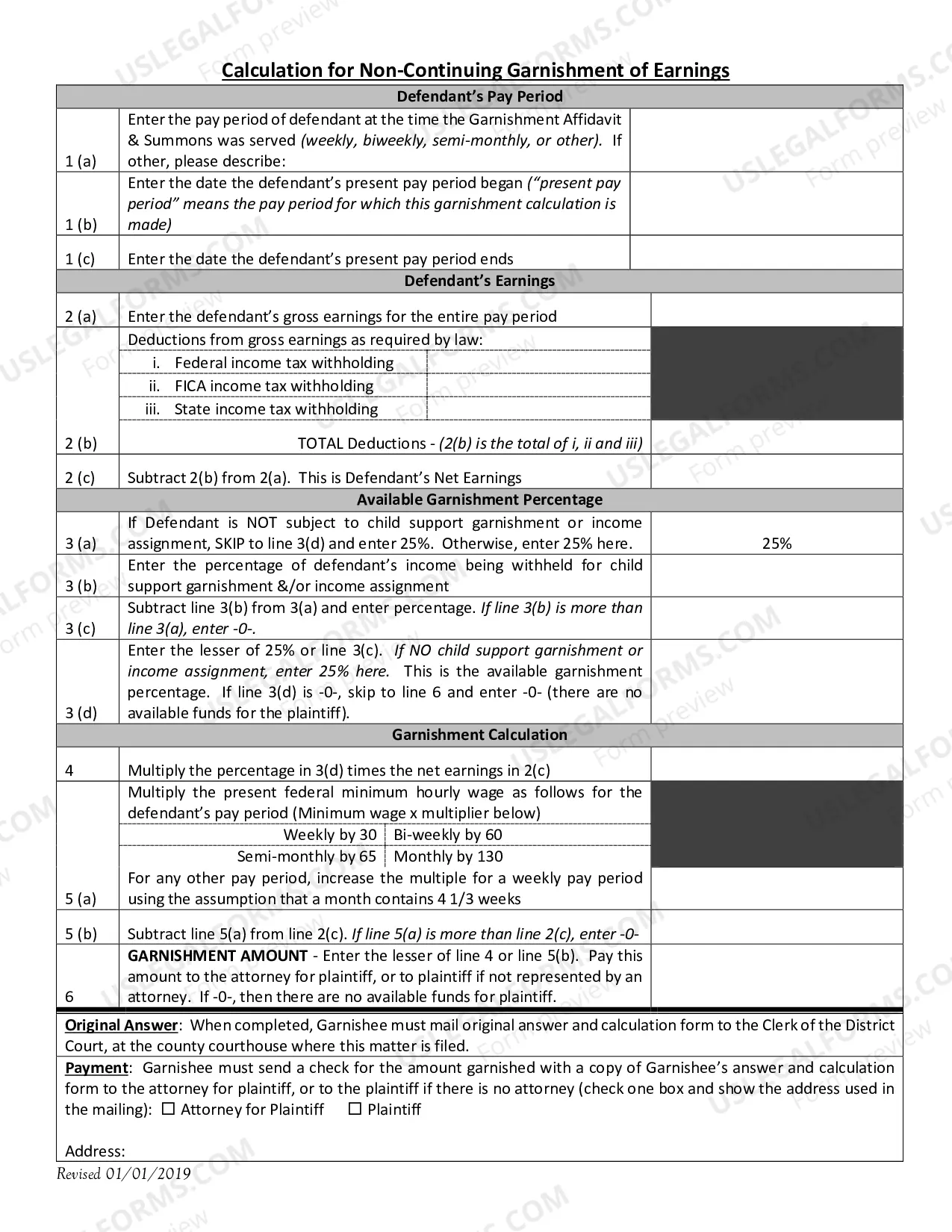
- Complete any necessary calculations related to the judgment debtor's earnings if applicable.
- Provide proof of service that the judgment debtor was notified of the garnishment.
- Sign and date the form, then have it notarized to ensure legal validity.
Does this document require notarization?
Yes, this form must be notarized to be legally valid. This ensures that the affidavit is authenticated and can be accepted by the court. US Legal Forms provides integrated online notarization, making it easy to have your document notarized via a secure video call, available 24/7.
Get your form ready online
Our built-in tools help you complete, sign, share, and store your documents in one place.
Make edits, fill in missing information, and update formatting in US Legal Forms—just like you would in MS Word.
Download a copy, print it, send it by email, or mail it via USPS—whatever works best for your next step.
Sign and collect signatures with our SignNow integration. Send to multiple recipients, set reminders, and more. Go Premium to unlock E-Sign.
If this form requires notarization, complete it online through a secure video call—no need to meet a notary in person or wait for an appointment.
We protect your documents and personal data by following strict security and privacy standards.

Make edits, fill in missing information, and update formatting in US Legal Forms—just like you would in MS Word.

Download a copy, print it, send it by email, or mail it via USPS—whatever works best for your next step.

Sign and collect signatures with our SignNow integration. Send to multiple recipients, set reminders, and more. Go Premium to unlock E-Sign.

If this form requires notarization, complete it online through a secure video call—no need to meet a notary in person or wait for an appointment.

We protect your documents and personal data by following strict security and privacy standards.
Avoid these common issues
- Failing to sign the affidavit before a notary.
- Not providing adequate proof of service to the judgment debtor.
- Incorrectly calculating amounts owed or property controlled.
- Inadequately identifying the judgment debtor or garnishee.
Advantages of online completion
- Instant access to the necessary legal form for quick filing.
- Easy to edit and customize to fit your specific situation.
- Reliable legal content that complies with current Oklahoma laws.
- Secure document storage and direct download options for convenience.
Looking for another form?
Form popularity
FAQ
What Happens When a Garnishment Summons Is Served?In the case of a nonearnings garnishment, the garnishee must provide a written disclosure to the creditor within 20 days after service of the garnishment summons that identifies all indebtedness, money, or property that the garnishee owes to the debtor.
If money is being taken out of your paycheck or bank account, you may be able to ask the court to stop or lower the amount of the garnishment. Lawyers call this a "Request or Claim for Exemption" from garnishment. An "exemption" means you will not have to pay the money to the creditor.
If it's already started, you can try to challenge the judgment or negotiate with the creditor. But, they're in the driver's seat, and if they don't allow you to stop a garnishment by agreeing to make voluntary payments, you can't really force them to. You can, however, stop the garnishment by filing a bankruptcy case.
In Oklahoma, wage garnishments stay in force for the lesser of the following: (1) satisfaction of the debt, or (2) the lapse of 180 days (or about six months) from the date the garnishment process started. Some debtor employees are saddled with more than one garnishment order.
You can stop a garnishment by paying the debt in full. You can stop a wage garnishment by asking the court to order installment payments in your case. Read Getting an Installment Payment Plan to learn more. Objecting to a garnishment will stop it until the objection is decided.
Quitting your current job will not erase the debt it will only leave you without the money to pay it. Once you find another job, the creditor can file to have your wages garnished there. You're best off staying employed where you are.
With these changes, a garnishment that is issued will expire in six (6) months, and then a new garnishment will have to be issued. The old law forced Creditors to file a new garnishment every month for each Debtor.
If money is being taken out of your paycheck or bank account, you may be able to ask the court to stop or lower the amount of the garnishment. Lawyers call this a "Request or Claim for Exemption" from garnishment. An "exemption" means you will not have to pay the money to the creditor.