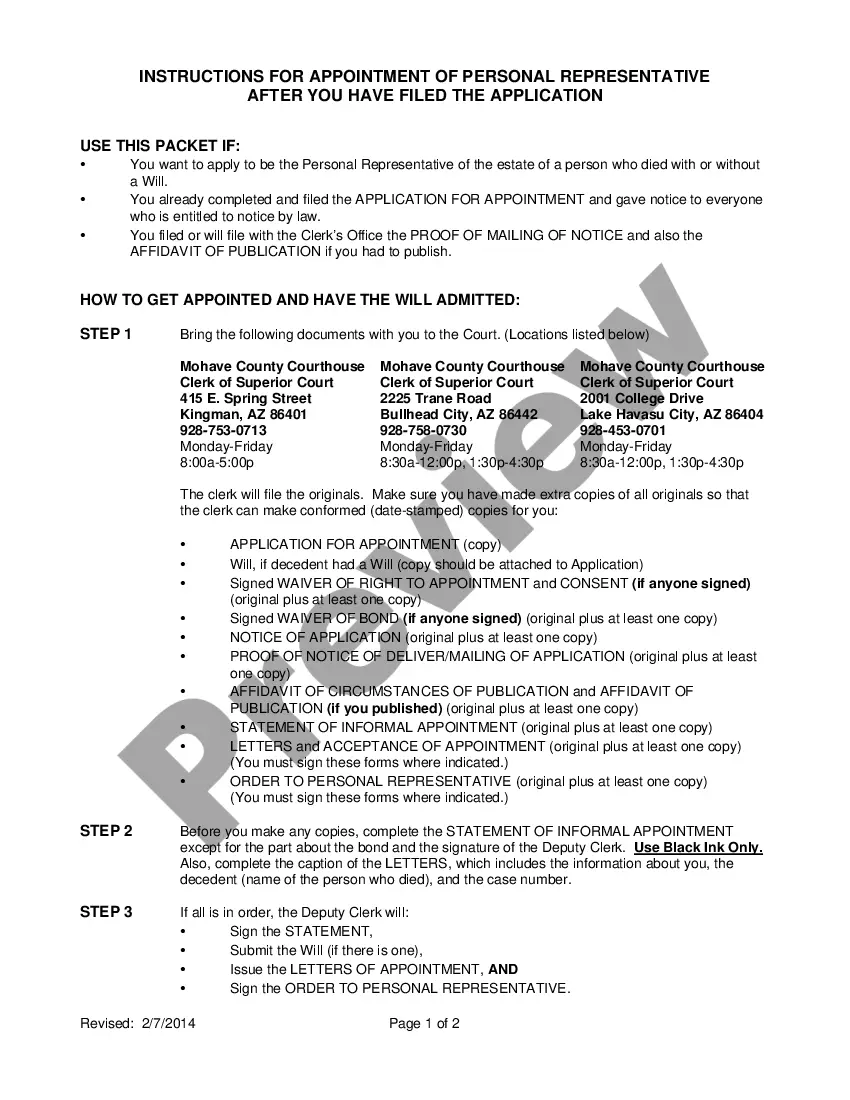
Oklahoma Living Trust for Individual as Single, Divorced or Widow (or Widower) with No Children

What this document covers
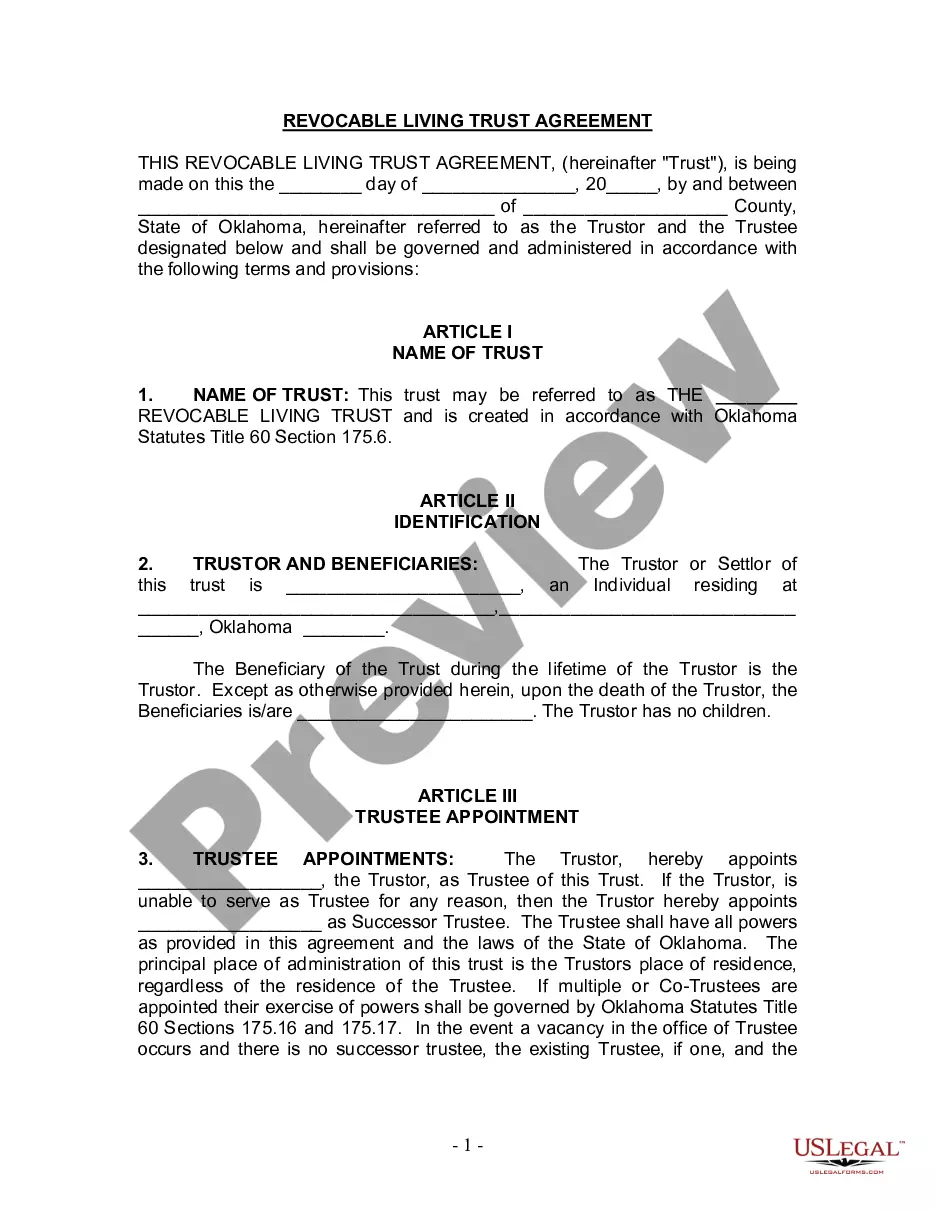
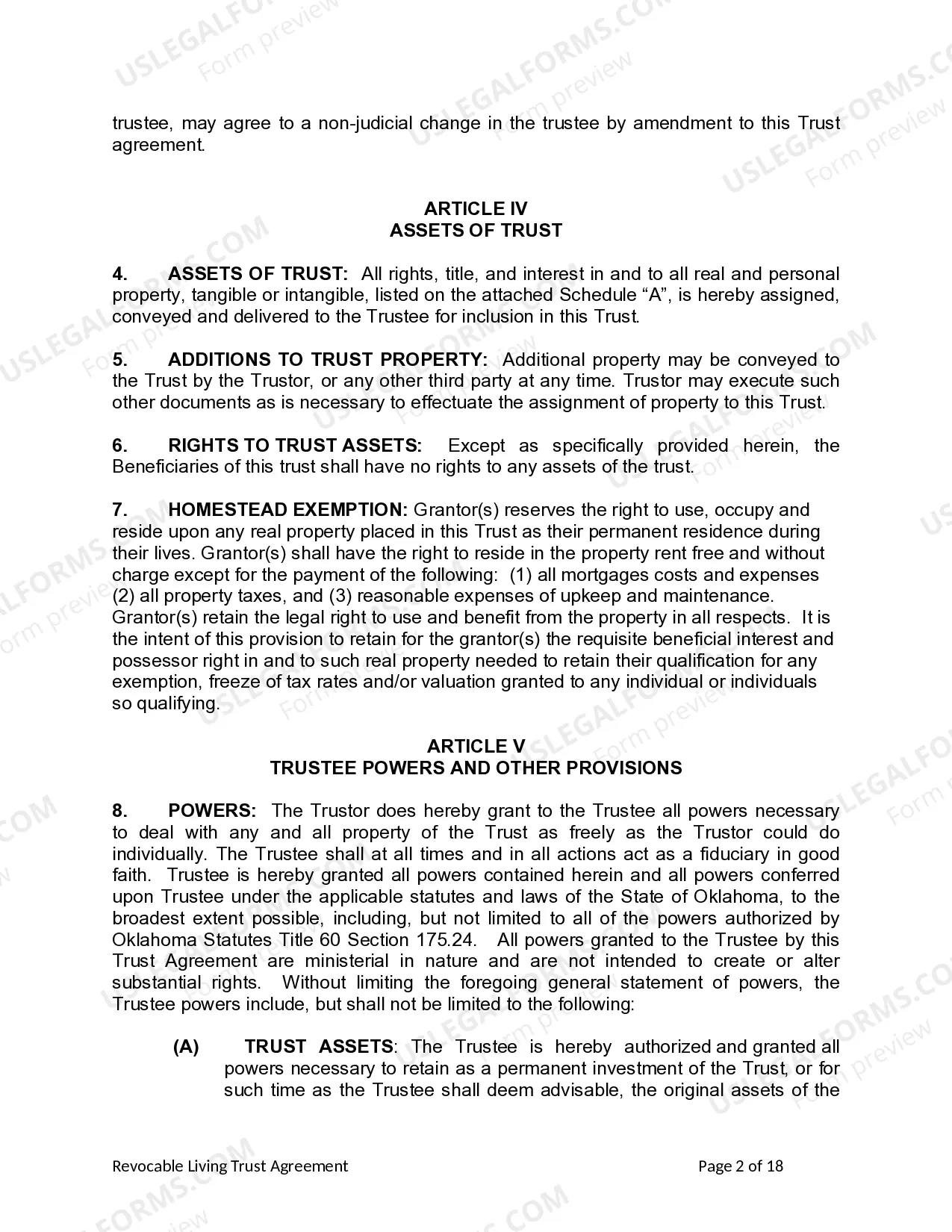
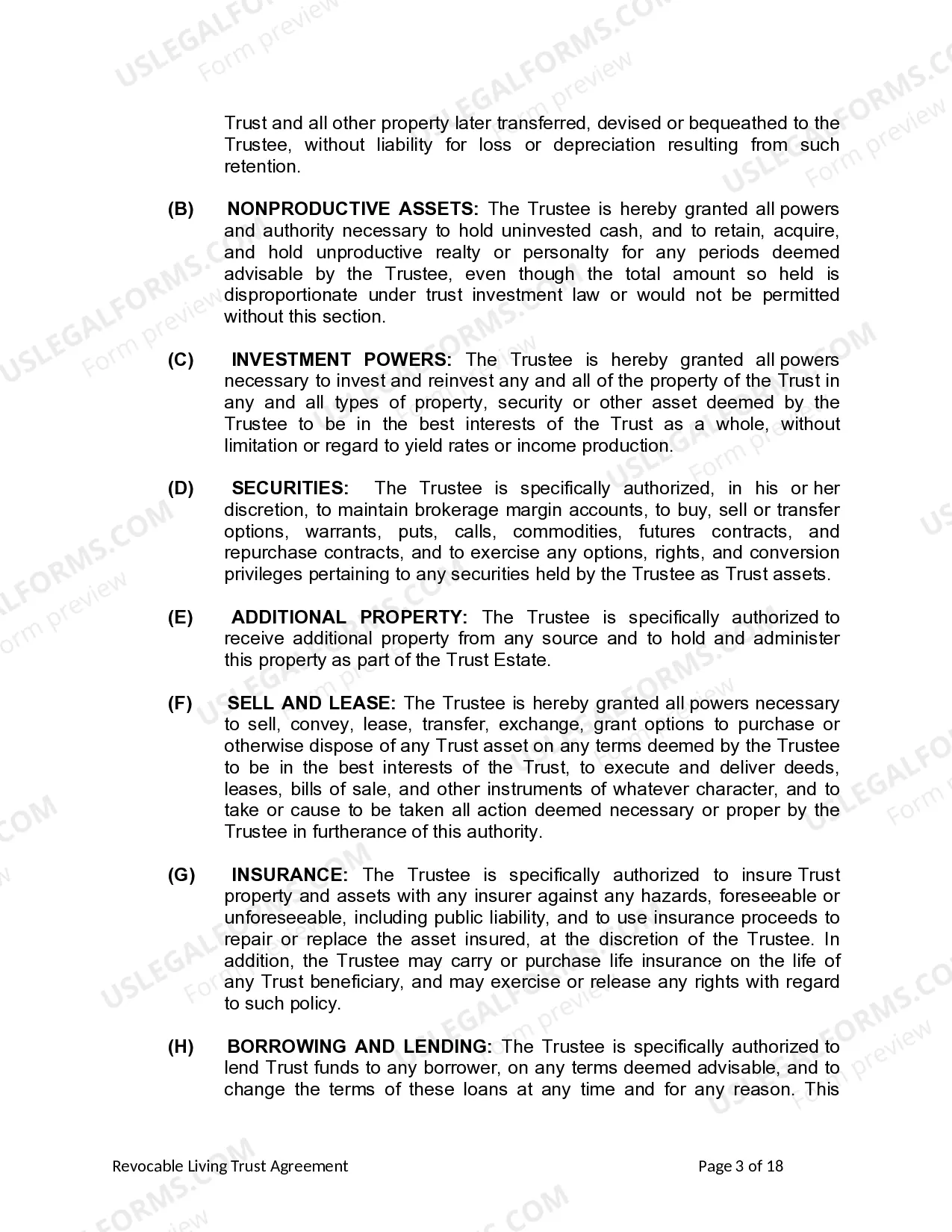
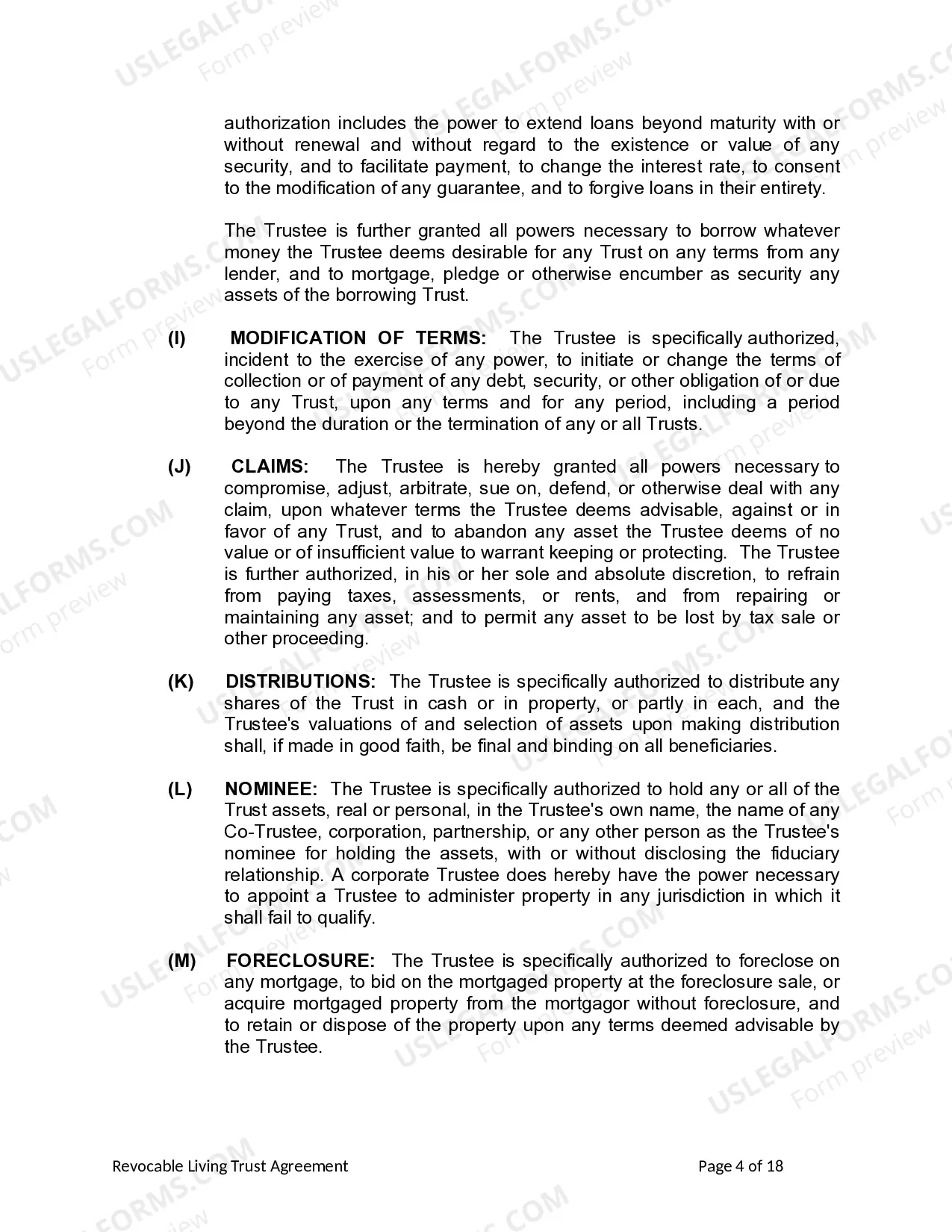
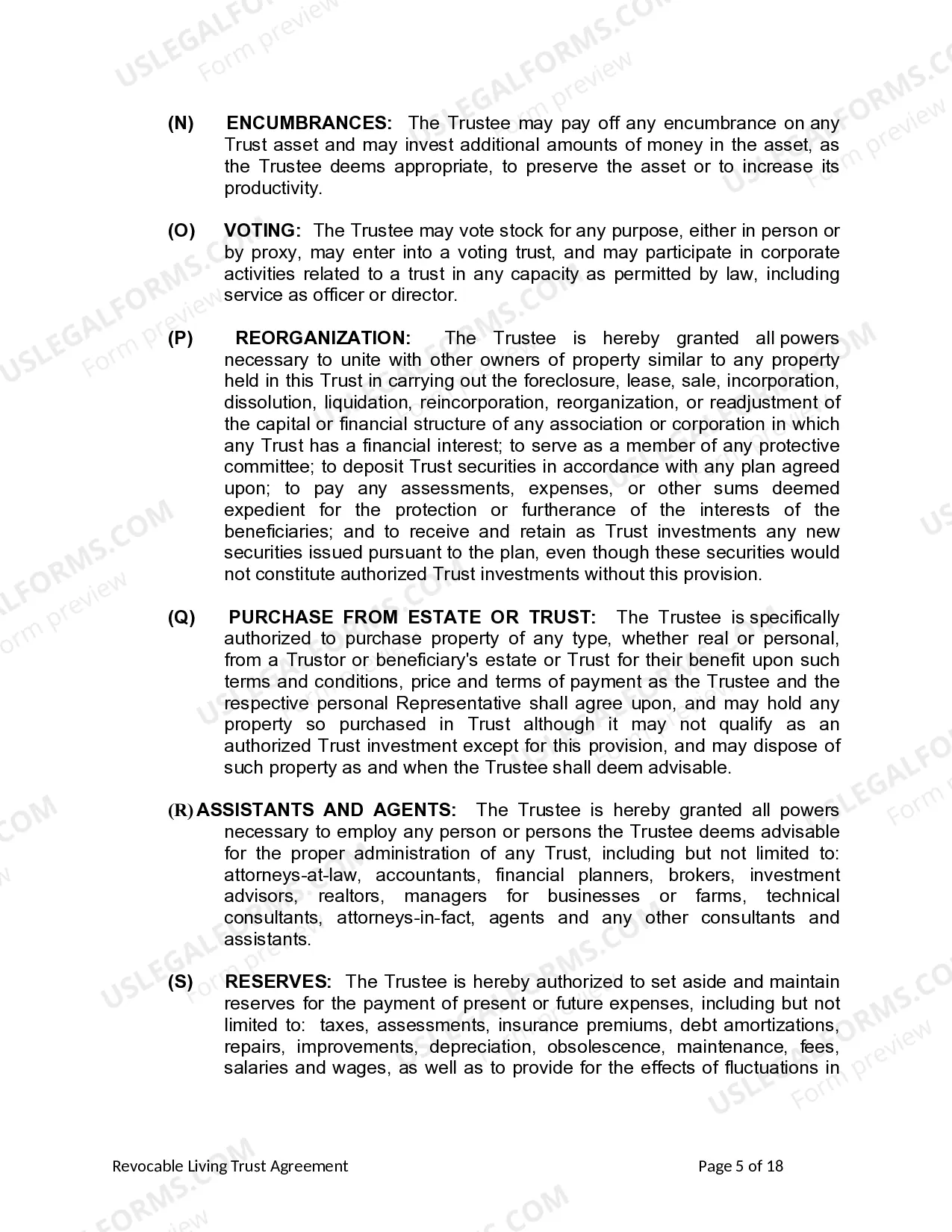
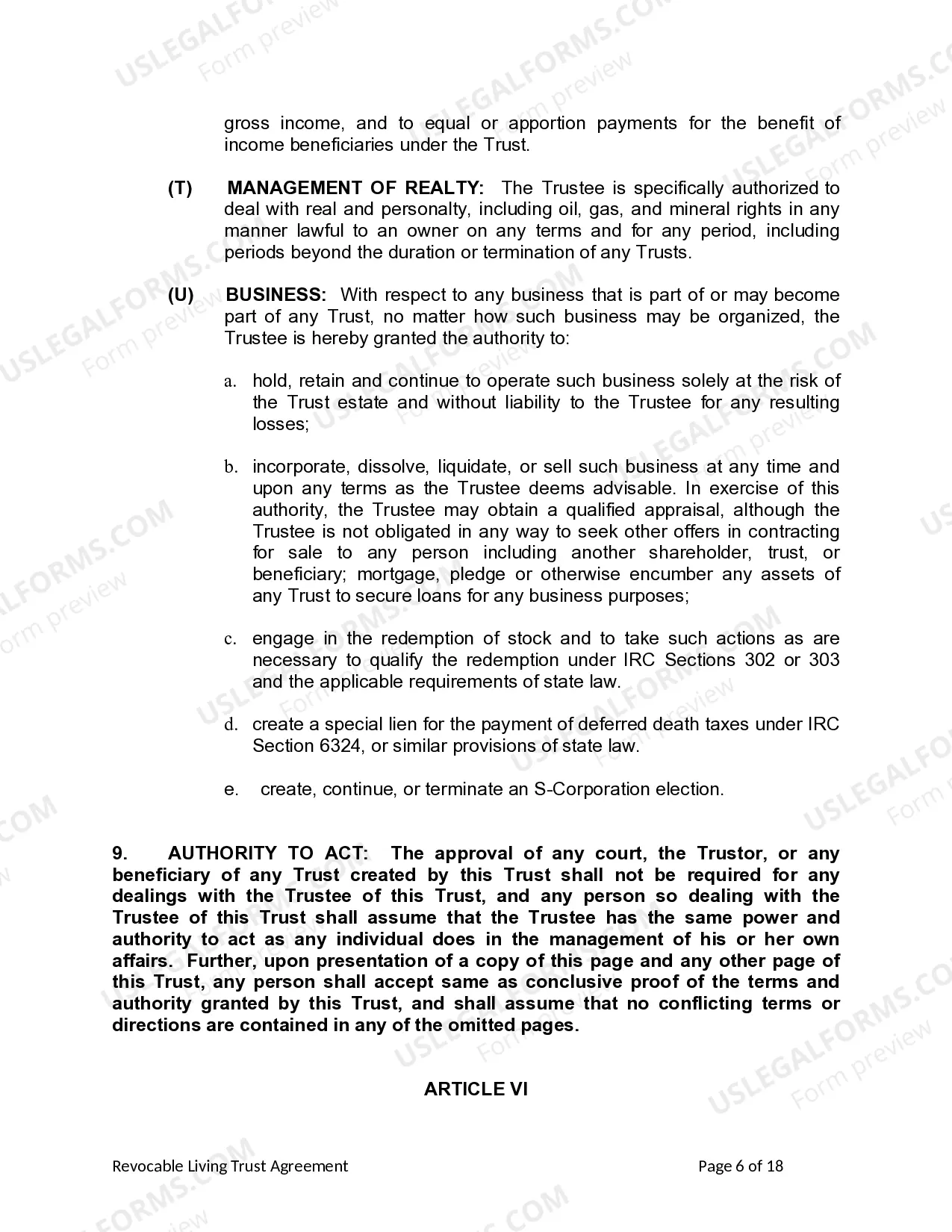
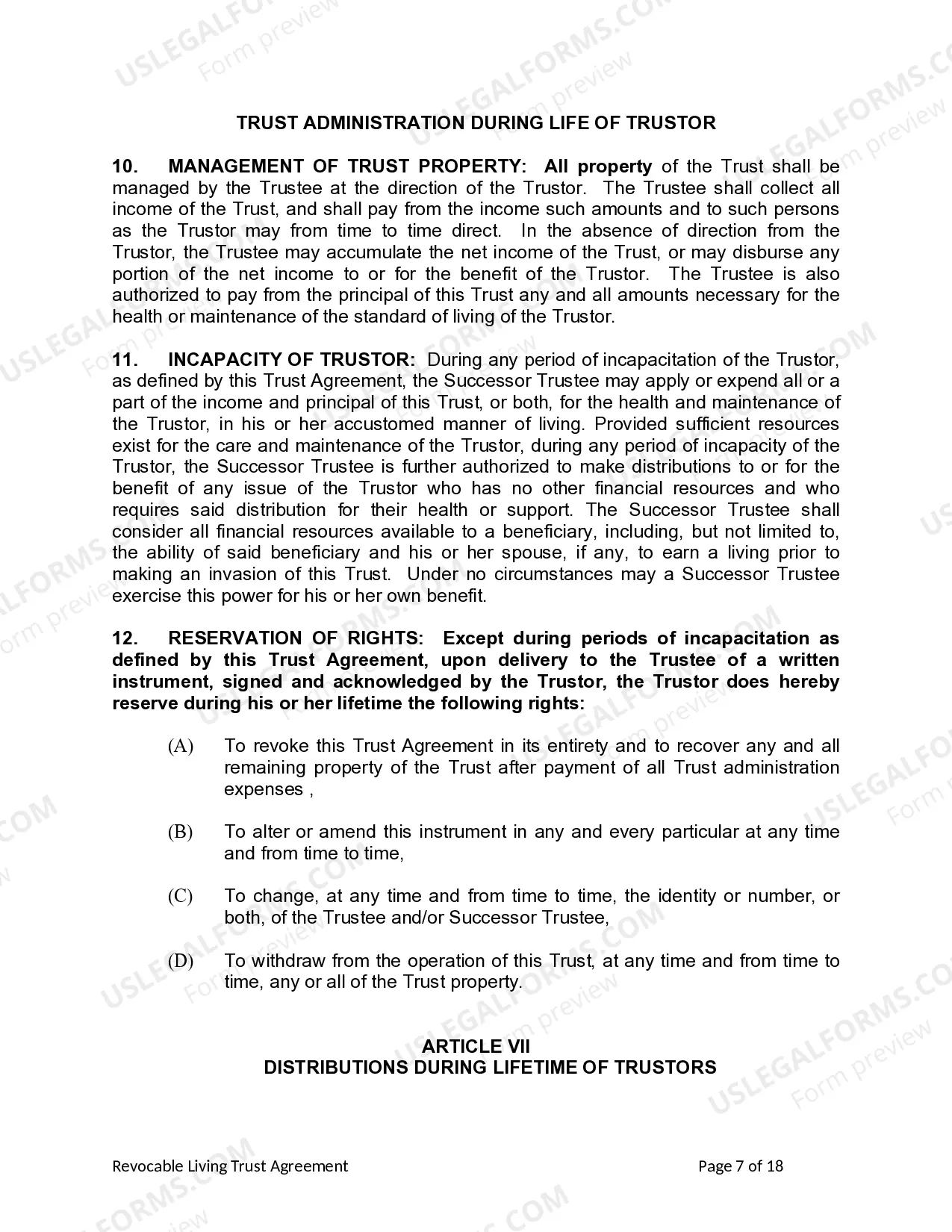
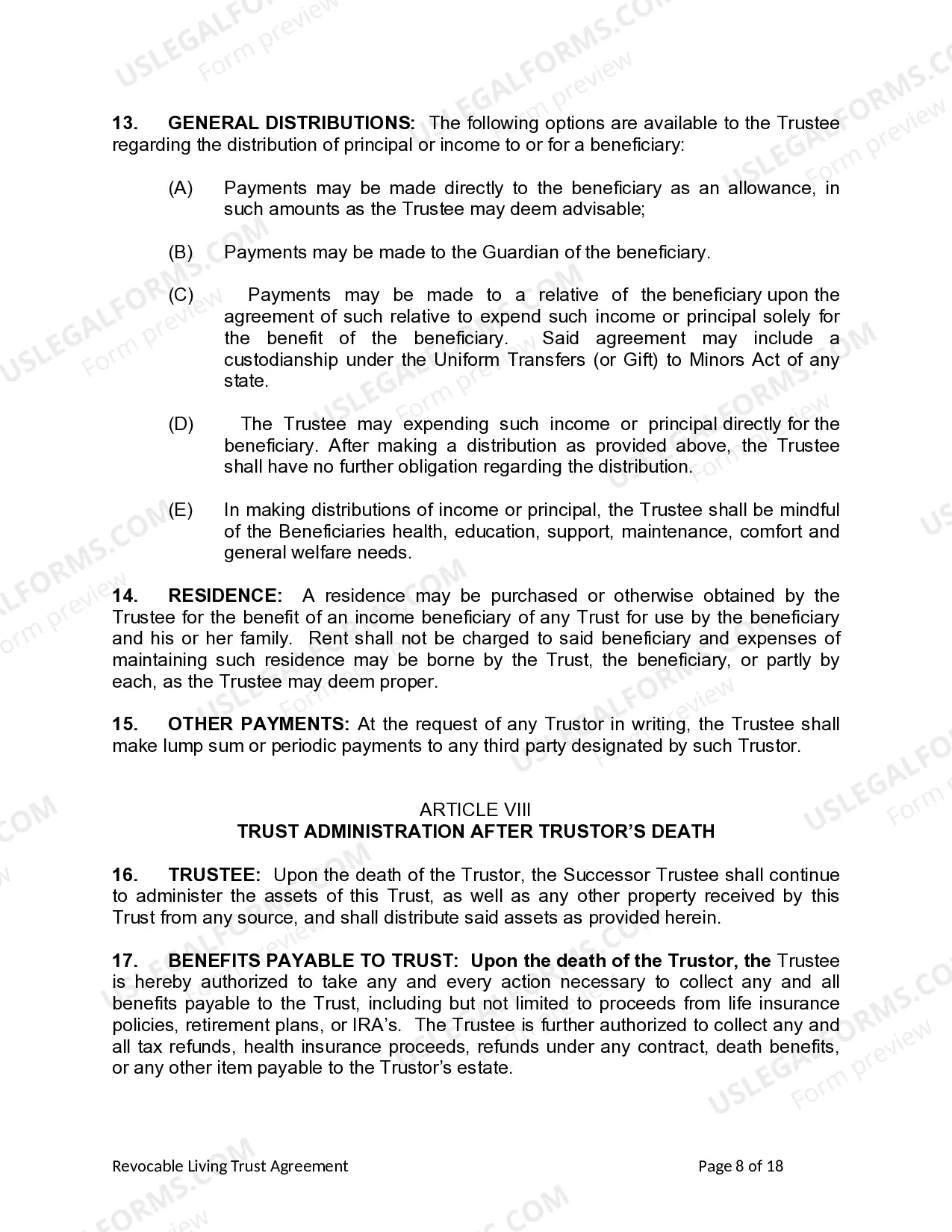
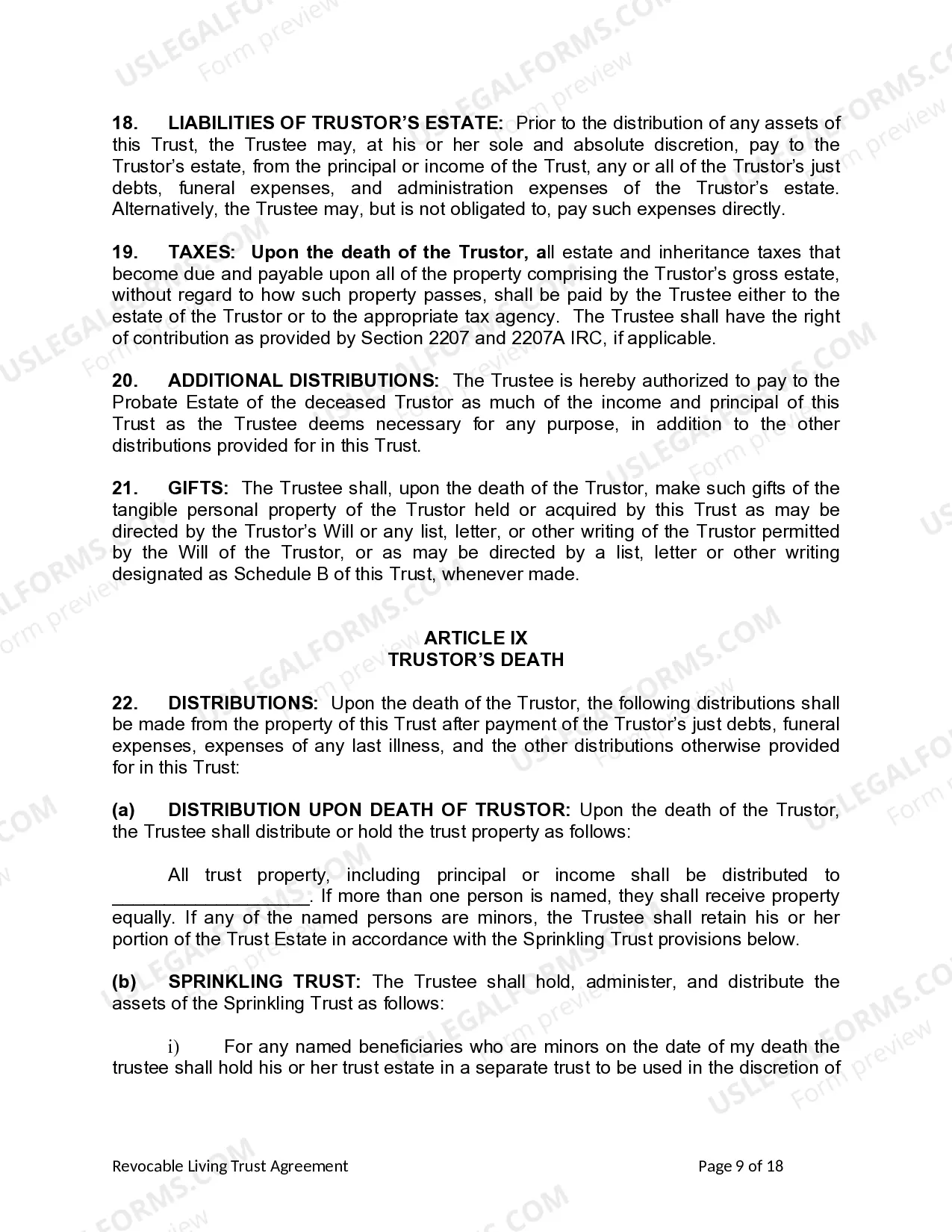
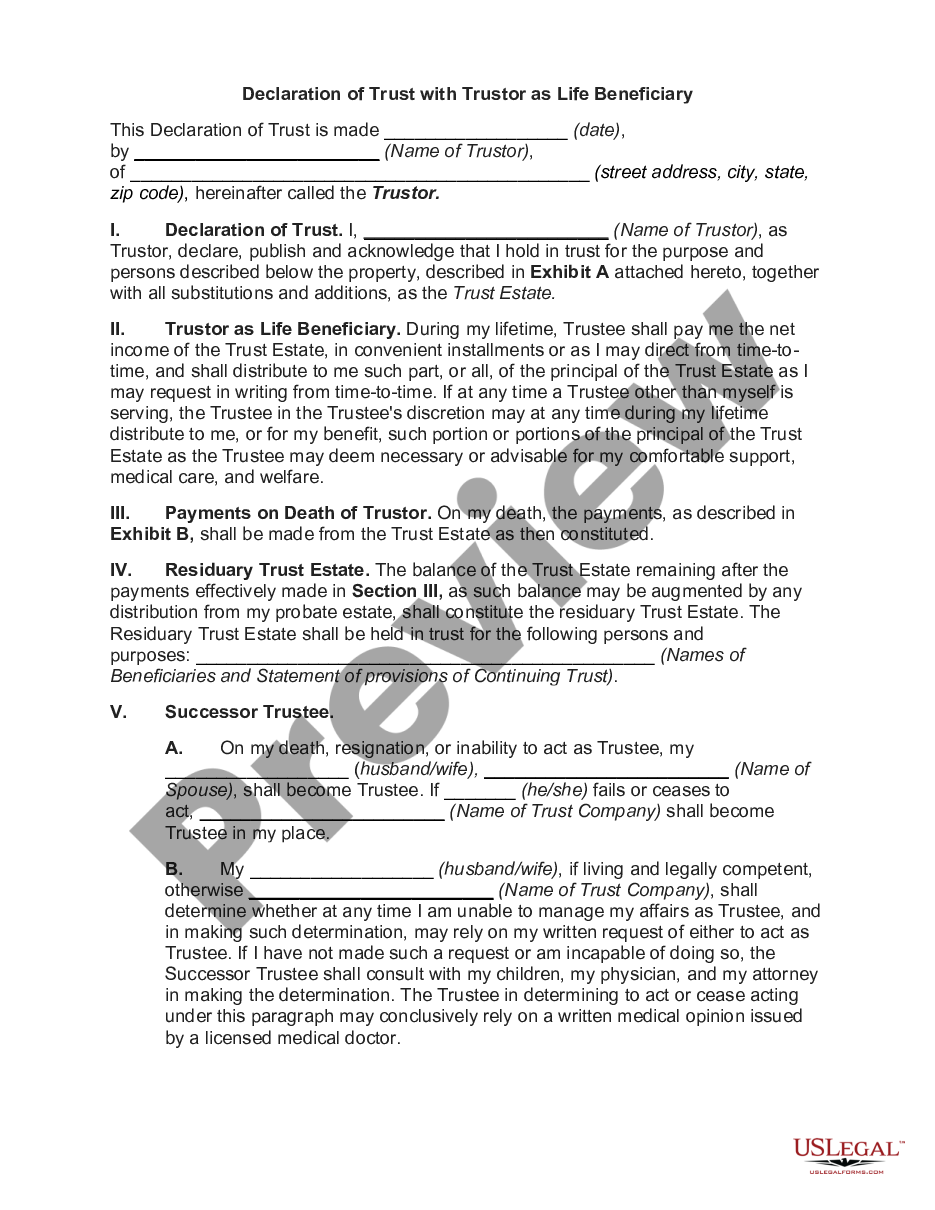
This Living Trust for Individual as Single, Divorced or Widow (or Widower) with No Children is a legal document designed for individuals who are single, divorced, or widowed without children. The purpose of this form is to establish a living trust that allows the individual to manage their assets during their lifetime and specify the distribution of those assets after their death without going through probate. Unlike a will, a living trust provides more control and flexibility over asset distribution and can help avoid delays associated with the probate process.
Key parts of this document
- Trust Name: Specifies the name of the trust created.
- Trustor Information: Identifies the individual(s) establishing the trust.
- Distribution Instructions: Outlines how assets should be distributed upon the trustor's death.
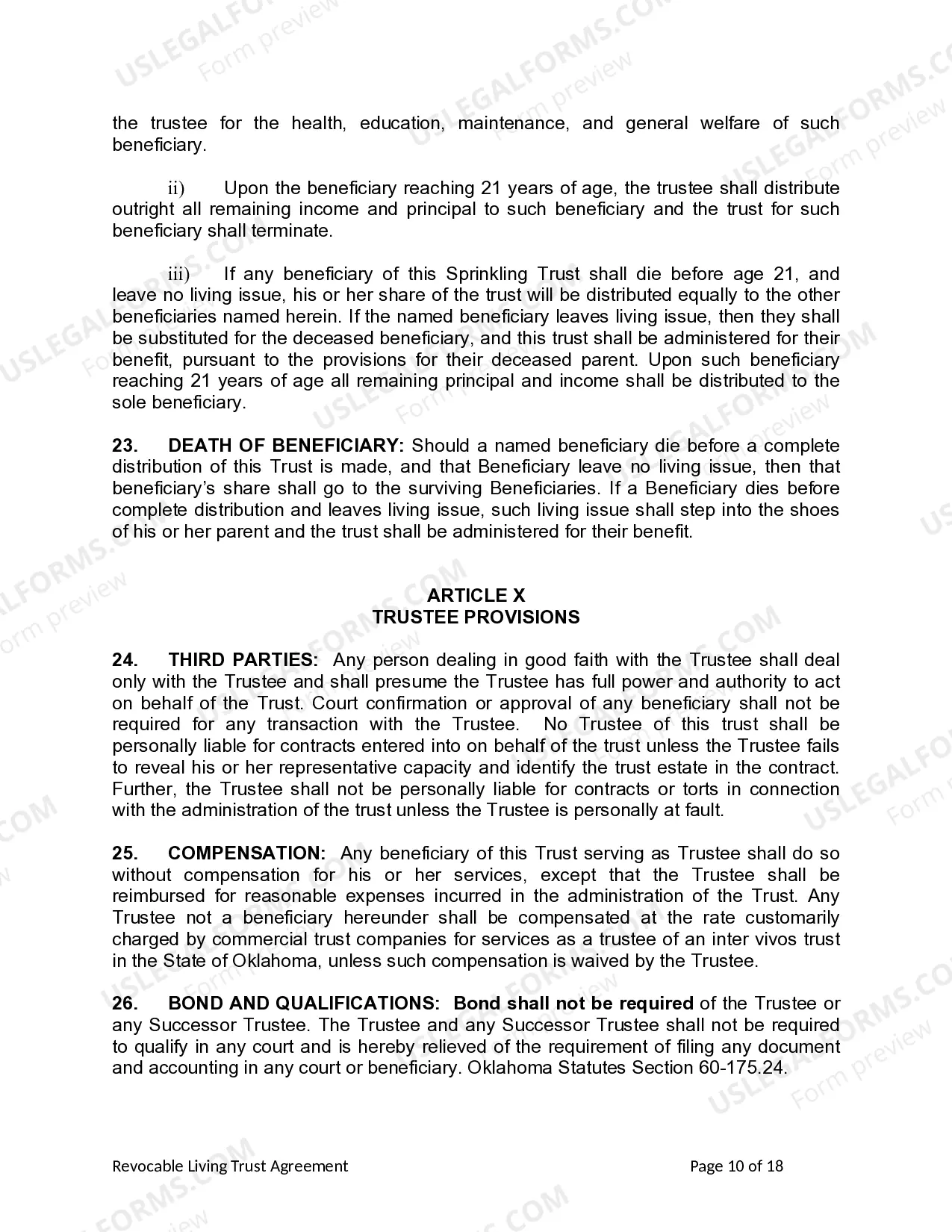
- Trustee Designation: Names an individual or entity to manage the trust assets.
- Asset Inclusion: Lists all assets being transferred into the trust.
- Successor Trustee Provisions: Describes the appointment of a successor trustee in case of the trustee's incapacity or death.




When to use this document
This form should be used by individuals who are single, divorced, or widowed and have no children, and wish to plan for the management and distribution of their assets. It is particularly useful for those who want to avoid probate or ensure a smooth transition of asset management upon their death. Scenarios for its use include estate planning for individuals who own property, have bank accounts, or other assets they wish to protect and allocate according to their wishes.
Who can use this document
- Individuals who are single, divorced, or widowed.
- Those without children wishing to establish an estate plan.
- Anyone looking to manage their assets during their lifetime and avoid probate upon death.
- Individuals seeking to maintain control over their assets and direct how they will be distributed.
How to prepare this document
- Identify the parties involved in the trust, including the trustor and trustee(s).
- Choose a name for the trust and fill in the corresponding section.
- List the assets you wish to include in the trust on the attached schedule.
- Designate any successor trustee(s) in case the primary trustee cannot fulfill their duties.
- Sign the document in the presence of a notary public to ensure its legal validity.
Does this form need to be notarized?
This document requires notarization to meet legal standards. US Legal Forms provides secure online notarization powered by Notarize, allowing you to complete the process through a verified video call, available 24/7.
Get your form ready online
Our built-in tools help you complete, sign, share, and store your documents in one place.
Make edits, fill in missing information, and update formatting in US Legal Forms—just like you would in MS Word.
Download a copy, print it, send it by email, or mail it via USPS—whatever works best for your next step.
Sign and collect signatures with our SignNow integration. Send to multiple recipients, set reminders, and more. Go Premium to unlock E-Sign.
If this form requires notarization, complete it online through a secure video call—no need to meet a notary in person or wait for an appointment.
We protect your documents and personal data by following strict security and privacy standards.

Make edits, fill in missing information, and update formatting in US Legal Forms—just like you would in MS Word.

Download a copy, print it, send it by email, or mail it via USPS—whatever works best for your next step.

Sign and collect signatures with our SignNow integration. Send to multiple recipients, set reminders, and more. Go Premium to unlock E-Sign.

If this form requires notarization, complete it online through a secure video call—no need to meet a notary in person or wait for an appointment.

We protect your documents and personal data by following strict security and privacy standards.
Mistakes to watch out for
- Failing to list all assets intended for the trust, which can lead to confusion later.
- Not designating a successor trustee, leaving the trust without management in case of incapacity.
- Signing the trust document without a notary, which may lead to questioning of its validity.
- Ignoring state-specific regulations that could affect the trust's legality.
Why complete this form online
- Convenience of accessing and completing the form from home.
- Editability allows for adjustments before finalizing the document.
- Access to reliable legal templates drafted by licensed attorneys.
- Saves time compared to drafting a trust document from scratch.
Looking for another form?
Form popularity
FAQ
In Oklahoma, you can make a living trust to avoid probate for virtually any asset you ownreal estate, bank accounts, vehicles, and so on. You need to create a trust document (it's similar to a will), naming someone to take over as trustee after your death (called a successor trustee).
No, you don't need a lawyer to set up a trust, but it might be a good idea to seek legal advice to ensure the trust is set up correctly and that you have considered all long-term financial and estate planning aspects of the trust.Some living trusts are revocable, which means the trust can be changed at any time.
Funding a Trust Is Expensive... This is the major drawback to using a revocable living trust for many people, but it's not worth the time, money, and effort to create one if the trust isn't fully funded.
Yes. If the cumulative value of a deceased person's probate personal property (not including real estate) that would otherwise go through probate court is less than $50,000, that probate property can be obtained by the deceased person's successors by the use of a Small Estates Affidavit and thus avoid probate.
In Oklahoma, the person who made the will must state that it is the last will and then sign it at the end of the document in the presence of two witnesses. The witnesses must sign at the end of the will at the request and in the presence of the person who had the will drafted. A will must be probated.
Choose whether to make an individual or shared trust. Decide what property to include in the trust. Choose a successor trustee. Decide who will be the trust's beneficiaries who will get the trust property. Create the trust document.
Assuming you decide you want a revocable living trust, how much should you expect to pay? If you are willing to do it yourself, it will cost you about $30 for a book, or $70 for living trust software. If you hire a lawyer to do the job for you, get ready to pay between $1,200 and $2,000.
But probate isn't always necessary, as certain estates are labeled small estates and therefore bypass these proceedings. To become part of this distinction, an estate must be worth less than $50,000 in total value, after debts and liabilities have been removed, according to Oklahoma inheritance laws.
There is no set price tag on setting up a living trust. It can range from just under $100 to more than $1,000. It all depends on how you create it and how complex your estate is. These days, you can shop around and find plenty of living trust software options.