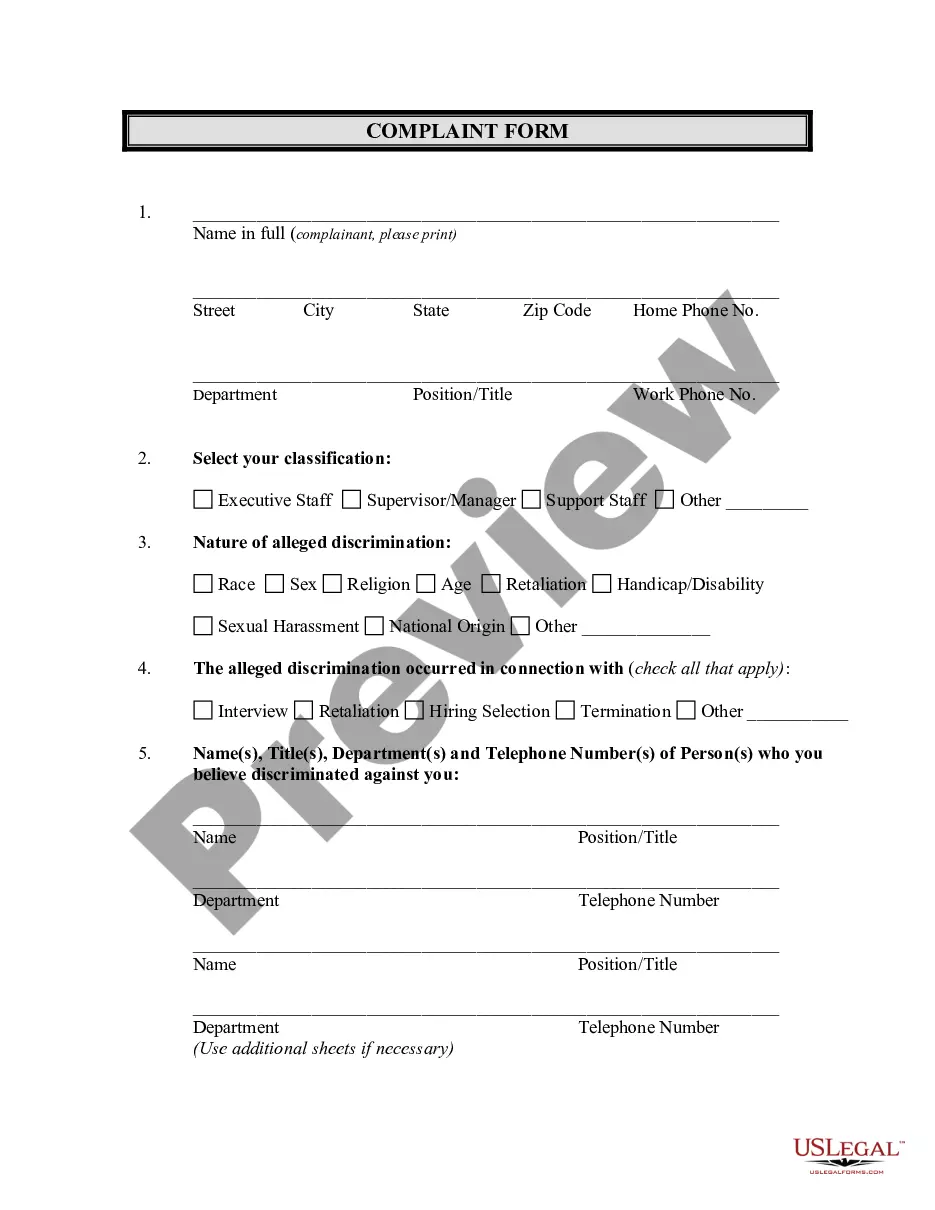
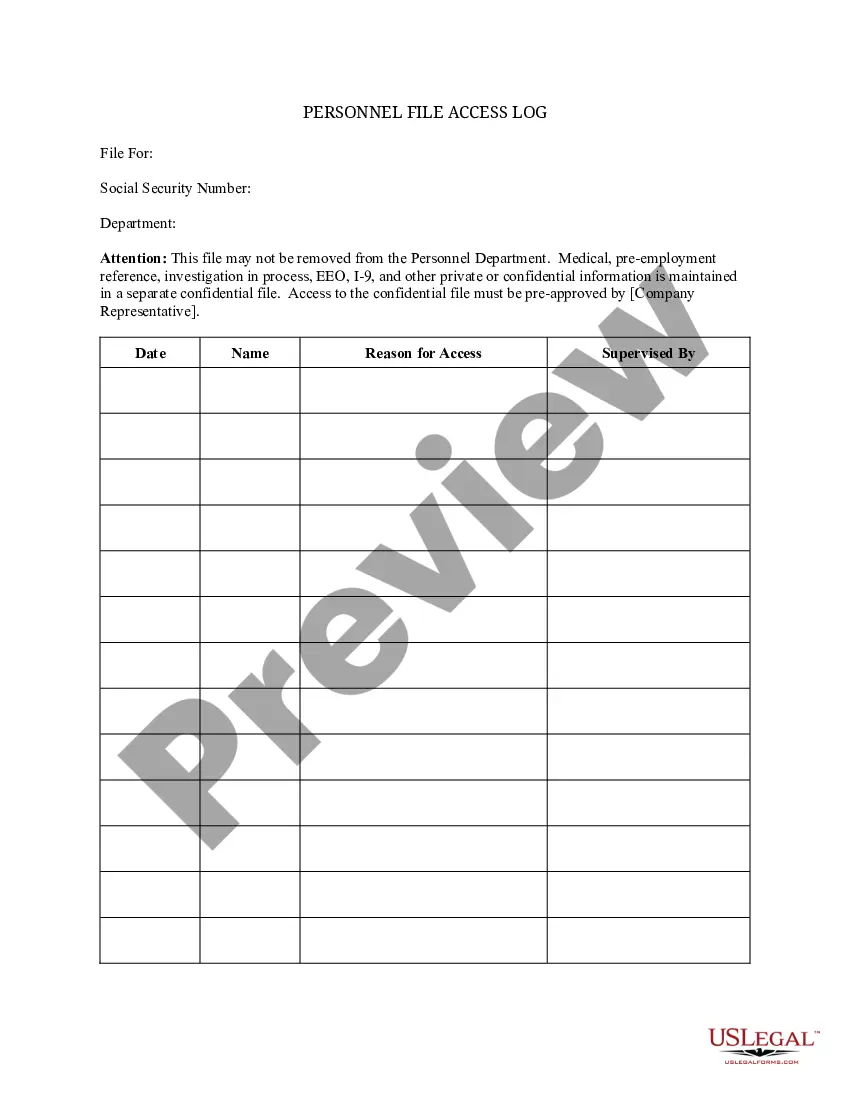
Ohio Personnel File Access Log
Description
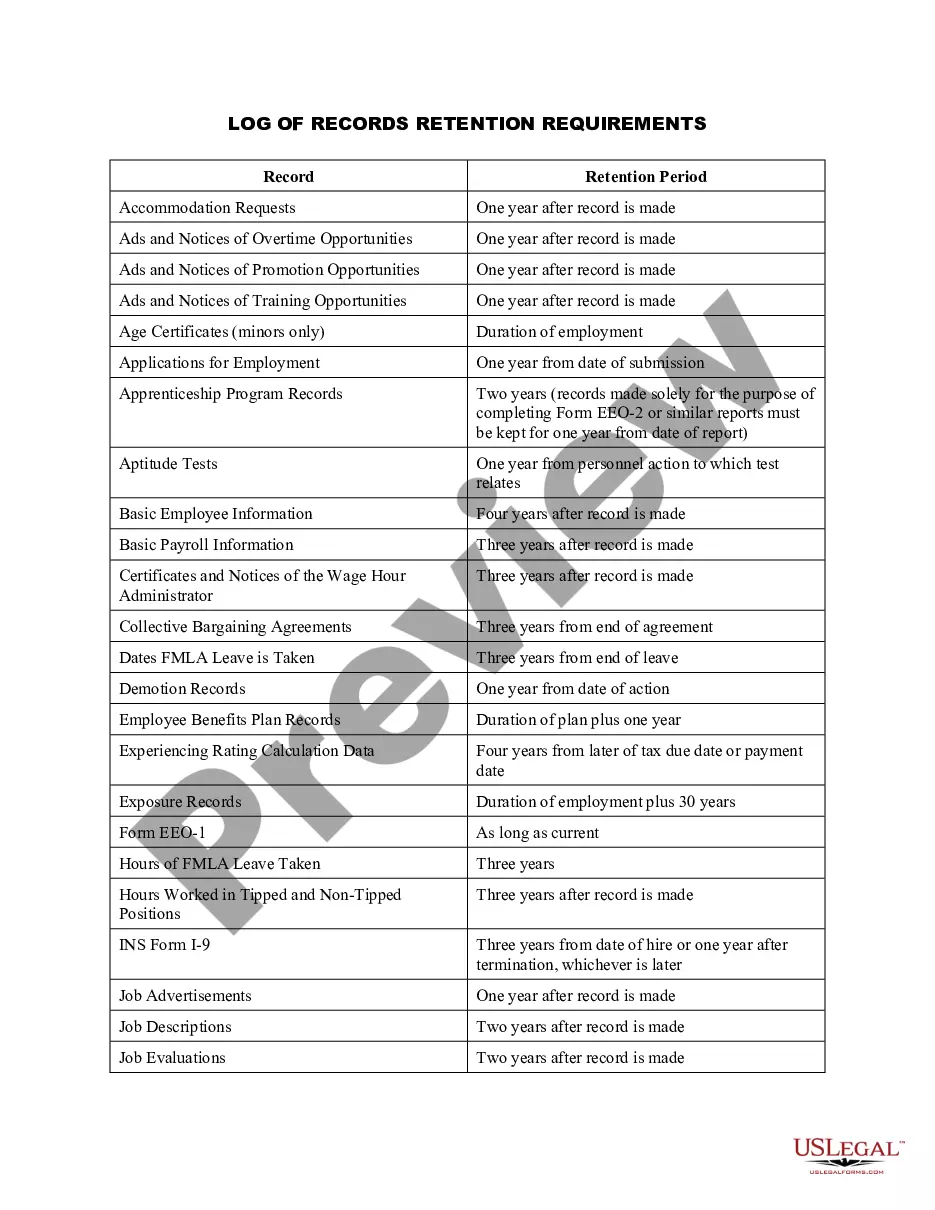
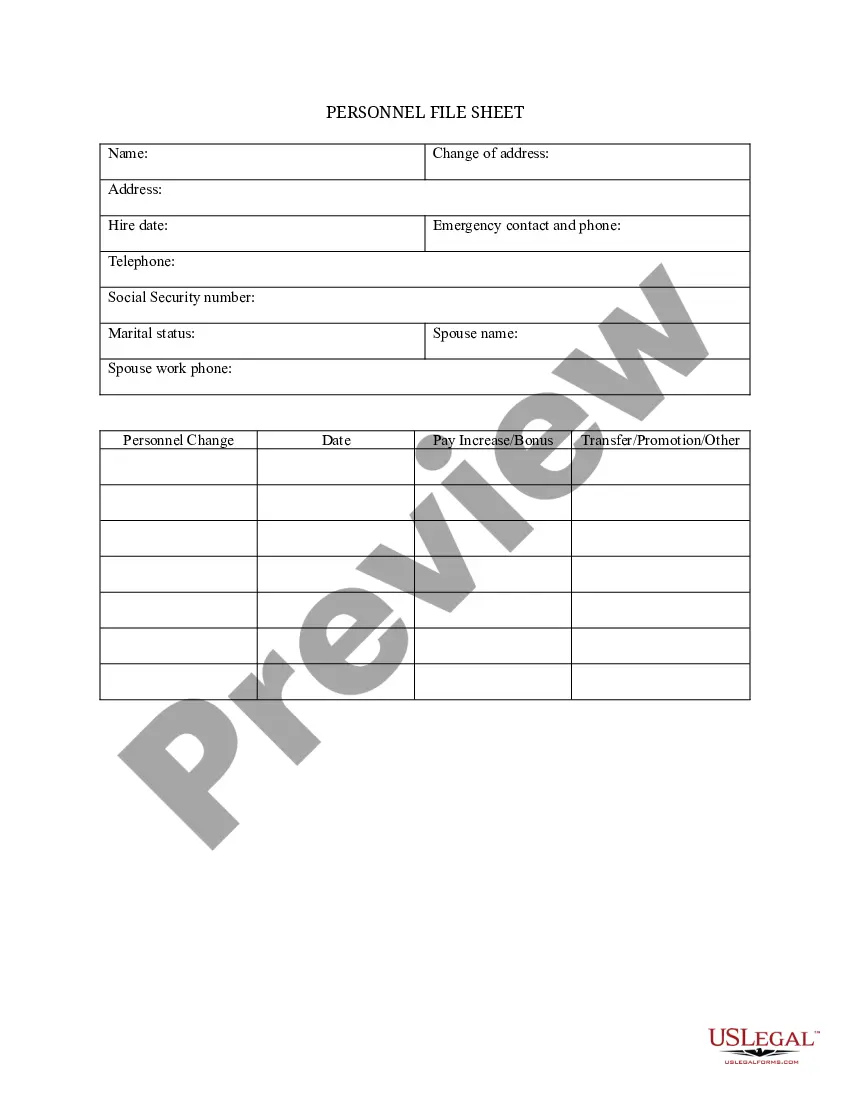
Get your form ready online
Our built-in tools help you complete, sign, share, and store your documents in one place.
Make edits, fill in missing information, and update formatting in US Legal Forms—just like you would in MS Word.
Download a copy, print it, send it by email, or mail it via USPS—whatever works best for your next step.
Sign and collect signatures with our SignNow integration. Send to multiple recipients, set reminders, and more. Go Premium to unlock E-Sign.
If this form requires notarization, complete it online through a secure video call—no need to meet a notary in person or wait for an appointment.
We protect your documents and personal data by following strict security and privacy standards.

Make edits, fill in missing information, and update formatting in US Legal Forms—just like you would in MS Word.

Download a copy, print it, send it by email, or mail it via USPS—whatever works best for your next step.

Sign and collect signatures with our SignNow integration. Send to multiple recipients, set reminders, and more. Go Premium to unlock E-Sign.

If this form requires notarization, complete it online through a secure video call—no need to meet a notary in person or wait for an appointment.

We protect your documents and personal data by following strict security and privacy standards.
Looking for another form?





How to fill out Personnel File Access Log?
If you need to thoroughly, obtain, or create legal document templates, utilize US Legal Forms, the largest repository of legal forms available online.
Employ the site's user-friendly and convenient search to find the documents you need.
Different templates for corporate and personal purposes are categorized by sections and indicates, or keywords.
Step 3. If you are dissatisfied with the document, use the Search field at the top of the page to find alternative versions of the legal form template.
Step 4. Once you have found the form you require, click the Get now button. Choose your preferred pricing plan and enter your information to register for the account.
- Use US Legal Forms to access the Ohio Personnel File Access Log In just a few clicks.
- If you are already a US Legal Forms member, Log Into your account and click the Download button to obtain the Ohio Personnel File Access Log.
- You can also access forms you previously obtained in the My documents tab of your account.
- If you are using US Legal Forms for the first time, follow the steps outlined below.
- Step 1. Make sure you have selected the form for the correct city/state.
- Step 2. Utilize the Review option to examine the form's details. Remember to read the description.
Form popularity
FAQ
The short answer is 'yes'. You have a right to make a SAR to your employer, asking to see your personnel files, at any time. Your employer has the right to ask why you want to see your files, but must then provide all your records to you.
As an employee, do I have a right to see my personnel files? The short answer is 'yes'. You have a right to make a SAR to your employer, asking to see your personnel files, at any time. Your employer has the right to ask why you want to see your files, but must then provide all your records to you.
An employee's personnel file usually contains information related to their performance, salary, and any investigations of misconduct or medical issues. As a result, these records are generally considered private and can be accessed by only the employer and the employee.
There is no law in Ohio that requires an employer to grant an employee access to his or her personnel file. There are, however, two key exceptions: medical records and wage and hour records.
- In Ohio the answer is no. There is no law which would require an employer to permit an employee or former employee to view their entire personnel file. In other states, there may be statutes which provide an employee access to his or her personnel folder.
Records maintained in a personnel file are generally considered public records under Ohio law. When a public records request is made, documents or information such as social security numbers, home addresses, personal telephone numbers, and employee ID numbers may require redaction or withholding pursuant to law.
As an employee, do I have a right to see my personnel files? The short answer is 'yes'. You have a right to make a SAR to your employer, asking to see your personnel files, at any time. Your employer has the right to ask why you want to see your files, but must then provide all your records to you.
There is no law in Ohio that requires an employer to grant an employee access to his or her personnel file. There are, however, two key exceptions: medical records and wage and hour records.