Ohio Classification Form for Estates
What is this form?
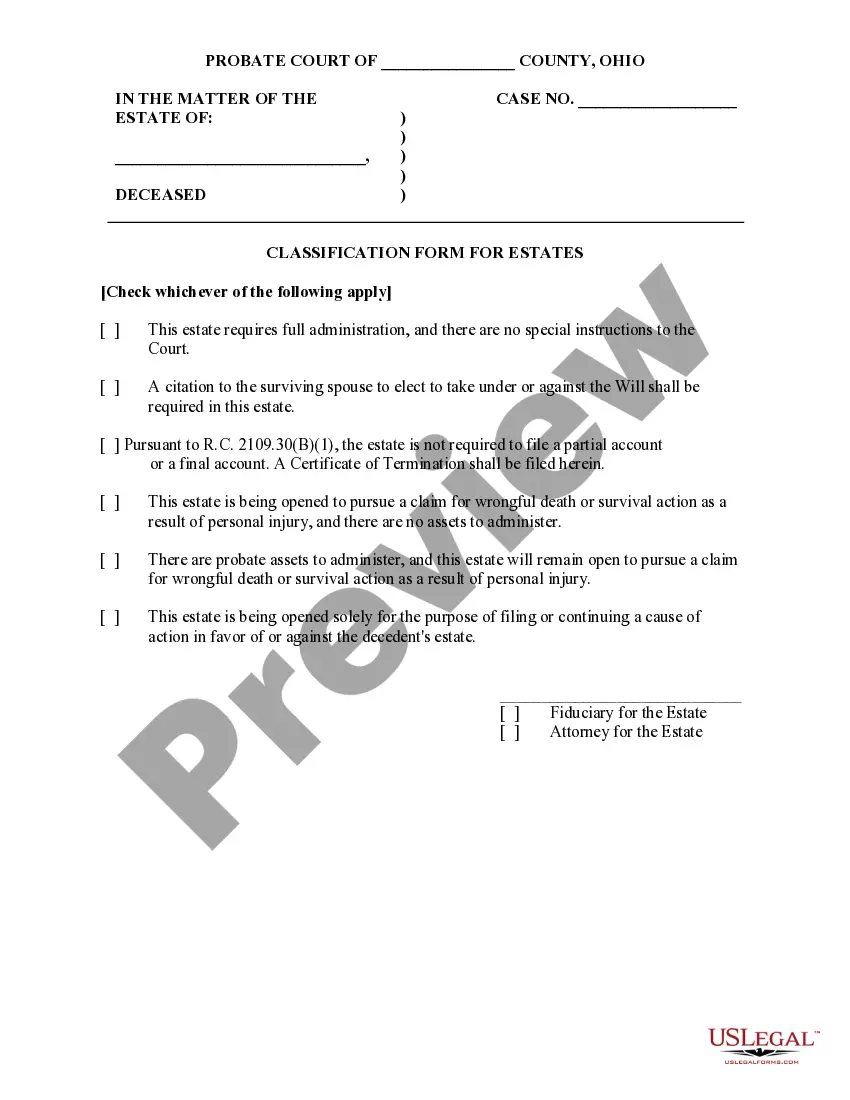
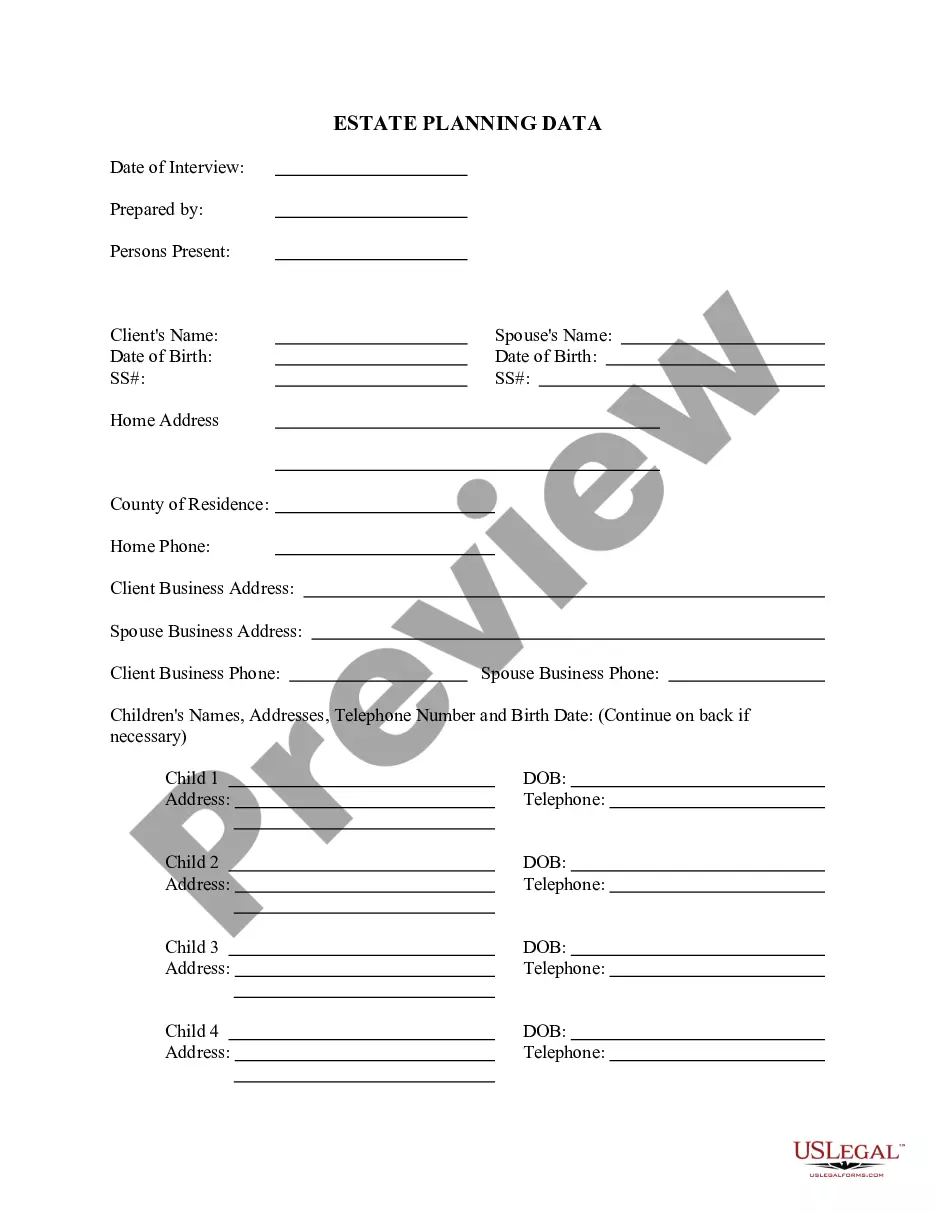
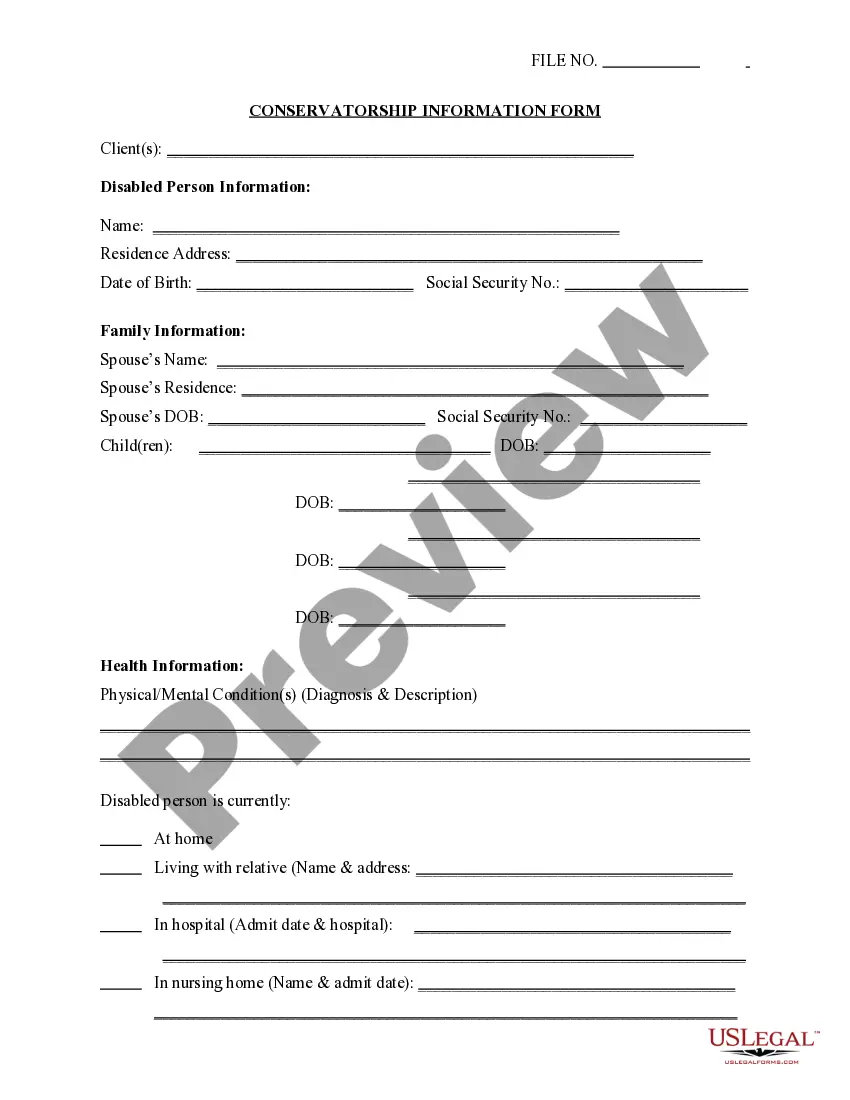
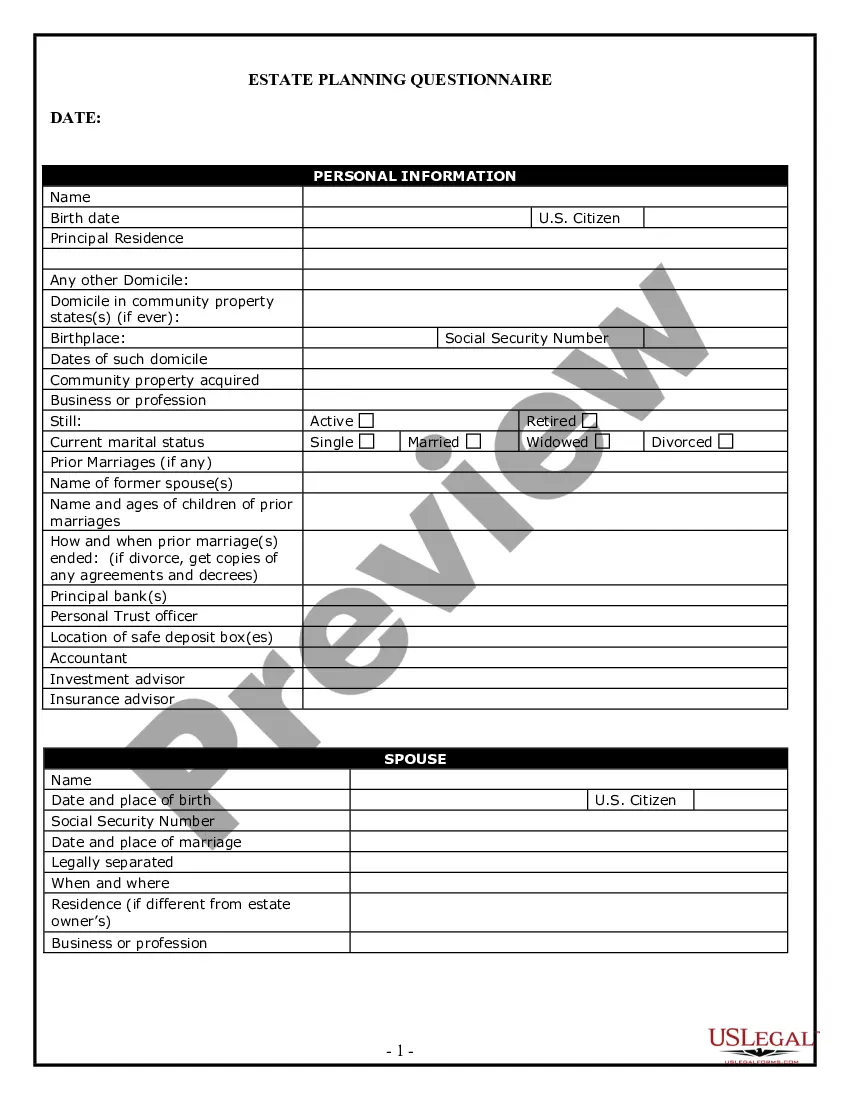
The Classification Form for Estates is a legal document used in Ohio to facilitate the administration of a deceased person's estate. This form helps determine the nature of the estate and what type of administration is necessary, including any claims for wrongful death or survival actions. Its purpose is to classify the estate correctly, which can influence how the estate is handled in probate court, making it distinct from other estate-related forms.
Key components of this form
- Case information for identifying the estate, including the deceased's name and case number.
- Options to classify the estate, such as requiring full administration or relating to wrongful death claims.
- Spaces for the fiduciary and attorney to sign and date the form.
- Check boxes that specify the type of estate administration required.
When this form is needed
This form should be used when managing the estate of a deceased individual in Ohio, particularly when you need to clarify how the estate should be administered. Scenarios include determining if the estate requires full administration or if there are claims arising from wrongful death or personal injury. It's essential for ensuring compliance with Ohio probate procedures.
Who can use this document
- Executors or administrators of an estate in Ohio.
- Attorneys representing estates during probate proceedings.
- Heirs or beneficiaries seeking clarification on estate administration.
Instructions for completing this form
- Provide the name of the deceased and the corresponding case number.
- Review the classification options for the estate and check the appropriate boxes based on your situation.
- If applicable, specify any actions required, such as citations to the surviving spouse.
- Have the fiduciary for the estate and the attorney for the estate sign the form.
- Submit the completed form to the probate court as required by local rules.
Does this form need to be notarized?
This form does not typically require notarization unless specified by local law. Ensure you verify your local procedures to determine if notarization is needed for your specific situation.
Get your form ready online
Our built-in tools help you complete, sign, share, and store your documents in one place.
Make edits, fill in missing information, and update formatting in US Legal Forms—just like you would in MS Word.
Download a copy, print it, send it by email, or mail it via USPS—whatever works best for your next step.
Sign and collect signatures with our SignNow integration. Send to multiple recipients, set reminders, and more. Go Premium to unlock E-Sign.
If this form requires notarization, complete it online through a secure video call—no need to meet a notary in person or wait for an appointment.
We protect your documents and personal data by following strict security and privacy standards.

Make edits, fill in missing information, and update formatting in US Legal Forms—just like you would in MS Word.

Download a copy, print it, send it by email, or mail it via USPS—whatever works best for your next step.

Sign and collect signatures with our SignNow integration. Send to multiple recipients, set reminders, and more. Go Premium to unlock E-Sign.

If this form requires notarization, complete it online through a secure video call—no need to meet a notary in person or wait for an appointment.

We protect your documents and personal data by following strict security and privacy standards.
Mistakes to watch out for
- Failing to check the appropriate classification options, which can lead to administrative delays.
- Leaving the case number blank or incorrectly filled, which can complicate court processing.
- Not obtaining the necessary signatures from the fiduciary and attorney.
Why complete this form online
- Immediate access to the form, allowing for timely completion and submission.
- Editability for customization to meet specific estate circumstances.
- Reliable templates drafted by licensed attorneys to ensure compliance with legal standards.
Main things to remember
- The Classification Form for Estates is crucial for proper estate administration in Ohio.
- It helps delineate what type of administration is required and clarifies the legal standing of claims.
- Be sure to complete the form accurately to avoid processing issues in probate court.
Looking for another form?
Form popularity
FAQ
An inventory and appraisal is a required filing in California probate. The inventory and appraisal is a single document that (1) inventories the property in the decedent's estate and (2) contains an appraisal of the property in the inventory. California Probate Code § 8800(a).
5.7 Information about the estate Assets include the full market value of houses, flats or other property, the value of household goods, jewellery and belongings at the sum for which they could be sold, including assets held jointly with another person.
Your inventory should include the number of shares of each type of stock, the name of the corporation, and the name of the exchange on which the stock is traded. Meanwhile, you should note the total gross amount of a bond, the name of the entity that issued it, the interest rate on the bond, and its maturity date.
First, the person who makes the will, also known as the testator, can name an individual to be the executor. The testator would stipulate this appointment in the will. Once the testator passes away, the named executor may have to submit a petition to the appropriate probate court to be confirmed as the executor.
Last Will and Testament and Codicil(s): The original will and codicils will be required because if an original cannot be found, then it is presumed the decedent destroyed them, Revocable Living Trust and Amendment(s): Usually a copy of the trust or amendment is all that is required.
When calculating the value of an estate, the gross value is the sum of all asset values, and the net value is the gross value minus any debts: in other words, the actual worth of the estate.
Determine Your State's Laws Regarding Inventory Forms. Review the Instructions Provided. Identify Real Property. Identify Personal Property. Identify Bank Accounts. Identify Retirement Accounts. Identify Non-Probate Assets. File the Form With the Court.
Determine Your Priority for Appointment. Receive Written Waivers From Other Candidates. Contact Court in the County Where Deceased Resided. File the Petition for Administration. Attend the Probate Hearing. Secure a Probate Bond.
The first step in probating an estate is to locate all of the decedent's estate planning documents and other important papers, even before being appointed to serve as the personal representative or executor.