Ohio Mortgage Note
About this form
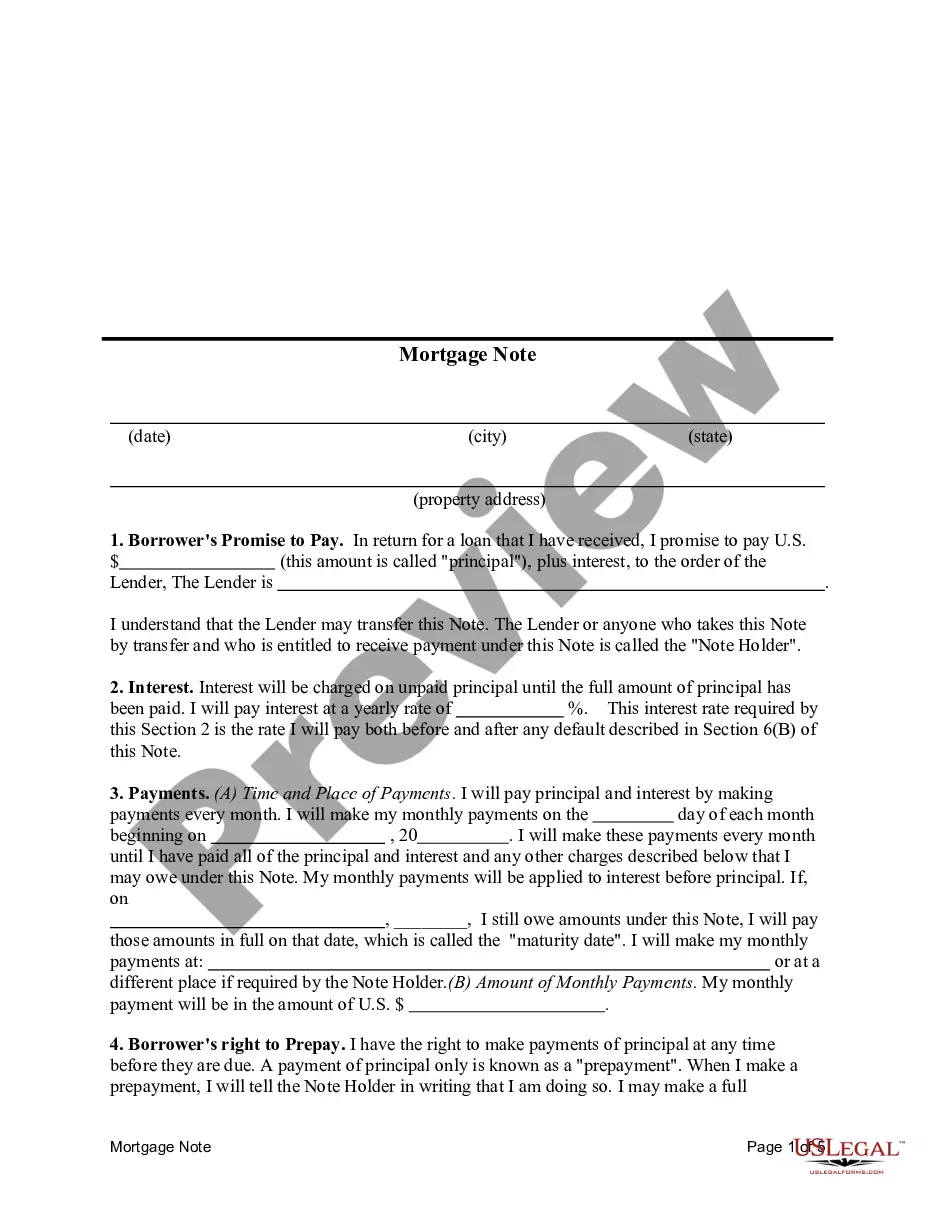
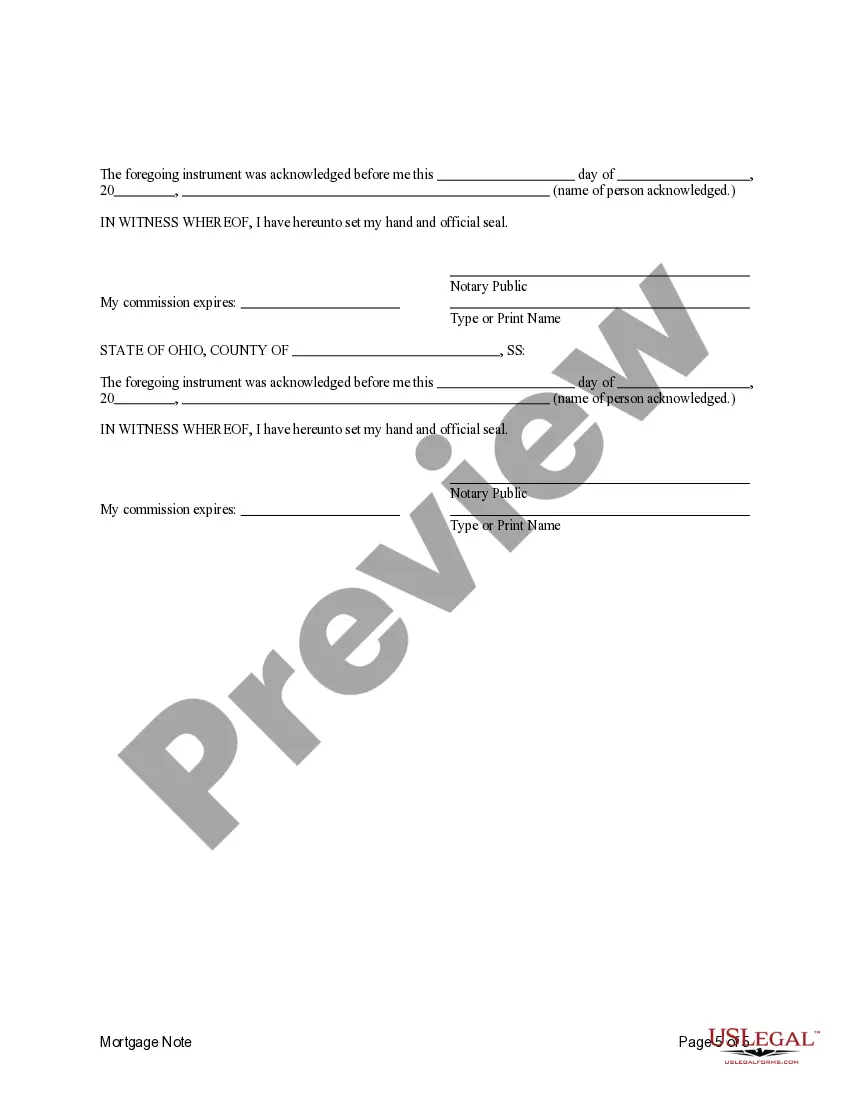
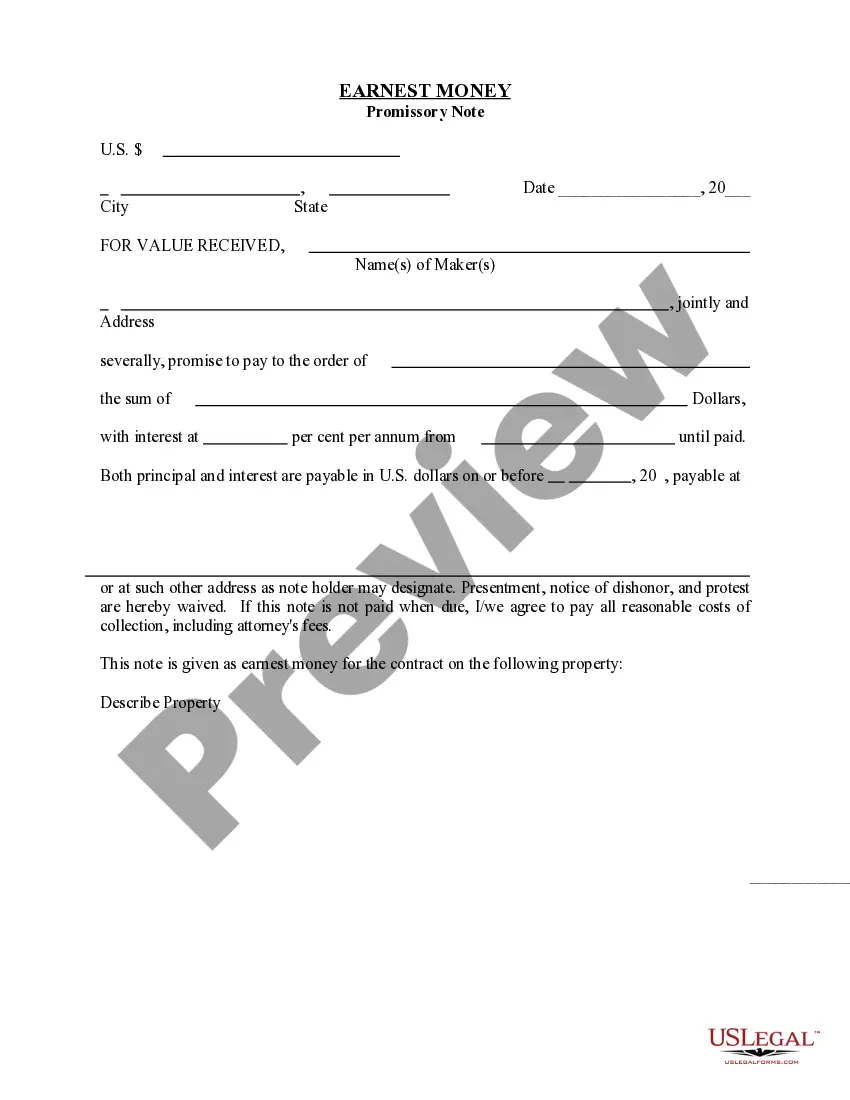
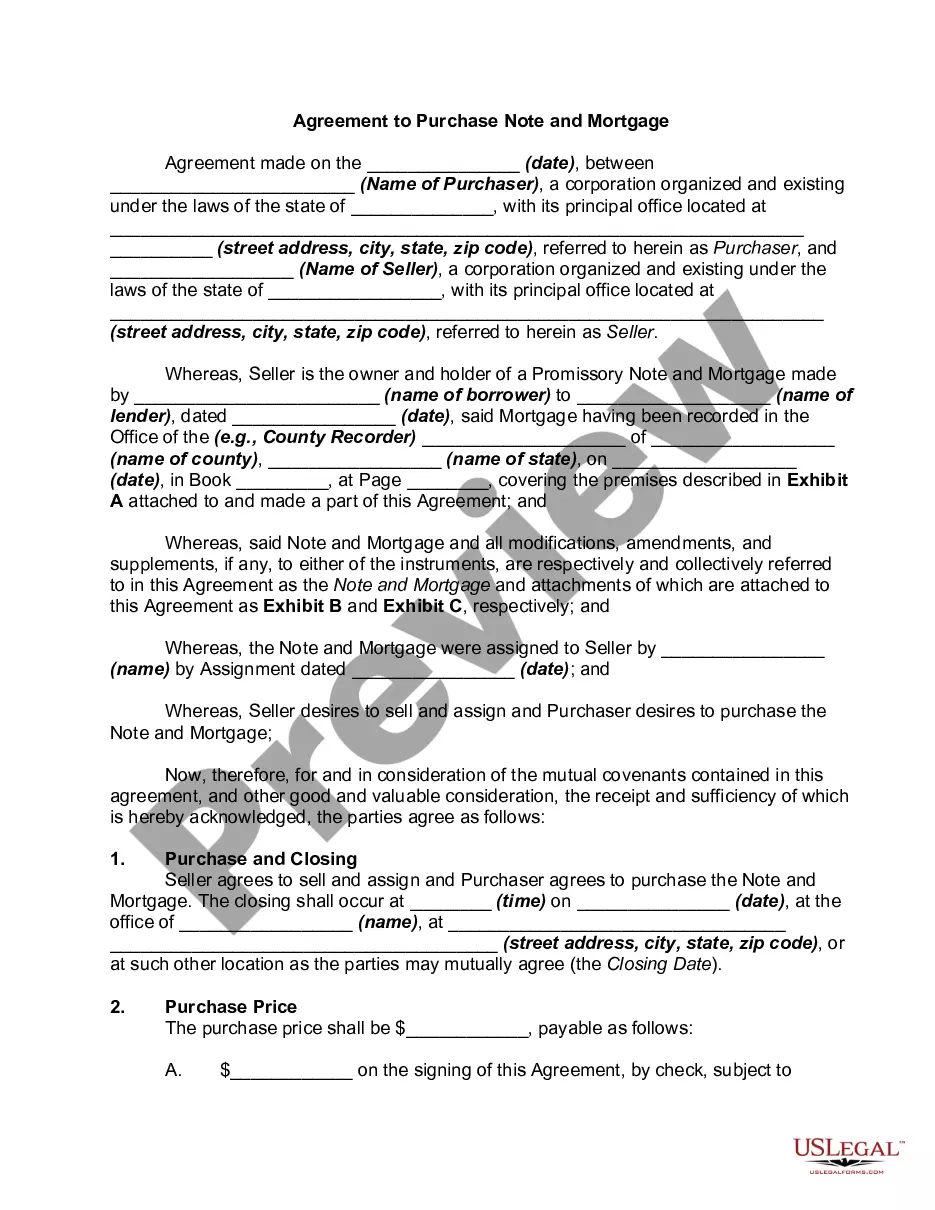
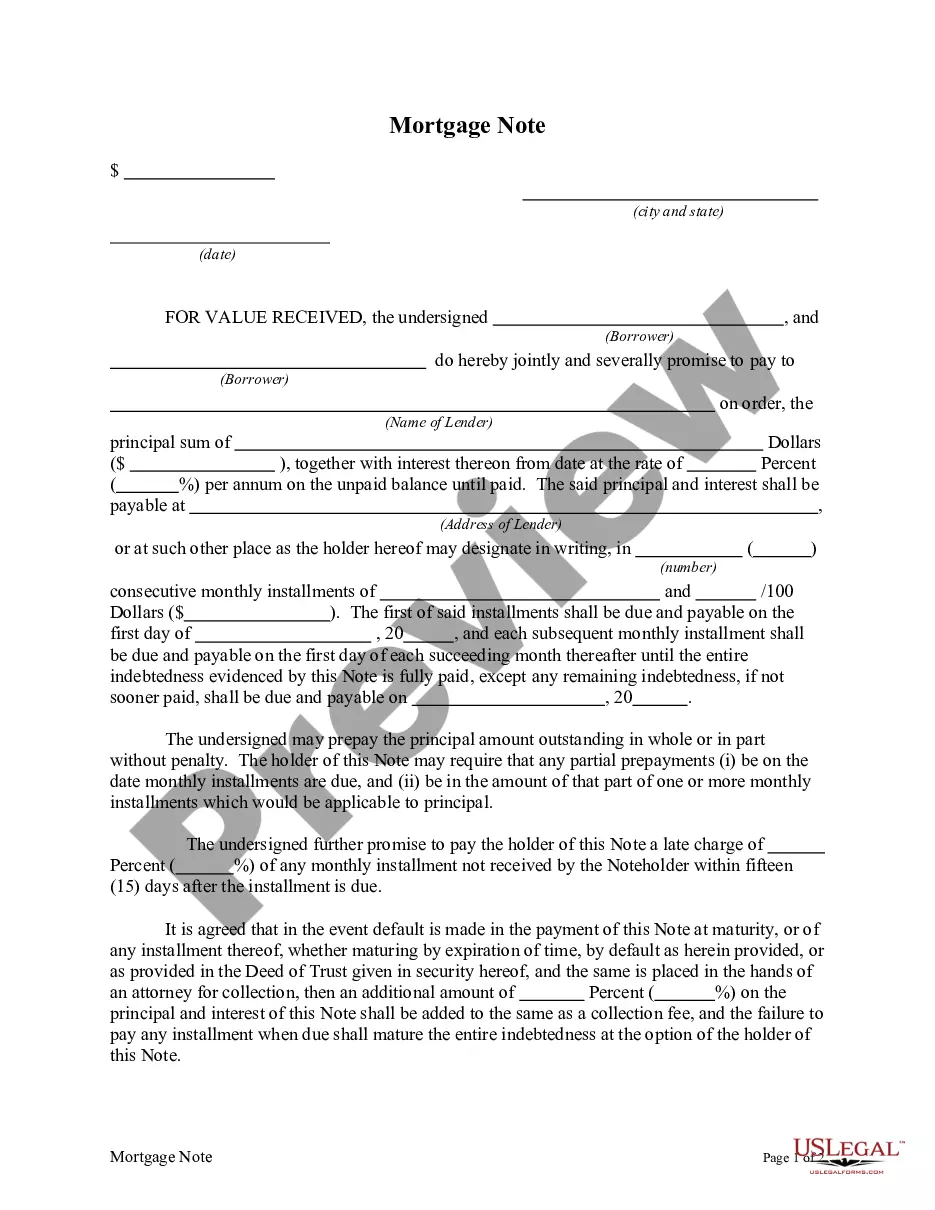
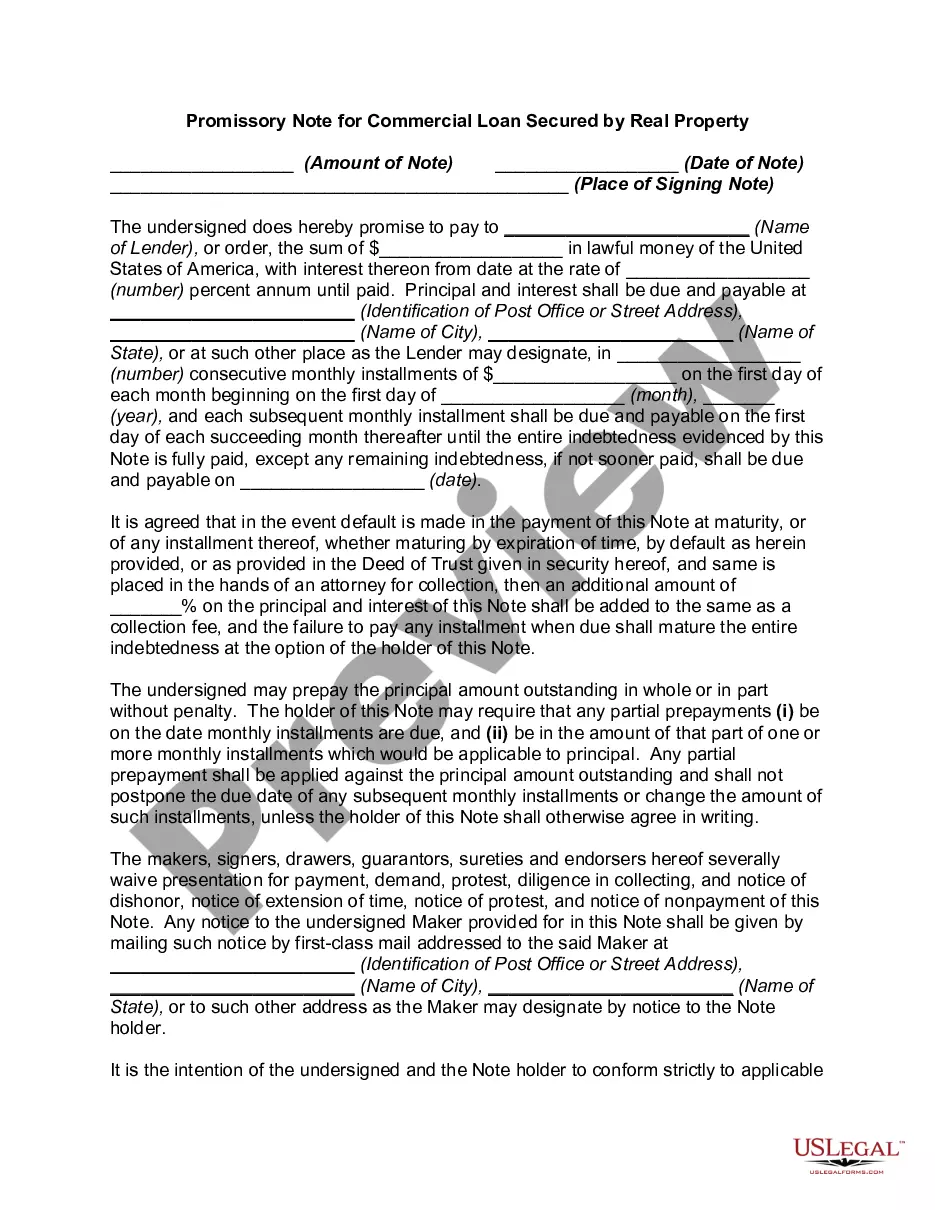
A Mortgage Note is a legal document that outlines theterms of a loan for purchasing real estate. This form serves as a written promise to repay a borrowed sum with interest. It is essential for home financing in Ohio, distinguishing it from other financing documents like mortgages and deeds of trust. This particular Mortgage Note can be downloaded in Word format for easy customization and completion.
What’s included in this form
- Parties involved: Identification of the borrower and lender.
- Loan amount: Amount borrowed by the borrower.
- Interest rate: The rate at which interest accrues on the borrowed amount.
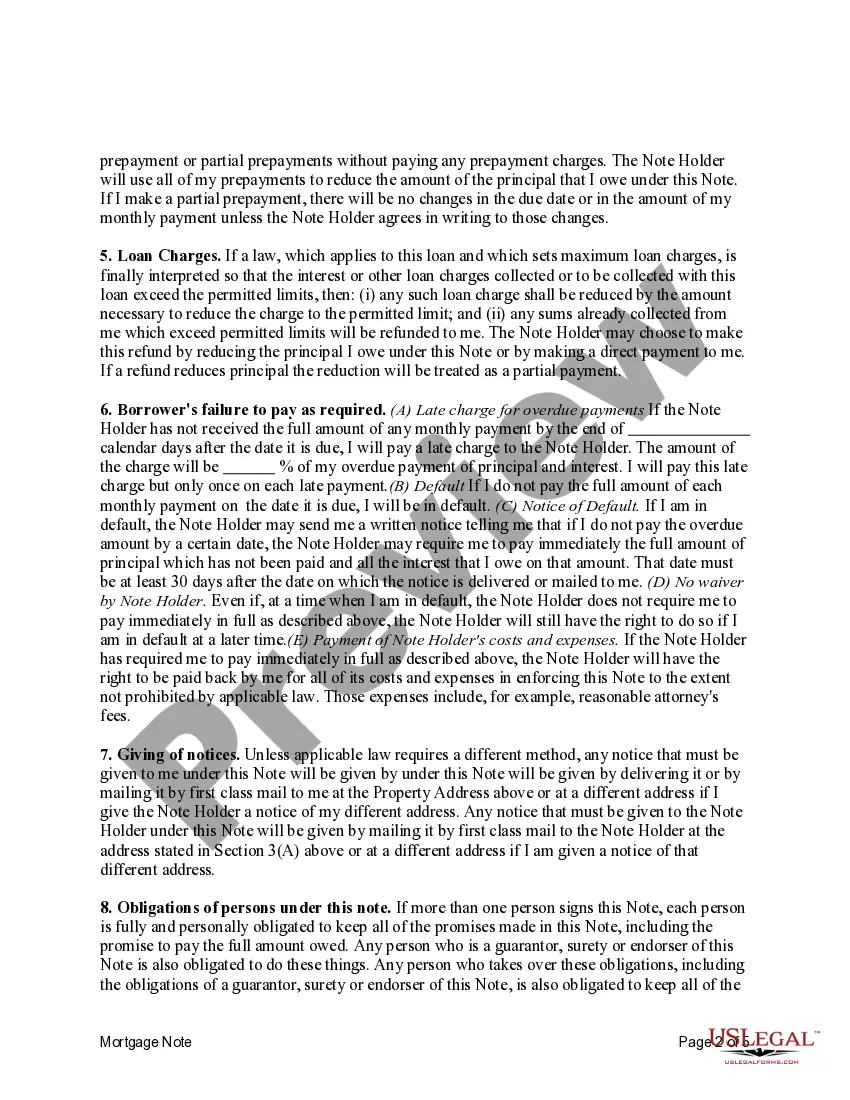
- Payment terms: Details on payment schedules, including due dates and amounts.
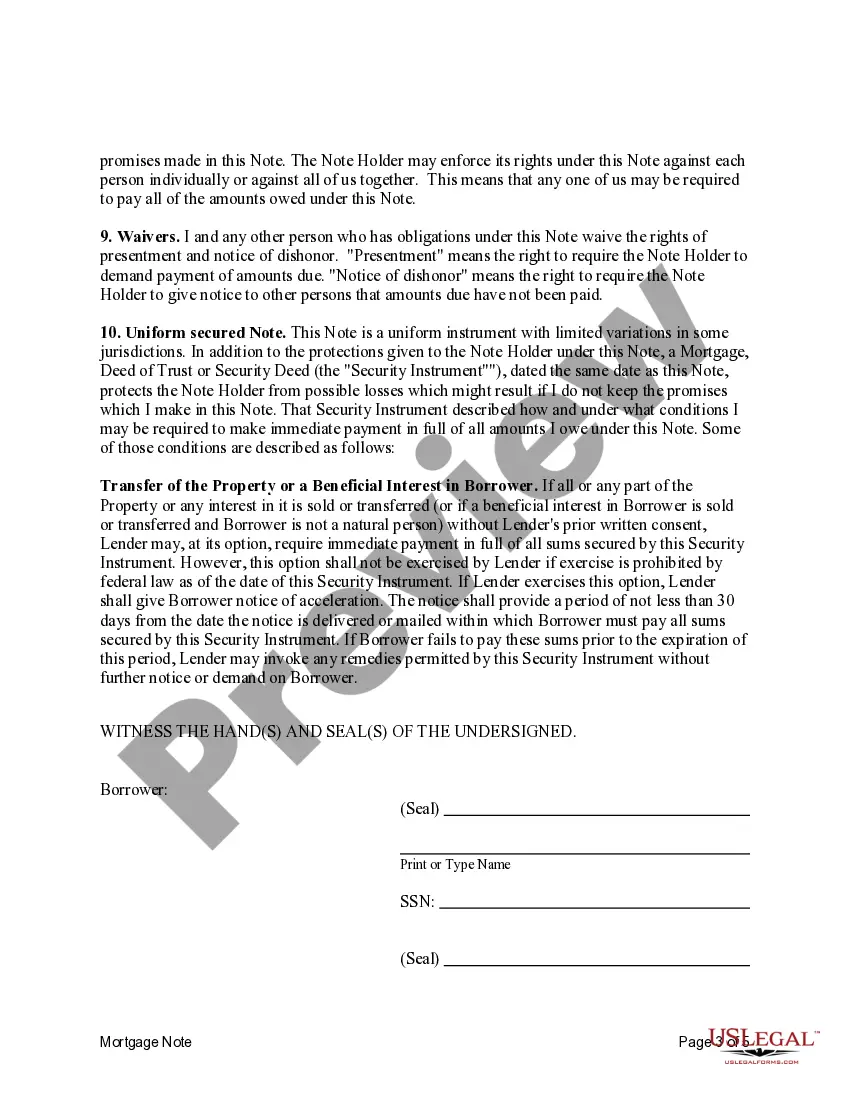
- Notices: Guidelines on how notices must be communicated between the borrower and lender.
- Obligations: Explanation of the responsibilities of all parties involved.
When to use this document
You should use a Mortgage Note when you are borrowing money from a lender to purchase real estate. This document is crucial for defining the terms of repayment and ensuring that both parties understand their rights and obligations. Scenarios include buying a home, refinancing an existing mortgage, or obtaining a loan secured by property.
Who can use this document
- Home buyers seeking financing for property purchases.
- Real estate investors acquiring properties with the intent to generate income.
- Anyone refinancing an existing mortgage to secure better terms.
- Individuals entering a financial agreement secured by real estate.
How to complete this form
- Identify the parties: Enter the full names and addresses of the borrower and lender.
- Specify the loan amount: Clearly state the total amount being borrowed.
- Detail the interest rate: Provide the annual interest rate applicable to the loan.
- Outline payment terms: Include the payment schedule, amounts due, and due dates.
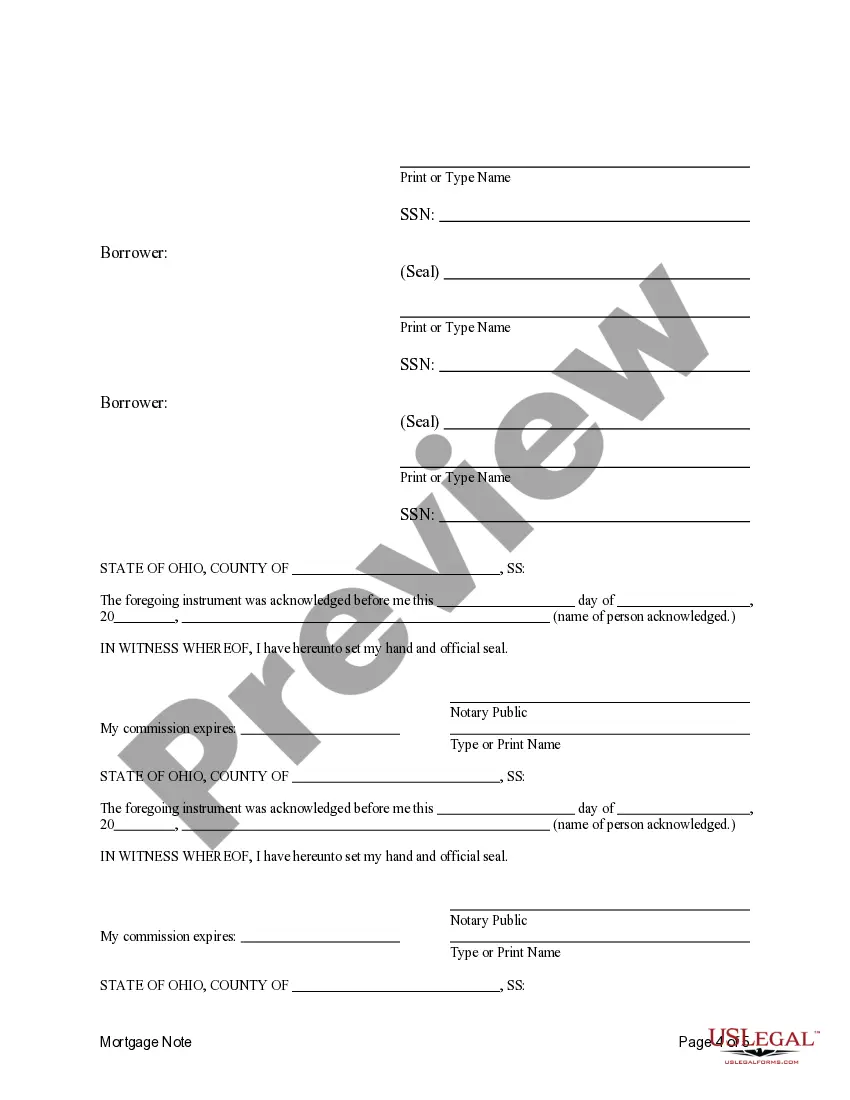
- Sign and date: All parties must sign and date the form to make it legally binding.
Notarization guidance
This form typically does not require notarization unless specified by local law. However, it's advisable to consult with a legal professional to ensure compliance with state regulations.
Get your form ready online
Our built-in tools help you complete, sign, share, and store your documents in one place.
Make edits, fill in missing information, and update formatting in US Legal Forms—just like you would in MS Word.
Download a copy, print it, send it by email, or mail it via USPS—whatever works best for your next step.
Sign and collect signatures with our SignNow integration. Send to multiple recipients, set reminders, and more. Go Premium to unlock E-Sign.
If this form requires notarization, complete it online through a secure video call—no need to meet a notary in person or wait for an appointment.
We protect your documents and personal data by following strict security and privacy standards.

Make edits, fill in missing information, and update formatting in US Legal Forms—just like you would in MS Word.

Download a copy, print it, send it by email, or mail it via USPS—whatever works best for your next step.

Sign and collect signatures with our SignNow integration. Send to multiple recipients, set reminders, and more. Go Premium to unlock E-Sign.

If this form requires notarization, complete it online through a secure video call—no need to meet a notary in person or wait for an appointment.

We protect your documents and personal data by following strict security and privacy standards.
Common mistakes to avoid
- Failing to clearly state the loan amount.
- Not specifying the interest rate, leading to confusion over payment obligations.
- Missing signatures or incorrect dates which can invalidate the agreement.
- Not providing proper notice addresses for communication between parties.
Advantages of online completion
- Convenience: Easily download and complete the form at your own pace.
- Editability: Modify the form as needed to fit your specific loan agreement.
- Reliability: Access legally vetted documents drafted by licensed attorneys.
Main things to remember
- The Mortgage Note outlines the borrower's obligation to repay the loan for purchasing a property.
- It is specifically designed for use in Ohio, reflecting state requirements.
- Careful completion of the form can help avoid common pitfalls and ensure legal enforceability.
Looking for another form?



Form popularity
FAQ
If you lose your closing papers or they get destroyed, you can obtain a copy of your mortgage note by searching the county's records or contacting the registry of deeds. It's also possible to obtain a copy from the company who services your loan (that is, the company you get billing statements from).
A mortgage holder, more accurately called a note holder or simply the holder, is the owner of your loan. The holder has the right to enforce the loan agreement.
The Note is signed by the people who agree to pay the debt (the people that will be making the mortgage payments). The Deed and the Deed of Trust are signed by those who will own the property that is being mortgaged.The Note itself has virtually nothing to do with the property.
A mortgage note is the document that you sign at the end of your home closing. It contains all the terms of the agreement between the borrower and the lender and accurately reflects all the terms of the mortgage.
A mortgage note is the document that you sign at the end of your home closing. It contains all the terms of the agreement between the borrower and the lender and accurately reflects all the terms of the mortgage.
Once documents such as deeds, mortgage notes, or satisfaction of mortgage or judgment are recorded they become an official public record. Countrywide Process has the capability of completing document recordings quickly and efficiently throughout California.
The lender can provide copies of the documents signed at closing. If the loan has changed hands, contact the most current servicer for a copy of your mortgage or deed of trust documents. A lender is required under the Federal Servicer Act to provide you copies of your loan documents if you submit a written request.
The Mortgage Follows the Note Further, perfection of a security interest in the mortgage note (whether in favor of a buyer or a lender with a security interest to secure an obligation) also perfects the security interest in the buyer's or lender's security interest in the seller's or borrower's rights in the mortgage.