New York Civil Judgment Order
About this form
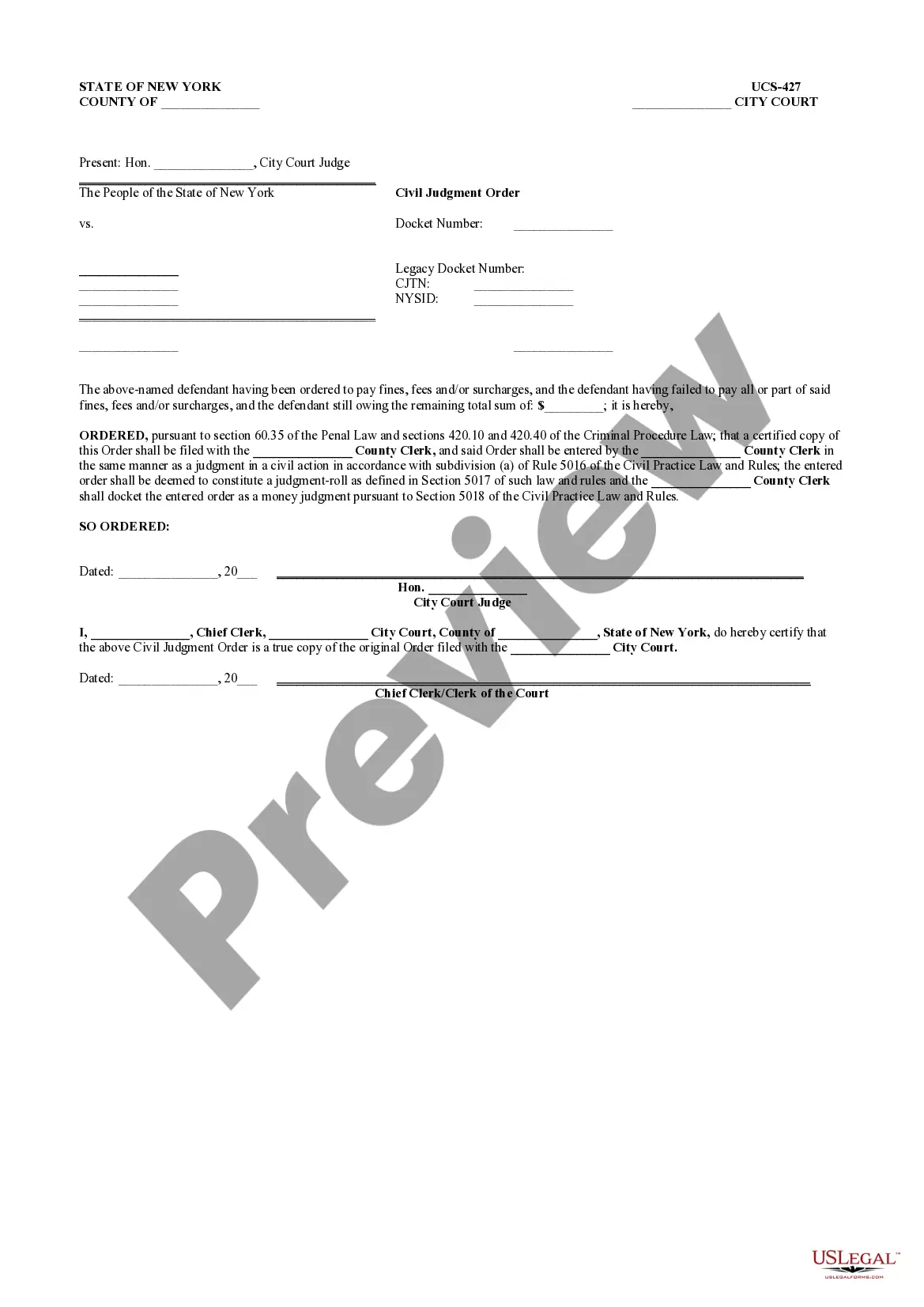
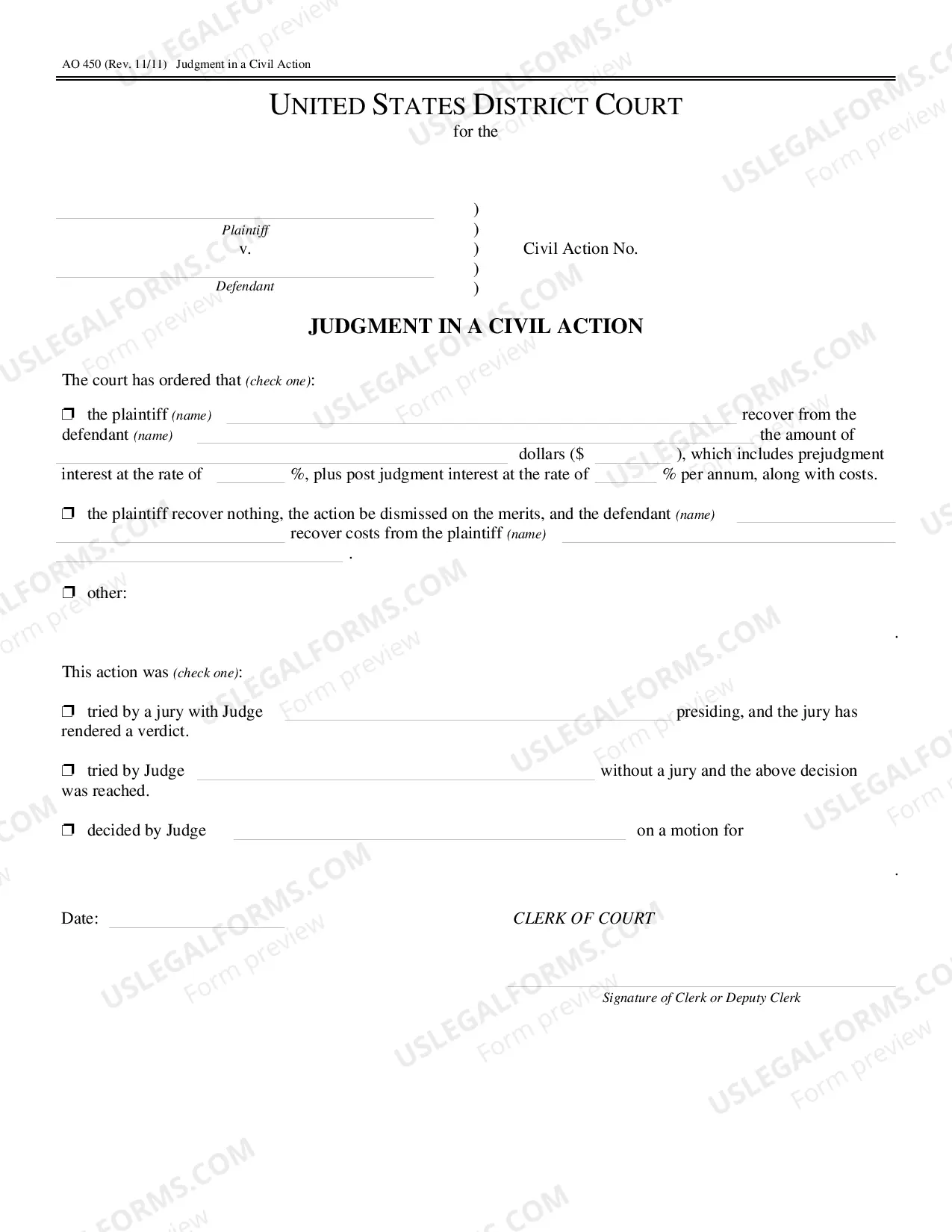
The Civil Judgment Order is a legal document used to enforce court-ordered payments in civil actions. This form specifically applies when a defendant has been ordered to pay fines, fees, or surcharges, but has failed to pay the full amount owed. Unlike other legal forms, this document serves to formally recognize the debt as a civil judgment, enabling enforcement actions to be taken to recover the owed amount.
Key components of this form
- Identifying information for the parties involved, including names and contact details.
- Specified amounts owed, including total fines, fees, and damages.
- Judicial endorsement by the presiding judge of the City Court.
- Clerk's certification that the order is a true copy of the original filed order.
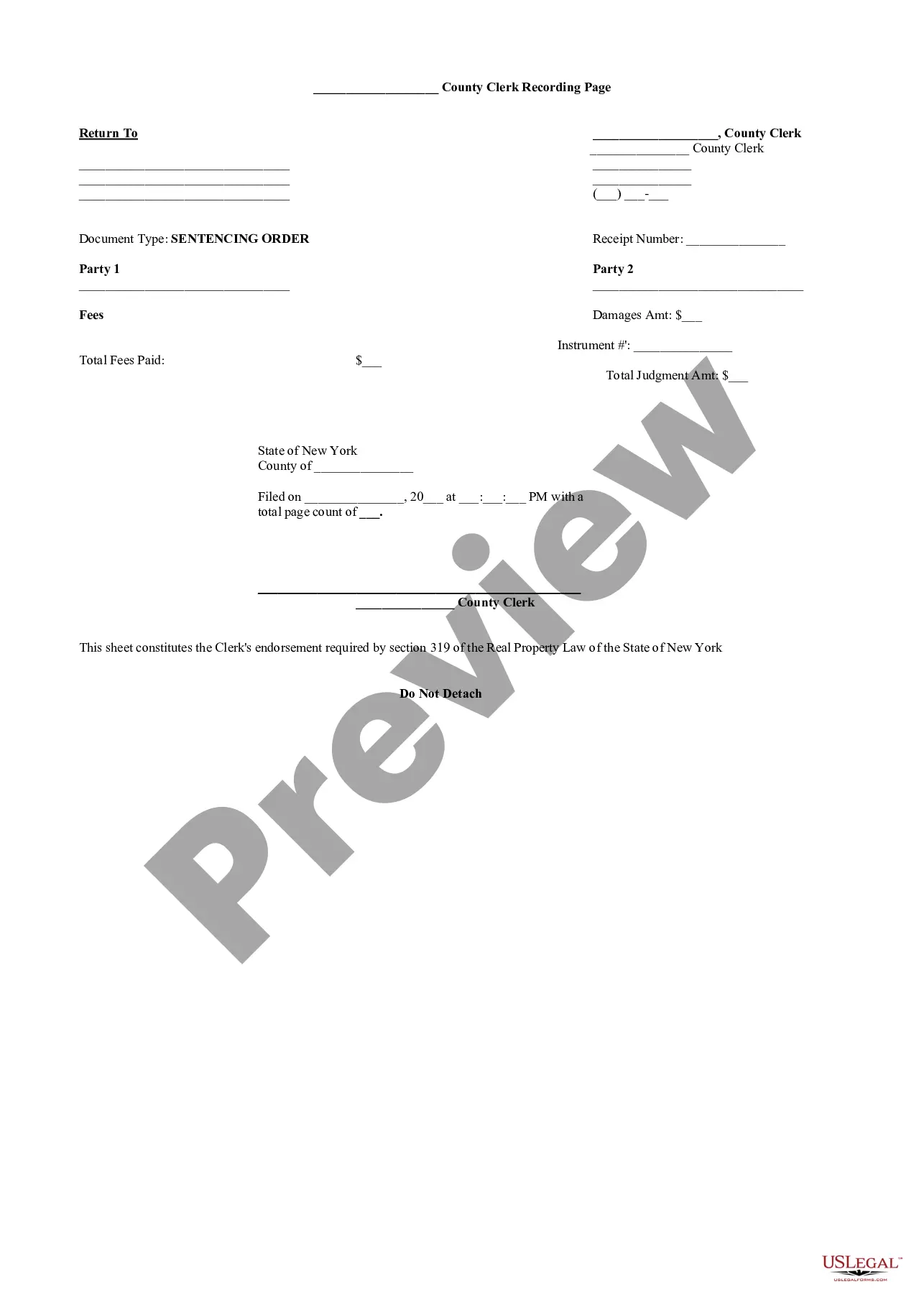
- Filing details, such as the date and time of entry with the county clerk.
Common use cases
This form should be used when a defendant has been ordered by a court to pay certain fines or fees but fails to do so. If a court judgment has been issued, and part or all of that financial obligation remains unpaid, the Civil Judgment Order is necessary to transform the court's ruling into a legally enforceable civil judgment.
Intended users of this form
- Individuals or entities seeking to enforce a court judgment for unpaid fines or fees.
- Legal professionals representing clients with outstanding judgments.
- Court clerks responsible for processing civil judgment orders.
How to complete this form
- Identify the parties involved in the case, including their full names and addresses.
- Fill in the amount owed, including total fines, fees, and damages.
- Obtain the signature of the city court judge to endorse the order.
- Complete the filing details, including the date, time, and the clerk's information.
- File the order with the county clerk to ensure it is recorded as a civil judgment.
Does this document require notarization?
This form does not typically require notarization unless specified by local law.
Get your form ready online
Our built-in tools help you complete, sign, share, and store your documents in one place.
Make edits, fill in missing information, and update formatting in US Legal Forms—just like you would in MS Word.
Download a copy, print it, send it by email, or mail it via USPS—whatever works best for your next step.
Sign and collect signatures with our SignNow integration. Send to multiple recipients, set reminders, and more. Go Premium to unlock E-Sign.
If this form requires notarization, complete it online through a secure video call—no need to meet a notary in person or wait for an appointment.
We protect your documents and personal data by following strict security and privacy standards.

Make edits, fill in missing information, and update formatting in US Legal Forms—just like you would in MS Word.

Download a copy, print it, send it by email, or mail it via USPS—whatever works best for your next step.

Sign and collect signatures with our SignNow integration. Send to multiple recipients, set reminders, and more. Go Premium to unlock E-Sign.

If this form requires notarization, complete it online through a secure video call—no need to meet a notary in person or wait for an appointment.

We protect your documents and personal data by following strict security and privacy standards.
Typical mistakes to avoid
- Neglecting to include the correct names and addresses of the parties involved.
- Failing to accurately state the total amount owed or miscalculating fees.
- Omitting the judicial endorsement, which is crucial for the formâs validity.
Why use this form online
- Convenience of downloading the form and completing it at your own pace.
- The ability to easily edit and customize the form to suit specific needs.
- Access to legal templates drafted by licensed attorneys, ensuring accuracy and compliance.
Looking for another form?

Form popularity
FAQ
Renew the judgment Money judgments automatically expire (run out) after 10 years. To prevent this from happening, the creditor must file a request for renewal of the judgment with the court BEFORE the 10 years run out.
An order is a direction by the court or judge entered into the record for a variety of matters. Whereas a Judgment is the written final determination/outcome of the lawsuit. For example, an order may be entered in a dog bite lawsuit to exclude evidence from being presented to the jury.
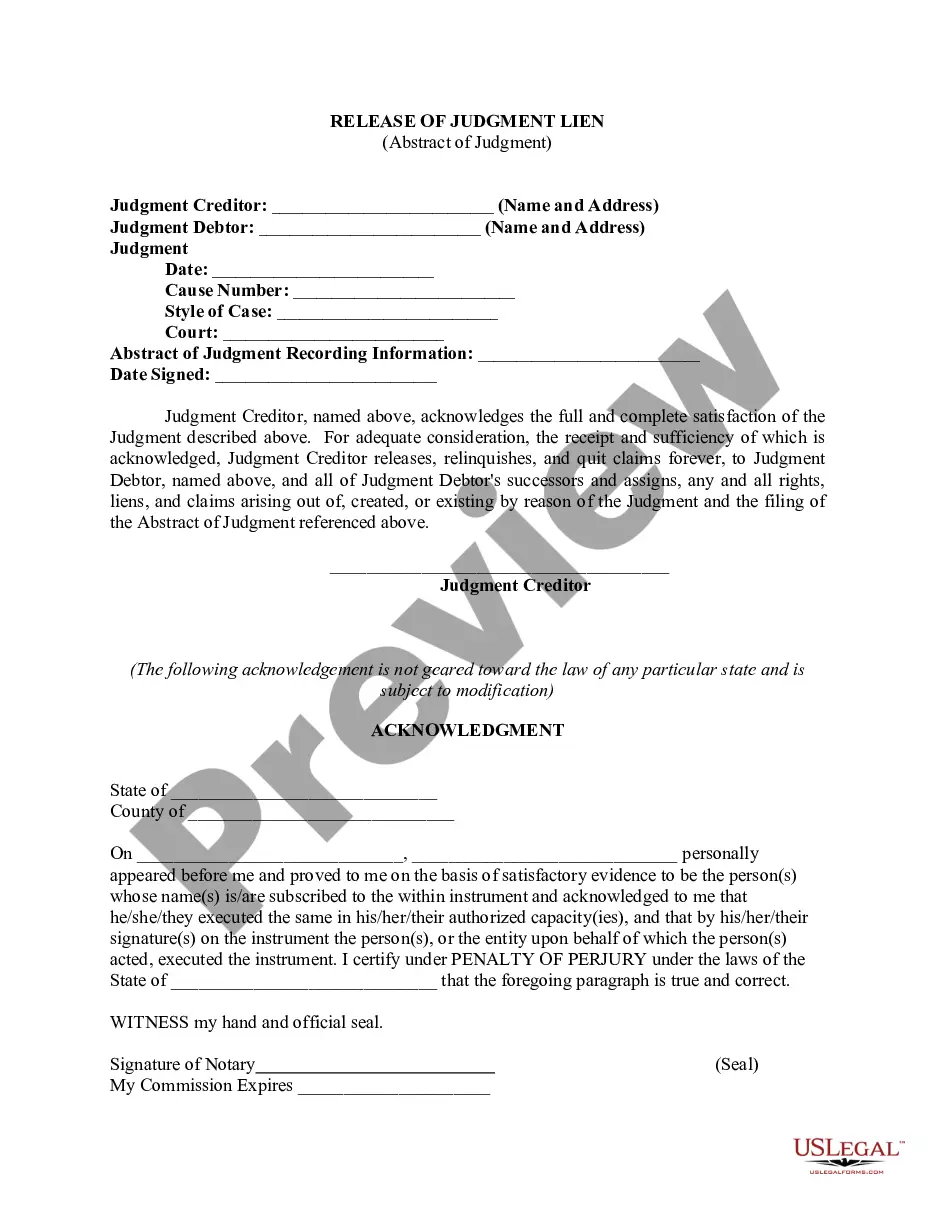
A civil judgment is a ruling against a defendant in a court of law. It refers to a non-criminal legal matter and often requires the defendant to pay damages. Damages are generally money amounts.
You may be surprised to learn that money judgments in New York are enforceable for a period of twenty (20) years. That judgment can be enforced against any property you have that can be assigned or transferred (such as money, bank accounts and real property).
The statute of limitations in New York is six years for any type of debt. The six-year time period is counted from when a debt repayment became due or when the debtor made the most recent payment, whichever is more recent.
A judgment is good for 20 years, but if the plaintiff wants to enforce the judgment against land it is only good for 10 years unless the plaintiff renews it for another 10 years.
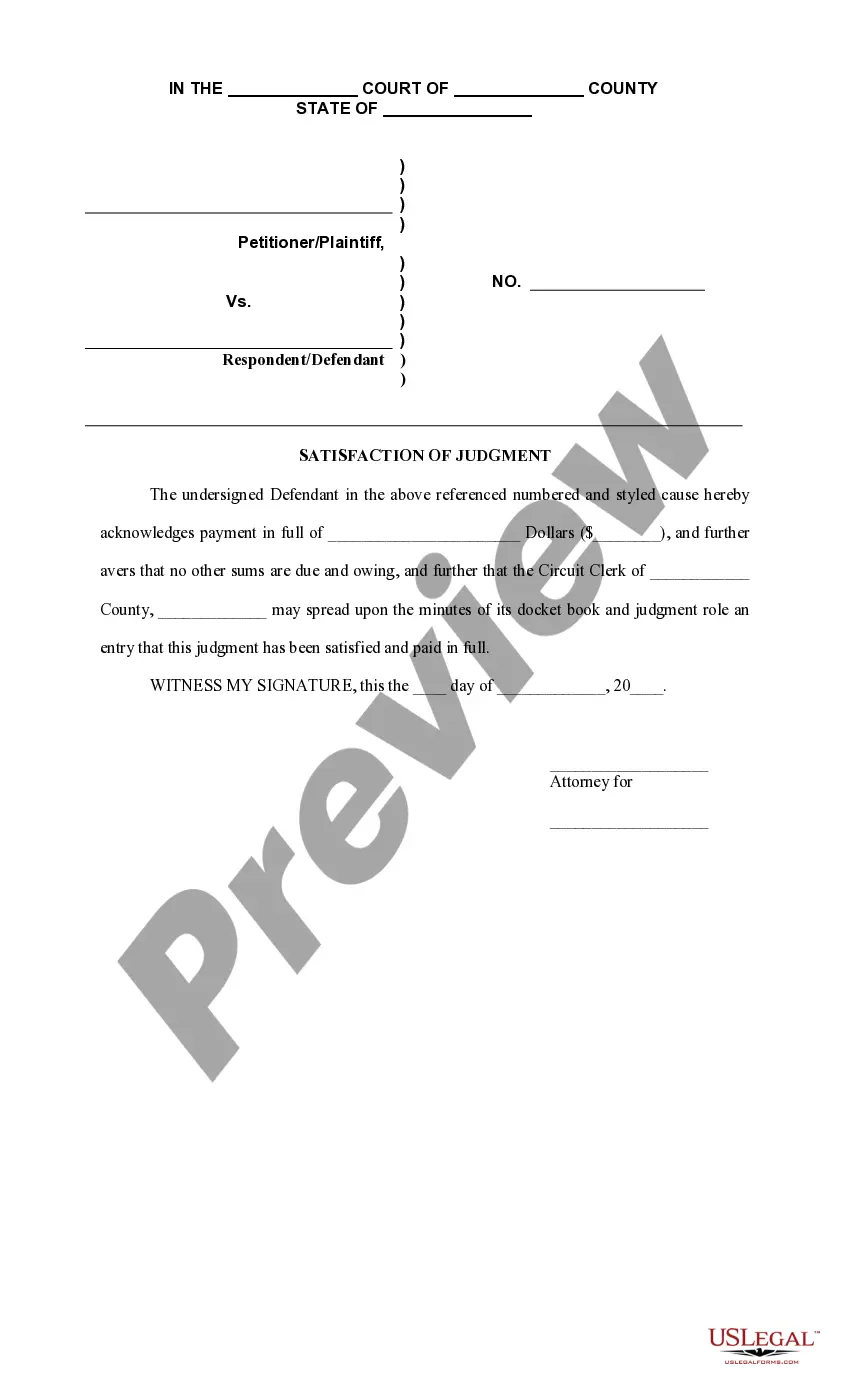
New York State judgments are valid for 20 years. A judgment can act as a lien on real property for ten years which may be extended for an additional term if you to take affirmative action.