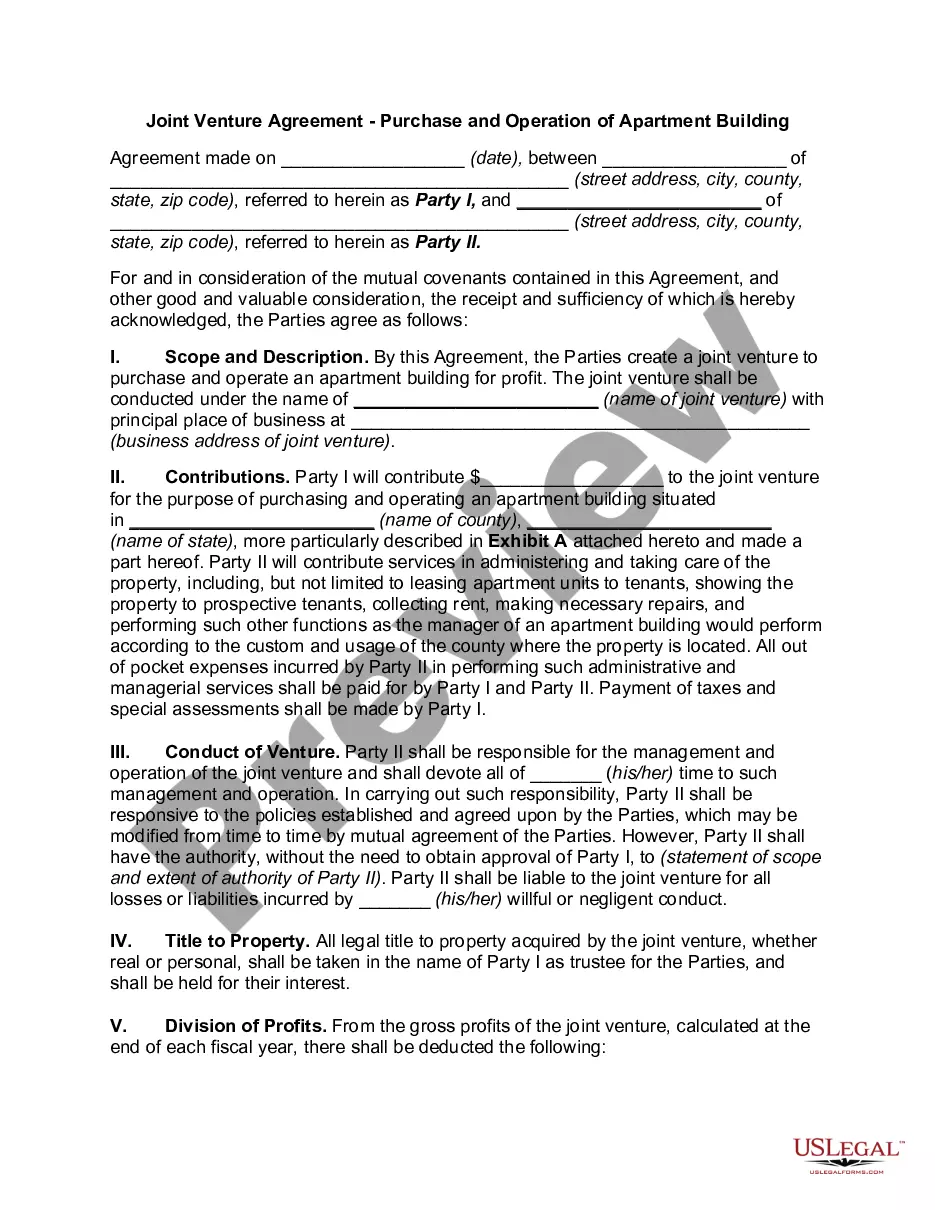
New York Lease Termination Order
About this form
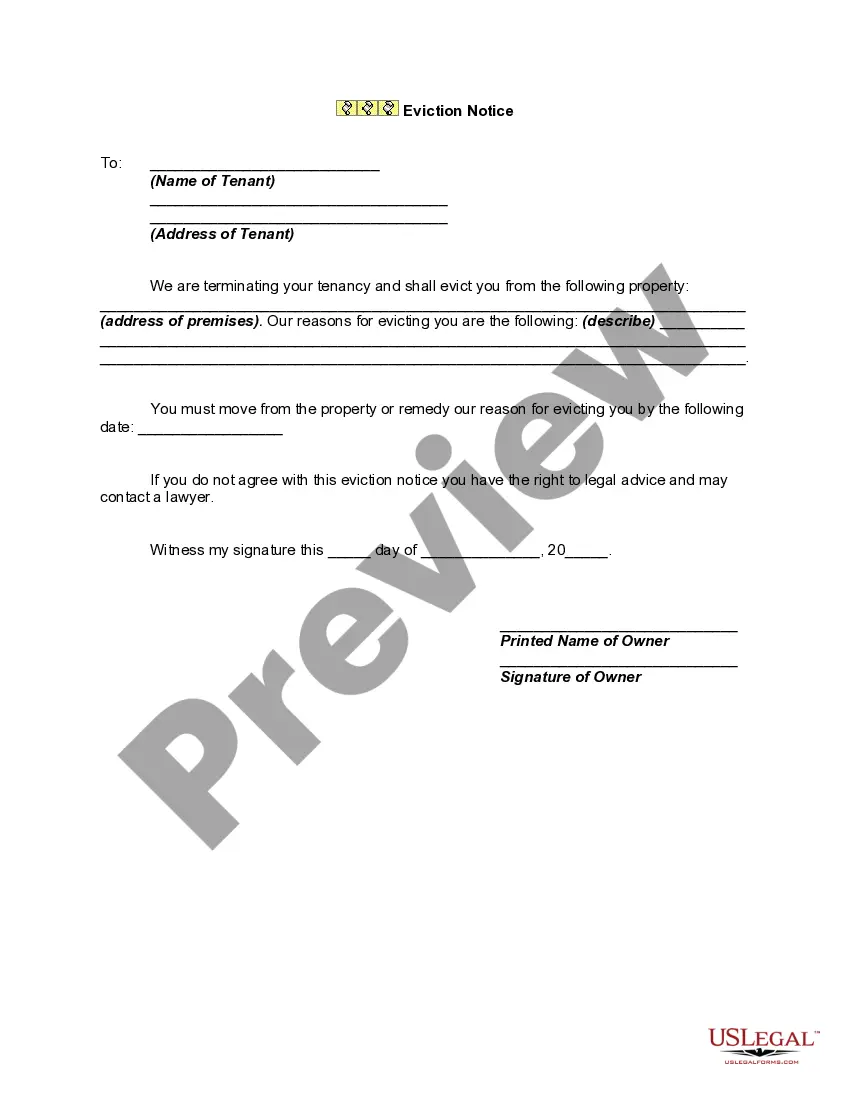
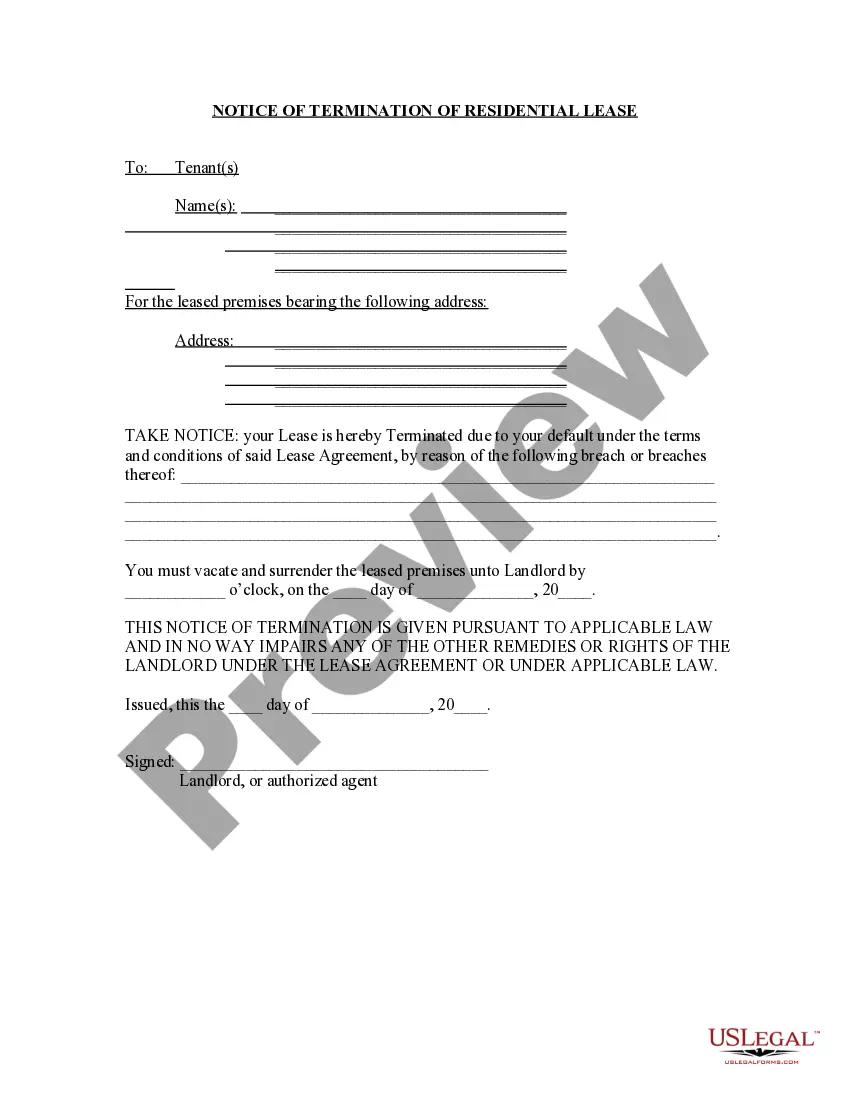
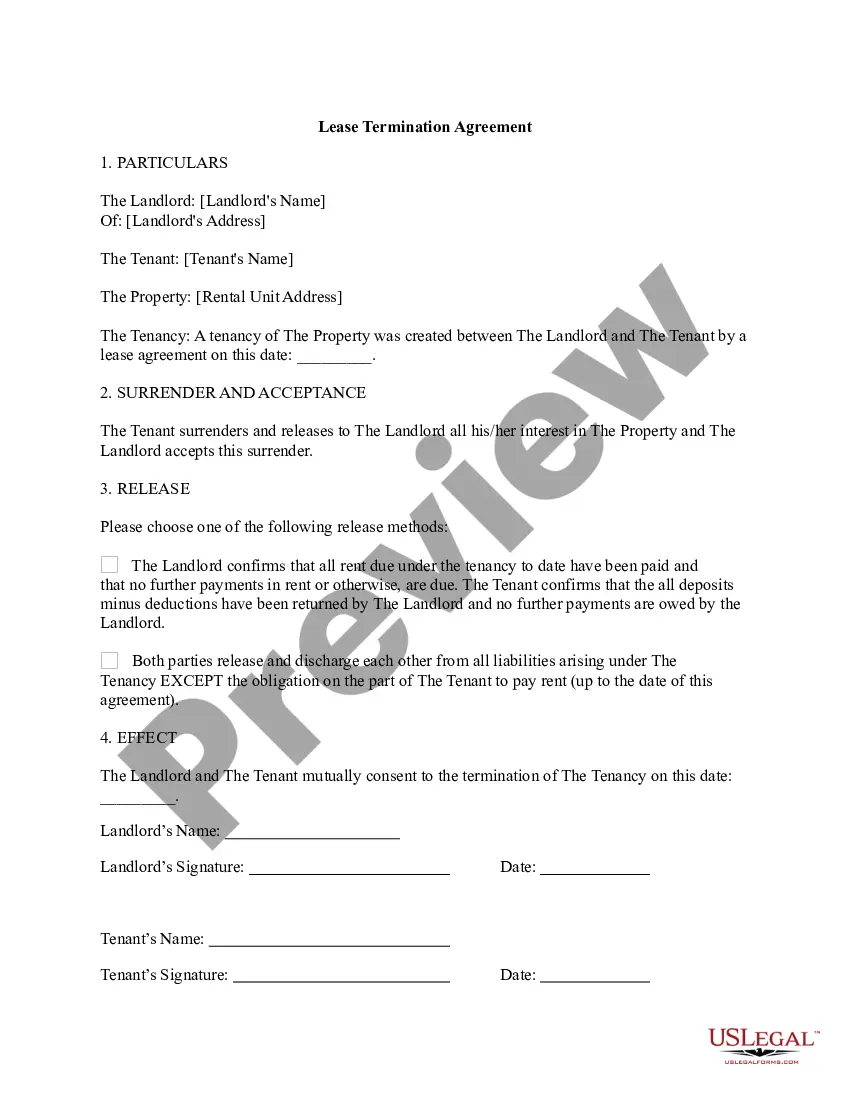
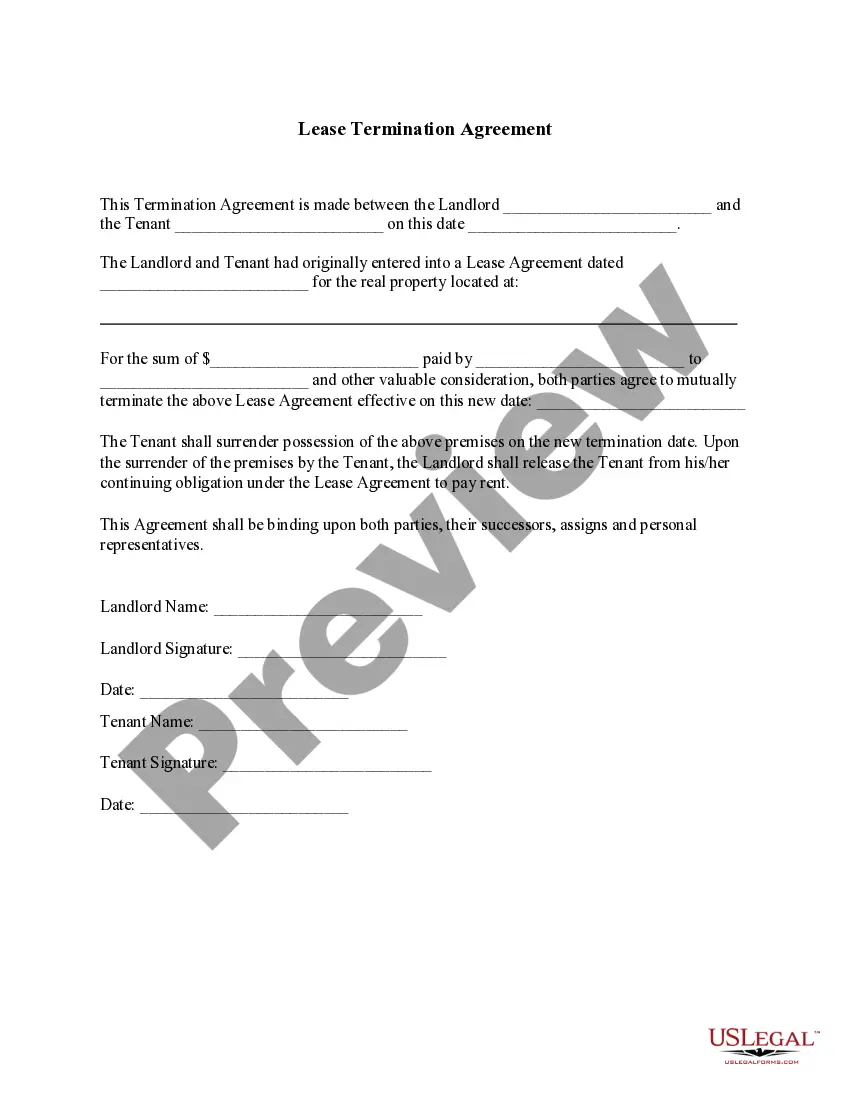
The Lease Termination Order is a legal document that allows a landlord to end a rental agreement and request that the tenant vacate the rental property. Unlike an eviction, which involves a court process to remove a tenant, this form can facilitate a voluntary conclusion of the tenancy without the need for eviction proceedings. It serves to protect tenants by providing a legal mechanism to terminate leases under specific circumstances, particularly in cases involving orders of protection.
Form components explained
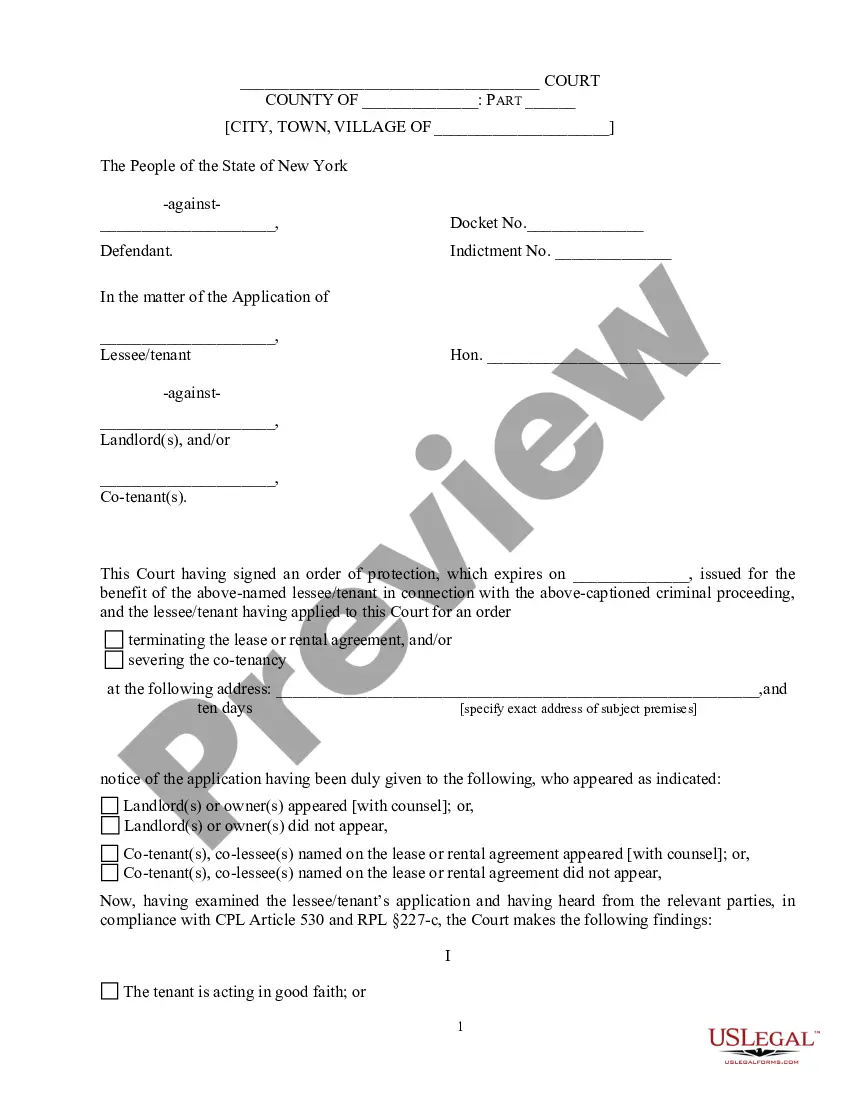
- Court information: Details about the court and county handling the application.
- Parties involved: Names and addresses of the tenant and landlord(s).
- Application specifics: Information about the application for lease termination or co-tenancy severance.
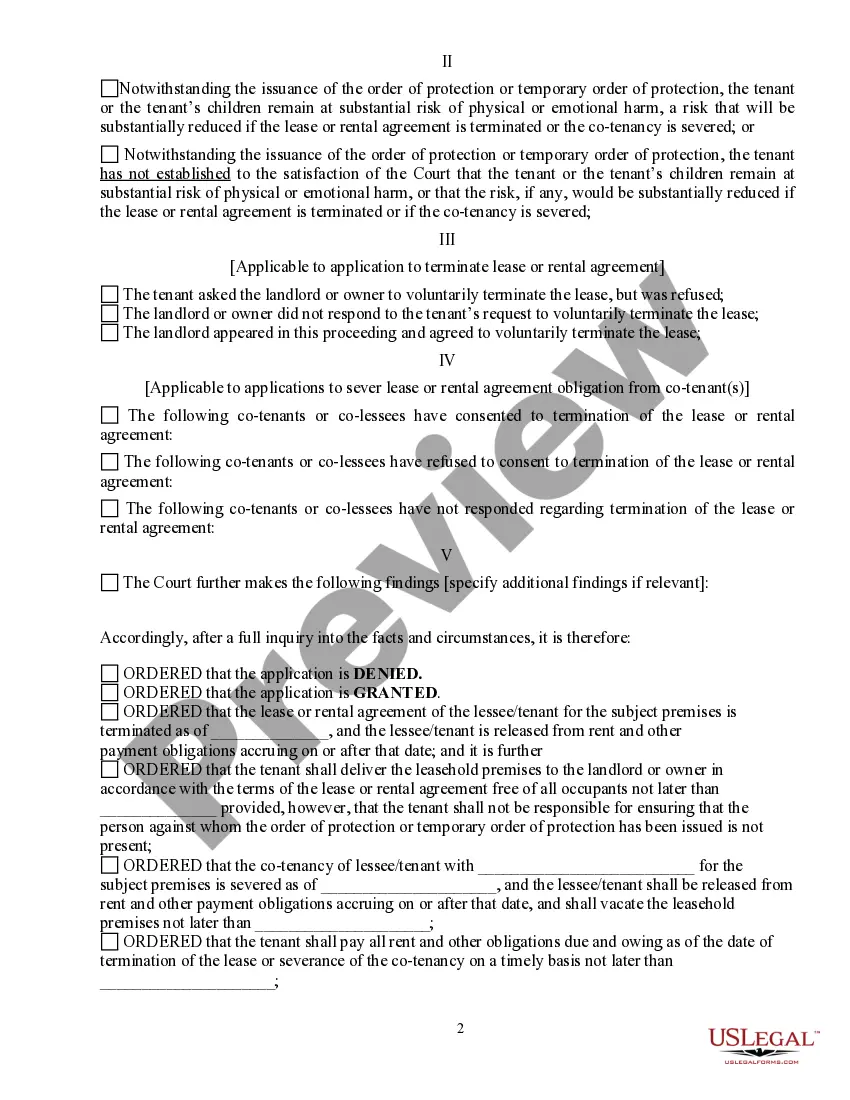
- Findings: The courtâs findings regarding the good faith of the tenant and any risks present.
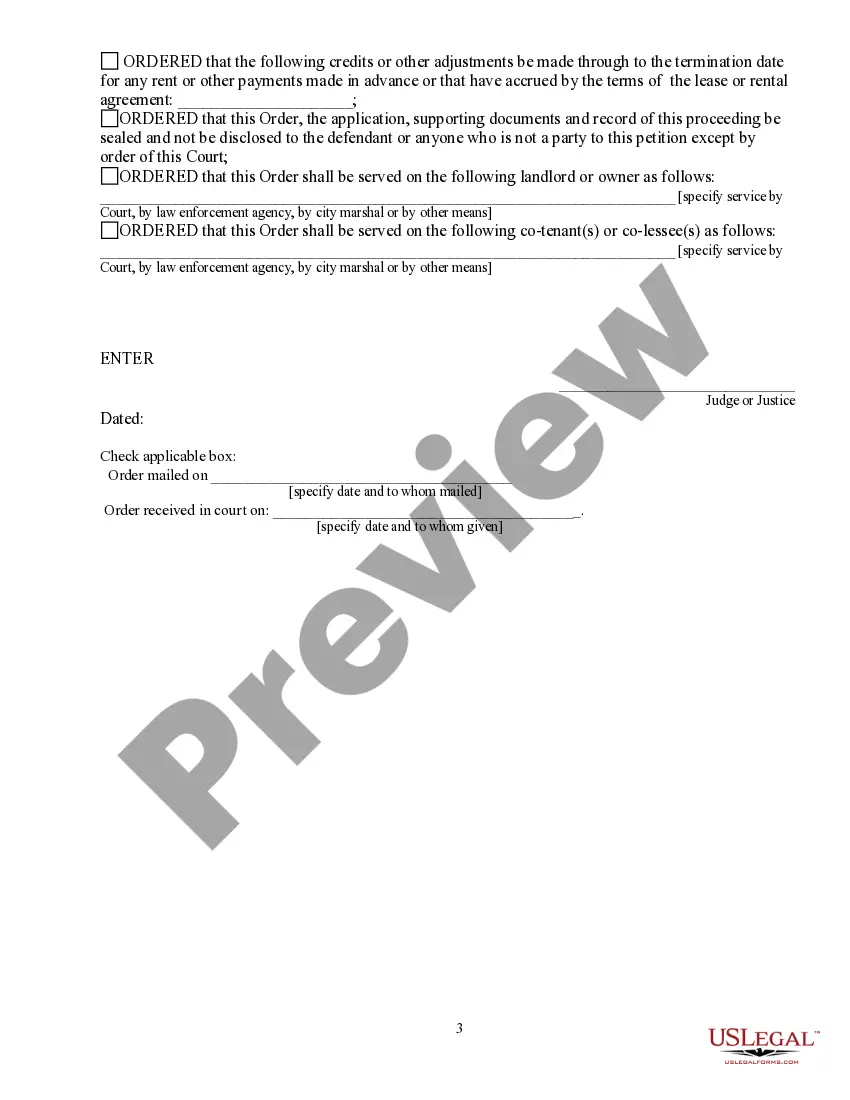
- Order details: Instructions for vacating the premises and financial obligations post-termination.
- Service requirements: Procedures for serving the order to the landlord and co-tenants.

Common use cases
This form is necessary when a tenant needs to terminate their lease agreement, particularly in situations involving domestic disputes, protective orders, or other circumstances that place the tenant or their dependents at risk. It is essential for facilitating a safe exit for tenants without resorting to eviction processes, which can be lengthy and complicated.
Who this form is for
- Tenants seeking to legally terminate their lease agreement.
- Individuals who have received an order of protection and require lease termination for safety reasons.
- Landlords needing documentation to formally acknowledge the termination of a lease.
- Co-tenants who must address tenancy obligations following the departure of another tenant.
Completing this form step by step
- Identify the court and county where the application will be submitted.
- Fill in the names and addresses of all parties involved, including the tenant and landlord.
- Specify the grounds for lease termination or co-tenancy severance.
- Enter relevant dates, including the effective termination date and deadlines for vacating the premises.
- Confirm service procedures for notifying landlords and co-tenants of the lease termination order.
Is notarization required?
This form does not typically require notarization unless specified by local law. Ensure to check local requirements for any additional verification needed for the Lease Termination Order to be valid.
Get your form ready online
Our built-in tools help you complete, sign, share, and store your documents in one place.
Make edits, fill in missing information, and update formatting in US Legal Forms—just like you would in MS Word.
Download a copy, print it, send it by email, or mail it via USPS—whatever works best for your next step.
Sign and collect signatures with our SignNow integration. Send to multiple recipients, set reminders, and more. Go Premium to unlock E-Sign.
If this form requires notarization, complete it online through a secure video call—no need to meet a notary in person or wait for an appointment.
We protect your documents and personal data by following strict security and privacy standards.

Make edits, fill in missing information, and update formatting in US Legal Forms—just like you would in MS Word.

Download a copy, print it, send it by email, or mail it via USPS—whatever works best for your next step.

Sign and collect signatures with our SignNow integration. Send to multiple recipients, set reminders, and more. Go Premium to unlock E-Sign.

If this form requires notarization, complete it online through a secure video call—no need to meet a notary in person or wait for an appointment.

We protect your documents and personal data by following strict security and privacy standards.
Common mistakes
- Failing to include all required parties in the application.
- Not specifying the correct court details, which can delay the process.
- Neglecting to provide sufficient evidence supporting the need for lease termination.
- Missing deadlines for notifying parties involved in the case.
Why complete this form online
- Convenience: Obtain and complete the form from home without the need to visit a legal office.
- Editability: Customize the form to fit specific circumstances and requirements.
- Reliability: Access accurate, legally drafted templates that adhere to state laws.
Looking for another form?


Form popularity
FAQ
The tenant must first attempt to secure the voluntary consent of the landlord to terminate the lease, and if the request is de- nied, a court may order termination as long as all payments due under the lease through the termination date of the lease have been paid (Real Property Law § 227-c).
Discrimination is a big deal in NYC law, and landlords cannot turn people away based on race, religion, age, disability, sexual orientation, gender, or creed. You must talk to a lawyer if you believe you are a victim of discrimination. Without a written court order, they cannot force you to leave your home.
A new tenant can't back out of the lease after signing it without paying a penalty. The only exception to this rule is when the tenant uses a valid reason. In periodic leases, the tenant must provide written notice to their landlord before leaving, ing to what New York law states.
Many conditions let you get out of the lease without penalty. If a property is not fit for living. If a landlord violates rules of entry or harasses renters. If a tenant is an active military duty member. If a tenant faces domestic violence in the property. If the apartment is illegal.
A Notice of Termination is given to a tenant to end the tenancy. The notice tells the tenant the reason, the date that the tenant must move, and that a case will be started if the tenant doesn't move by the deadline. Give the tenant at least 30 days notice to leave.
A lease is a binding legal contract, and your landlord has no obligation to let you break it. Even if you may think it's in your landlord's best interest to let you out of the lease, that likely won't happen. However, breaking a lease in NYC is still possible, even if your landlord doesn't want to let you out of it.
Termination date: The law says, the termination date must be effective no earlier than thirty days after the date on which the next rental payment is due (after the notice is delivered). The notice is considered delivered five days after mailing.
The most common way to end a lease is by providing the notice required in a Lease Agreement or by state or local law. Tenants use a Tenant Notice of Intent to Move, while landlords use a Landlord's Notice of Non-Renewal.