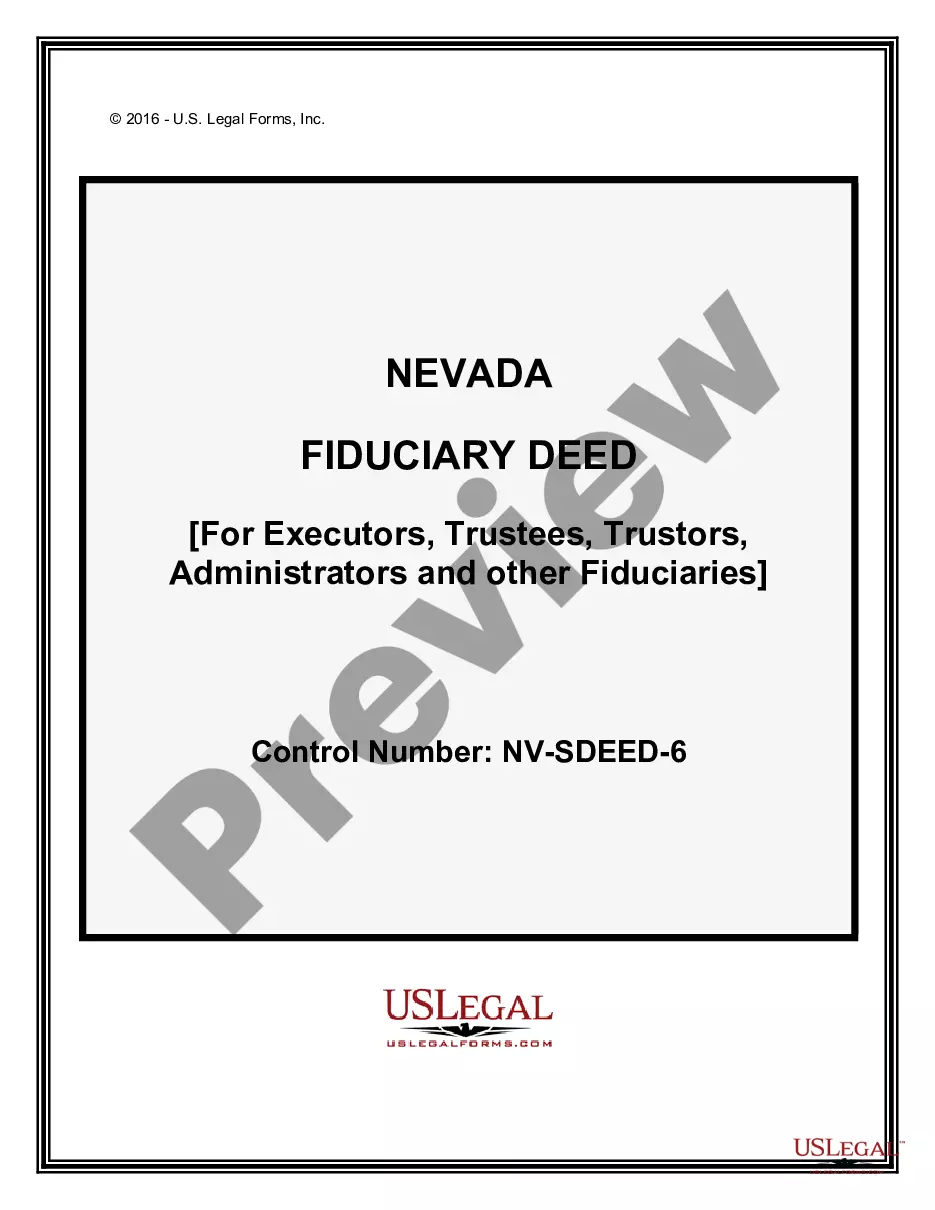
Nevada Fiduciary Deed for use by Executors, Trustees, Trustors, Administrators and other Fiduciaries
What is this form?
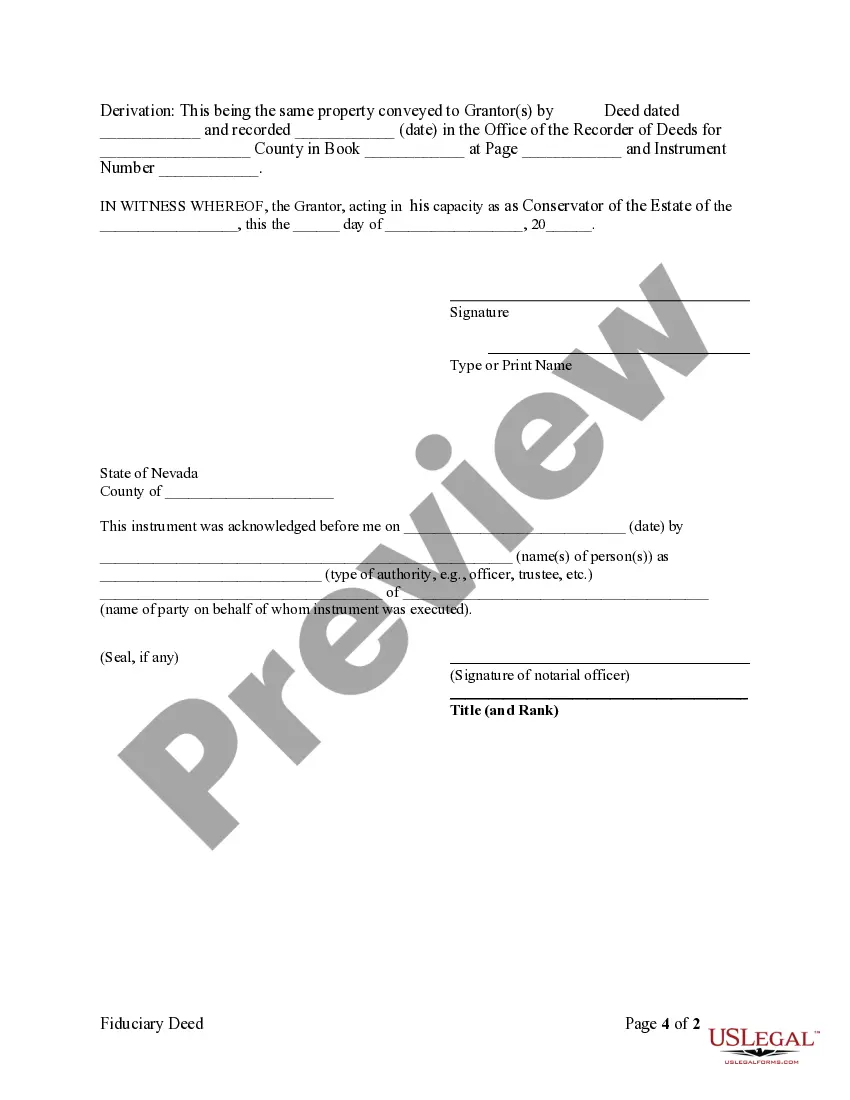
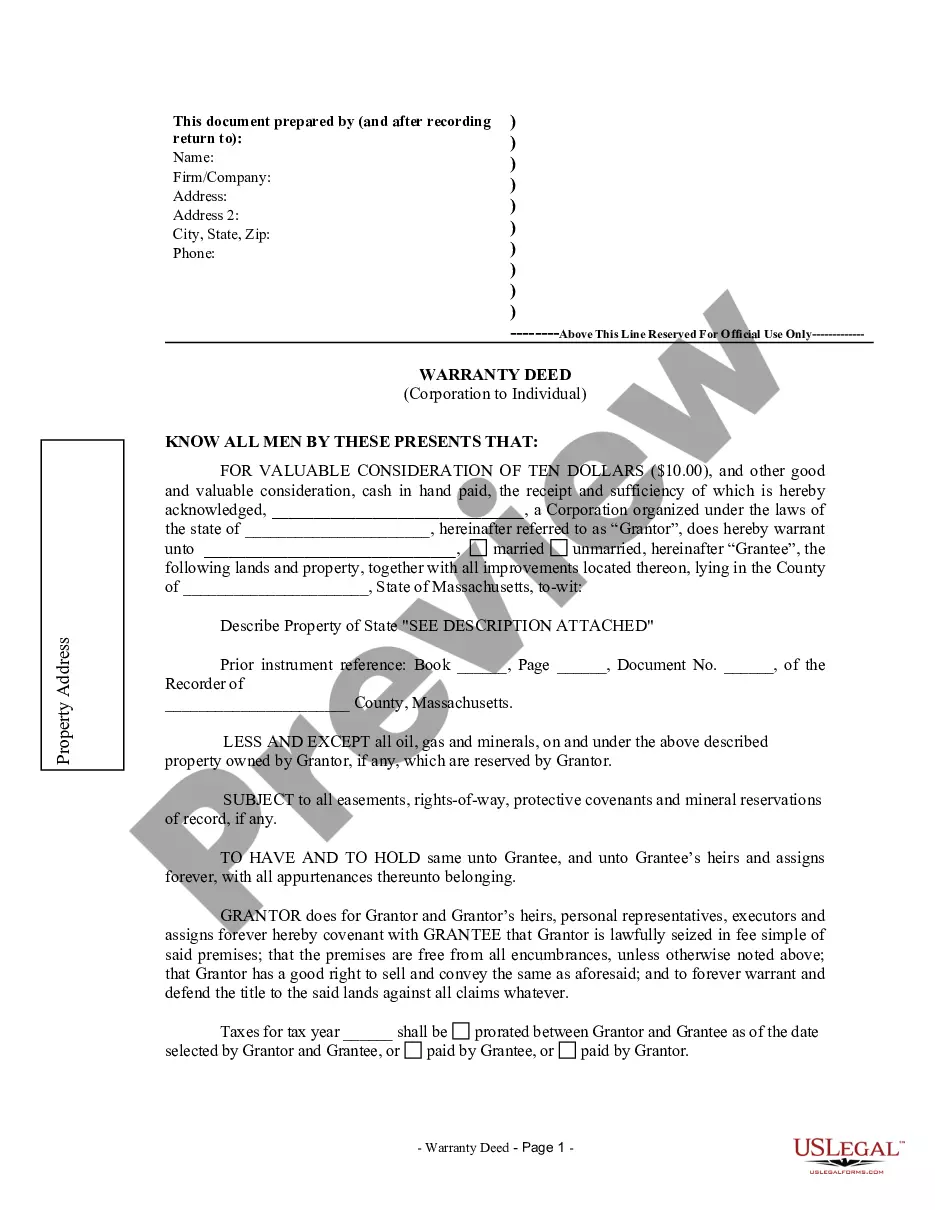
The Fiduciary Deed is a legal document used by executors, trustees, trustors, administrators, and other fiduciaries to transfer property ownership on behalf of another party. This form serves a unique purpose by granting authority to fiduciaries to manage and convey property without needing to go through the probate process, differing from other types of deeds which may be solely for personal transactions or real estate sales.
Key parts of this document
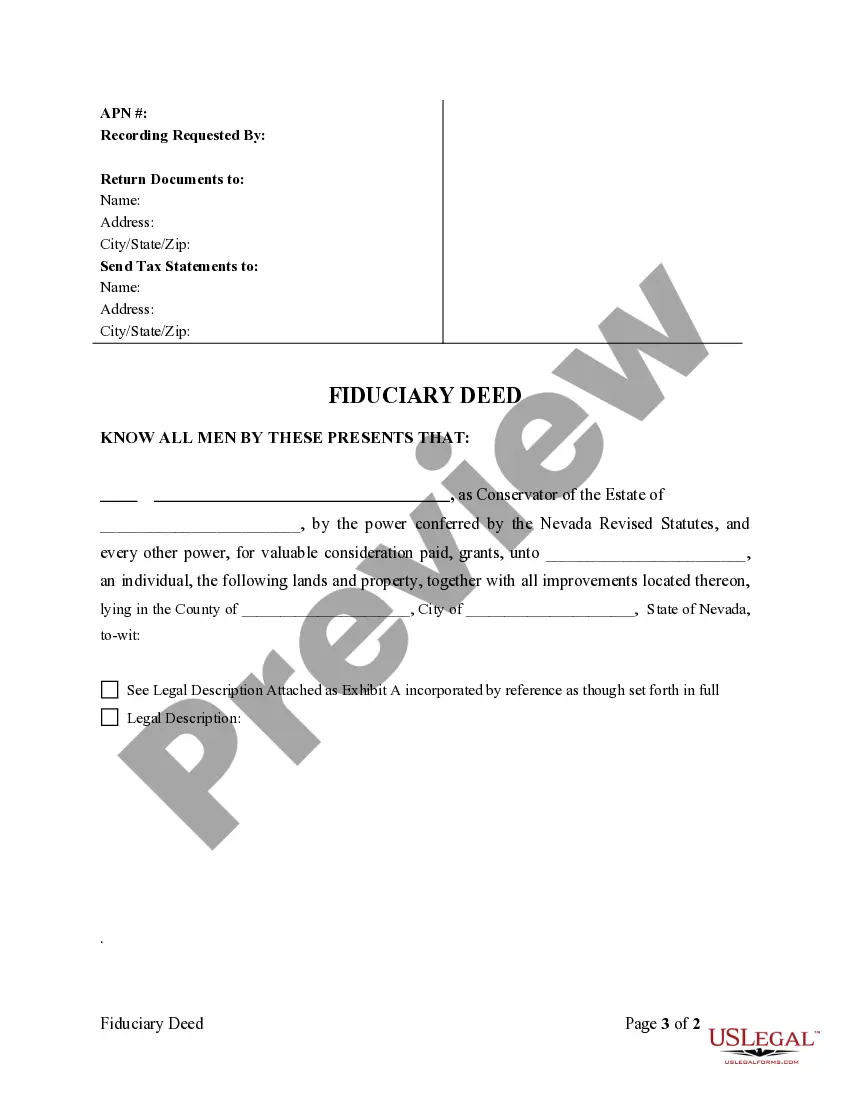
- Identification of the grantor and grantee.
- Legal description of the property being transferred.
- Statement of the grantor's authority as fiduciary.
- Date of execution of the deed.
- Signature of the grantor confirming the transfer.



Common use cases
This Fiduciary Deed should be used in situations where a fiduciary needs to transfer or sell property that belongs to a trust or an estate. This includes cases where an executor is handling the estate of a deceased person or a trustee is managing the assets of a trust. It is also applicable when a guardian or conservator needs to manage property on behalf of a minor or incapacitated individual.
Who can use this document
This form is intended for:
- Executors of wills responsible for estate administration.
- Trustees managing trust assets for beneficiaries.
- Trustors transferring property into a trust.
- Administrators handling properties of an intestate estate.
- Guardians and conservators acting on behalf of those unable to manage their own affairs.
Instructions for completing this form
- Identify and enter the name of the grantor and grantee in the designated fields.
- Provide a clear legal description of the property being conveyed.
- Document the authority under which you are acting as a fiduciary.
- Enter the date of signature and any additional required information.
- Sign the deed in the capacity you have indicated, ensuring it is executed properly.
Is notarization required?
This form needs to be notarized to ensure legal validity. US Legal Forms provides secure online notarization powered by Notarize, allowing you to complete the process through a verified video call, available anytime.
Get your form ready online
Our built-in tools help you complete, sign, share, and store your documents in one place.
Make edits, fill in missing information, and update formatting in US Legal Forms—just like you would in MS Word.
Download a copy, print it, send it by email, or mail it via USPS—whatever works best for your next step.
Sign and collect signatures with our SignNow integration. Send to multiple recipients, set reminders, and more. Go Premium to unlock E-Sign.
If this form requires notarization, complete it online through a secure video call—no need to meet a notary in person or wait for an appointment.
We protect your documents and personal data by following strict security and privacy standards.

Make edits, fill in missing information, and update formatting in US Legal Forms—just like you would in MS Word.

Download a copy, print it, send it by email, or mail it via USPS—whatever works best for your next step.

Sign and collect signatures with our SignNow integration. Send to multiple recipients, set reminders, and more. Go Premium to unlock E-Sign.

If this form requires notarization, complete it online through a secure video call—no need to meet a notary in person or wait for an appointment.

We protect your documents and personal data by following strict security and privacy standards.
Avoid these common issues
- Failing to include a complete legal description of the property.
- Not identifying the grantor's authority accurately.
- Leaving the signature or date fields blank.
- Not reviewing state-specific requirements before use.
Why use this form online
- Easy access to professional legal templates at your convenience.
- Editable format allows for customization according to your specific situation.
- A reliable resource developed by licensed attorneys to ensure legal compliance.
Looking for another form?
Form popularity
FAQ
Fiduciary - An individual or bank or trust company that acts for the benefit of another. Trustees, executors, and personal representatives are all fiduciaries.
A fiduciary is a person or organization that acts on behalf of another person or persons, putting their clients' interest ahead of their own, with a duty to preserve good faith and trust. Being a fiduciary thus requires being bound both legally and ethically to act in the other's best interests.
It is harder to be impartial when the fiduciary is also a beneficiary. As a beneficiary, the fiduciary usually wants to favor himself. Acting as fiduciary, however, the fiduciary must treat himself no better than any other beneficiary.
A fiduciary is a person who stands in a position of trust with you (or your estate after your death) and your beneficiaries. There are different types of fiduciaries depending on the context: an executor or executrix is named in a will; a trustee is named by a trust; an agent is appointed by a power of attorney.
Fiduciary - An individual or trust company that acts for the benefit of another.Executor - (Also called personal representative; a woman is sometimes called an executrix) An individual or trust company that settles the estate of a testator according to the terms of the will.
Fiduciary - An individual or trust company that acts for the benefit of another.Executor - (Also called personal representative; a woman is sometimes called an executrix) An individual or trust company that settles the estate of a testator according to the terms of the will.
The personal representative and the trustee named in such wills are sometimes the same person. In the case of a revocable trust containing a testamentary trust, the trustee continues on as the trustee of the trust after your affairs are settled and the trusts are funded.
An executor has a fiduciary duty to act in the best interests of the estate and its beneficiaries. They can face legal liability if they fail to meet this duty, such as when they act in their own interests or allow the assets in the estate to decay.
It is harder to be impartial when the fiduciary is also a beneficiary. As a beneficiary, the fiduciary usually wants to favor himself. Acting as fiduciary, however, the fiduciary must treat himself no better than any other beneficiary.