Employee Handbook Introduction
About this form
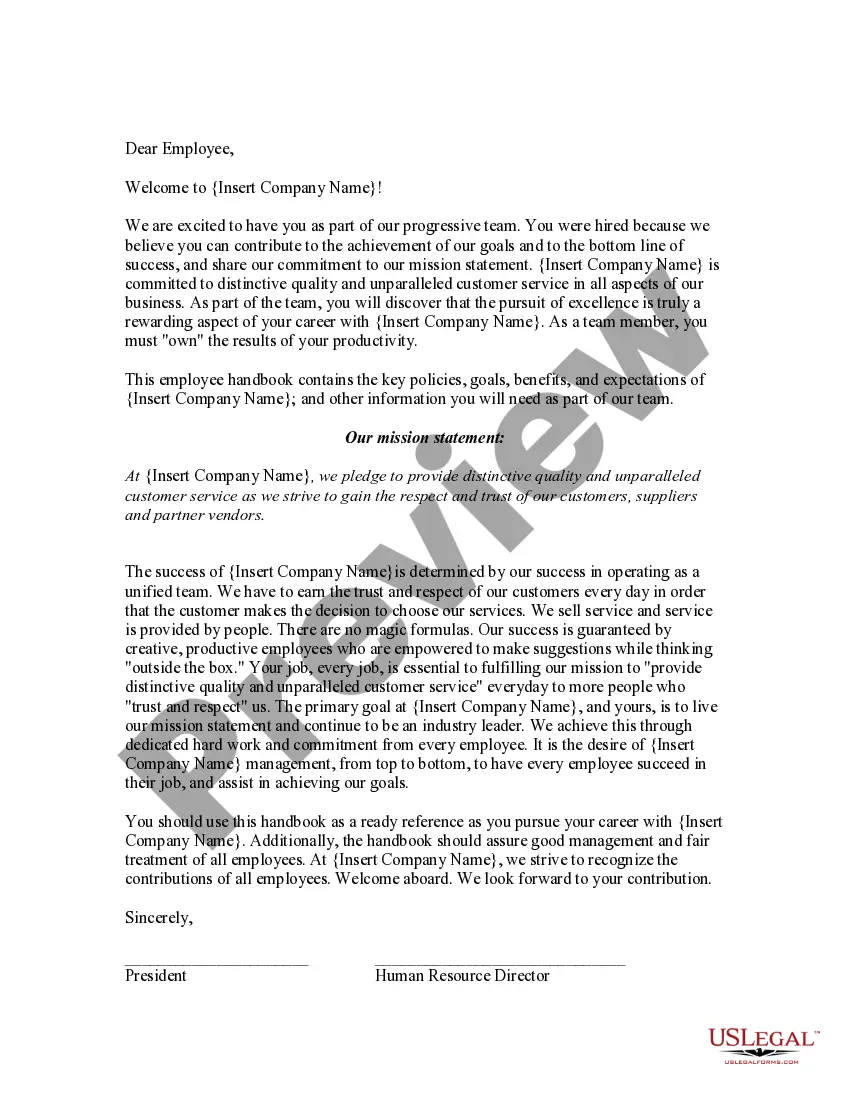
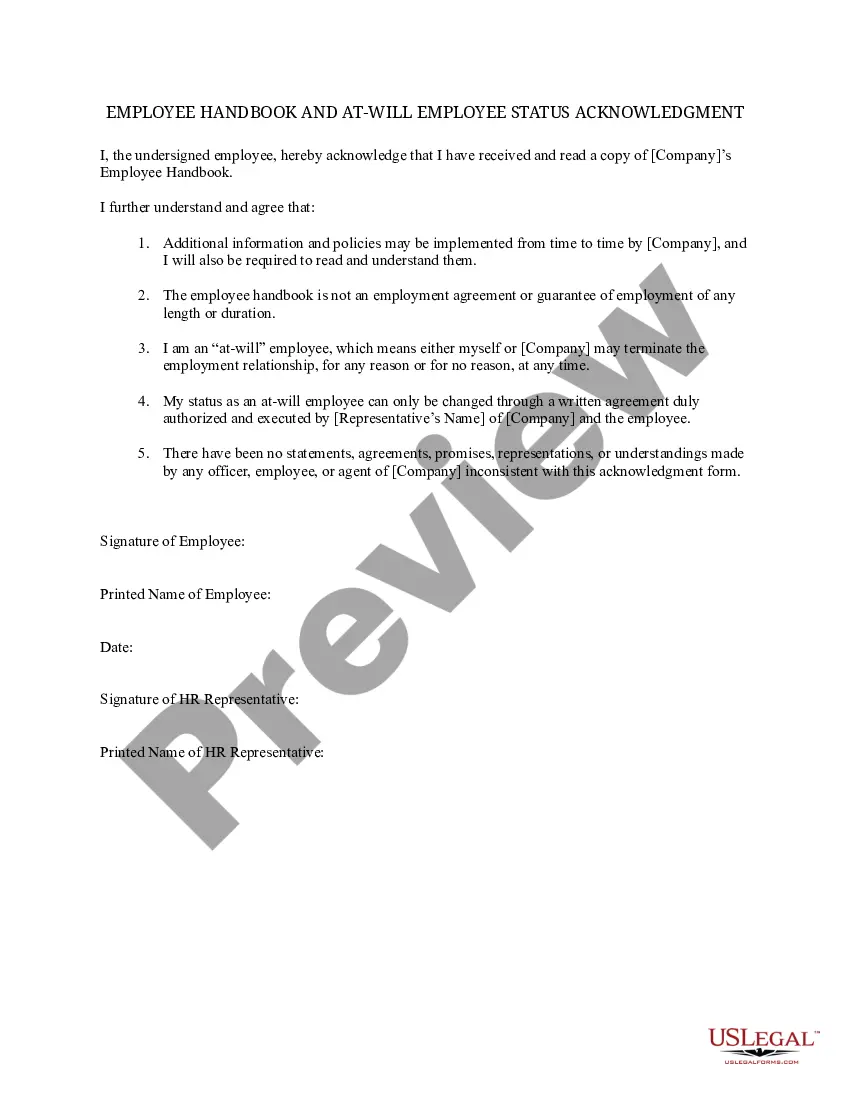
The Employee Handbook Introduction serves as the welcoming section of a company's employee handbook. This form outlines the companyâs mission statement, values, and goals, providing new employees with essential information about their roles and the organization's expectations. Unlike other legal forms, it emphasizes the narrative and welcoming tone that fosters a sense of belonging among new hires.
What’s included in this form
- Welcome letter to introduce new employees to the company.
- Company mission statement that defines the organization's purpose and goals.
- Description of company values and beliefs.
- Explanation of the employee's role in contributing to the companyâs mission.
- Details on the expectations for employee productivity and teamwork.


When to use this form
This form is essential for companies that wish to provide a structured and welcoming introduction to their employee handbook. It should be utilized when onboarding new employees to ensure they understand the company's mission, values, and their roles in achieving organizational goals. This introduction sets the tone for the employee experience and can be helpful in building a cohesive team environment.
Who needs this form
- Businesses of all sizes looking to create or enhance their employee handbooks.
- Human resource professionals responsible for employee onboarding.
- Company executives wanting to communicate the organization's mission and values to new hires.
- Managers seeking to promote a strong team culture and productivity among employees.
How to prepare this document
- Begin with a warm welcome message addressed to the new employee.
- Insert the company name prominently in the introduction.
- Clearly state the companyâs mission and values for the employee to understand what drives the organization.
- Outline the employee's expected role in relation to the companyâs mission and values.
- Provide information about the objectives of the employee handbook and its significance for their career.
Is notarization required?
Notarization is not commonly needed for this form. However, certain documents or local rules may make it necessary. Our notarization service, powered by Notarize, allows you to finalize it securely online anytime, day or night.
Get your form ready online
Our built-in tools help you complete, sign, share, and store your documents in one place.
Make edits, fill in missing information, and update formatting in US Legal Forms—just like you would in MS Word.
Download a copy, print it, send it by email, or mail it via USPS—whatever works best for your next step.
Sign and collect signatures with our SignNow integration. Send to multiple recipients, set reminders, and more. Go Premium to unlock E-Sign.
If this form requires notarization, complete it online through a secure video call—no need to meet a notary in person or wait for an appointment.
We protect your documents and personal data by following strict security and privacy standards.

Make edits, fill in missing information, and update formatting in US Legal Forms—just like you would in MS Word.

Download a copy, print it, send it by email, or mail it via USPS—whatever works best for your next step.

Sign and collect signatures with our SignNow integration. Send to multiple recipients, set reminders, and more. Go Premium to unlock E-Sign.

If this form requires notarization, complete it online through a secure video call—no need to meet a notary in person or wait for an appointment.

We protect your documents and personal data by following strict security and privacy standards.
Typical mistakes to avoid
- Failing to personalize the welcome letter by not including the employee's name.
- Using vague language that does not clearly convey the companyâs mission.
- Overloading the introduction with too much technical jargon.
- Neglecting to communicate the importance of the employeeâs role in achieving company goals.
Advantages of online completion
- Easy access to a professionally drafted employee handbook introduction template.
- Convenient to customize the form to fit your company's unique mission and values.
- Fast download and print options ensure immediate availability for onboarding.
- Reliable content drafted by licensed attorneys, ensuring compliance with legal standards.
Summary of main points
- An Employee Handbook Introduction sets the tone for new employees.
- Clearly articulating the mission and values fosters employee engagement.
- This form is vital for effective onboarding processes.
- Customize the introduction to make it relevant to your organization.
Looking for another form?

Form popularity
FAQ
Your company's history, mission, vision and goals. Your company's core values and culture. Human resources and legal information related to employment. Your company's policies. Employee benefits and perks.
A great employee handbook should communicate your core values, house rules, procedures, and company culture as directly as possible. It should be a brilliant onboarding tool for new hires and a great reference tool for existing employees who need reminders on company policies. Good HR handbooks wear many hats!
An employee handbook can be a valuable communication resource for both the employer and the employee. It provides guidance and information related to the organization's history, mission, values, policies, procedures and benefits in a written format.
Employee handbooks are important because they outline expectations and values for employees, but they can also cover the employer in case of any legal issues down the line.A good employee handbook will give them that clarity.
Step 1: Identify the Need for a Policy. Step 2: Determine Policy Content. Step 3: Obtain Stakeholder Support. Step 4: Communicate with Employees. Step 5: Update and Revise the Policy.
Thus, employee handbook should include information on: Your company's history, mission, vision and goals. Your company's core values and culture. Human resources and legal information related to employment.
Most employee handbooks include information on: Company culture, values, and a mission statement. Human resource and legal information as well as rights and obligations related to employment. Realistic expectations; both what the company expects to see from its employees and what employees can expect from the company.
Step 1: Review and Make Required Revisions to the Current Company Policies. Step 2: Create an Outline of What to Include in the Employee Handbook. Step 3: Create Summarized Versions of Each Policy and Procedure. Step 4: Add Each Summary Statement in the Appropriate Sections According to the Outline.
Employee handbooks can go by different names, such as an employee field guide or staff manual. Whatever you call them, employee handbooks are documents that all employees at a company should receive, often on their first day. They are designed to cover everything a new hire needs to know to get started at their job.