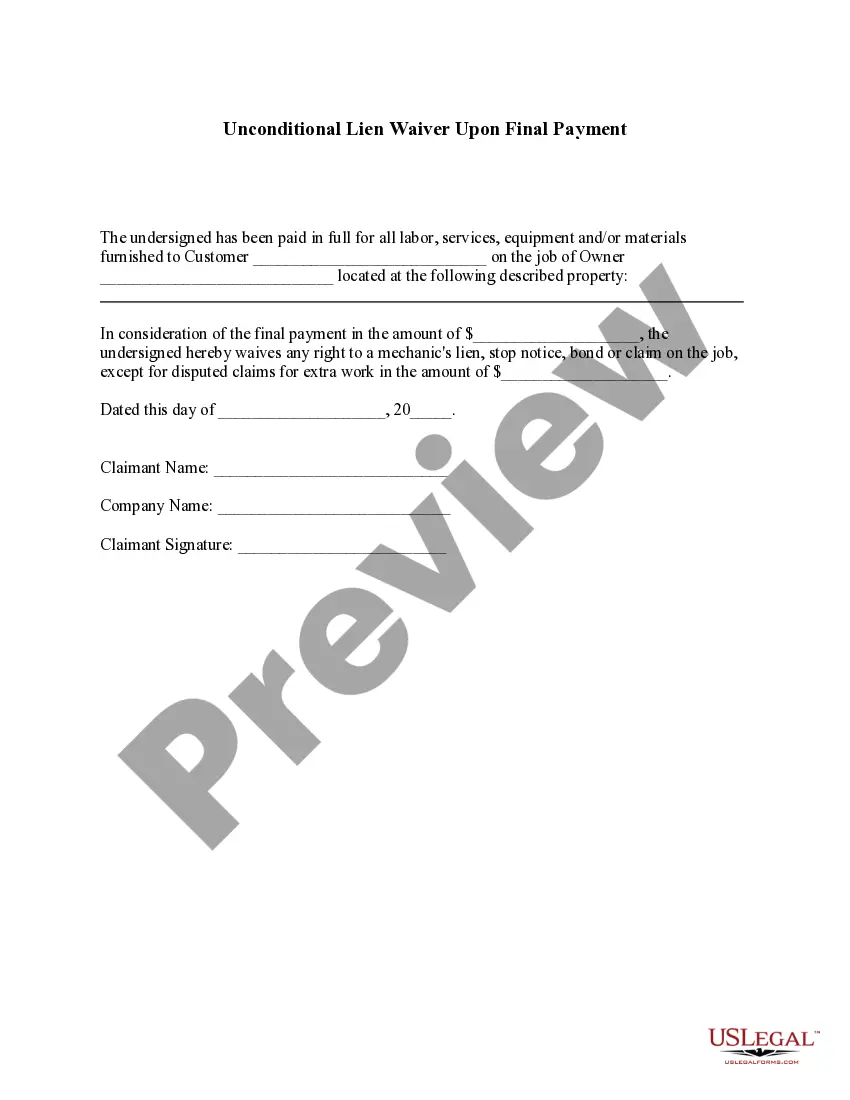
Nevada Unconditional Waiver and Release Upon Final Payment - Individual
About this form
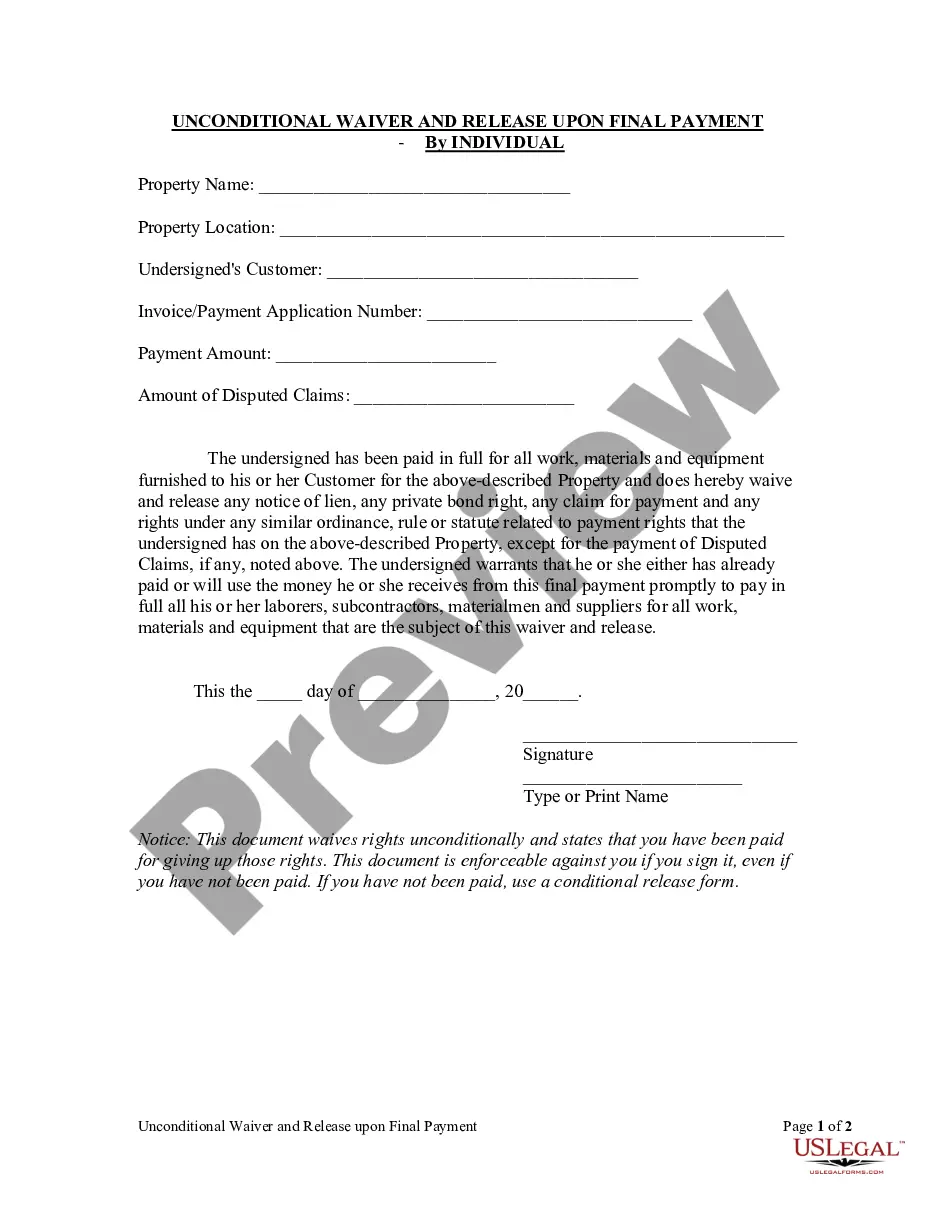
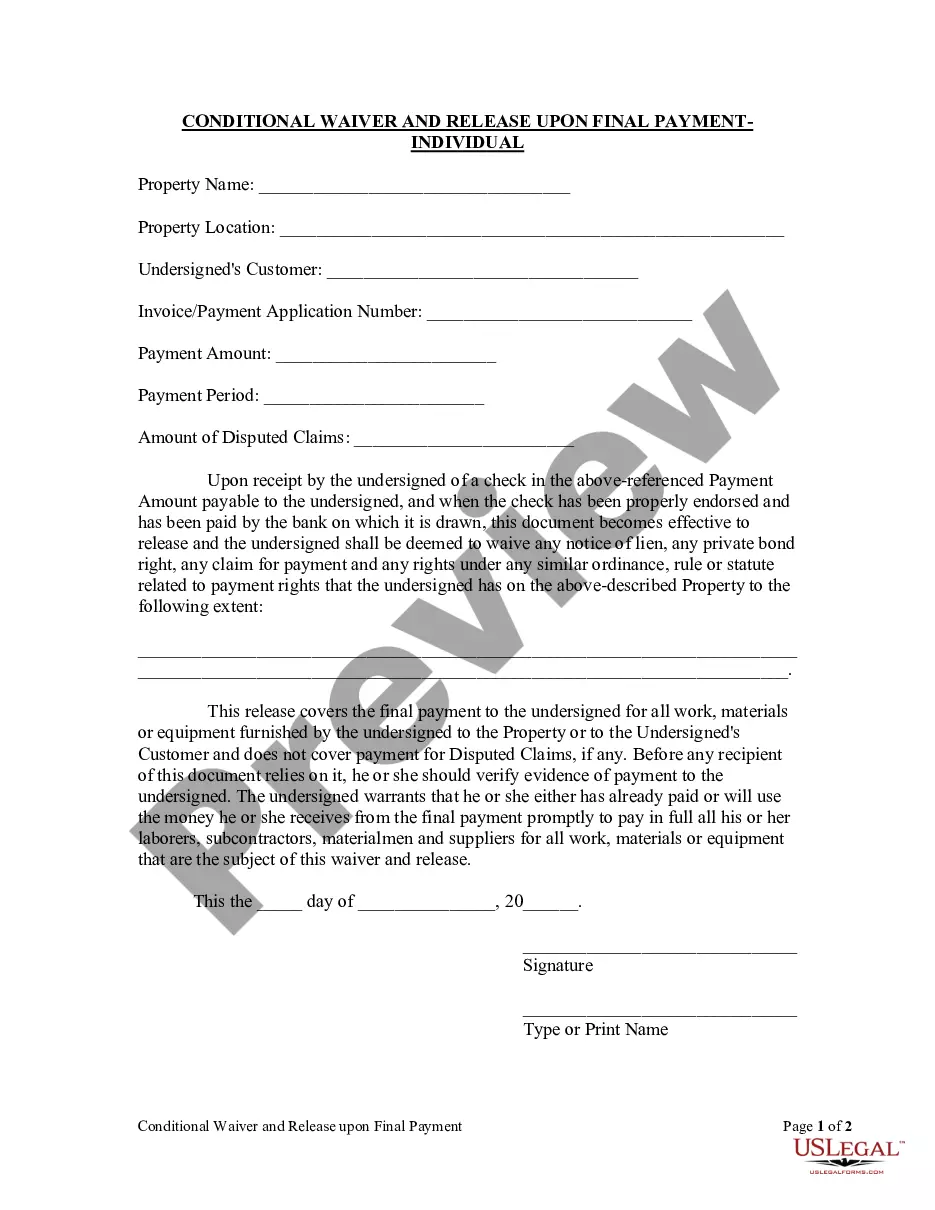
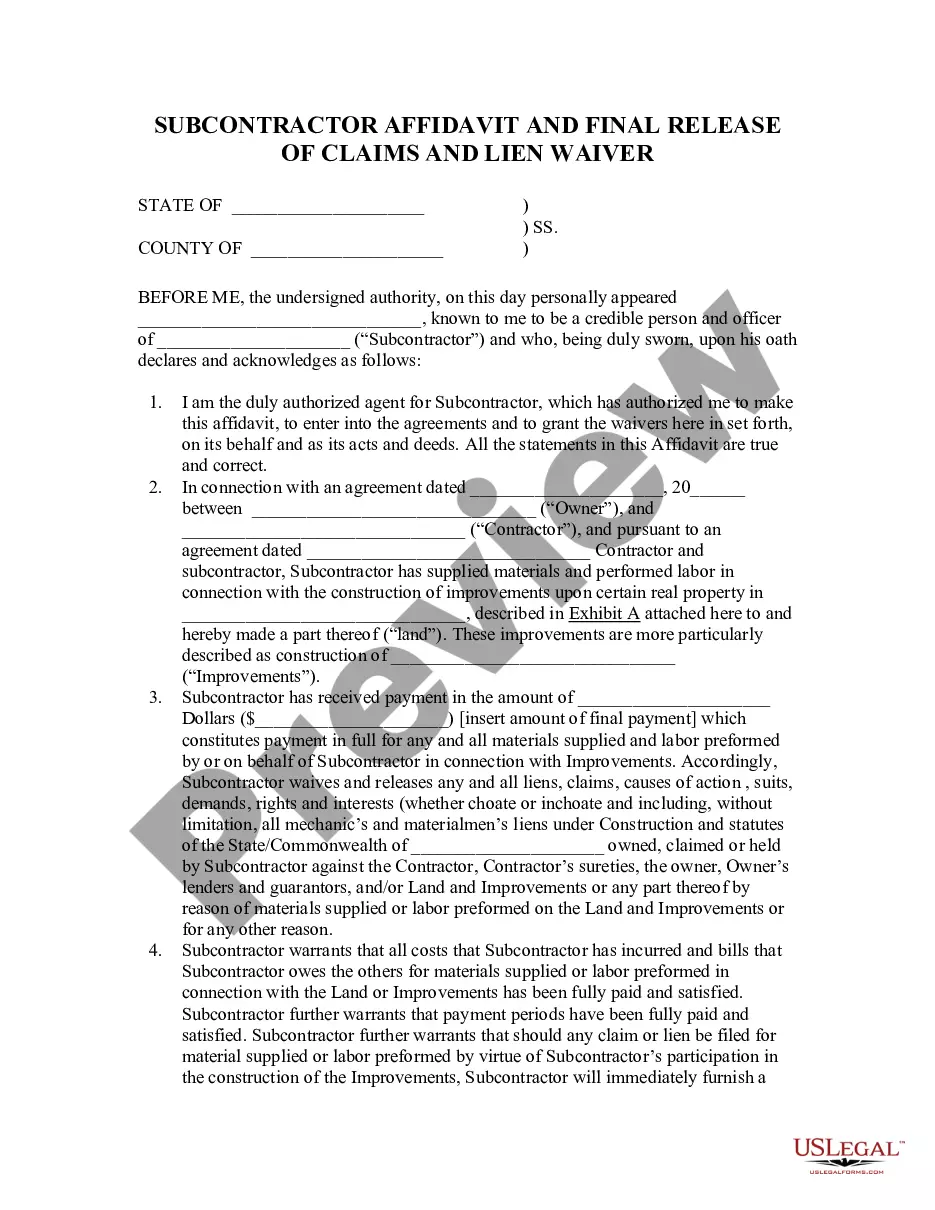
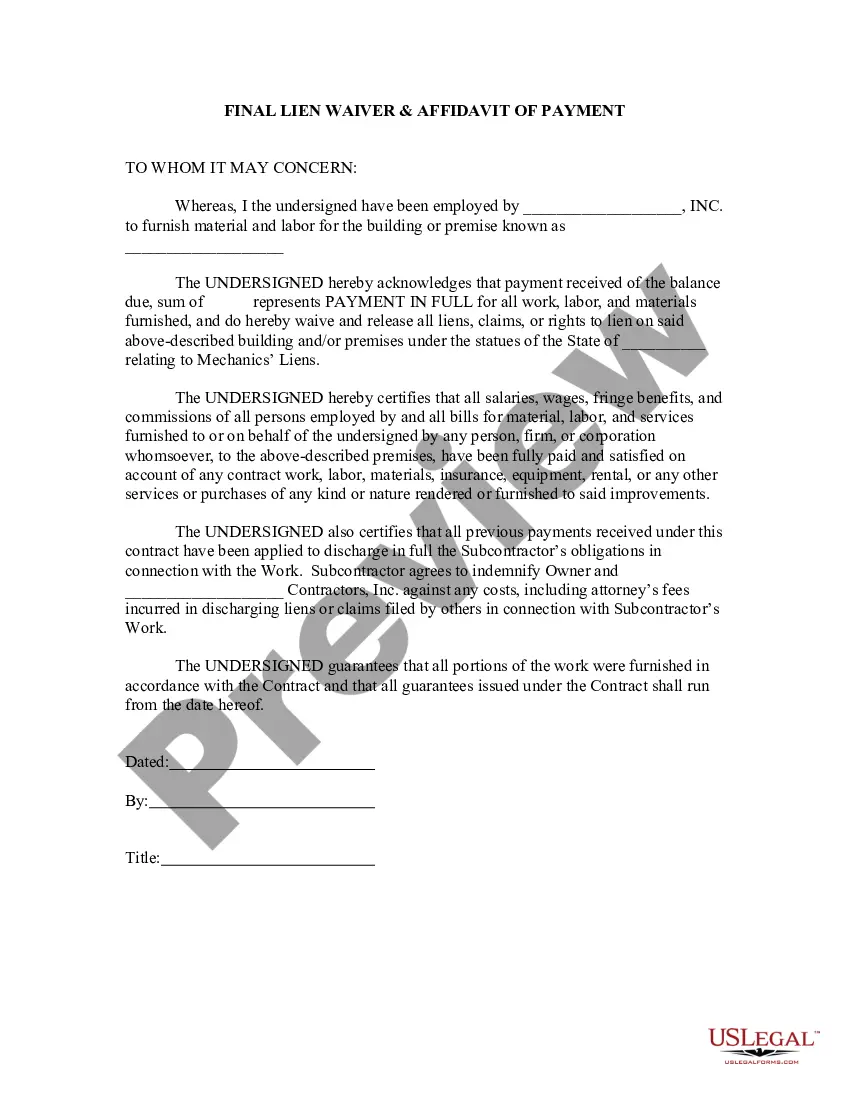
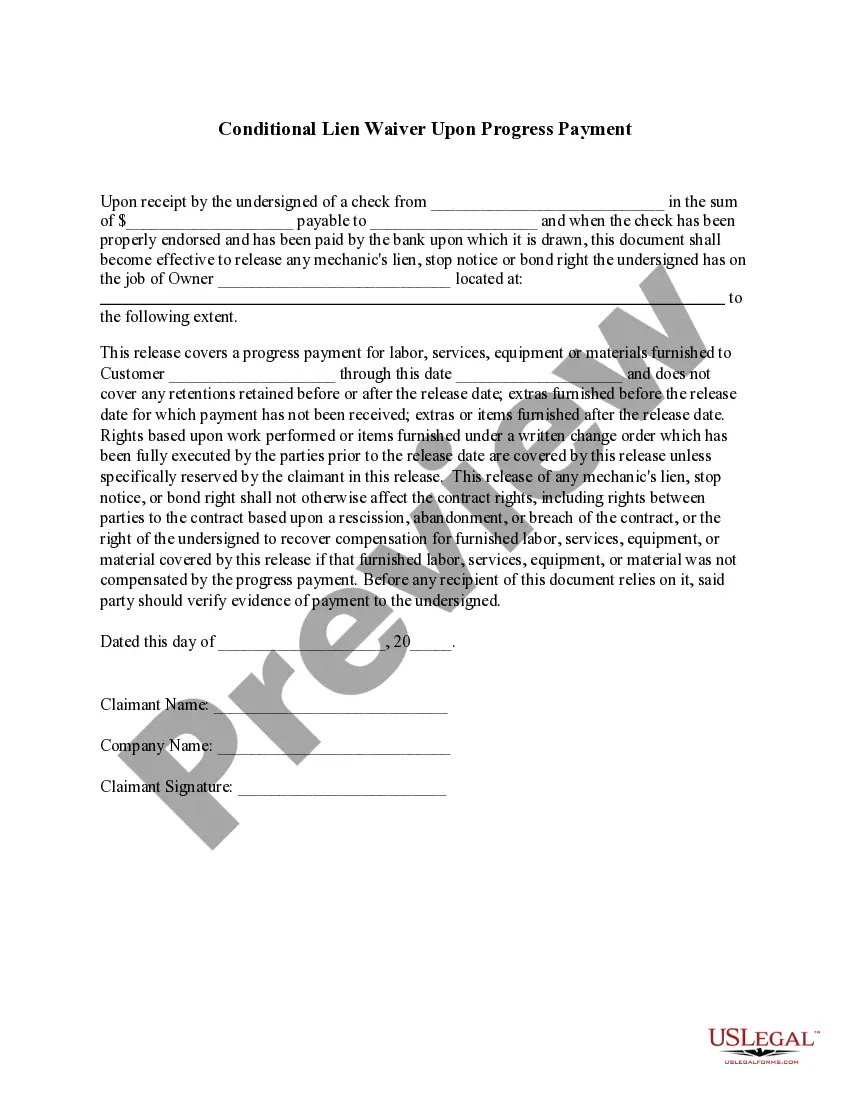
The Unconditional Waiver and Release Upon Final Payment is a legal document used by individuals who have received full payment for their work and materials related to a specific property. This form effectively waives any lien rights or payment claims attached to that property, granting the customer complete release as long as they have been paid in full. This form is distinct from conditional releases, which are used when payment has not yet been received.
Key components of this form
- Property name and location details
- Customer information of the undersigned
- Invoice or payment application number
- Amount of payment received and amount of disputed claims
- Signature and printed name of the undersigned
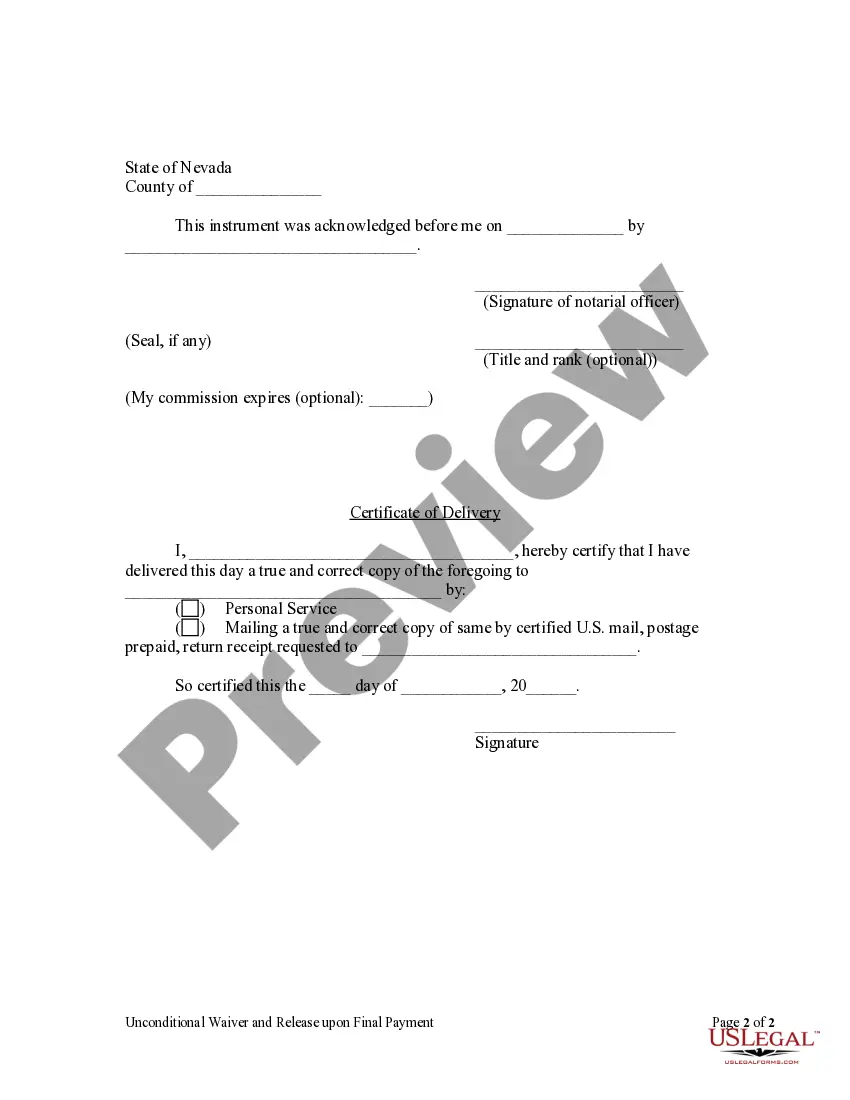
- Notarial acknowledgment
Common use cases
This form should be used after an individual has completed work and received final payment for services or materials provided on a property. It is appropriate in scenarios such as construction projects, renovations, or service agreements where the individual needs to confirm receipt of payment and relinquish claims for additional payment related to that work.
Who needs this form
- Individuals (not companies or organizations) who have completed work on a property.
- Contractors, subcontractors, or suppliers who have received final payment.
- Any legal entity needing to release payment claims after settling invoices fully.
How to prepare this document
- Identify the property by entering the property name and location.
- Fill out the customer details along with the invoice or payment application number.
- Specify the total payment amount received and any disputed claims if applicable.
- Sign and print your name to indicate your agreement and acknowledgment.
- Complete the notarial section if needed to authenticate the document.
Notarization guidance
Yes, this form must be notarized to be legally valid. Notarization reinforces the authenticity of the document, making it enforceable in legal contexts. US Legal Forms offers integrated online notarization services available 24/7, allowing you to complete the process securely through a video call without any travel required.
Get your form ready online
Our built-in tools help you complete, sign, share, and store your documents in one place.
Make edits, fill in missing information, and update formatting in US Legal Forms—just like you would in MS Word.
Download a copy, print it, send it by email, or mail it via USPS—whatever works best for your next step.
Sign and collect signatures with our SignNow integration. Send to multiple recipients, set reminders, and more. Go Premium to unlock E-Sign.
If this form requires notarization, complete it online through a secure video call—no need to meet a notary in person or wait for an appointment.
We protect your documents and personal data by following strict security and privacy standards.

Make edits, fill in missing information, and update formatting in US Legal Forms—just like you would in MS Word.

Download a copy, print it, send it by email, or mail it via USPS—whatever works best for your next step.

Sign and collect signatures with our SignNow integration. Send to multiple recipients, set reminders, and more. Go Premium to unlock E-Sign.

If this form requires notarization, complete it online through a secure video call—no need to meet a notary in person or wait for an appointment.

We protect your documents and personal data by following strict security and privacy standards.
Avoid these common issues
- Failing to fill in the property details accurately.
- Not specifying the amount of disputed claims, if any.
- Inadequate signatures or missing printed names.
- Neglecting to have the document notarized when required.
Why complete this form online
- Convenience of downloading the form instantly at any time.
- Editability to tailor completion to specific circumstances.
- Access to attorney-drafted templates ensuring legal compliance.
- Secure storage options for future reference and peace of mind.
Looking for another form?

Form popularity
FAQ
Name of Claimant. This is the name the party to be paid, and the party who will be signing the lien waiver document. Name of Customer. Job Location. Owner. Exceptions. Claimant's Signature. Claimant's Title. Date of Signature.
An unconditional mechanic's lien waiver states the contractor has in fact been paid in full for the stated work. Write the name of the maker of the check in the space provided on the mechanic's lien release form. Fill in the amount of the payment. Write the name of contractor the payment is being made to.
Signing an unconditional lien waiver is enforceable even before you get paid. This means that if you sign an unconditional lien waiver before receiving the money and the property owner ends up not paying up, you have already waived your lien rights because you signed the unconditional lien waiver.
An "Unconditional Waiver and Release Upon Final Payment" extinguishes all claimant rights upon receipt of the payment. A "Conditional Waiver and Release Upon Final Payment" extinguishes all claimant rights upon receipt of the final payment with certain provisions.
An unconditional release means that there are no restrictions on the release of the lien. This type of lien release is often used in final project documents to confirm that the project is complete, payment has occurred, and you release all future rights to file liens on the project.
1Name of Claimant. This is the name the party to be paid, and the party who will be signing the lien waiver document.2Name of Customer.3Job Location.4Owner.5Exceptions.6Claimant's Signature.7Claimant's Title.8Date of Signature.