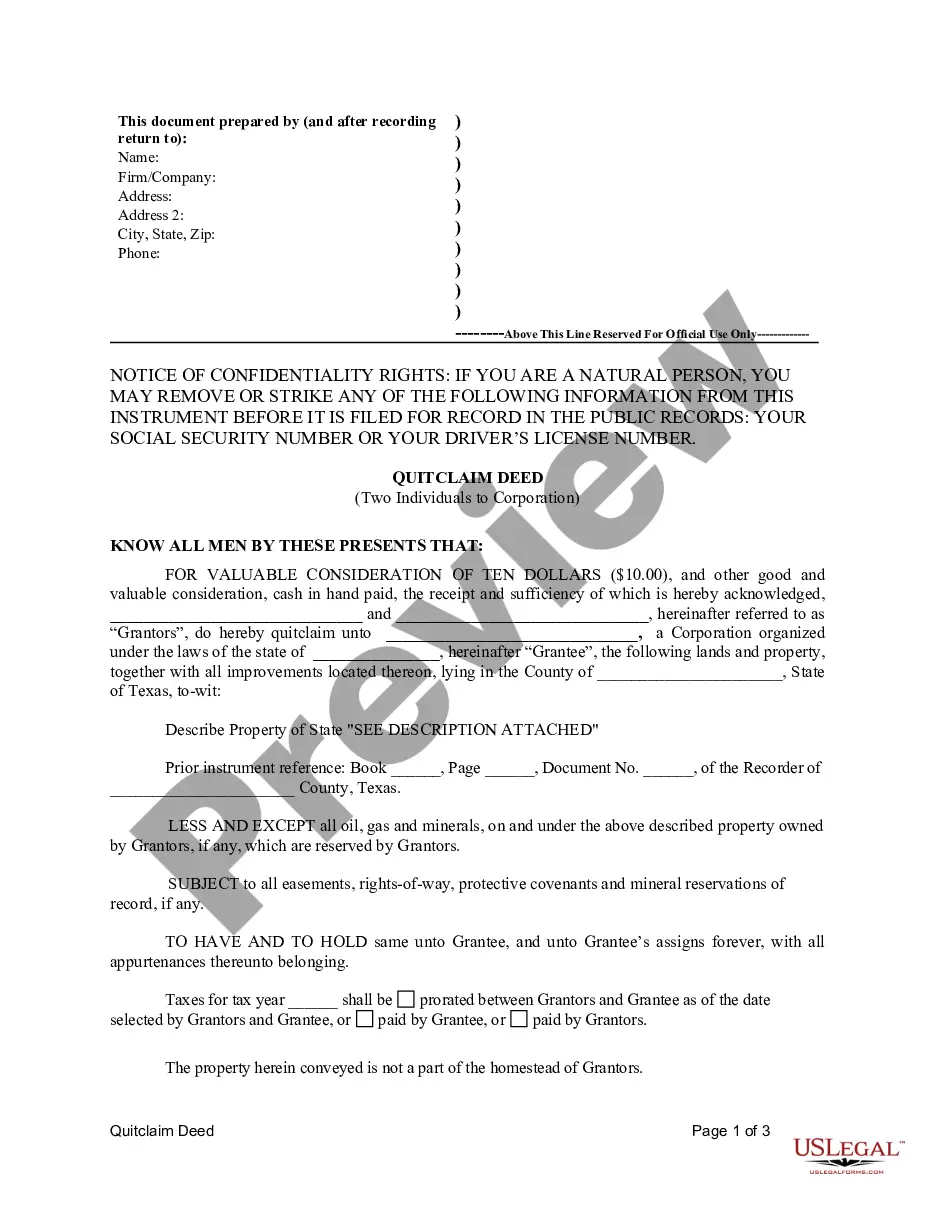
Texas Enhanced Life Estate or Lady Bird Quitclaim Deed from Individual to Two Individuals or Husband and Wife
Understanding this form
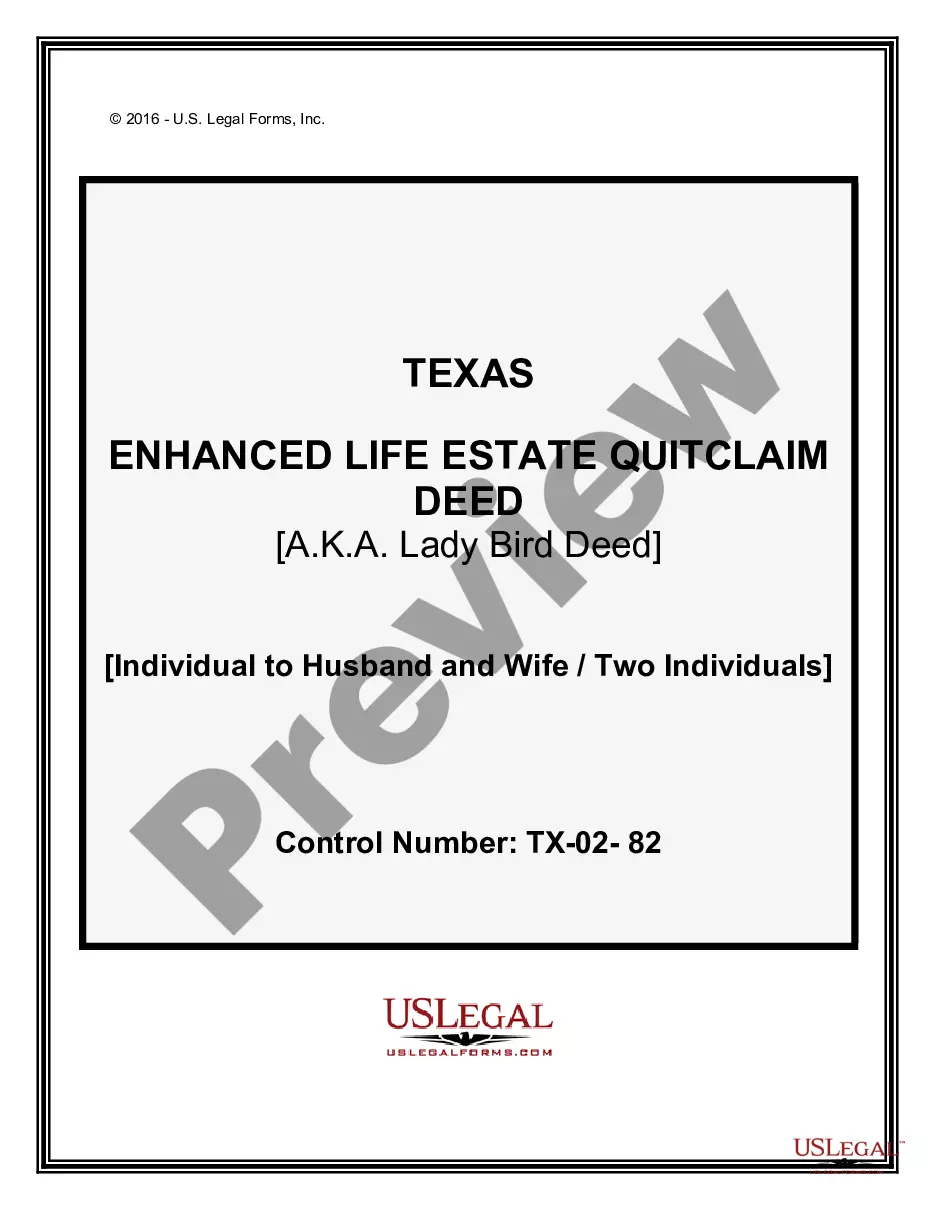
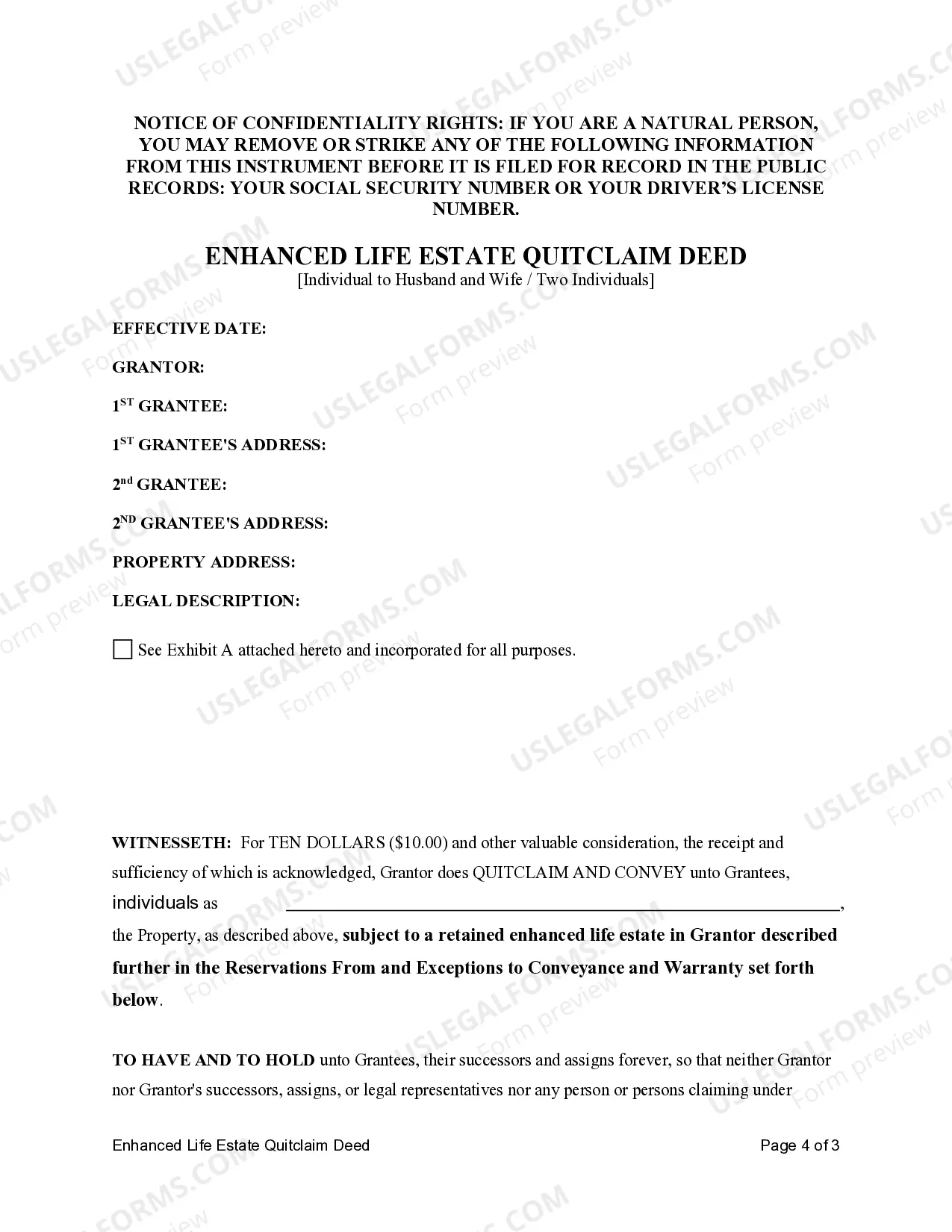
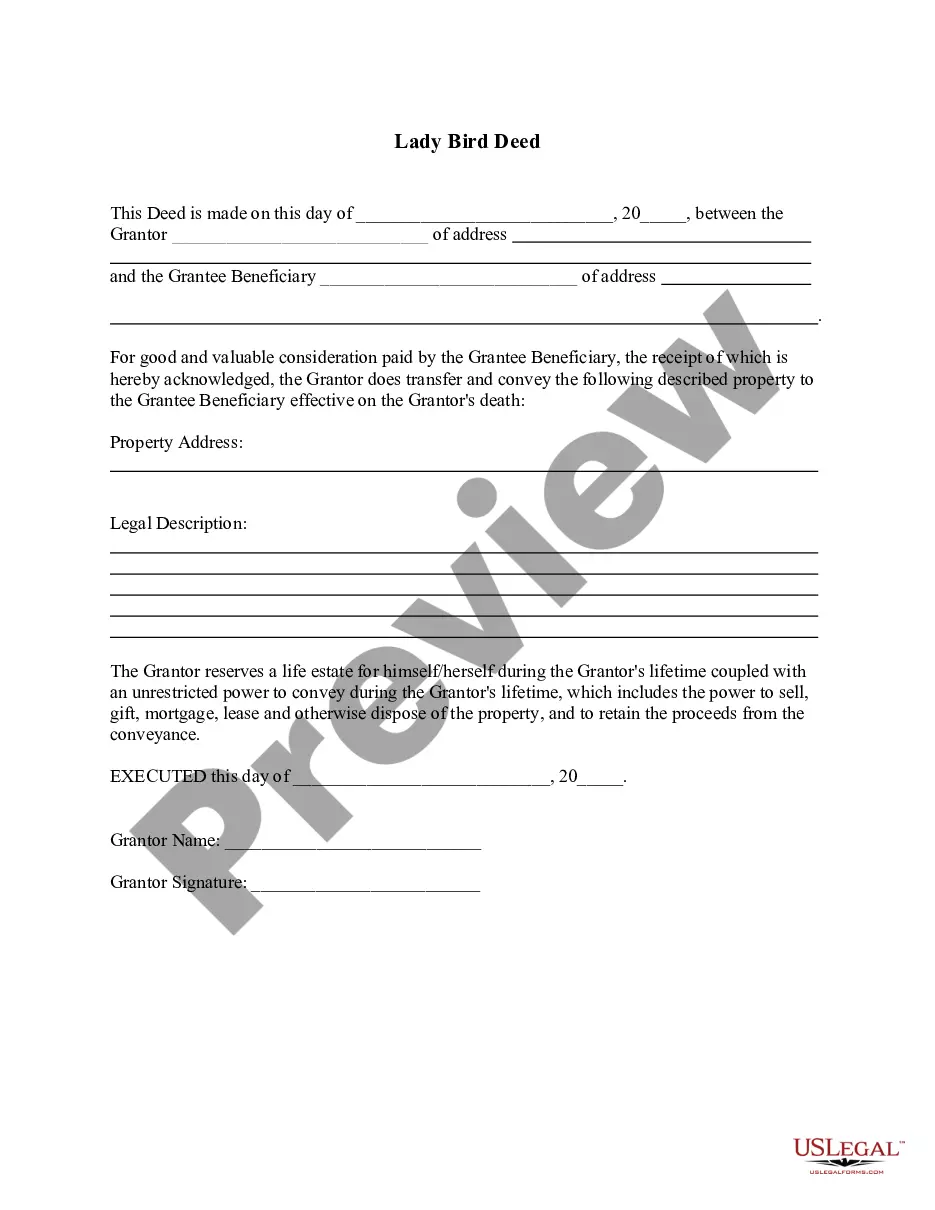
The Enhanced Life Estate or Lady Bird Quitclaim Deed is a legal document that transfers property ownership from an individual (the Grantor) to two individuals or a married couple (the Grantees) while allowing the Grantor to retain certain rights. This type of deed, often referred to as a Lady Bird Deed, provides enhanced control over the property, allowing the Grantor to sell or encumber the property without notifying the Grantees. It serves a unique purpose compared to standard quitclaim deeds by providing protections and flexibility for the Grantor's future intentions regarding the property.
What’s included in this form
- Identification of the Grantor and Grantees.
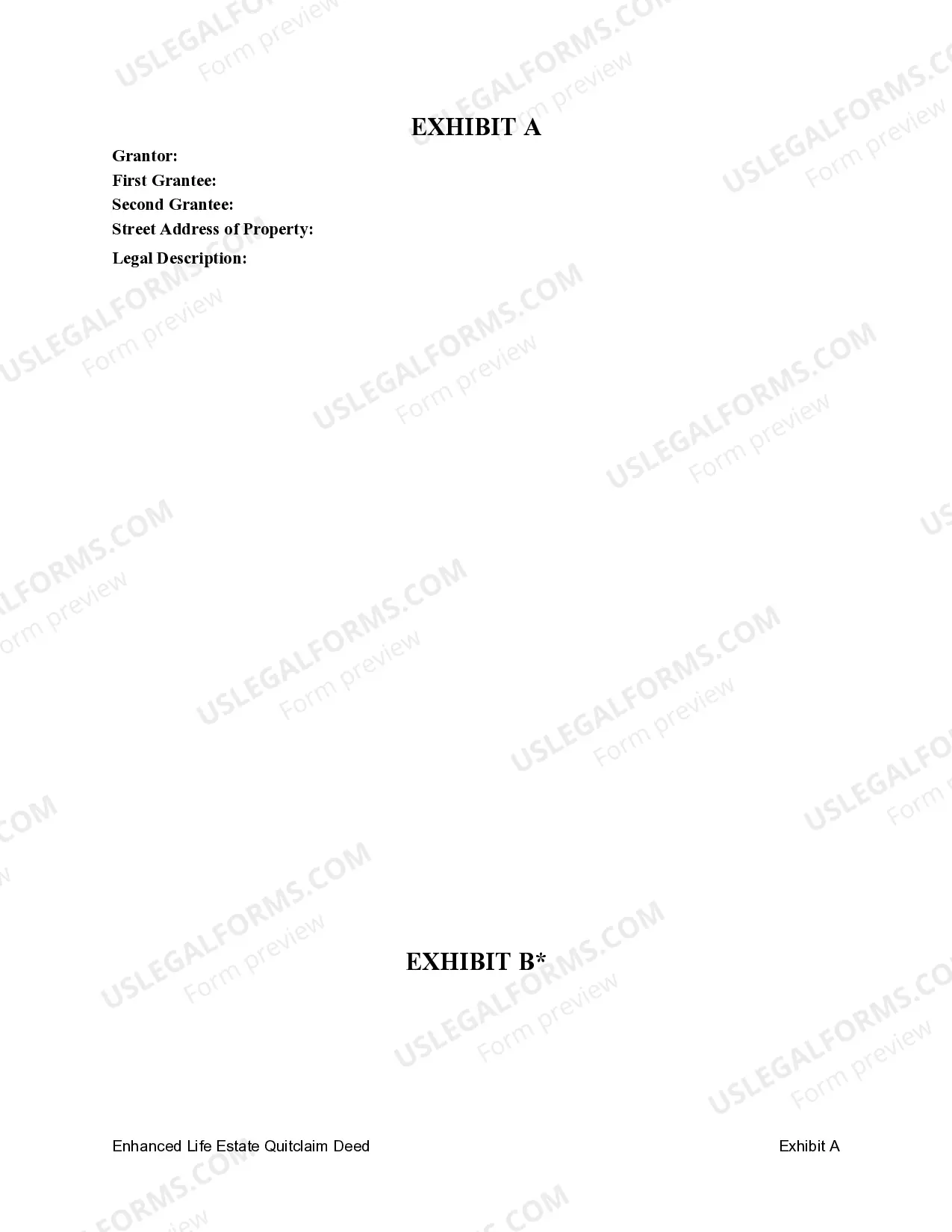
- Legal description of the property being transferred.
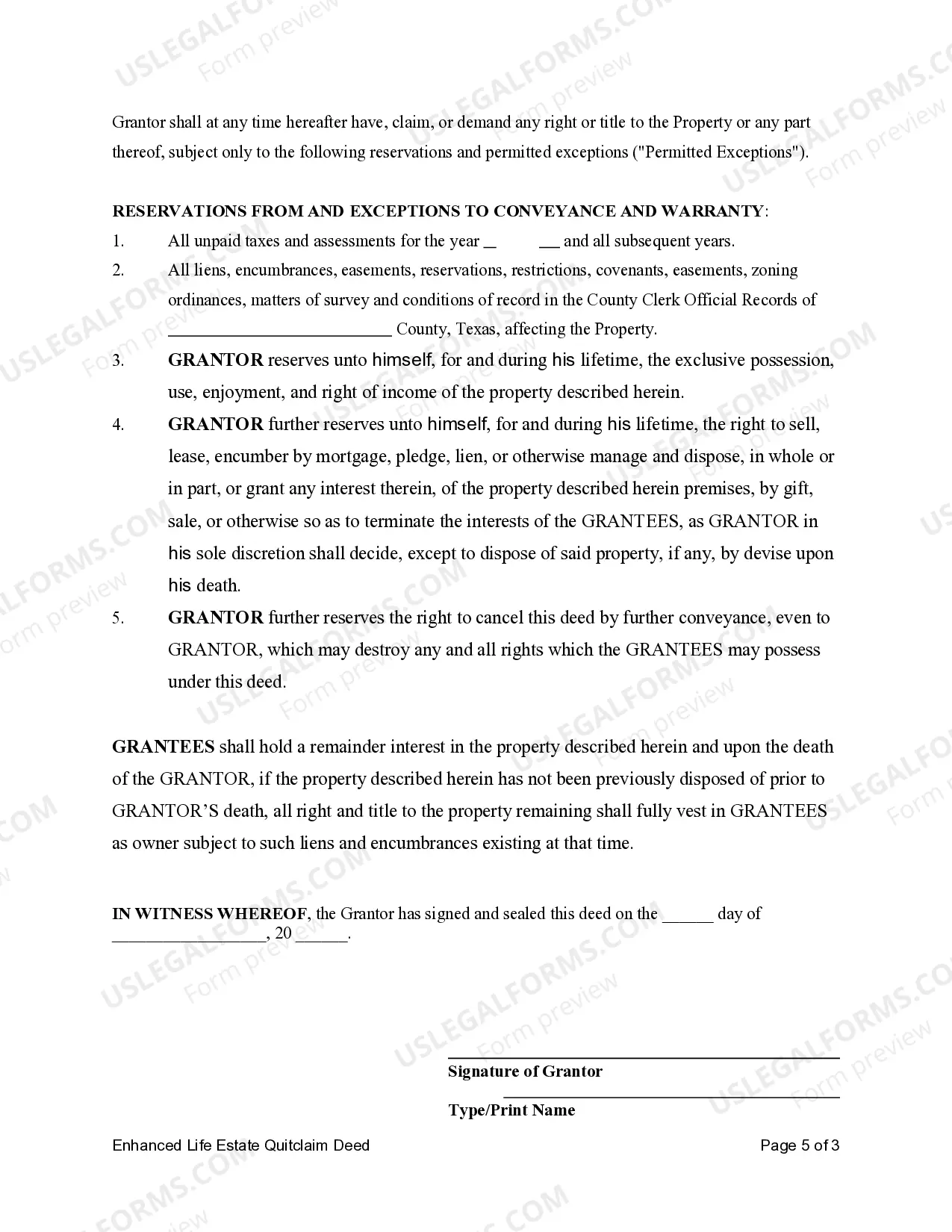
- Retention of an enhanced life estate by the Grantor.
- Options for Grantees on how to own the property (e.g., Tenants in Common, Joint Tenants with Right of Survivorship).
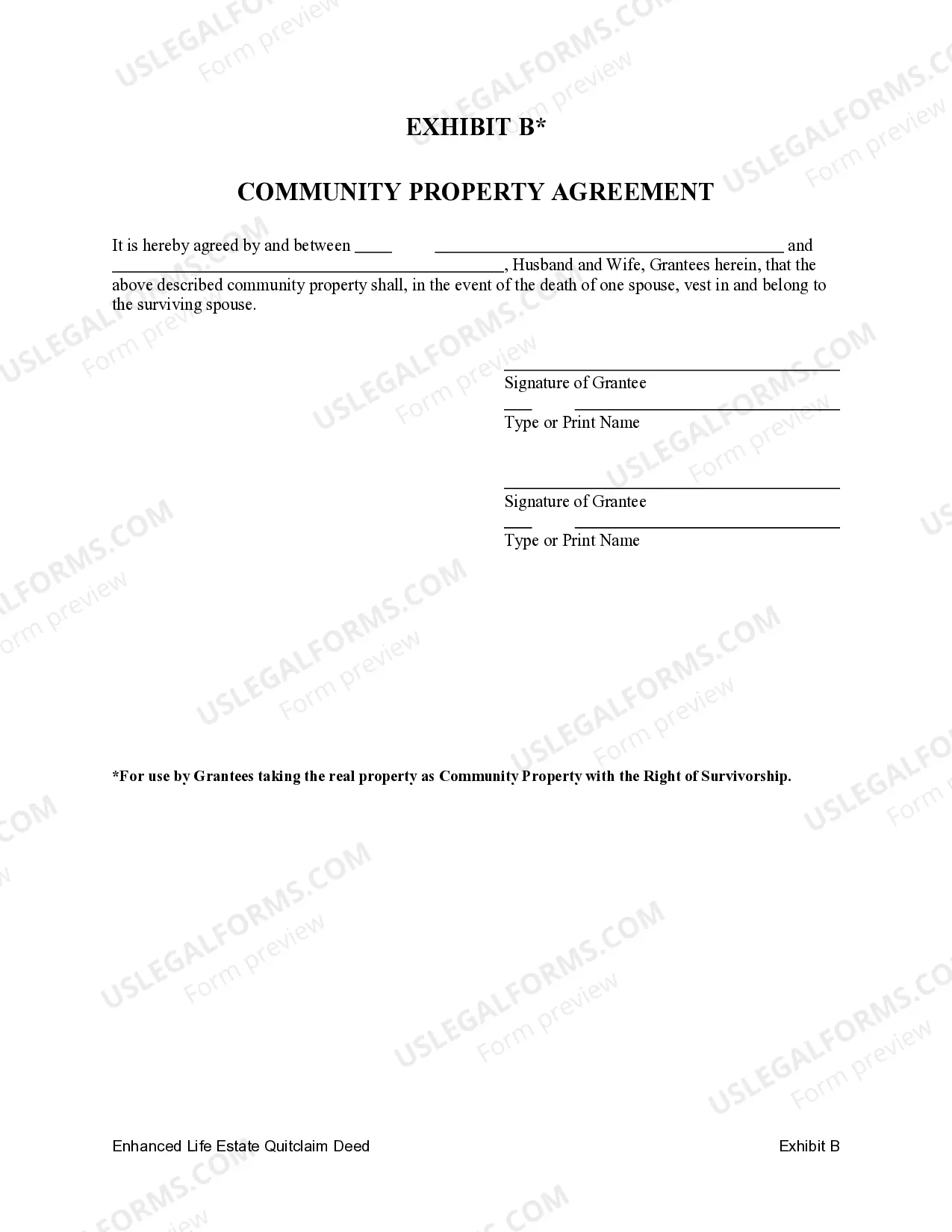
- Notices about the need for a Community Property Agreement for certain ownership types.
- Reservation of rights for the Grantor, including the ability to sell the property.


When to use this document
This form is typically used when an individual wishes to transfer real estate to two individuals or a married couple while maintaining rights to the property during their lifetime. It is suitable for estate planning purposes, especially for those wanting to ensure continued control over the property without immediate transfer of all rights to the Grantees. It can also be useful in instances where the property ownership structure is important for tax or inheritance considerations.
Who this form is for
- Individuals looking to transfer property to family members or partners while keeping certain rights.
- Couples who wish to assure property rights for both spouses while maintaining flexibility.
- Those involved in estate planning seeking to manage property distribution effectively.
Steps to complete this form
- Identify the parties involved: enter the names of the Grantor and the Grantees.
- Provide a complete legal description of the property being conveyed.
- Specify how the Grantees will hold the property (e.g., Tenants in Common or Joint Tenants with Right of Survivorship).
- Indicate the Grantor's retained rights and any applicable reservations.
- Complete and sign the deed in the presence of a notary public if required.
Does this form need to be notarized?
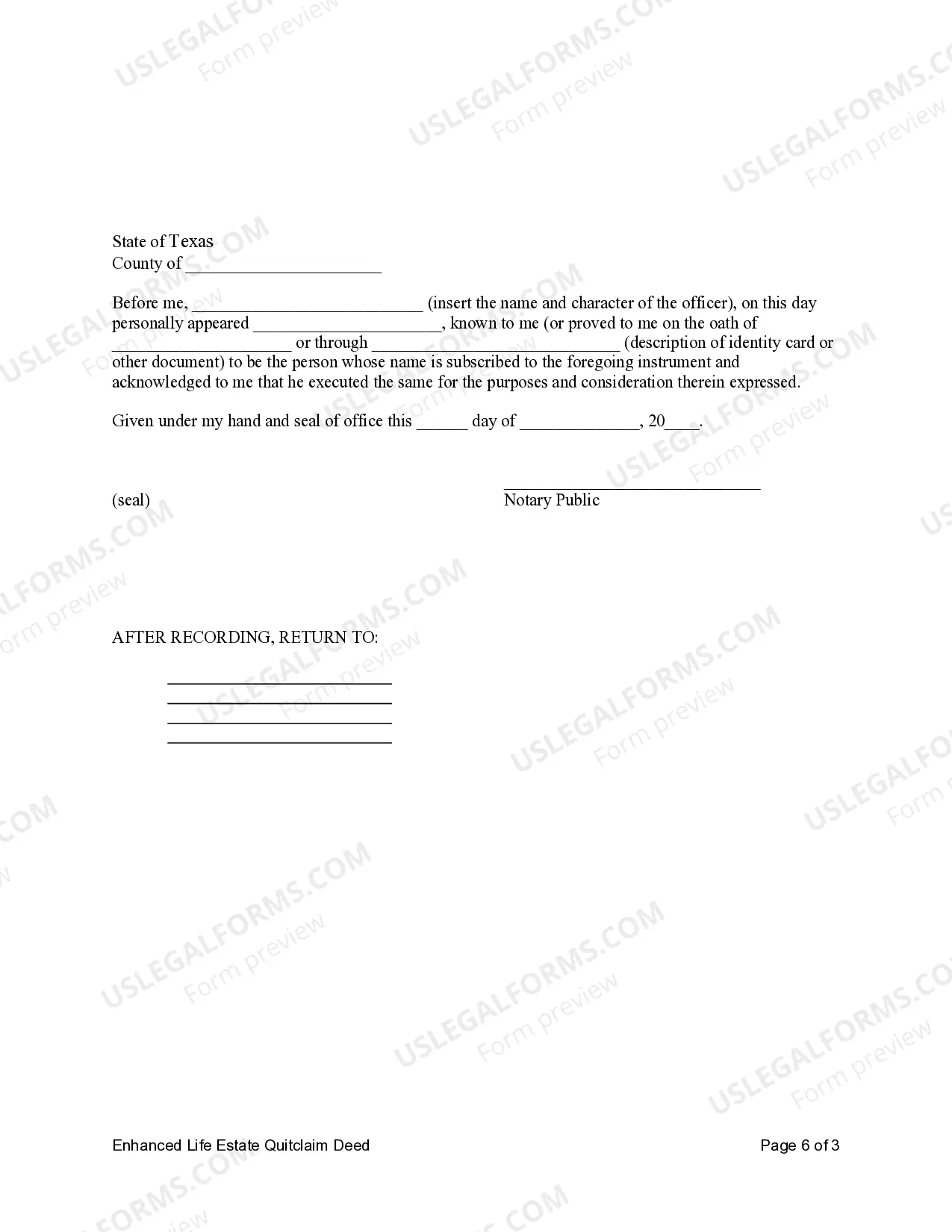
Yes, this form must be notarized to be legally valid in most cases. This ensures that the signatures are authentic and that the document is executed properly. U.S. Legal Forms offers integrated online notarization services, providing a secure and convenient way to notarize the deed via video call.
Get your form ready online
Our built-in tools help you complete, sign, share, and store your documents in one place.
Make edits, fill in missing information, and update formatting in US Legal Forms—just like you would in MS Word.
Download a copy, print it, send it by email, or mail it via USPS—whatever works best for your next step.
Sign and collect signatures with our SignNow integration. Send to multiple recipients, set reminders, and more. Go Premium to unlock E-Sign.
If this form requires notarization, complete it online through a secure video call—no need to meet a notary in person or wait for an appointment.
We protect your documents and personal data by following strict security and privacy standards.

Make edits, fill in missing information, and update formatting in US Legal Forms—just like you would in MS Word.

Download a copy, print it, send it by email, or mail it via USPS—whatever works best for your next step.

Sign and collect signatures with our SignNow integration. Send to multiple recipients, set reminders, and more. Go Premium to unlock E-Sign.

If this form requires notarization, complete it online through a secure video call—no need to meet a notary in person or wait for an appointment.

We protect your documents and personal data by following strict security and privacy standards.
Typical mistakes to avoid
- Failing to include the correct legal description of the property.
- Not specifying how Grantees will hold the property.
- Ignoring the need for a Community Property Agreement if applicable.
- Not having the deed notarized when required by state law.
Why use this form online
- Convenient access: complete your deed from anywhere at any time.
- Editability: modify the form easily to meet your specific needs.
- Reliable: ensures compliance with state laws and requirements.
Main things to remember
- The Enhanced Life Estate Quitclaim Deed allows for property transfer while retaining control during the Grantor's lifetime.
- It's especially useful for estate planning to avoid probate complications.
- Ensure all parties and property details are accurately documented to prevent issues later.
Looking for another form?

Form popularity
FAQ
A Lady Bird deed avoids probate, so the home is not part of the probate estate and Medicaid cannot go after it.
While you can draft a Ladybird Deed on your own, it is always best to have something like this done by an experienced attorney. These are documents that need to be done correctly, or it can create additional issues for your loved ones.
A lady bird deed is an estate planning tool that enables a Medicaid beneficiary to protect their home as an inheritance from their state's Medicaid Estate Recovery Program. A lady bird (ladybird) deed (also called an enhanced life estate deed, lady bird trust or a transfer on death deed) is a type of life estate deed.
This right to rescind is what distinguishes a Lady Bird Deed from a standard Life Estate Deed.A properly written, signed and filed Enhanced Life Estate Deed does supersede the terms of the owner's Will, so long as the grantor has not exercised the retained right to reclaim ownership while living.
It only applies to residential properties and must be promptly recorded after it is notarized. This document is exempt from documentary transfer tax under Rev. & Tax. Code §11930.
Warranties.A ladybird deed may transfer title with warranties in the deed whereby the grantor warrants that he has full ownership of the property at the time of the conveyance. Quitclaim language, however, could also be used in a ladybird deed, with the seller deeding whatever interest he has to pass at his death.
Quitclaim deeds are most often used to transfer property between family members. Examples include when an owner gets married and wants to add a spouse's name to the title or deed, or when the owners get divorced and one spouse's name is removed from the title or deed.
They are both quit claim deeds. A lady bird deed is more flexible and is advised in most circumstances.