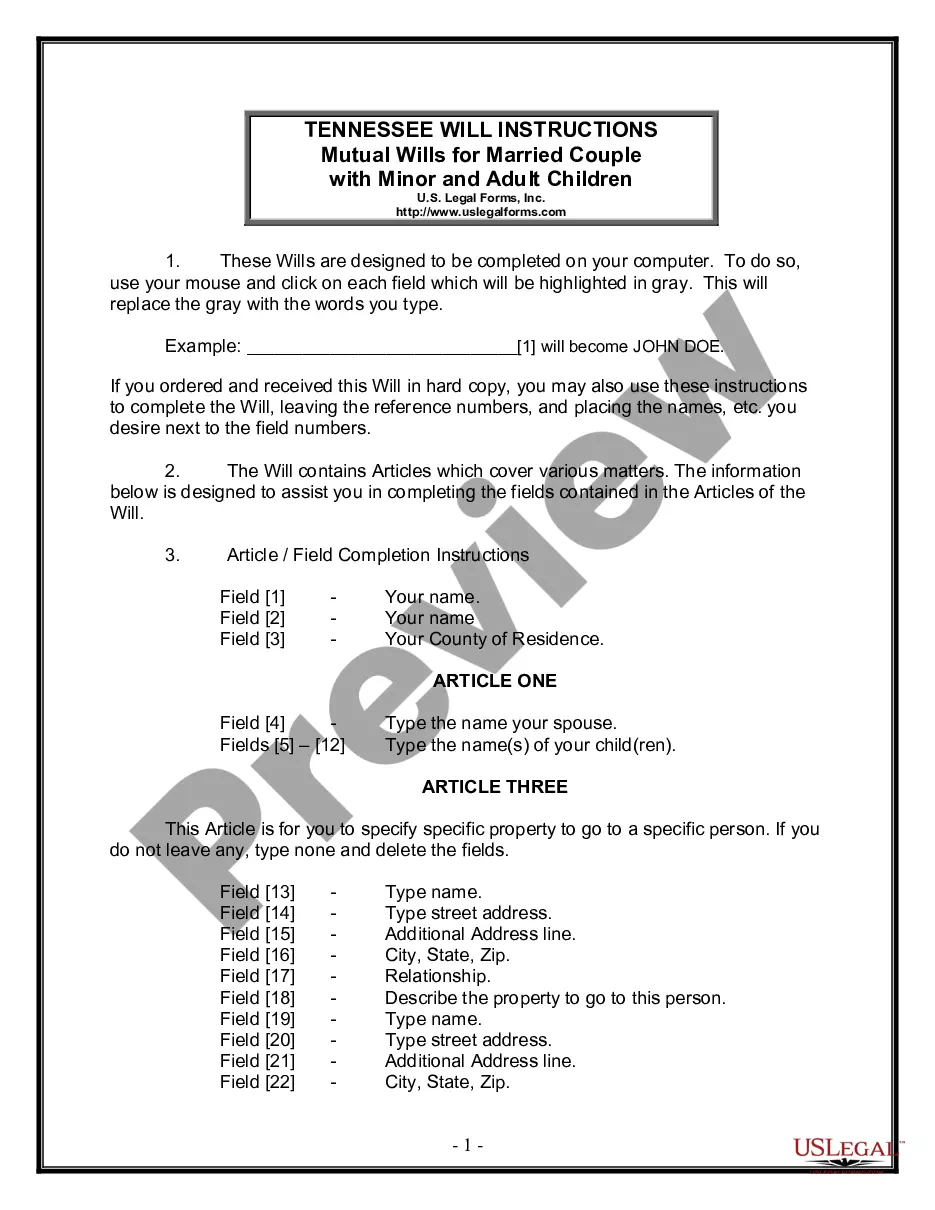
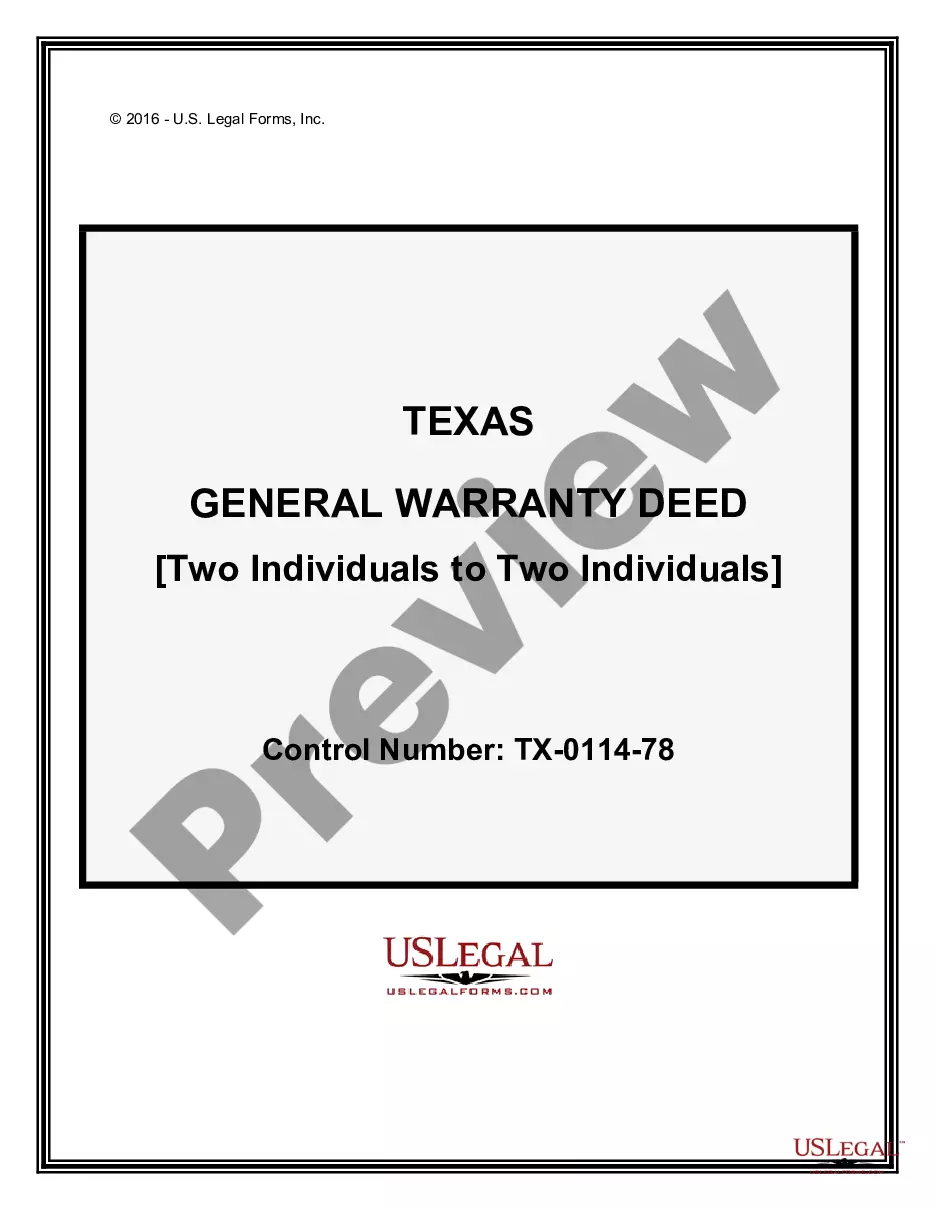
Texas Warranty Deed from Two Individuals to Two Individuals
What is this form?
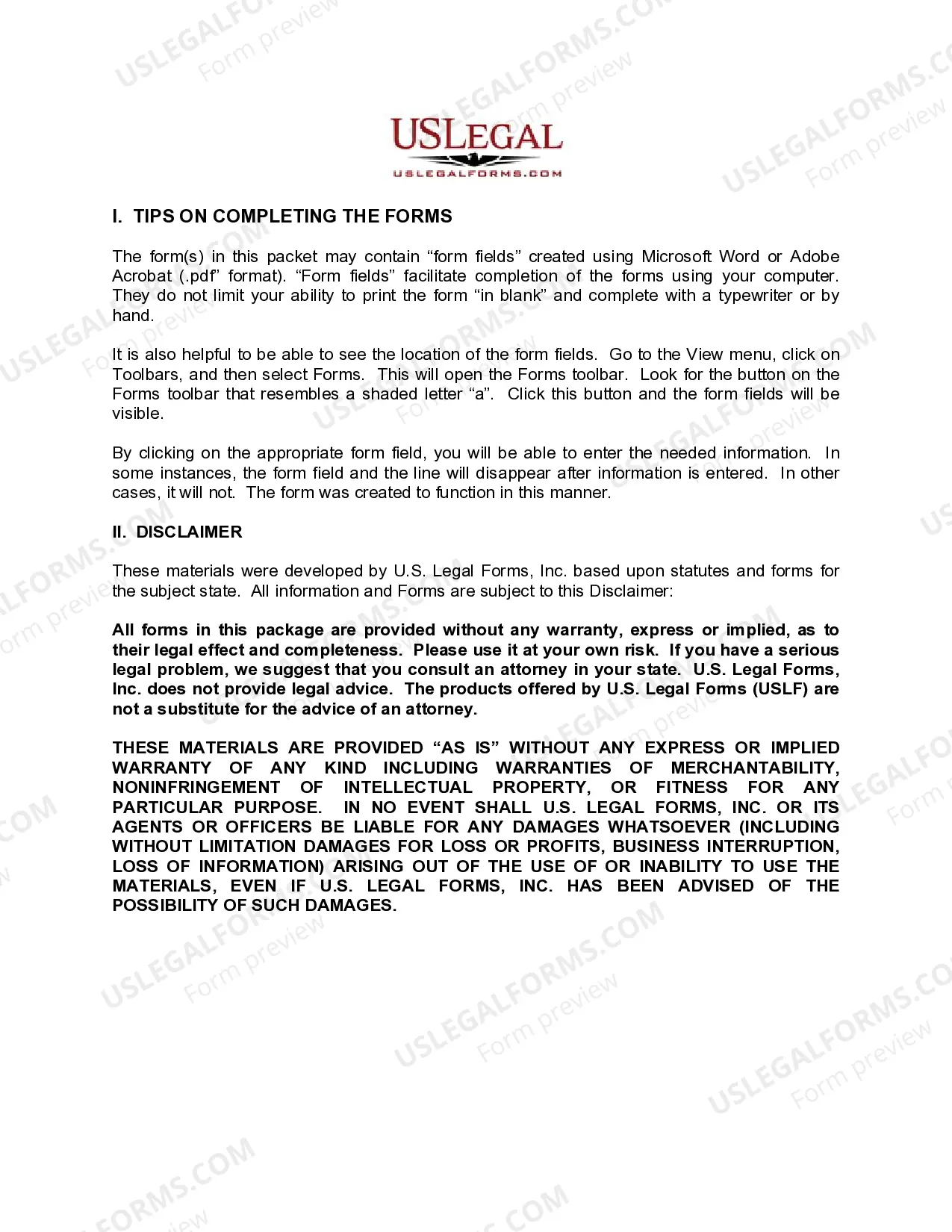
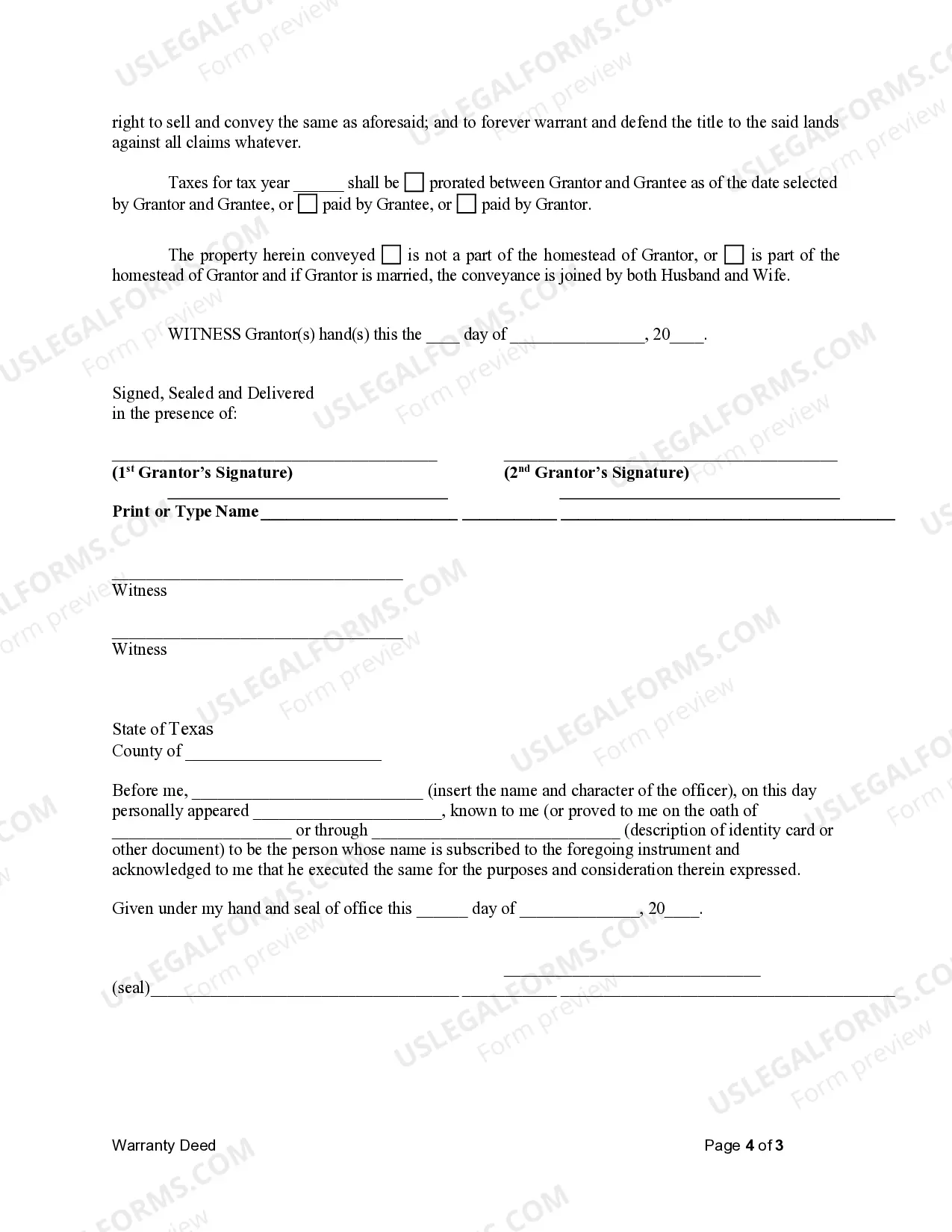
This Warranty Deed is a legal document used to transfer property ownership from two individuals (grantors) to another two individuals (grantees). It ensures that the grantors warrant the title of the property, conveying it free from any encumbrances, except for specific reservations noted in the deed. Unlike other property transfer documents, this Warranty Deed includes guarantees about the ownership and condition of the property, providing a stronger form of protection for the grantees.
Key parts of this document
- Grantor and Grantee Information: Names and marital status of both the individuals transferring and receiving the property.
- Property Description: Detailed description of the property being conveyed, including its location.
- Consideration Amount: Acknowledgment of the value exchanged for the property transfer, often a nominal sum.
- Legal Guarantees: Assurances by the grantors that they hold clear title to the property and will defend it against claims.
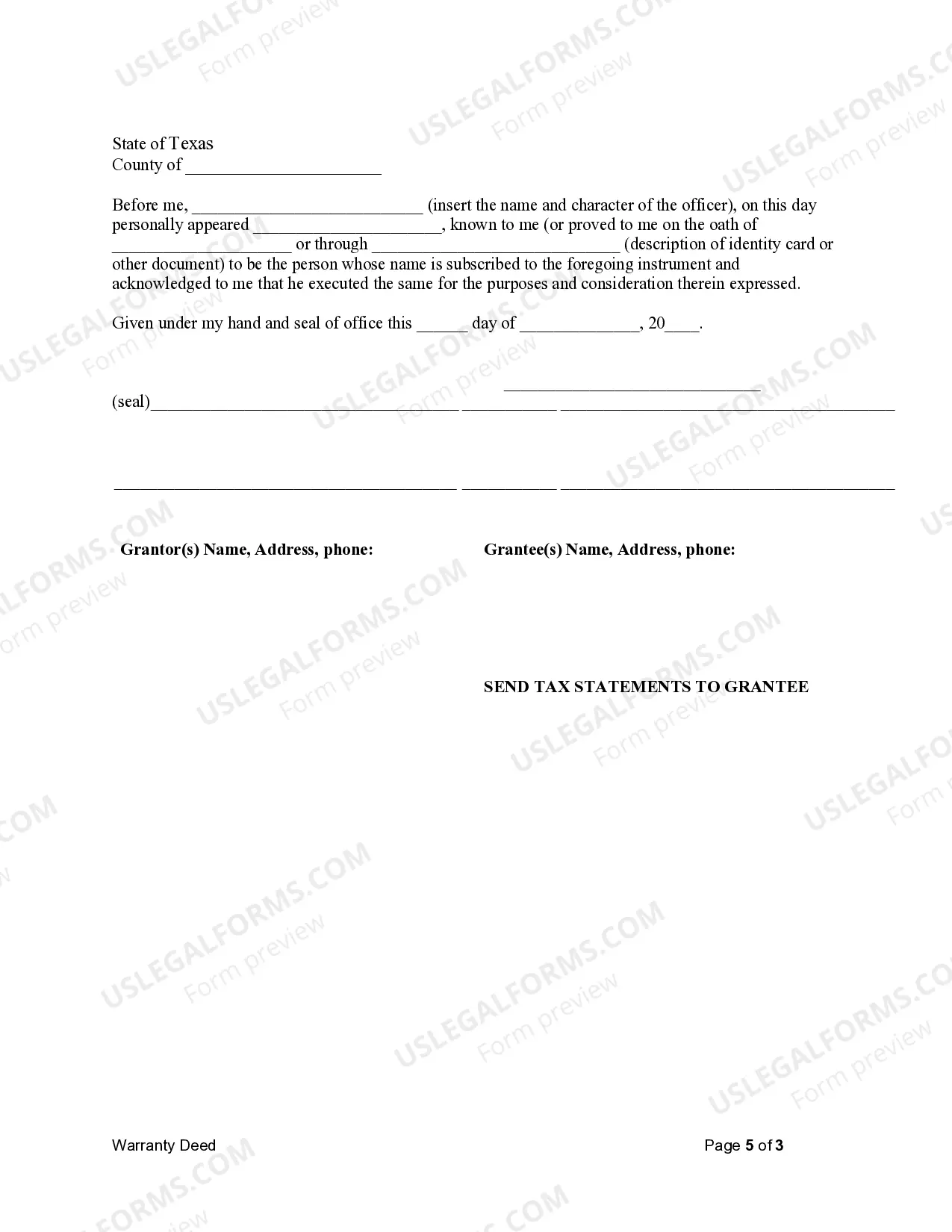
- Notarization Section: Requirements for witnessing and notarizing the deed for legal enforcement.




When to use this form
This Warranty Deed should be used in situations where two individuals wish to transfer property ownership to another set of two individuals. It is suitable for personal transactions, inheritance situations, or when couples are buying property together. If there are specific mineral rights and reservations applicable to the property, this form also allows for those to be included, safeguarding all parties involved.
Who can use this document
- Individuals transferring property to another pair of individuals.
- Married couples or unmarried individuals involved in property ownership transactions.
- Heirs or beneficiaries dealing with inherited property before probate.
- Anyone needing to clarify property ownership rights and responsibilities.
Steps to complete this form
- Identify the parties: Enter the names and marital statuses of the grantors and grantees.
- Specify the property: Accurately describe the property being transferred, including location and any attachments.
- Enter consideration: State the nominal dollar amount indicating the value exchanged for the property.
- Review warranties: Ensure that all legal assurances about title and ownership are correctly stated.
- Sign and notarize: Have all parties sign the document in the presence of a notary public to validate the transaction.
Does this form need to be notarized?
This form needs to be notarized to ensure legal validity. US Legal Forms provides secure online notarization powered by Notarize, allowing you to complete the process through a verified video call, available anytime.
Get your form ready online
Our built-in tools help you complete, sign, share, and store your documents in one place.
Make edits, fill in missing information, and update formatting in US Legal Forms—just like you would in MS Word.
Download a copy, print it, send it by email, or mail it via USPS—whatever works best for your next step.
Sign and collect signatures with our SignNow integration. Send to multiple recipients, set reminders, and more. Go Premium to unlock E-Sign.
If this form requires notarization, complete it online through a secure video call—no need to meet a notary in person or wait for an appointment.
We protect your documents and personal data by following strict security and privacy standards.

Make edits, fill in missing information, and update formatting in US Legal Forms—just like you would in MS Word.

Download a copy, print it, send it by email, or mail it via USPS—whatever works best for your next step.

Sign and collect signatures with our SignNow integration. Send to multiple recipients, set reminders, and more. Go Premium to unlock E-Sign.

If this form requires notarization, complete it online through a secure video call—no need to meet a notary in person or wait for an appointment.

We protect your documents and personal data by following strict security and privacy standards.
Mistakes to watch out for
- Failing to accurately describe the property being transferred, which can lead to disputes.
- Not obtaining a signature from all necessary parties, especially when marital consent is required.
- Neglecting to notarize the document, making it unenforceable.
Benefits of using this form online
- Convenience: Download and complete the form at your own pace, from any location.
- Editability: Easily make changes before finalizing your deed, ensuring all details are correct.
- Reliability: Ensure you are using a template that complies with Texas state laws, drafted by legal professionals.
Looking for another form?


Form popularity
FAQ
Find the most recent deed to the property. It is best to begin with a copy of the most recent deed to the property (the deed that transferred the property to the current grantor). Create a new deed. Sign and notarize the deed. File the documents in the county land records.
The deed must be presented to and accepted by the grantee, and it should be filed of record in the county clerk's office to put the public on notice of the transfer. Failure to file the deed can subject the property to future claims by other parties. Most commonly, a grantor provides a general warranty deed.
Retrieve your original deed. Get the appropriate deed form. Draft the deed. Sign the deed before a notary. Record the deed with the county recorder. Obtain the new original deed.
In Texas, you can't add your spouse's name to an existing deed, but you can create a new deed by transferring the property from yourself to you and your spouse jointly. You can do this by using either a deed without warranty or a quit claim deed.
It's important to note that a warranty deed does not actually prove the grantor has ownership (a title search is the best way to prove that), but it is a promise by the grantor that they are transferring ownership and if it turns out they don't actually own the property, the grantor will be responsible for compensating
Special warranties allow the transfer of property title between seller and buyer. The purchase of title insurance can mitigate the risk of prior claims to the special warranty deed.
A warranty deed guarantees that: The grantor is the rightful owner of the property and has the legal right to transfer the title.The title would withstand third-party claims to ownership of the property. The grantor will do anything to ensure the grantee's title to the property.
As a property owner and grantor, you can obtain a warranty deed for the transfer of real estate through a local realtor's office, or with an online search for a template. To make the form legally binding, you must sign it in front of a notary public.
The deed and any related agreements should be filed in the land records of the county where the property is located. The county clerk will require a recording fee. Recording fees can vary, but usually range from $11.00 to $30.00 for the first page and $4.00 for each additional page.