Nevada Heirship Affidavit - Descent

Understanding this form
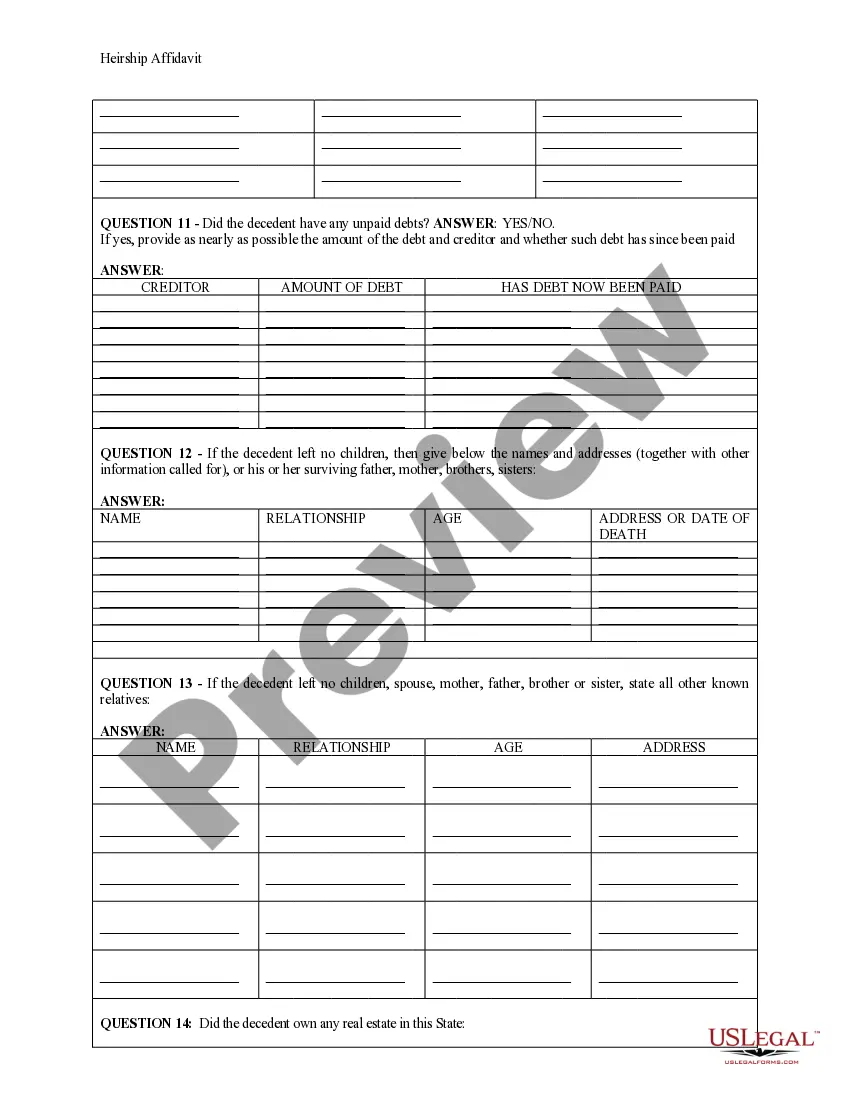
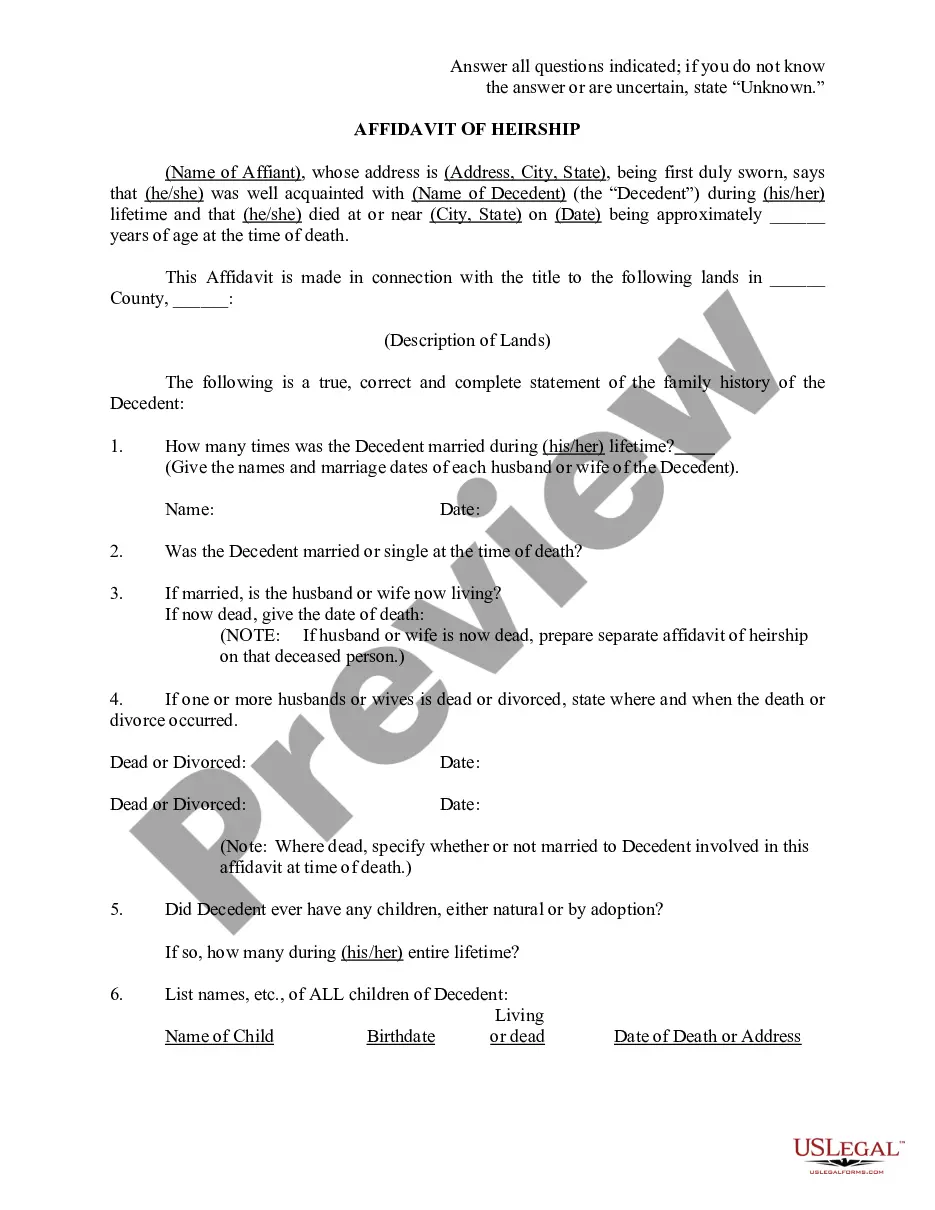
The Heirship Affidavit - Descent is a legal document used to declare the heirs of a deceased individual. This affidavit serves a crucial role in establishing ownership of both personal and real property when a person dies without a will. Unlike other estate planning documents, this affidavit is typically filed to clarify the lineage of the deceased rather than to outline the distribution of their estate.
Main sections of this form
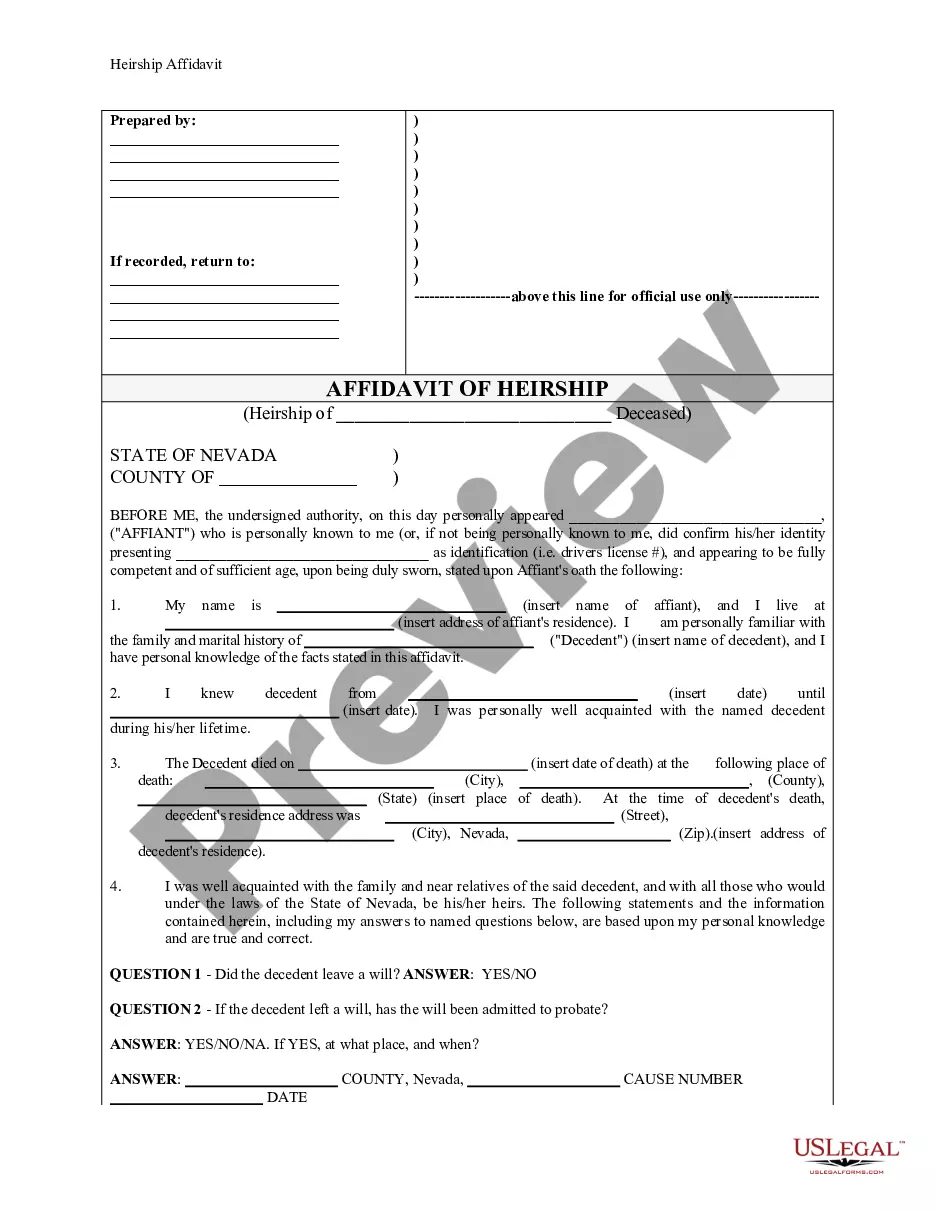
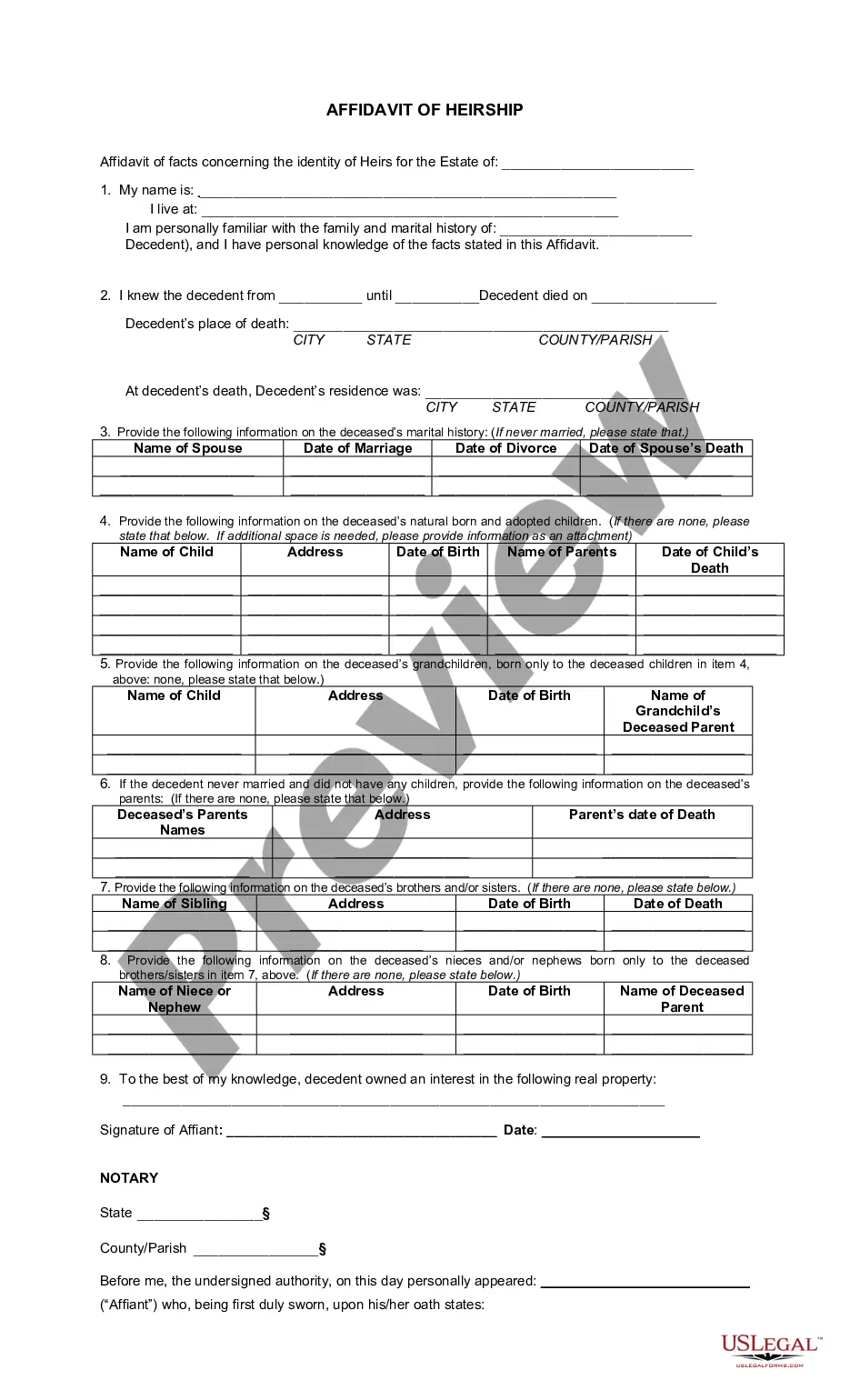
- Affiant's personal details, including name and address.
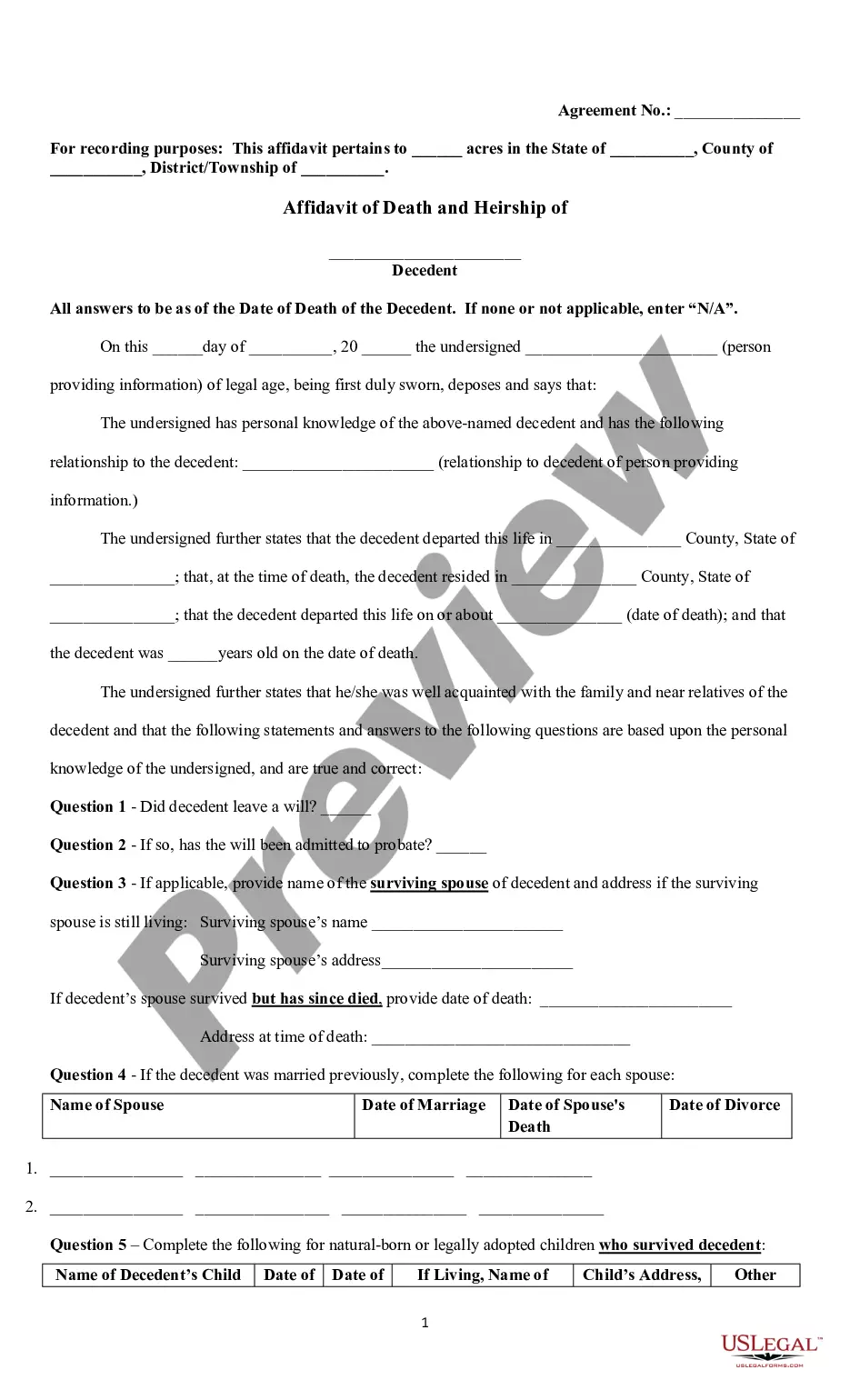
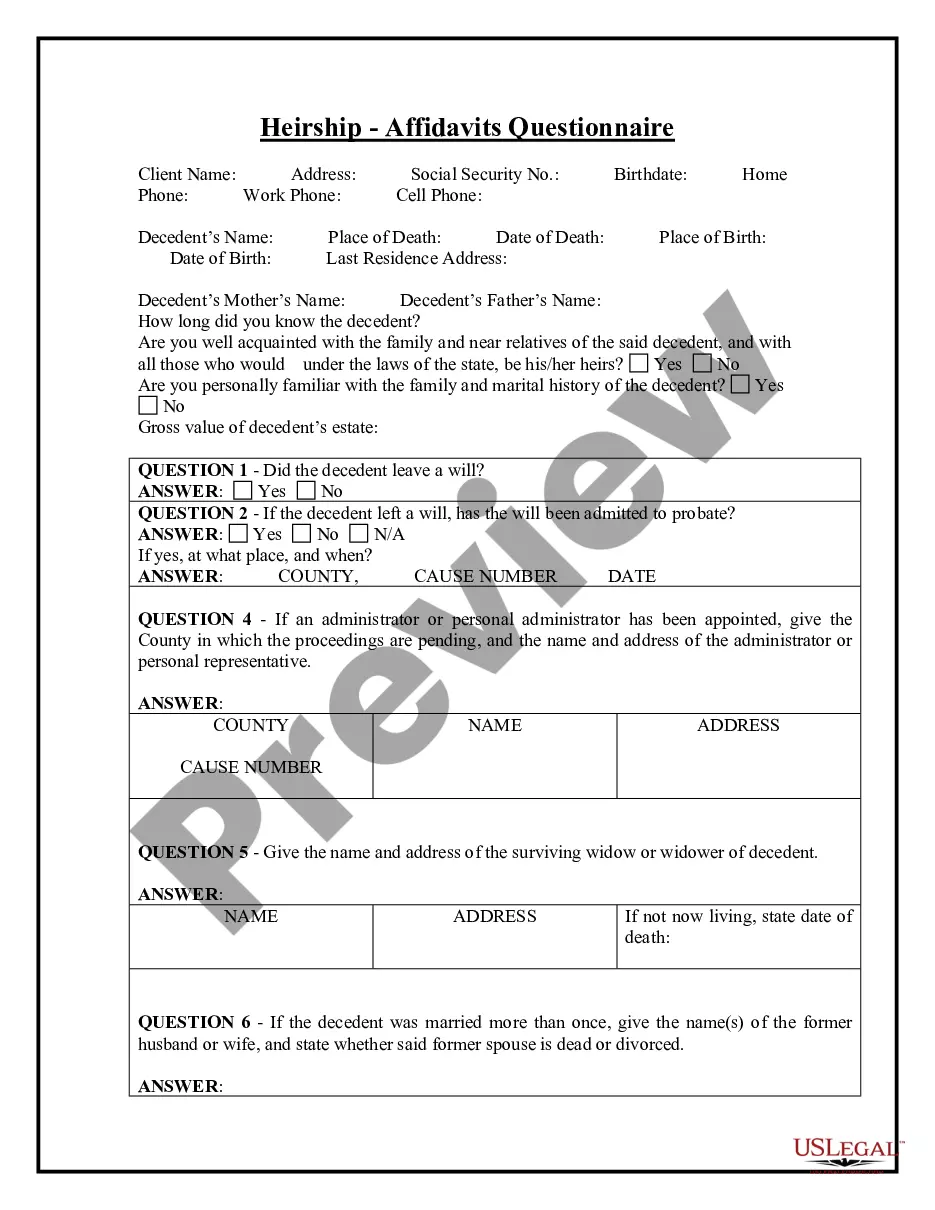
- Information about the deceased, such as their name and date of death.
- Questions regarding the existence of a will and probate status.
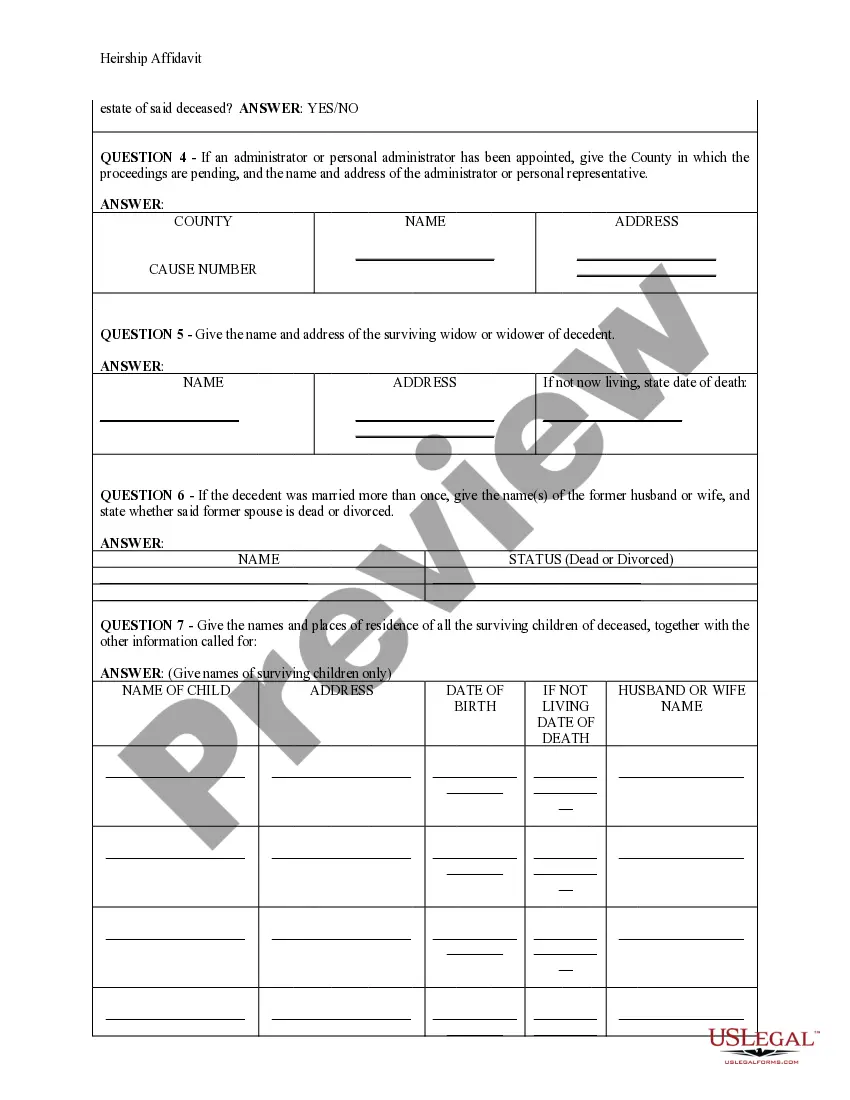
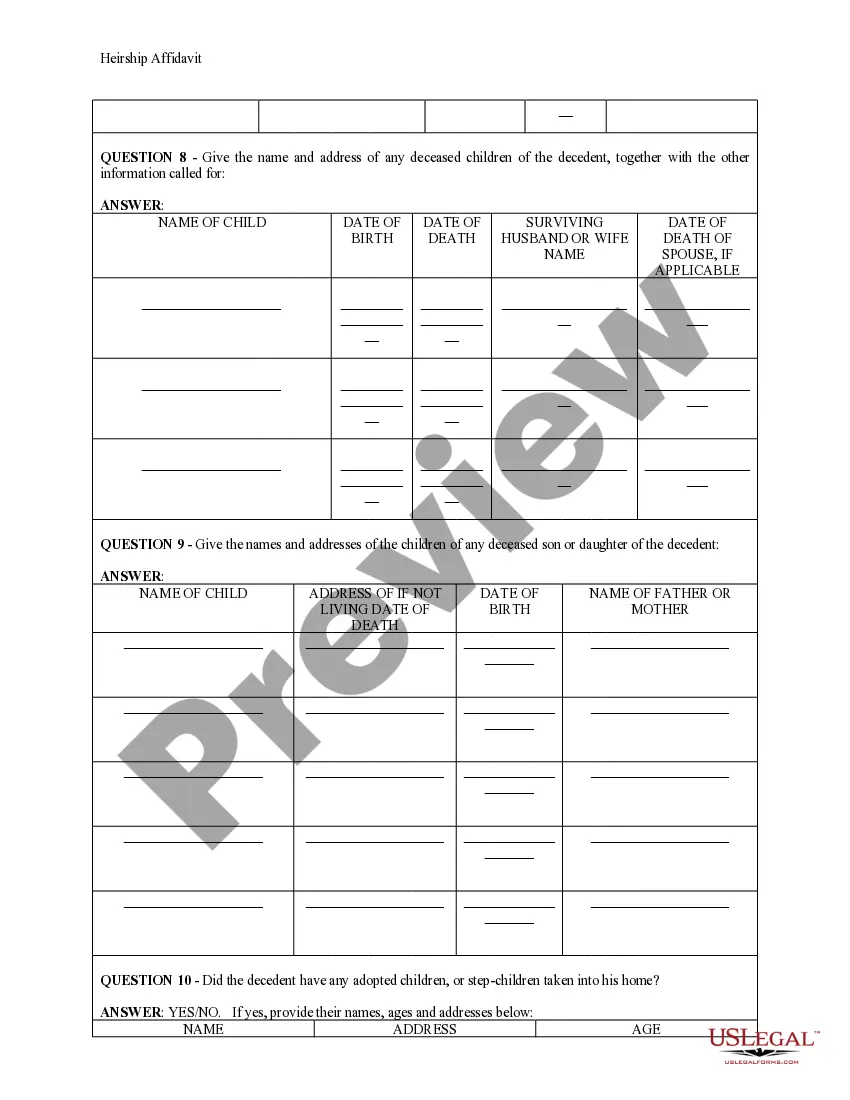
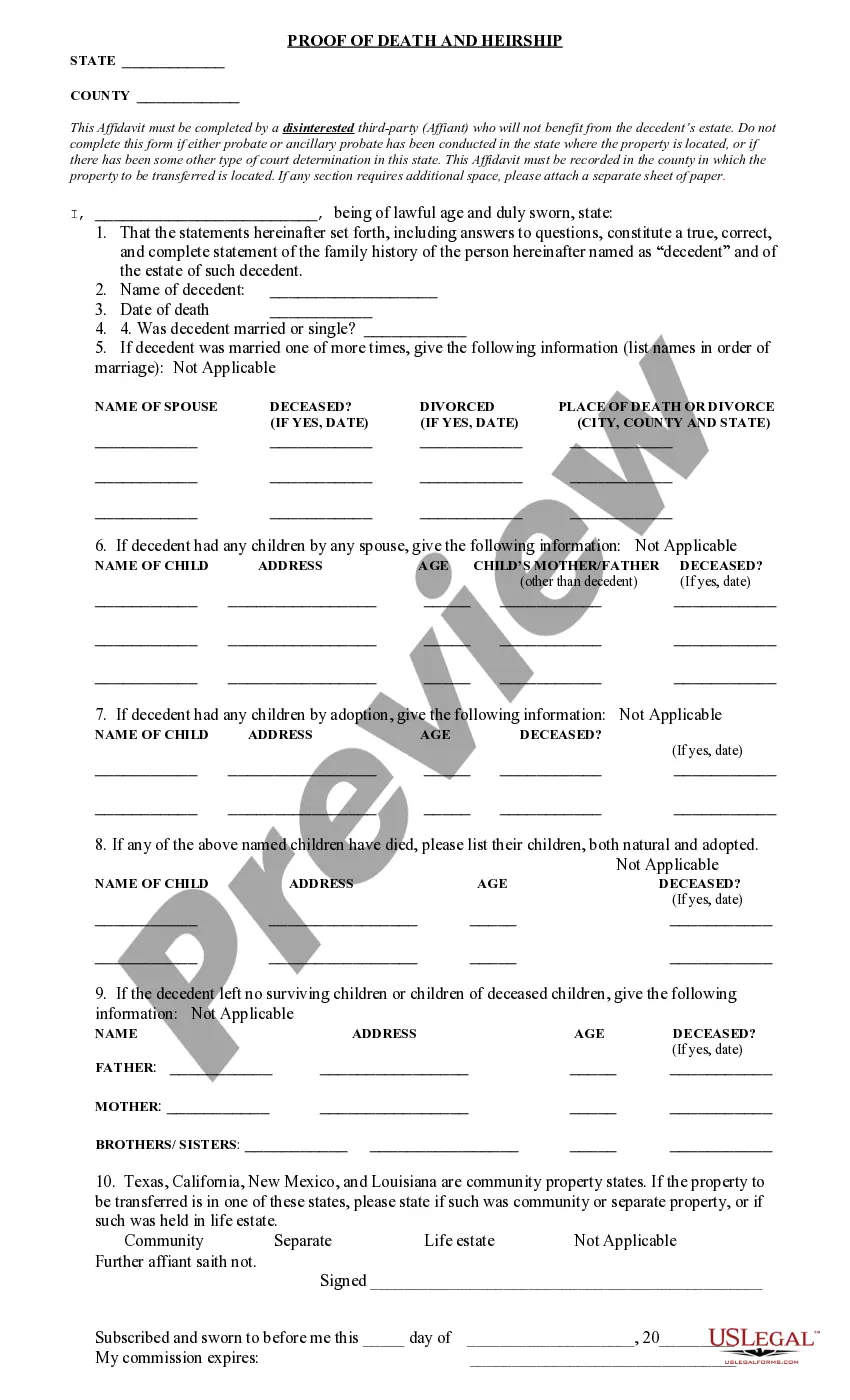
- Details about surviving family members and potential heirs.
- Records of any debts owed by the deceased.
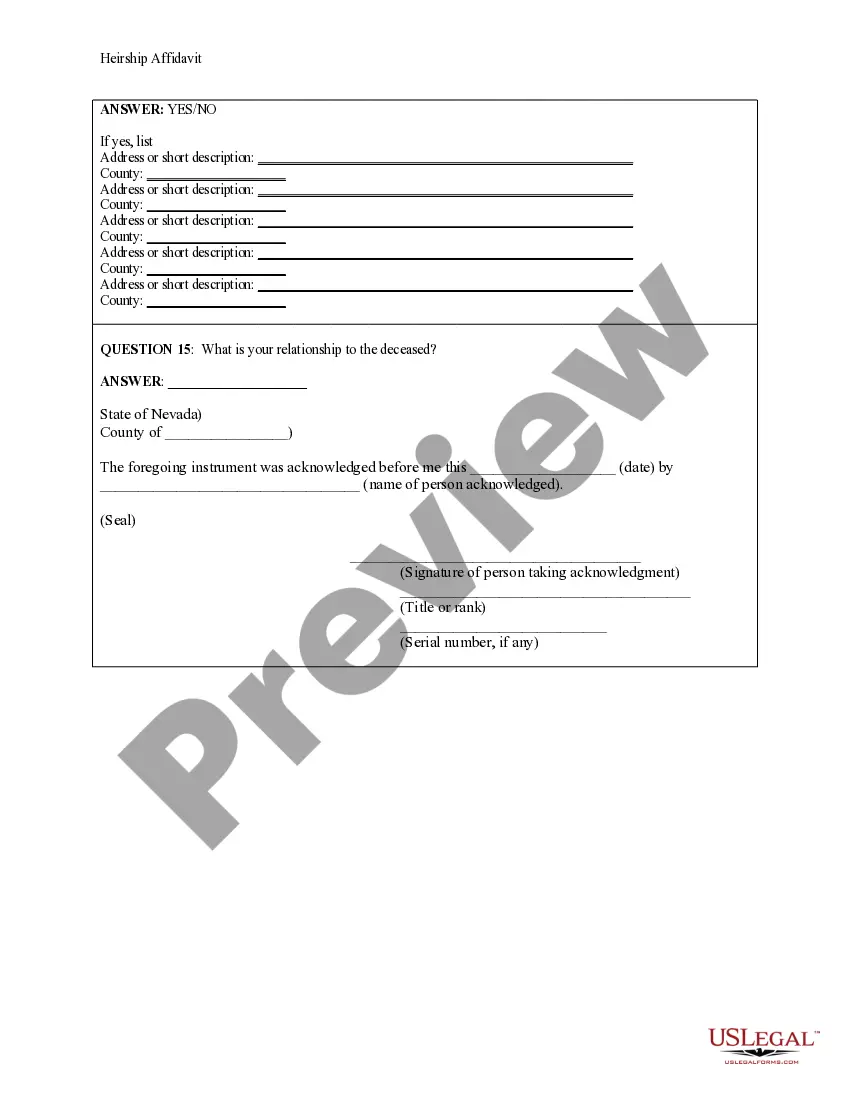
- Information on real estate owned by the deceased.
When to use this document
You should use the Heirship Affidavit when a person passes away without leaving a will (intestate) and their property needs to be transferred to the rightful heirs. It is commonly required when heirs wish to sell or manage the deceased's property, particularly if the estate has not been formally opened.
Who should use this form
This form is intended for:
- Individuals who are familiar with the family structure of the deceased.
- Heirs or beneficiaries needing to establish ownership of decedent's property.
- Those managing the estate of a deceased person who died without a will.
- Non-heirs needing to affirm the familial connections of the deceased for legal purposes.
Steps to complete this form
- Identify the affiant and input their personal information at the beginning of the form.
- Provide details about the deceased, including their name, date of death, and last residence.
- Answer questions regarding the existence of a will and the status of any probate proceedings.
- List all surviving relatives and their addresses, as well as any deceased children and their details.
- Detail any debts owed by the deceased and whether real estate is involved.
- Sign and date the affidavit in the presence of a notary public.
Is notarization required?
Yes, this form must be notarized to be legally valid. It ensures authenticity and can be a requirement when submitting the affidavit to local authorities. US Legal Forms provides integrated online notarization for convenience, available 24/7 through secure video calls.
Get your form ready online
Our built-in tools help you complete, sign, share, and store your documents in one place.
Make edits, fill in missing information, and update formatting in US Legal Forms—just like you would in MS Word.
Download a copy, print it, send it by email, or mail it via USPS—whatever works best for your next step.
Sign and collect signatures with our SignNow integration. Send to multiple recipients, set reminders, and more. Go Premium to unlock E-Sign.
If this form requires notarization, complete it online through a secure video call—no need to meet a notary in person or wait for an appointment.
We protect your documents and personal data by following strict security and privacy standards.

Make edits, fill in missing information, and update formatting in US Legal Forms—just like you would in MS Word.

Download a copy, print it, send it by email, or mail it via USPS—whatever works best for your next step.

Sign and collect signatures with our SignNow integration. Send to multiple recipients, set reminders, and more. Go Premium to unlock E-Sign.

If this form requires notarization, complete it online through a secure video call—no need to meet a notary in person or wait for an appointment.

We protect your documents and personal data by following strict security and privacy standards.
Avoid these common issues
- Failing to provide complete information about the deceased or survivors.
- Not answering all questions in the affidavit accurately.
- Forgetting to have the form notarized where required.
- Submitting the affidavit without ensuring it aligns with state requirements.
Benefits of completing this form online
- Convenient access to legal forms from anywhere at any time.
- Easily editable to reflect specific personal circumstances.
- Relief from waiting for legal appointments; prepare documents at your own pace.
- Access to reliable templates that comply with state laws.
Main things to remember
- The Heirship Affidavit is crucial for defining heirs when there is no will.
- It establishes ownership rights over the deceased's property.
- Accurate completion and notarization are required for legal validity.
- Provide comprehensive details regarding the deceased's family and assets.
- This form adheres to the specifications set by Nevada law.
Looking for another form?


Form popularity
FAQ
An affidavit of heirship must be filed with the real property records in the county where the land is located. Call the county clerk and ask how much their filing fees are. The filing fees vary from county to county.
Affidavit must be filed by the new owner with the assessor for the city or township where the property is located within 45 days of the transfer.
An affidavit of heirship should be signed by two disinterested witnesses. To qualify as a disinterested witness, one must be knowledgeable about the deceased and his or her family history, but cannot benefit financially from the estate.
1. This form should be completed by someone other than an Heir. This person should be someone who is familiar with the family history of the deceased (decedent), and who will obtain no benefit from the Estate. The person who fills out the form is referred to as the AFFIANT.
In accordance with Michigan State Law, a Property Transfer Affidavit must be filed with the local assessor's office whenever real estate or some types of personal property transfer ownership (a transfer of ownership is generally defined as: a conveyance of title to, or present interest in, a property, including
A fee of $15 for the first page and $4 for each additional page is common. Ask if you can file the two affidavits of heirship as one document. Some counties let you file the two affidavits of heirship as one document if the decedent and property descriptions are the same.
When a person who owns real property dies intestate, and there is no survivor mentioned in the deed, the heirs of the decedent, must file an affidavit of descent to establish their chain of title to the property. This affidavit, is known as an affidavit of descent.
Step 1 At the top, write in the name of the decedent. Step 2 Under Section 1, write in the date of birth, the date of death, the residential address of decedent. Step 3 In Section 2, check the box that describes you as the person filling out the affidavit.
The transfer by affidavit process can be used to close a person's estate when the deceased has $50,000 or less in assets subject to administration in Wisconsin. It is an alternative to using a court process for smaller estates.