New Mexico Deed of Release and Full Reconveyance - Individual Lender or Holder
What this document covers
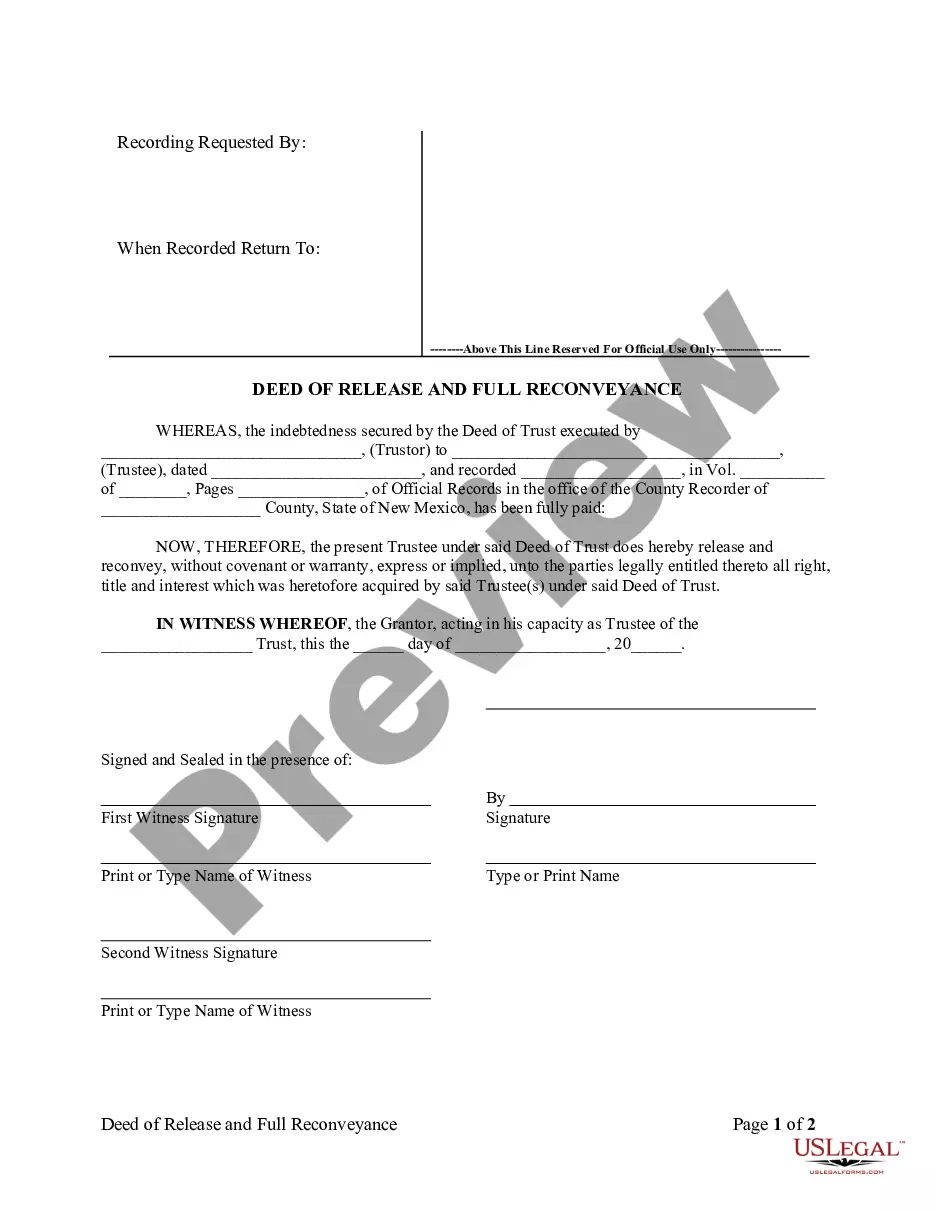
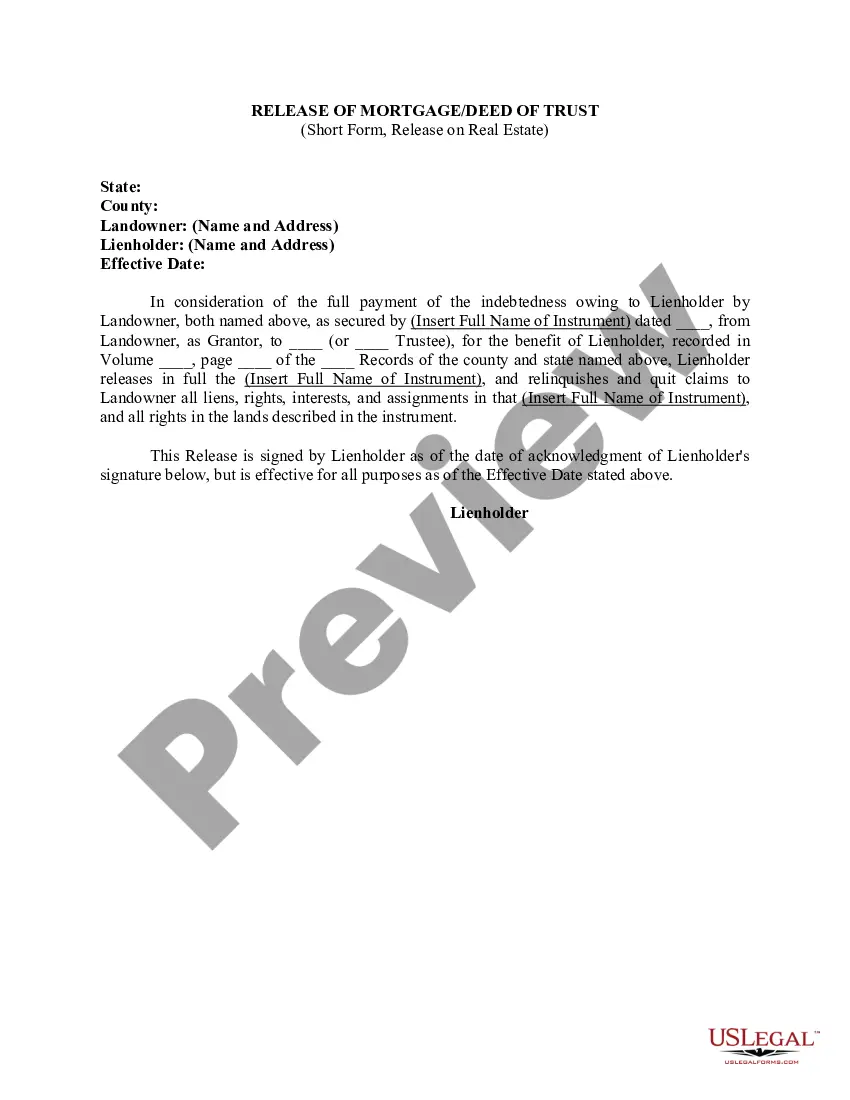
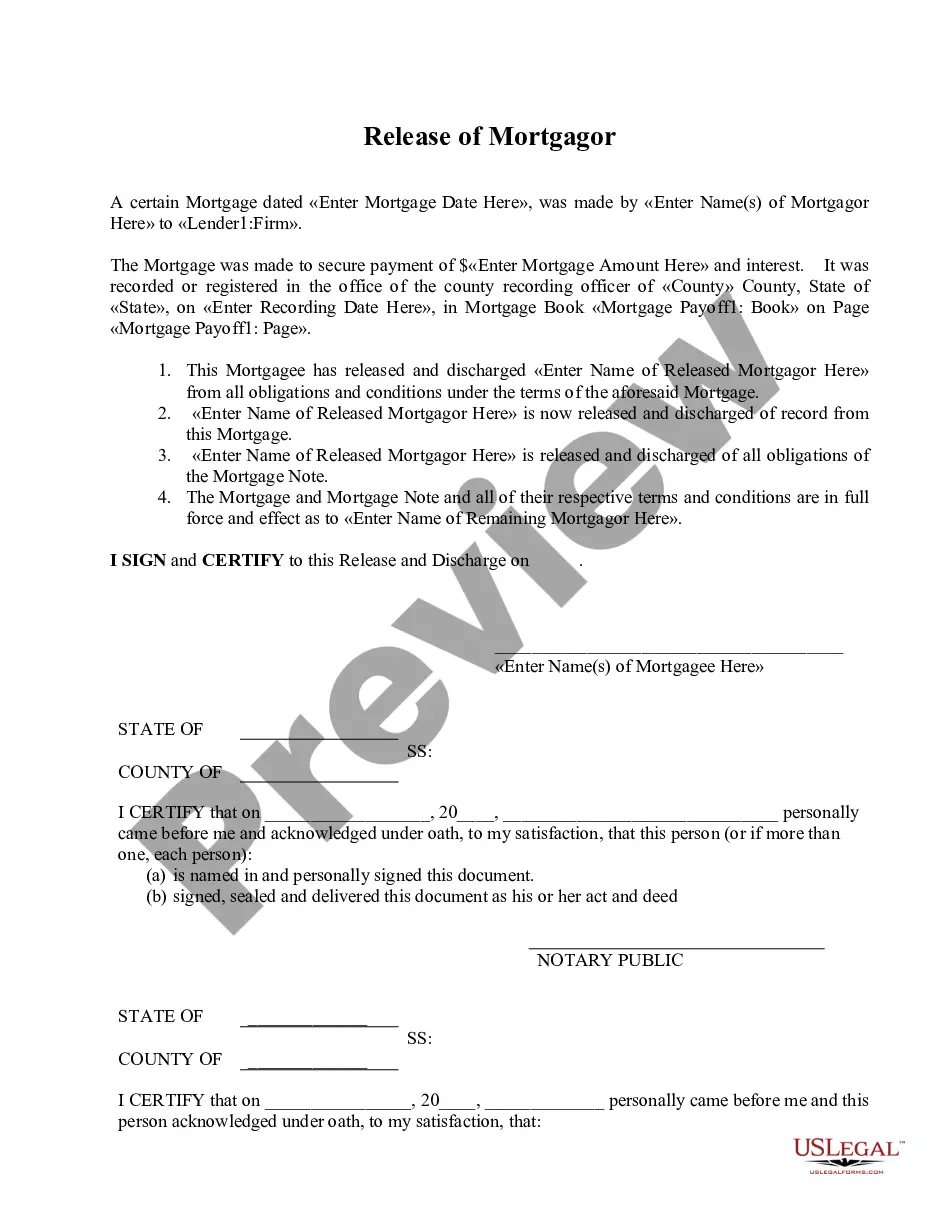
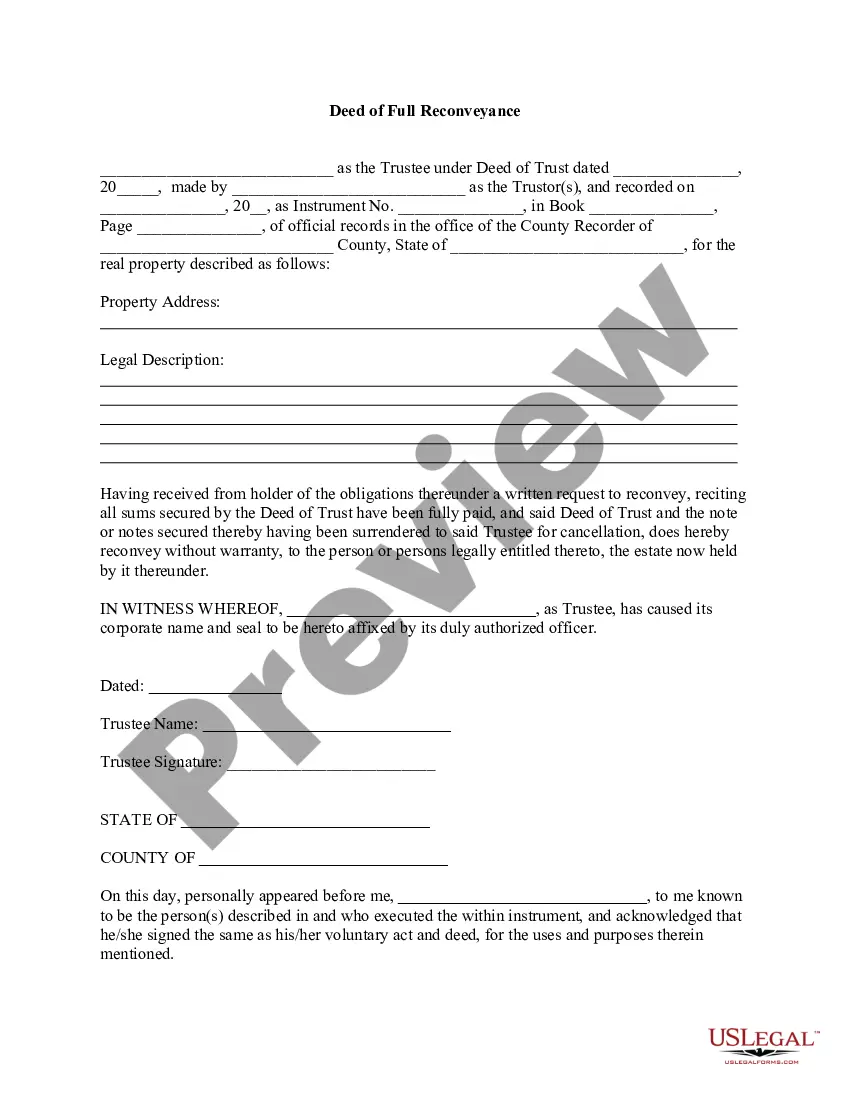
The Deed of Release and Full Reconveyance - Individual Lender or Holder is a legal document used to release a borrower from a mortgage or deed of trust once the debt has been fully paid. This form differs from similar documents as it specifically addresses situations where an individual lender or holder is involved, effectively reconveying the property back to the borrower without any warranties. This ensures that the lender relinquishes any claim to the property, providing the borrower with clear ownership.
What’s included in this form
- Parties involved: Identification of the Trustor (borrower) and Trustee (lender).
- Details of the original deed: Date of execution and recordation, and reference to the official records.
- Statement of indebtedness: A declaration that the original debt secured by the deed has been fully paid.
- Release clause: The actual reconveyance of rights and title from the Trustee back to the borrower.
- Signatures: Required signatures of the Trustee and possibly witnesses, depending on state rules.

Situations where this form applies
This form should be used when an individual lender has financed a loan secured by a property and the borrower has paid off the entire loan amount. Once the debt is satisfied, this document serves to formally release the lender's claim on the property, allowing the borrower to regain full ownership and clear title.
Who should use this form
This form is intended for:
- Borrowers looking to confirm their release from a mortgage or deed of trust after fulfilling payment obligations.
- Individual lenders who wish to document the reconveyance of property after the loan has been paid off.
- Trustees involved in managing the deed who need to execute the formal release.
Completing this form step by step
- Identify the parties: Enter the name of the Trustor and Trustee accurately.
- Specify the property: Include details regarding the property being reconveyed, referencing official records.
- Enter relevant dates: Fill in the dates of the original deed and its recordation.
- Indicate satisfaction of debt: Clearly state that the debt has been fully paid.
- Obtain signatures: Ensure the Trustee signs the document and, if required, include witness signatures.
Notarization requirements for this form
This form must be notarized to be legally valid. US Legal Forms provides secure online notarization powered by Notarize, allowing you to complete the process through a verified video call.
Get your form ready online
Our built-in tools help you complete, sign, share, and store your documents in one place.
Make edits, fill in missing information, and update formatting in US Legal Forms—just like you would in MS Word.
Download a copy, print it, send it by email, or mail it via USPS—whatever works best for your next step.
Sign and collect signatures with our SignNow integration. Send to multiple recipients, set reminders, and more. Go Premium to unlock E-Sign.
If this form requires notarization, complete it online through a secure video call—no need to meet a notary in person or wait for an appointment.
We protect your documents and personal data by following strict security and privacy standards.

Make edits, fill in missing information, and update formatting in US Legal Forms—just like you would in MS Word.

Download a copy, print it, send it by email, or mail it via USPS—whatever works best for your next step.

Sign and collect signatures with our SignNow integration. Send to multiple recipients, set reminders, and more. Go Premium to unlock E-Sign.

If this form requires notarization, complete it online through a secure video call—no need to meet a notary in person or wait for an appointment.

We protect your documents and personal data by following strict security and privacy standards.
Typical mistakes to avoid
- Failing to include the correct details about the original deed and property.
- Not providing the necessary signatures or dates.
- Assuming no additional local requirements exist for filing the document.
Benefits of completing this form online
- Instant download of the form in Word and WordPerfect formats for easy editing.
- Access to professional templates drafted by licensed attorneys, ensuring legal compliance.
- Convenient use from anywhere, allowing for completion and filing at your own pace.
Looking for another form?


Form popularity
FAQ
A Mortgage Release is where you, the homeowner, voluntarily transfer the ownership of your property to the owner of your mortgage in exchange for a release from your mortgage loan and payments.Depending on your situation, you may be required to make a financial contribution to receive a mortgage release.
How do you file a Deed of Reconveyance? A Deed of Reconveyance should be filed with your local county recorder or recorder of deeds once it has been signed by a notary public (such as an attorney). Once the document has been filed, the debt that was registered to the property will be considered paid off.
When you pay off your loan and you have a mortgage, the lender will send you or the local recorder of deeds or office that handles the filing of real estate documents a release of mortgage.On the other hand, when you have a trust deed or deed of trust, the lender files a release deed.
The deed must be signed by the party or parties making the conveyance or grant; and 7.
A deed of trust is a method of securing a real estate transaction that includes three parties: a lender, borrower and a third-party trustee.
Generally, the lender sends the documents to be recorded after the closing. The recording fees are included in your closing costs. Typically, the lender will provide you with a copy of the deed of trust after the closing. The original warranty deeds are often mailed to the grantee after they are recorded.
Is completed and signed by the trustee, whose signature must be notarized. Full Reconveyance form can be purchased at most office supply or stationery stores. Usually the trustee named on your Deed of Trust will also have forms available and will issue the Full Reconveyance.
The act or process of reconveying property. A discharge acts as a reconveyance of the legal title from the mortgagee to the holder of the equity. 2. rare, archaic. the act or process of conveying something or someone back to their original location.
Take possession of all the papers. Get an NOC. Get your CIBIL report updated. Get the lien withdrawn. Get an encumbrance certificate.