EXPERIMENTS, RESEARCH, INVESTIGATION AND OUTSIDE
Overview of this form
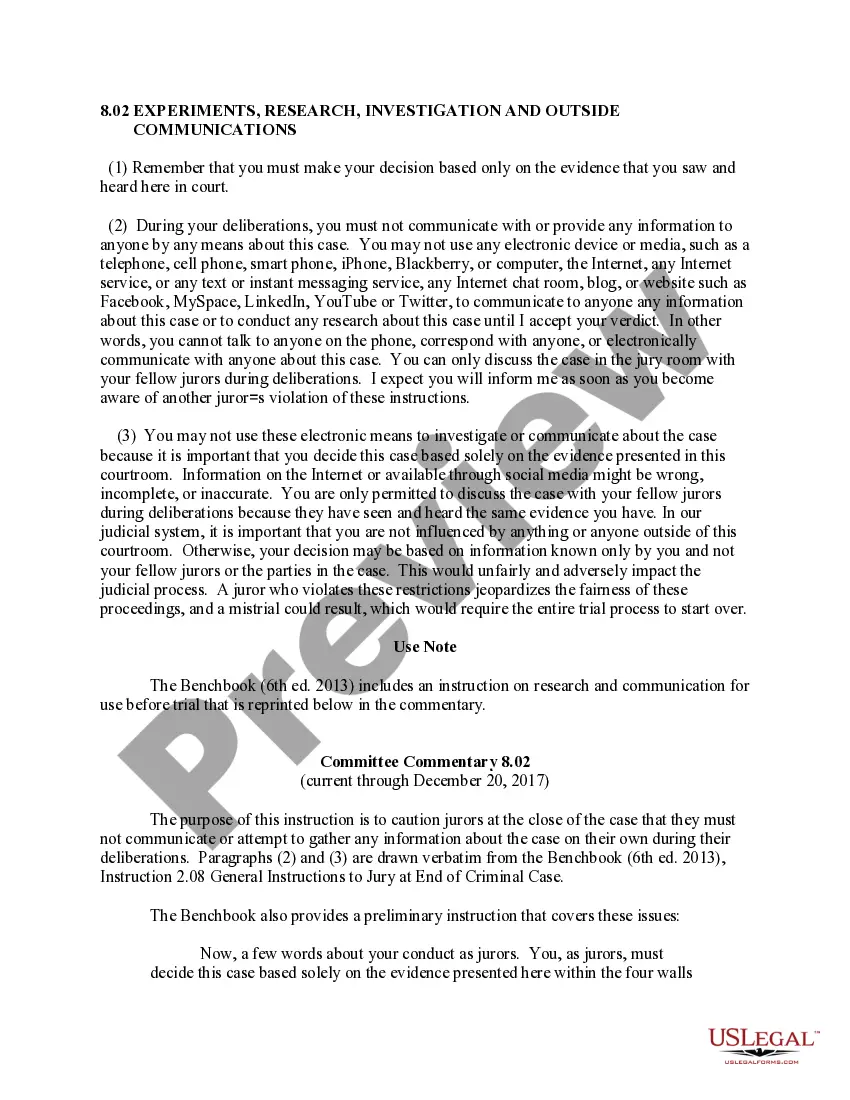
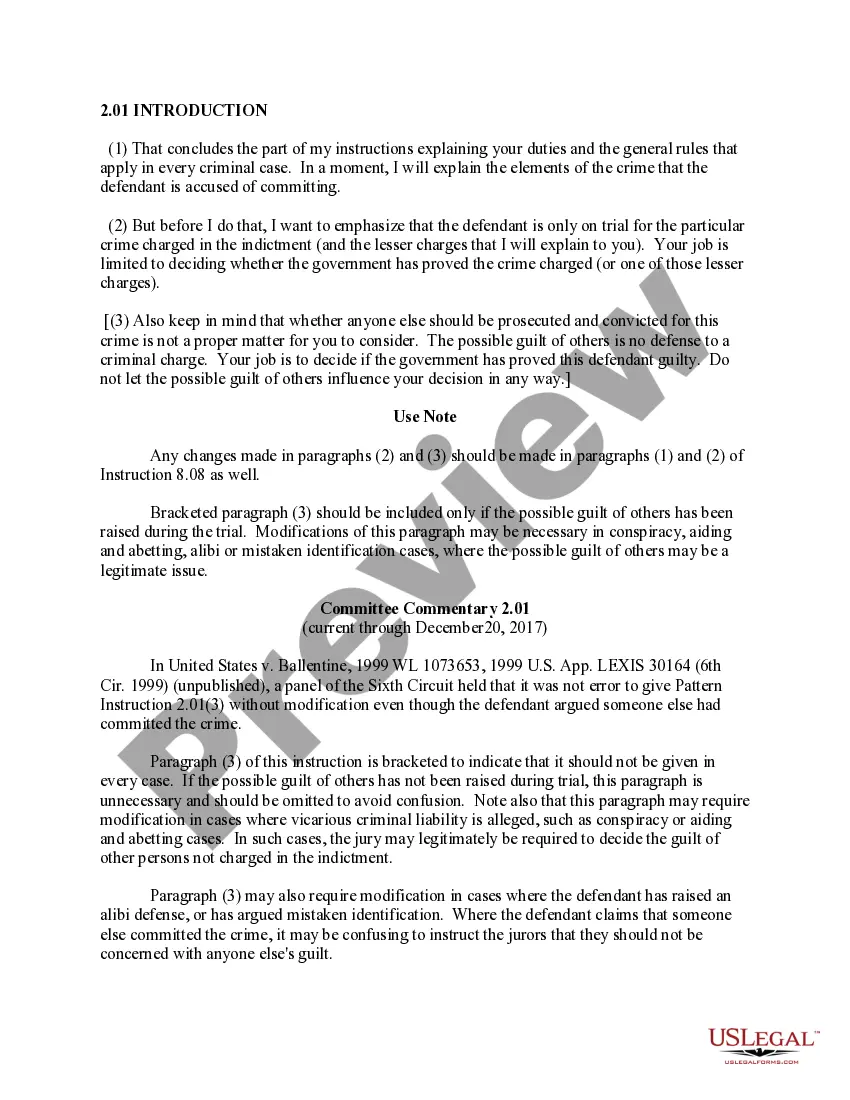
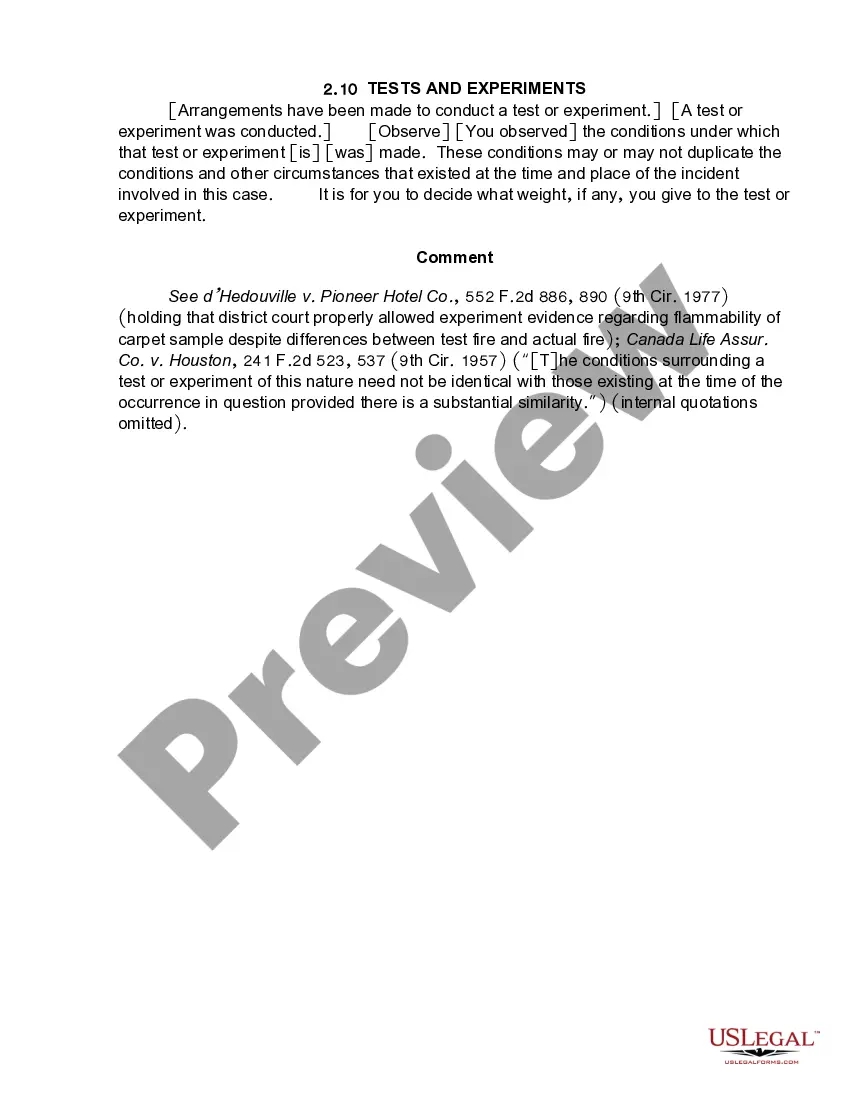
The "Experiments, Research, Investigation and Outside Communications" form serves as a set of guidelines that jurors must follow during a trial. This form emphasizes the importance of deciding a case based solely on the evidence presented in the courtroom, without outside influence or personal research. This distinguishes it from other forms as it specifically addresses juror conduct and the integrity of the judicial process, ensuring that all decisions are made based on common knowledge shared among jurors.
Main sections of this form
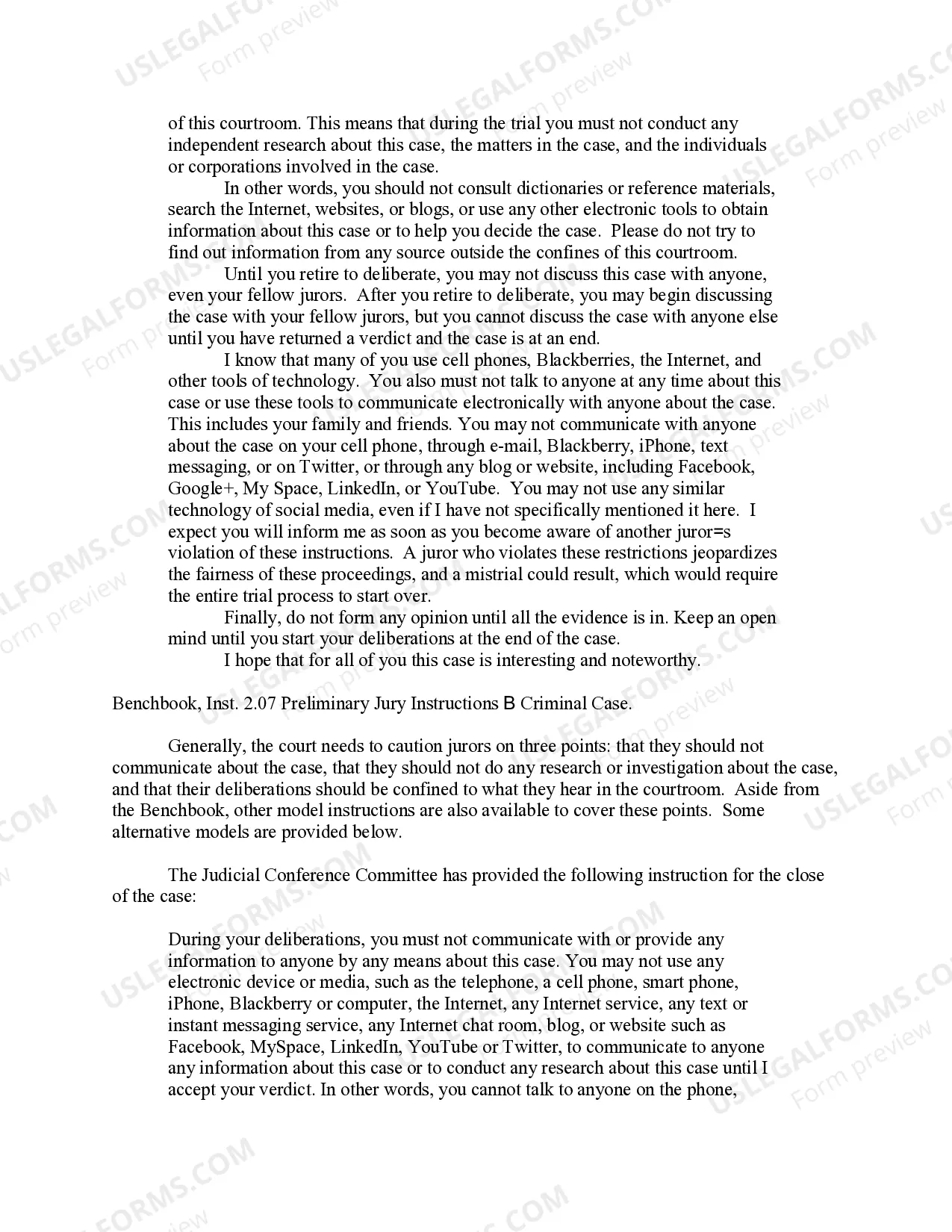
- Evidence-based decision-making: Jurors must base their verdict solely on courtroom evidence.
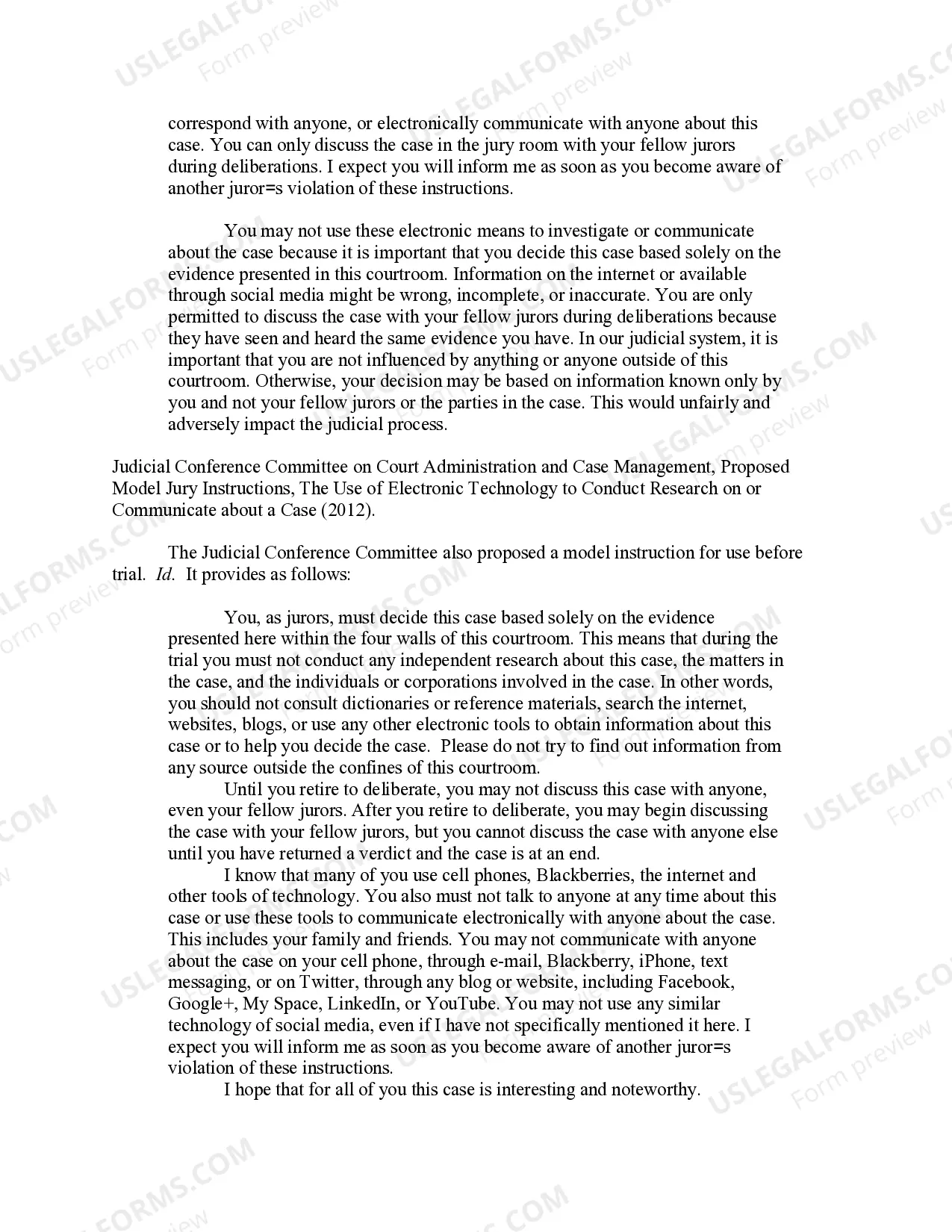
- No outside communication: Jurors are prohibited from discussing the case with anyone outside the jury room.
- Use of electronic devices: Explicit instructions against using phones, the internet, or social media for case-related research or communication.
- Reporting violations: Jurors are required to report any violations of these instructions.
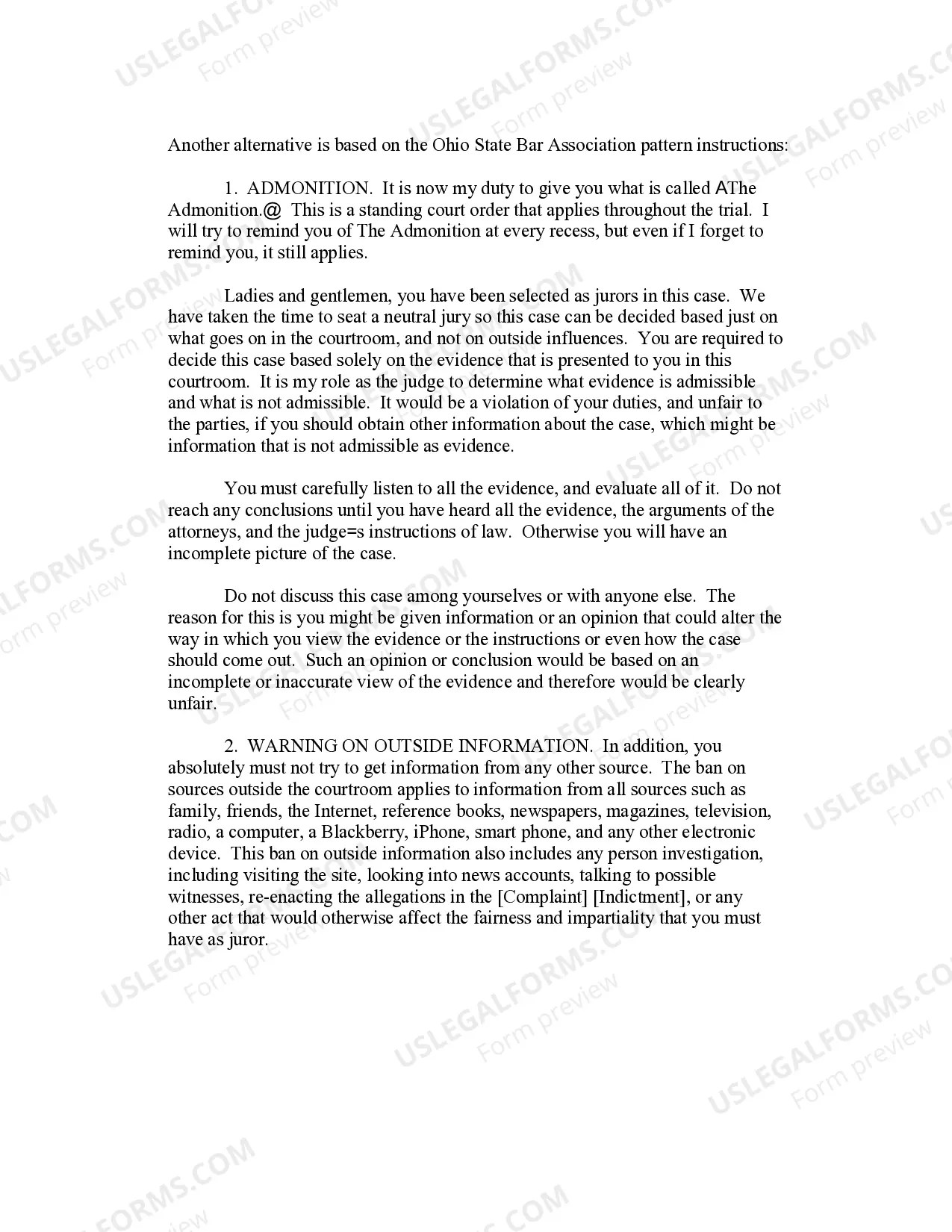
- Focus on impartiality: Reinforcement of the need to avoid any influences that could compromise the jury's decision-making.
Common use cases
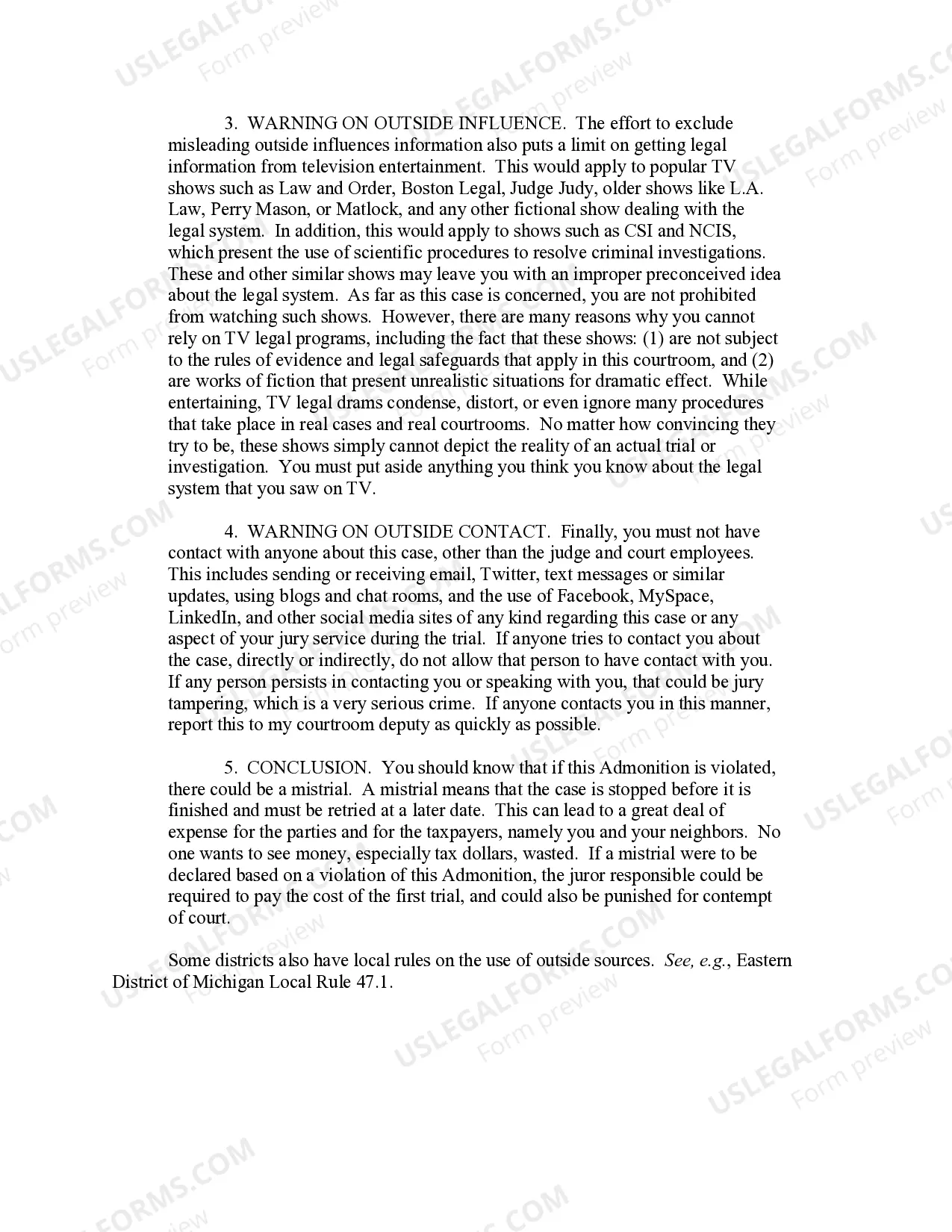
This form is essential during a jury trial when jurors are tasked with deliberating a verdict. It provides critical instructions at the conclusion of a trial, reminding jurors to refrain from outside communication or research that could impact the fairness and impartiality of their decisions. This form is used specifically in situations where maintaining the integrity of the trial process is crucial, reinforcing the importance of basing opinions solely on the courtroom evidence.
Who needs this form
- Jurors serving on a trial jury.
- Court personnel involved in jury instructions.
- Judges presiding over trials wishing to ensure compliance with juror conduct protocols.
- Legal professionals seeking to understand jury limitations and instructions during trial proceedings.
Instructions for completing this form
- Review the instructions carefully at the conclusion of the trial.
- Understand the prohibition on outside communication with anyone regarding the case.
- Acknowledge the use of electronic devices and media is restricted for jury-related activities.
- Commit to discussing the case only with fellow jurors during the designated deliberation period.
- Report any violations of these guidelines to the judge promptly.
Is notarization required?
This form usually doesn’t need to be notarized. However, local laws or specific transactions may require it. Our online notarization service, powered by Notarize, lets you complete it remotely through a secure video session, available 24/7.
Get your form ready online
Our built-in tools help you complete, sign, share, and store your documents in one place.
Make edits, fill in missing information, and update formatting in US Legal Forms—just like you would in MS Word.
Download a copy, print it, send it by email, or mail it via USPS—whatever works best for your next step.
Sign and collect signatures with our SignNow integration. Send to multiple recipients, set reminders, and more. Go Premium to unlock E-Sign.
If this form requires notarization, complete it online through a secure video call—no need to meet a notary in person or wait for an appointment.
We protect your documents and personal data by following strict security and privacy standards.

Make edits, fill in missing information, and update formatting in US Legal Forms—just like you would in MS Word.

Download a copy, print it, send it by email, or mail it via USPS—whatever works best for your next step.

Sign and collect signatures with our SignNow integration. Send to multiple recipients, set reminders, and more. Go Premium to unlock E-Sign.

If this form requires notarization, complete it online through a secure video call—no need to meet a notary in person or wait for an appointment.

We protect your documents and personal data by following strict security and privacy standards.
Avoid these common issues
- Communicating about the case with family or friends before deliberations.
- Using electronic devices for research related to the case.
- Failing to report other jurors who violate the conduct instructions.
- Forming opinions about the case before hearing all the evidence.
Benefits of completing this form online
- Convenient access to legal guidelines and instructions, eliminating the need for physical copies.
- Easily editable to suit specific juror preferences or case requirements.
- Reliable source of information drafted by licensed attorneys, ensuring accuracy and compliance.
Legal use & context:
- The form serves to uphold the fairness of the judicial process by restricting juror communication.
- Violations of the instructions may result in a mistrial, affecting both the parties involved and the judicial system.
- This form enforces standard jury instructions applicable in many jurisdictions, promoting consistent behavior among jurors.
Looking for another form?

Form popularity
FAQ
Step 1: Define your variables. You should begin with a specific research question.Step 2: Write your hypothesis.Step 3: Design your experimental treatments.Step 4: Assign your subjects to treatment groups.Step 5: Measure your dependent variable.
Answer and Explanation: The answer isD) observation, hypothesis, experiment, conclusion.
The 7 steps of the scientific method Ask a question. The first step in the scientific method is asking a question you want to answer.Establish your hypothesis.Test your hypothesis by conducting an experiment.Make an observation.Analyze the results and draw a conclusion.Present the findings.
Based on the methods used to collect data in experimental studies, the experimental research designs are of three primary types: Pre-experimental Research Design.True Experimental Research Design.Quasi-experimental Research Design.
Obtaining good results from a DOE involves these seven steps: Set objectives. Select process variables. Select an experimental design. Execute the design. Check that the data are consistent with the experimental assumptions. Analyze and interpret the results. Use/present the results (may lead to further runs or DOE's).
Laboratory Experiment. Field experiment. Quasi Experiment. Natural Experiment. Field experiments.
True experiments have four elements: manipulation, control , random assignment, and random selection. The most important of these elements are manipulation and control.
FAQs: What are the components of experimental design? The components of experimental design are control, independent variable and dependent variable, constant variables, random assignment and manipulation.