Ohio Recording Cover Page for Filing a Lien
What this document covers
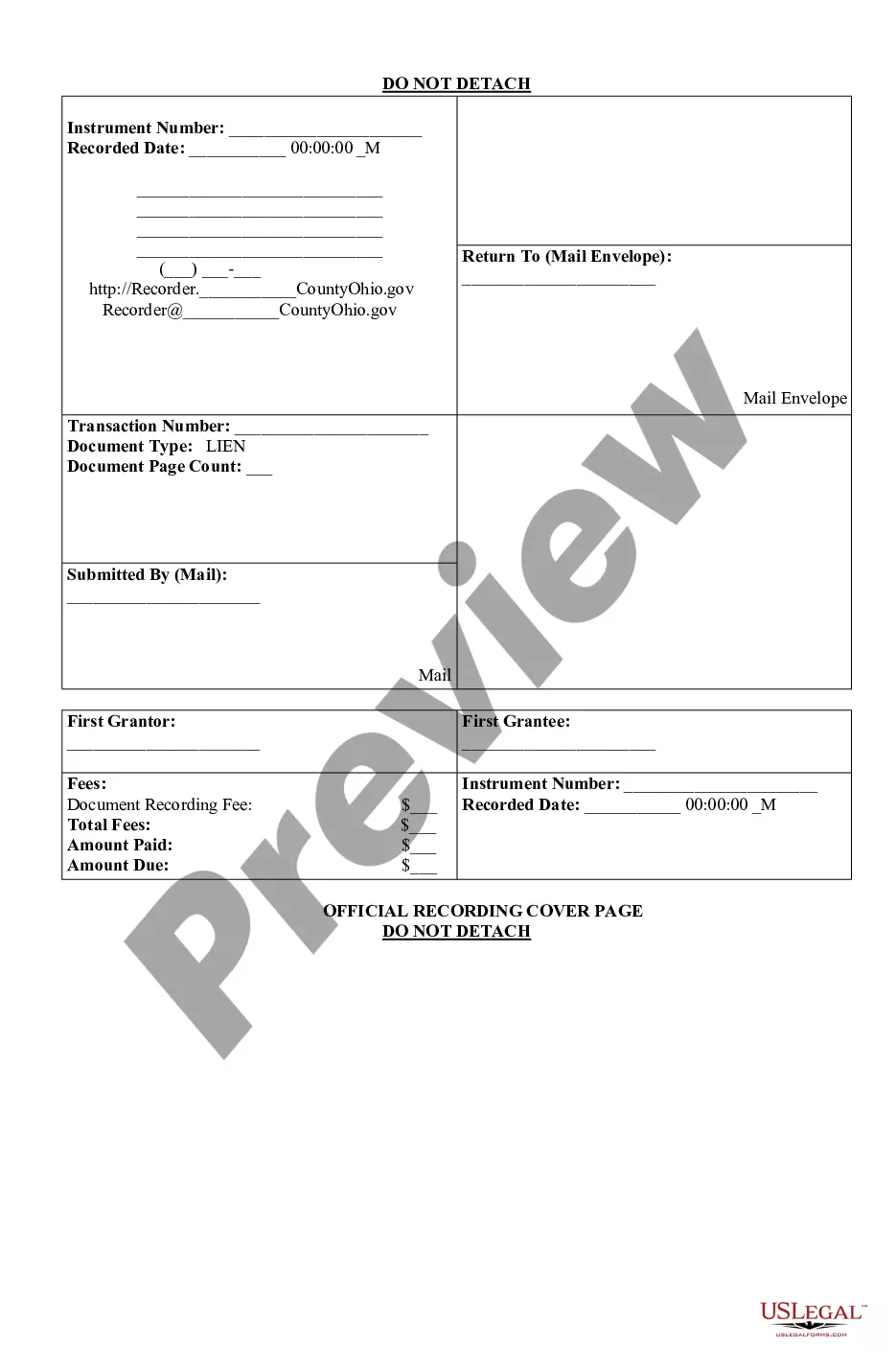
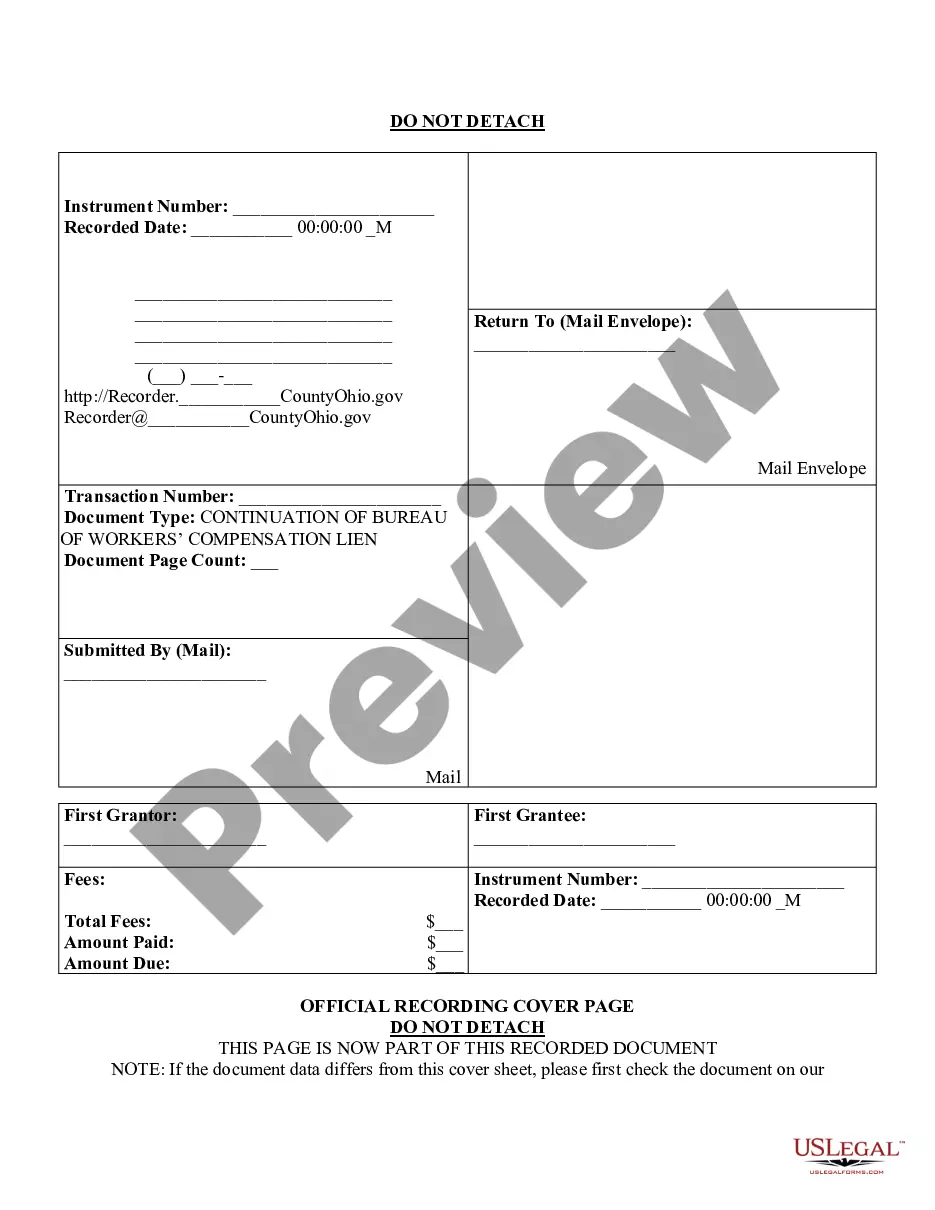
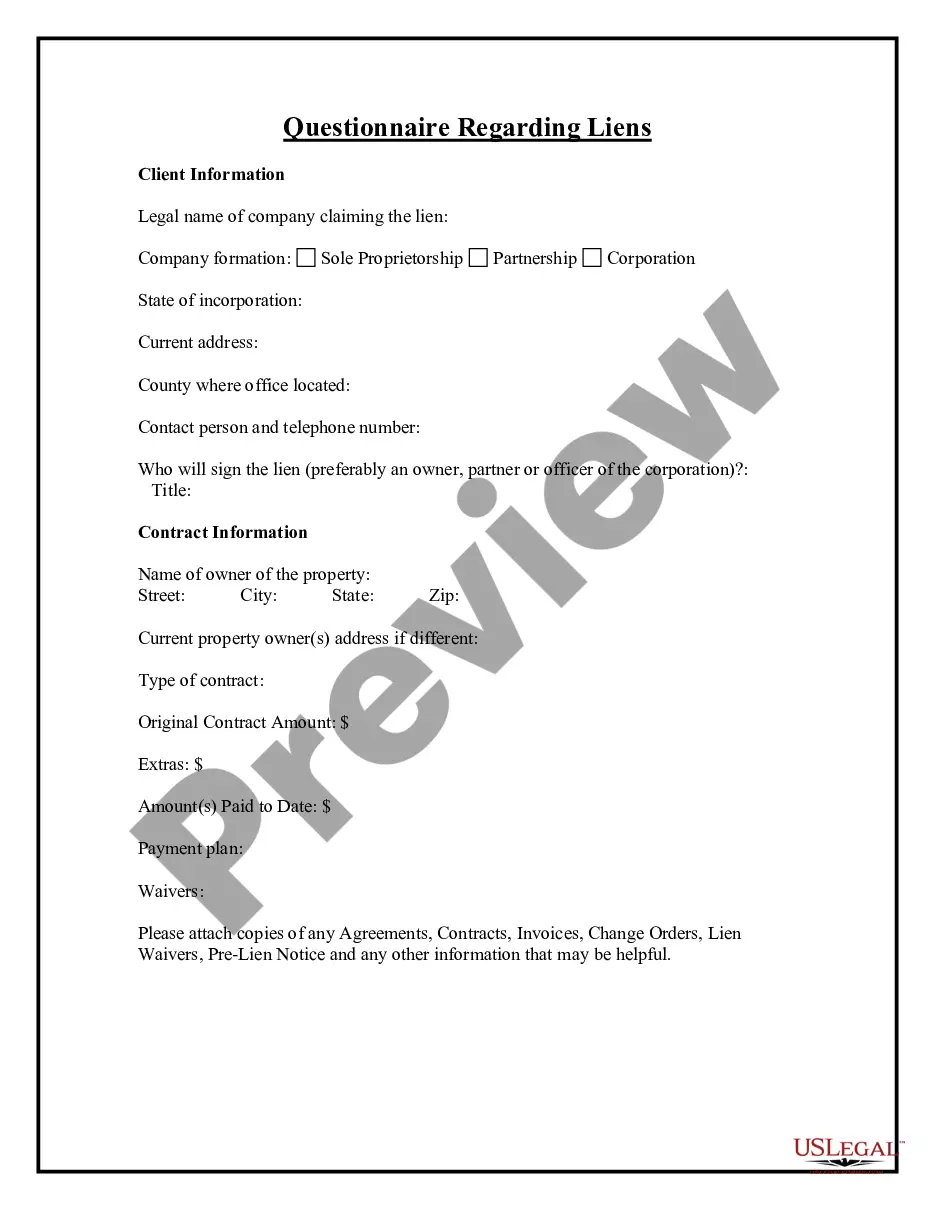
The Recording Cover Page for Filing a Lien serves as the first page of your lien document. This cover page contains essential information that helps ensure accurate recording of the lien with the county recorder's office. It is distinct from other legal forms as it specifically outlines details related to the lien, including instrument numbers and parties involved, streamlining the recording process.
What’s included in this form
- Instrument number: Unique identifier for the recorded document.
- Recorded date: The date the lien is officially recorded.
- Return to address: Where the recorded document should be sent.
- Transaction number: Reference for tracking the recording.
- Document type: Indicates that the document is a lien.
- Fees section: Includes details about recording fees and amounts.

Common use cases
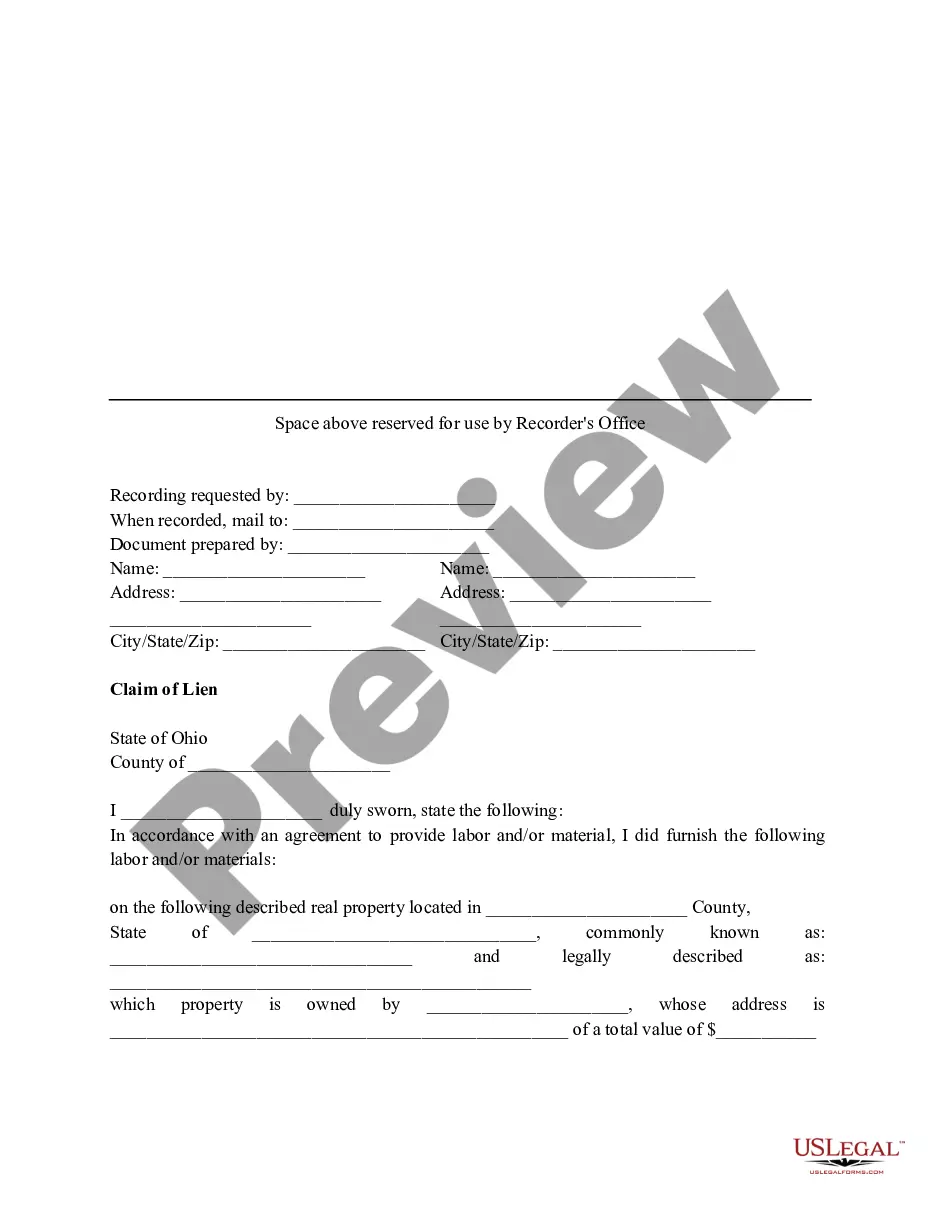
This form is essential when you need to officially record a lien against a property. It is often used in scenarios such as securing payment for services rendered, guaranteeing a loan, or establishing a legal claim against an asset. Using the cover page ensures that your lien is processed promptly and correctly by the appropriate authorities.
Who this form is for
This form is intended for:
- Creditors seeking to secure a financial interest in a debtor's property.
- Individuals or businesses requiring a formal mechanism to record liens.
- Attorneys assisting clients with lien filing needs.
- Property owners involved in disputes that require lien documentation.
How to complete this form
- Identify the instrument number for your document.
- Enter the recorded date when the lien is submitted.
- Fill in the return address where documents should be mailed.
- Complete the transaction number for record-keeping.
- Provide the name of the first grantor and first grantee involved in the lien.
- Specify the total fees required and amounts paid or due.
Does this form need to be notarized?
This form does not typically require notarization unless specified by local law. It is advisable to check your local regulations to confirm requirements related to lien documentation.
Get your form ready online
Our built-in tools help you complete, sign, share, and store your documents in one place.
Make edits, fill in missing information, and update formatting in US Legal Forms—just like you would in MS Word.
Download a copy, print it, send it by email, or mail it via USPS—whatever works best for your next step.
Sign and collect signatures with our SignNow integration. Send to multiple recipients, set reminders, and more. Go Premium to unlock E-Sign.
If this form requires notarization, complete it online through a secure video call—no need to meet a notary in person or wait for an appointment.
We protect your documents and personal data by following strict security and privacy standards.

Make edits, fill in missing information, and update formatting in US Legal Forms—just like you would in MS Word.

Download a copy, print it, send it by email, or mail it via USPS—whatever works best for your next step.

Sign and collect signatures with our SignNow integration. Send to multiple recipients, set reminders, and more. Go Premium to unlock E-Sign.

If this form requires notarization, complete it online through a secure video call—no need to meet a notary in person or wait for an appointment.

We protect your documents and personal data by following strict security and privacy standards.
Common mistakes to avoid
- Forgetting to complete all required fields, leading to processing delays.
- Entering incorrect information that doesn't match the accompanying lien document.
- Neglecting to check for local requirements that may vary by jurisdiction.
- Detaching the cover page, which may invalidate the recording.
Why complete this form online
- Convenience: Access and complete the form from any location at your convenience.
- Editability: Easily fill out and revise the form as needed before submission.
- Reliability: Ensure you are using the most current version of the form according to local regulations.
Legal use & context
- The Recording Cover Page is essential for the legal recognition of a lien.
- It establishes a public claim against a property, which can be enforced legally.
- Failure to properly complete and submit the form may result in the lien being deemed invalid.
Key takeaways
- The cover page is a critical component of filing a lien.
- Accurate completion ensures proper processing by the county recorder's office.
- Review state-specific requirements for any additional obligations.
Looking for another form?

Form popularity
FAQ
Therefore, liens are not officially recorded, and personal property could be sold off to a third party who is unaware of the lien's existence. In most states, judgment liens must be filed by the creditor through the county or state.
Mechanic's lien. Which of the following liens does not need to be recorded to be valid? A statutory lien is created by statute. A real estate tax lien, then, is an involuntary, statutory lien.
Preliminary Title Report- California case law is clear that a preliminary title report cannot be relied upon as a true and reliable condition of title to real property.No duties or liabilities arise with a preliminary title report. Therefore, there is no liability to a title company if any recorded document is missed.
If the borrower on a recorded mortgage defaults, the lender can foreclose and either be paid in full or receive the property. However, if a mortgage or deed of trust was not recorded, the lender cannot foreclose against the property, just against the defaulting borrower personally.
Although recording statutes vary between U.S. states, they virtually all require that an interest in real property be formally recorded in the appropriate county office in order to be valid.If your deed has not been recorded, you are not recognized as the legal owner of your property.
In the case of mortgage liens, courts use the date of a recording to determine the priority for which liens should receive payment first. To understand which documents have been or must be recorded, check with your state and county recording division.
According to the Ohio Revised Code (ORC), it is the duty of the County Recorder to record all deeds, mortgages, plats or other instruments of writing that are required or authorized by the ORC.
In order to clear the title to the real property owned by the mortgagor, the Satisfaction of Mortgage document must be recorded with the County Recorder or Recorder of Deeds. If the mortgagee fails to record a satisfaction within the set time limits, the mortgagee may be responsible for damages set out by statute.
A "lien" is a notice that attaches to your property, telling the world that a creditor claims you owe it some money. A lien is typically a public record.Liens are a common way for creditors to collect what they're owed.