New Mexico General Partnership Package
Overview of this form package
The New Mexico General Partnership Package provides essential legal forms for the formation, management, and dissolution of a partnership. These documents, tailored by licensed attorneys, assist in establishing a legally binding partnership and navigating its lifecycle with ease. Unlike other generic templates, this package includes specially designed forms specific to New Mexico's legal requirements, enabling you to address your partnership needs effectively.
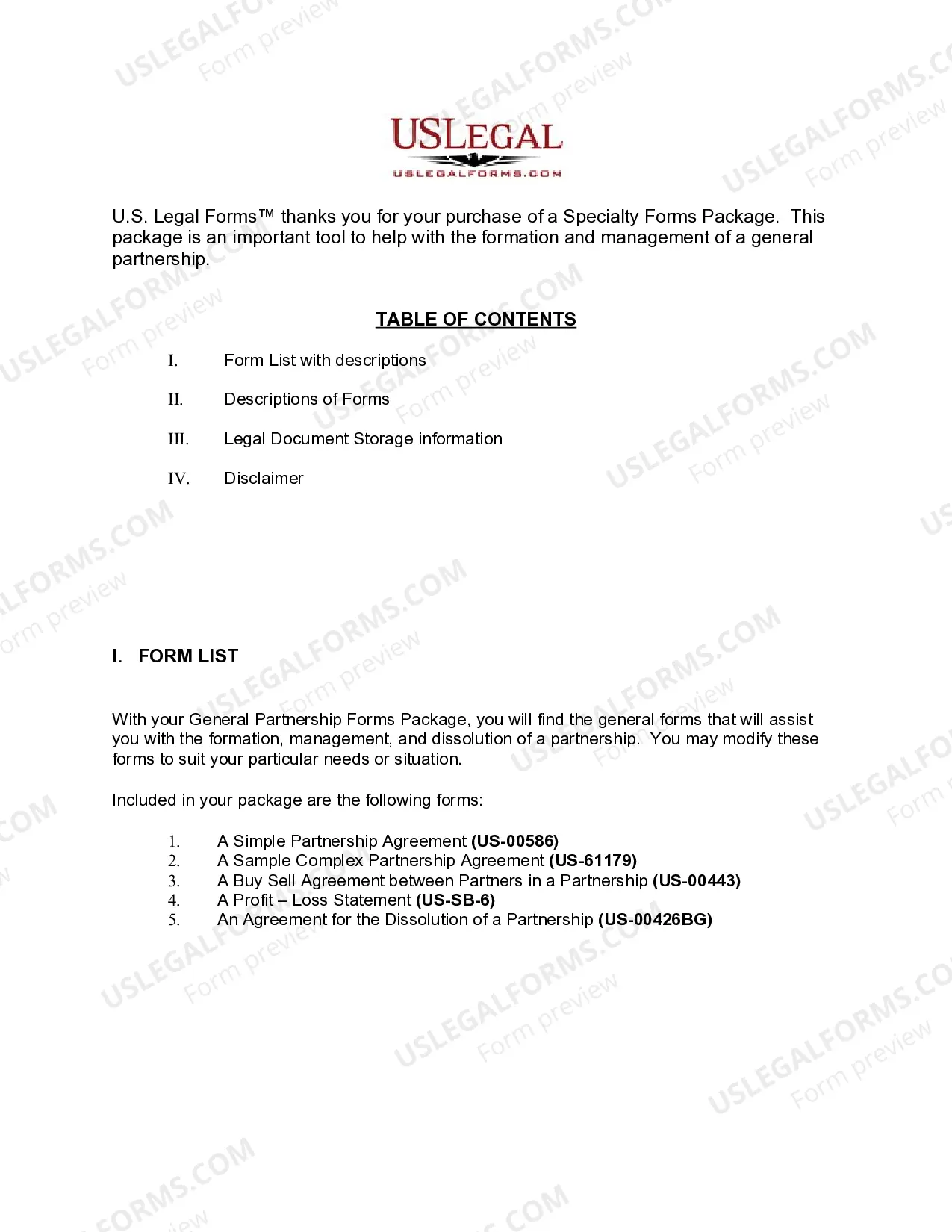
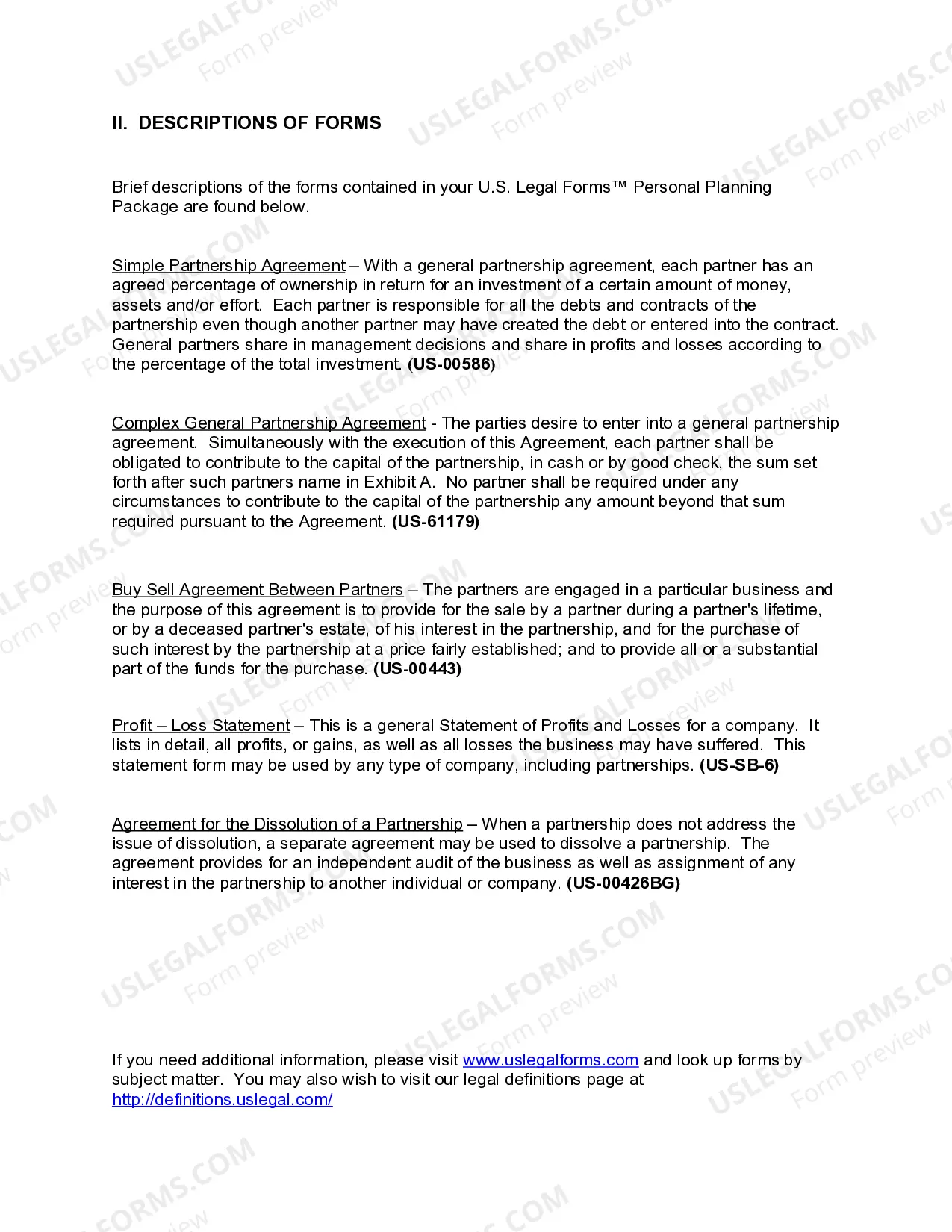
Forms included in this package
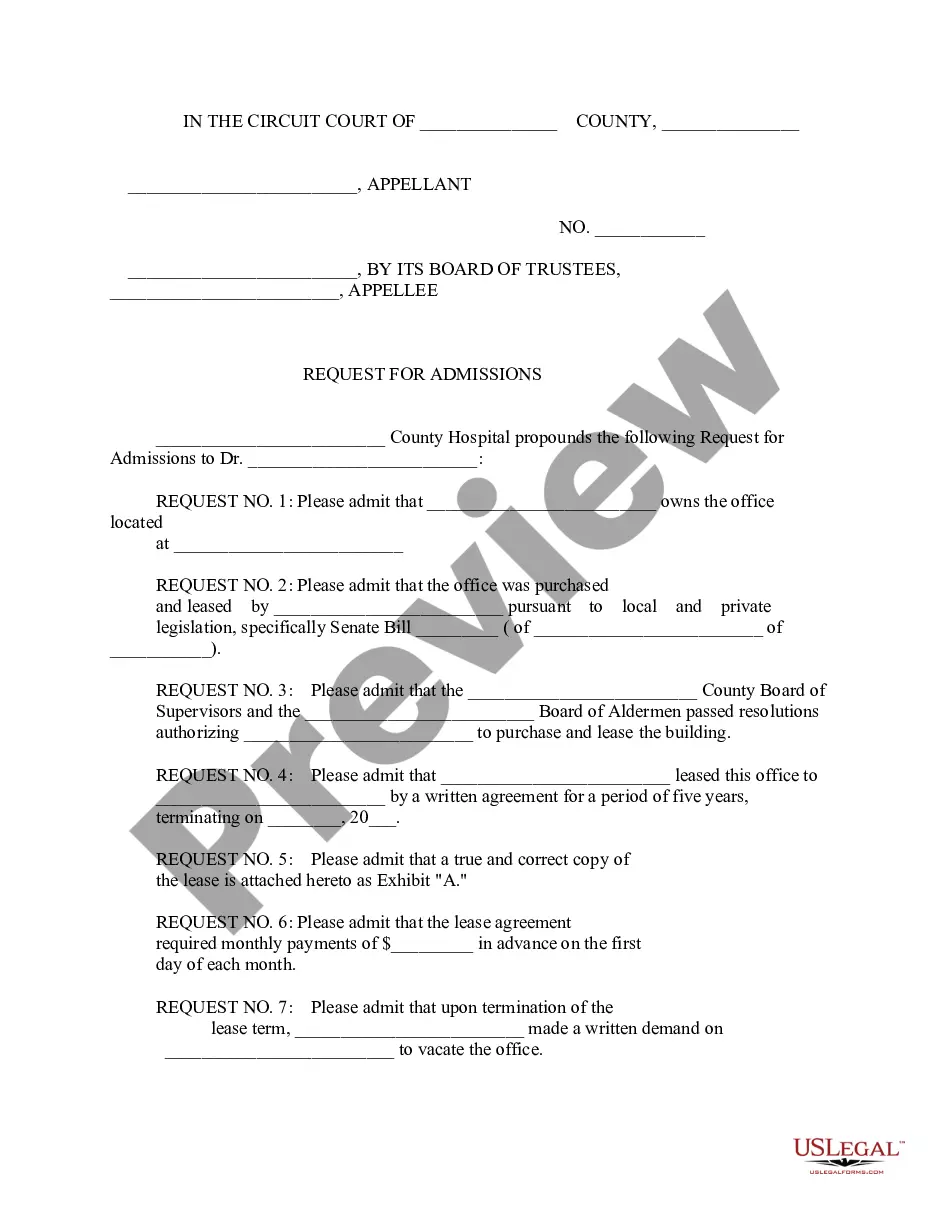
- Agreement for the Dissolution of a Partnership
- I.R.S. Form SS-4 (to obtain your federal identification number)
- Buy Sell Agreement Between Partners of a Partnership
- Simple Partnership Agreement
- Sample Business Plan Template
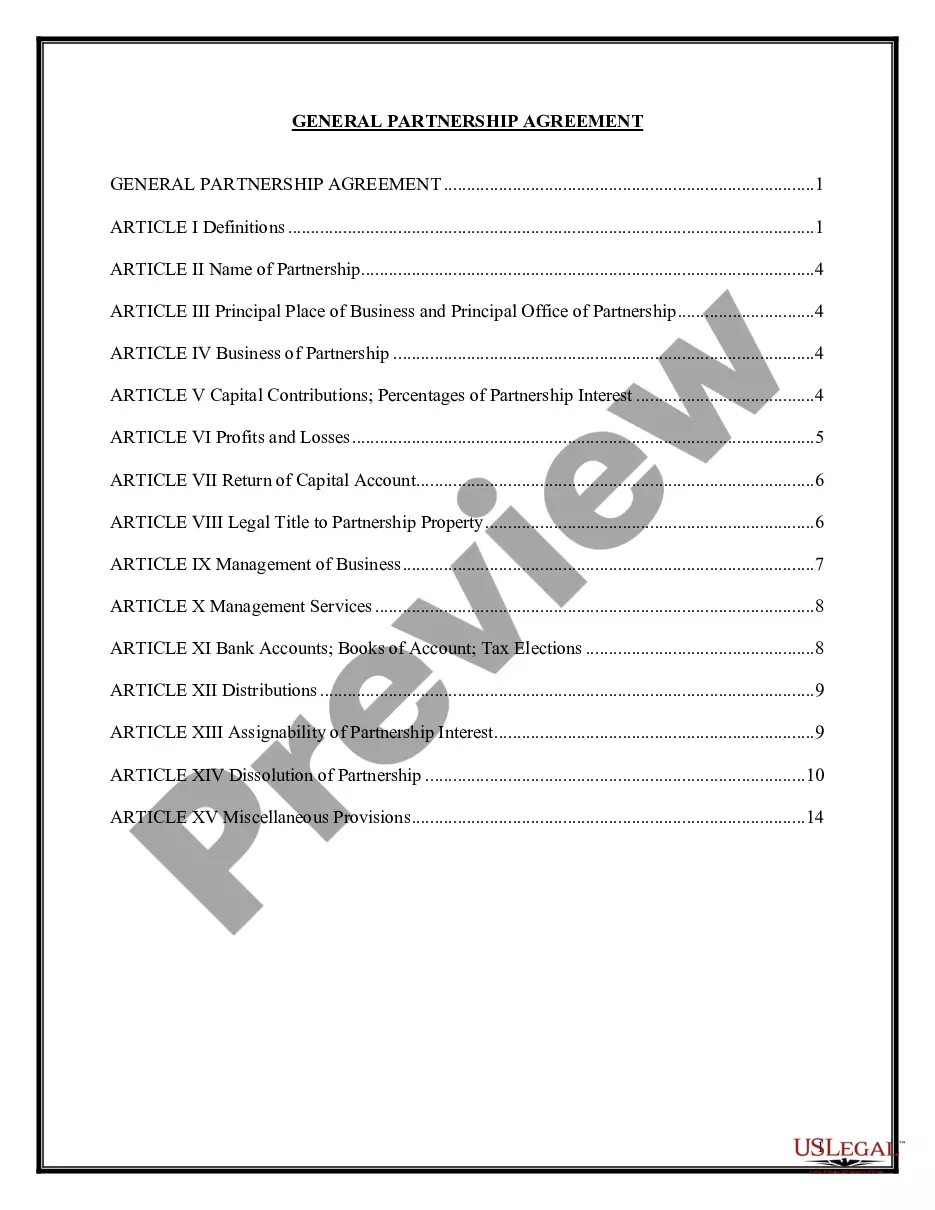
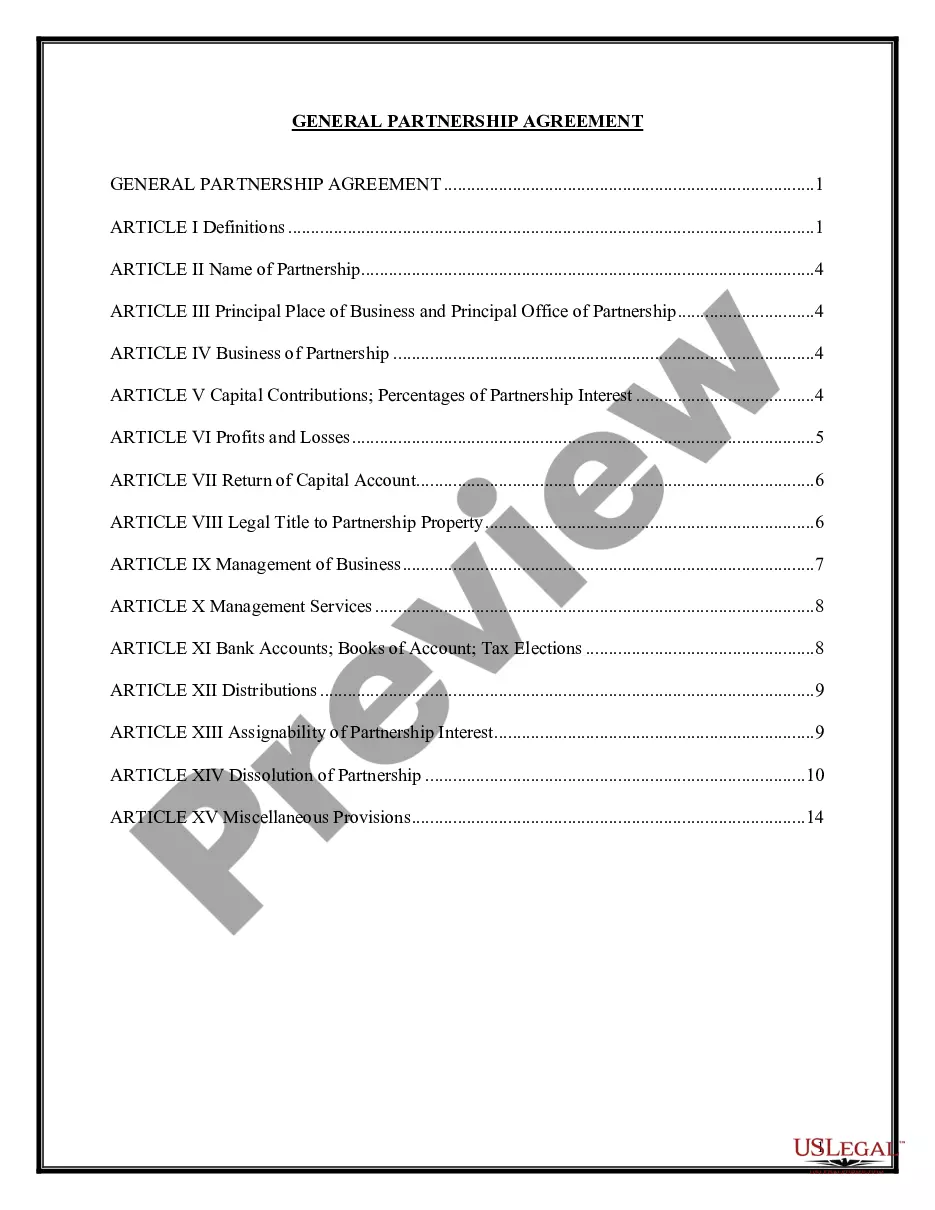
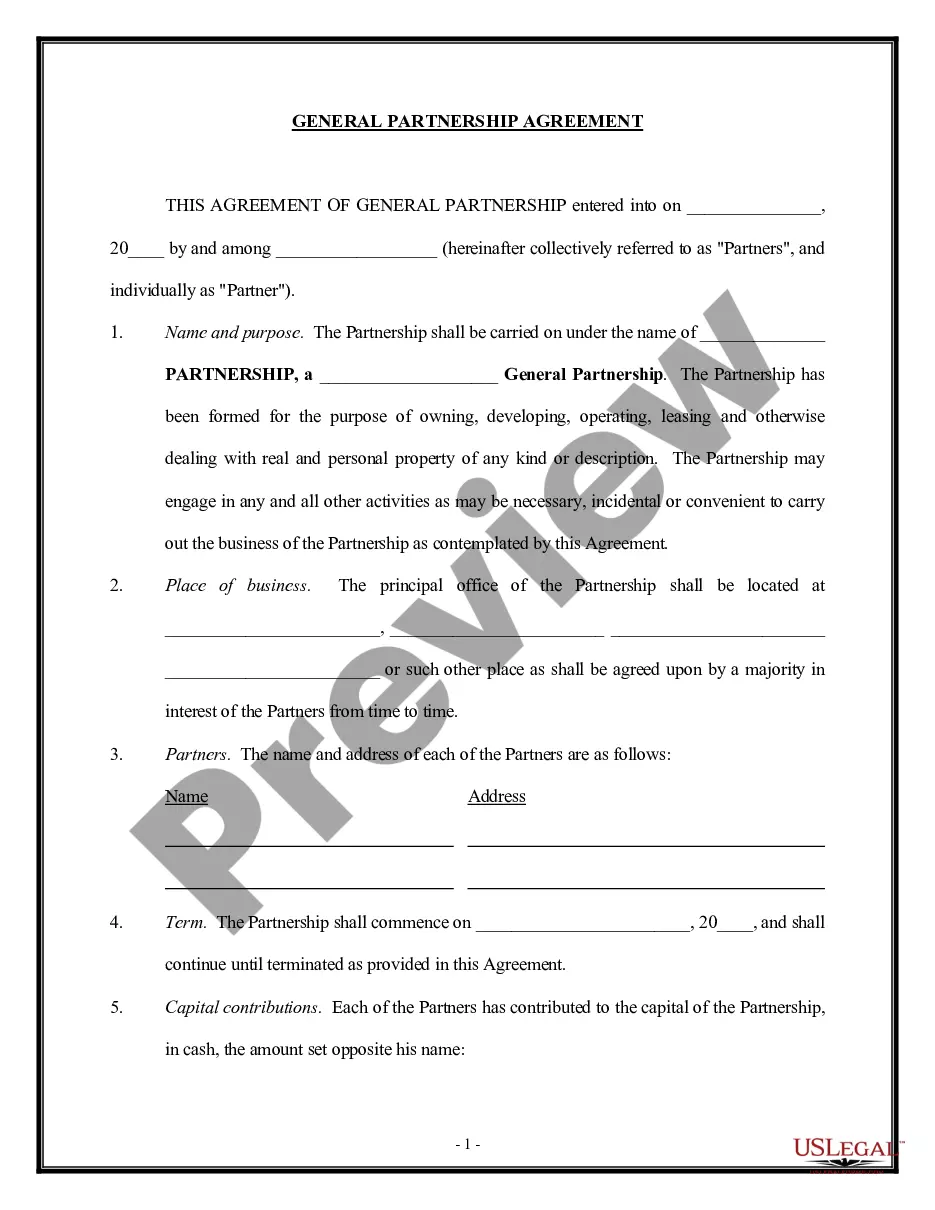
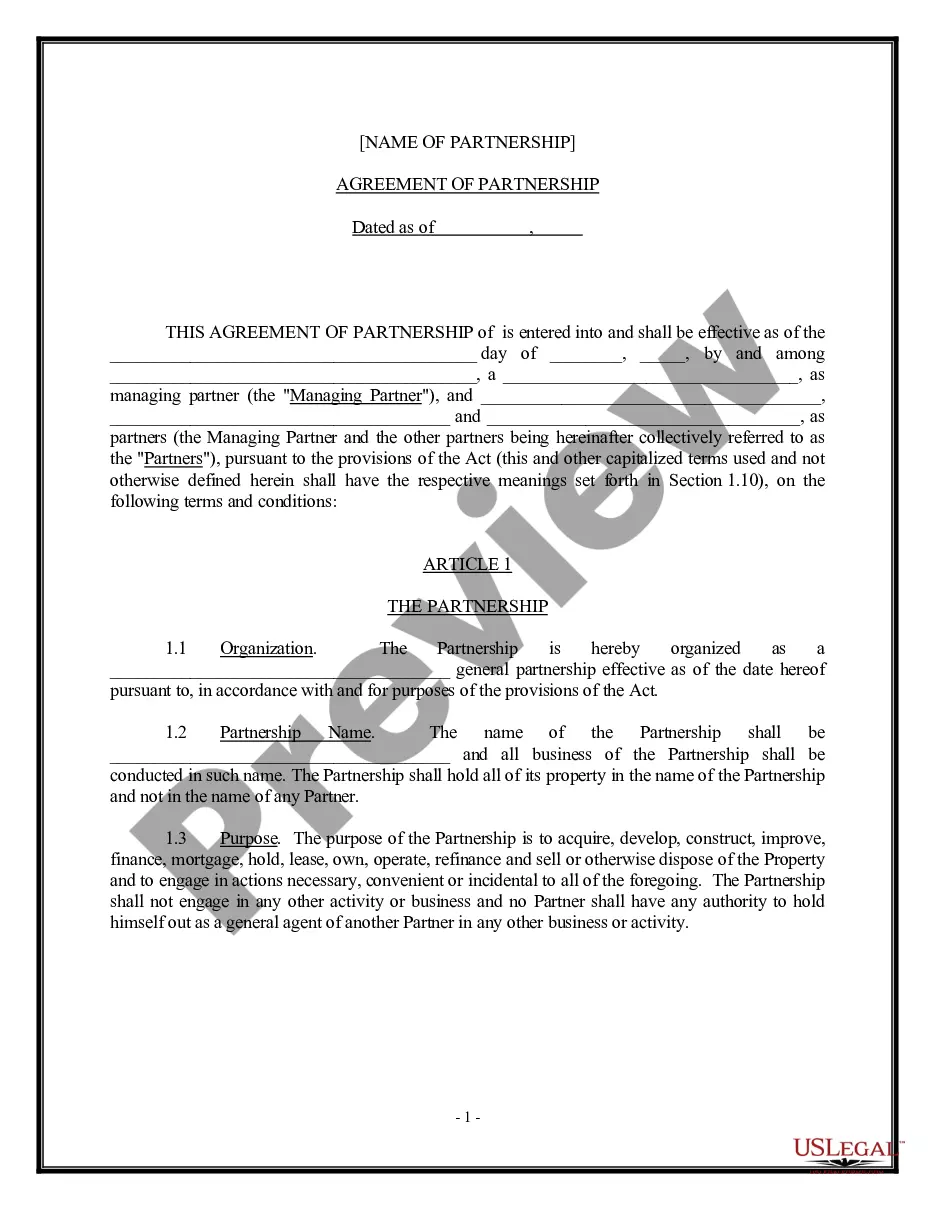
- General Partnership Agreement - Complex
- Checklist for Starting Up a New Business
- Profit and Loss Statement
- Business Startup Costs
- Employment or Work Application - General
- Stand Alone Confidentiality and Noncompetition Agreement with Employee
- Self-Employed Independent Contractor Employment Agreement - General
When to use this document
This package is suitable in various situations, including:
- Forming a new general partnership with one or more partners.
- Establishing clear terms and agreements to manage partnership responsibilities and contributions.
- Documenting the buy-sell arrangement among partners for smooth ownership transitions.
- Tracking profits and losses accurately with a dedicated profit-loss statement.
- Legally dissolving a partnership when the business relationship needs to be ended.
Who this form package is for
- Entrepreneurs looking to start a new partnership in New Mexico.
- Existing partners wanting to formalize their partnership agreement.
- Business owners needing a clear framework for profit-sharing and loss allocation.
- Partners preparing for potential buyouts or transitions within the partnership.
- Individuals involved in dissolving an existing partnership.
How to complete these forms
- Review the included forms to understand their purposes and requirements.
- Identify all partners involved in the general partnership.
- Fill in the form fields with the necessary information, including contributions and profit-sharing ratios.
- Ensure all partners sign the relevant agreements where required.
- Keep printed copies of each signed document for your records and future reference.
Notarization details for included forms
Forms in this package typically do not require notarization unless required by local law. However, certain agreements, such as partnership agreements, may benefit from notarization to enhance their legal standing. Always check local regulations to determine if notarization is necessary for your specific situation.
Get your form ready online
Our built-in tools help you complete, sign, share, and store your documents in one place.
Make edits, fill in missing information, and update formatting in US Legal Forms—just like you would in MS Word.
Download a copy, print it, send it by email, or mail it via USPS—whatever works best for your next step.
Sign and collect signatures with our SignNow integration. Send to multiple recipients, set reminders, and more. Go Premium to unlock E-Sign.
If this form requires notarization, complete it online through a secure video call—no need to meet a notary in person or wait for an appointment.
We protect your documents and personal data by following strict security and privacy standards.

Make edits, fill in missing information, and update formatting in US Legal Forms—just like you would in MS Word.

Download a copy, print it, send it by email, or mail it via USPS—whatever works best for your next step.

Sign and collect signatures with our SignNow integration. Send to multiple recipients, set reminders, and more. Go Premium to unlock E-Sign.

If this form requires notarization, complete it online through a secure video call—no need to meet a notary in person or wait for an appointment.

We protect your documents and personal data by following strict security and privacy standards.
Mistakes to watch out for
- Not having all partners sign the partnership agreement, which can lead to disputes.
- Failing to specify contributions and profit-sharing details clearly within the agreement.
- Neglecting to document verbal agreements, which can create misunderstandings later.
- Using forms without modification to suit specific partnership needs.
- Overlooking the requirement for a formal dissolution process when ending a partnership.
Why use this package online
- Convenient access to lawyer-drafted forms that meet state regulations.
- Edit and customize forms easily to suit your specific partnership needs.
- Immediate download and printing without the need for in-person appointments.
- Cost savings of up to 40% compared to purchasing forms individually.
- Secure and organized legal document storage options available for future use.
Legal use & context
- These forms serve as legally binding agreements in New Mexico when completed correctly.
- Partnership documents help define roles, responsibilities, and financial arrangements.
- Properly executed dissolution agreements protect the interests of all partners and ensure compliance with state laws.
Quick recap
- The New Mexico General Partnership Package includes various essential legal forms for partnership needs.
- It is vital to complete the forms accurately and ensure they reflect the partnership's specifics.
- This package offers significant savings compared to purchasing individual forms separately.
Looking for another form?

Form popularity
FAQ
The limited liability partnership (LLP) is a similar business structure but it has no general partners. All of the owners of an LLP have limited personal liability for business debts. In order to better understand LPs and LLPs, it's helpful to compare them to general partnerships.
A limited liability partnership (LLP) is a type of partnership where all partners have limited liability. All partners can also partake in management activities. This is unlike a limited partnership, where at least one general partner must have unlimited liability and limited partners cannot be part of management.
For example, let's say that Fred and Melissa decide to open a baking store. The store is named F&M Bakery. By opening a store together, Fred and Melissa are both general partners in the business, F&M Bakery. It is important to note that each general partner must be involved in the business.
A general partner is a part-owner of a business and shares in its profits. A general partner is often a doctor, lawyer, or another professional who has joined a partnership in order to remain independent while being part of a larger business.
A general partnership is the shared ownership of a business by two or more people.Forming a general partnership is as simple as filing a form with the Clerk of the Circuit Court in the county in which the business will be located and paying a relatively small fee.
A general partnership is a business arrangement by which two or more individuals agree to share in all assets, profits, and financial and legal liabilities of a jointly-owned business.Furthermore, any partner may be sued for the business's debts.
Having carefully studied the idea of a one-partner partnership in light of the Revised Uniform Partnership Act, we conclude that no such animal exists. If a partnership consists of only two persons, the partnership dissolves by operation of law when one of them departs.
There is no general partner in an LLC.
A limited partnership must have at least one general partner. The general partner or partners are responsible for running the business. They have control over the day-to-day management of the business and have the authority to make legally binding business decisions.