New Mexico Concrete Mason Contract for Contractor
What this document covers
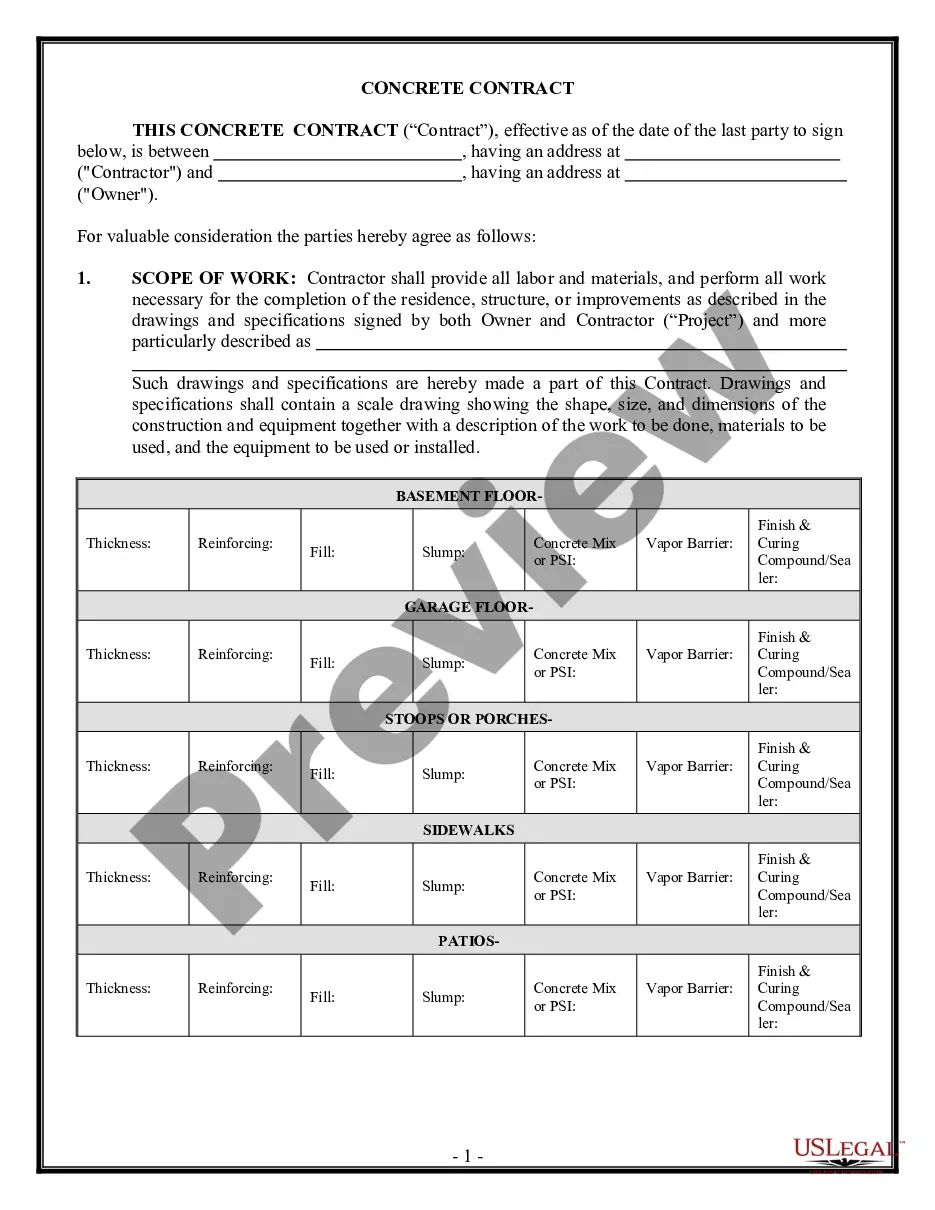
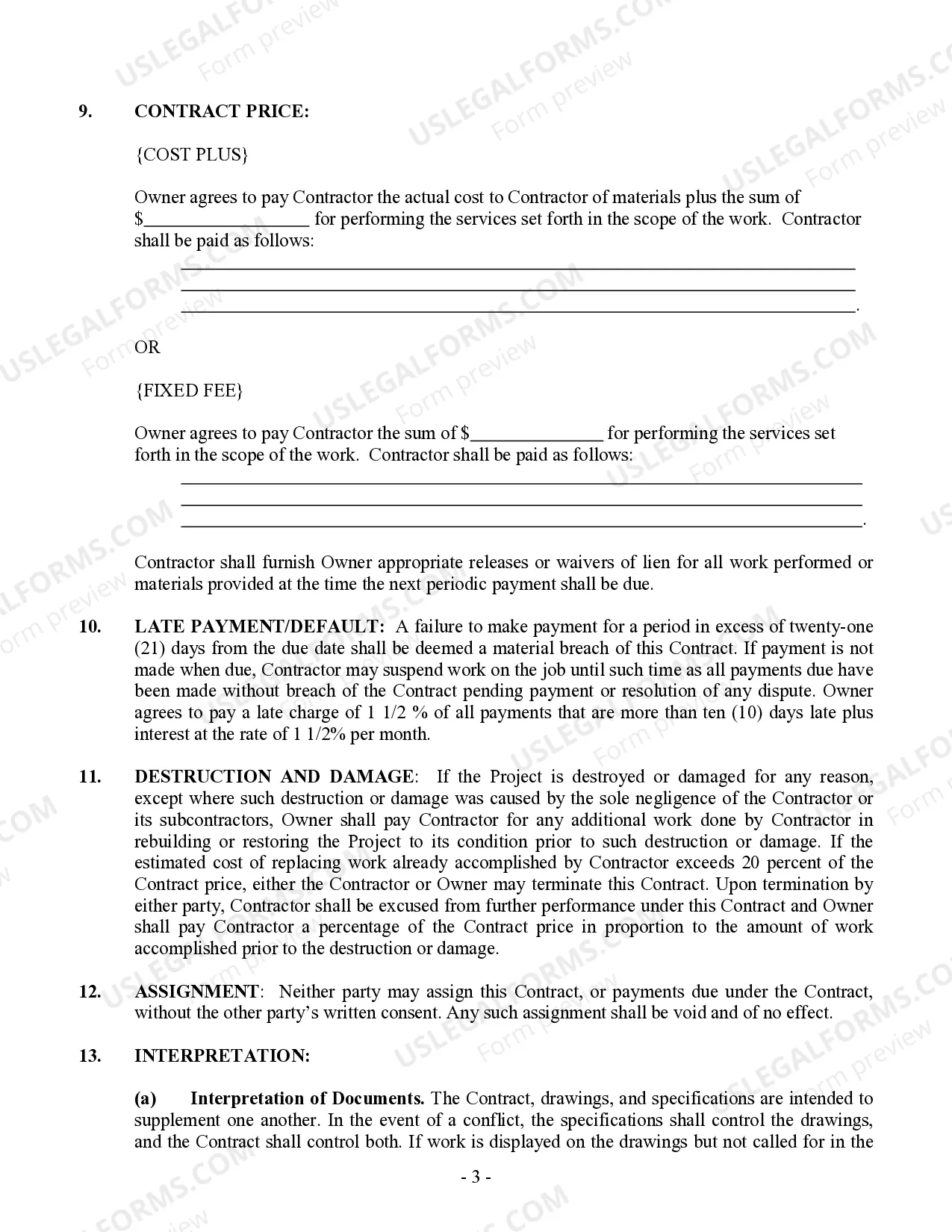
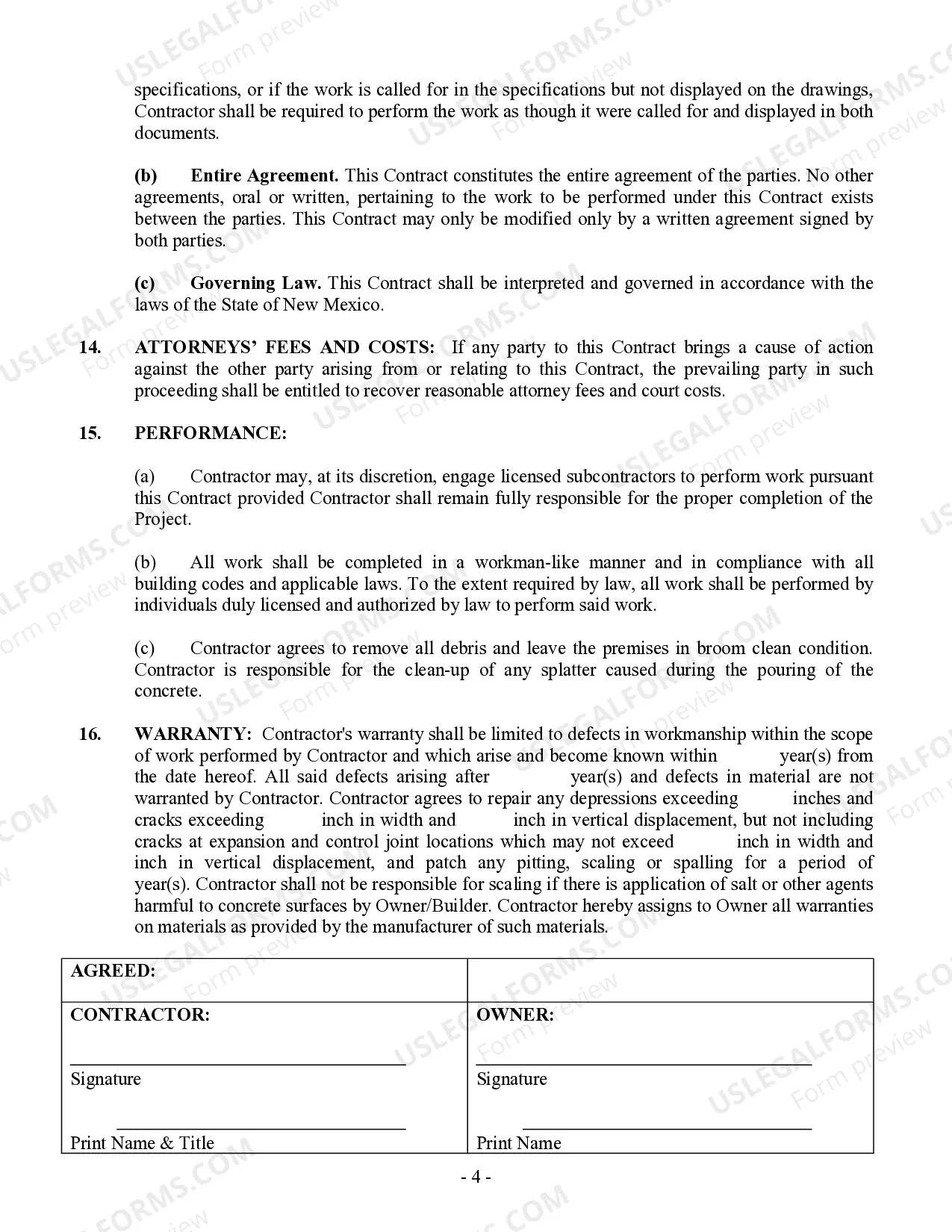
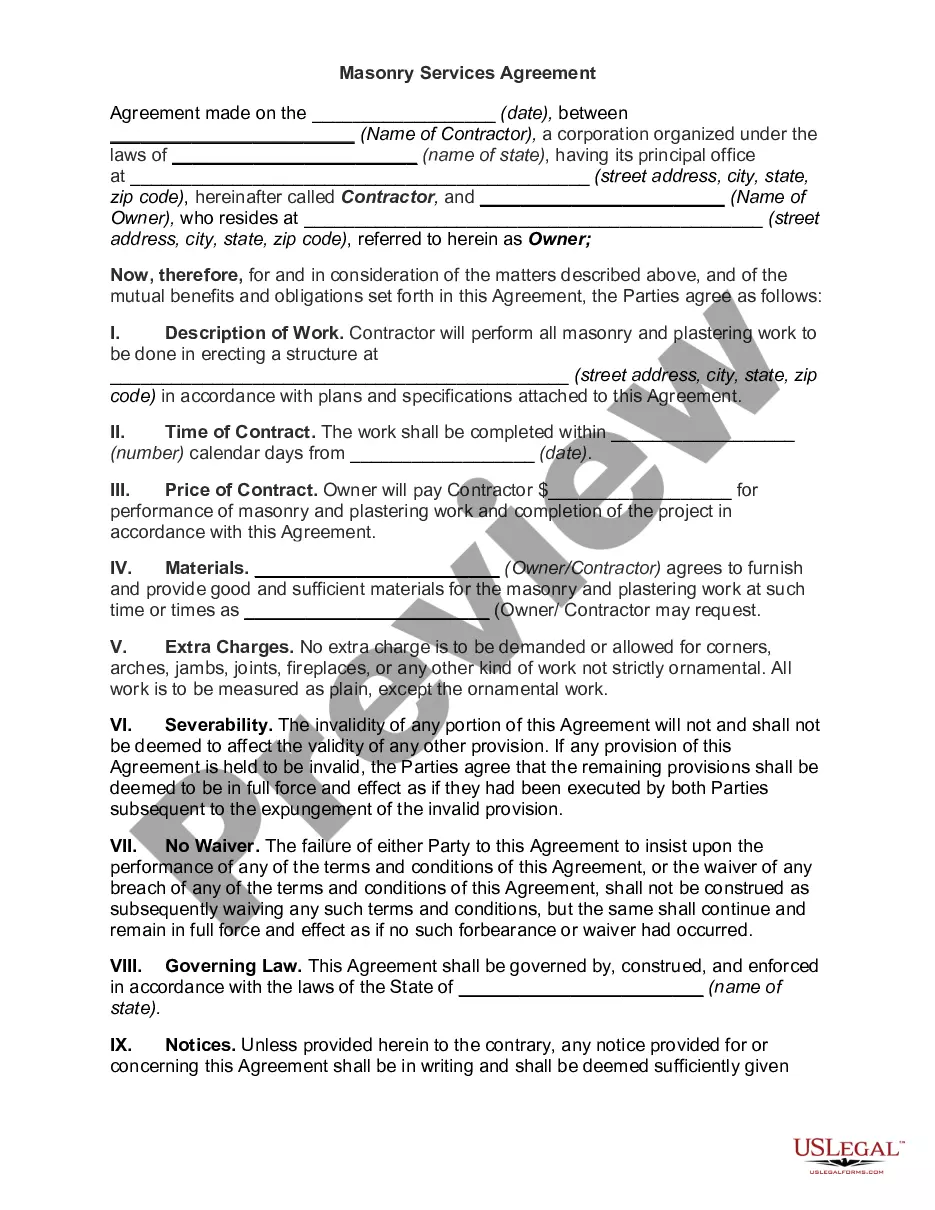
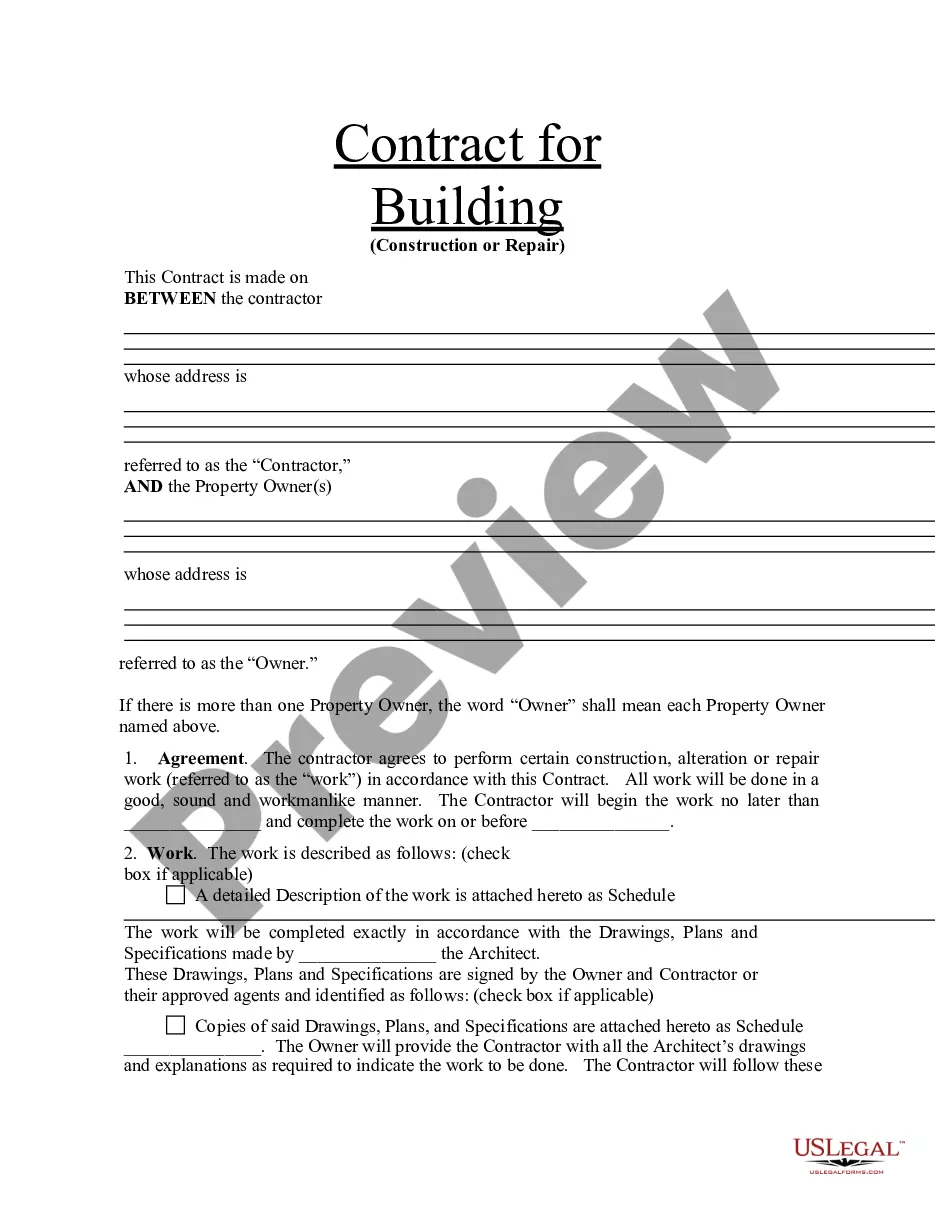
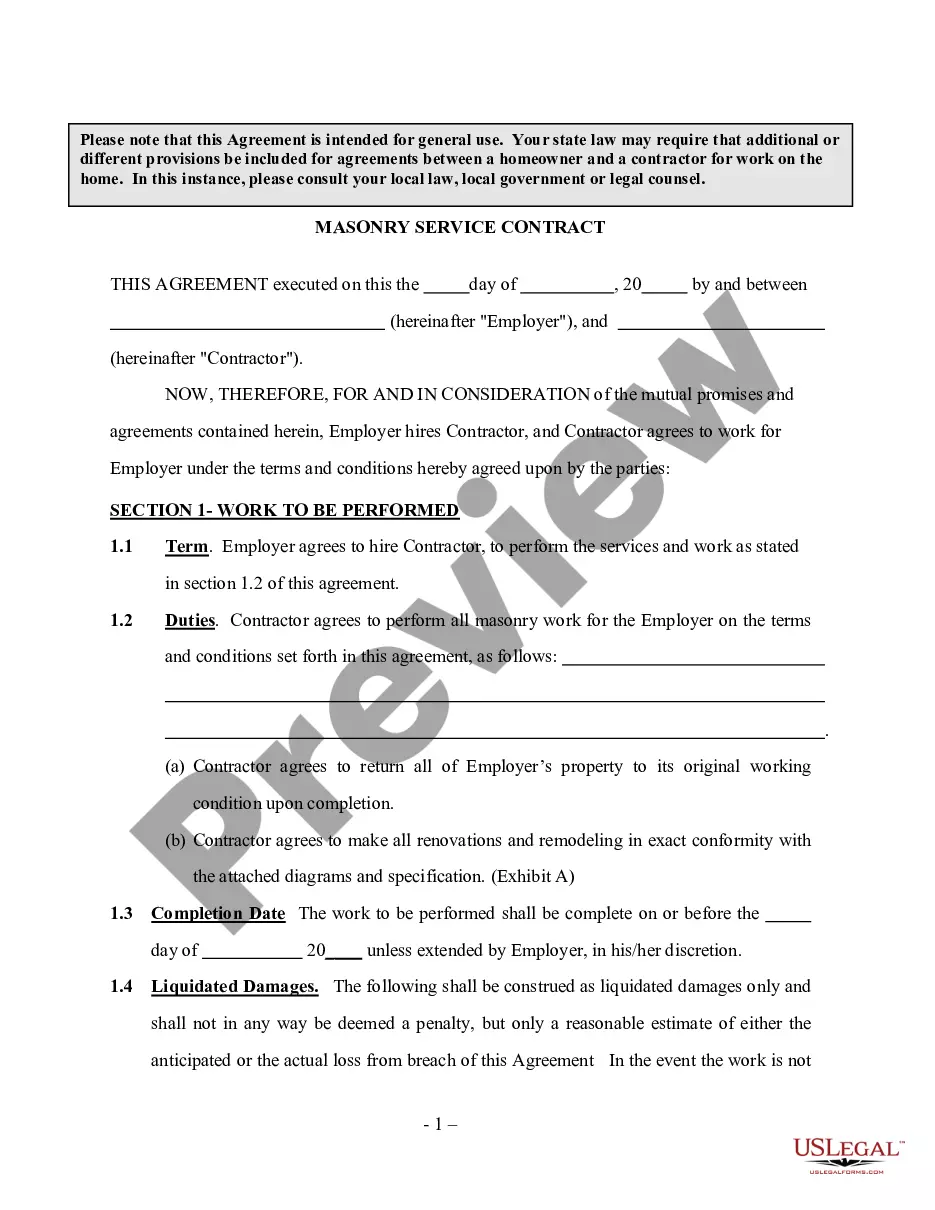
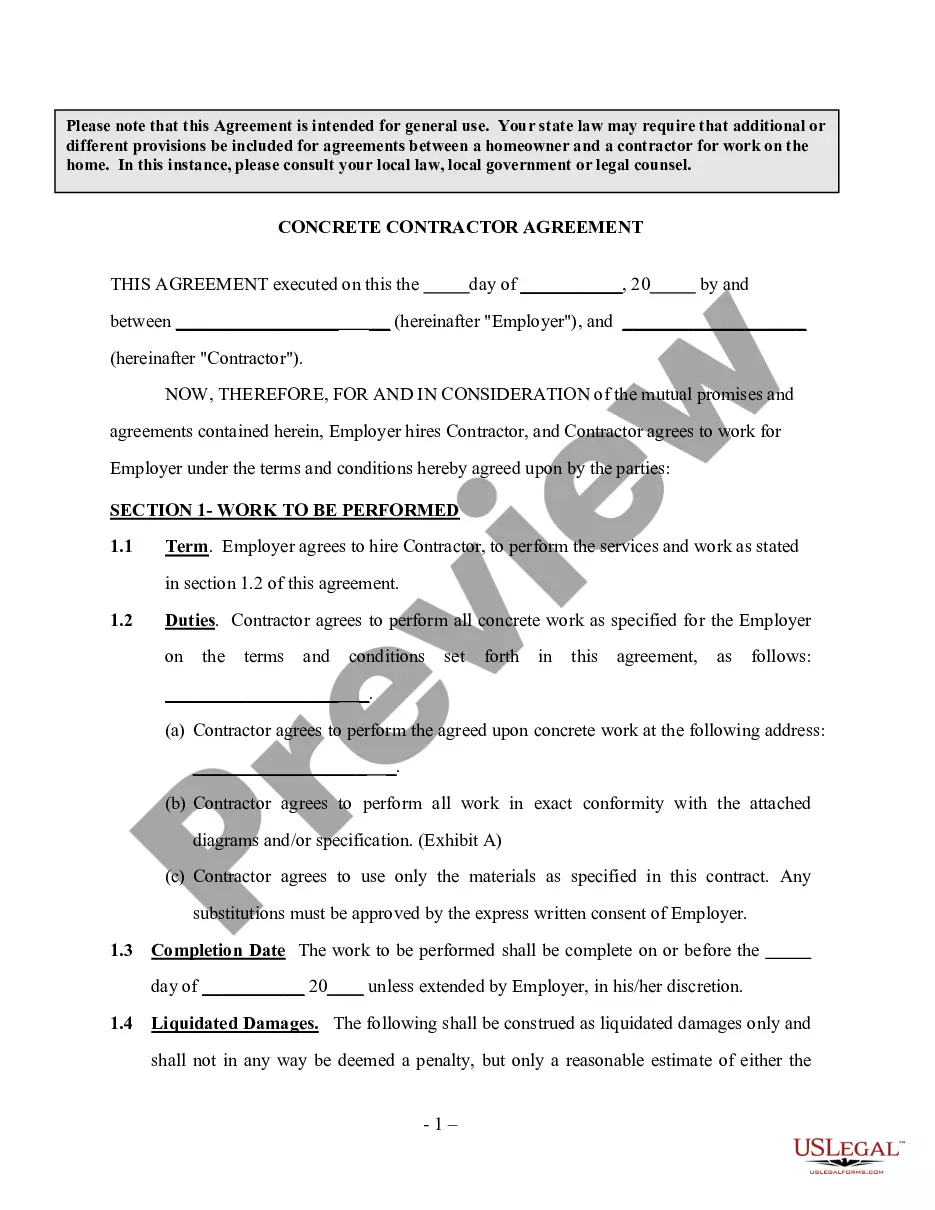
The Concrete Mason Contract for Contractor is a legal document that formalizes the agreement between concrete mason contractors and property owners. This contract specifies the terms for either a cost-plus or fixed-fee payment arrangement, clearly laying out responsibilities related to change orders, work site conditions, warranties, and insurance. Designed to comply with New Mexico's legal framework, this form ensures that both parties have clear expectations and obligations throughout the construction process.
What’s included in this form
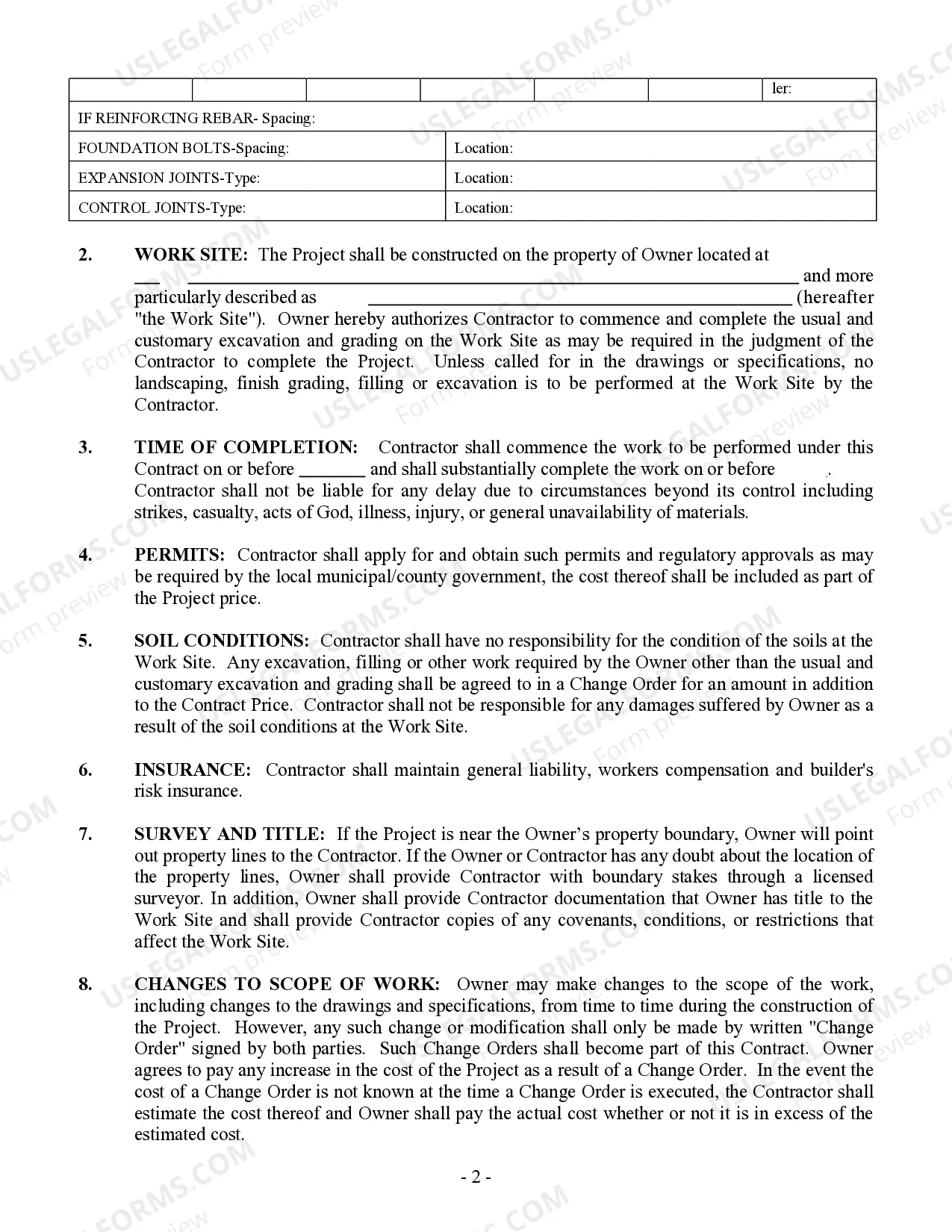
- Permits: Details the contractor's responsibility to obtain necessary permits and includes associated costs.
- Soil Conditions: Clarifies the contractor's lack of responsibility for site soil conditions.
- Insurance: Outlines required insurance coverage for liability and worker protection.
- Changes to Scope of Work: Establishes the process for modifying project plans through written change orders.
- Contract Price: Specifies the financial arrangements, including cost-plus details.
- Late Payment/Default: Describes the consequences of late payments and material breaches of the contract.
When to use this document
This form should be used when a property owner wishes to hire a concrete mason contractor for a construction project. It is particularly applicable when the project involves significant interactions regarding cost adjustments, insurance obligations, or when changes to the original scope of work are anticipated during the project. Utilizing this contract helps to define expectations and protect both parties' interests.
Who can use this document
- Concrete Mason Contractors seeking a formal agreement with property owners.
- Property Owners planning to hire contractors for concrete-related projects.
- Parties involved in construction projects in New Mexico that require clear contract terms.
How to complete this form
- Identify the parties involved: Clearly list the names and contact information for the contractor and property owner.
- Specify the project: Describe the scope of work, including any specific concrete services needed.
- Determine payment structure: Indicate whether the payment will be cost-plus or a fixed fee and include payment terms.
- Detail insurance requirements: List the types of insurance the contractor must maintain.
- Sign and date the contract: Ensure both parties sign the document to make it legally binding.
Notarization requirements for this form
This form does not typically require notarization unless specified by local law. However, it is advisable to verify the requirements in your jurisdiction to ensure legal validity.
Get your form ready online
Our built-in tools help you complete, sign, share, and store your documents in one place.
Make edits, fill in missing information, and update formatting in US Legal Forms—just like you would in MS Word.
Download a copy, print it, send it by email, or mail it via USPS—whatever works best for your next step.
Sign and collect signatures with our SignNow integration. Send to multiple recipients, set reminders, and more. Go Premium to unlock E-Sign.
If this form requires notarization, complete it online through a secure video call—no need to meet a notary in person or wait for an appointment.
We protect your documents and personal data by following strict security and privacy standards.

Make edits, fill in missing information, and update formatting in US Legal Forms—just like you would in MS Word.

Download a copy, print it, send it by email, or mail it via USPS—whatever works best for your next step.

Sign and collect signatures with our SignNow integration. Send to multiple recipients, set reminders, and more. Go Premium to unlock E-Sign.

If this form requires notarization, complete it online through a secure video call—no need to meet a notary in person or wait for an appointment.

We protect your documents and personal data by following strict security and privacy standards.
Common mistakes
- Failing to specify the scope of work clearly, leading to misunderstandings.
- Not including necessary permits or insurance requirements.
- Neglecting to document changes to the project via signed change orders.
- Forgetting to have both parties sign the contract before starting work.
Why use this form online
- Convenient access: Download and complete the form at your convenience.
- Editability: Easily modify sections to match the specific project requirements.
- Legal compliance: Ensures adherence to New Mexico's legal standards for construction contracts.
Looking for another form?
Form popularity
FAQ
Anyone seeking to become a contractor in New Mexico is required to sit for two exams, business and law and the trade. The applicant must submit a bond for $500 to $5,000 and provide proof of required experience (2-4 years depending on classification). The applicant must also submit a certificate of competence.
Approval for the New Mexico GB02 license requires four years of previous experience. With this license you may erect, alter, repair or demolish residential and commercial buildings, and certain structures.
New Mexico requires anyone engaging in construction-related contracting work to have a license. Section 60-13-3 of the New Mexico Construction Industries Licensing Act of 1978 defines construction-related work as any type of mechanical, electrical, plumbing, LP gas, or general construction work.
Do You Need a License in New Mexico to Become a Handyman? You must register as a handyman to perform work in New Mexico. The state offers a handyman certification that restricts the type of work you can perform and the amount of compensation that you can earn each year.
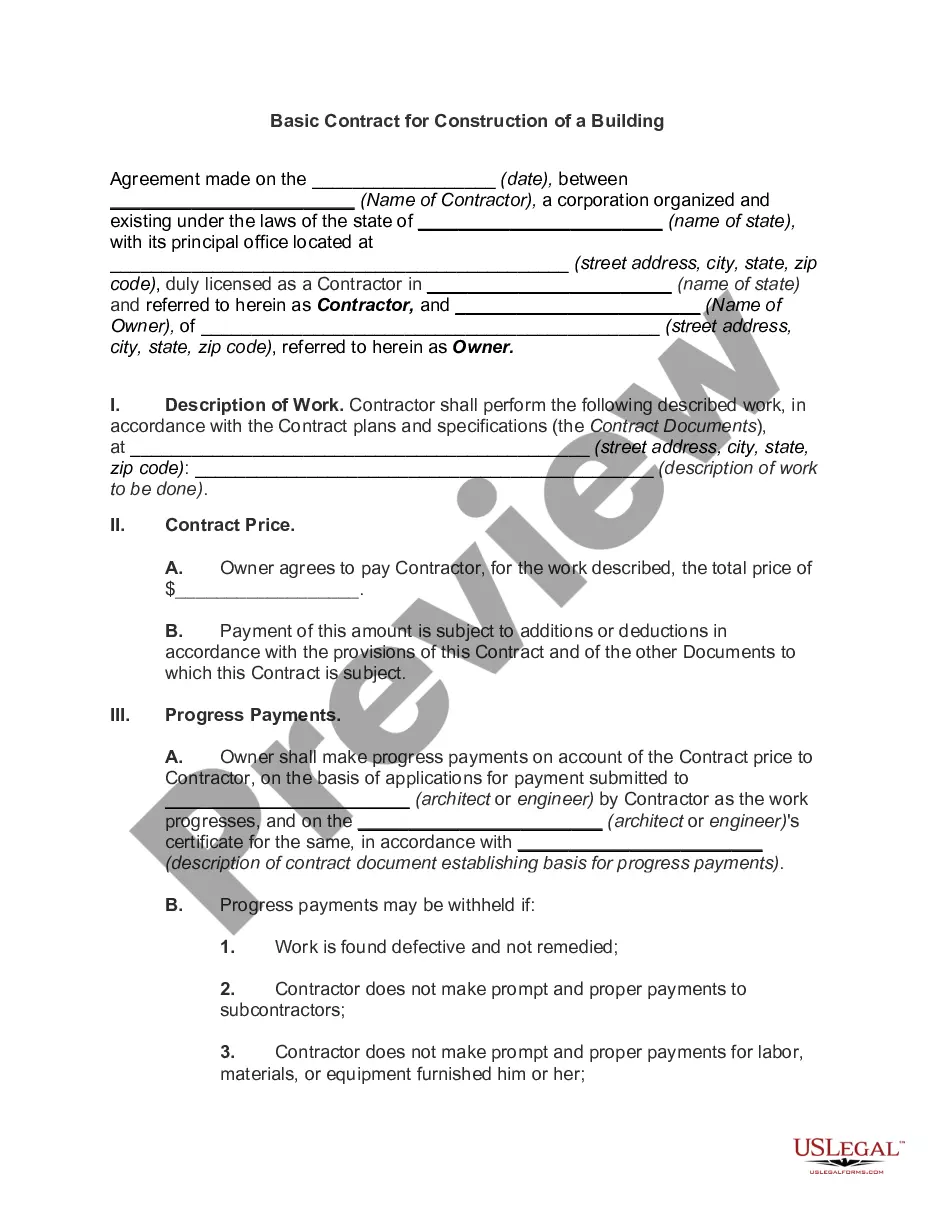
A construction contract is a mutual or legally binding agreement between two parties based on policies and conditions recorded in document form. The two parties involved are one or more property owners and one or more contractors.
What are the requirements for becoming a New Mexico licensed contractor? Anyone engaged in construction-related contracting in New Mexico must be licensed. This includes general construction work, electrical, mechanical and plumbing and LP gas.
#1: Review Your Bid. #2: Review Complete Plans. #3: Review All Specifications. #4: Visit the Job Site. #5: Review the Job Schedule. #6: Complete a Project Checklist. #7: Verify Project Funding. #8: Read Complete Contract.