Continuing Criminal Enterprise
Understanding this form
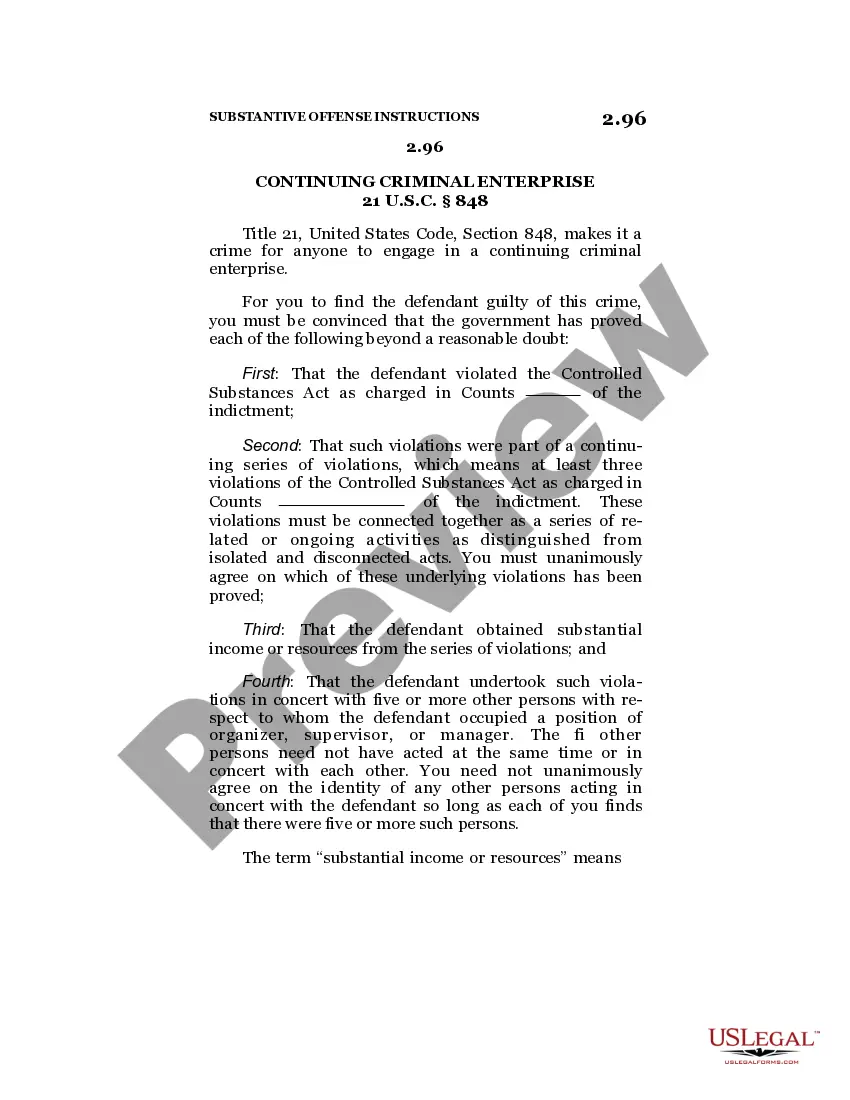
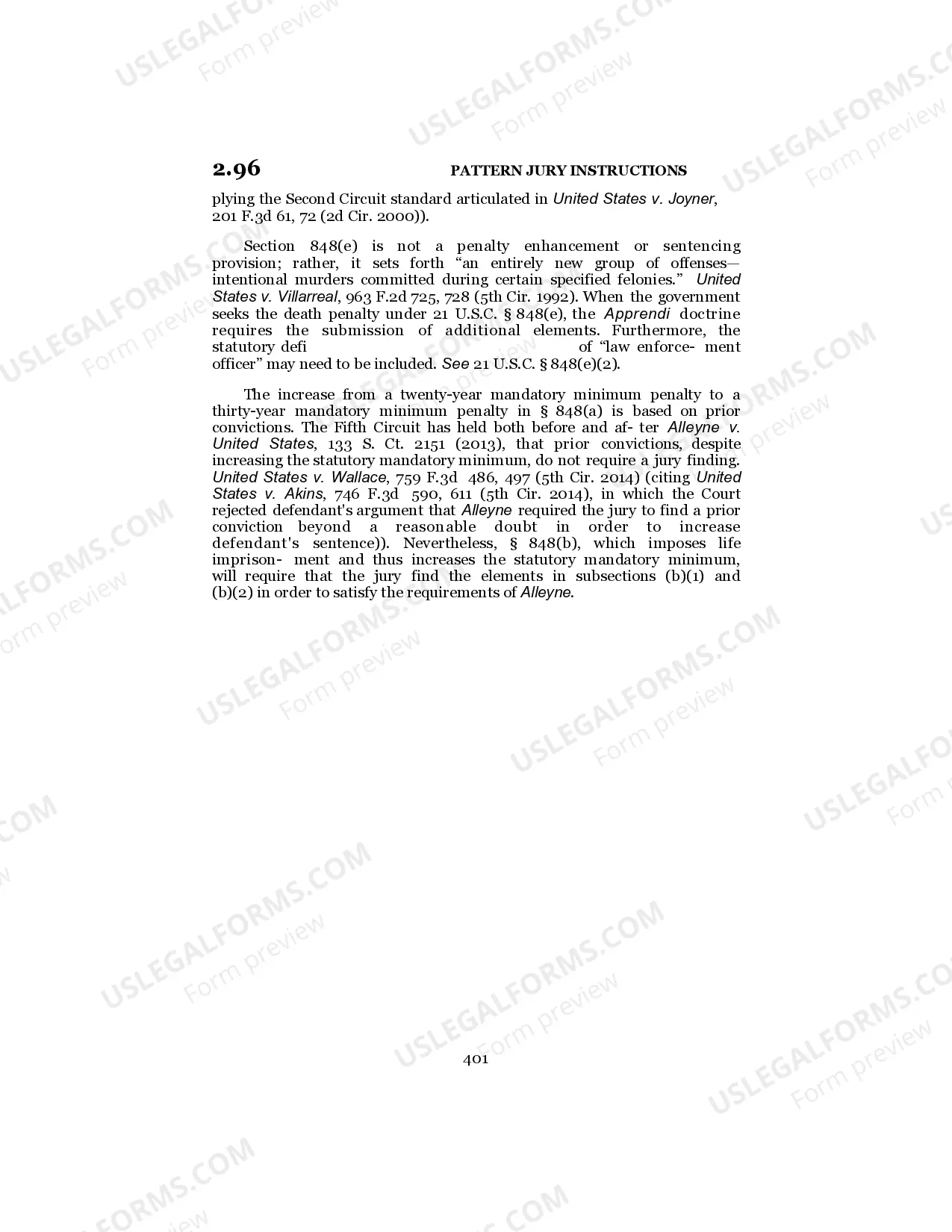
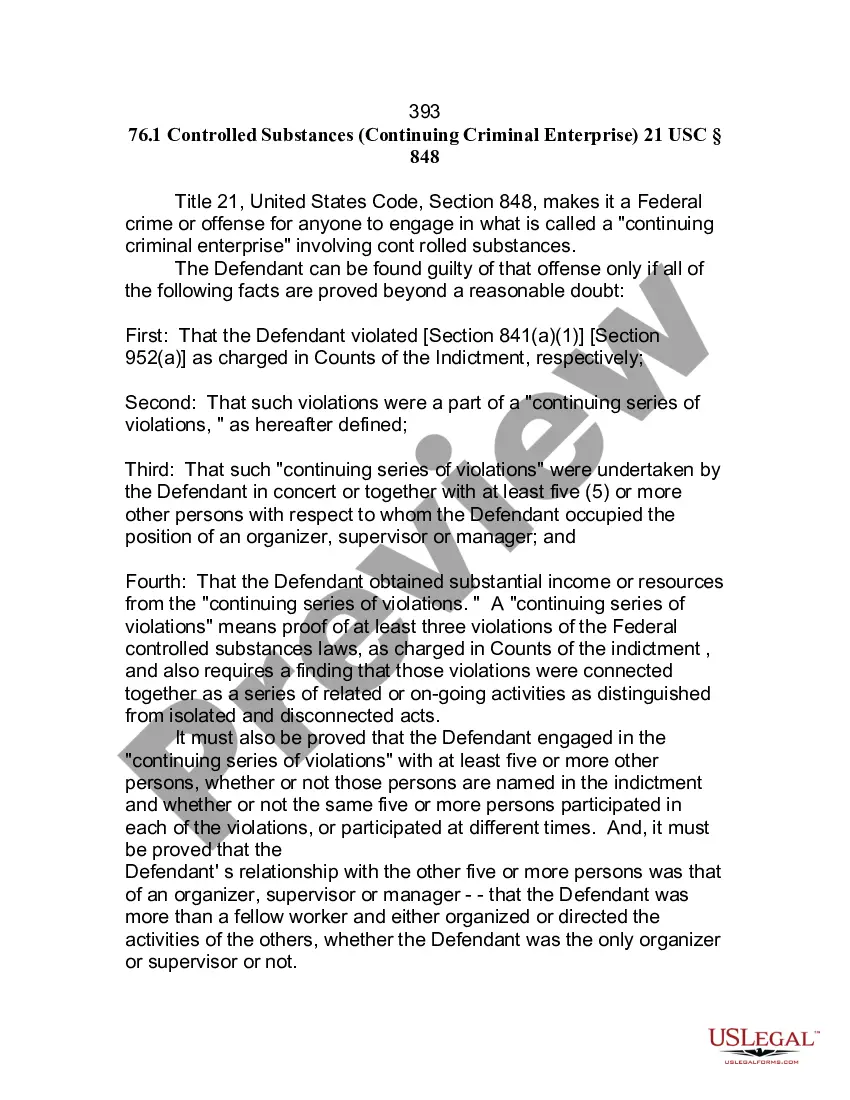
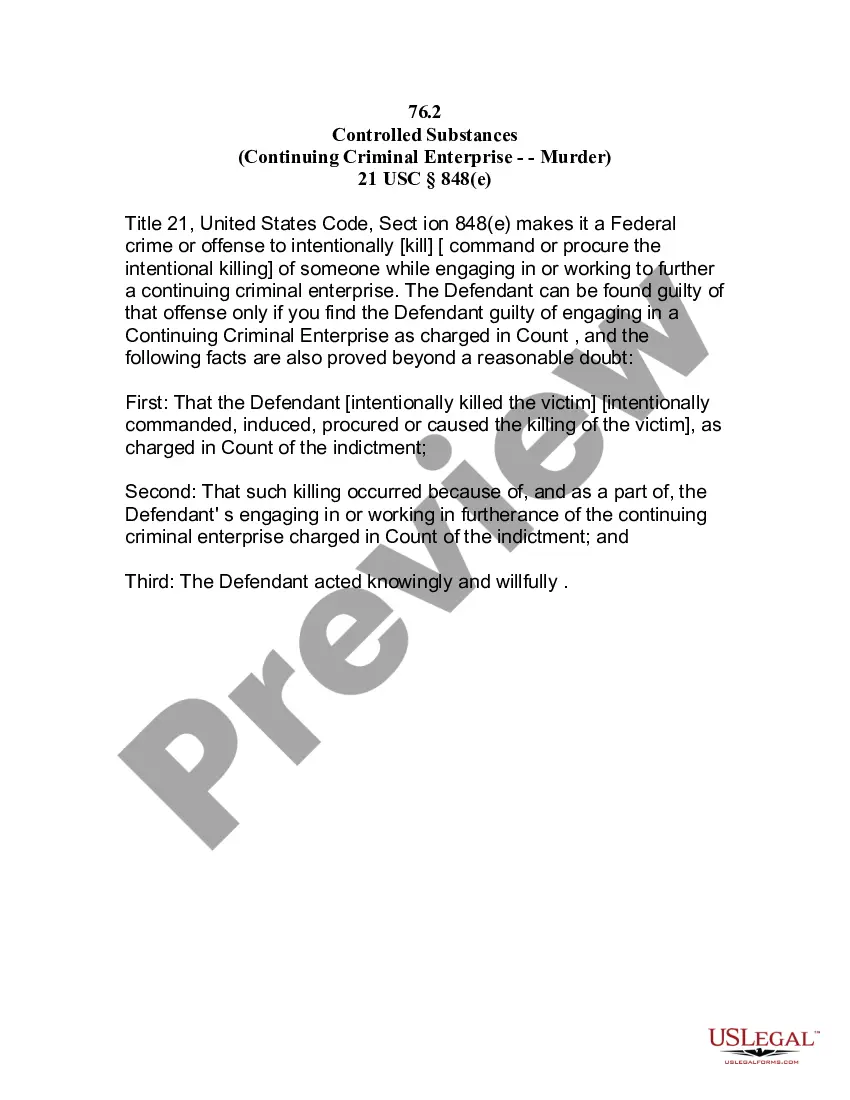
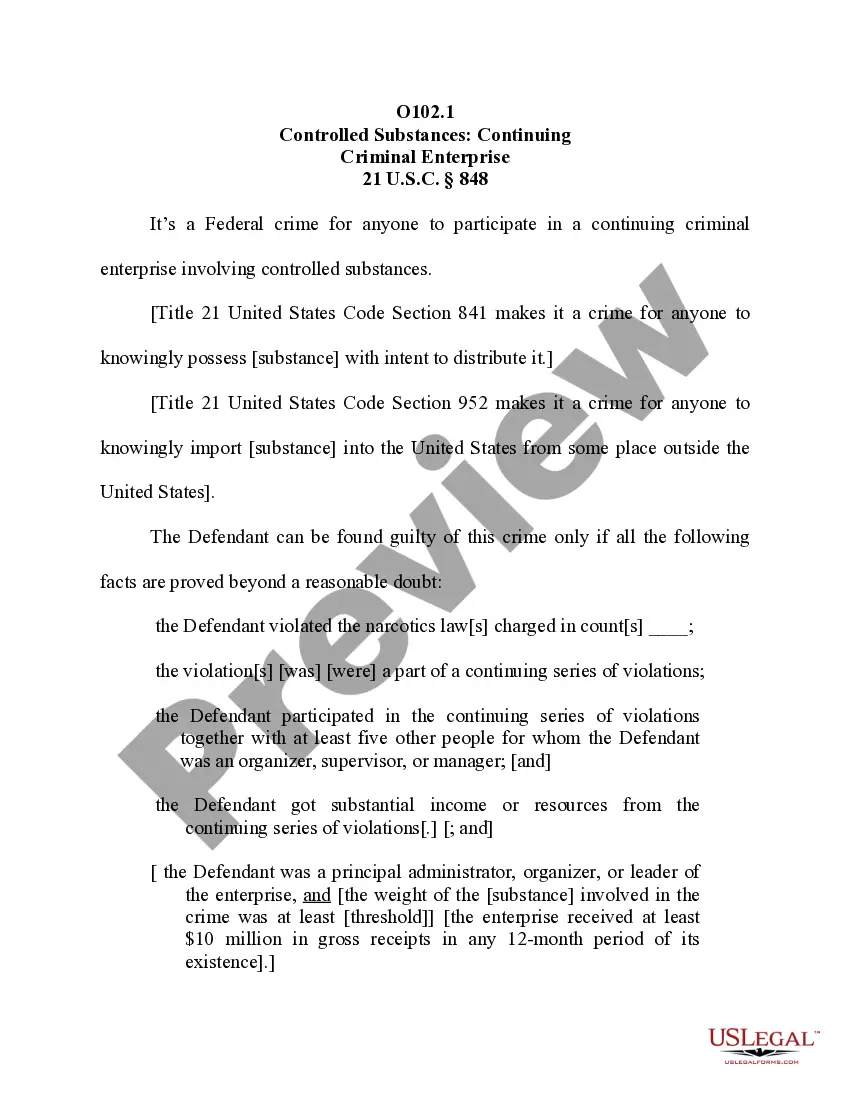
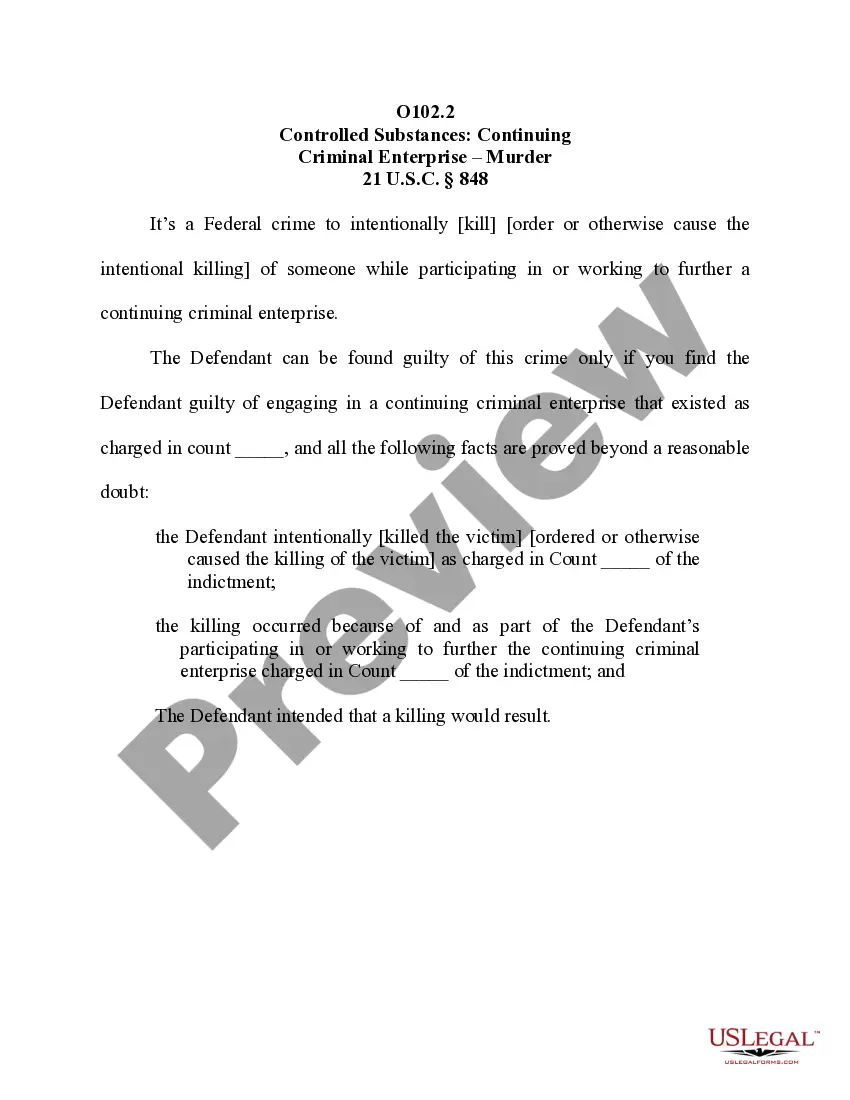
The Continuing Criminal Enterprise form is a legal template used to present charges against individuals involved in ongoing criminal activities, particularly drug-related offenses. This form is critical in illustrating how these activities are not isolated incidents but rather part of a larger, continuous operation involving organized crime. Unlike other forms, this one specifically addresses the criteria for establishing a continuing criminal enterprise under Title 21, United States Code, Section 848.
Form components explained
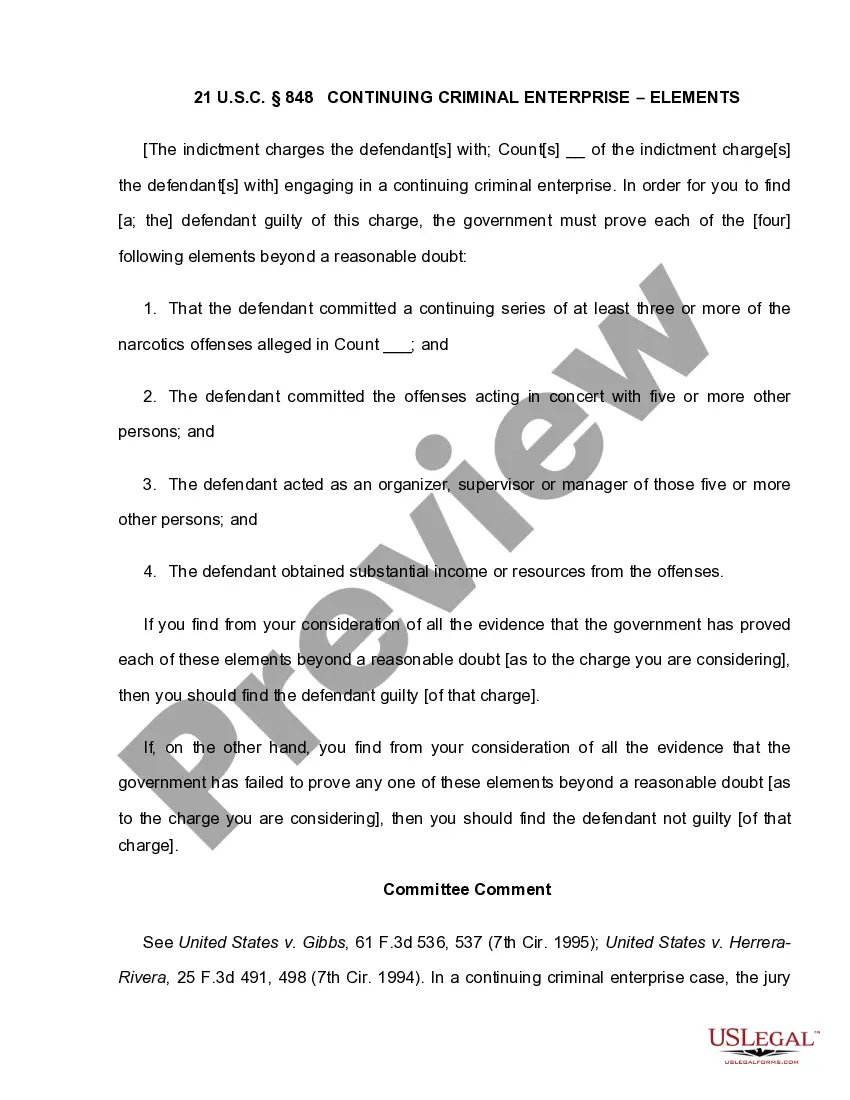
- Definition of a continuing criminal enterprise, including the criteria for guilt.
- Details on how violations of the Controlled Substances Act must be interconnected.
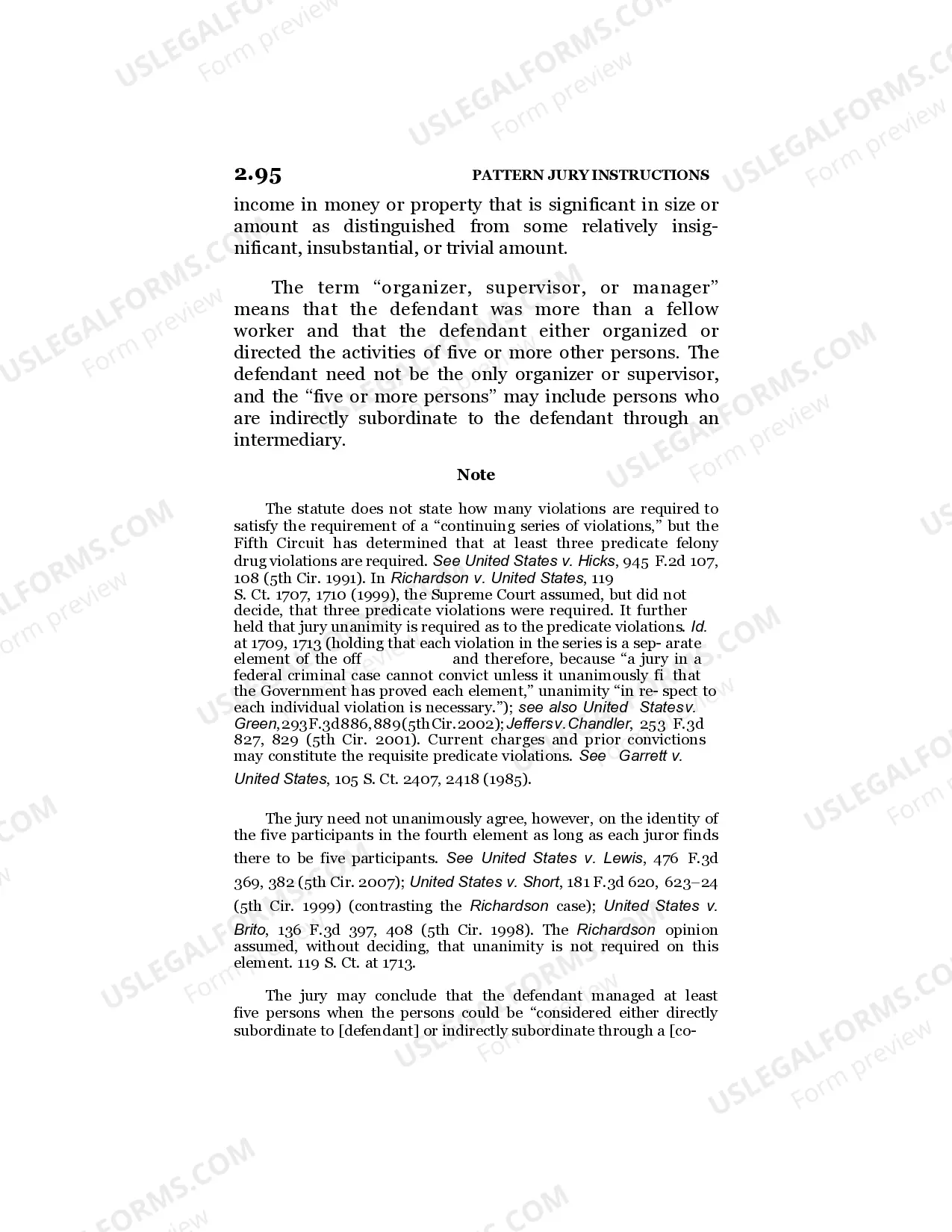
- Clarification on the requirement of substantial income or resources obtained from these violations.
- Explanation of the organizational role in relation to five or more individuals involved.
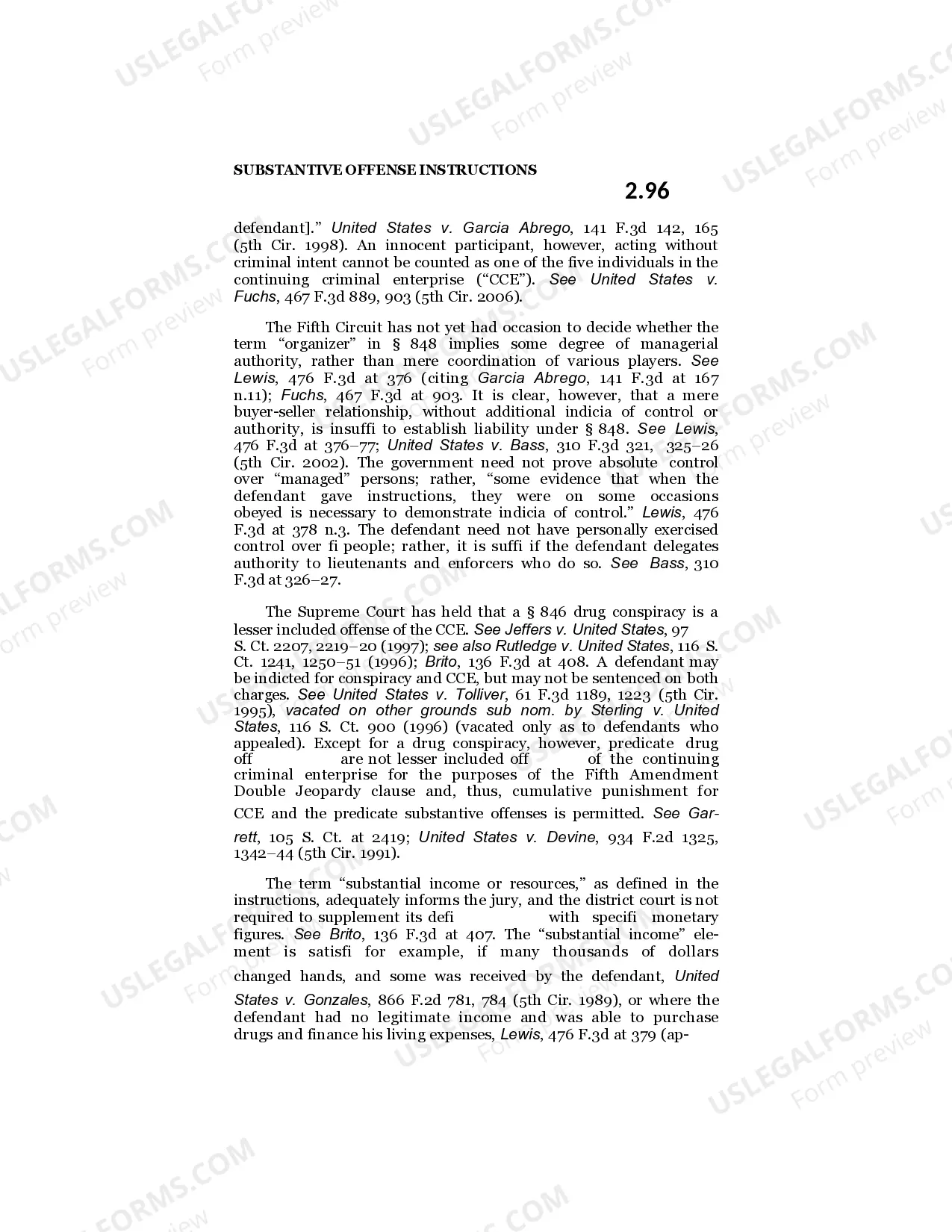
- Guidelines on jury unanimity related to predicate violations.
When to use this document
This form should be used in cases where a defendant is being charged with participating in a continuing criminal enterprise. It is relevant when there is evidence of multiple drug-related offenses that are interconnected and when the accused has taken an organizational role in directing such activities. This form is crucial for prosecutors to lay out the framework for these serious charges under federal law.
Who this form is for
- Prosecutors building a case against individuals charged with drug crimes.
- Defense attorneys representing clients accused of engaging in a continuing criminal enterprise.
- Legal professionals seeking to understand or teach about the nuances of federal drug laws.
How to complete this form
- Identify the defendant and provide detailed information regarding their identity.
- List the specific counts of the Controlled Substances Act that are being violated.
- Demonstrate how these violations are interconnected and part of a series of related activities.
- Document evidence of substantial income or resources obtained through these violations.
- Include details about the organizational structure, identifying the five or more individuals involved.
Notarization guidance
Notarization is generally not required for this form. However, certain states or situations might demand it. You can complete notarization online through US Legal Forms, powered by Notarize, using a verified video call available anytime.
Get your form ready online
Our built-in tools help you complete, sign, share, and store your documents in one place.
Make edits, fill in missing information, and update formatting in US Legal Forms—just like you would in MS Word.
Download a copy, print it, send it by email, or mail it via USPS—whatever works best for your next step.
Sign and collect signatures with our SignNow integration. Send to multiple recipients, set reminders, and more. Go Premium to unlock E-Sign.
If this form requires notarization, complete it online through a secure video call—no need to meet a notary in person or wait for an appointment.
We protect your documents and personal data by following strict security and privacy standards.

Make edits, fill in missing information, and update formatting in US Legal Forms—just like you would in MS Word.

Download a copy, print it, send it by email, or mail it via USPS—whatever works best for your next step.

Sign and collect signatures with our SignNow integration. Send to multiple recipients, set reminders, and more. Go Premium to unlock E-Sign.

If this form requires notarization, complete it online through a secure video call—no need to meet a notary in person or wait for an appointment.

We protect your documents and personal data by following strict security and privacy standards.
Avoid these common issues
- Failing to establish the required connections between violations.
- Not providing enough evidence of substantial income or resources.
- Inadequately identifying the organizational role of the defendant relative to others.
- Neglecting to ensure jury instructions correctly emphasize the need for unanimity on predicate violations.
Why complete this form online
- Convenient access to a legally compliant template drafted by licensed attorneys.
- Easy to edit and personalize to fit specific case details.
- Accessible from anywhere, saving time and resources when preparing legal documents.
Looking for another form?








Form popularity
FAQ
State predicate crimes include murder, kidnaping, gambling, arson, robbery, bribery, extortion, and drug offenses. The statute defines enterprise to include any individual, partnership, corporation, association, or other legal entity, or any group of individuals who, though not a legal entity, are associated in fact.
Ing to the FBI, a criminal enterprise is a structured organization engaging in acts of criminal conspiracy and/or criminal activity. Among the common criminal enterprises are drug-trafficking organizations, street gangs, and organized crime syndicates.
Any business-related act that uses deceit, deception, or dishonesty to carry out criminal enterprise. Stings and Swindles. A white-collar crime in which people use their institutional or business position to trick others out of their money.
Sometimes intimidation, threats and/or force are also needed to protect those operations. These elements comprise organized crime as a continuing criminal enterprise. Organized crime is a continuing criminal enterprise that rationally works to profit from illicit activities that are often in great public demand.
The Continuing Criminal Enterprise Statute (commonly referred to as CCE Statute or Kingpin Statute) is a United States federal law that targets large-scale drug traffickers who are responsible for long-term and elaborate drug conspiracies.
For this sentence to be imposed, prosecutors must show that: You were a "principal" operator in the organization; AND. The organization trafficked at least 300 times the amount of drugs needed to trigger a mandatory 5-year sentence; OR. The organization grossed at least $10 million in a single year.
But what do we mean by ?criminal enterprise?? The FBI defines a criminal enterprise as ?a group of individuals with an identified hierarchy, or comparable structure, engaged in significant criminal activity.? Typically, we think of drug cartels, racketeering enterprises, or even the Gestapo.
Defending Against CCE And RICO Charges for a larger number of crimes, the penalties for violating these laws can be particularly severe. RICO provides for up to 20 years in prison per count; CCE mandates a minimum of 20 years per count, up to life imprisonment, along with fines up to $2 million.