Controlled Substances: Continuing Criminal Enterprise - Murder
What is this form?
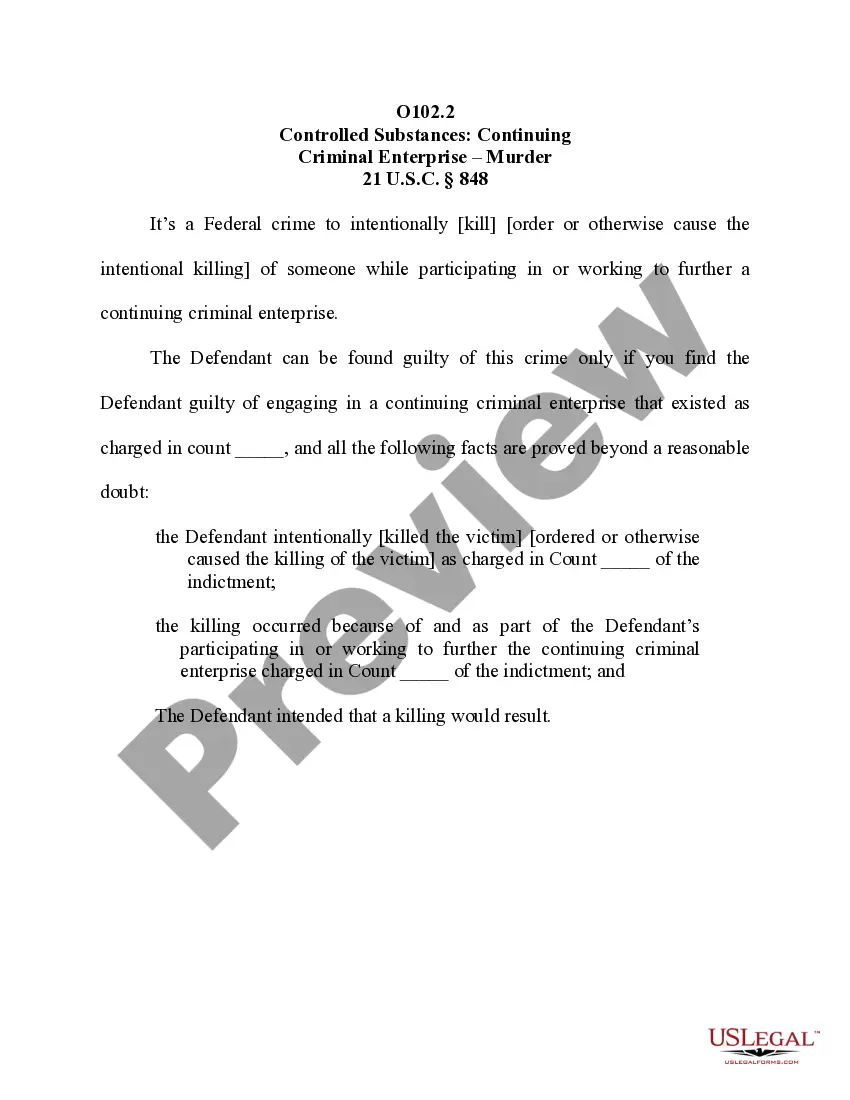
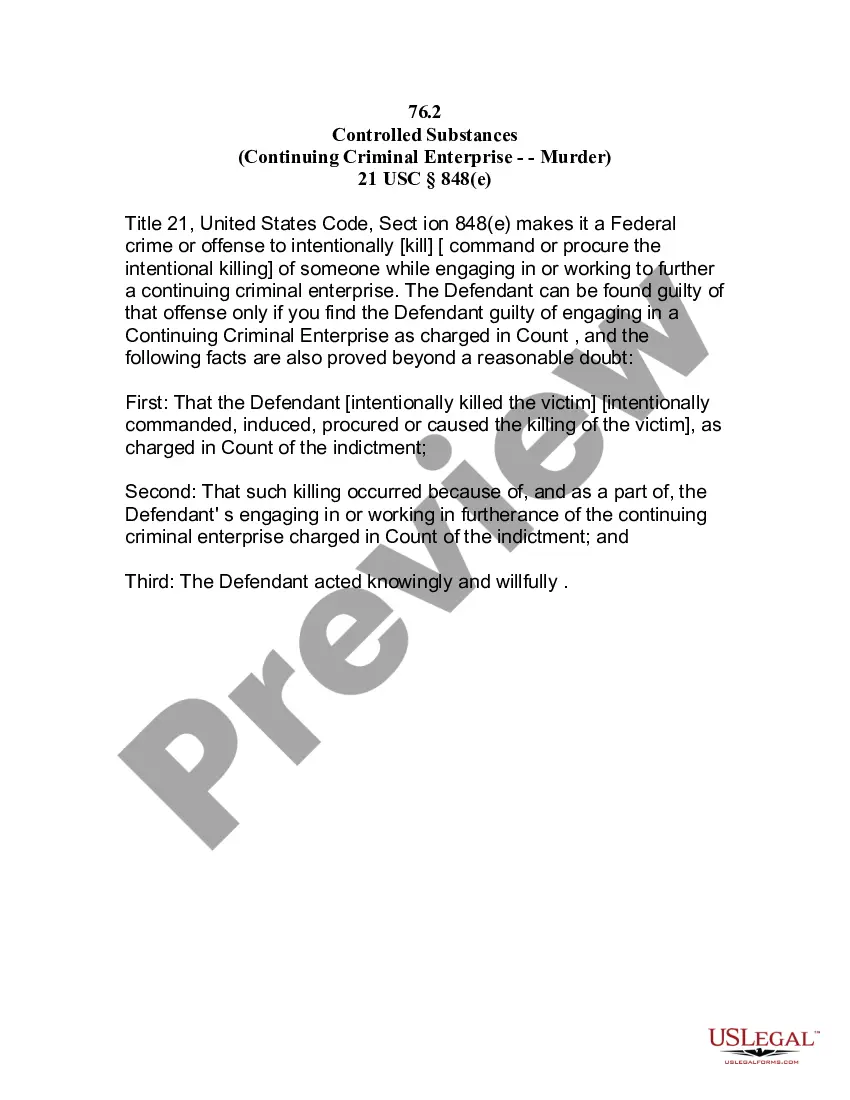
This form provides the Pattern Jury Instructions from the 11th Circuit Federal Court of Appeals regarding the federal crime of murder within the context of a continuing criminal enterprise. It clearly outlines the legal standards needed for a conviction, distinguishing it from other murder-related charges by its specific emphasis on the involvement in ongoing criminal activities. The Controlled Substances: Continuing Criminal Enterprise - Murder form helps ensure clarity in jury instructions and legal processes in such serious cases.
Main sections of this form
- Definition of the crime involving intentional killing related to a continuing criminal enterprise.
- Criteria for establishing guilt, including proof of intentional action and the relationship to the continuing criminal enterprise.
- Specific examples of actions that constitute killing, such as direct killing or ordering a killing.
- Conditions that must be met for a conviction, including the requirement that the act was performed to further the enterprise.
Situations where this form applies
This form is used during criminal trials involving defendants accused of murder in the context of a controlled substances continuing criminal enterprise. It is essential when the prosecution aims to demonstrate that the defendant committed a murder specifically tied to trafficking or leading a criminal organization. Defense attorneys may also utilize this form to challenge the criteria for the prosecutionâs case.
Who needs this form
- Prosecuting attorneys presenting a case before a jury for a continuing criminal enterprise leading to murder.
- Defense attorneys preparing to defend clients accused of such crimes.
- Judges requiring a clear framework for instructing the jury on the specific legal definitions and elements of the crime.
How to prepare this document
- Read the definitions of the crime as detailed in the instructions.
- Identify the specific actions taken by the defendant as they pertain to the case.
- Assess the evidence to determine if it supports the criteria for guilt as outlined.
- Ensure all elements related to the continuing criminal enterprise and the intentional act are clearly delineated in the court documents.
- Consult with legal counsel to tailor the application of these instructions to the specific case at hand.
Is notarization required?
This form does not typically require notarization unless specified by local law. It is primarily related to jury instructions in a trial setting rather than requiring a signature or witness verification.
Get your form ready online
Our built-in tools help you complete, sign, share, and store your documents in one place.
Make edits, fill in missing information, and update formatting in US Legal Forms—just like you would in MS Word.
Download a copy, print it, send it by email, or mail it via USPS—whatever works best for your next step.
Sign and collect signatures with our SignNow integration. Send to multiple recipients, set reminders, and more. Go Premium to unlock E-Sign.
If this form requires notarization, complete it online through a secure video call—no need to meet a notary in person or wait for an appointment.
We protect your documents and personal data by following strict security and privacy standards.

Make edits, fill in missing information, and update formatting in US Legal Forms—just like you would in MS Word.

Download a copy, print it, send it by email, or mail it via USPS—whatever works best for your next step.

Sign and collect signatures with our SignNow integration. Send to multiple recipients, set reminders, and more. Go Premium to unlock E-Sign.

If this form requires notarization, complete it online through a secure video call—no need to meet a notary in person or wait for an appointment.

We protect your documents and personal data by following strict security and privacy standards.
Typical mistakes to avoid
- Failing to connect the murder charge directly to the ongoing criminal enterprise.
- Misinterpreting the legal definitions of intentional killing.
- Neglecting to review all evidence that supports or disputes intent.
Benefits of completing this form online
- Convenience of accessing legal instructions from any location.
- Editability allows for adjustments according to specific case details.
- Reliability ensured through professionally drafted legal materials.
Legal use & context
- The instructions provided are legally binding during federal trials.
- They are crafted to ensure jurors understand the specific law concerning continuing criminal enterprise and murder.
- Any alterations must be made in accordance with federal requirements applicable to criminal proceedings.
Key takeaways
- This form provides essential jury instructions for cases involving murder in the context of a continuing criminal enterprise.
- It specifies the criteria required for proving such a case beyond a reasonable doubt.
- A clear understanding of this form is crucial for both prosecution and defense in federal criminal cases.
Looking for another form?




Form popularity
FAQ
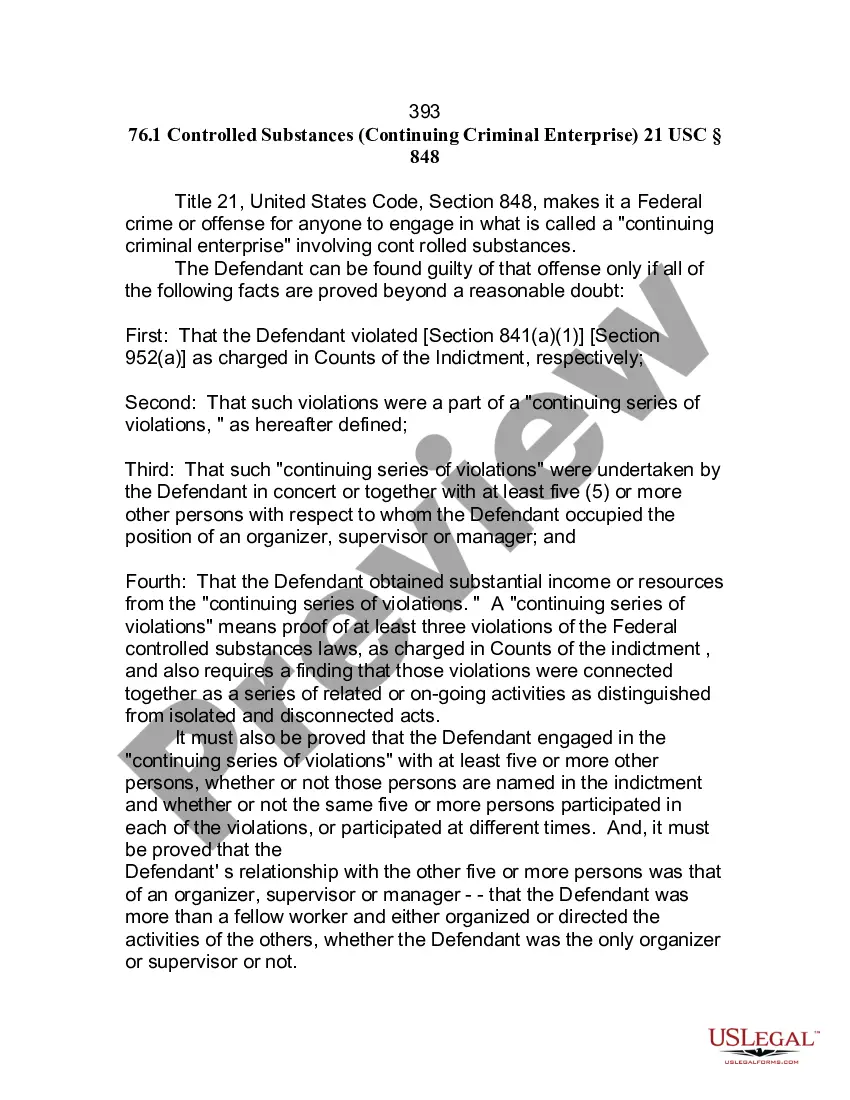
The Continuing Criminal Enterprise Statute (commonly referred to as CCE Statute or Kingpin Statute) is a United States federal law that targets large-scale drug traffickers who are responsible for long-term and elaborate drug conspiracies.
Ing to the FBI, a criminal enterprise is a structured organization engaging in acts of criminal conspiracy and/or criminal activity. Among the common criminal enterprises are drug-trafficking organizations, street gangs, and organized crime syndicates.
Enterprise crime combines illegal activity with a legitimate business environment as a front. It is also called a syndicate or organized crime. This type of crime involves a leader or leaders, with people working under them. The goal is financial gain at minimal risk of being caught.
The Continuing Criminal Enterprise Statute (commonly referred to as CCE Statute or The Kingpin Statute) is a Federal law that targets large-scale drug traffickers who are responsible for long-term and elaborate drug conspiracies.
The continuing criminal enterprise statute provides expanded opportunities for the government to investigate, prosecute, and punish persons involved in distributing illegal drugs.
Defending Against CCE And RICO Charges for a larger number of crimes, the penalties for violating these laws can be particularly severe. RICO provides for up to 20 years in prison per count; CCE mandates a minimum of 20 years per count, up to life imprisonment, along with fines up to $2 million.
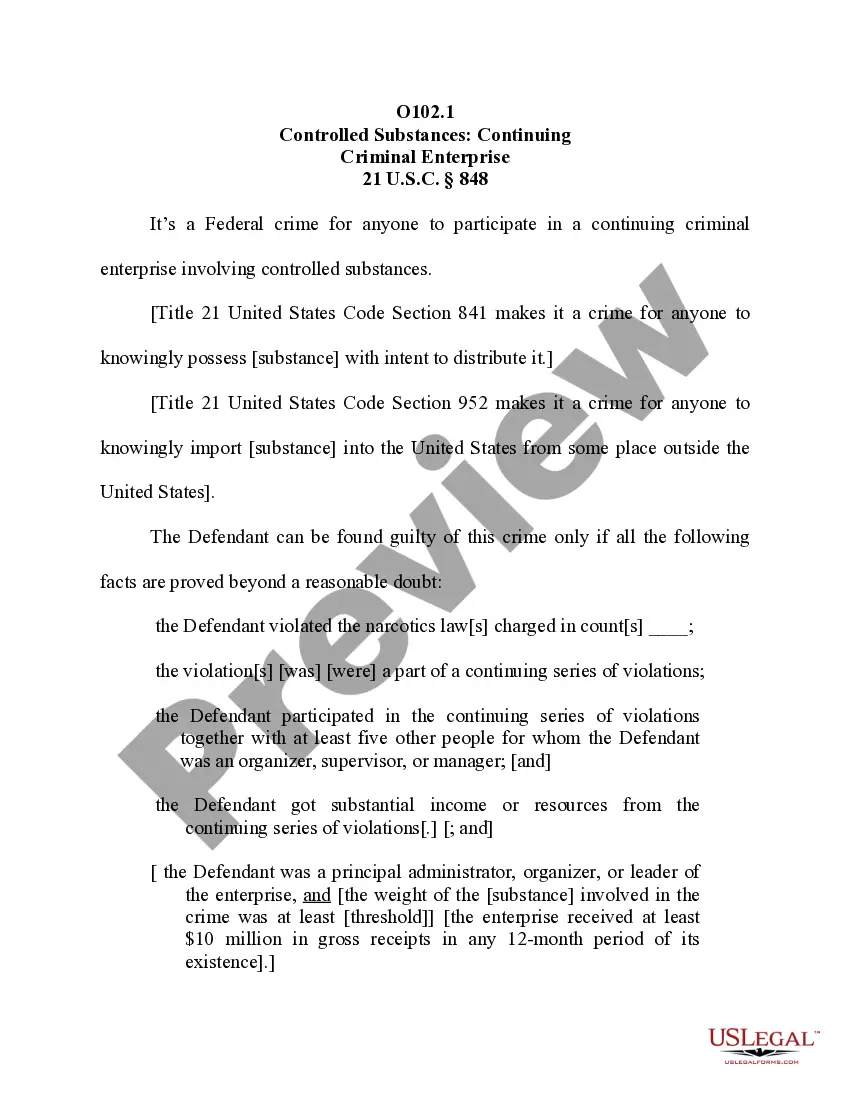
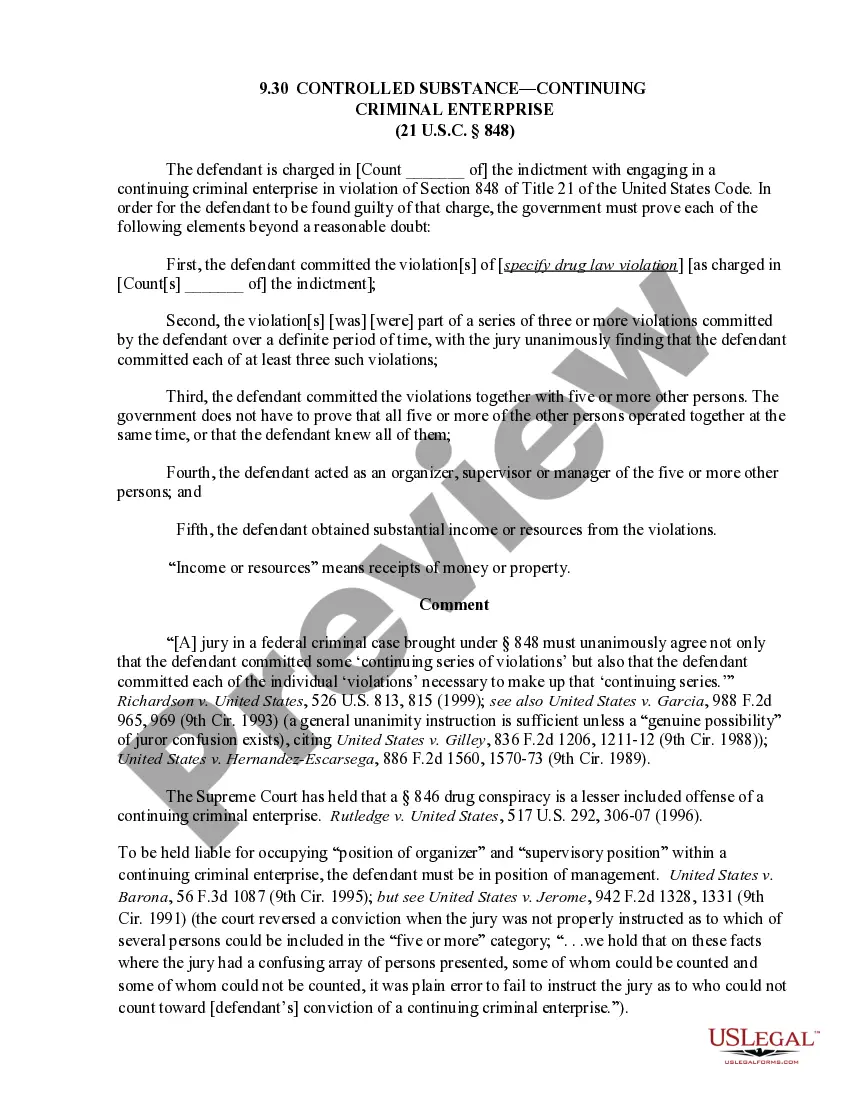
First, the prior offenses must be related and occur over a definite period of time. Proof of isolated drug offenses will not be sufficient to convict a defendant of this crime. Further, the accused must work with at least five other people. Next, the defendant needs to be an organizer or supervisor of the organization.