Alabama Answer and Waiver - Consent to Judgment
About this form
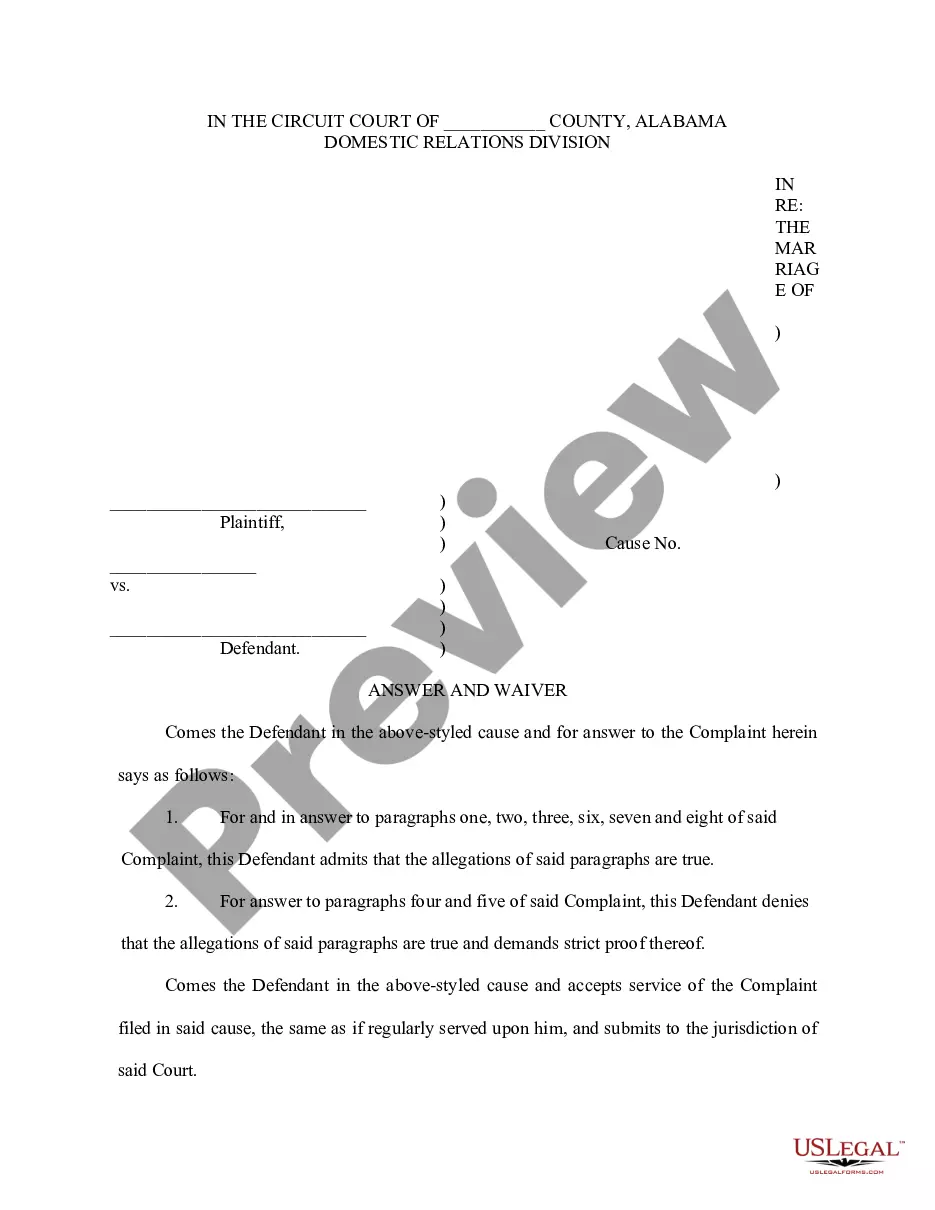
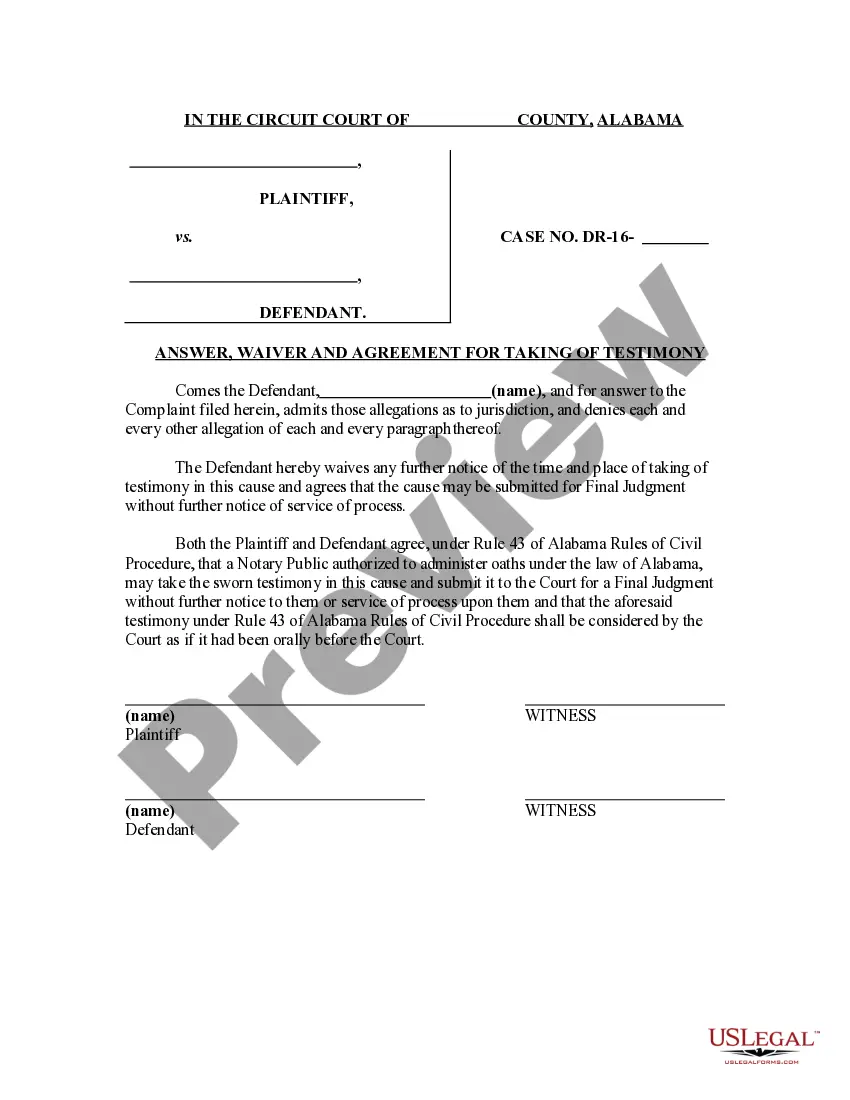
The Answer and Waiver - Consent to Judgment form is a legal document used by a defendant in a divorce case. This form allows the defendant to respond to the complaint while waiving certain legal rights, including the right to receive notice regarding specific discovery actions. It is designed to streamline the legal proceedings by allowing the case to proceed to judgment without additional notifications.
Key parts of this document
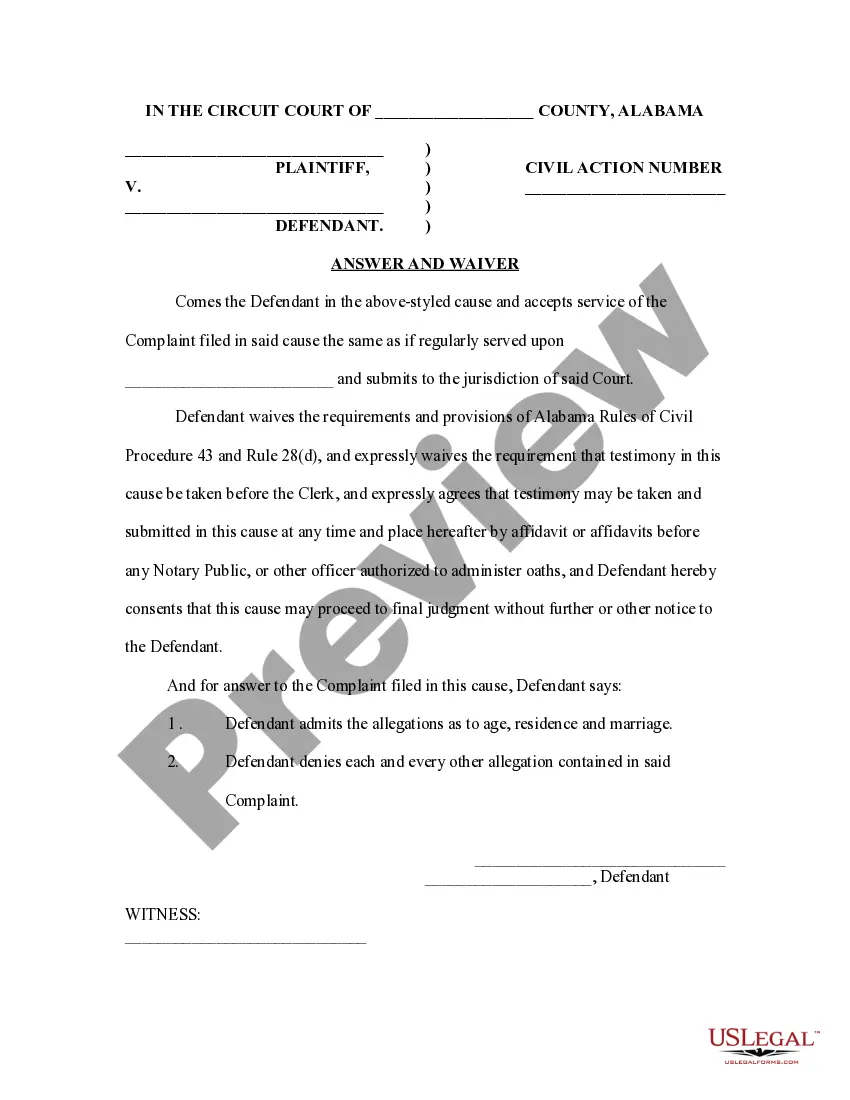
- Defendant's acceptance of service and jurisdiction of the court.
- Admission and denial of allegations presented in the complaint.
- Waiver of notice regarding interrogatories and cross-examination.
- Consent for testimony to be taken via affidavit.
- Agreement for proceeding to final judgment without further notice.

When this form is needed
This form is typically used when a defendant in a divorce case wants to formally respond to a complaint and expedite the proceedings by waiving certain rights. It is useful for defendants who do not contest the allegations and wish to avoid delays in the court process.
Intended users of this form
- Defendants in a divorce case who wish to respond to the complaint.
- Individuals who do not wish to contest the allegations made against them.
- Those looking to expedite legal proceedings through a consent to judgment.
Instructions for completing this form
- Identify the parties involved in the case, filling out the names of the plaintiff and defendant.
- Read and respond to each relevant paragraph of the complaint, specifying admissions and denials accordingly.
- Indicate acceptance of service and consent to the court's jurisdiction.
- Waive specific rights as stated, including notice of discovery and testimony methods.
- Sign the form in the presence of a witness to finalize the document.
Does this form need to be notarized?
This form does not typically require notarization unless specified by local law. Always check specific state requirements to ensure compliance.
Get your form ready online
Our built-in tools help you complete, sign, share, and store your documents in one place.
Make edits, fill in missing information, and update formatting in US Legal Forms—just like you would in MS Word.
Download a copy, print it, send it by email, or mail it via USPS—whatever works best for your next step.
Sign and collect signatures with our SignNow integration. Send to multiple recipients, set reminders, and more. Go Premium to unlock E-Sign.
If this form requires notarization, complete it online through a secure video call—no need to meet a notary in person or wait for an appointment.
We protect your documents and personal data by following strict security and privacy standards.

Make edits, fill in missing information, and update formatting in US Legal Forms—just like you would in MS Word.

Download a copy, print it, send it by email, or mail it via USPS—whatever works best for your next step.

Sign and collect signatures with our SignNow integration. Send to multiple recipients, set reminders, and more. Go Premium to unlock E-Sign.

If this form requires notarization, complete it online through a secure video call—no need to meet a notary in person or wait for an appointment.

We protect your documents and personal data by following strict security and privacy standards.
Common mistakes to avoid
- Failing to accurately admit or deny allegations, which may impact the case outcome.
- Not providing sufficient signatures or dating the document.
- Overlooking specific waivers related to rights, leading to unwanted delays.
Why use this form online
- Convenient access to a legally vetted document, ensuring compliance with state regulations.
- Editable format allows for personalization based on specific case needs.
- Quick download eliminates delays associated with traditional legal assistance.
Summary of main points
- The Answer and Waiver - Consent to Judgment allows defendants in divorce cases to respond effectively to complaints.
- Using this form can expedite divorce proceedings by waiving certain rights.
- It is essential to accurately complete and sign this form to avoid common mistakes.
Looking for another form?

Form popularity
FAQ
Used by a defendant in a divorce to respond to the complaint while waiving certain rights and allowing judgment to move forward. The form covers acceptance of service and jurisdiction, admission or denial of allegations, waiver of notice for some discovery actions, and testimony by affidavit, with an agreement to proceed to final judgment without further notice.
Infidelity is not determined by this form. The Alabama Answer and Waiver - Consent to Judgment focuses on how a defendant responds to the complaint and waives certain rights to speed the case, not on fault-based issues. If fault facts are relevant, they would be handled in the court record outside of this consent to judgment.
This form does not govern asset distribution. It is used to respond to the complaint and, if desired, to consent to judgment and waive certain notices, not to resolve property division. Asset issues are typically handled later in the divorce case through separate filings and orders.
Using this form correctly is about timely response and consent to judgment; it emphasizes speed to final resolution rather than contesting every fact. A common legal misstep is failing to file an appropriate response to the complaint, which can delay the case. This form helps expedite proceedings when the defendant does not contest the allegations.
This form is a procedural tool, not a counseling guide. The biggest legal regrets for many litigants are failing to respond promptly and to obtain counsel early. By using the Alabama Answer and Waiver - Consent to Judgment, a defendant can respond and potentially move toward judgment without added notices.
The key difference is that this form includes a waiver of notice regarding discovery (interrogatories and cross-examination) and permits testimony by affidavit, plus an agreement to proceed to final judgment without further notice. A standard divorce answer typically does not include these waivers or consent to judgment.