New Jersey Last Will and Testament for Domestic Partner with Minor Children
Overview of this form
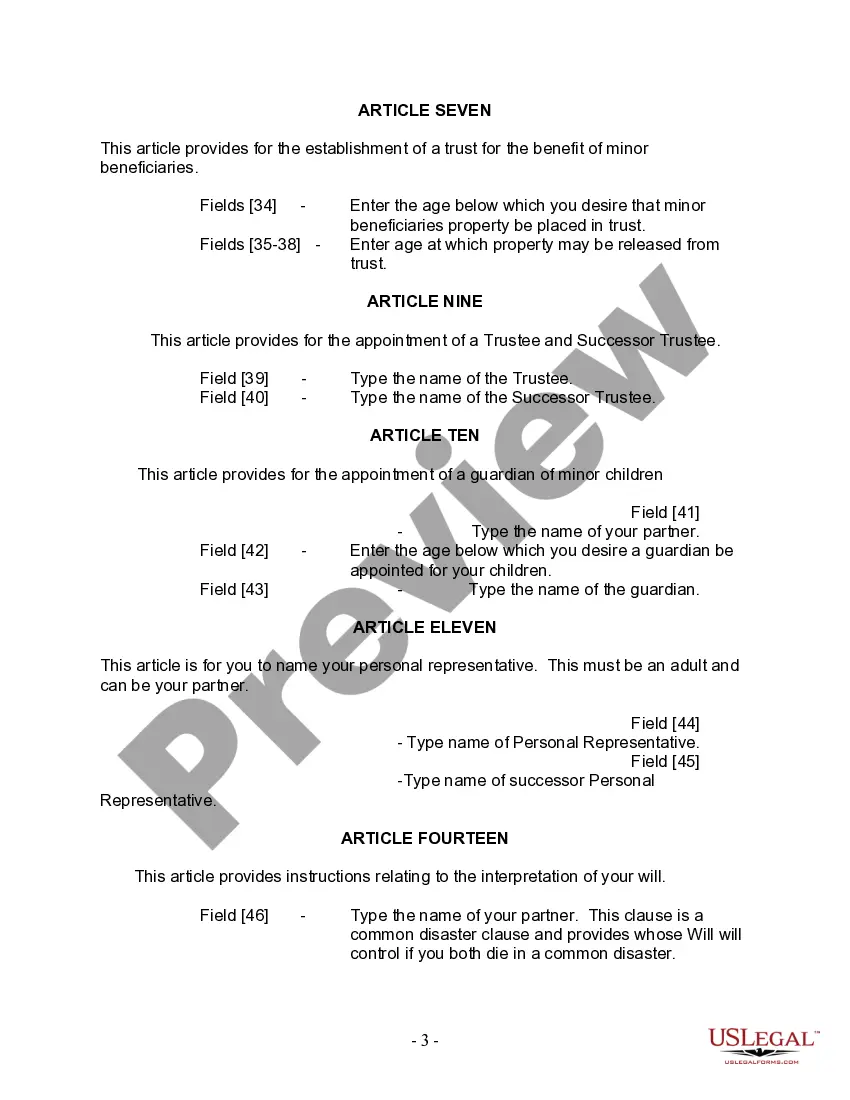
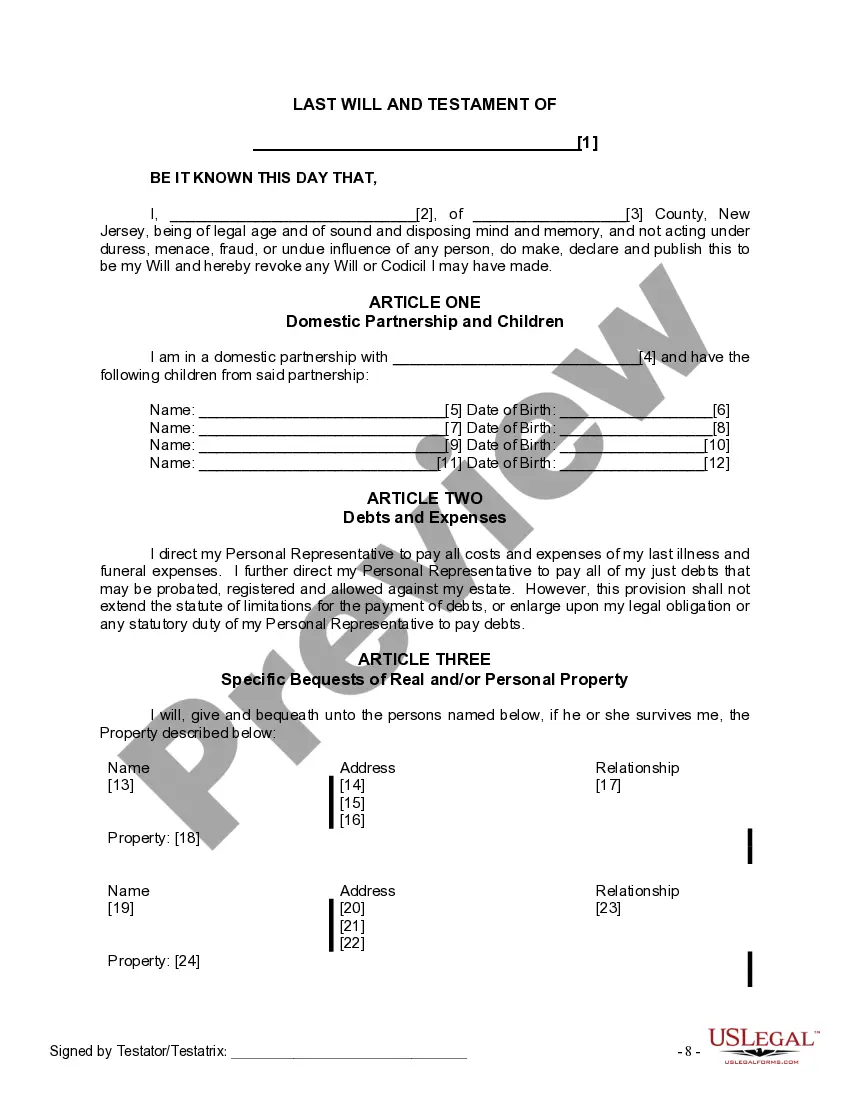
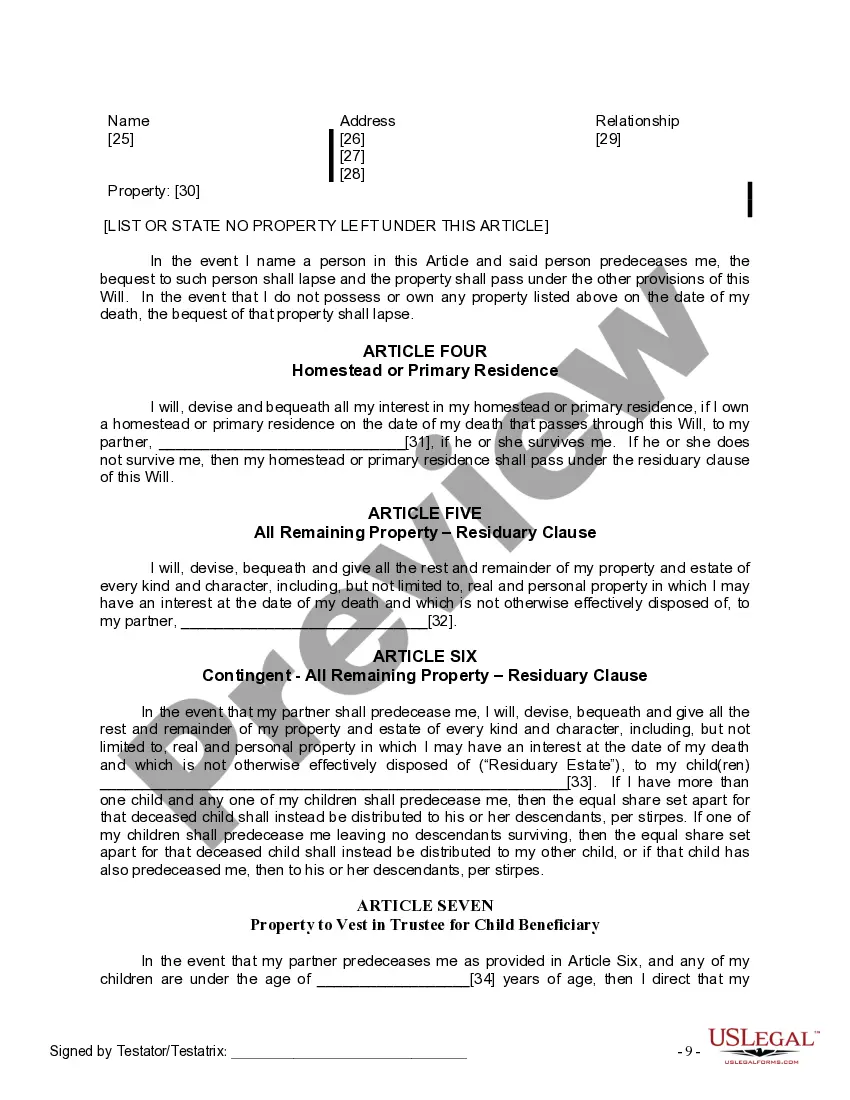
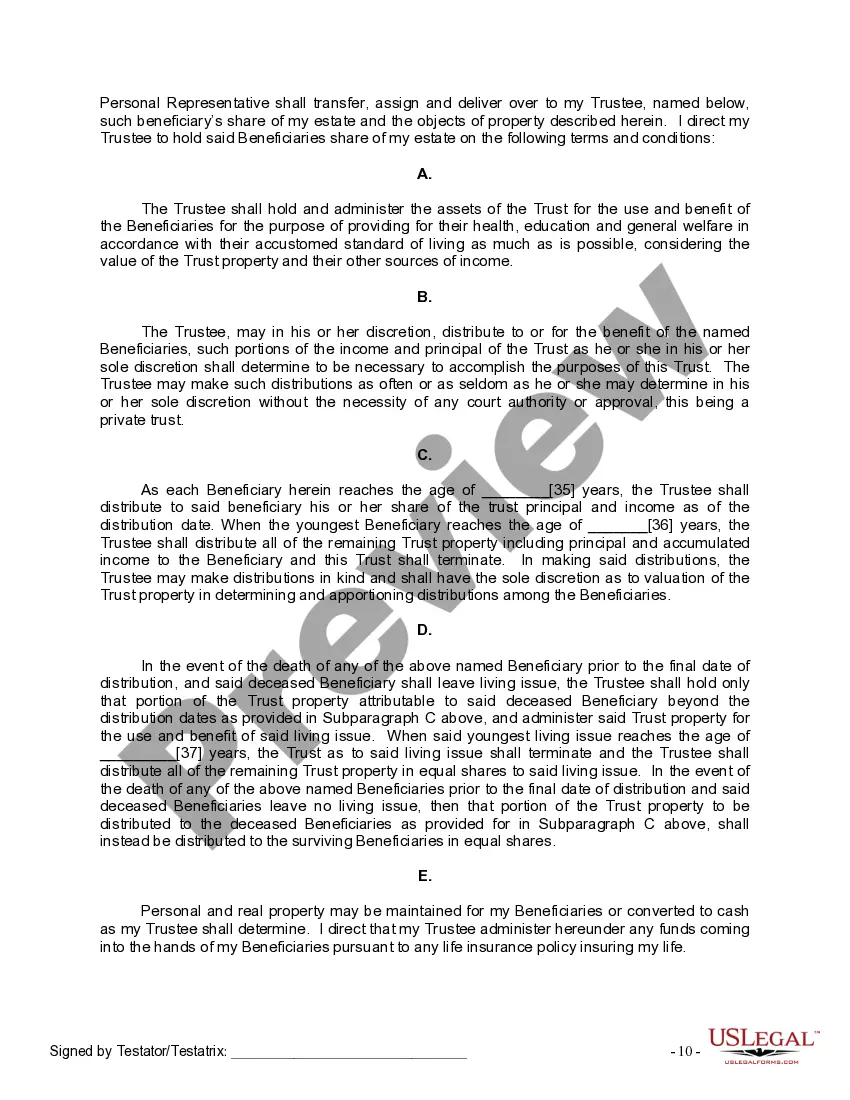
The Last Will and Testament for Domestic Partner with Minor Children is a legal document that allows individuals in a domestic partnership to specify how their assets will be distributed upon their death. This form is specially designed for partners who have minor children, ensuring that provisions are in place for both the partner and the children, including establishing trusts for the minors. Unlike a standard will, this form addresses the unique needs of domestic partnerships, making it a tailored solution for such families.
Form components explained
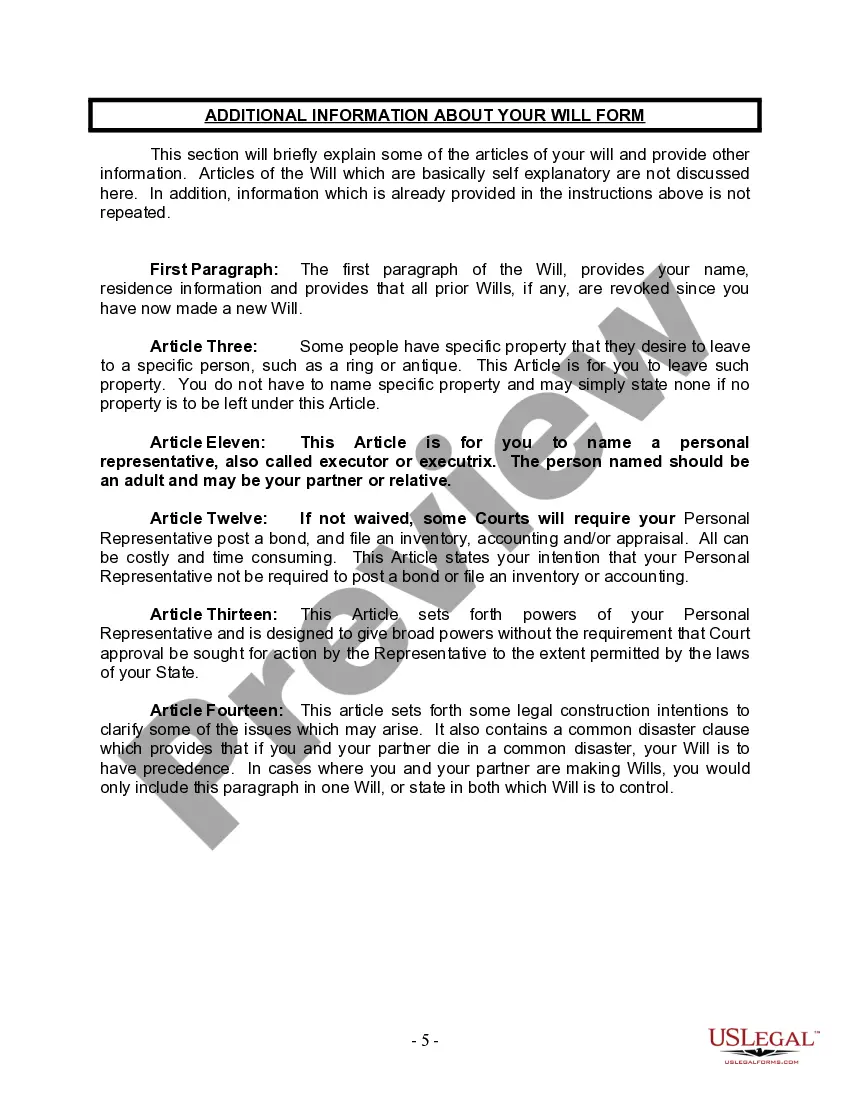
- Appointment of a personal representative or executor to manage the estate.
- Designation of beneficiaries who will receive specific assets.
- Establishment of a trust for minor childrenâs inheritance.
- Appointment of a guardian for minor children if both parents pass away.
- Instructions regarding debts and funeral expenses.
- Provisions for the distribution of remaining assets after specific bequests.



When this form is needed
This form should be used when individuals in a domestic partnership have minor children and want to ensure their assets are distributed according to their wishes after death. If you want to provide for your partner and children, appoint a guardian for your minor children, or establish a trust for their benefit, this Last Will and Testament is essential. It is also useful for updating existing wills to reflect changes in your personal situation or to ensure it meets legal requirements in your state.
Who can use this document
- Individuals in a domestic partnership with minor children.
- People looking to designate how their assets will be managed and distributed after death.
- Partners who want to specify guardianship arrangements for their children.
- Anyone needing a legally valid method to ensure their wishes are respected regarding estate management.
How to prepare this document
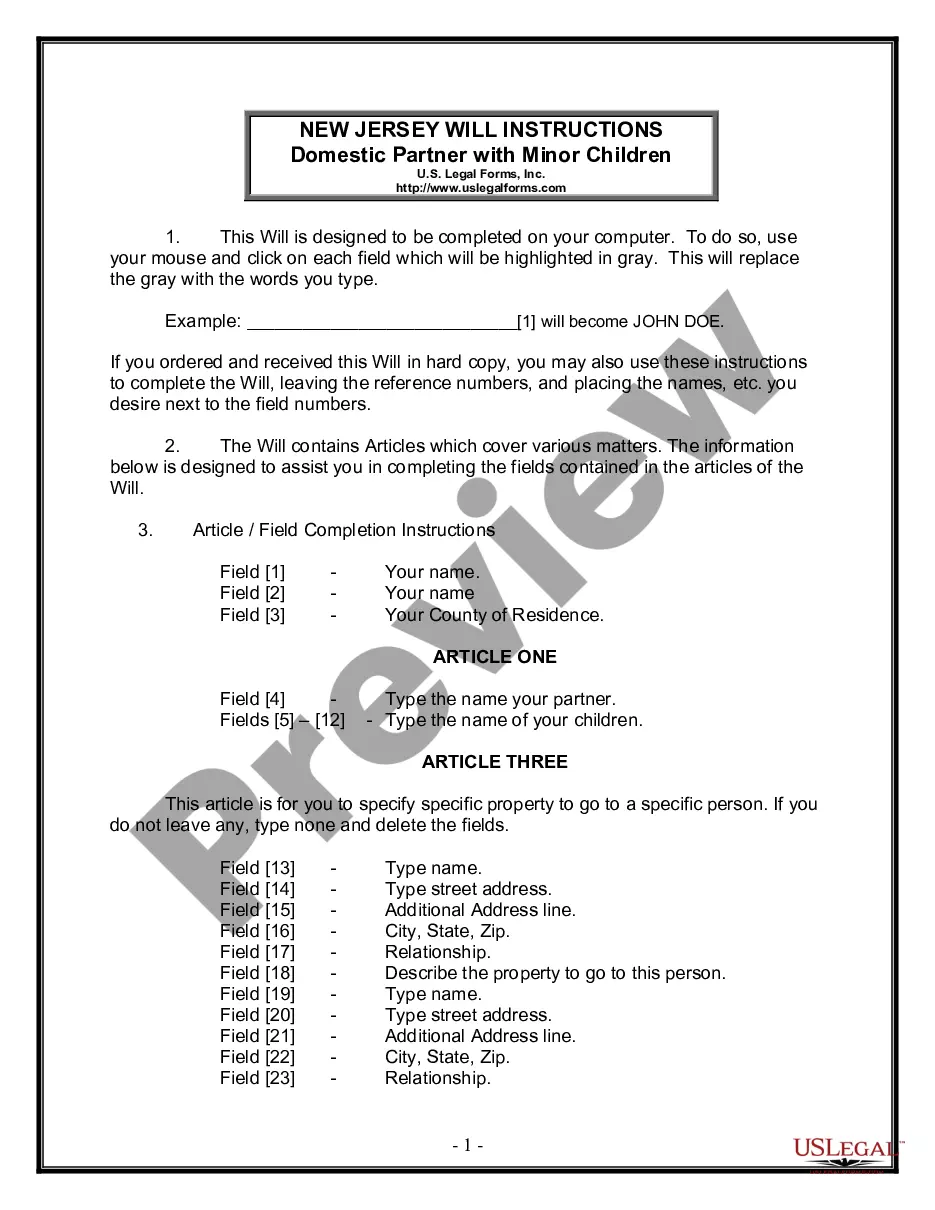
- Enter your personal information, including your name and county of residence.
- Specify the name of your domestic partner and your children.
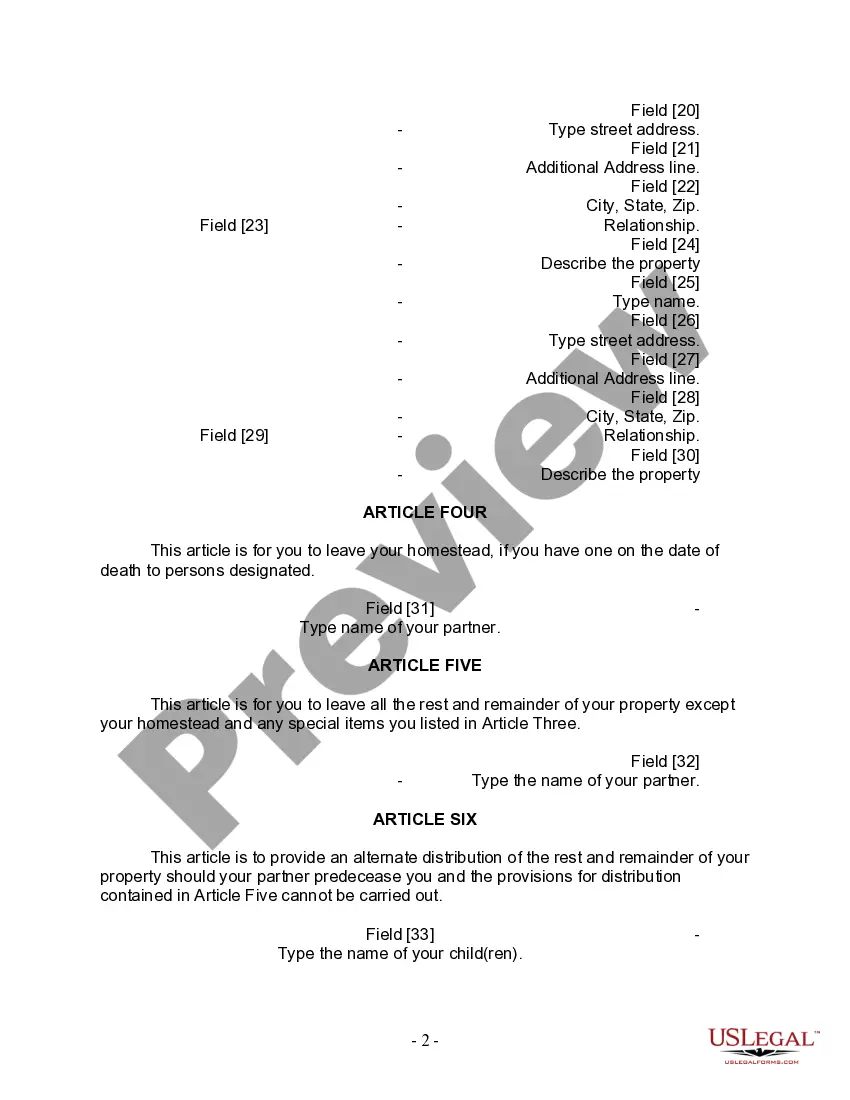
- Designate beneficiaries and describe any specific property you wish to bequeath.
- Complete essential sections regarding guardianship and trust for minor children.
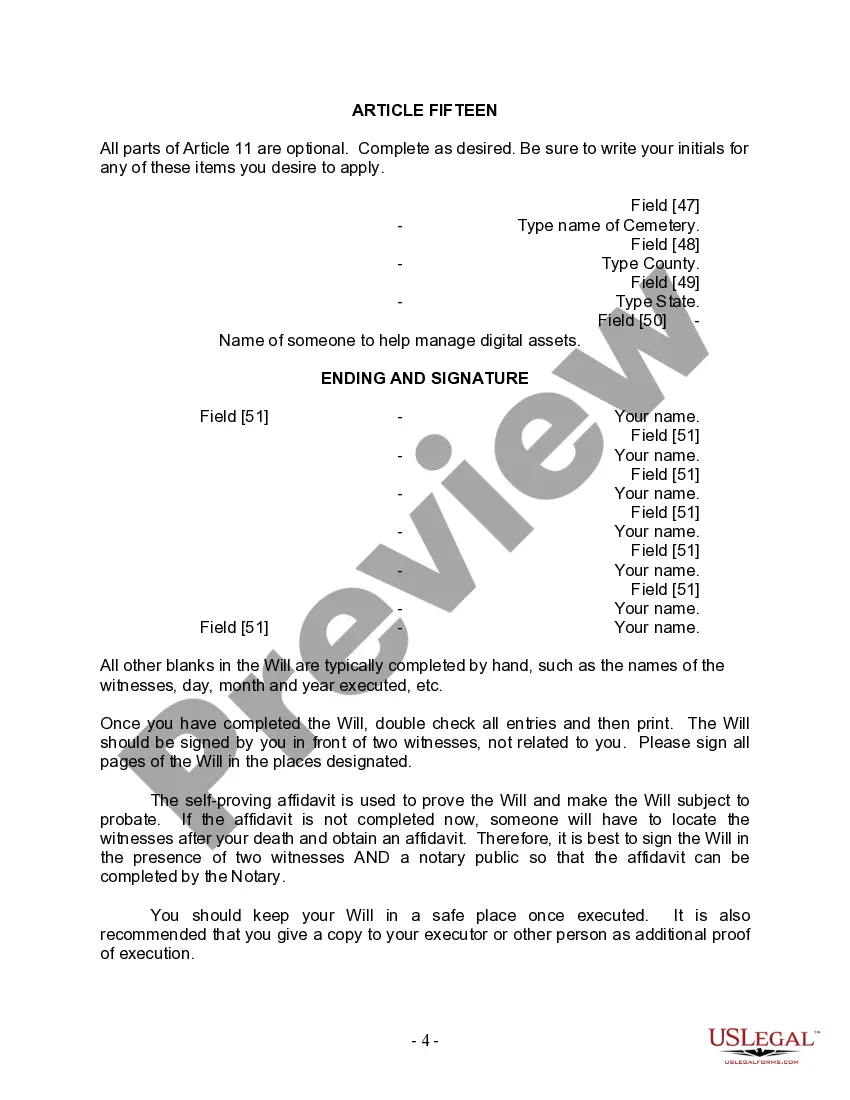
- Have the document signed in front of two witnesses and a notary if required.
- Store the completed will in a safe place and provide copies to relevant individuals, like your executor.
Notarization requirements for this form
Yes, this form must be notarized to be legally valid. The notarization ensures that the will can be admitted to probate without additional evidence of execution. US Legal Forms offers integrated online notarization services, allowing you to securely notarize your document via video call, making the process convenient and efficient.
Get your form ready online
Our built-in tools help you complete, sign, share, and store your documents in one place.
Make edits, fill in missing information, and update formatting in US Legal Forms—just like you would in MS Word.
Download a copy, print it, send it by email, or mail it via USPS—whatever works best for your next step.
Sign and collect signatures with our SignNow integration. Send to multiple recipients, set reminders, and more. Go Premium to unlock E-Sign.
If this form requires notarization, complete it online through a secure video call—no need to meet a notary in person or wait for an appointment.
We protect your documents and personal data by following strict security and privacy standards.

Make edits, fill in missing information, and update formatting in US Legal Forms—just like you would in MS Word.

Download a copy, print it, send it by email, or mail it via USPS—whatever works best for your next step.

Sign and collect signatures with our SignNow integration. Send to multiple recipients, set reminders, and more. Go Premium to unlock E-Sign.

If this form requires notarization, complete it online through a secure video call—no need to meet a notary in person or wait for an appointment.

We protect your documents and personal data by following strict security and privacy standards.
Typical mistakes to avoid
- Failing to sign the will in the presence of witnesses.
- Not updating the will after significant life changes, such as a new child or a change in partnership.
- Forgetting to designate a guardian for minor children.
- Leaving out important details about specific bequests.
- Assuming that a verbal agreement about asset distribution is sufficient without a written will.
Advantages of online completion
- Convenient access to legal templates that can be customized from the comfort of your home.
- Ability to edit information as needed before finalizing the document.
- Drafted by licensed attorneys to ensure legal integrity and compliance.
- Quick turnaround time, allowing for immediate use after completion.
Main things to remember
- This is a comprehensive Last Will and Testament tailored for domestic partners with minor children.
- It includes essential provisions for asset distribution, guardianship, and trust management.
- Proper execution, including witness and notarization, ensures legal validity.
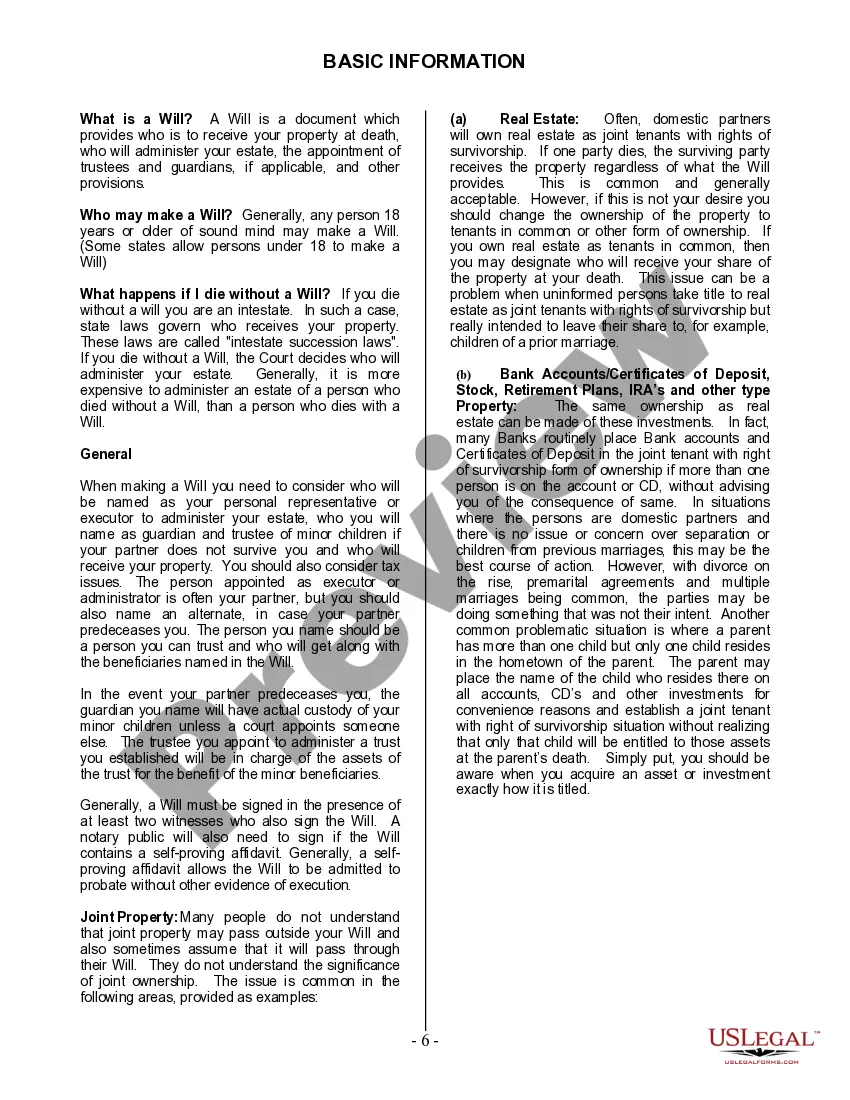
- Using this form can prevent intestate succession issues and provide clarity for your loved ones.
Looking for another form?
Form popularity
FAQ
Bank accounts. Brokerage or investment accounts. Retirement accounts and pension plans. A life insurance policy.
1Create the initial document. Start by titling the document Last Will and Testament" and including your full legal name and address.2Designate an executor.3Appoint a guardian.4Name the beneficiaries.5Designate the assets.6Ask witnesses to sign your will.7Store your will in a safe place.
Find an online template or service. Make a list of your assets. Be specific about who gets what. If you have minor children, choose a guardian. Give instructions for your pet. Choose an executor. Name a 'residuary beneficiary' List your funeral preferences.
At least two competent witnesses must have signed the will for it to be valid. In most states, the witnesses must have both watched the testator sign the will and then signed it themselves; in other states, it's enough if the will maker told them his or her own signature was valid and asked them to sign later.
Include personal identifying information. Include a statement about your age and mental status. Designate an executor. Decide who will take care of your children. Choose your beneficiaries. List your funeral details. Sign and date your Last Will and Testament.
You don't have to get a lawyer to draft your will. It's perfectly legal to write your own will, and any number of products exist to help you with this, from software programs to will-writing kits to the packet of forms you can pick up at your local drugstore.
You don't have to have a lawyer to create a basic will you can prepare one yourself. It must meet your state's legal requirements and should be notarized.But be careful: For anything complex or unusual, like distributing a lot of money or cutting someone out, you'd do best to hire a lawyer.
What makes a will legal?The will must be signed by at least two witnesses. The witnesses must watch you sign the will, though they don't need to read it. Your witnesses, in most states, must be people who won't inherit anything under the will.
You can make your own will in California, using Nolo's do-it-yourself online will or will software. You may, however, want to consult a lawyer in some situations; for example, if you suspect your will might be contested or if you want to disinherit your spouse, you should talk with an attorney.