BANK THEFT / 18 U.S.C. Sec. 2113(b)
About this form
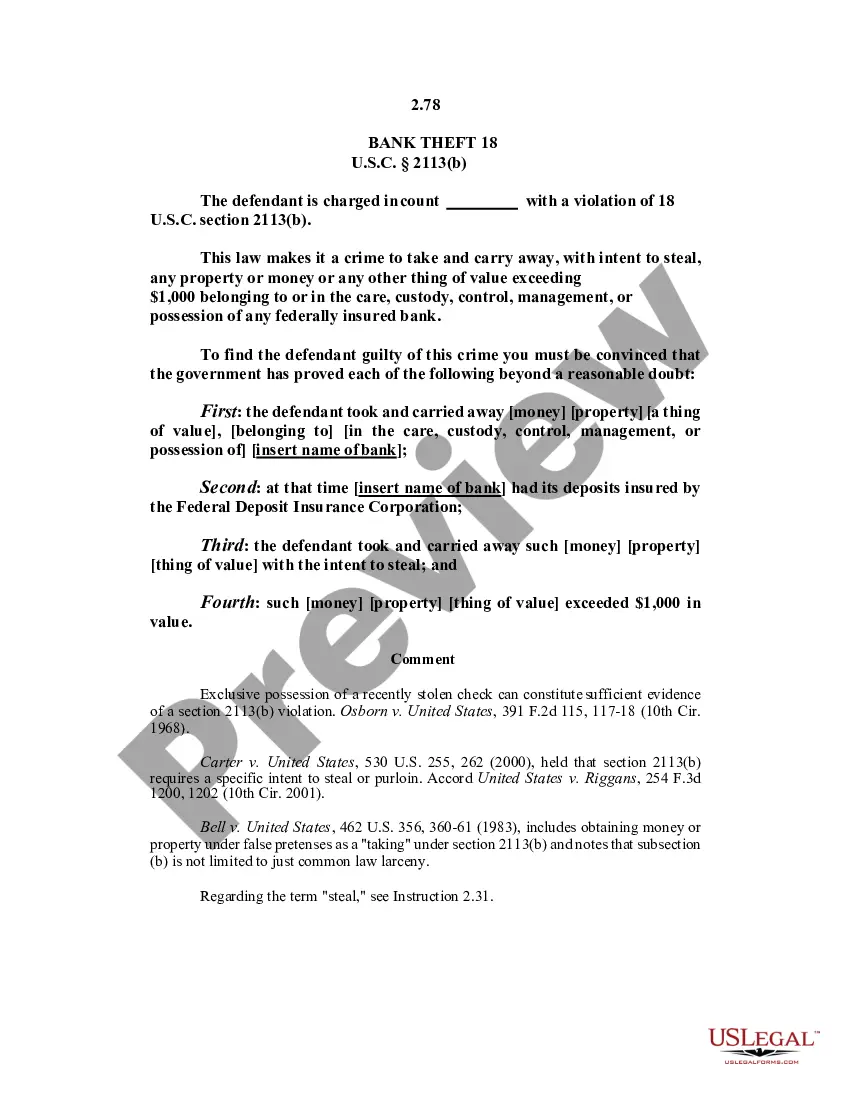
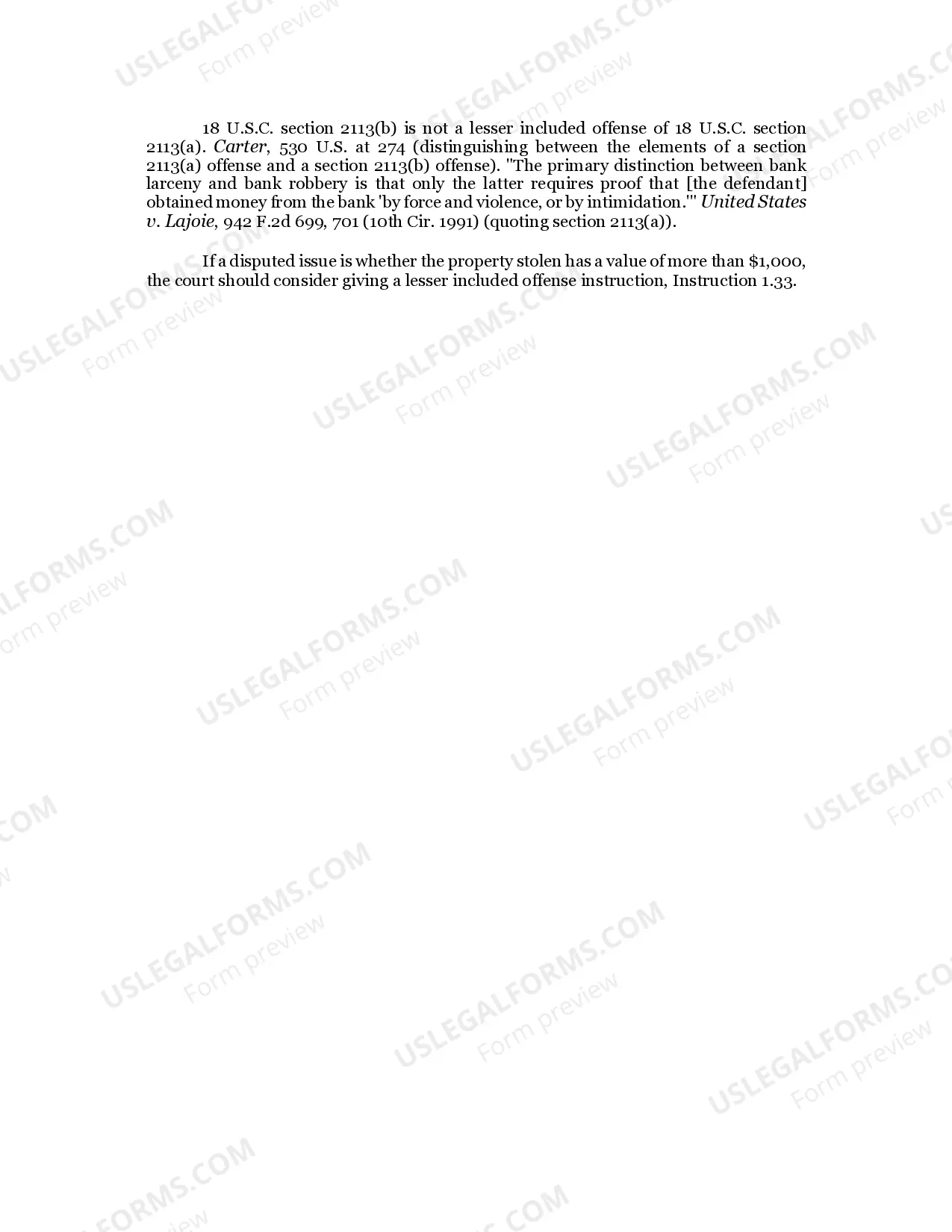
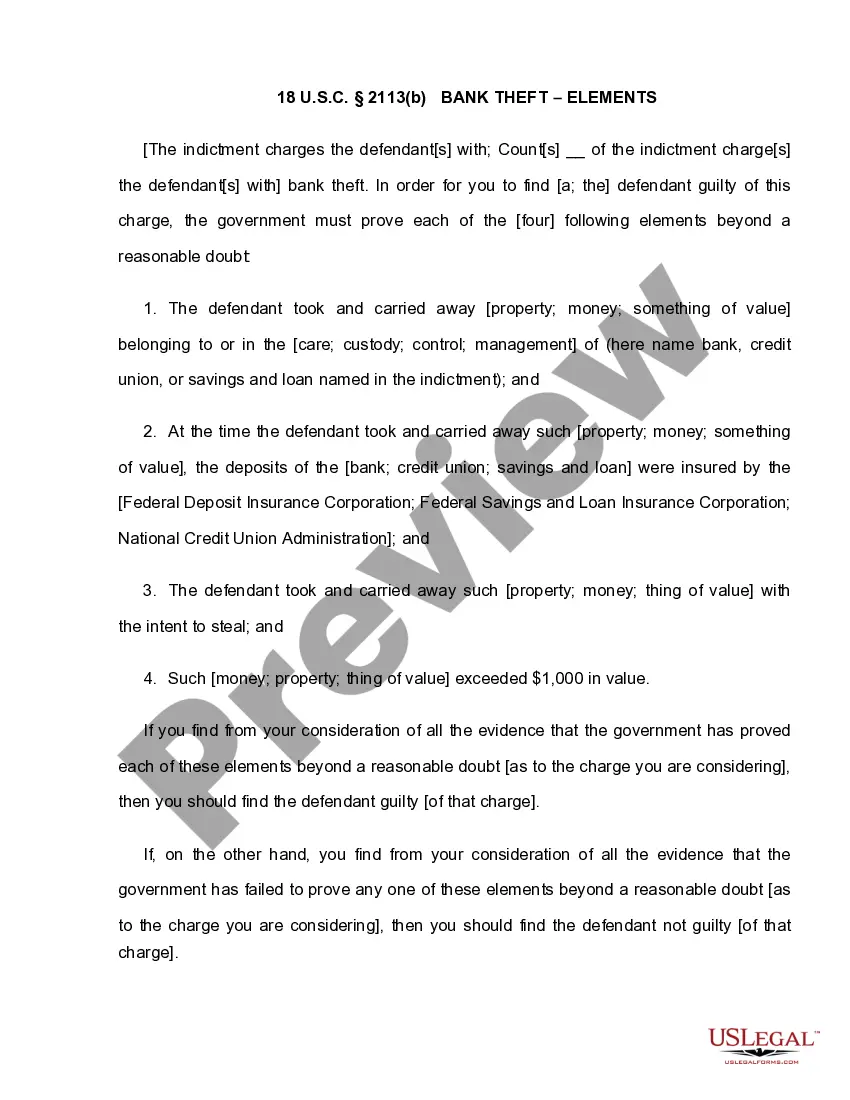
The Bank Theft form, based on 18 U.S.C. Sec. 2113(b), is a legal document used to charge individuals who unlawfully take property exceeding $1,000 from federally insured banks with the intent to steal. This form highlights the critical elements required for prosecution under this statute and distinguishes it from other offenses, particularly bank robbery, which involves force or intimidation.
Form components explained
- Identification of the defendant and the specific count of theft.
- Details of the stolen property or money, including value exceeding $1,000.
- Confirmation that the property belonged to a federally insured bank.
- Documentation of the defendantâs intent to steal at the time of the offense.
- Consideration of exclusive possession of stolen property as evidence.
When to use this form
This form is necessary when there is evidence of theft exceeding $1,000 from a federally insured bank. It should be utilized in criminal proceedings where the defendant is being charged with bank theft under federal law. This form is crucial in ensuring all legal requirements are met for successful prosecution.
Who needs this form
- Prosecutors pursuing criminal charges for bank theft.
- Legal professionals preparing cases involving allegations of theft from federally insured banks.
- Law enforcement officials documenting the circumstances surrounding a theft case.
Steps to complete this form
- Identify the defendant and state the specific count of bank theft.
- Fill in the details of the property taken, including its description and value.
- Include the name of the federally insured bank from which the theft occurred.
- Clearly state the defendant's intent to steal at the time of the act.
- Ensure that all relevant evidence supporting the case is documented.
Notarization guidance
This form does not typically require notarization unless specified by local law.
Get your form ready online
Our built-in tools help you complete, sign, share, and store your documents in one place.
Make edits, fill in missing information, and update formatting in US Legal Forms—just like you would in MS Word.
Download a copy, print it, send it by email, or mail it via USPS—whatever works best for your next step.
Sign and collect signatures with our SignNow integration. Send to multiple recipients, set reminders, and more. Go Premium to unlock E-Sign.
If this form requires notarization, complete it online through a secure video call—no need to meet a notary in person or wait for an appointment.
We protect your documents and personal data by following strict security and privacy standards.

Make edits, fill in missing information, and update formatting in US Legal Forms—just like you would in MS Word.

Download a copy, print it, send it by email, or mail it via USPS—whatever works best for your next step.

Sign and collect signatures with our SignNow integration. Send to multiple recipients, set reminders, and more. Go Premium to unlock E-Sign.

If this form requires notarization, complete it online through a secure video call—no need to meet a notary in person or wait for an appointment.

We protect your documents and personal data by following strict security and privacy standards.
Mistakes to watch out for
- Failing to prove the value of the stolen property exceeds $1,000.
- Omitting the name of the federally insured bank.
- Not establishing a clear intention to steal by the defendant.
- Neglecting to include supporting evidence for the charge.
Benefits of completing this form online
- Convenient access and immediate download of the legal form.
- Easily fillable template reduces errors in legal documentation.
- Reliability in formatting, ensuring compliance with legal requirements.
Looking for another form?
Form popularity
FAQ
Under federal law, bank robbery is a serious offense and you could be sentenced for up to 20 years in a federal prison, a fine up to $250,000, or both. If you used violence to accomplish the bank robbery, you could face more severe penalties.
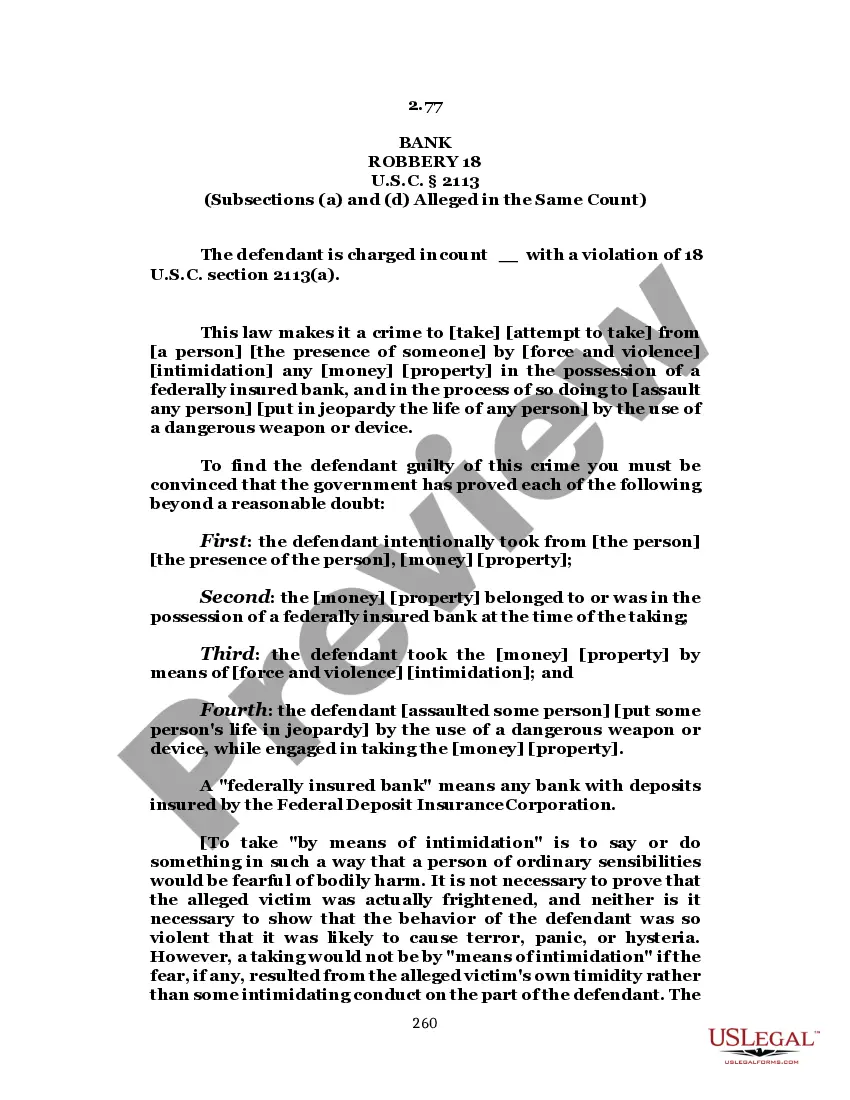
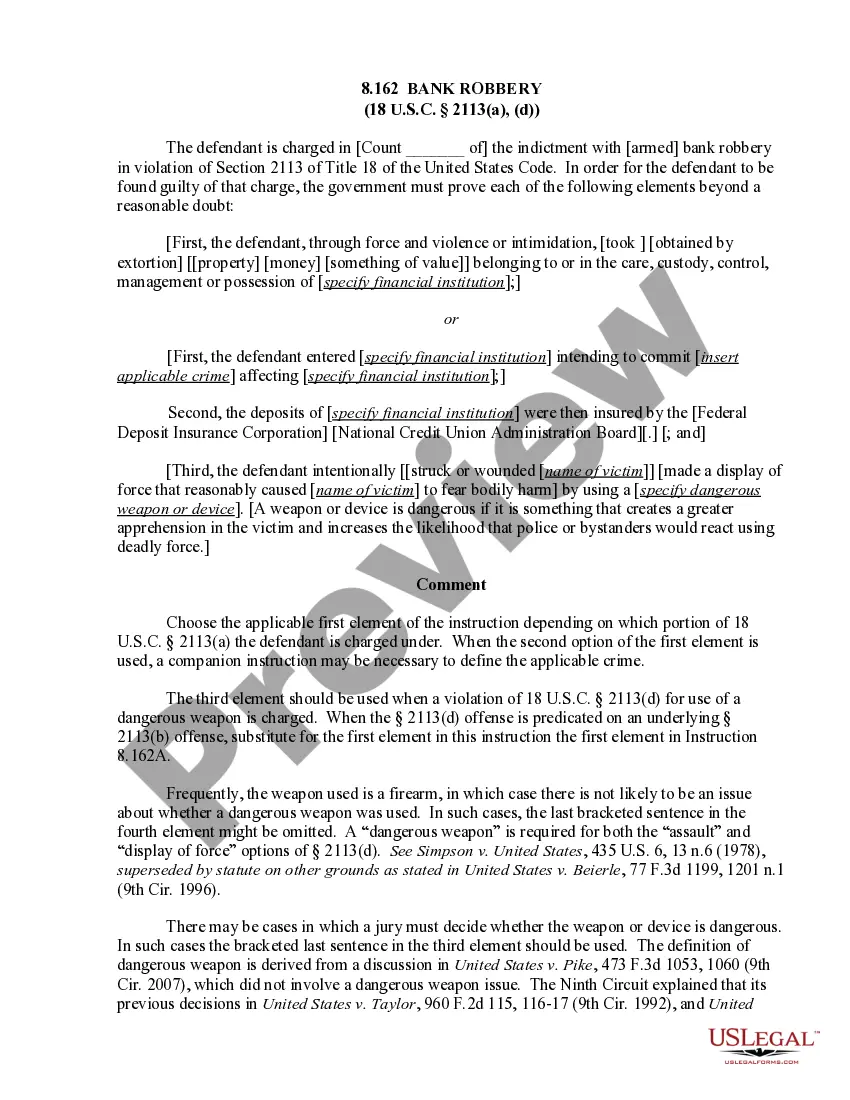
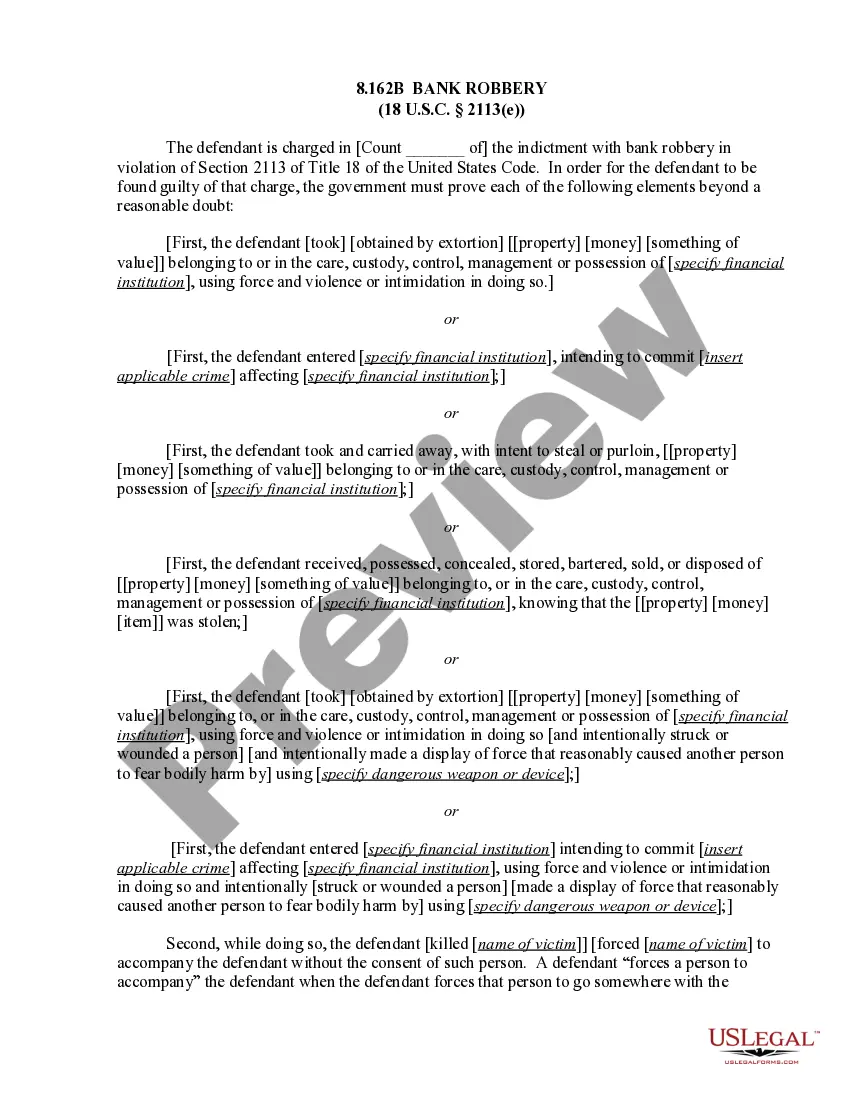
§ 2113 of the United States Code. Under section (a) of this statute, bank robbery is defined as: ?using force, violence, or intimidation to take, attempt to take, or extort any property or money in the possession of any bank, credit union, or savings and loan association.?
Title 18, section 2113 of the United States Code is the Federal criminal bank robbery statute.
Consequently, many bank robbers are caught the same day. The clearance rate for bank robbery is among the highest of all crimes, at nearly 60%. The urban location of the crime also contributes to its repeat victimization profile, a measure of how quickly a crime victim will suffer a repeat of the original crime.
Bank Robbery -- General Overview. Title 18, section 2113 of the United States Code is the Federal criminal bank robbery statute. Section 2113 outlines and defines prohibited criminal conduct vis-a-vis federally protected financial institutions and concomitant penalties.
If you are convicted of federal bank robbery in California, you face up to 20 years in state prison. If you are found guilty of felony bank robbery, you may face the following penalties: Up to 20 years in federal prison. Up to $250,000 in fines.