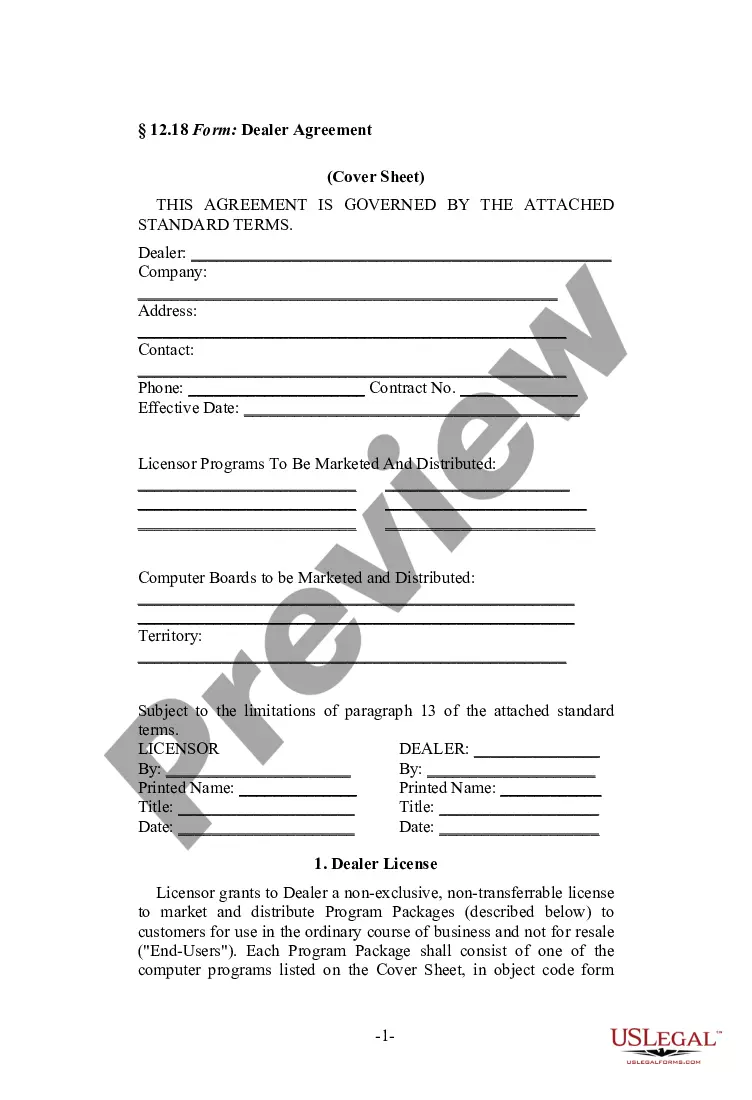
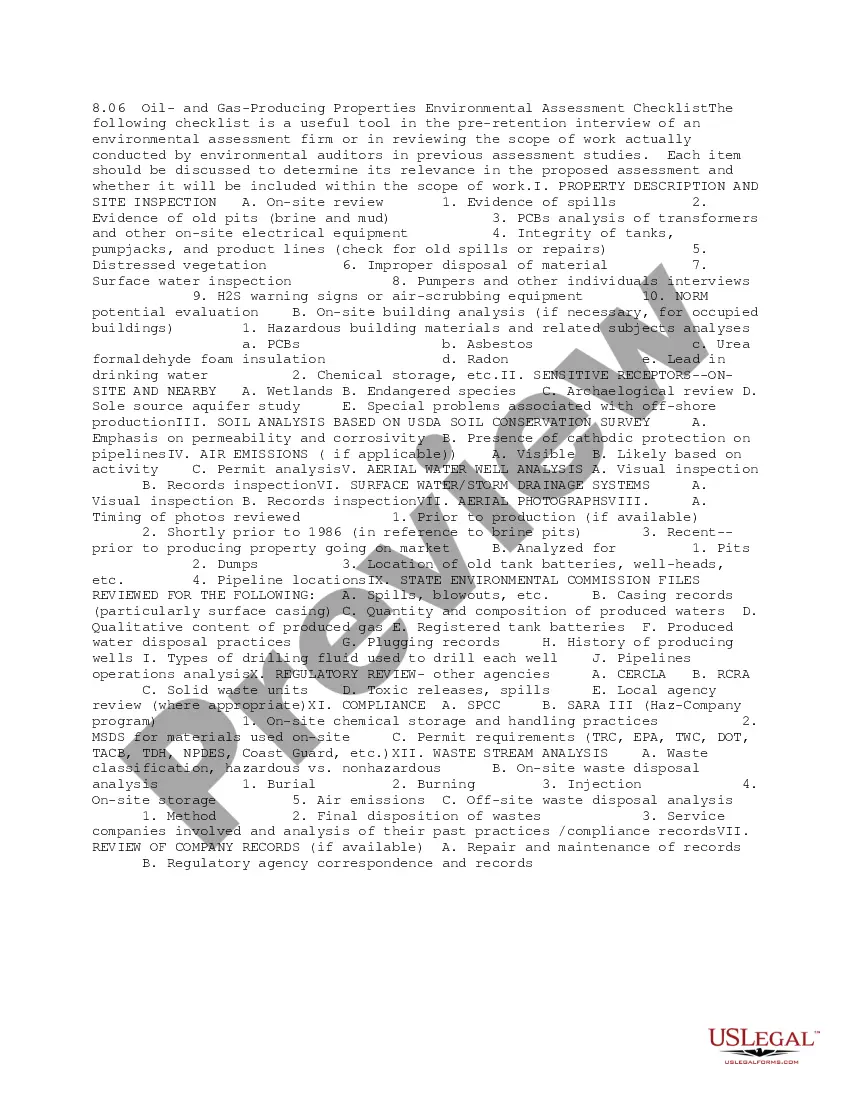
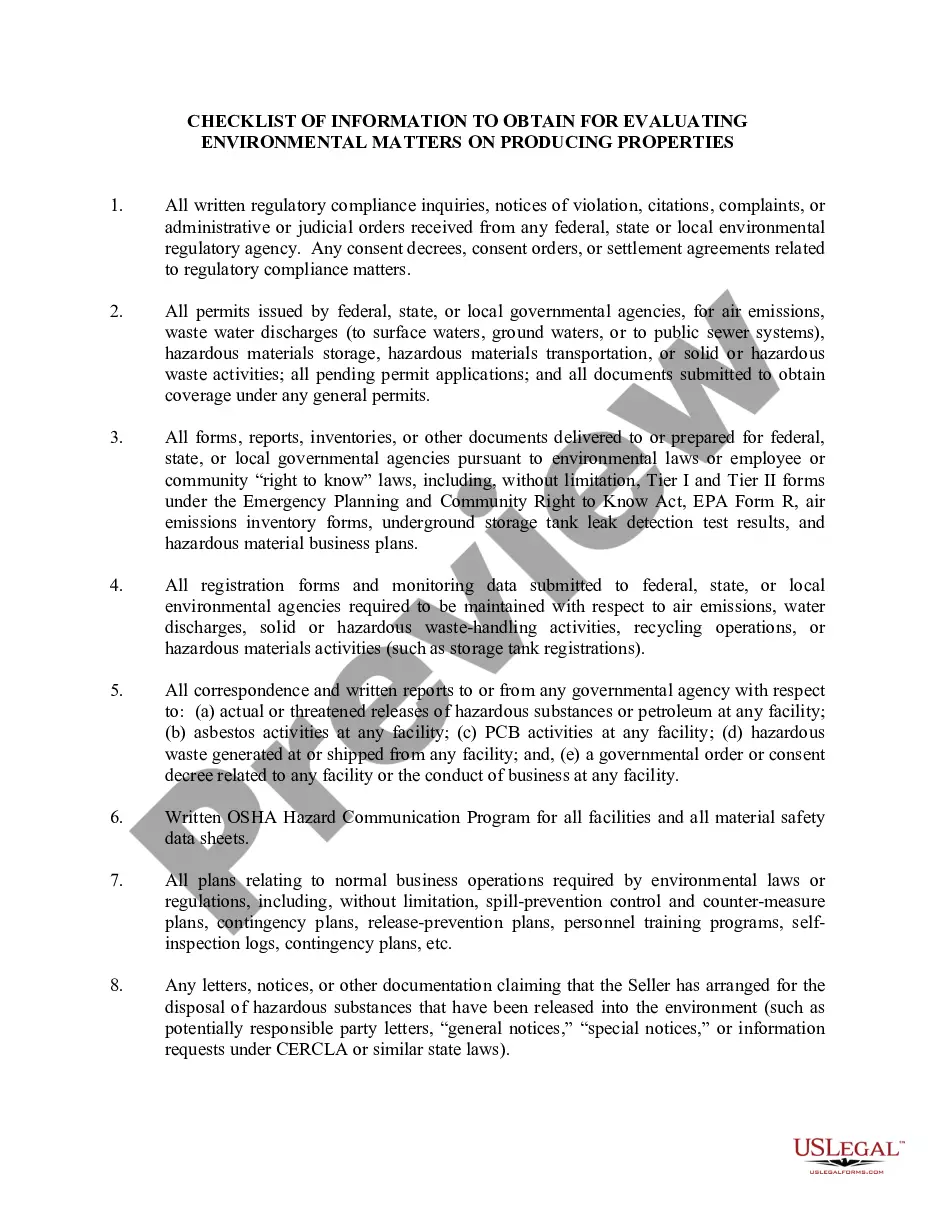
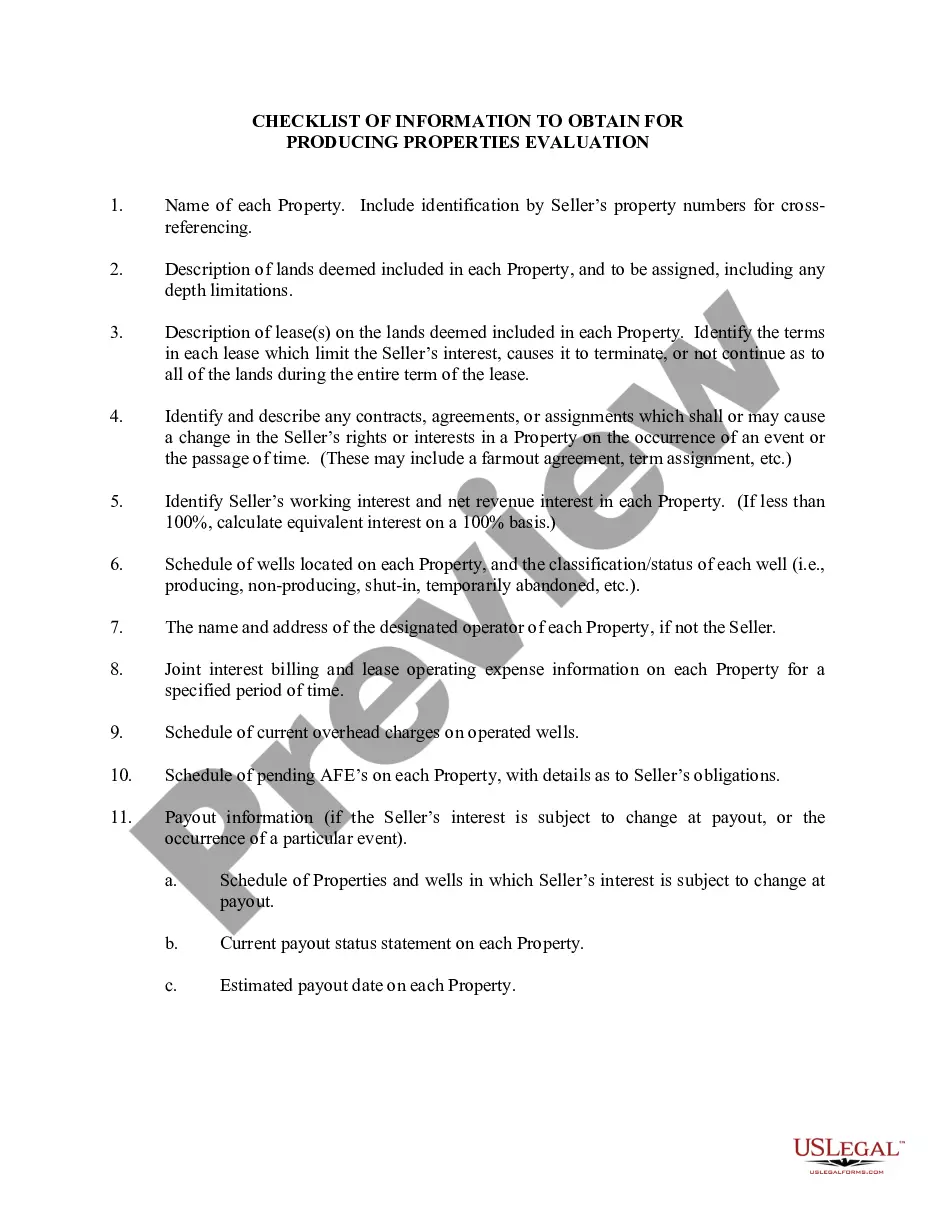
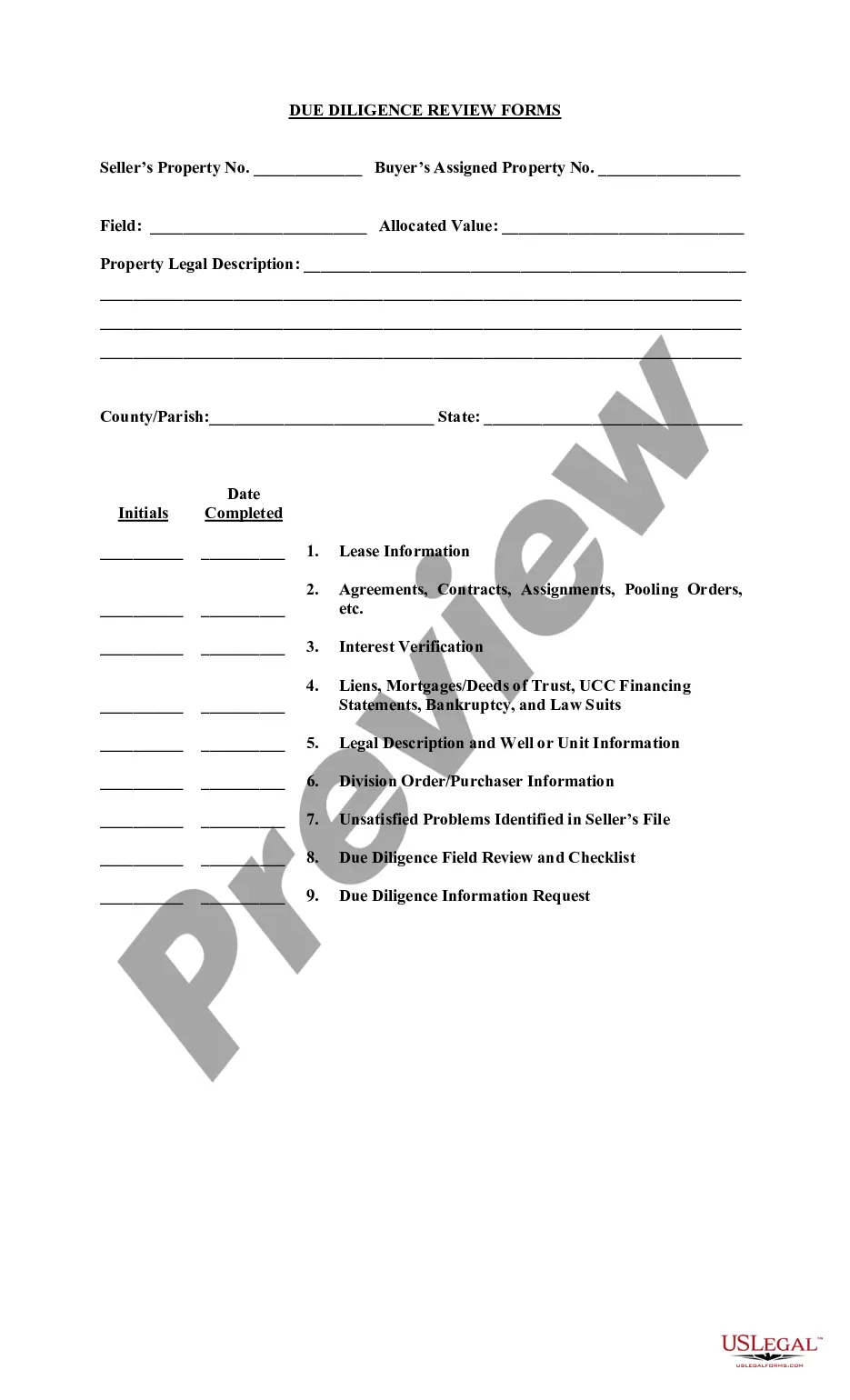
This due diligence checklist can be used in the pre-retention interview of an environmental assessment firm or in reviewing the scope of work conducted by environmental auditors in previous assessment studies.
New Jersey Oil and Gas Producing Properties Environmental Assessment Checklist
Category:
State:
Multi-State
Control #:
US-DD0806
Format:
Word;
PDF;
Rich Text
Instant download
Description
Get your form ready online
Our built-in tools help you complete, sign, share, and store your documents in one place.
Built-in online Word editor
Make edits, fill in missing information, and update formatting in US Legal Forms—just like you would in MS Word.
Export easily
Download a copy, print it, send it by email, or mail it via USPS—whatever works best for your next step.
E-sign your document
Sign and collect signatures with our SignNow integration. Send to multiple recipients, set reminders, and more. Go Premium to unlock E-Sign.
Notarize online 24/7
If this form requires notarization, complete it online through a secure video call—no need to meet a notary in person or wait for an appointment.
Store your document securely
We protect your documents and personal data by following strict security and privacy standards.

Make edits, fill in missing information, and update formatting in US Legal Forms—just like you would in MS Word.

Download a copy, print it, send it by email, or mail it via USPS—whatever works best for your next step.

Sign and collect signatures with our SignNow integration. Send to multiple recipients, set reminders, and more. Go Premium to unlock E-Sign.

If this form requires notarization, complete it online through a secure video call—no need to meet a notary in person or wait for an appointment.

We protect your documents and personal data by following strict security and privacy standards.
Looking for another form?

How to fill out Oil And Gas Producing Properties Environmental Assessment Checklist?
If you want to fully, download, or print valid document templates, utilize US Legal Forms, the largest collection of legal forms available online.
Use the site's intuitive and user-friendly search to find the documents you require. Numerous templates for business and personal purposes are categorized by type and region, or keywords.
Leverage US Legal Forms to access the New Jersey Oil and Gas Producing Properties Environmental Assessment Checklist with just a few clicks.
Step 5. Complete the transaction. You can use your credit card or PayPal account to finalize the payment.
Step 6. Select the format of the legal form and download it to your device. Step 7. Fill out, edit, and print or sign the New Jersey Oil and Gas Producing Properties Environmental Assessment Checklist. Each legal document template you purchase is yours permanently. You have access to every form you downloaded in your account. Visit the My documents section and choose a form to print or download again. Complete and download, and print the New Jersey Oil and Gas Producing Properties Environmental Assessment Checklist with US Legal Forms. There are millions of professional and state-specific forms you can utilize for your business or personal needs.
- If you are already a US Legal Forms customer, Log In to your account and click the Download button to locate the New Jersey Oil and Gas Producing Properties Environmental Assessment Checklist.
- You can also access forms you have previously downloaded in the My documents section of your account.
- If you are using US Legal Forms for the first time, refer to the instructions below.
- Step 1. Ensure you have selected the form for the correct city/state.
- Step 2. Use the Review method to review the form's content. Be sure to read the description.
- Step 3. If you are not satisfied with the form, use the Search field at the top of the screen to find other variants of the legal form template.
- Step 4. Once you have found the form you need, click the Buy now button. Choose the pricing plan you prefer and enter your credentials to register for an account.
Form popularity
FAQ
The response action outcome (RAO) represents the conclusions drawn from assessments and remedial actions taken at contaminated sites. An RAO determines whether the site meets the necessary cleanup standards set by NJDEP. It provides assurance that potential risks to human health and the environment have been addressed. To understand and document your RAO effectively, consider referencing the New Jersey Oil and Gas Producing Properties Environmental Assessment Checklist.
The final remediation document (FRD) for NJDEP is a crucial report that certifies that all necessary remediation activities have been completed at a site. This document verifies compliance with state environmental standards and protects public health. An FRD ensures that the site is safe for current and future use. Utilizing the New Jersey Oil and Gas Producing Properties Environmental Assessment Checklist can help you navigate the documentation process and ensure all requirements are met.
To report a spill to NJDEP, you should immediately contact the NJDEP's hotline and provide details about the location, type of material spilled, and the quantity. Timely reporting is essential for a swift response and mitigates potential harm to the environment. The NJDEP has specific guidelines outlining the information needed when reporting spills. Employing the New Jersey Oil and Gas Producing Properties Environmental Assessment Checklist can help ensure you gather all necessary details when making a report.
In New Jersey, well water tests are required under certain conditions to ensure the safety and quality of drinking water. Homeowners with private wells should test their water regularly for contaminants, especially if there is a nearby spill or other environmental concern. Testing helps identify any risks to health and enables timely intervention. The New Jersey Oil and Gas Producing Properties Environmental Assessment Checklist can assist in determining when testing is necessary.
A reportable spill in New Jersey generally includes any release of regulated substances that may impact public health or the environment. This includes spills of oil, fuel, and certain chemicals in quantities that exceed thresholds defined by NJDEP regulations. Reporting a spill promptly is crucial for effective response and remediation. To navigate spill reporting requirements easily, consider using the New Jersey Oil and Gas Producing Properties Environmental Assessment Checklist.
Trichloroethylene (TCE) standards set by the New Jersey Department of Environmental Protection (NJDEP) establish permissible levels of this chemical in various environments. These standards aim to safeguard water sources and public health. The NJDEP routinely reviews these standards to ensure they reflect current scientific understanding. For those involved in oil and gas properties, adhering to the New Jersey Oil and Gas Producing Properties Environmental Assessment Checklist can guide compliance with TCE regulations.
In New Jersey, the heating oil tank system remediation rules under NJAC F provide a framework for cleaning up releases from underground heating oil tanks. These regulations ensure that proper procedures are followed to protect public health and the environment. The rules include criteria for assessment and remediation of contaminated sites. Utilizing the New Jersey Oil and Gas Producing Properties Environmental Assessment Checklist can help streamline compliance with these requirements.
The dirty dirt law, enforced by NJDEP, regulates the disposal of contaminated soil and requires proper management of materials that do not meet clean fill standards. This law aims to reduce pollution and protect community health. By following the New Jersey Oil and Gas Producing Properties Environmental Assessment Checklist, you can be assured that your assessment aligns with these regulations, helping you stay ahead of potential compliance issues.
Clean fill includes uncontaminated soil, gravel, and crushed stone that meet NJDEP's standards. These materials should not contain hazardous substances or pollutants that could harm the environment. By referring to the New Jersey Oil and Gas Producing Properties Environmental Assessment Checklist, you can easily identify acceptable materials and ensure that your project remains compliant with state regulations.
In New Jersey, clean fill standards refer to the criteria set by the New Jersey Department of Environmental Protection (NJDEP) for materials that can be safely used in landfills or construction sites. These standards ensure that the materials do not contaminate the environment or pose risks to public health. When you utilize the New Jersey Oil and Gas Producing Properties Environmental Assessment Checklist, you can verify that the materials meet these standards, ensuring compliance and protecting your investments.