Verification of Employment, Without Reference
What this document covers
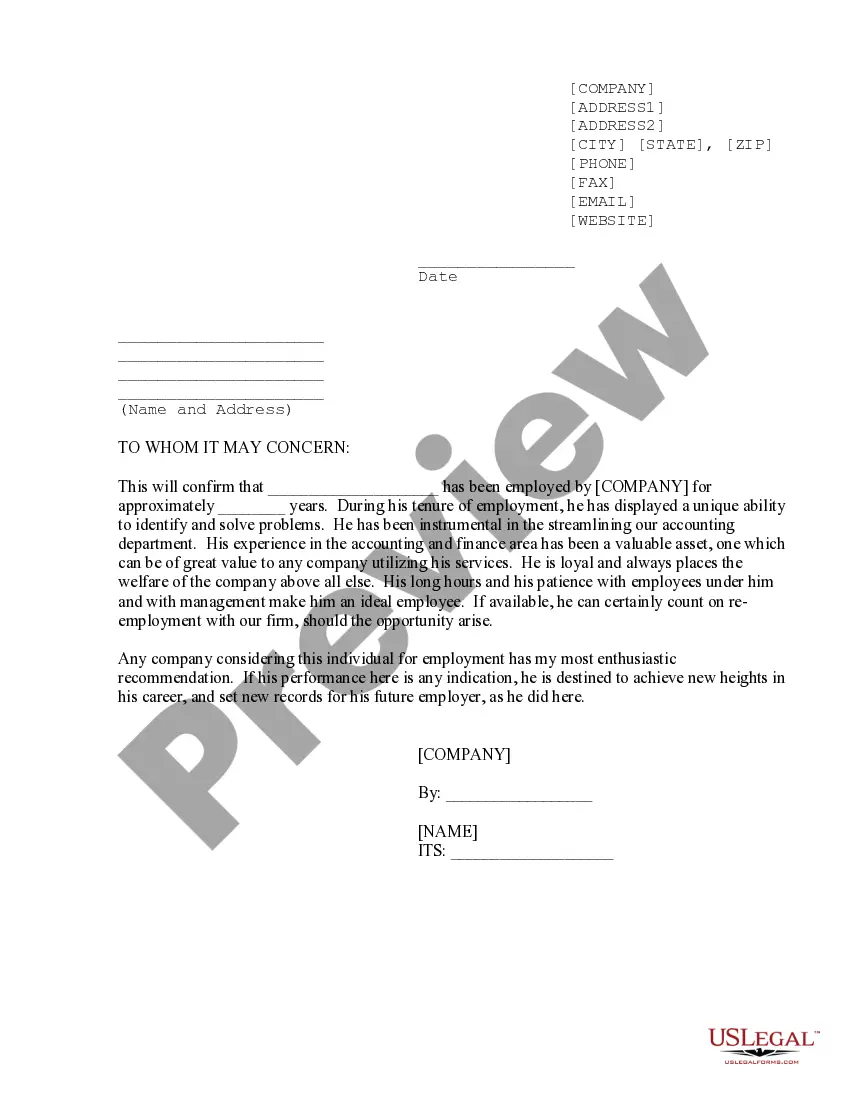
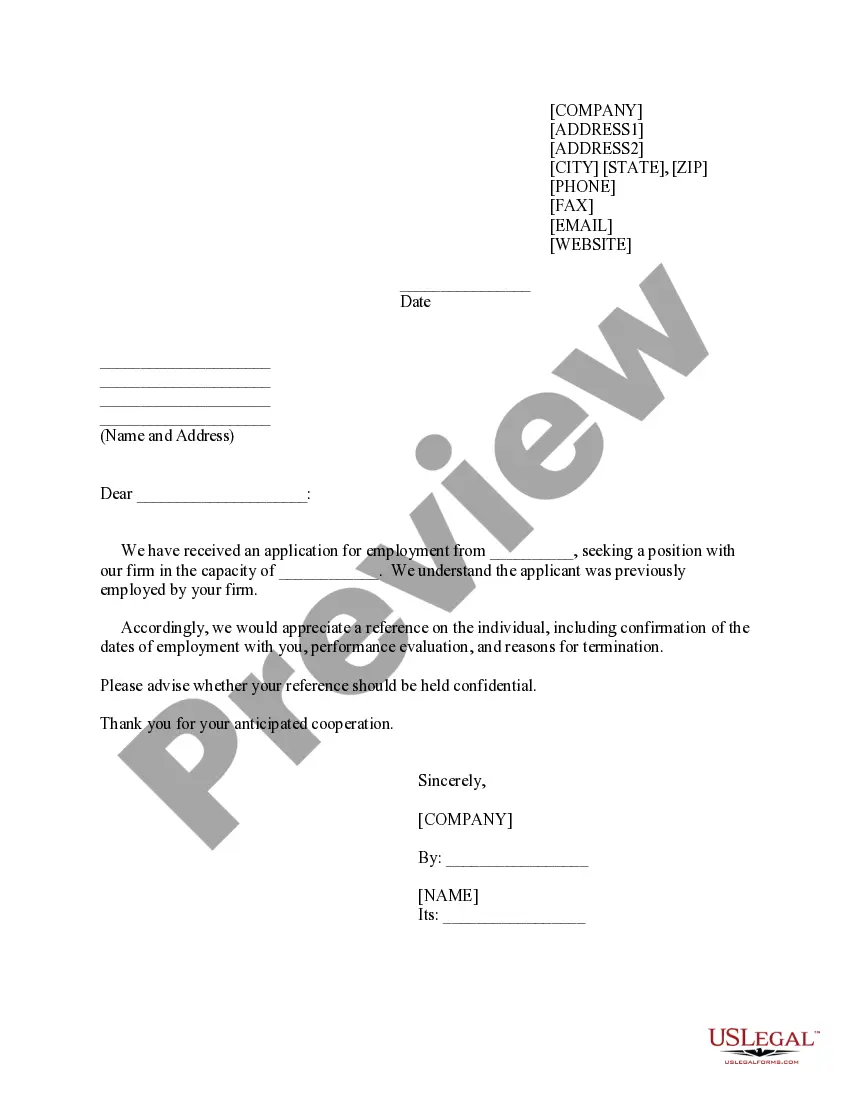
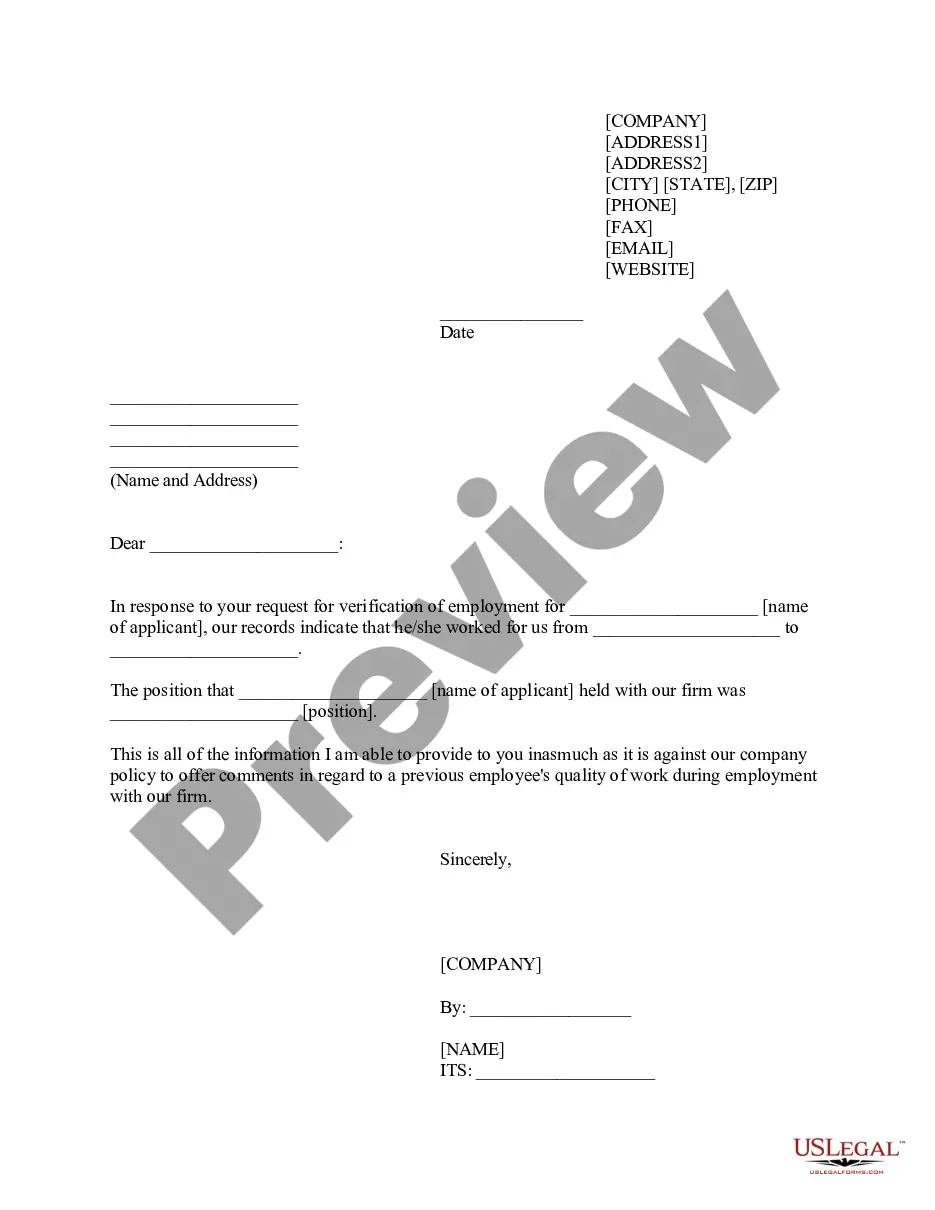
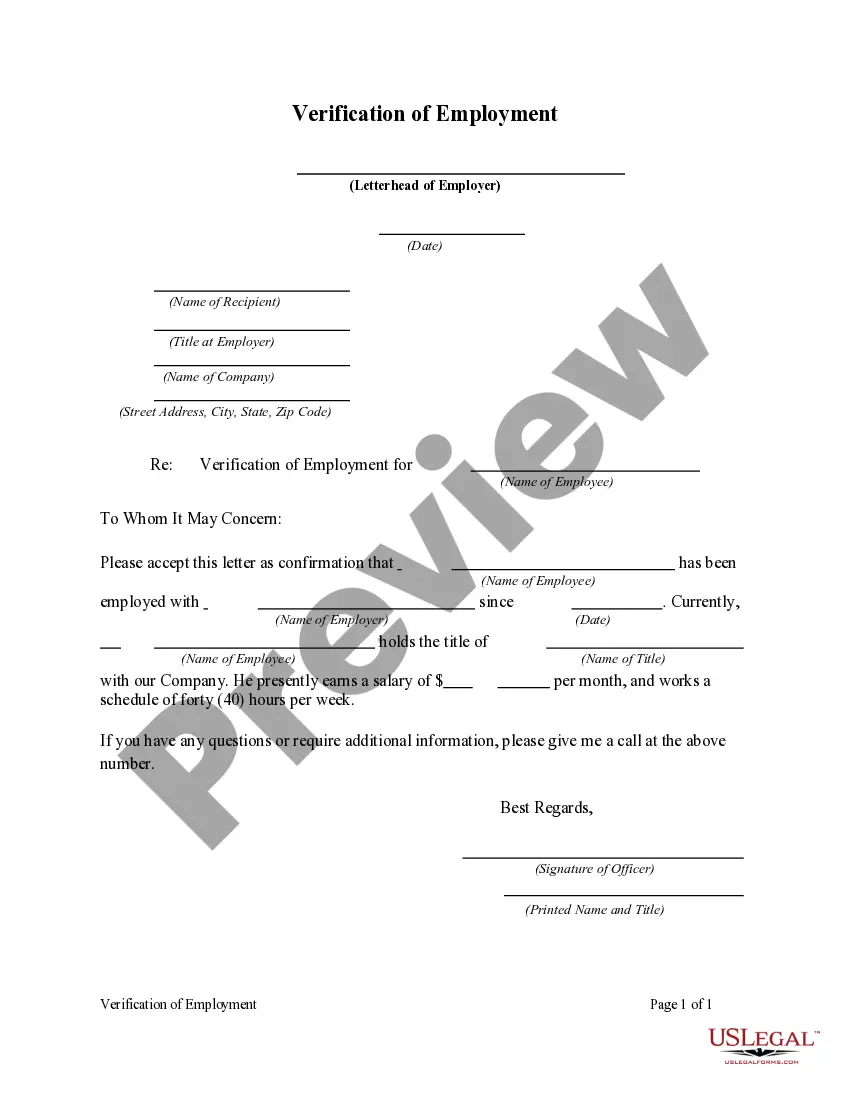
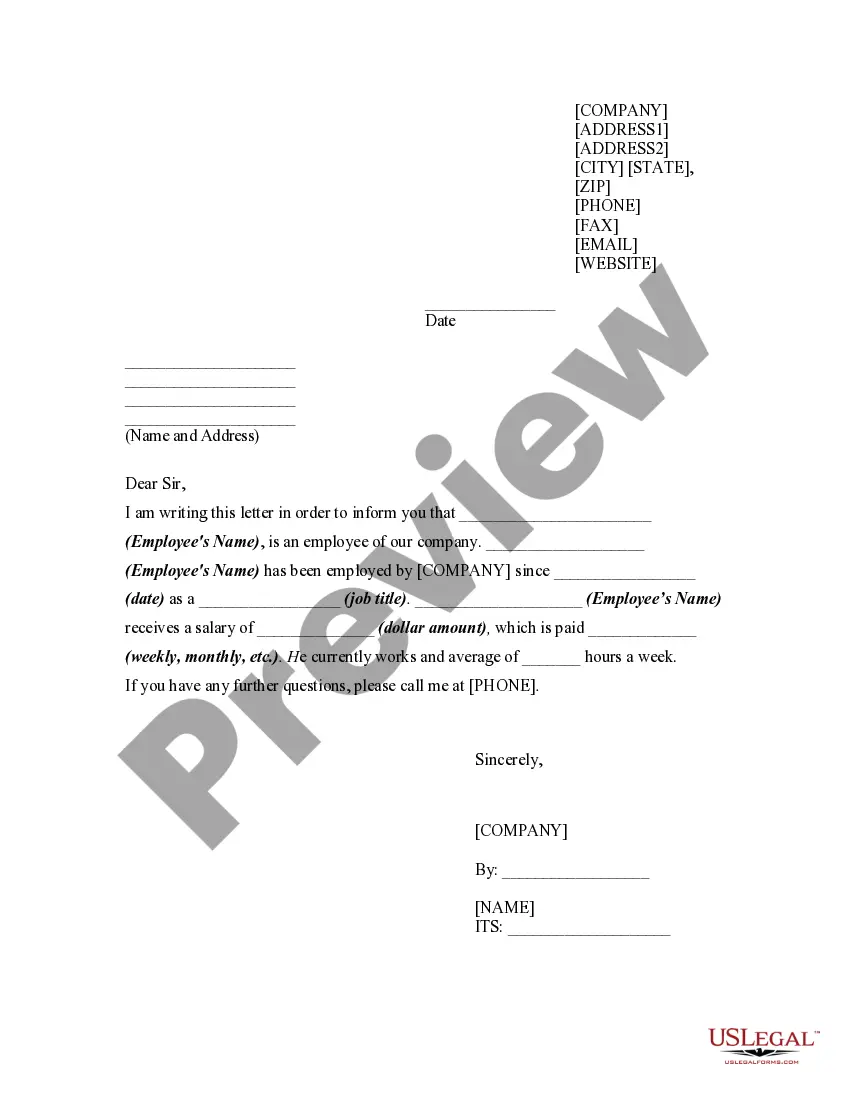
The Verification of Employment, Without Reference is a document that confirms an individual's employment status without revealing personal references. This form is commonly used by prospective employers to validate a candidate's work history, ensuring that they meet specific job qualifications based on their experience. This form differs from other employment verification forms by omitting any personal references, focusing solely on employment duration and job performance.
Form components explained
- Employer's address and contact information
- Date of the employment verification
- Recipient information (To Whom It May Concern)
- Employee's name and duration of employment
- Employer's assessment of the employee's skills and character
- Signature of the employer or representative
When to use this form
This form is typically used when a current or former employee needs to provide proof of their employment history without needing to include personal references. Job seekers may need this verification to complete applications for new positions, especially when the potential employer requires confirmation of past employment without contacting previous supervisors or colleagues.
Who this form is for
- Employers who need to validate an employee's work history
- Employees seeking to confirm their employment status for new job applications
- Human resources professionals managing employment verification processes
- Recruiters looking to streamline the hiring process for candidates
Completing this form step by step
- Fill in the employer's address and contact information appropriately.
- Enter the date of the verification.
- Specify the recipient's name in the "To Whom It May Concern" section.
- Complete the employee's name and state the duration of employment.
- Provide a description of the employee's contributions and qualities.
- Sign the form and include the employer's printed name and title.
Notarization requirements for this form
This form does not typically require notarization unless specified by local law. Always check for any specific jurisdictional requirements that may affect notarization.
Get your form ready online
Our built-in tools help you complete, sign, share, and store your documents in one place.
Make edits, fill in missing information, and update formatting in US Legal Forms—just like you would in MS Word.
Download a copy, print it, send it by email, or mail it via USPS—whatever works best for your next step.
Sign and collect signatures with our SignNow integration. Send to multiple recipients, set reminders, and more. Go Premium to unlock E-Sign.
If this form requires notarization, complete it online through a secure video call—no need to meet a notary in person or wait for an appointment.
We protect your documents and personal data by following strict security and privacy standards.

Make edits, fill in missing information, and update formatting in US Legal Forms—just like you would in MS Word.

Download a copy, print it, send it by email, or mail it via USPS—whatever works best for your next step.

Sign and collect signatures with our SignNow integration. Send to multiple recipients, set reminders, and more. Go Premium to unlock E-Sign.

If this form requires notarization, complete it online through a secure video call—no need to meet a notary in person or wait for an appointment.

We protect your documents and personal data by following strict security and privacy standards.
Common mistakes
- Failing to include the date of verification.
- Omitting crucial details about the employee's role and contributions.
- Not providing accurate employer contact information.
- Leaving out the signature or title of the signing authority.
Why complete this form online
- Convenient downloading format for immediate use.
- Editability allows customization to fit specific needs.
- Reliable access to attorney-drafted templates ensures legal compliance.
Key takeaways
- The form is essential for confirming employment without references.
- It is suitable for various users, including employers and employees.
- Proper completion is critical to ensure validity and effectiveness.
Looking for another form?
Form popularity
FAQ
How to Request the Letter Ask your supervisor or manager. Contact Human Resources. Get a template from the company or organization requesting the letter. Use an employment verification service.
Employers who fail to respond to federal employment-verification requests can suffer fines and denial of government contracts for up to one year. Failure to complete an employment-verification request from another third party can dilute trust with current and former employees alike.
Employers who fail to respond to federal employment-verification requests can suffer fines and denial of government contracts for up to one year. Failure to complete an employment-verification request from another third party can dilute trust with current and former employees alike.
Unless legally required, employers are not required to fill out employment verification letters for past or present employees. Companies that prefer not to provide these verification letters will often include that information as part of their employee contracts, but not everyone is aware of this.
The employer can request pay stubs from the employee that will show what wage they are currently earning, their current position, and employment dates. Additionally, larger employers may utilize a third party verification system that automatically verifies current employment without contacting the current employer.
Employment verification confirms and details the essential facts about applicants' previous jobs, while a reference check builds upon that information and gives employers critical insight into different aspects of potential employees' performance.
Employers that receive verification of employment requests from state or federal government agencies are generally required to respond to them. They do not have to respond to requests from collection agencies and others, however.
Employment contracts: Employment contracts and agreements can be used to establish a work history. Referral letters: Former supervisors may have written referral letters when they, or you, left the company. Monster suggests asking for these letters when possible so that you can verify employment at a later date.