District of Columbia Application for Sublease
What this document covers
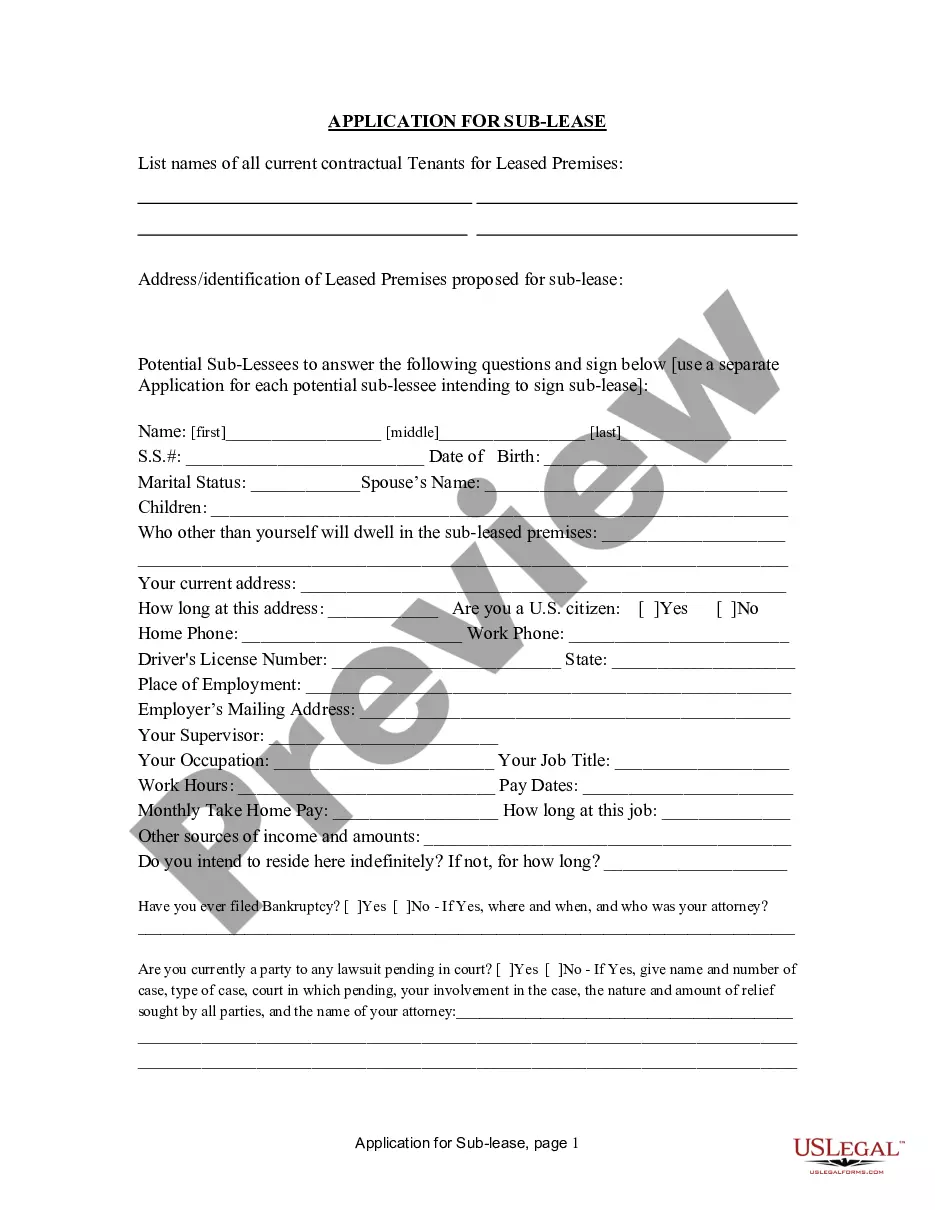
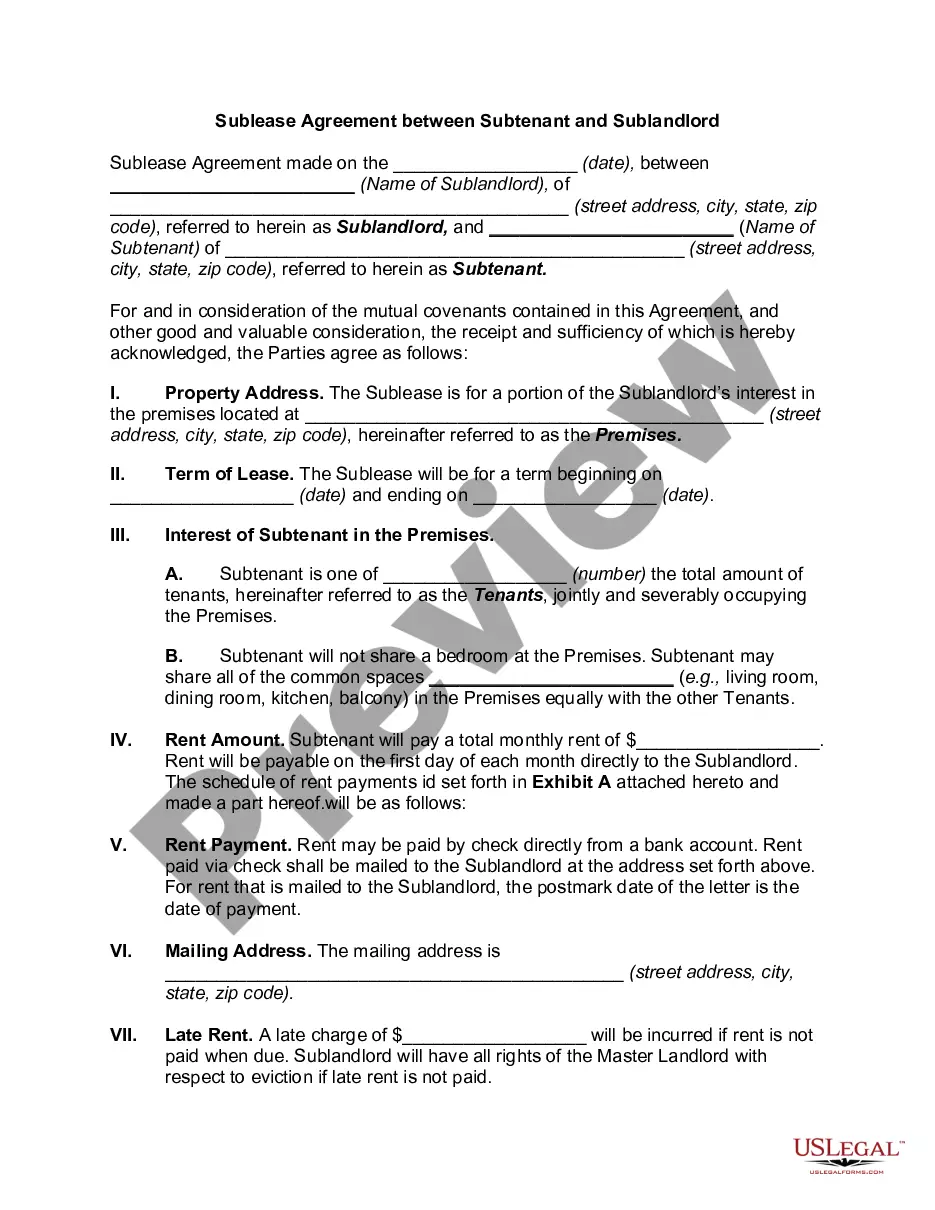
The Application for Sublease is a document that allows a potential sub-tenant to apply to the landlord for permission to sublet a rental property. This form gathers essential information that the landlord considers when deciding whether to grant or deny the sublease. Unlike a standard lease agreement, this form specifically focuses on the sub-tenancy arrangement and the qualifications of the sub-tenant. It ensures both parties are clear about the conditions and responsibilities involved.
Main sections of this form
- Personal information of the sub-tenant, including marital status and current address.
- Employment details, including place of employment and income sources.
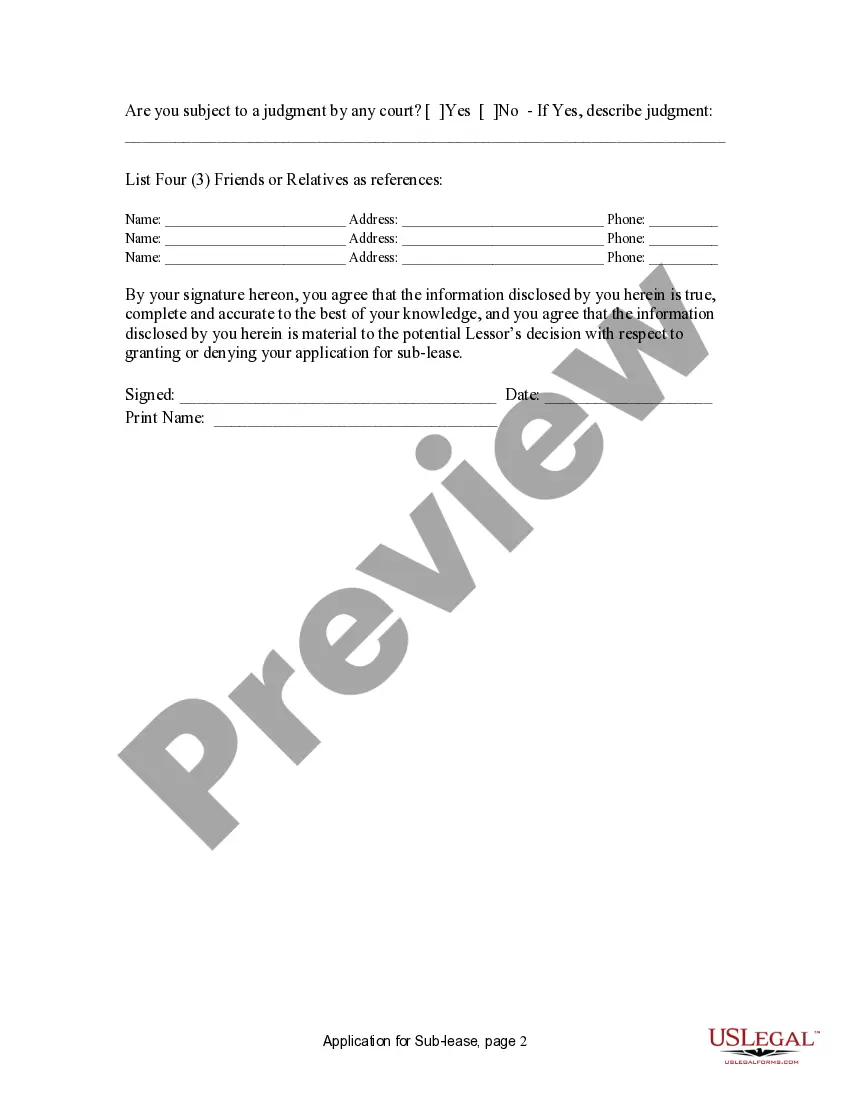
- Questions regarding previous bankruptcies and legal judgments.
- Reference information including friends or relatives who can vouch for the sub-tenant.
- A declaration by the applicant confirming the accuracy of the provided information.
When to use this form
This form is necessary when a tenant wishes to sublease their rental property to another person. It is typically used when the original lease allows for subletting, particularly if it requires landlord approval. Subtenants should submit this application to ensure their eligibility and to clarify their responsibilities towards rent and lease terms.
Intended users of this form
This form is intended for:
- Current tenants looking to sublet their residential space.
- Potential sub-tenants seeking approval to rent a portion of a rented property.
- Landlords who need a standard process for evaluating sublessees.
Steps to complete this form
- Enter the personal information including marital status and address.
- Provide employment details and income information to demonstrate financial stability.
- Answer questions regarding bankruptcies or legal issues, if applicable.
- List personal references who can support your application.
- Sign and date the application to certify the truthfulness of the information provided.
Does this form need to be notarized?
This form usually doesn’t need to be notarized. However, local laws or specific transactions may require it. Our online notarization service, powered by Notarize, lets you complete it remotely through a secure video session, available 24/7.
Get your form ready online
Our built-in tools help you complete, sign, share, and store your documents in one place.
Make edits, fill in missing information, and update formatting in US Legal Forms—just like you would in MS Word.
Download a copy, print it, send it by email, or mail it via USPS—whatever works best for your next step.
Sign and collect signatures with our SignNow integration. Send to multiple recipients, set reminders, and more. Go Premium to unlock E-Sign.
If this form requires notarization, complete it online through a secure video call—no need to meet a notary in person or wait for an appointment.
We protect your documents and personal data by following strict security and privacy standards.

Make edits, fill in missing information, and update formatting in US Legal Forms—just like you would in MS Word.

Download a copy, print it, send it by email, or mail it via USPS—whatever works best for your next step.

Sign and collect signatures with our SignNow integration. Send to multiple recipients, set reminders, and more. Go Premium to unlock E-Sign.

If this form requires notarization, complete it online through a secure video call—no need to meet a notary in person or wait for an appointment.

We protect your documents and personal data by following strict security and privacy standards.
Avoid these common issues
- Failing to provide complete and accurate personal information.
- Not including references or contact information for them.
- Leaving questions about legal issues unanswered, which could raise concerns.
- Submitting the application without a signature or date.
Why use this form online
- Convenience of accessing and filling out the form at any time.
- Editable format that allows for corrections and updates before submission.
- Reliable templates drafted by licensed attorneys ensuring legal compliance.
Looking for another form?
Form popularity
FAQ
Subletting an apartment can be straightforward if you follow the required steps. Begin by understanding your lease terms and obtaining necessary permissions. The District of Columbia Application for Sublease provides a structured way to formalize the agreement. With careful planning and clear communication, you can navigate the subletting process smoothly.
You can post your apartment for sublet on various platforms such as online classifieds, rental websites, and social media groups. Popular marketplaces include Craigslist, Facebook Marketplace, and dedicated rental sites. Using the District of Columbia Application for Sublease not only clarifies your terms but can also attract potential subtenants by presenting your listing professionally.
Yes, you can sublet an apartment in Washington D.C., but it is essential to follow specific guidelines. Review your lease agreement to verify if subletting is permitted. Utilizing the District of Columbia Application for Sublease can simplify the process, ensuring you fulfill all legal requirements. Communicate with your landlord to obtain necessary approvals before proceeding.
To ensure your sublease is legitimate, start by checking your lease agreement for subletting policies. Additionally, use the District of Columbia Application for Sublease to document the arrangement properly. Clearly outline the terms in writing, including rent, duration, and responsibilities. This helps protect both parties and ensures compliance with local laws.
Landlords in Washington, D.C., have several key obligations, including maintaining the property's habitability and addressing repair requests in a timely manner. They must also provide essential services, such as heat, water, and security. Additionally, understanding these responsibilities is crucial when navigating the District of Columbia Application for Sublease, ensuring both parties uphold their rights and duties.
A sublet typically refers to a temporary rental agreement, allowing a tenant to rent their space to another person, often for a shorter duration. On the other hand, a sublease is a formal agreement that transfers all or part of the tenant's rights and responsibilities under the original lease. Clear distinctions between these terms are essential when completing a District of Columbia Application for Sublease, as the legal implications can differ considerably.
Yes, landlords in Washington, D.C., must obtain a rental dwelling license to operate legally. This requirement safeguards tenant rights and ensures landlords adhere to local housing regulations. By acquiring this license, landlords can confidently navigate the complexities of rental agreements, including those involving a District of Columbia Application for Sublease.
Washington, D.C., has a reputation for being more tenant-friendly compared to many other states, meaning protections for renters are strong. While landlords do have rights, the laws and regulations tend to favor tenants when it comes to issues like eviction and rent increases. This dynamic is crucial for anyone engaged in the District of Columbia Application for Sublease, as it can influence lease terms and tenant rights.
Landlords in Washington, D.C., can enter a property without prior notice in specific emergency situations, such as a fire or flood. They may also enter for necessary repairs if they secure the tenant's consent beforehand. However, generally, landlords should provide reasonable notice to tenants, typically 24 hours, ensuring respect for their privacy. Understanding these regulations can help streamline the District of Columbia Application for Sublease process.
In real estate terms, subleasing and subletting refer to the same concept—renting your apartment or rental to another person while retaining responsibility for the lease. However, some people differentiate based on whether the tenant has direct interaction with the landlord or not. Regardless of the terminology, handling both situations correctly is crucial, which is where the District of Columbia Application for Sublease can guide you through the necessary steps.