Verification of Employment
Overview of this form
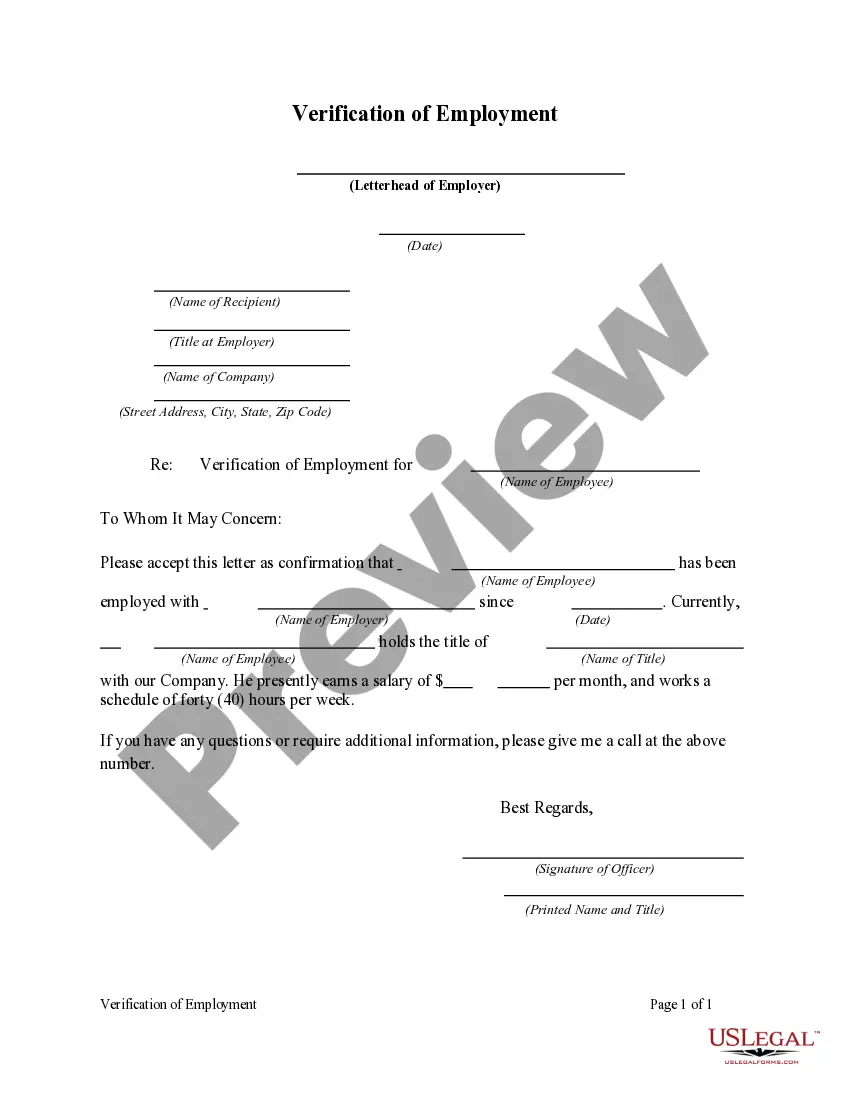
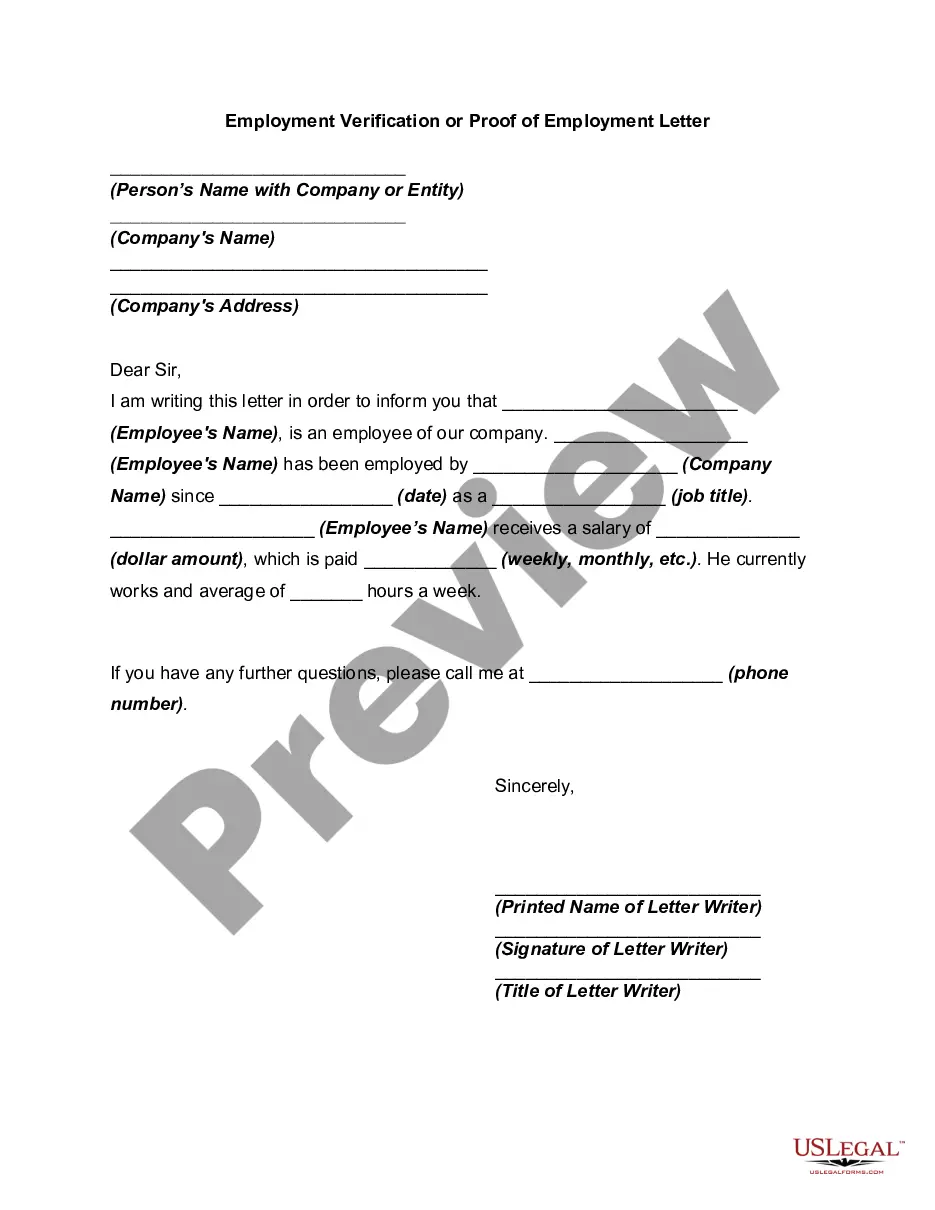
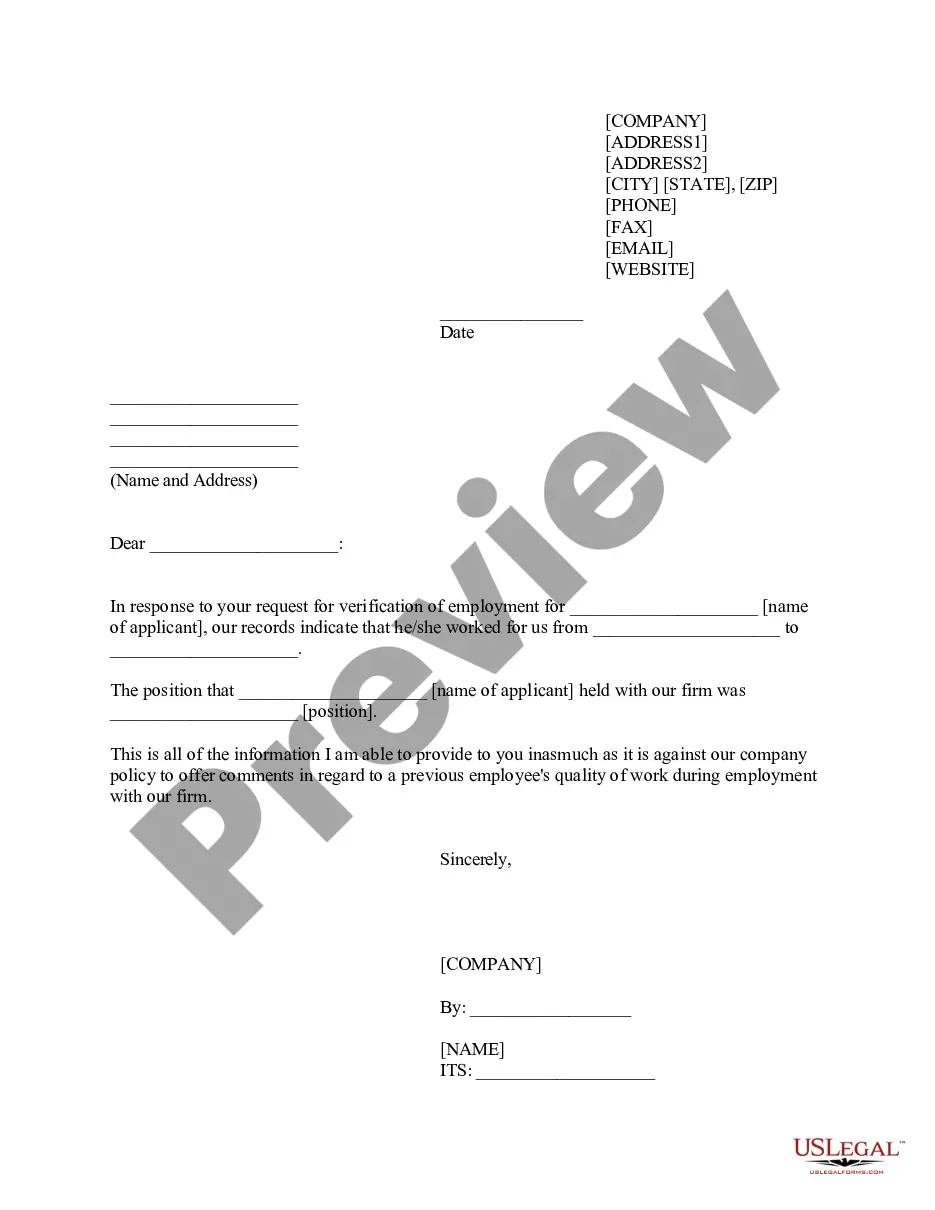
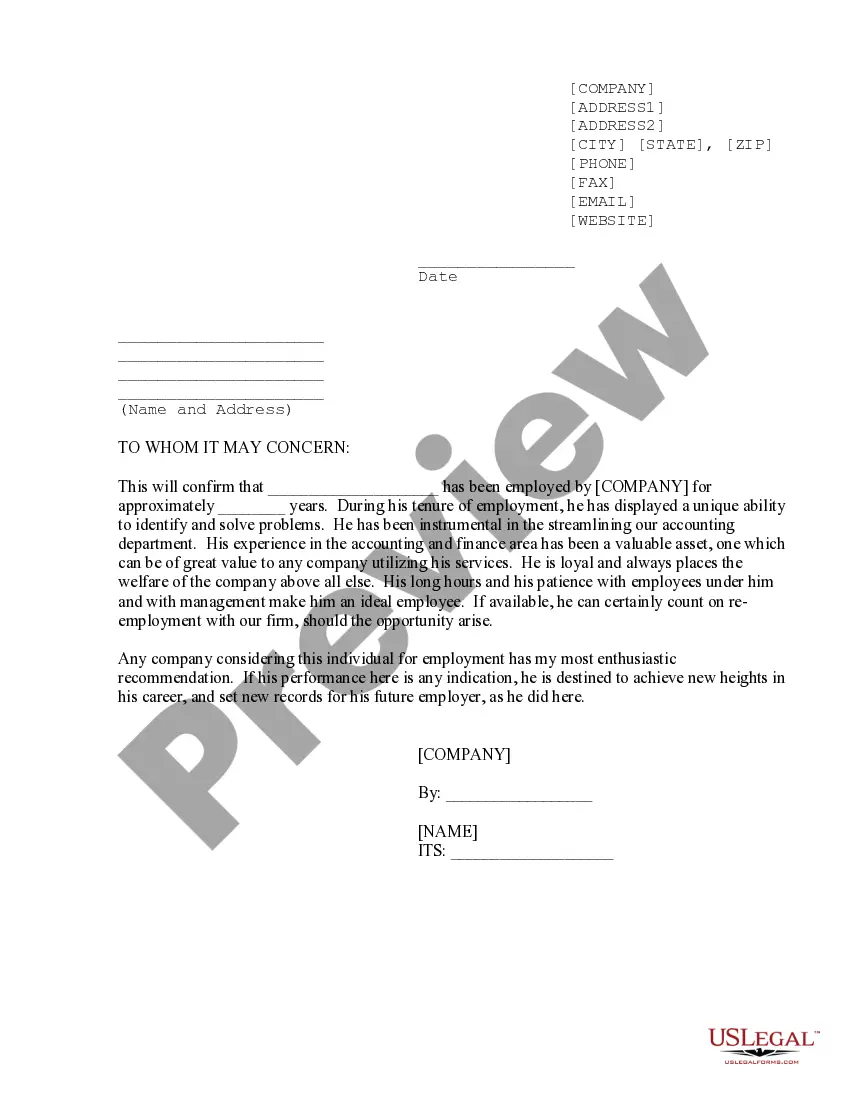
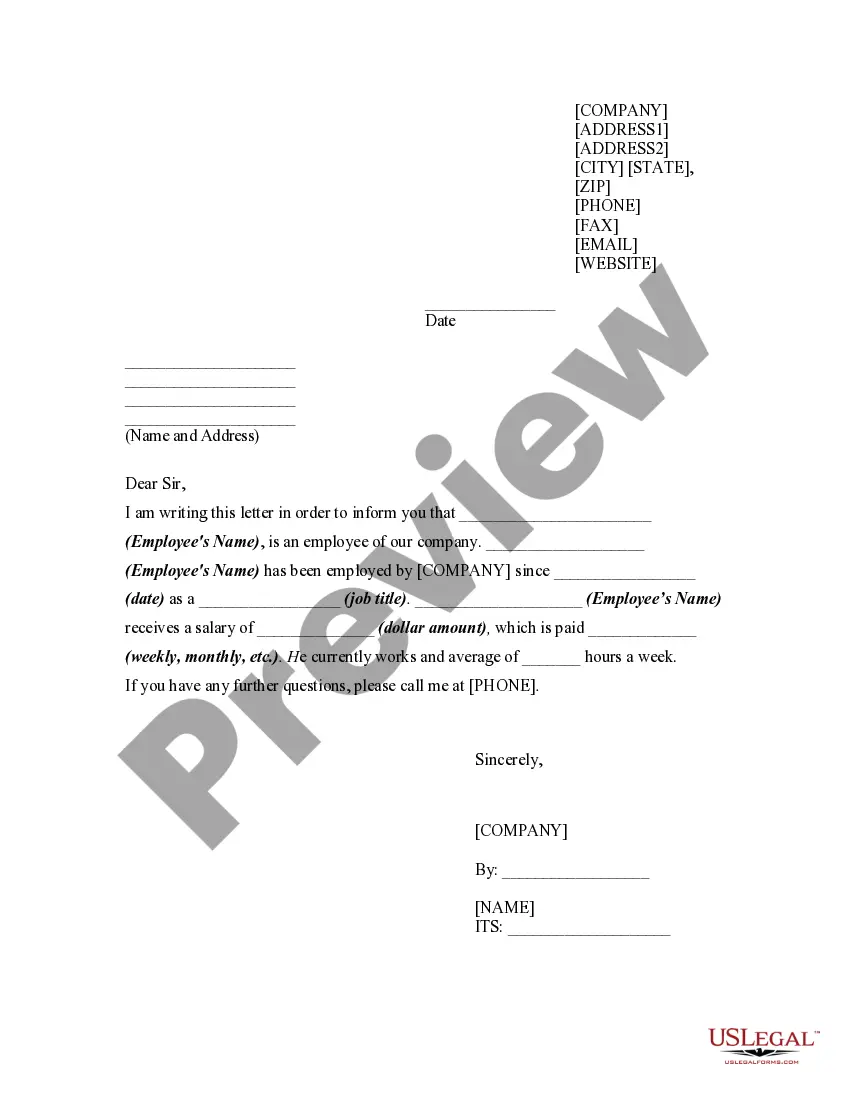
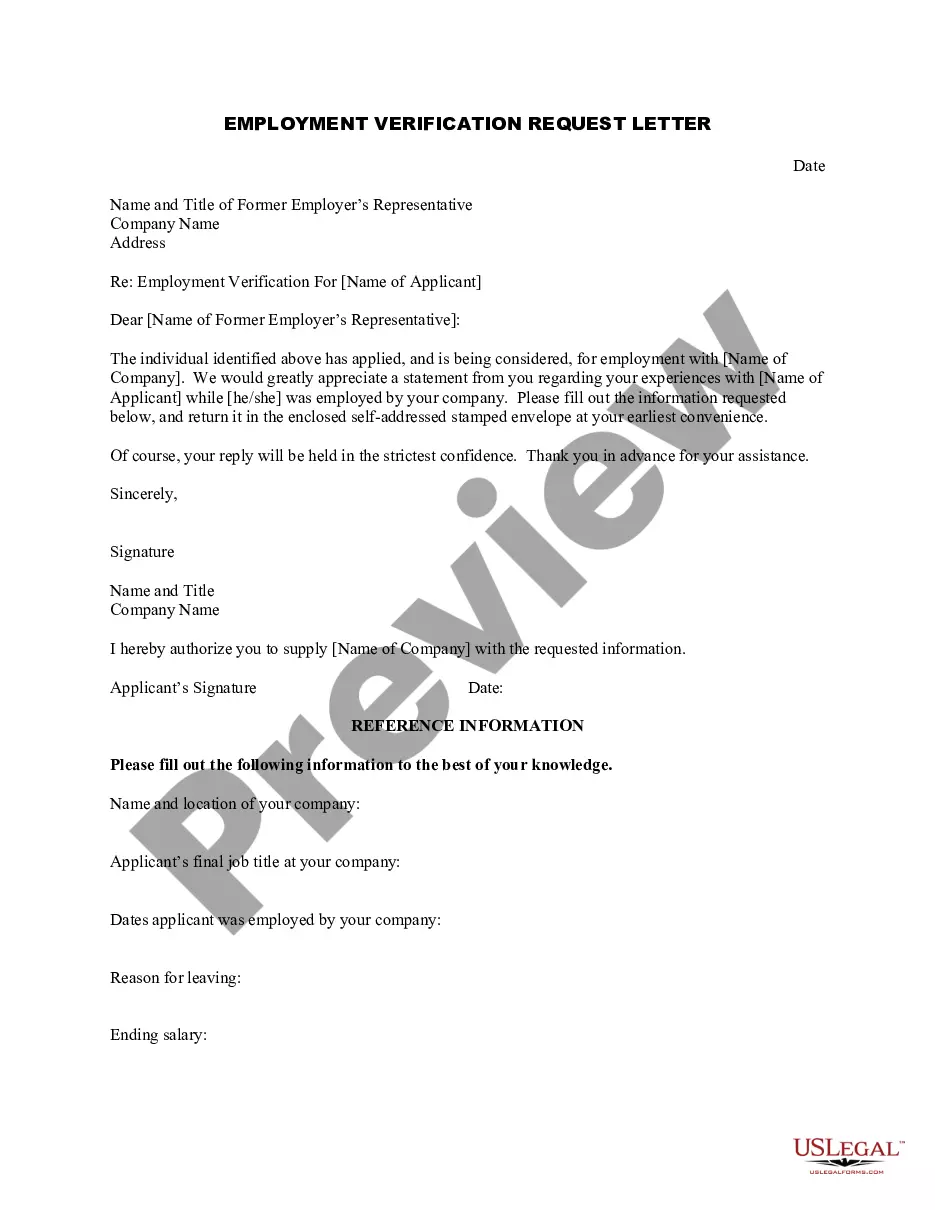
The Verification of Employment form is a document used by employers to confirm an employee's job status and details. This form serves to provide potential employers, lenders, or other entities with official proof of employment. Unlike a simple letter, it contains standardized information to ensure clarity and accuracy for all parties involved.
Form components explained
- Employee's name and position within the company.
- Dates of employment, including start date and (if applicable) end date.
- Current salary and compensation details.
- Employer's contact information for verification purposes.
- Signature of the employer or authorized representative.
Common use cases
This form is commonly used in situations where an employee needs to provide proof of employment for various purposes, such as applying for a loan, renting an apartment, or verifying employment for a new job. It is also useful for background checks or verifying income for financial institutions.
Who this form is for
- Employers or HR professionals who need to issue employment verification.
- Employees requesting proof of employment for their personal use.
- Organizations conducting background checks on applicants.
Instructions for completing this form
- Gather the necessary information about the employee being verified.
- Fill in the employee's name, position, and employment dates.
- Provide details of the employee's salary and any bonuses or commissions.
- Include your contact information and any relevant company letterhead.
- Sign and date the form to validate the information provided.
Notarization requirements for this form
This form does not typically require notarization unless specified by local law. Verify specific requirements in your jurisdiction to ensure compliance.
Get your form ready online
Our built-in tools help you complete, sign, share, and store your documents in one place.
Make edits, fill in missing information, and update formatting in US Legal Forms—just like you would in MS Word.
Download a copy, print it, send it by email, or mail it via USPS—whatever works best for your next step.
Sign and collect signatures with our SignNow integration. Send to multiple recipients, set reminders, and more. Go Premium to unlock E-Sign.
If this form requires notarization, complete it online through a secure video call—no need to meet a notary in person or wait for an appointment.
We protect your documents and personal data by following strict security and privacy standards.

Make edits, fill in missing information, and update formatting in US Legal Forms—just like you would in MS Word.

Download a copy, print it, send it by email, or mail it via USPS—whatever works best for your next step.

Sign and collect signatures with our SignNow integration. Send to multiple recipients, set reminders, and more. Go Premium to unlock E-Sign.

If this form requires notarization, complete it online through a secure video call—no need to meet a notary in person or wait for an appointment.

We protect your documents and personal data by following strict security and privacy standards.
Common mistakes to avoid
- Omitting important details like employment dates or salary information.
- Failing to provide a clear point of contact for verification.
- Not signing the form, which can invalidate it.
Benefits of using this form online
- Convenience of completing the form from any location at any time.
- Editability allows for easy updates and customization.
- Guarantees access to attorney-drafted templates that ensure legal compliance.
Summary of main points
- The Verification of Employment is a formal document confirming an employeeâs job status and income.
- This form is useful in various contexts, including rental applications and loan approvals.
- It is essential to provide complete and accurate information to avoid issues with verification.
Looking for another form?
Form popularity
FAQ
The Verification of Employment Form is a standardized document employers use to confirm an employee's job status and details for third parties. It provides official proof of employment, listing the employee’s name, position, dates of employment (start date and end date if applicable), current salary or compensation, the employer’s contact information, and the signature of the employer or an authorized representative. It's commonly used by lenders, landlords, or prospective employers.
Using this form, employers provide the standardized information it contains: the employee’s name and position; dates of employment, including start date and end date if applicable; current salary and compensation details; the employer’s contact information for verification; and the signature of the employer or an authorized representative. It yields consistent, official proof of employment for lenders, landlords, and background checks.
The form must be signed by the employer or an authorized representative. The signature confirms the accuracy of the included information and authorizes release to the requesting party. A signed form helps ensure the document is accepted as official proof of employment by lenders, landlords, and background-check entities.
It provides a concise, standardized record of employment that background-check providers, lenders, or rental agencies rely on to verify job status, dates of employment, and income. By using the form, verifiers receive uniform data—employee name, position, dates, salary, employer contact, and a signer—making verification faster and more reliable.
This form is intended for employers or HR professionals who issue verification, employees requesting proof of employment, and organizations conducting background checks on applicants. It enables these stakeholders to obtain reliable, uniform employment information for third-party verifications such as lending, renting, or job applications.
The form is a standardized template with defined fields for the employee’s name, position, start and end dates, current salary, employer contact information, and a signer. By contrast, a general verification letter may be informal or omit data, whereas this template ensures consistent, verifiable details across verifiers.