New Jersey Warranty Deed for Correction
What this document covers
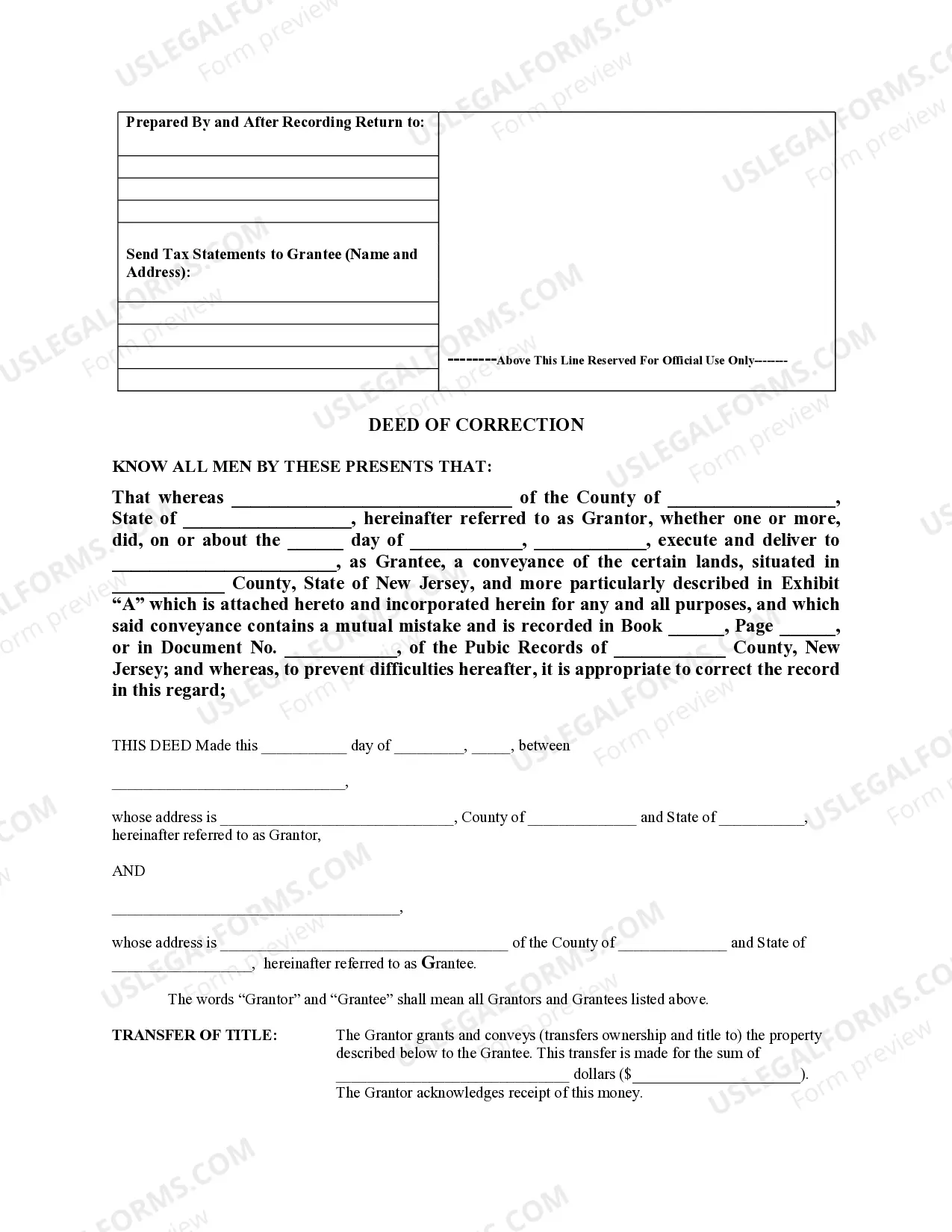
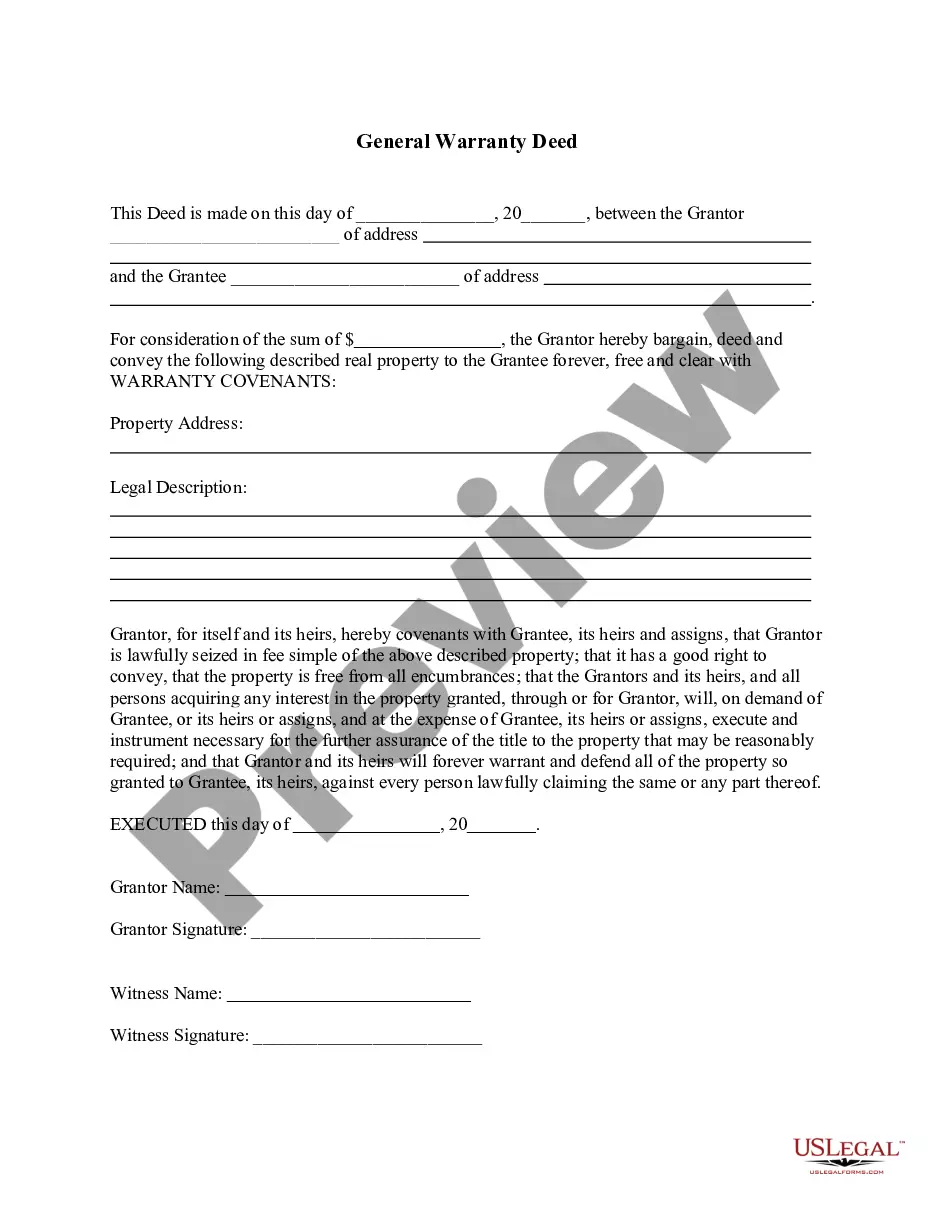
The Warranty Deed for Correction is a legal document used to rectify a mutual mistake in a previously executed deed. This form enables parties involved in a property transfer to ensure the legal accuracy of property ownership records. Unlike a standard warranty deed, which primarily transfers property rights, this deed specifically addresses errors that may have occurred in the original document, making it essential for clear title transfer and property record integrity.
Main sections of this form
- Identification of Grantor and Grantee: Names and addresses of the parties involved in the property transfer.
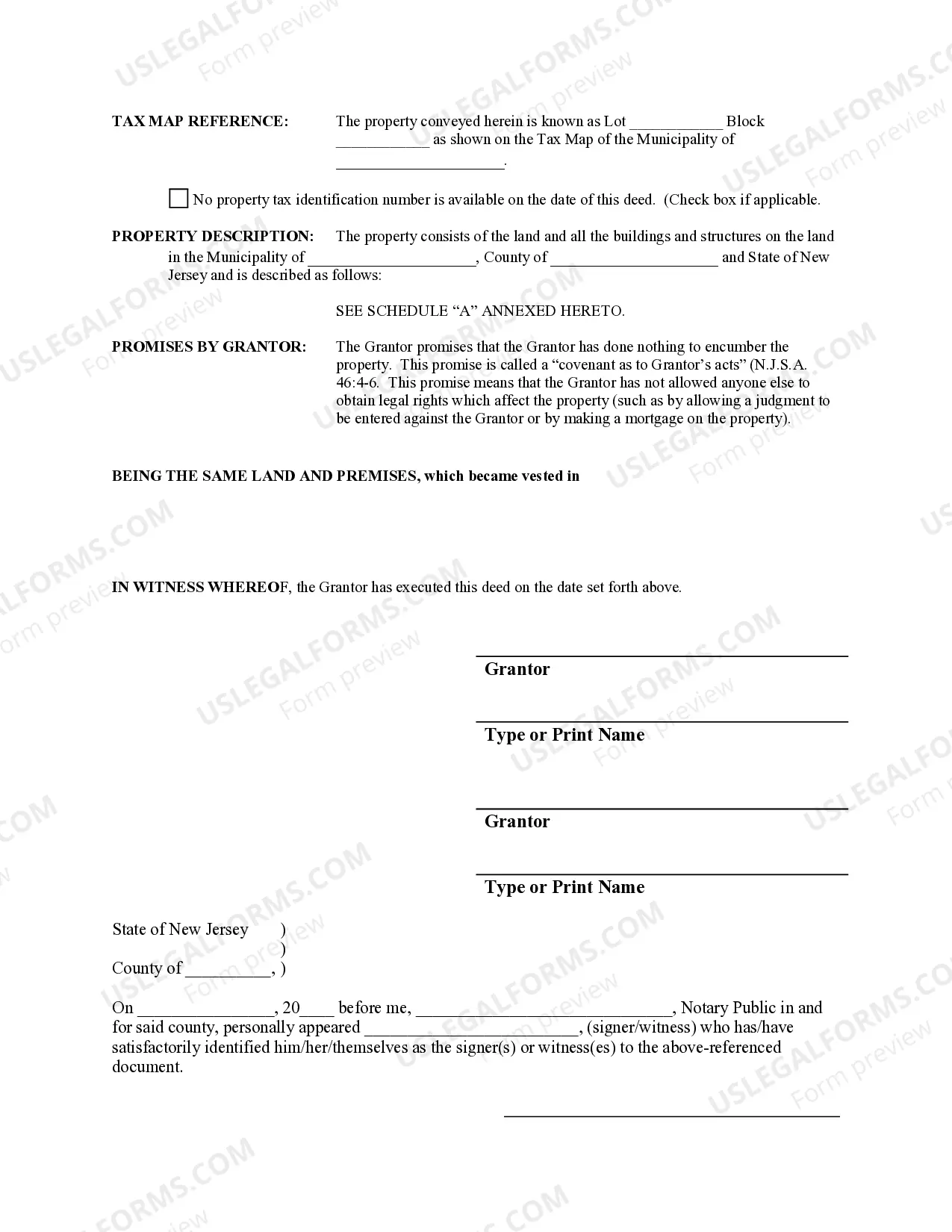
- Property Description: Detailed description of the property being corrected, including Tax Map reference.
- Transfer of Title Section: Specifies the ownership transfer and consideration amount.
- Covenants by Grantor: Promises made by the grantor regarding the status of the property.
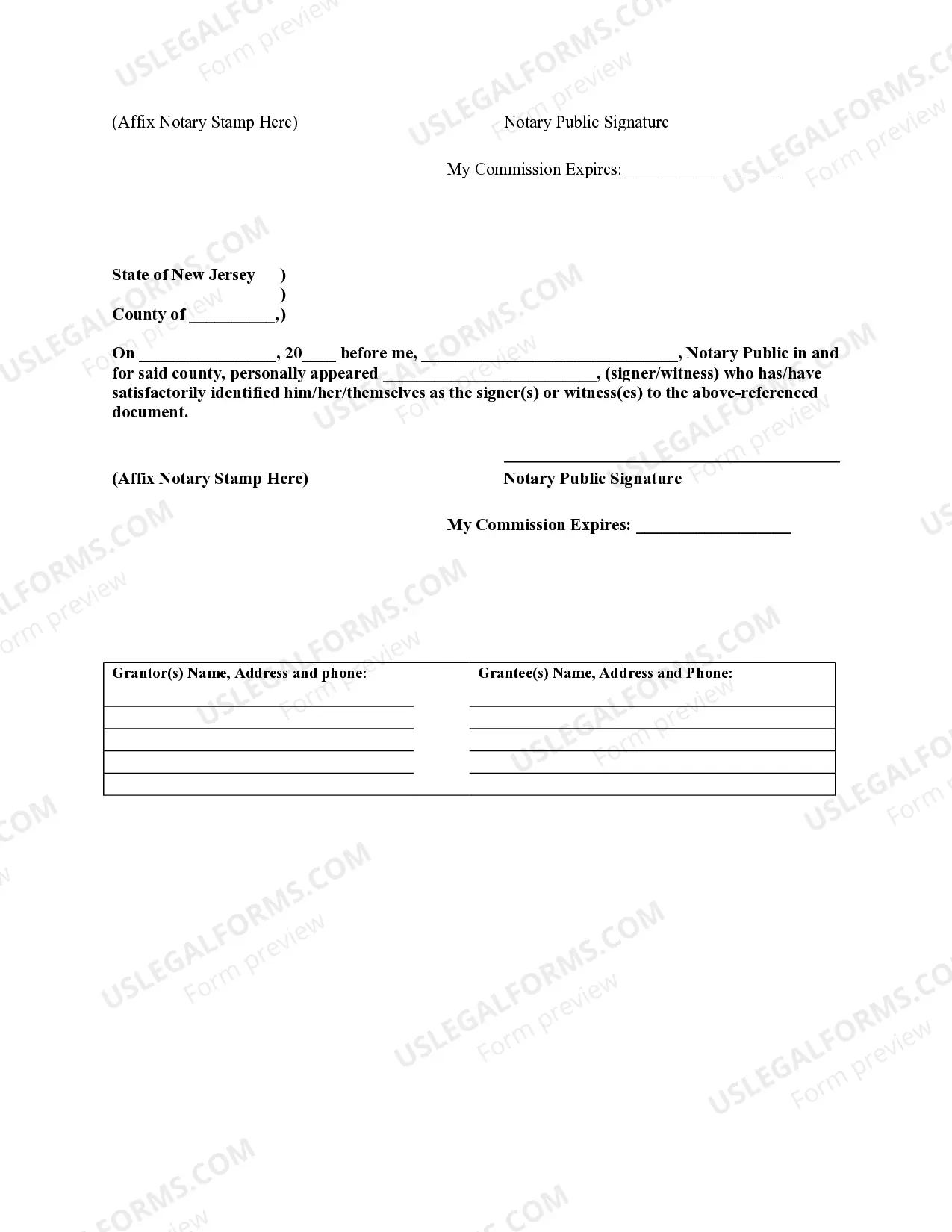
- Notarization Section: Area designated for notarization by a licensed official.




Common use cases
This form should be used when a mistake has been identified in a previously executed deed. Common scenarios include corrections of typographical errors, inaccurate property descriptions, or incorrect names of the parties involved. By using a Warranty Deed for Correction, property owners can maintain the accuracy of their real estate records and avoid potential legal issues in the future.
Who this form is for
- Individuals or entities that have previously executed a deed and need to correct information.
- Real estate professionals assisting clients with property transactions and titles.
- Property owners who wish to ensure their ownership records are accurate.
How to complete this form
- Identify the parties: Fill in the names and addresses of the Grantor (the person correcting the deed) and the Grantee (the new owner).
- Specify the property: Clearly describe the property being transferred, including any applicable Tax Map references.
- Enter the transfer details: Indicate the amount of money exchanged for the property and confirm receipt of that amount.
- Fill in the promises: Complete the Grantor's covenants regarding the status of the property to ensure there are no encumbrances.
- Sign and notarize: Ensure that all parties sign the deed and have it notarized, indicating its legal validity.
Notarization requirements for this form
Notarization is required for this form to take effect. Our online notarization service, powered by Notarize, lets you verify and sign documents remotely through an encrypted video session, available 24/7.
Get your form ready online
Our built-in tools help you complete, sign, share, and store your documents in one place.
Make edits, fill in missing information, and update formatting in US Legal Forms—just like you would in MS Word.
Download a copy, print it, send it by email, or mail it via USPS—whatever works best for your next step.
Sign and collect signatures with our SignNow integration. Send to multiple recipients, set reminders, and more. Go Premium to unlock E-Sign.
If this form requires notarization, complete it online through a secure video call—no need to meet a notary in person or wait for an appointment.
We protect your documents and personal data by following strict security and privacy standards.

Make edits, fill in missing information, and update formatting in US Legal Forms—just like you would in MS Word.

Download a copy, print it, send it by email, or mail it via USPS—whatever works best for your next step.

Sign and collect signatures with our SignNow integration. Send to multiple recipients, set reminders, and more. Go Premium to unlock E-Sign.

If this form requires notarization, complete it online through a secure video call—no need to meet a notary in person or wait for an appointment.

We protect your documents and personal data by following strict security and privacy standards.
Avoid these common issues
- Failing to include all necessary parties' names, which may lead to disputes later on.
- Omitting vital property details, such as accurate legal descriptions or Tax Map references.
- Not obtaining proper notarization, which can invalidate the document.
Why complete this form online
- Convenience: Access the form from anywhere and complete it at your own pace.
- Editability: Tailor the form precisely to your needs before finalizing.
- Reliability: Ensure compliance with up-to-date legal standards and requirements.
Quick recap
- The Warranty Deed for Correction is essential for rectifying mistakes in property deeds.
- It is important to provide accurate and complete information to avoid issues.
- Notarization is required for the form to be legally enforceable.
Looking for another form?
Form popularity
FAQ
Draw line through entry (thin pen line). Make sure that the inaccurate information is still legible. Initial and date the entry. State the reason for the error (i.e. in the margin or above the note if room). Document the correct information.
A rectification deed should be executed after mutual consent of all the parties to the main deed. All parties to the original deed should jointly execute the rectification deed as well. In case the original deed is registered, one should get the rectification deed also registered.
Determine if the error is harmless or fatal to the transfer of title. Decide what instrument is best suited to the error. Draft a corrective deed, affidavit, or new deed. Obtain the original signature(s) of the Grantor(s). Re-execute the deed with proper notarization and witnessing.
Quitclaim Deeds can be complicated legal documents. They are commonly used to add/remove someone to/from real estate title or deed (divorce, name changes, family and trust transfers).
By Practical Law Property. This standard document provides a framework to rectify an existing document relating to real property. To access this resource, sign in below or register for a free, no-obligation trial.
These errors can be rectified by execution of a supplementary document called rectification deed. A rectification deed is a document executed between parties to correct mistakes. There must have been a bonafide mistake whereby the original deed does not reflect the true intention of parties towards the deed.
If either party has found an error in the sale deed, the buyer and the seller will have to make an appearance in the sub-registrar's office, where the deed was previously registered. They will have to submit an application to the official, seeking correction in the document, along with all the supporting documents.
If a deed is to have any validity, it must be made voluntarily.If FRAUD is committed by either the grantor or grantee, a deed can be declared invalid. For example, a deed that is a forgery is completely ineffective. The exercise of UNDUE INFLUENCE also ordinarily serves to invalidate a deed.
Re-recording of the original document. With corrections made in the body of the original document. A cover sheet detailing the changes. Must be re-signed and re-acknowledged. Correction Deed. A new deed reflecting the corrections/changes. Must meet all recording requirements of a deed.