Subsurface Underground Carbon Dioxide Storage Lease and Agreement (with Landowner, Long Form)
Understanding this form
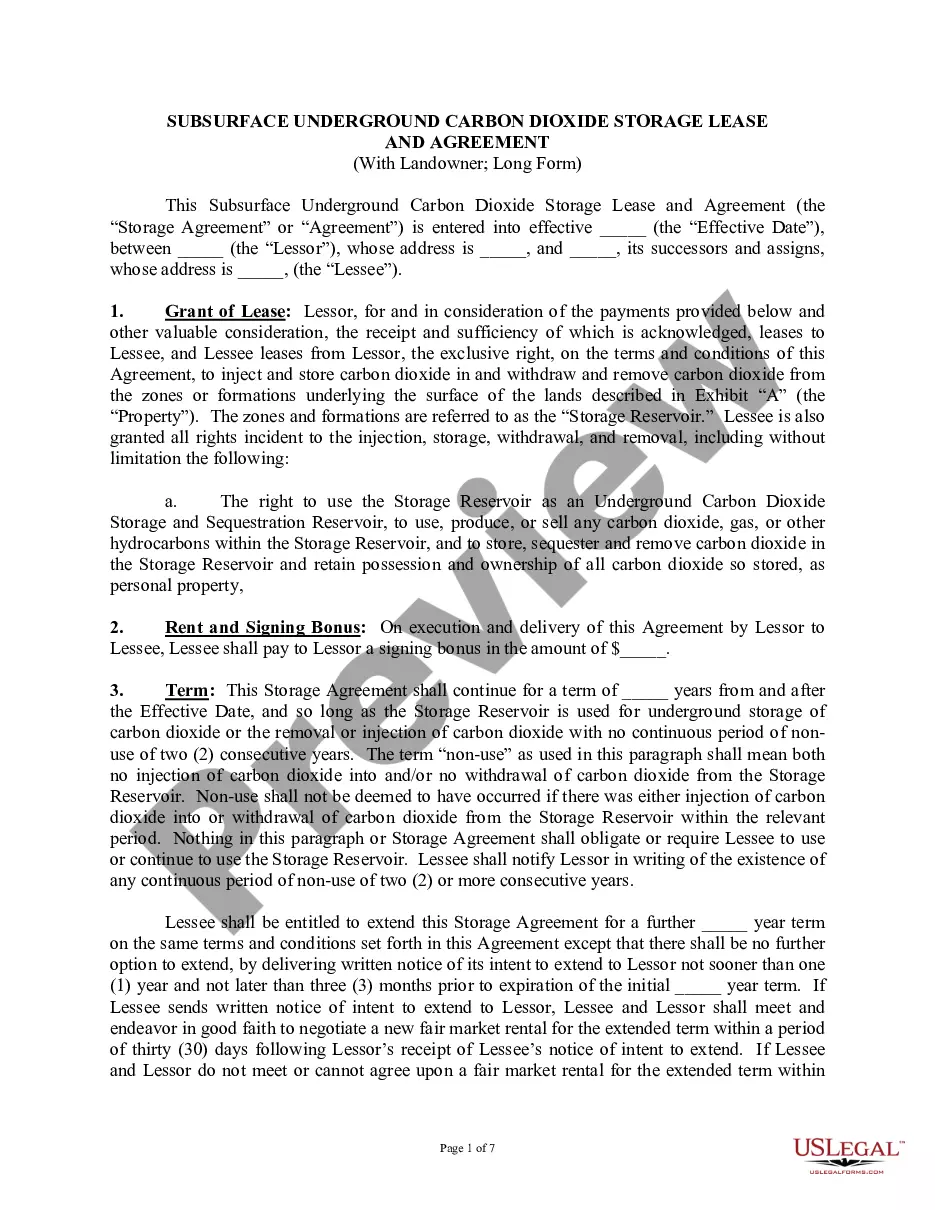
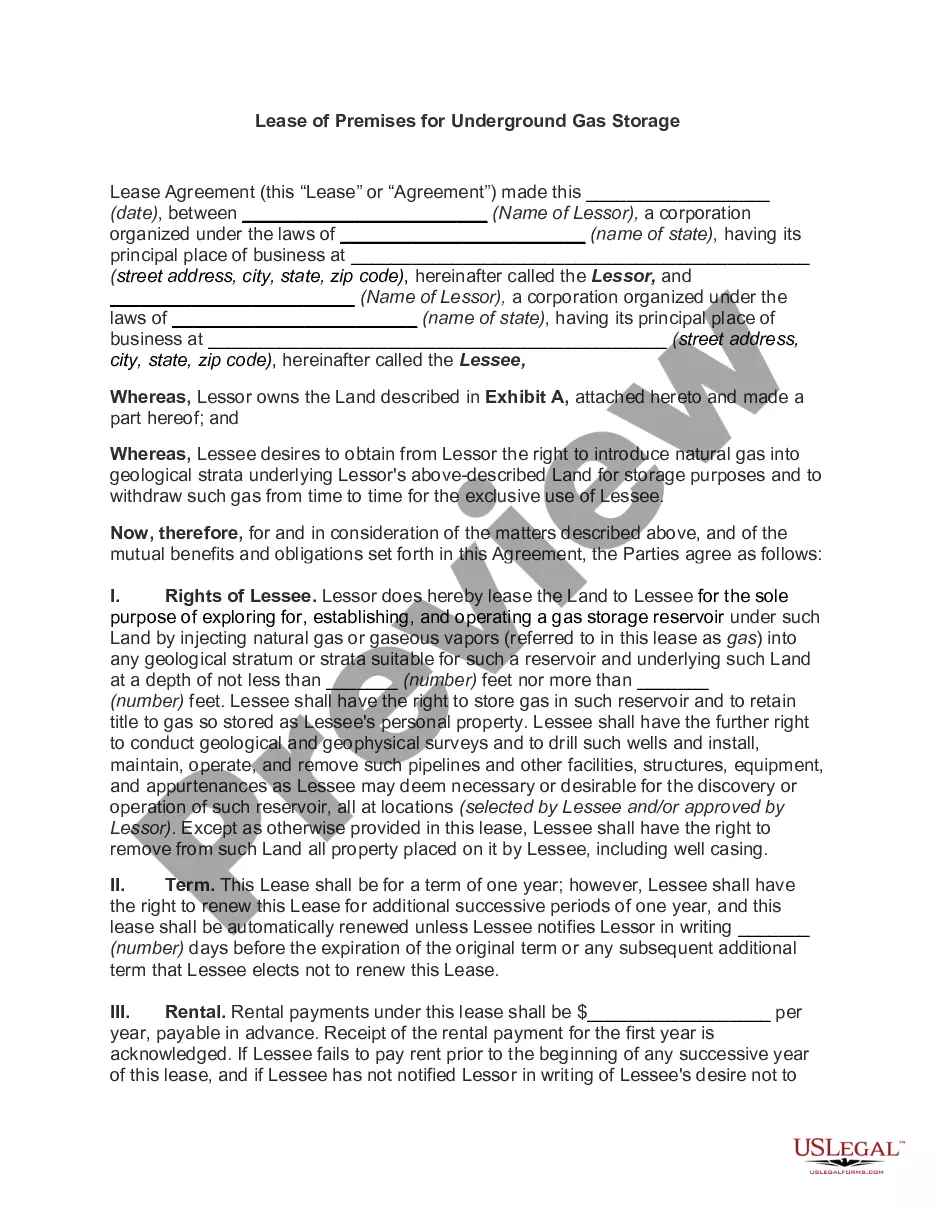
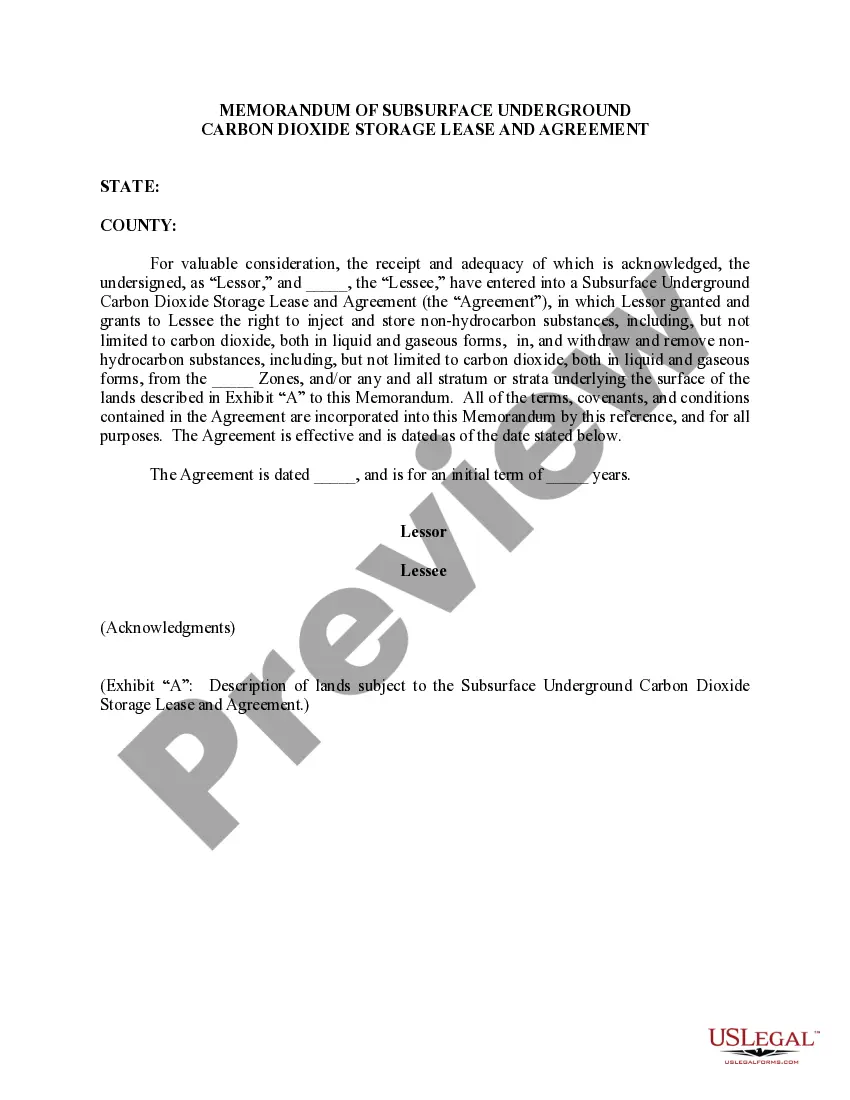
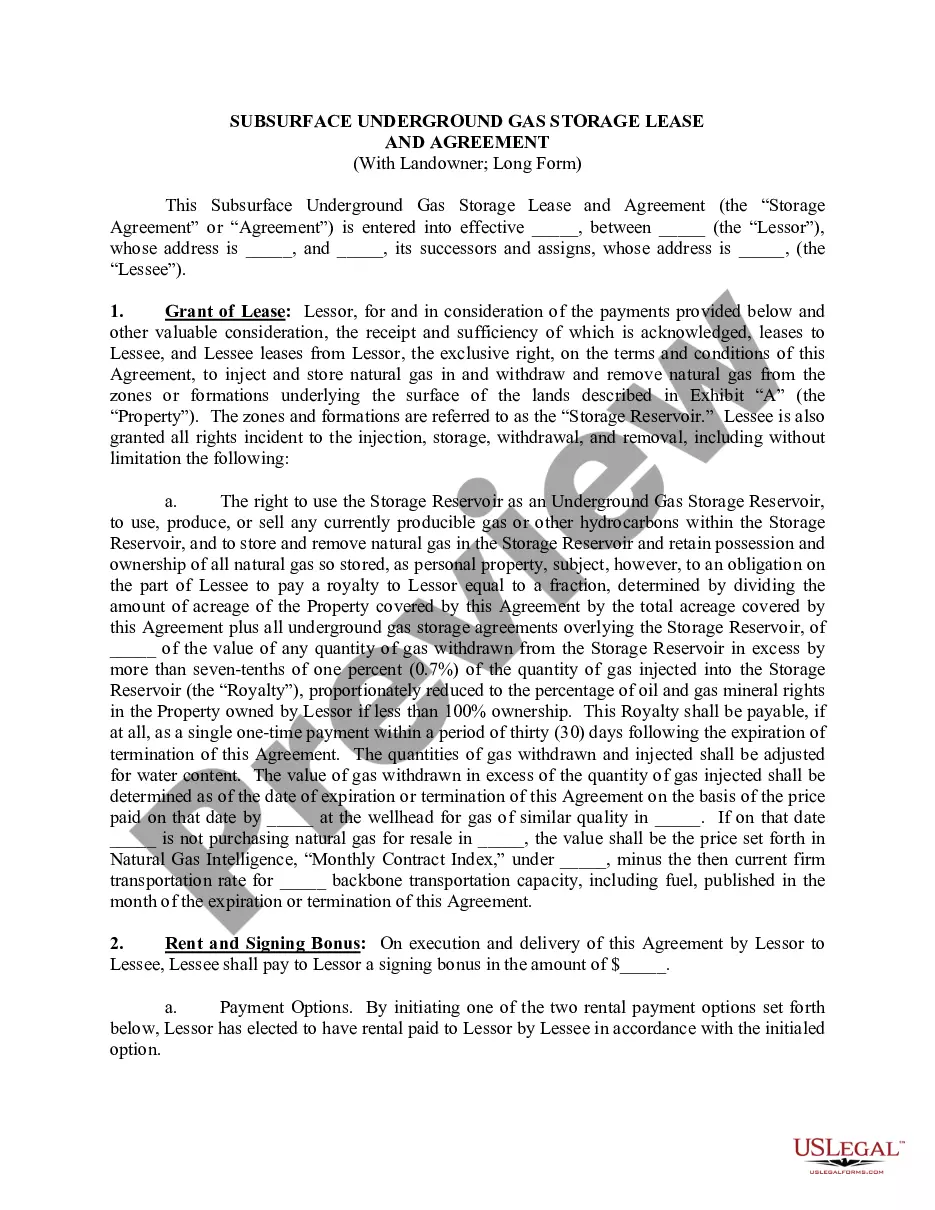
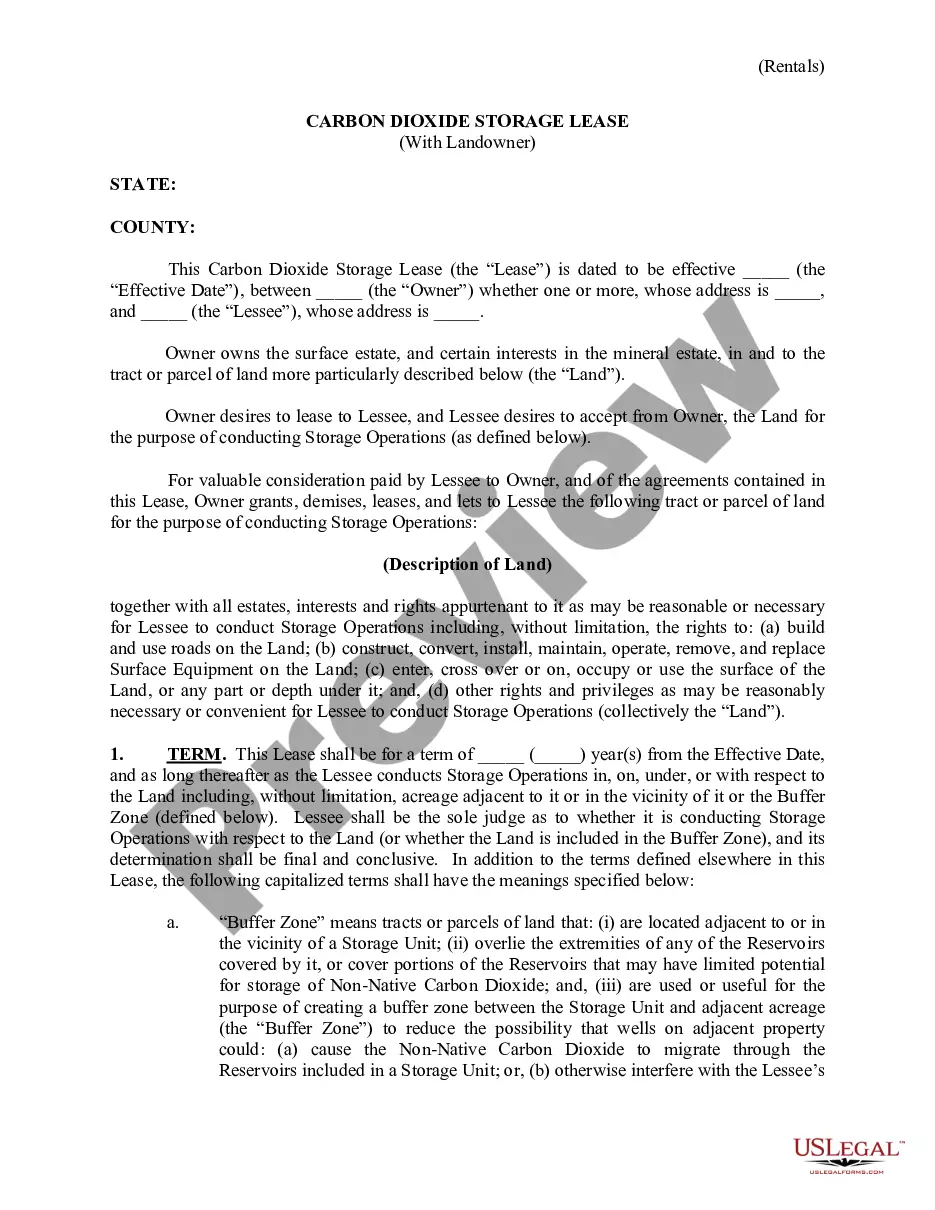
The Subsurface Underground Carbon Dioxide Storage Lease and Agreement is a legally binding document that outlines the relationship between a landowner (Lessor) and a company (Lessee) that wishes to inject and store carbon dioxide beneath the surface of the land. This agreement specifically details the rights granted to the Lessee, rental payments, responsibilities related to the use of the land, and liability issues. Unlike simpler lease agreements, this form addresses the unique considerations associated with carbon dioxide storage, providing comprehensive protection for both parties.
Main sections of this form
- Grant of Lease: Details the exclusive rights to inject, store, and withdraw carbon dioxide.
- Rent and Signing Bonus: Specifies the initial payment to the landowner upon signing.
- Term: Outlines the duration of the agreement and conditions for extension.
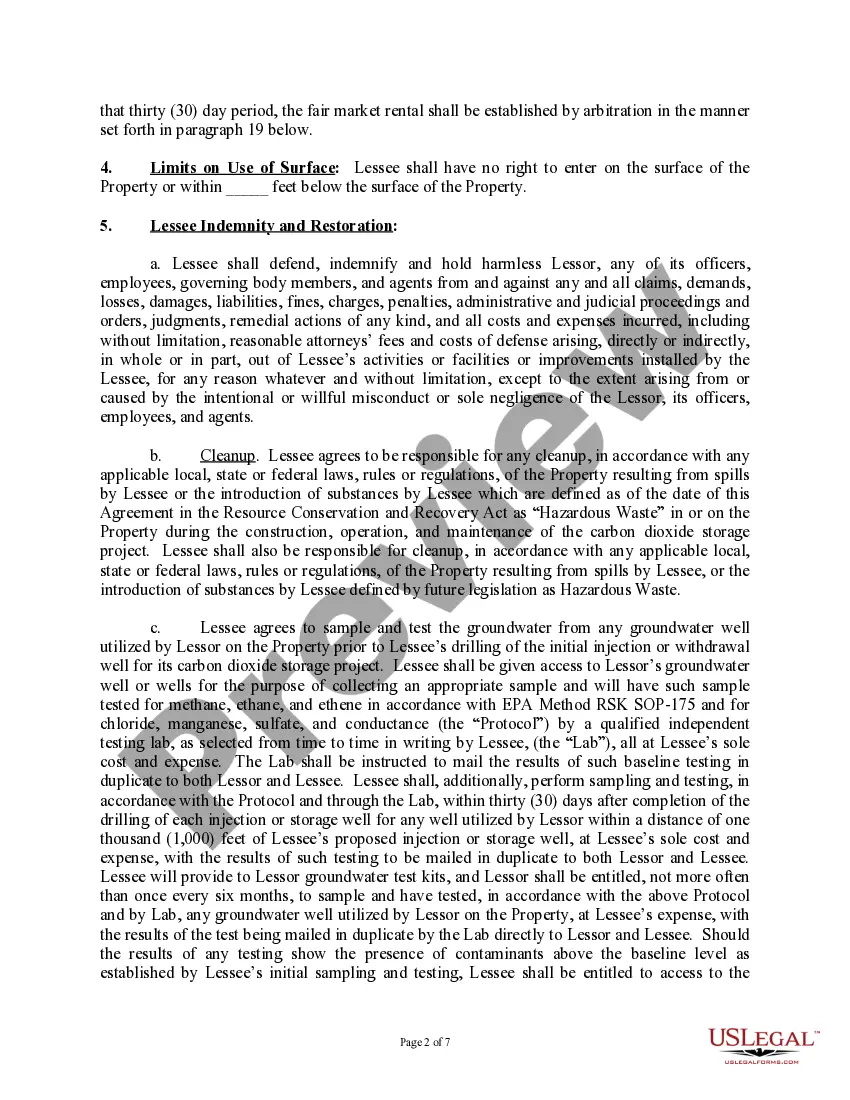
- Limits on Use of Surface: Restricts Lessee's access to the surface of the land to protect landowner interests.
- Indemnity and Restoration: Defines responsibilities for damage and cleanup.
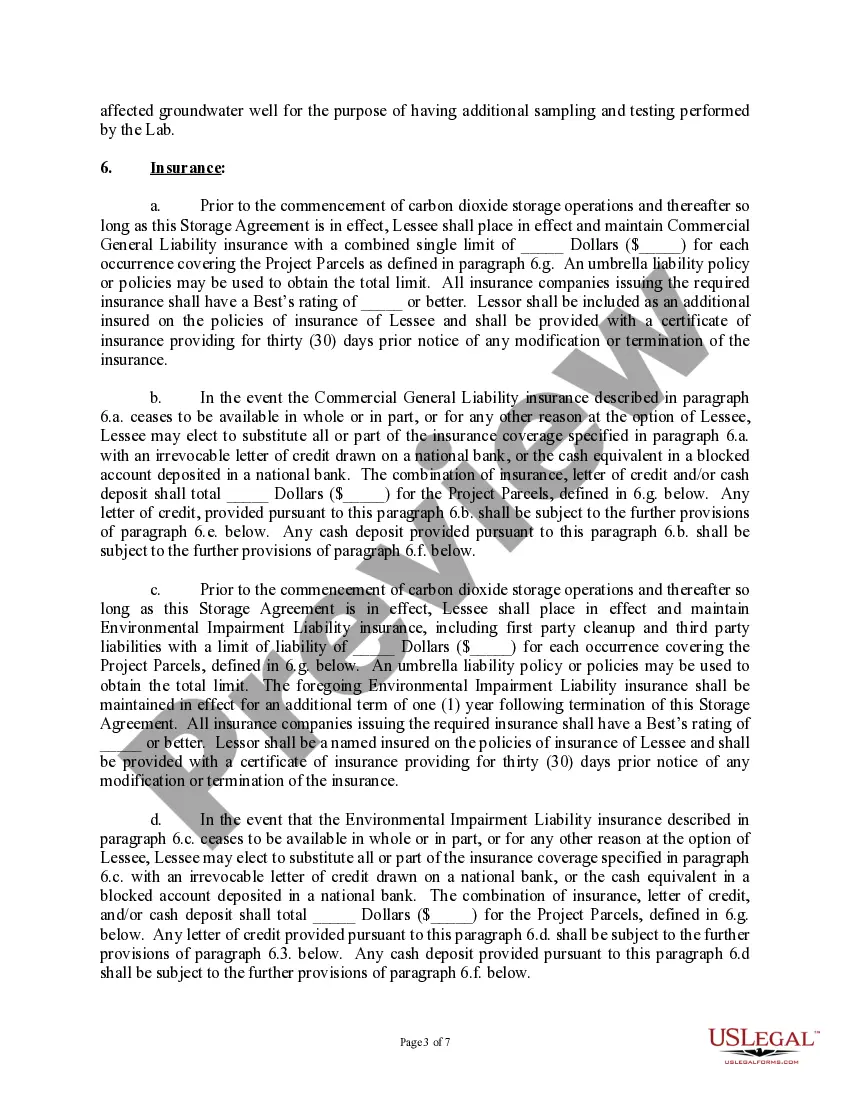
- Insurance: Requires Lessee to maintain specific types of insurance for liability and environmental protection.
Common use cases
You should use this form when entering into an agreement for the underground storage of carbon dioxide. This scenario is relevant for landowners who are considering leasing their subsurface rights to a company intending to engage in carbon sequestration. It is essential in contexts such as environmental remediation projects, compliance with emissions regulations, or as part of sustainability initiatives in industrial operations. This agreement is also suitable for organizations seeking to offset their carbon footprint by using land for carbon dioxide storage.
Who this form is for
- Landowners looking to lease their property for carbon dioxide storage.
- Companies involved in carbon capture and sequestration projects.
- Legal professionals assisting clients in establishing subsurface lease agreements.
- Environmental organizations interested in carbon offset strategies.
How to complete this form
- Identify the parties: Clearly state the name and address of both Lessor and Lessee.
- Define the property: Describe the specific land area covered by the agreement.
- Specify financial terms: Enter the signing bonus and rental amount.
- Set the term: Indicate the duration of the agreement and conditions for extension.
- Review and sign: Ensure both parties understand and agree to all terms before signing.
Does this form need to be notarized?
In most cases, this form does not require notarization. However, some jurisdictions or signing circumstances might. US Legal Forms offers online notarization powered by Notarize, accessible 24/7 for a quick, remote process.
Get your form ready online
Our built-in tools help you complete, sign, share, and store your documents in one place.
Make edits, fill in missing information, and update formatting in US Legal Forms—just like you would in MS Word.
Download a copy, print it, send it by email, or mail it via USPS—whatever works best for your next step.
Sign and collect signatures with our SignNow integration. Send to multiple recipients, set reminders, and more. Go Premium to unlock E-Sign.
If this form requires notarization, complete it online through a secure video call—no need to meet a notary in person or wait for an appointment.
We protect your documents and personal data by following strict security and privacy standards.

Make edits, fill in missing information, and update formatting in US Legal Forms—just like you would in MS Word.

Download a copy, print it, send it by email, or mail it via USPS—whatever works best for your next step.

Sign and collect signatures with our SignNow integration. Send to multiple recipients, set reminders, and more. Go Premium to unlock E-Sign.

If this form requires notarization, complete it online through a secure video call—no need to meet a notary in person or wait for an appointment.

We protect your documents and personal data by following strict security and privacy standards.
Common mistakes
- Failing to accurately describe the property and its boundaries.
- Neglecting to outline specific responsibilities regarding cleanup and damage.
- Leaving financial terms ambiguous or not clearly defined.
- Not reviewing local laws that may affect the agreement.
- Overlooking the need for insurance coverage details.
Advantages of online completion
- Convenience: Easily accessible and downloadable for immediate use.
- Editability: Fill in the specific details pertinent to your situation.
- Legal support: Templates drafted by licensed attorneys ensure compliance with legal standards.
- Time-saving: Quickly complete necessary documentation without lengthy legal consultations.
Legal use & context
- This agreement is essential for legally binding transactions regarding subsurface carbon dioxide storage.
- Clearly defined terms help protect the rights and responsibilities of both parties involved.
- Understanding the risk management section of the agreement is crucial for liability protection.
Key takeaways
- The form serves to protect landowners and lessees during carbon dioxide storage projects.
- Clearly outlined responsibilities and insurance requirements help minimize legal risks.
- Properly completed documentation ensures compliance with local regulations.
- Understanding the terms is crucial for both parties to mitigate future disputes.
Looking for another form?




Form popularity
FAQ
The most likely effect of exposure to carbon black is lung disease. Inhaling carbon black particles can irritate the lungs and cause coughing. Carbon black can also irritate the eyes, nose and throat. When people are exposed to high levels of carbon black over many years, the particles may lodge deep in their lungs.
Elemental carbon is of very low toxicity. Health hazard data presented here is based on exposures to carbon black, not elemental carbon. Chronic inhalation exposure to carbon black may result in temporary or permanent damage to lungs and heart.
Exposure to CO2 can produce a variety of health effects. These may include headaches, dizziness, restlessness, a tingling or pins or needles feeling, difficulty breathing, sweating, tiredness, increased heart rate, elevated blood pressure, coma, asphyxia, and convulsions.
Carbon is made up of just one type of atom. This means carbon is an element. Carbon atoms are arranged in a regular pattern, meaning carbon is solid at room temperature.
It makes up for 18% of the human body. Sugar, glucose, proteins etc are all made of it. Carbon in its diamond form is used in jewellery. Amorphous carbon is used to make inks and paints. Graphite is used as the lead in your pencils. One of the most important uses is carbon dating.
Carbon is found in abundance in the sun, stars, comets and atmospheres of most planets. Graphite is found naturally in many locations. Diamond is found in the form of microscopic crystals in some meteorites. Natural diamonds are found in the mineral, kimberlite, in South Africa, Arkansas and elsewhere.
Carbon is used in some way in most every industry in the world. It is used for fuel in the form of coal, methane gas, and crude oil (which is used to make gasoline). It is used to make all sorts of materials including plastics and alloys such as steel (a combination of carbon and iron).
Carbon dioxide becomes a poisonous gas when there is too much of it in the air you breathe. Besides the effects it can have on the planet and the atmosphere, carbon dioxide poisoning can lead to central nervous system damage and respiratory deterioration in humans and other breathing creatures.
Pure carbon is considered non-toxic, although inhalation of fine particles, such as soot, can damage lung tissue. Graphite and charcoal are considered safe enough to eat.