New Jersey Complaint Negligence Operation of Automobile
What is this form?
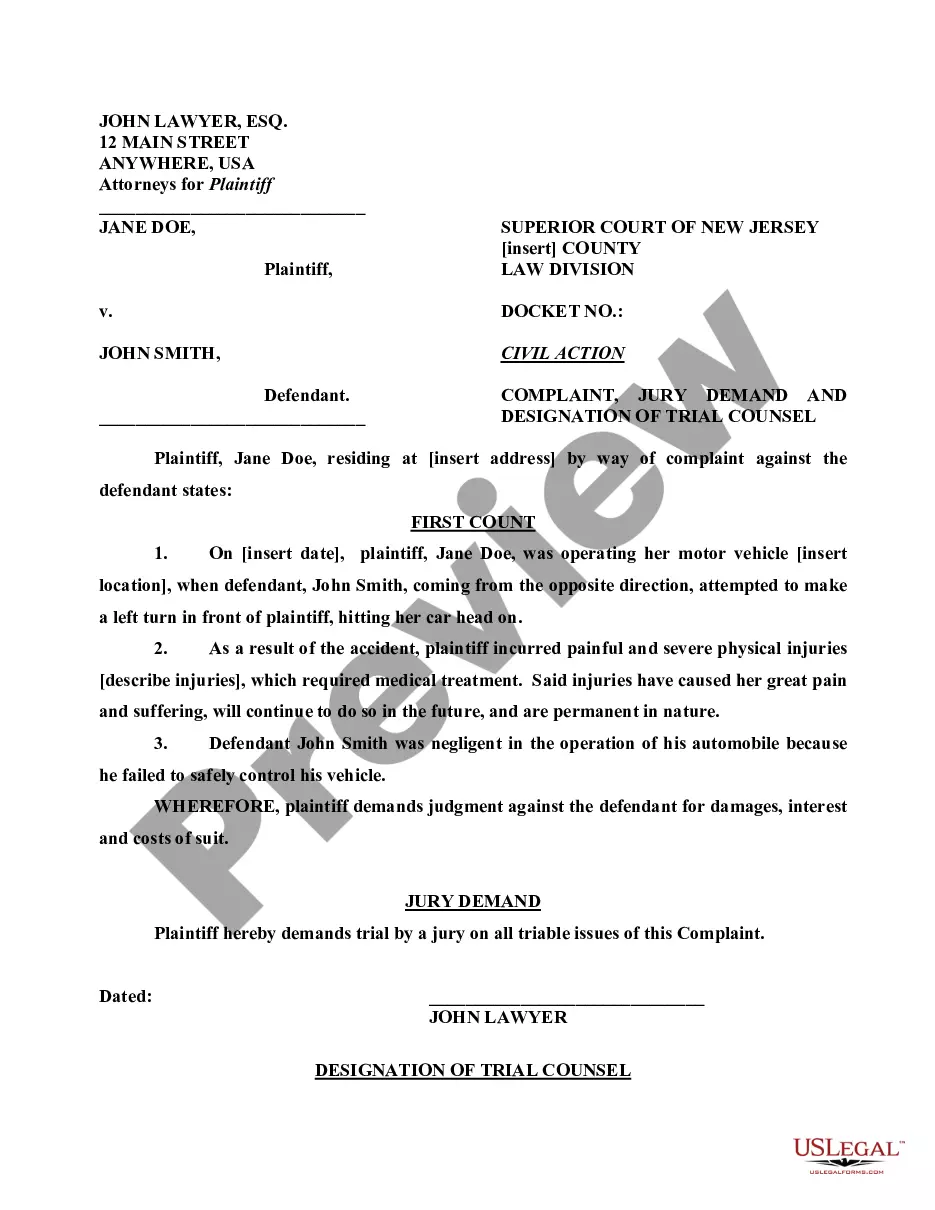
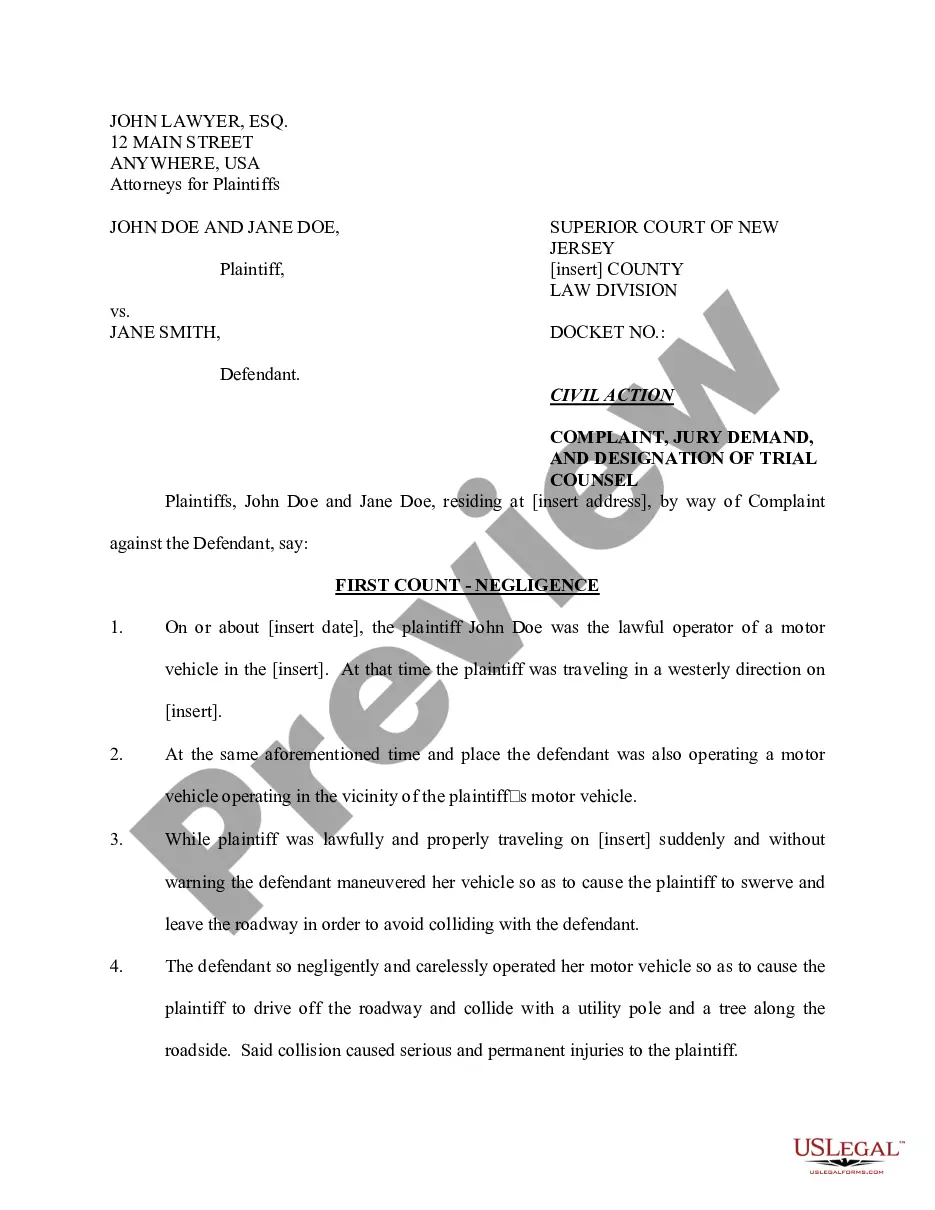
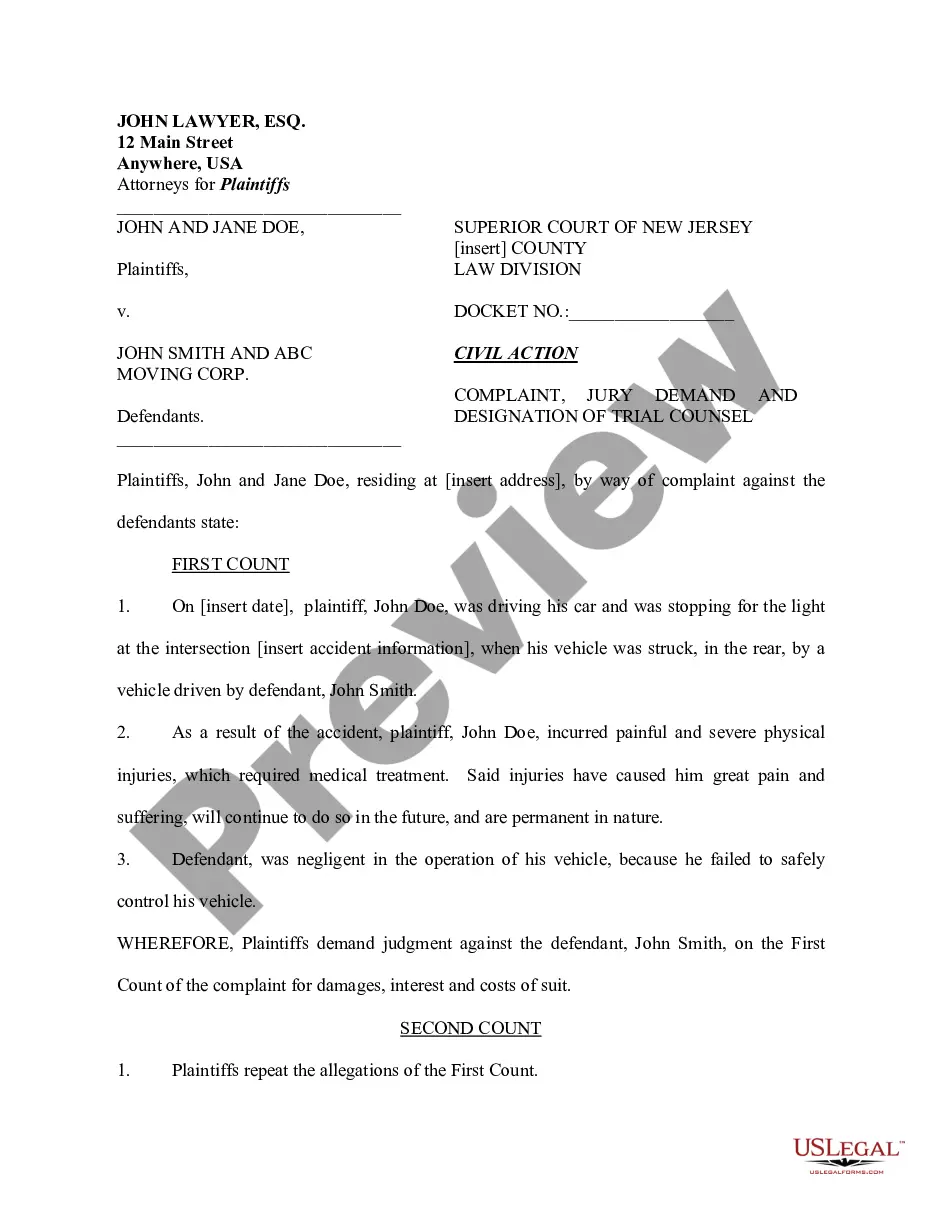
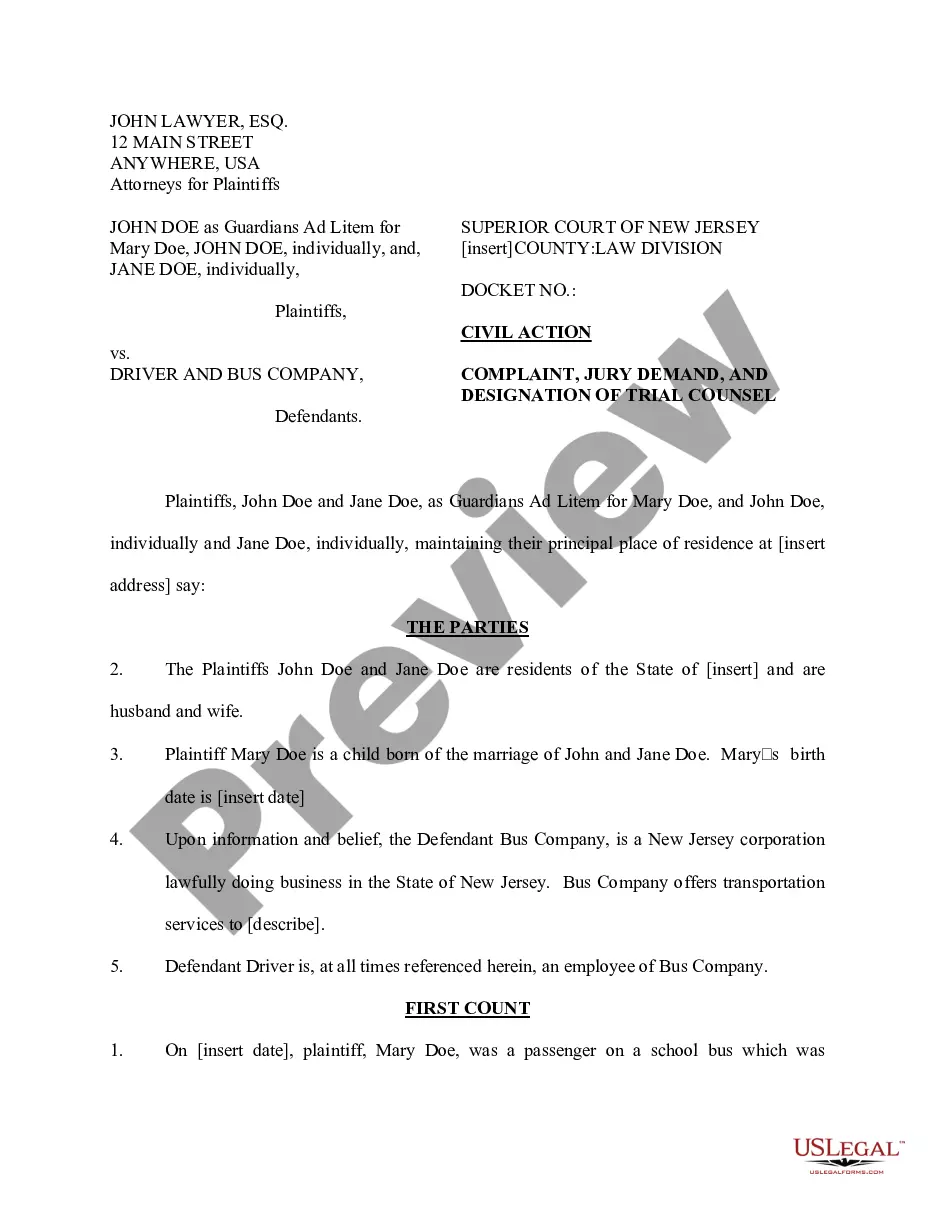
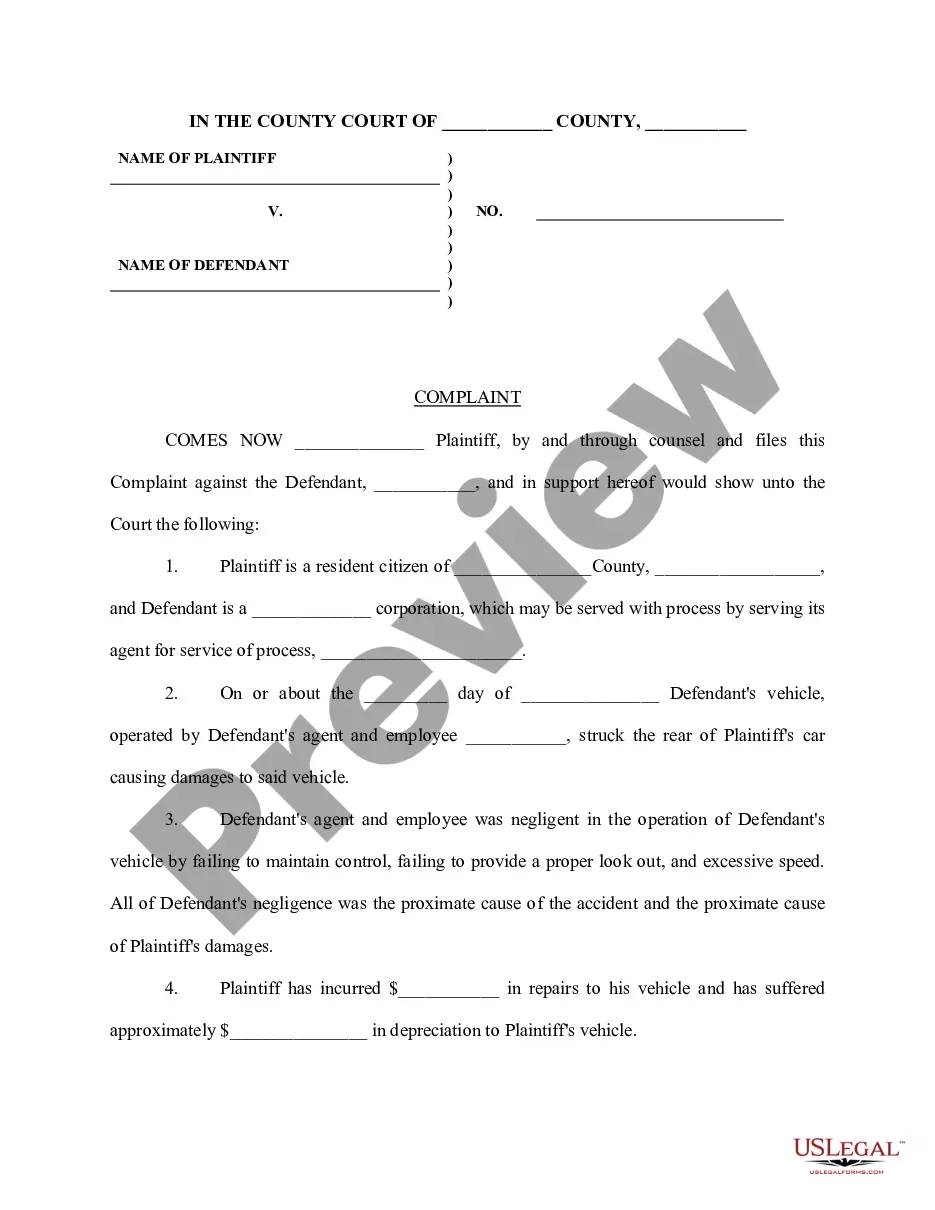
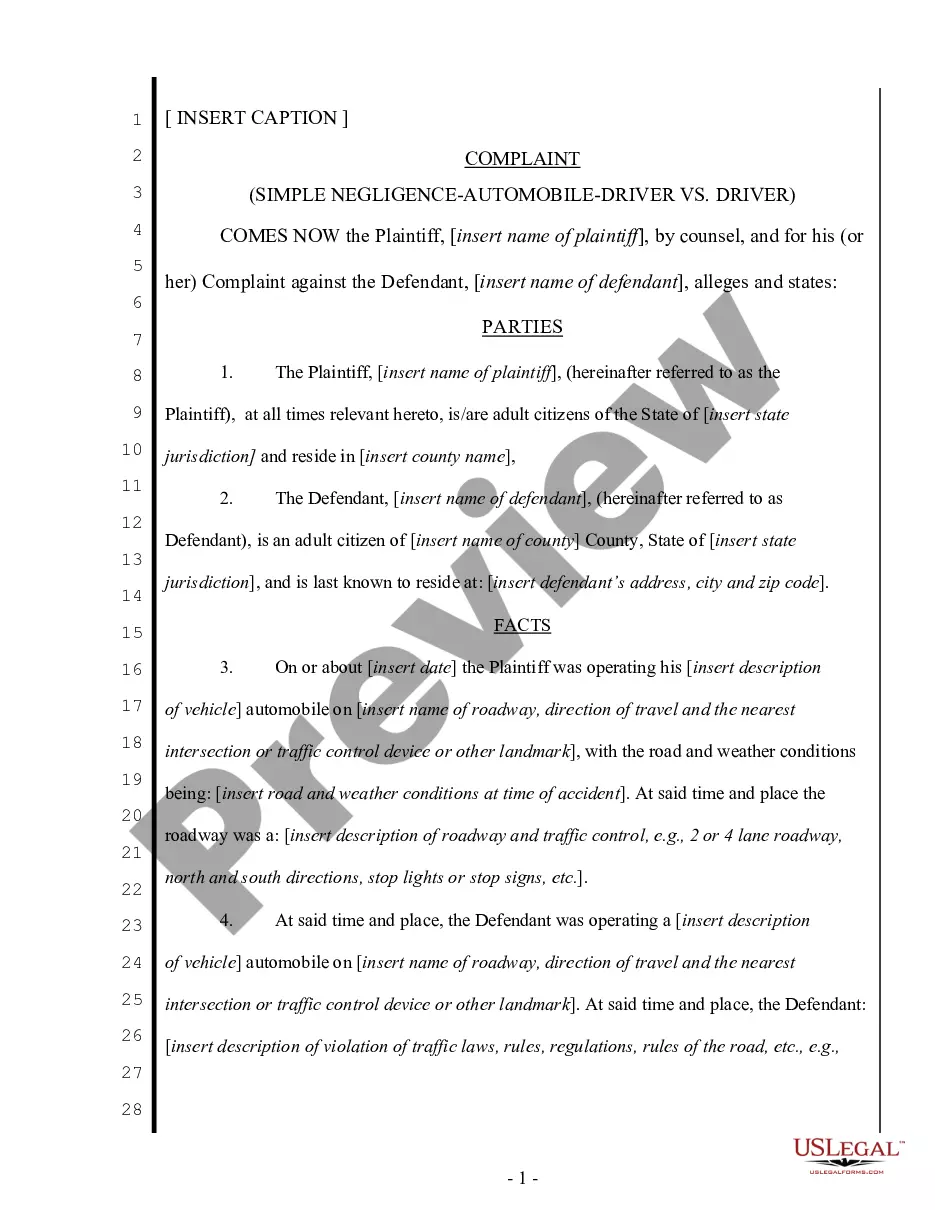
This form, known as the Complaint for Negligence Operation of Automobile, is utilized in New Jersey to address claims resulting from car accidents involving negligence. It outlines the plaintiff's case against the defendant, who is accused of failing to operate their vehicle safely.
What’s included in this form
- Identifying details of the plaintiff and defendant.
- Factual description of the incident, including date and location.
- Details regarding injuries sustained and medical treatment received.
- Claims of negligence against the defendant.
- Demand for judgment, including damages, interest, and costs.
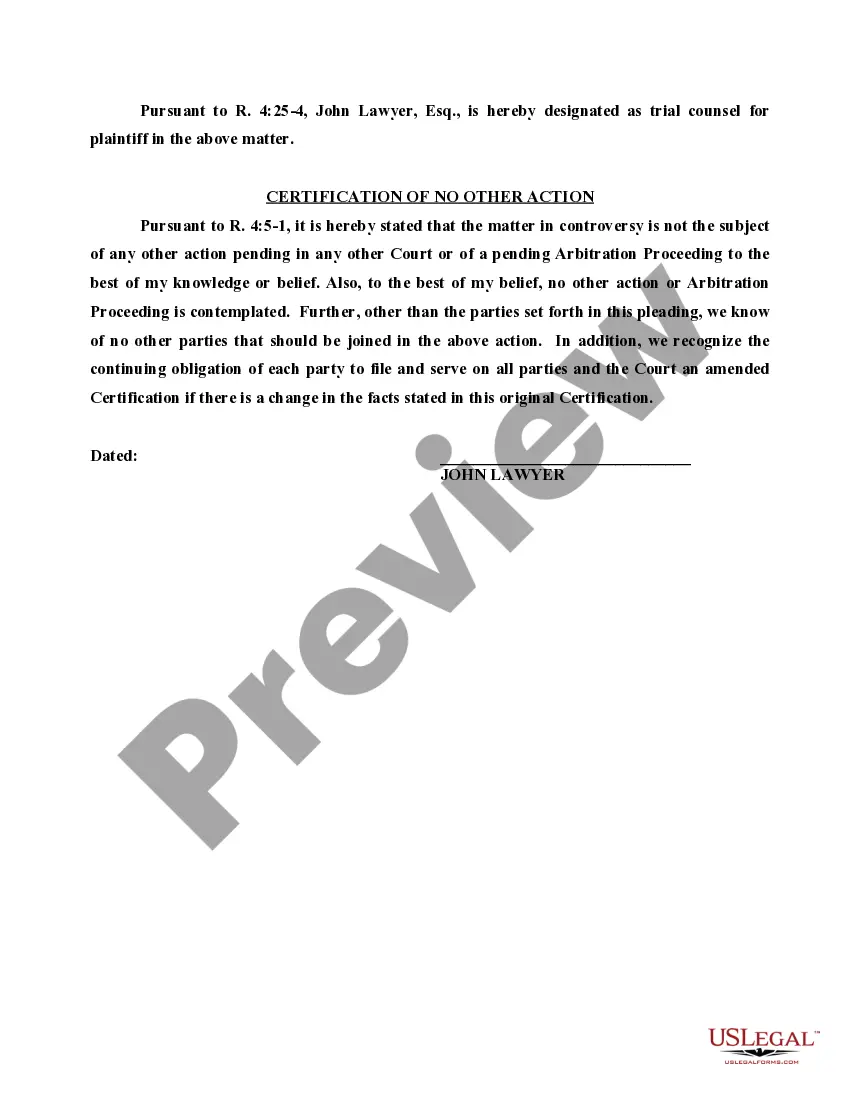
- Jury demand for trial on all triable issues.
When this form is needed
This form should be used when an individual involved in a car accident believes that the other driver acted negligently, leading to injuries. It is appropriate to file this complaint in the New Jersey Superior Court to seek damages for injuries and suffering resulting from the accident.
Who should use this form
- Individuals who have been injured in a car accident due to another driver's negligence.
- Plaintiffs seeking legal recourse for medical expenses and related damages.
- Those who wish to hold another driver accountable for unsafe driving behavior.
Steps to complete this form
- Identify the parties involved by entering the names and addresses of the plaintiff and defendant.
- State the date and location of the accident in the factual section.
- Describe the nature of the injuries and medical treatment received.
- Assert claims of negligence, detailing how the defendant failed to operate their vehicle safely.
- Specify the damages sought, including any medical expenses or compensation for pain and suffering.
- Complete the jury demand and signature sections as required.
Does this form need to be notarized?
This form does not typically require notarization unless specified by local law. Ensure to check local regulations or consult with an attorney if you have questions regarding notarization requirements.
Get your form ready online
Our built-in tools help you complete, sign, share, and store your documents in one place.
Make edits, fill in missing information, and update formatting in US Legal Forms—just like you would in MS Word.
Download a copy, print it, send it by email, or mail it via USPS—whatever works best for your next step.
Sign and collect signatures with our SignNow integration. Send to multiple recipients, set reminders, and more. Go Premium to unlock E-Sign.
If this form requires notarization, complete it online through a secure video call—no need to meet a notary in person or wait for an appointment.
We protect your documents and personal data by following strict security and privacy standards.

Make edits, fill in missing information, and update formatting in US Legal Forms—just like you would in MS Word.

Download a copy, print it, send it by email, or mail it via USPS—whatever works best for your next step.

Sign and collect signatures with our SignNow integration. Send to multiple recipients, set reminders, and more. Go Premium to unlock E-Sign.

If this form requires notarization, complete it online through a secure video call—no need to meet a notary in person or wait for an appointment.

We protect your documents and personal data by following strict security and privacy standards.
Avoid these common issues
- Failing to provide complete and accurate information about the accident.
- Not specifying the damages sought in clear terms.
- Omitting necessary signatures from the plaintiff or trial counsel.
- Neglecting to update any related certifications when facts change.
Advantages of online completion
- Immediate access to professionally drafted legal documentation.
- Convenience of downloading the form for personal use.
- Editable templates to customize based on specific details of your case.
- Reliable and up-to-date legal language compliant with state regulations.
- The complaint must be filed in the appropriate court in New Jersey.
- It is crucial to ensure that the lawsuit is initiated within the statute of limitations for personal injury claims in New Jersey.
Quick recap
- The Complaint for Negligent Operation of an Automobile is essential for pursuing claims related to auto accidents in New Jersey.
- It is important to specify all details of the incident and the injuries sustained comprehensively.
- Legal assistance may be beneficial to navigate the complexities of filing a lawsuit effectively.
Looking for another form?
Form popularity
FAQ
New Jersey is a contributory negligence state, which means that the person asking for damages in a lawsuit has to be less responsible for the accident than the person who allegedly caused the accident.
New Jersey is one of a handful of states with no-fault car insurance laws. Despite its name, no-fault does not mean that fault is not assigned following a car accident.
Negligence is in general defined as the failure to exercise the care that is expected of a reasonable person in similar circumstances so vehicular negligence can be doing such in a vehicle such as a car, truck or motorcycle.
Negligence is defined as the failure to use ordinary care. In the case of an auto accident, negligence means that a driver failed to exercise the care toward others which a reasonable person would do in the circumstances, or took action that a reasonable person would not under the circumstances.
Written accident reports must be filed within 10 days following the accident. You must use the official state form, New Jersey Motor Vehicle Commission Motor Vehicle Accident Report. The New Jersey Self-Reporting Crash form should be filed to report an accident that was not investigated by any police agency.
Negligent driving includes: Unintentionally failing to provide a safe environment for other drivers and pedestrians. Incidents where the term accidental may be used to describe the event. Driving on private property without the owner's consent. Driving under the influence of non-prescribed drugs or alcohol.
A driver who runs a stop sign causing an injury crash. A store owner who fails to put up a Caution: Wet Floor sign after mopping up a spill. A property owner who fails to replace rotten steps on a wooden porch that collapses and injures visiting guests.
Webster's Dictionary defines an accident as follows: an unfortunate happening that occurs unintentionally and results in harm, injury, damage or loss. By contrast, negligence as defined by most jurisdictions in the United States including California, is the lack of ordinary care or skill in the
If your vehicle is damaged in an accident, the responsible driver's insurance company should pay for the cost to repair your vehicle. However, if the responsible driver is uninsured or does not have insurance coverage for property damage, there are a couple options.