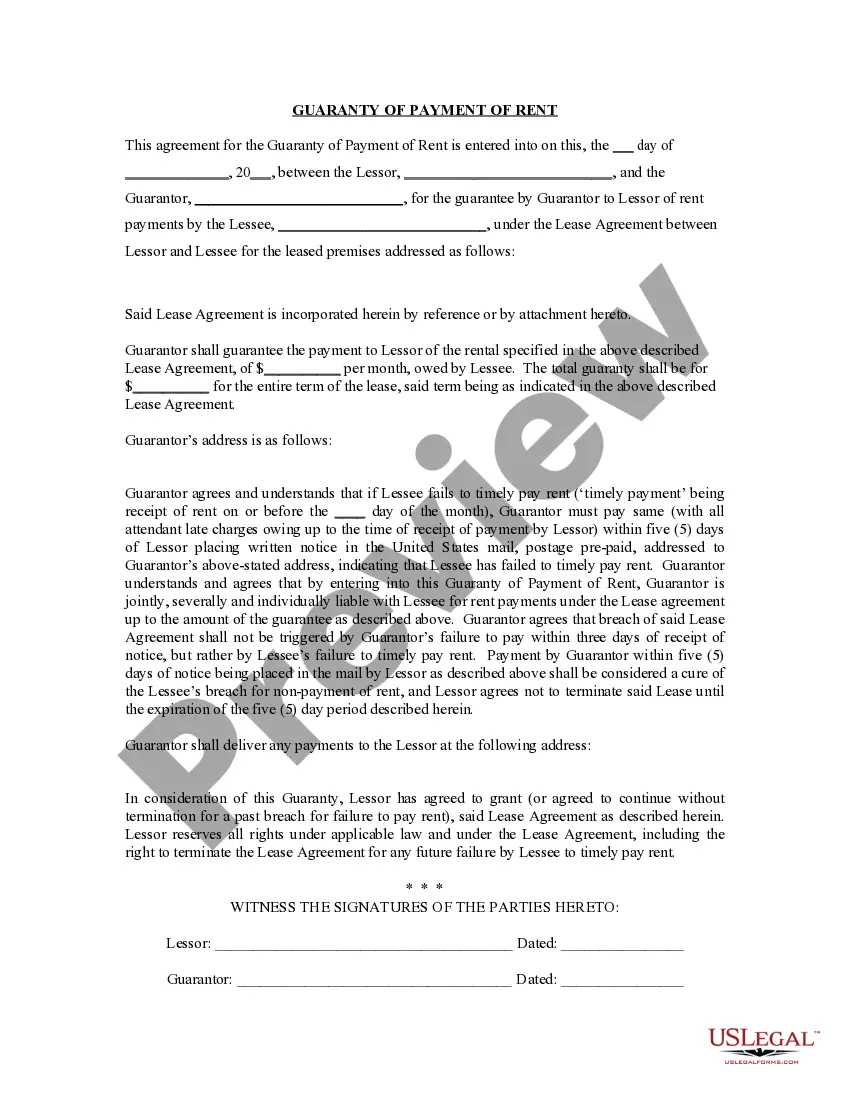
New Jersey Order Reforming Mortgage
What is this form?
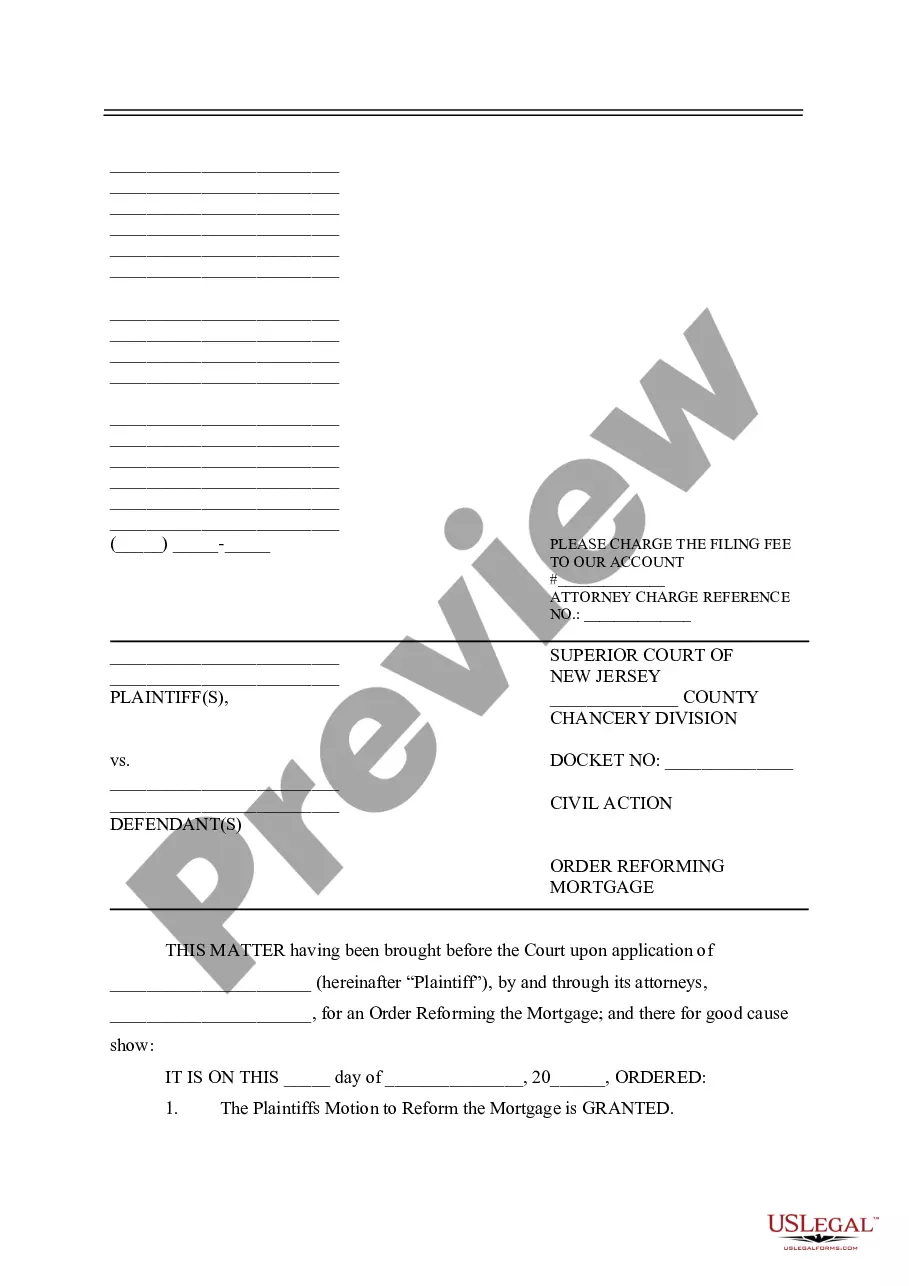
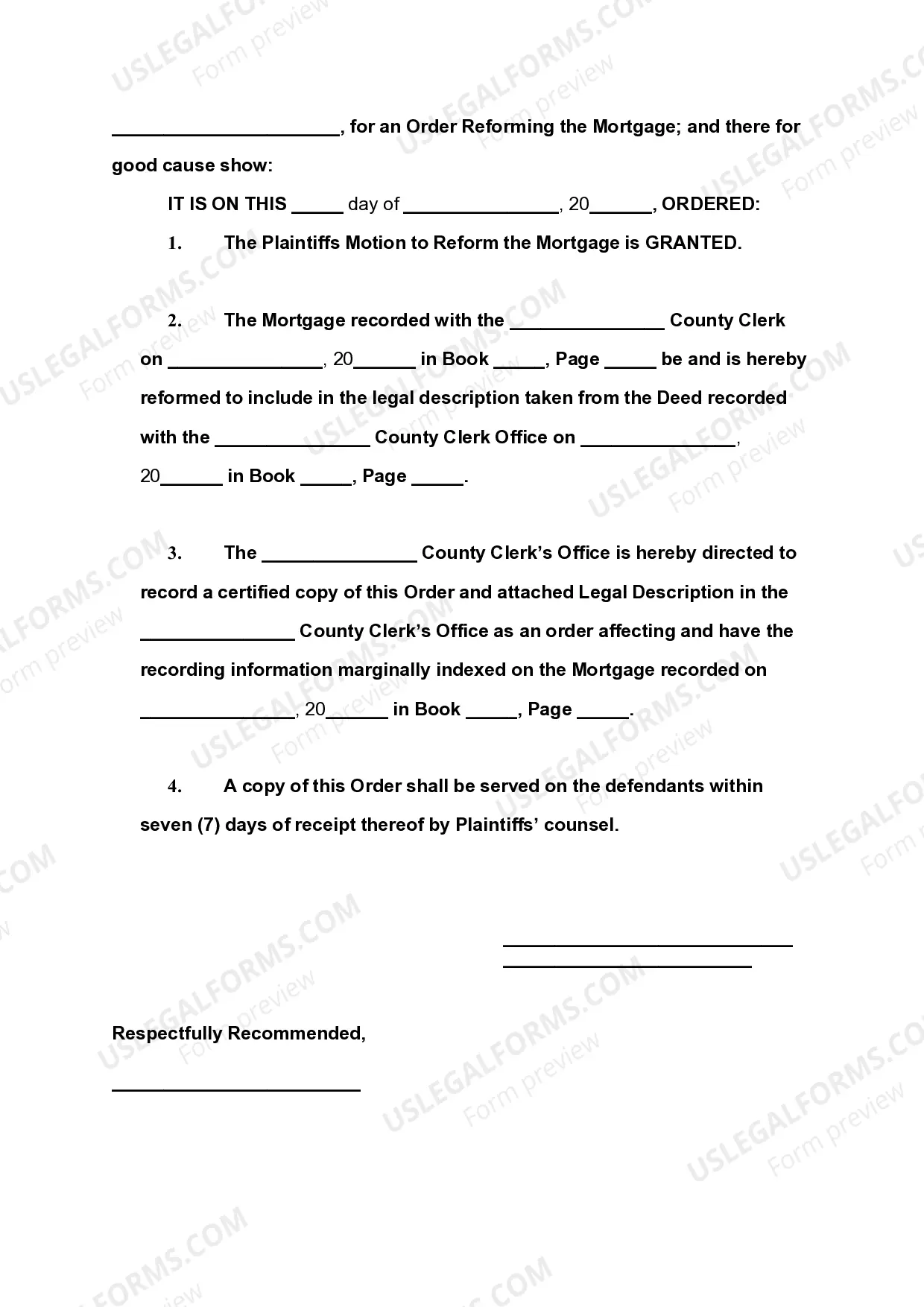
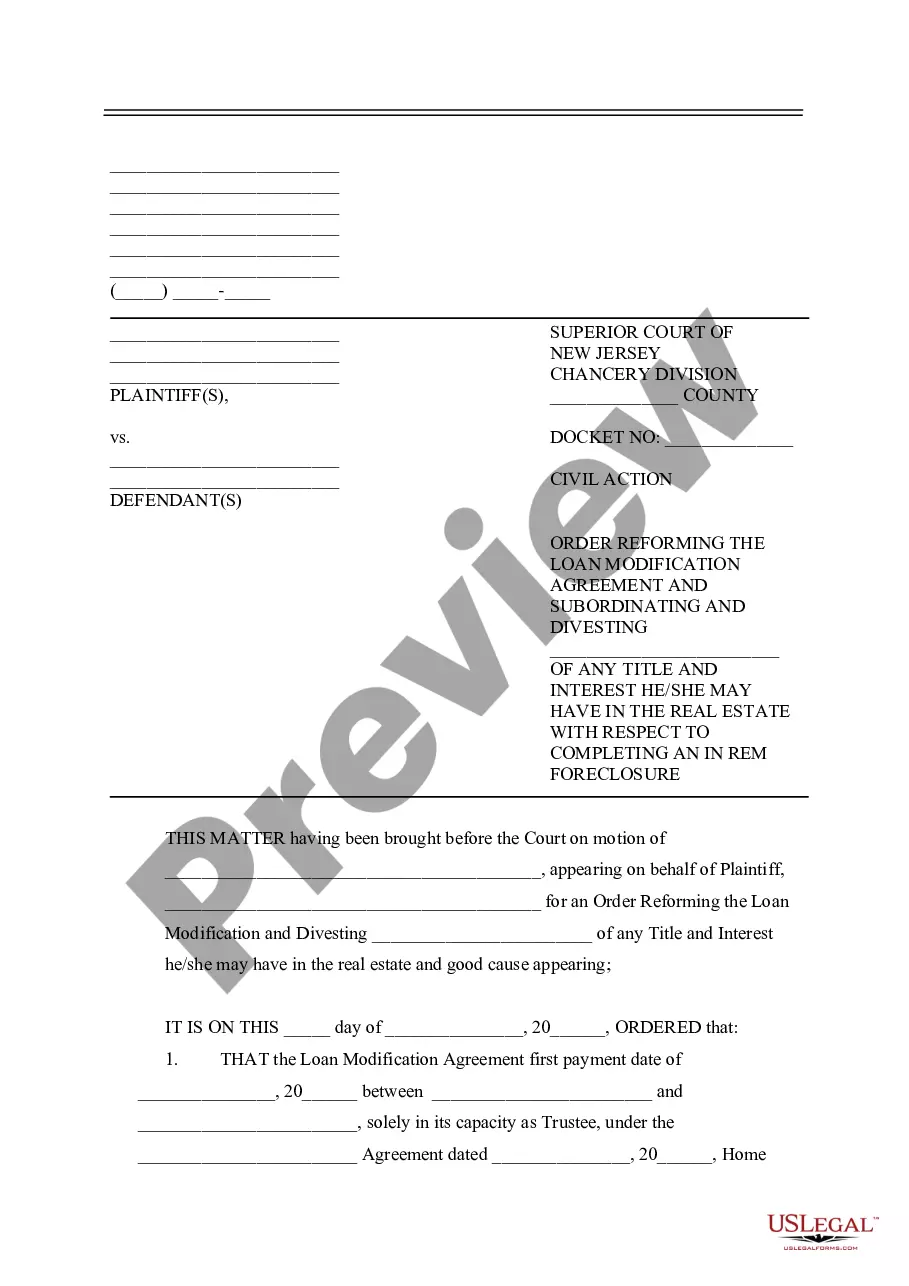
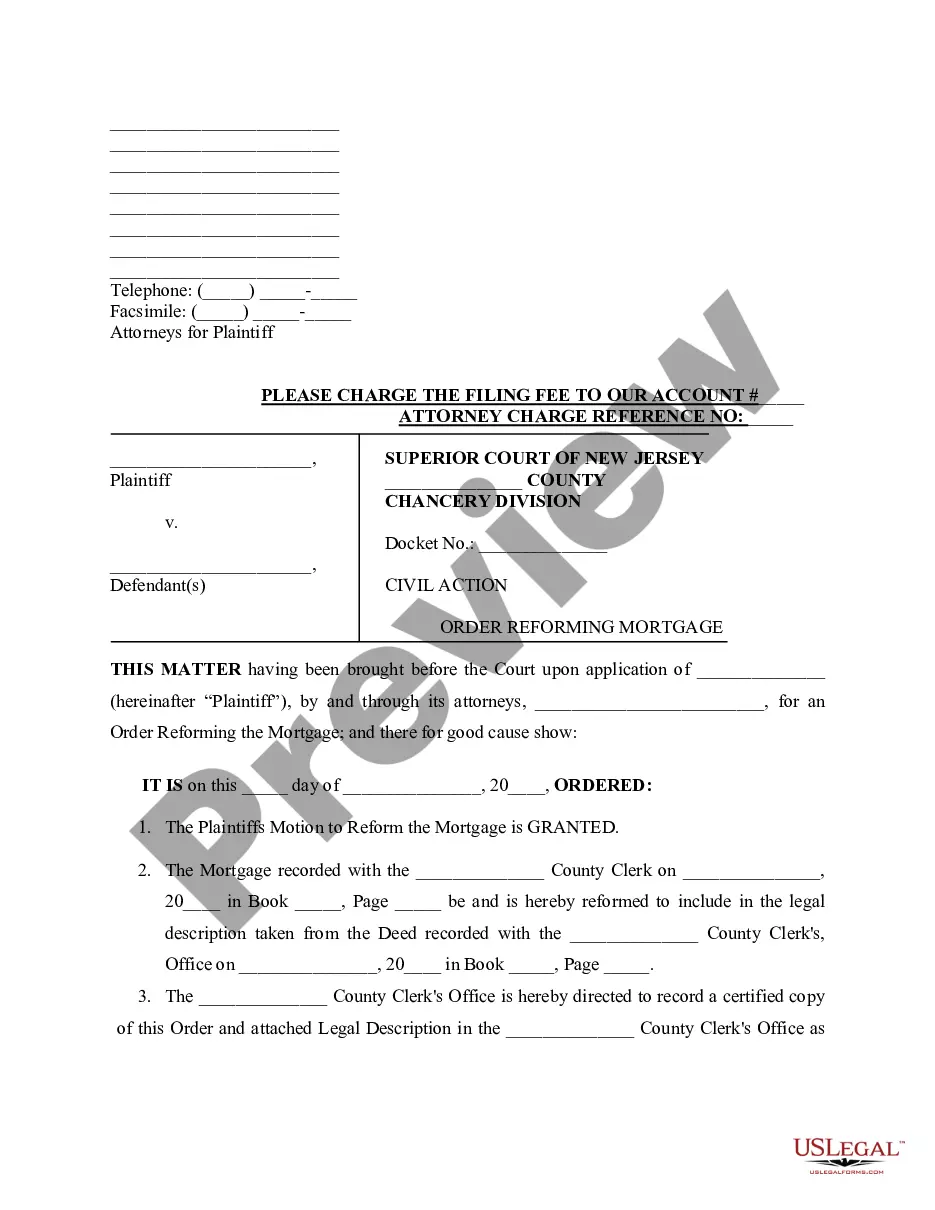
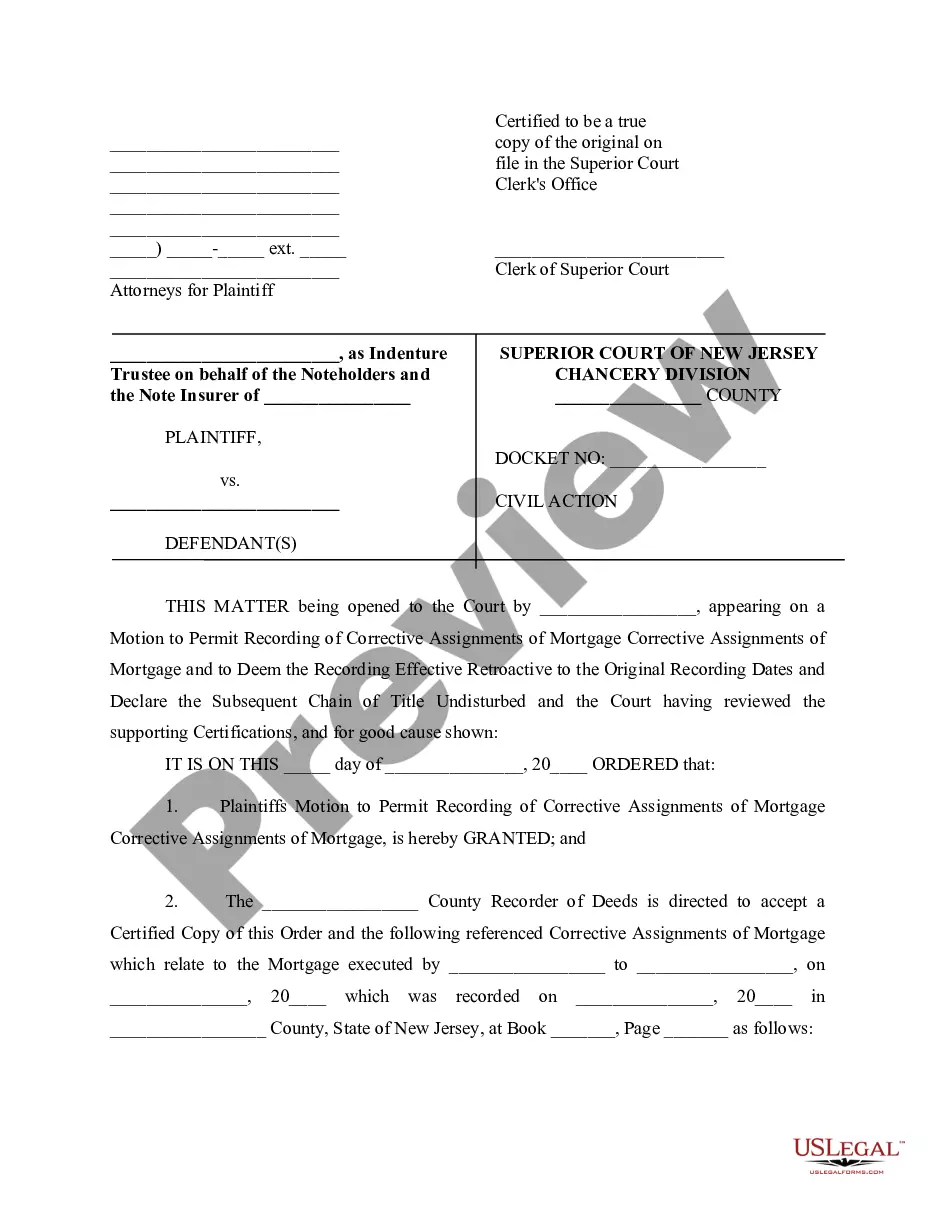
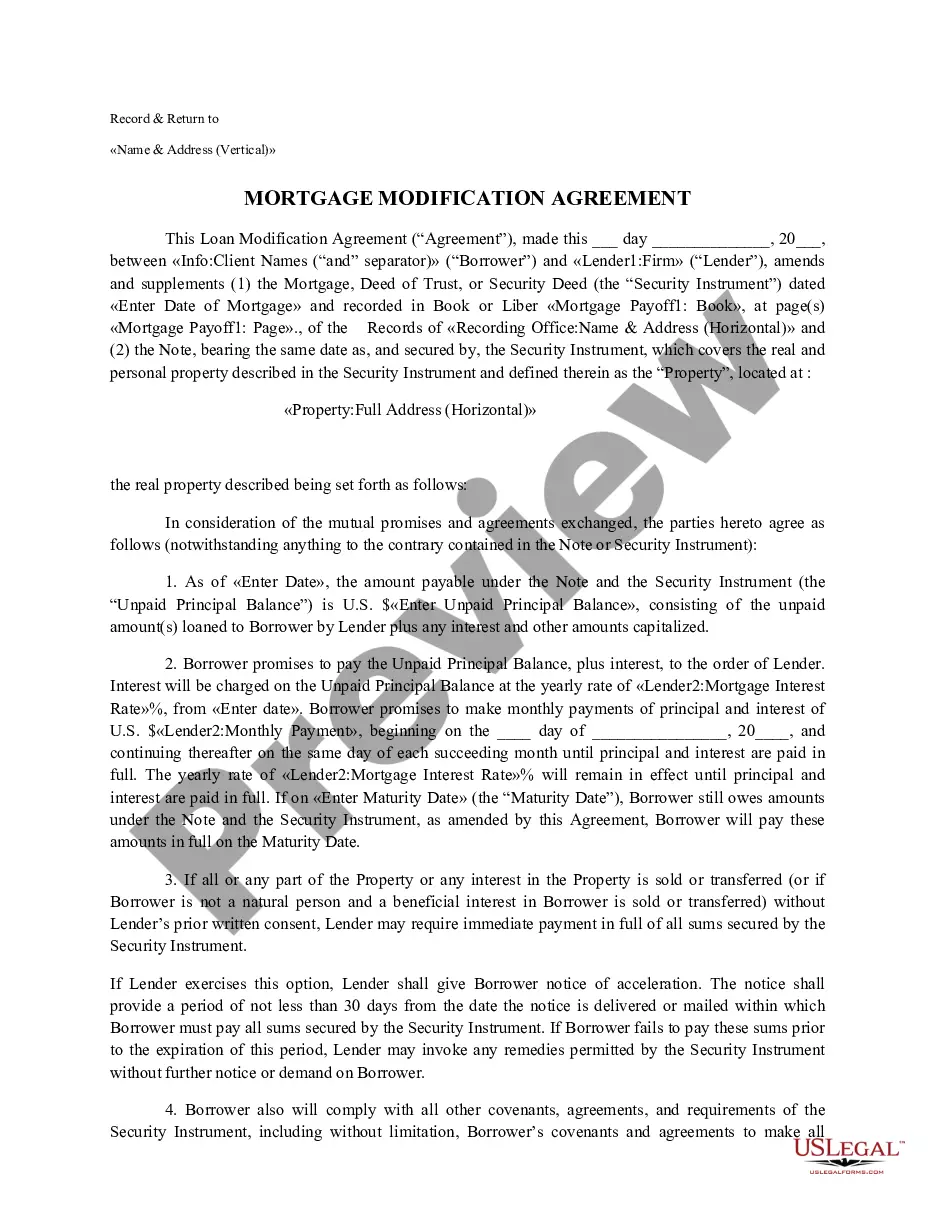
The Order Reforming Mortgage is a legal document issued by the chancery court to modify the terms of an existing mortgage. This form ensures that the legal description in the mortgage matches the information recorded in the deed. Unlike standard mortgage documents, this order specifically addresses discrepancies in legal descriptions, providing clarity and proper recording with local authorities.
Key components of this form
- Identification of the plaintiff and defendant parties.
- Docket number and court jurisdiction details.
- Date of the order and details regarding the motion to reform.
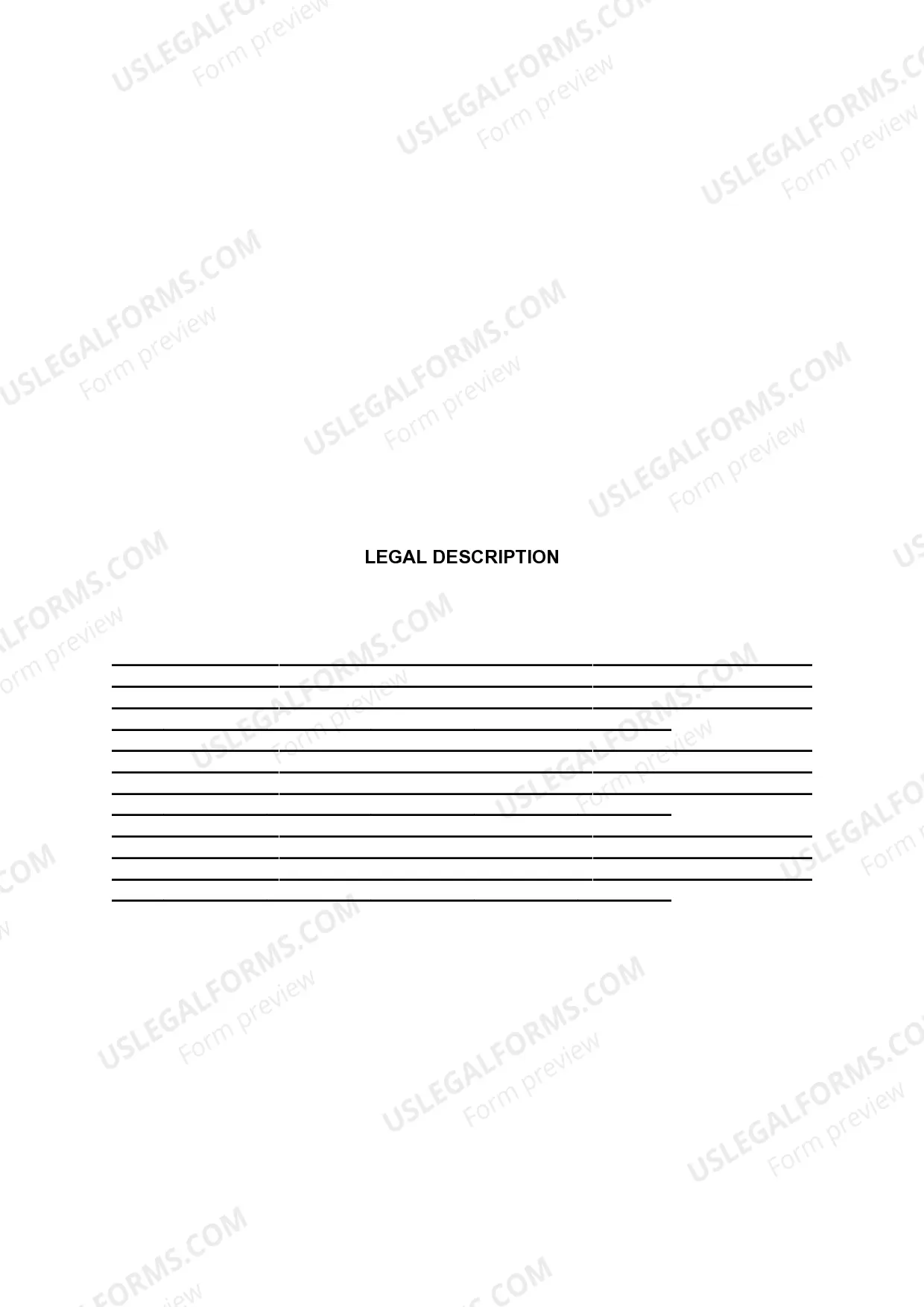
- Specific legal descriptions from the deed and the corresponding recording information.
- Instructions for the county clerk regarding recordkeeping and indexing.
- Requirement to serve the order to the defendants within a set timeframe.
When to use this form
This form is typically used when there is a need to correct or update the legal description in a mortgage. Common scenarios include discrepancies between the mortgage and the deed or changes in property boundaries that need to be officially recorded. It is important to use this form to resolve any legal issues related to property ownership and to ensure the alignment of legal documents.
Who this form is for
This form is intended for:
- Homeowners or property owners who need to amend their mortgage documents.
- Attorneys representing clients in mortgage disputes or corrections.
- Financial institutions seeking to rectify legal descriptions in their records.
Completing this form step by step
- Enter the names of the plaintiff and defendant parties at the top of the document.
- Fill in the docket number and court information as required.
- Specify the date of the order and details of the mortgage to be reformed.
- Provide the correct legal description taken from the deed, including the book and page numbers.
- Sign and date the document as required, ensuring all parties receive a copy.
Does this document require notarization?
This form does not typically require notarization unless specified by local law. It is recommended to confirm local regulations regarding notarization to ensure compliance.
Get your form ready online
Our built-in tools help you complete, sign, share, and store your documents in one place.
Make edits, fill in missing information, and update formatting in US Legal Forms—just like you would in MS Word.
Download a copy, print it, send it by email, or mail it via USPS—whatever works best for your next step.
Sign and collect signatures with our SignNow integration. Send to multiple recipients, set reminders, and more. Go Premium to unlock E-Sign.
If this form requires notarization, complete it online through a secure video call—no need to meet a notary in person or wait for an appointment.
We protect your documents and personal data by following strict security and privacy standards.

Make edits, fill in missing information, and update formatting in US Legal Forms—just like you would in MS Word.

Download a copy, print it, send it by email, or mail it via USPS—whatever works best for your next step.

Sign and collect signatures with our SignNow integration. Send to multiple recipients, set reminders, and more. Go Premium to unlock E-Sign.

If this form requires notarization, complete it online through a secure video call—no need to meet a notary in person or wait for an appointment.

We protect your documents and personal data by following strict security and privacy standards.
Typical mistakes to avoid
- Failing to include accurate legal descriptions from the deed.
- Neglecting to check for consistency in names and details between documents.
- Missing the deadline to serve the order to the defendants.
- Using outdated versions of the form that do not meet current legal standards.
Benefits of completing this form online
- Convenience of downloading and filling out the form at your pace.
- Editability allows for simple adjustments to ensure accuracy before submission.
- Access to approved templates drafted by licensed attorneys ensures legal compliance.
Looking for another form?
Form popularity
FAQ
It is a lengthy process with strict rules for mortgage lenders and multiple opportunities for you to save your home (or arrange the most favorable alternative). According to Nolo.com, New Jersey has the third-longest foreclosure timeline. The average is 1,161 days (38 months) from that first foreclosure notice.
Mortgage lenders are now prohibited by federal law from conducting a foreclosure while a mortgage modification application is under consideration. Before a foreclosure is begun, the lender or their servicer must take steps to let the borrower know what options exist to keep the house.
Although lenders in New Jersey will usually initiate foreclosure proceeding after three missed payments, legally, a lender may consider a mortgage delinquent as soon as one payment is missed.
It is still entirely possible for a foreclosure suit from the lender to be moving forward on a parallel track with your loan modification. One department for the lender may be trying to negotiate better terms with you while another is aggressively working to take your home.
Some states have complete consumer protections against deficiency suits, (known as non-recourse states). New Jersey doesn't. The lender must file their deficiency suit within 3 months of the Sheriff's sale in New Jersey. Invoking the fair market value of the property is a common defense against deficiency.