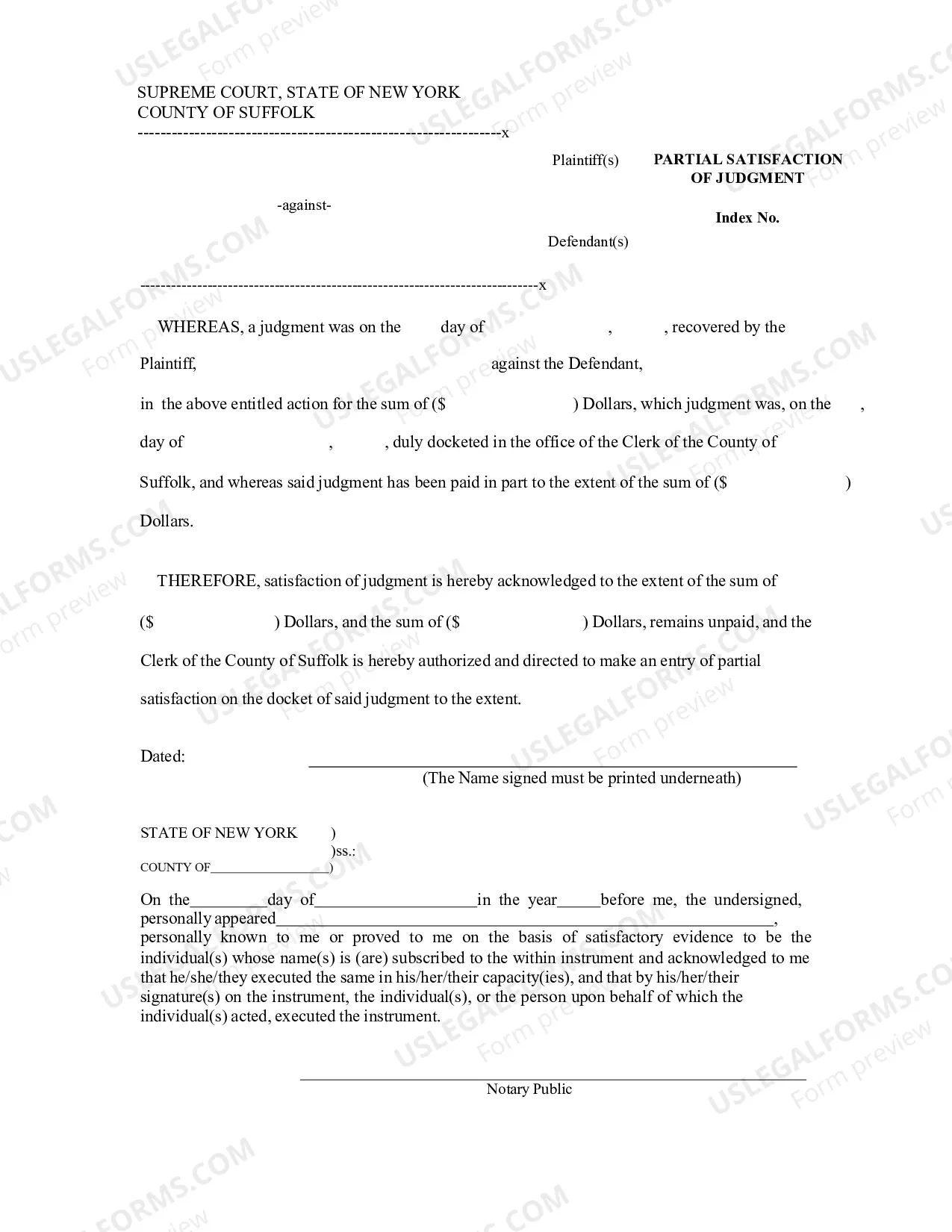
New Jersey Security Contract for Contractor
What this document covers
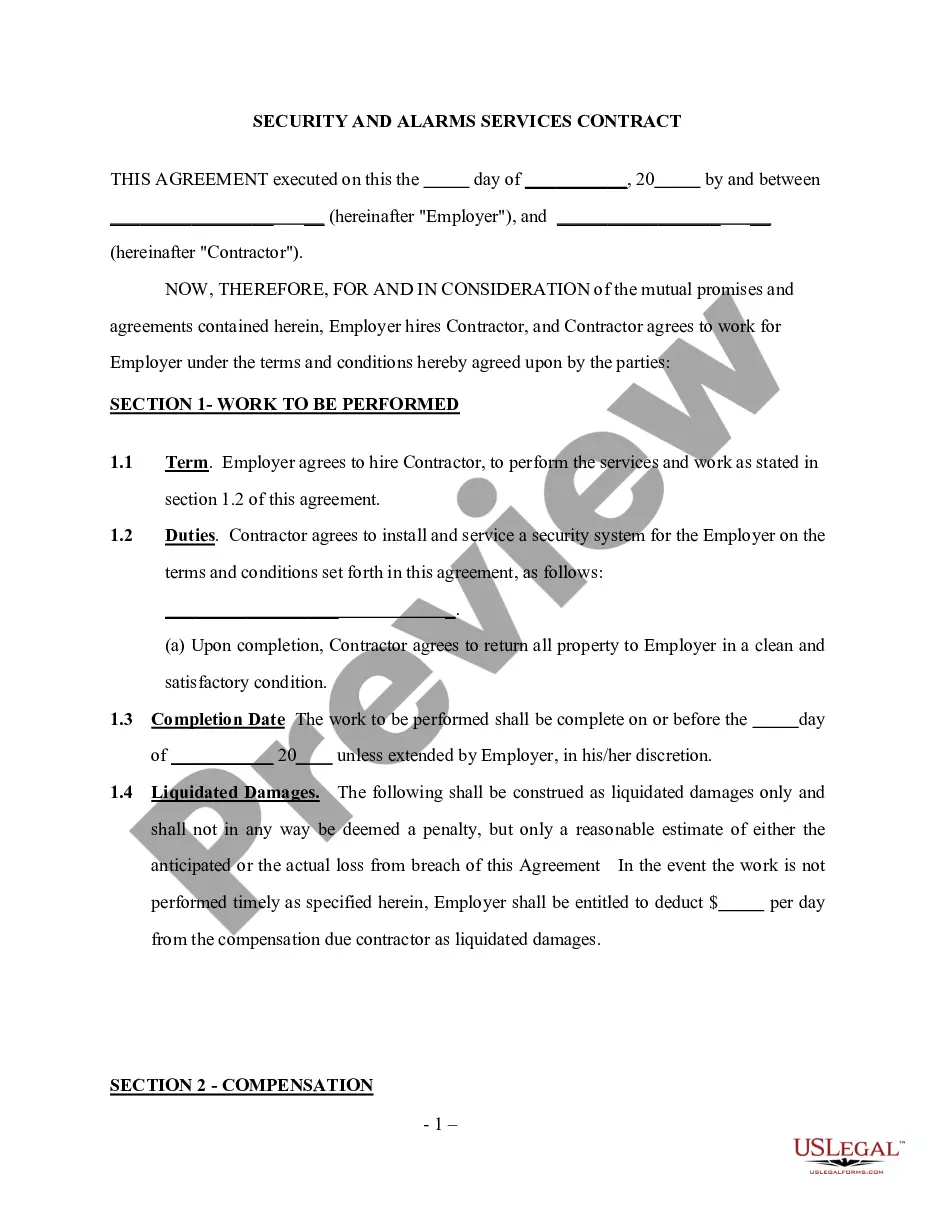
The Security Contract for Contractor is a legal document created to establish an agreement between security contractors and property owners regarding security services. This form outlines the expectations and liabilities associated with the provision of security at a property, including payment structures like cost plus or fixed fee arrangements. It is specifically tailored to comply with the legal requirements of New Jersey, ensuring that both parties are protected under state law.
What’s included in this form
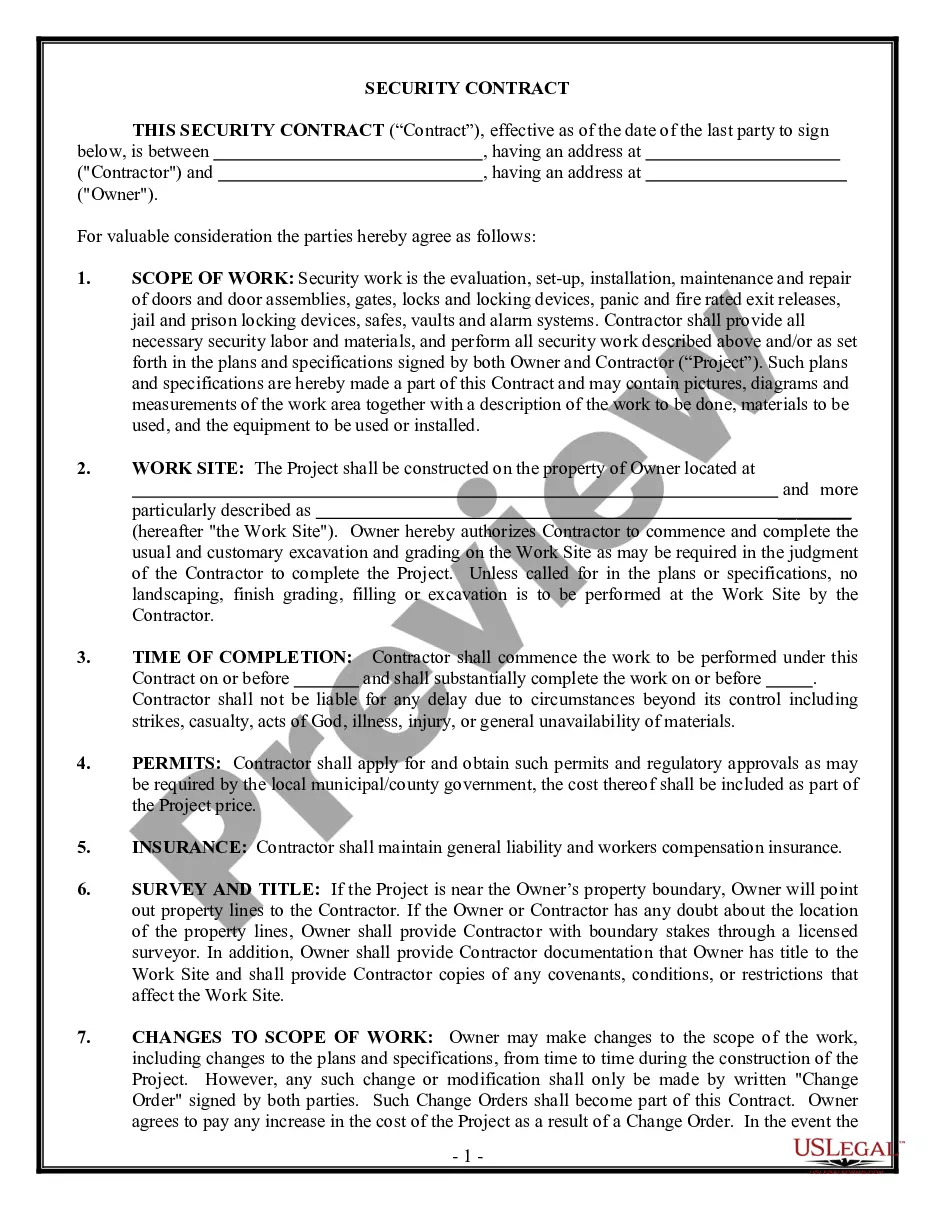
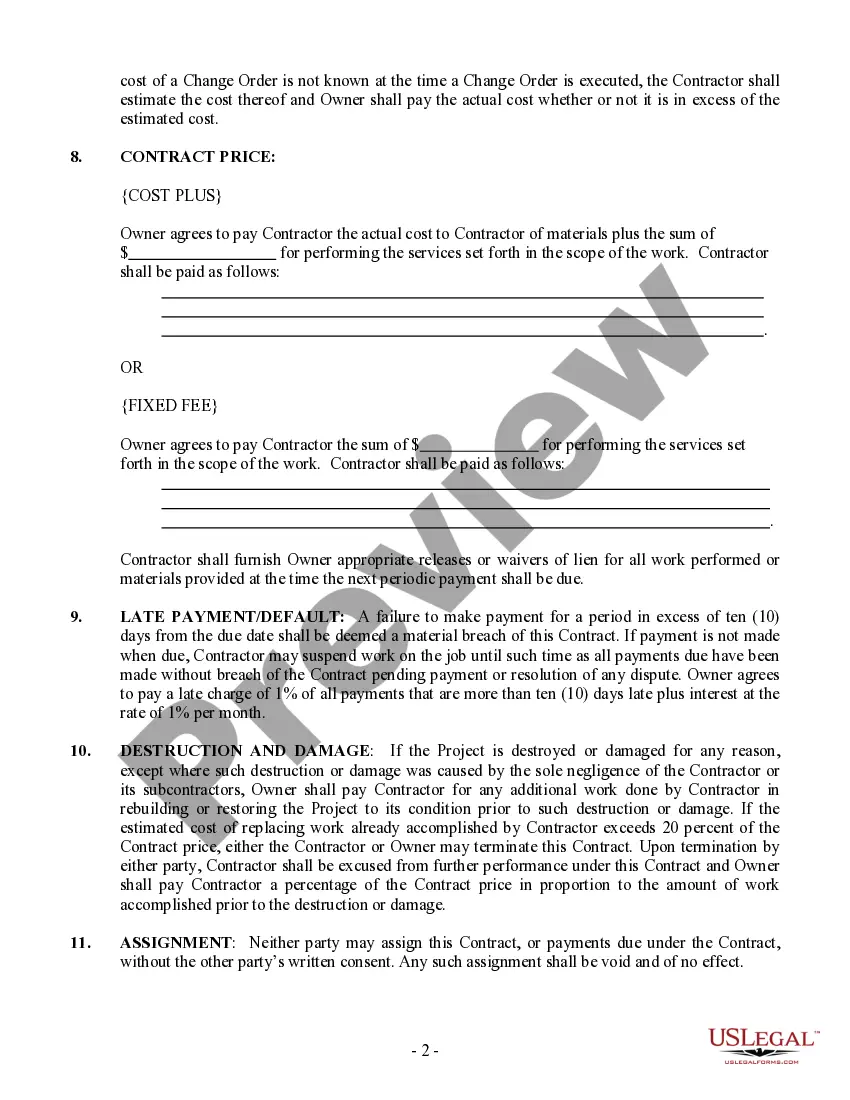
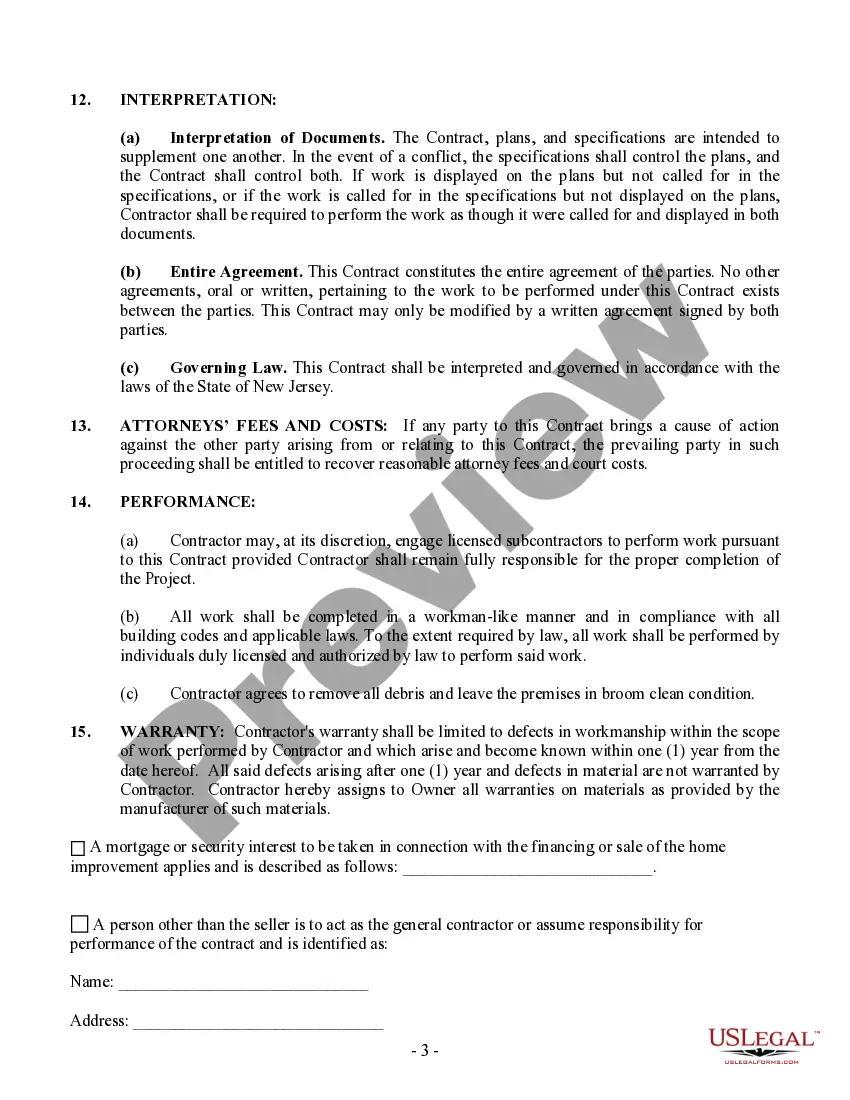
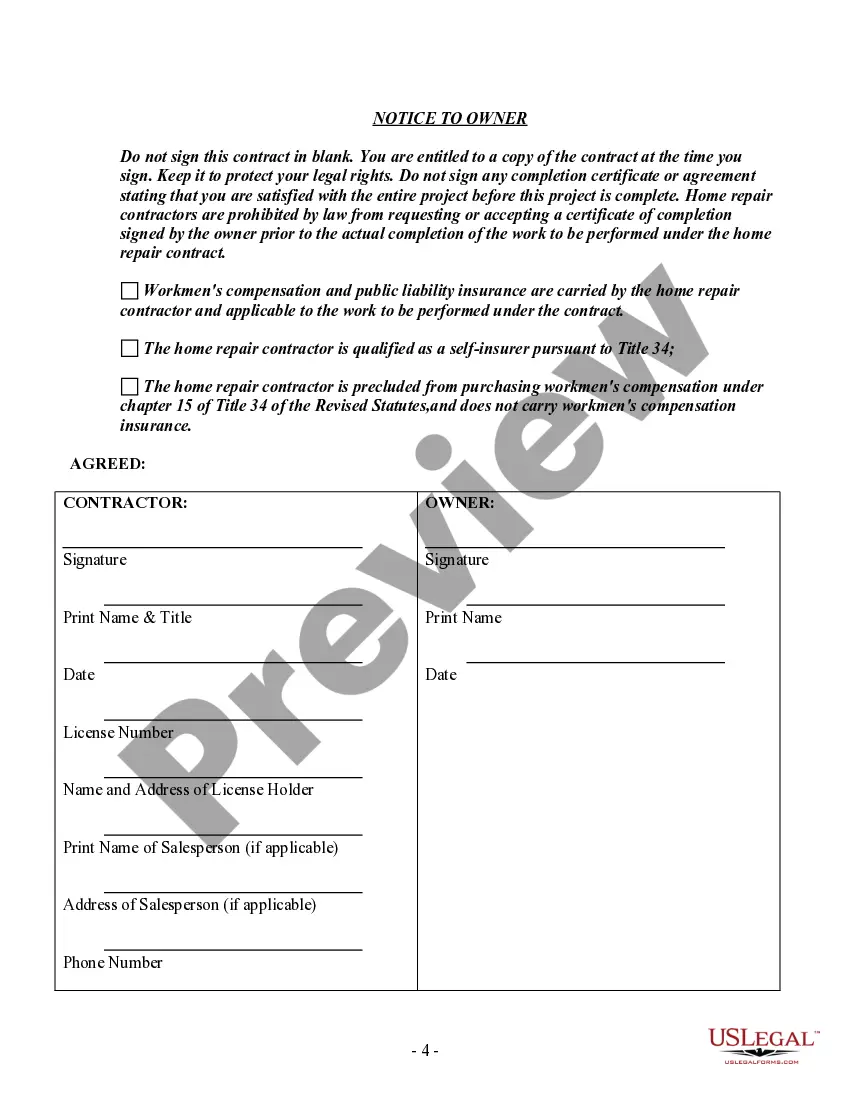
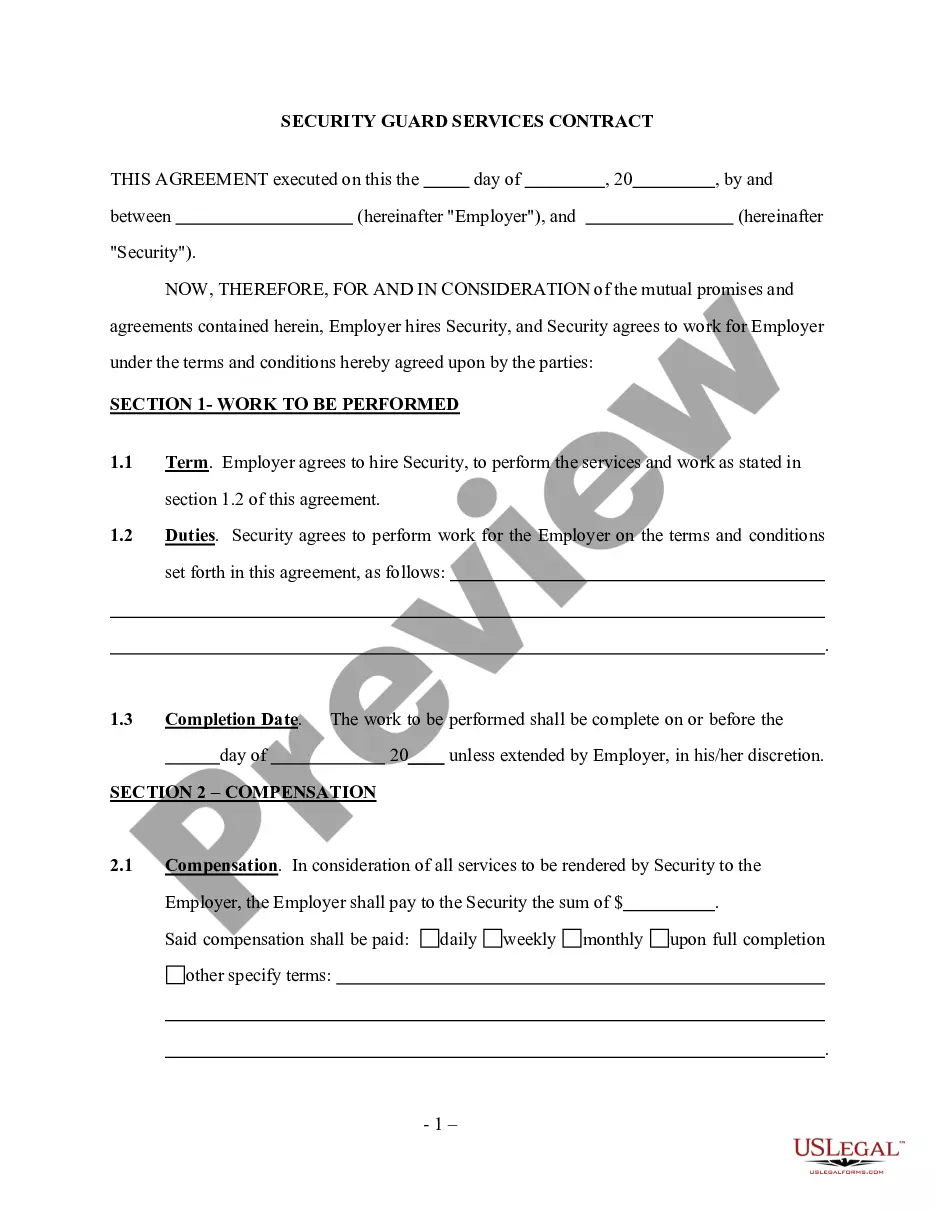
- Permits: Contractor is responsible for obtaining necessary permits and regulatory approvals.
- Insurance: Contractor must maintain general liability and workers' compensation insurance.
- Survey and Title: Owner must assist in confirming property boundaries and provide title documentation.
- Change Orders: Procedures for modifying the scope of work are outlined, including cost adjustments.
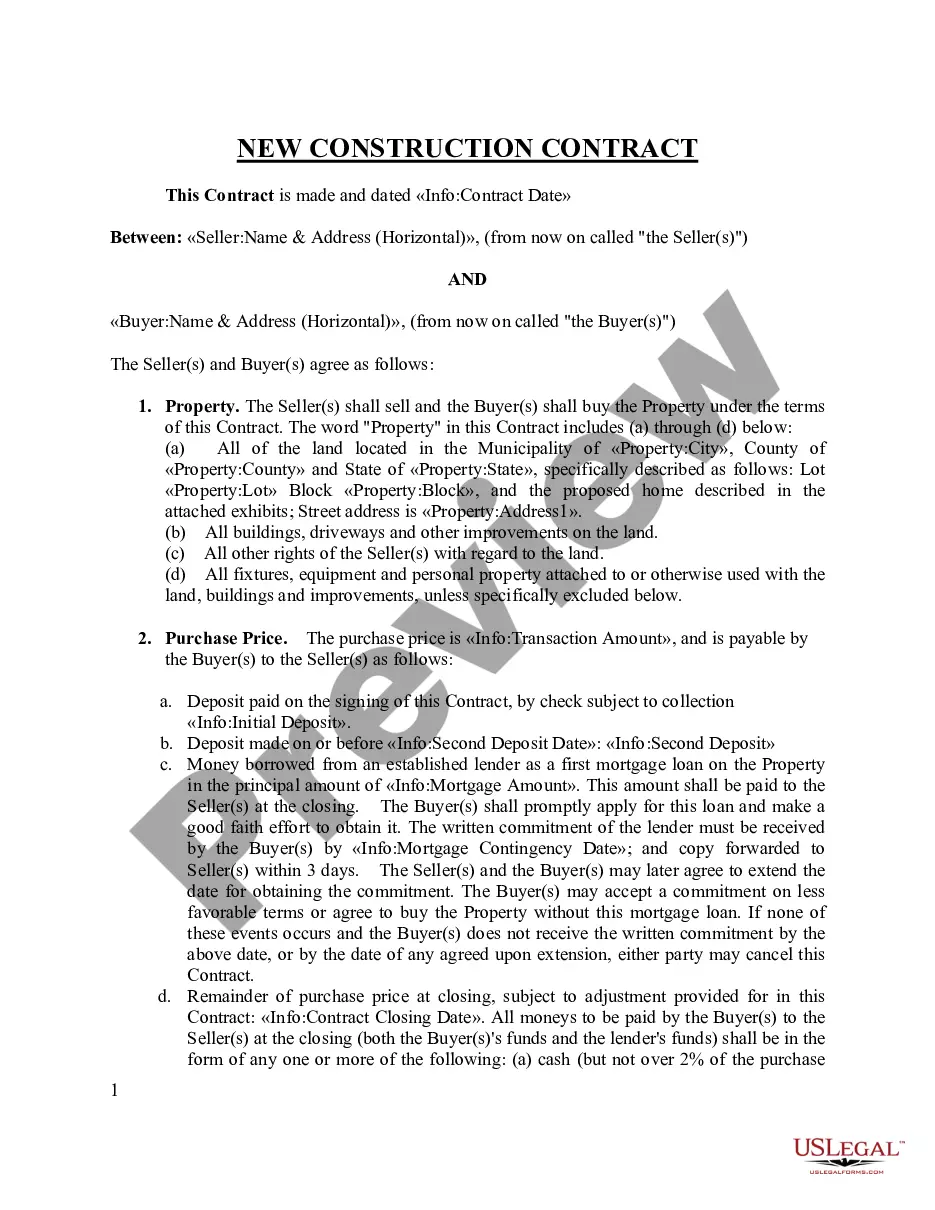
- Contract Price: Clear definitions of what constitutes the agreed-upon price for services.
- Warranty: Contractor's warranty on workmanship is limited to one year from the date of completion.

When to use this form
This form should be utilized when a property owner hires a security contractor to oversee security duties at a specified location. It is particularly relevant when there is a need to formalize payment arrangements, outline responsibilities, and protect legal interests before the commencement of work. This agreement is beneficial in situations involving multiple changes to the project scope or techniques for ensuring compliance with local laws.
Who this form is for
- Property owners seeking to hire security contractors for their premises.
- Security contractors looking to establish clear terms with property owners.
- Real estate professionals involved in property security agreements.
How to prepare this document
- Identify the parties involved: Clearly state the names and addresses of both the contractor and the property owner.
- Specify the work to be done: Outline the specific security services that will be provided.
- Enter details on payment: Indicate whether a cost plus or fixed fee payment arrangement will be used.
- Include necessary permit and insurance information: Ensure all required permits and insurance details are documented.
- Review and sign: Both parties should review the completed document and sign to confirm agreement.
Notarization guidance
This form does not typically require notarization unless specified by local law. However, it is advisable to consult a legal professional for confirmation based on your specific situation.
Get your form ready online
Our built-in tools help you complete, sign, share, and store your documents in one place.
Make edits, fill in missing information, and update formatting in US Legal Forms—just like you would in MS Word.
Download a copy, print it, send it by email, or mail it via USPS—whatever works best for your next step.
Sign and collect signatures with our SignNow integration. Send to multiple recipients, set reminders, and more. Go Premium to unlock E-Sign.
If this form requires notarization, complete it online through a secure video call—no need to meet a notary in person or wait for an appointment.
We protect your documents and personal data by following strict security and privacy standards.

Make edits, fill in missing information, and update formatting in US Legal Forms—just like you would in MS Word.

Download a copy, print it, send it by email, or mail it via USPS—whatever works best for your next step.

Sign and collect signatures with our SignNow integration. Send to multiple recipients, set reminders, and more. Go Premium to unlock E-Sign.

If this form requires notarization, complete it online through a secure video call—no need to meet a notary in person or wait for an appointment.

We protect your documents and personal data by following strict security and privacy standards.
Avoid these common issues
- Failing to include all relevant partiesâ names and addresses.
- Not specifying the scope of work clearly, leading to misunderstandings.
- Ignoring local permit requirements, which can lead to fines or delays.
- Omitting insurance details that protect both parties during the contract duration.
Why use this form online
- Convenience of accessing and filling out the form on various devices.
- Editability allows for customization to fit specific project needs.
- Provides a reliable legal framework drafted by licensed attorneys.
Legal use & context
- Enforceable contract: Provides clear terms for both parties to avoid disputes.
- Liability and warranty protections are established for both the contractor and the property owner.
- Local compliance: Tailored to meet New Jersey laws, enhancing legal validity.
Key takeaways
- This contract is essential for any security services provided to property owners.
- It includes crucial elements such as permits, insurance, and change order processes.
- Ensure understanding and accuracy in filling out the form to protect your interests.
Looking for another form?



Form popularity
FAQ
A certified contractor passed the state licensing examination. Certified contractors can work anywhere within the state in which they are licensed. A registered contractor is registered by a local county or municipality and receives a certificate of competency from the Electrical Contractors' Licensing Board.
Complete and submit an application to the Division, including copies of all required documentation. Complete the application's Disclosure Statement page. Complete and submit a Licensing Application to the DOBI, if you are planning on offering financing options.
A copy of your Alternate Name Form C-150G or Trade Name Certificate (if you have another business name). Proof of general liability insurance that's a minimum of $500,000 for each occurrence. A Federal Employer Identification Number (FEIN). Your Social Security Number.
Do You Need a License in New Jersey to Become a Handyman? New Jersey doesn't offer handyman licenses. However, handyman professionals must apply for a home improvement contractor license to perform any type of handyman work in New Jersey.
To do home construction and many types of substantial home repairs in New Jersey, an individual must be a licensed contractor. Obtaining an NJ contractor license requires the contractor to register with the New Jersey Division of Consumer Affairs, a process that involves multiple smaller steps.
2. How long does it take to process an application? A properly completed application will be processed within 30 days of receipt.
In New Jersey are authorized to alter, paint, remodel, repair, restore, renovate, move, modernize, or demolish any part of residential properties. This work includes patios, kitchens, cabinets, porches, doors, fences, bathrooms, garages, basements, and floor coverings.
Local governments (city, town, or county) will issue your New Jersey contractor license, but first you must register with the Division of Consumer Affairs. In order to get your HVAC, electrical, plumbing, or alarm system license, you will need to meet the requirements and take the New Jersey Business and Law exam.
In New Jersey are authorized to alter, paint, remodel, repair, restore, renovate, move, modernize, or demolish any part of residential properties. This work includes patios, kitchens, cabinets, porches, doors, fences, bathrooms, garages, basements, and floor coverings.