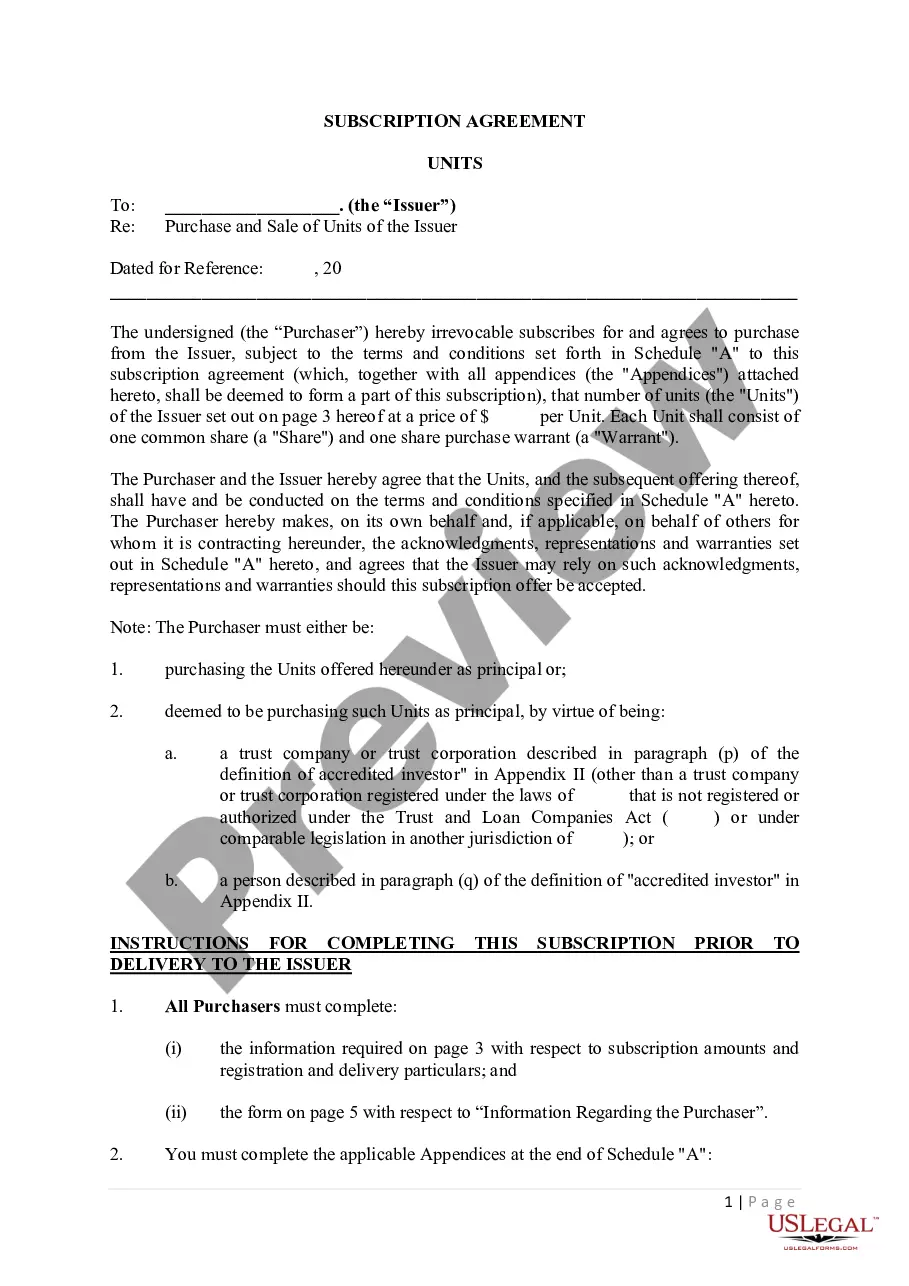
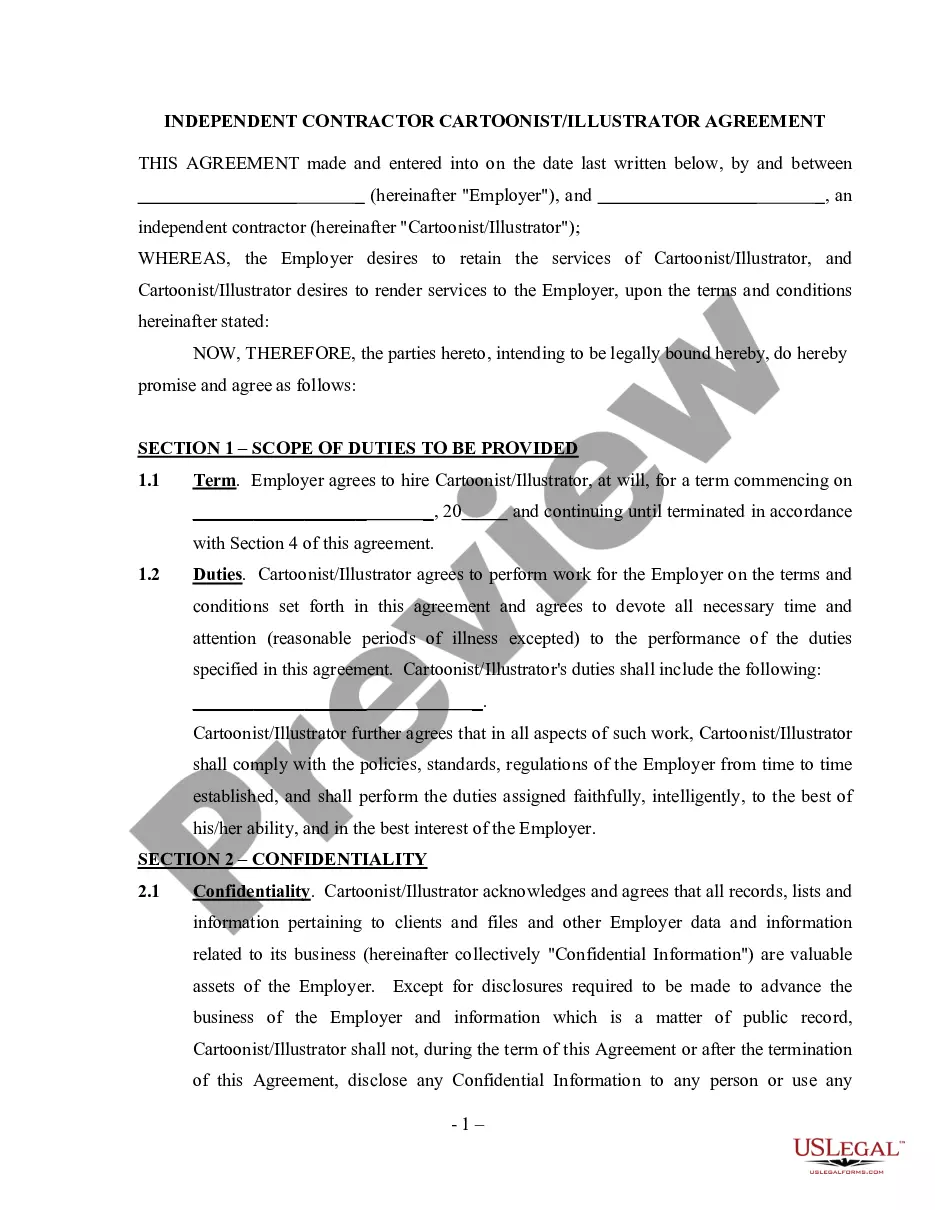
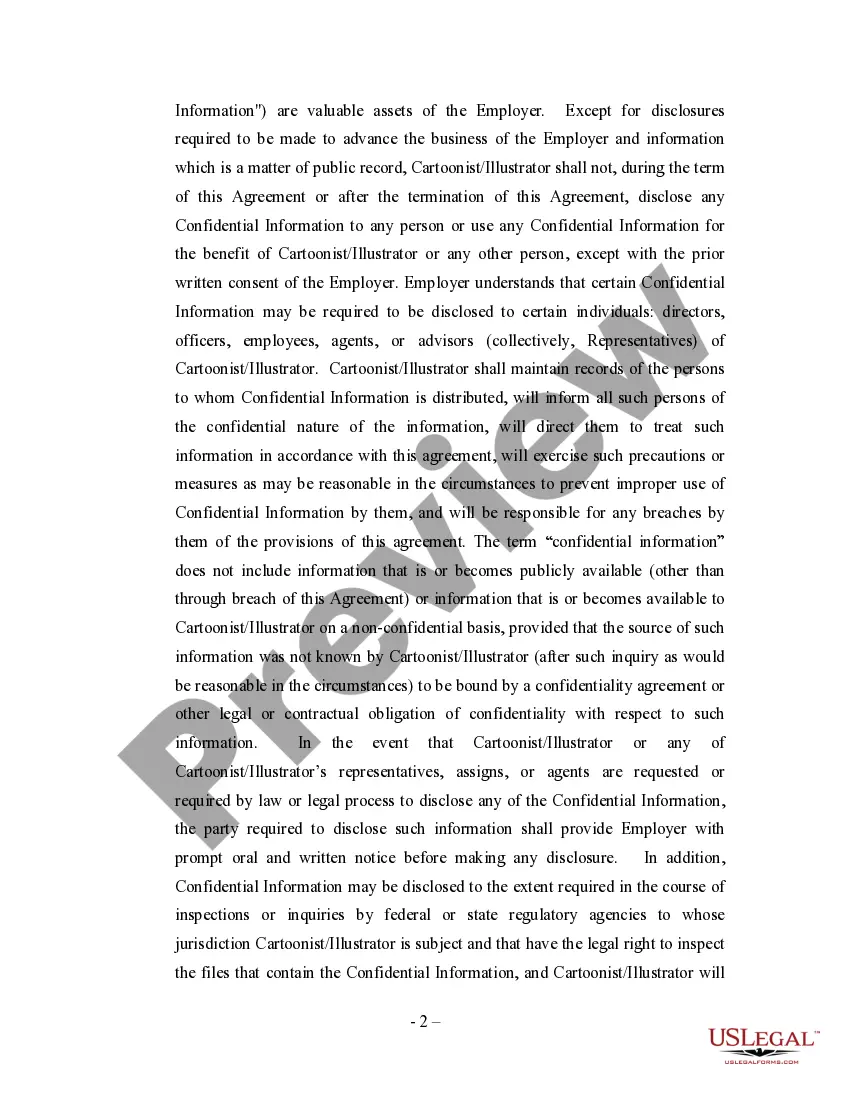
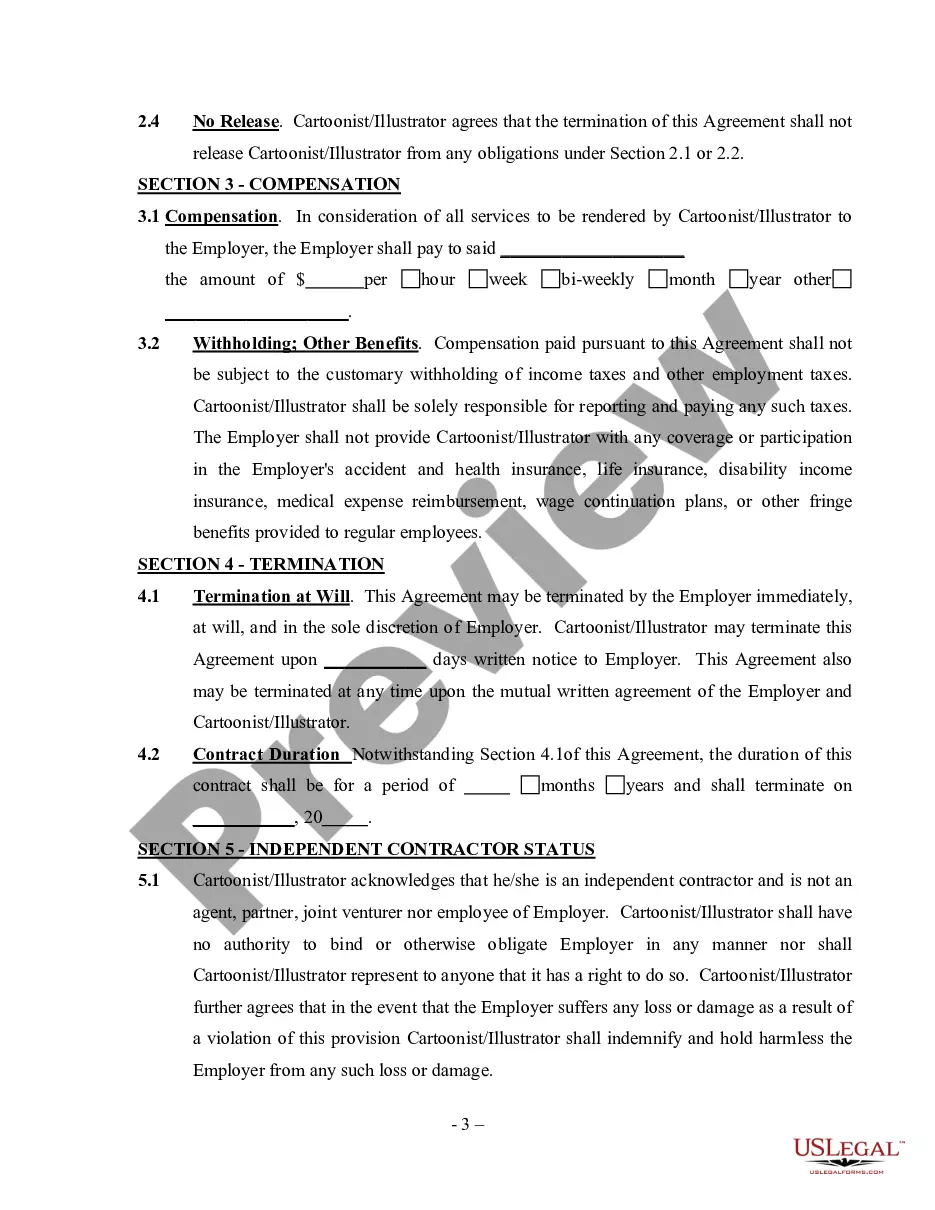
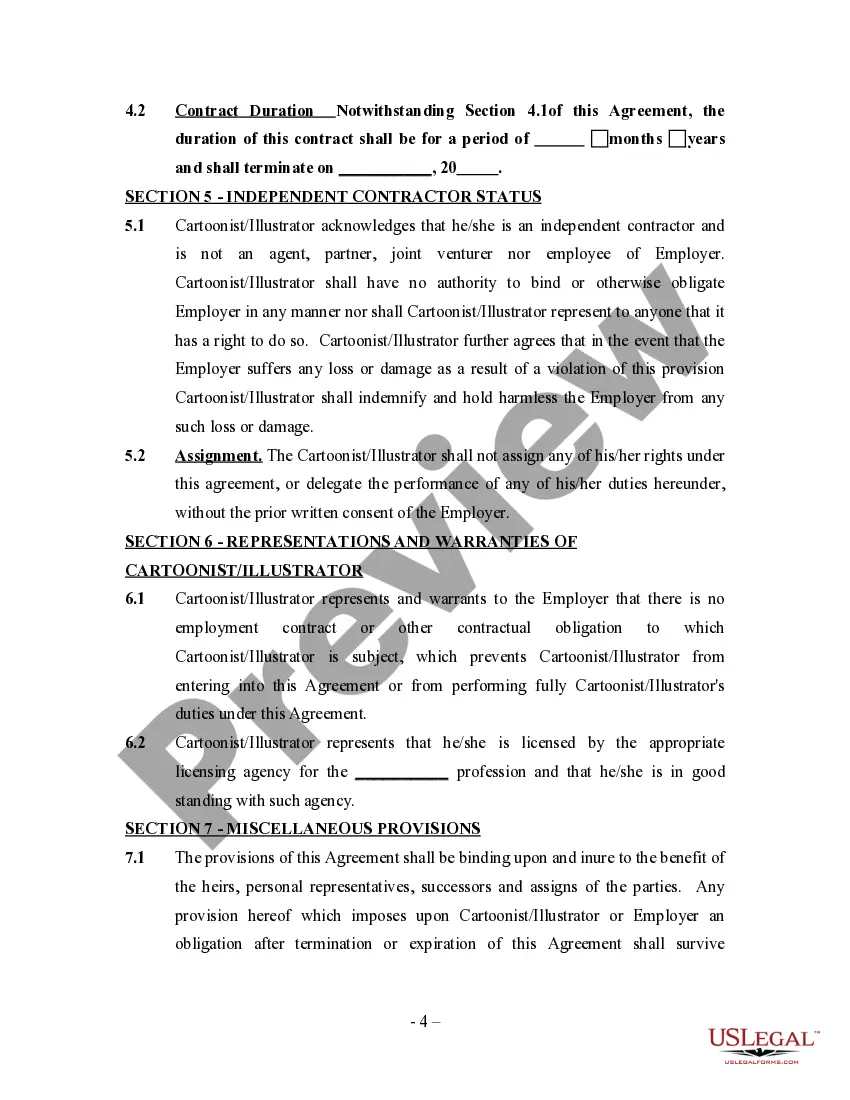
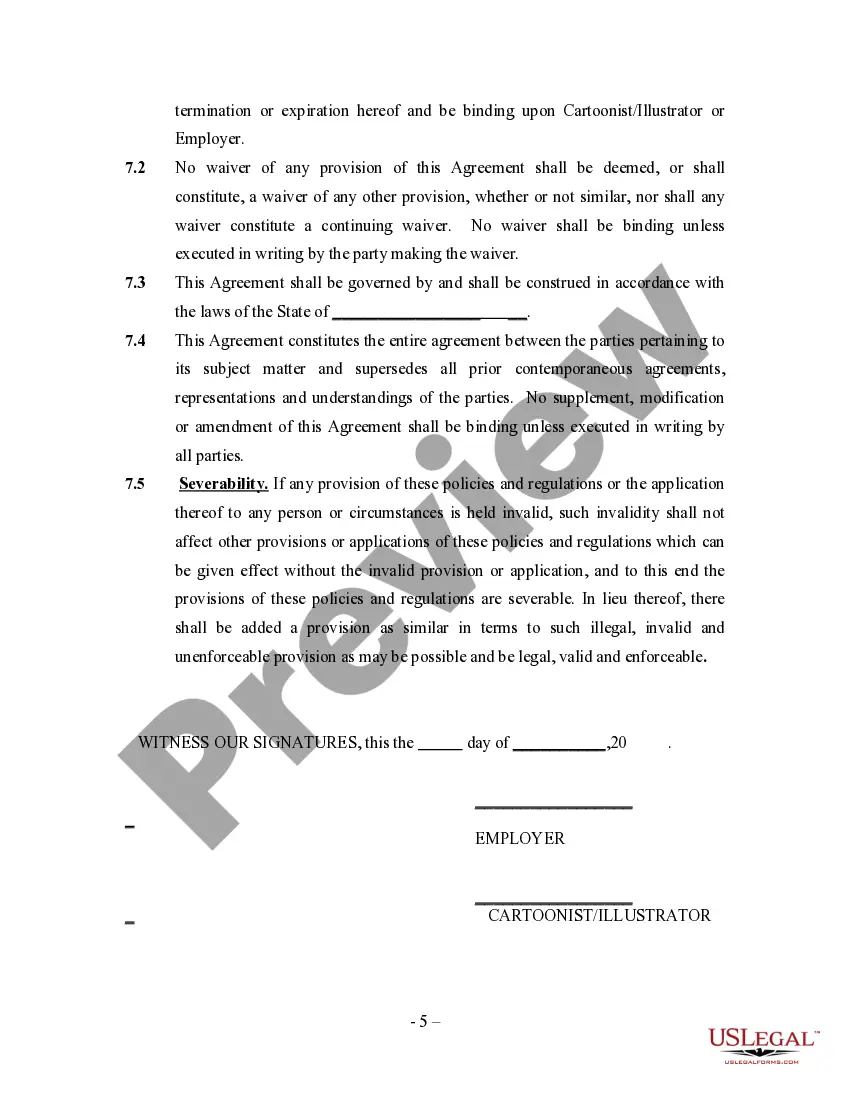
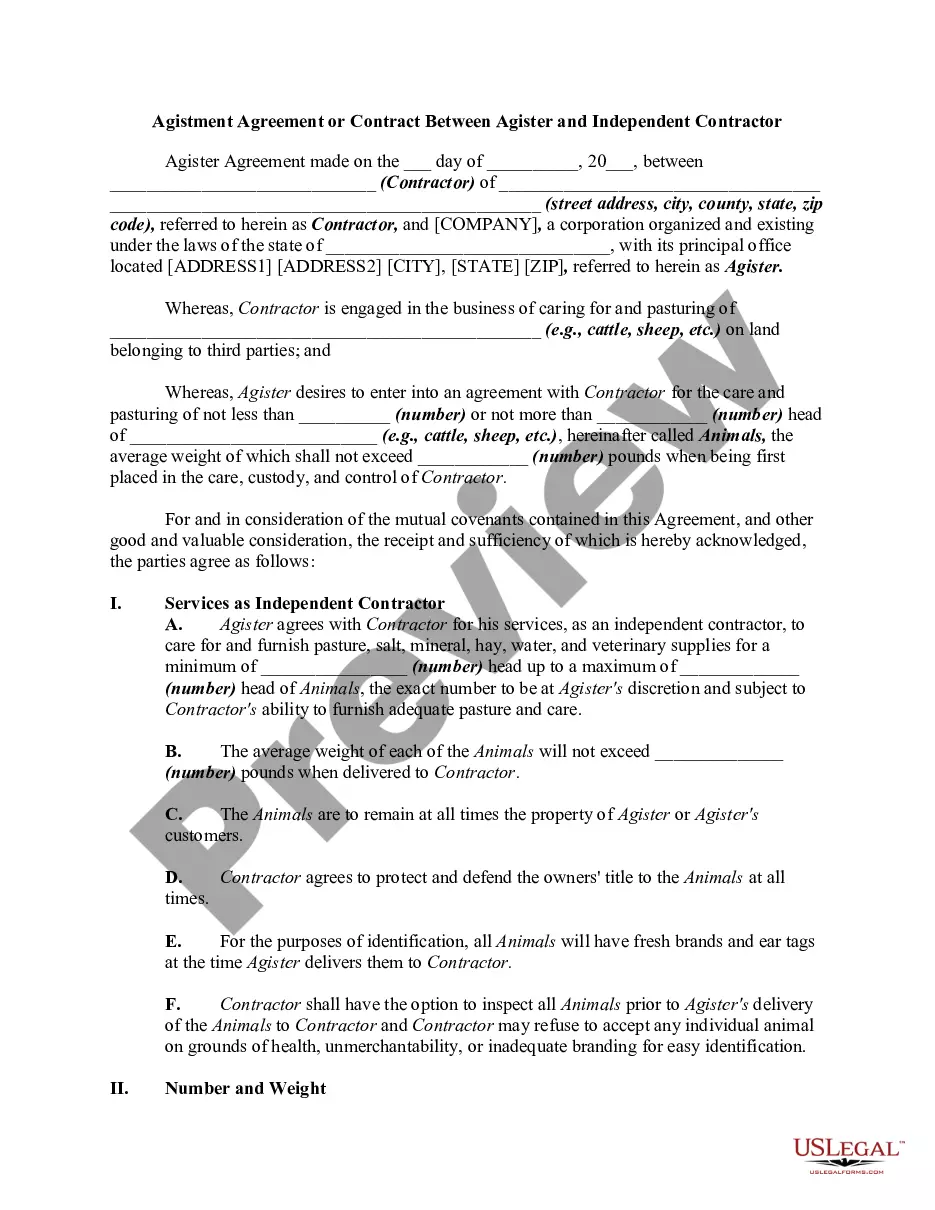
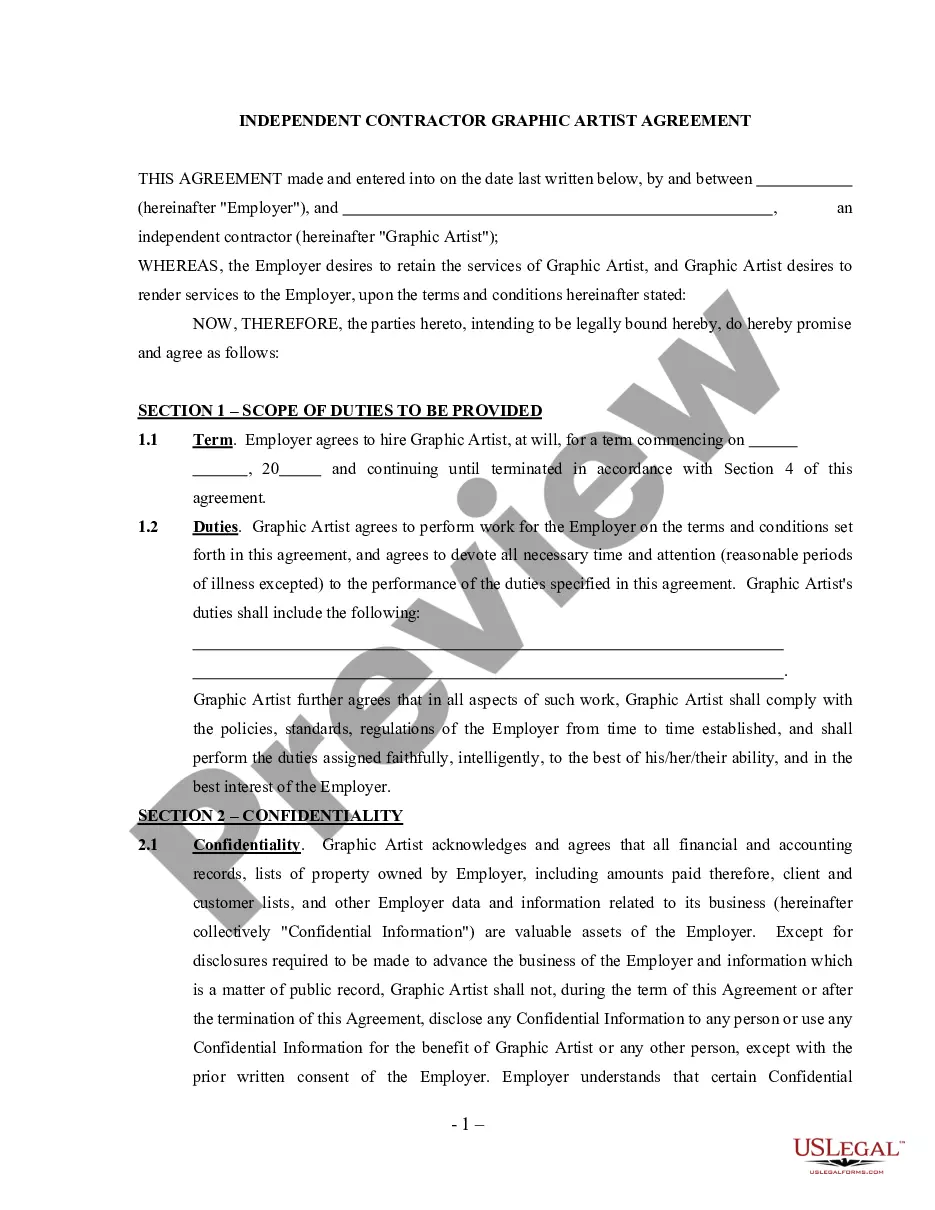
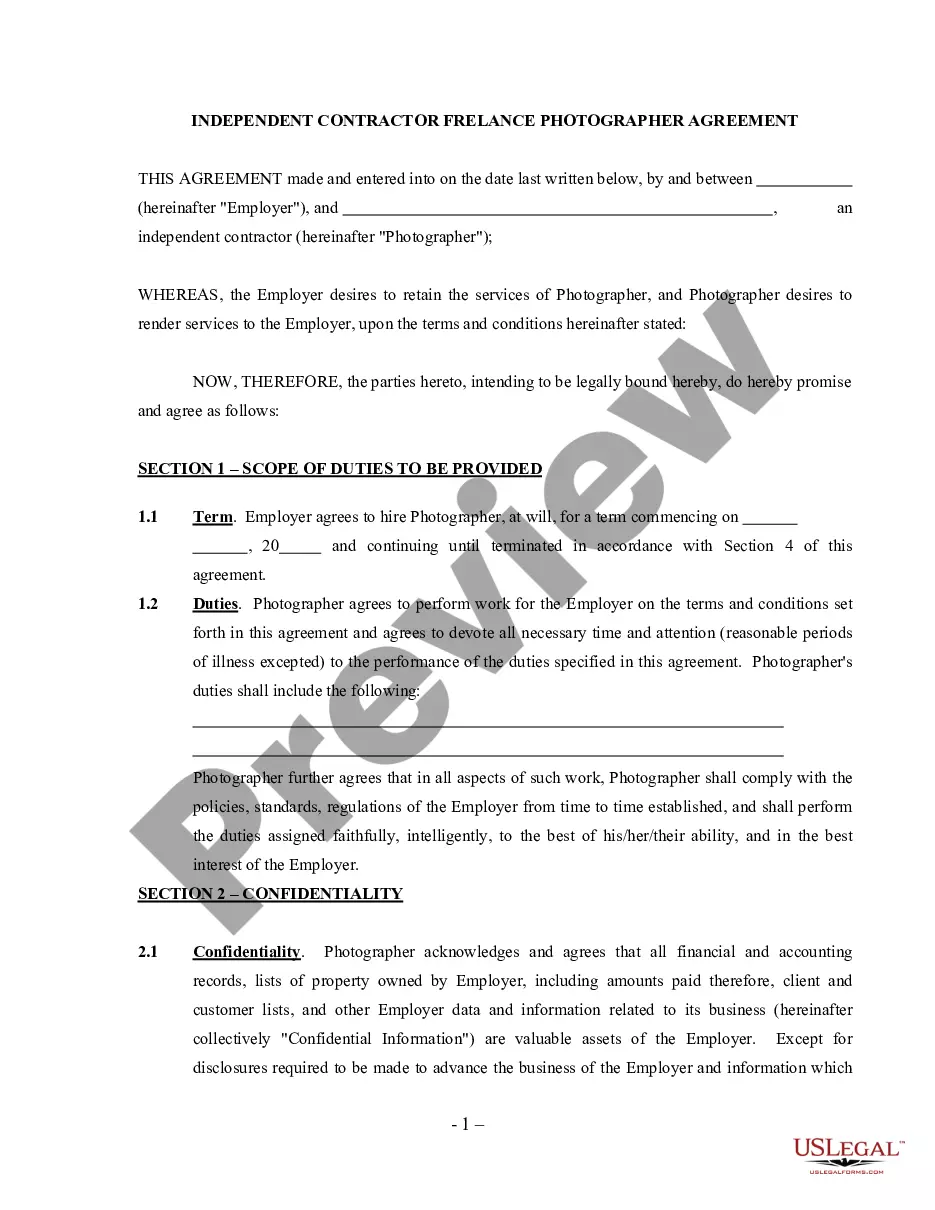
Employer contracts with a cartoonist or illustrator on an independent contractor basis to provide services as specified and agreed upon in the contract.
New Hampshire Cartoonist or Illustrator Agreement - Self-Employed Independent Contractor
State:
Multi-State
Control #:
US-INDC-125
Format:
Word;
Rich Text
Instant download
Description
Free preview
Get your form ready online
Our built-in tools help you complete, sign, share, and store your documents in one place.
Built-in online Word editor
Make edits, fill in missing information, and update formatting in US Legal Forms—just like you would in MS Word.
Export easily
Download a copy, print it, send it by email, or mail it via USPS—whatever works best for your next step.
E-sign your document
Sign and collect signatures with our SignNow integration. Send to multiple recipients, set reminders, and more. Go Premium to unlock E-Sign.
Notarize online 24/7
If this form requires notarization, complete it online through a secure video call—no need to meet a notary in person or wait for an appointment.
Store your document securely
We protect your documents and personal data by following strict security and privacy standards.

Make edits, fill in missing information, and update formatting in US Legal Forms—just like you would in MS Word.

Download a copy, print it, send it by email, or mail it via USPS—whatever works best for your next step.

Sign and collect signatures with our SignNow integration. Send to multiple recipients, set reminders, and more. Go Premium to unlock E-Sign.

If this form requires notarization, complete it online through a secure video call—no need to meet a notary in person or wait for an appointment.

We protect your documents and personal data by following strict security and privacy standards.
Looking for another form?




How to fill out Cartoonist Or Illustrator Agreement - Self-Employed Independent Contractor?
Are you presently in a situation where you require documents for occasional organizational or personal tasks almost every day.
There are numerous legal document templates accessible online, but locating ones you can trust is challenging.
US Legal Forms offers a vast selection of templates, such as the New Hampshire Cartoonist or Illustrator Agreement - Self-Employed Independent Contractor, designed to meet state and federal regulations.
- If you are already familiar with the US Legal Forms website and possess an account, simply Log In.
- Then, you can download the New Hampshire Cartoonist or Illustrator Agreement - Self-Employed Independent Contractor template.
- If you do not have an account and wish to start using US Legal Forms, follow these steps.
- Find the template you need and ensure it is for the correct area/state.
- Use the Preview button to review the form.
- Check the description to confirm you have selected the right template.
- If the template does not match what you are looking for, use the Search field to find the template that fits your needs and requirements.
- Once you obtain the correct template, click Get now.
- Select the pricing plan you prefer, fill in the necessary details to create your account, and complete the transaction using your PayPal or Visa or Mastercard.
- Choose a convenient document format and download your copy.
- Access all the document templates you have purchased in the My documents list. You can download an additional copy of the New Hampshire Cartoonist or Illustrator Agreement - Self-Employed Independent Contractor whenever needed. Simply navigate to the required template to download or print the document template.
- Utilize US Legal Forms, one of the most extensive collections of legal forms, to save time and avoid errors. The service provides professionally crafted legal document templates that you can use for various purposes. Create an account on US Legal Forms and start making your life a bit easier.
Form popularity
FAQ
Yes, an artist can be considered an independent contractor when they work on projects without the constraints of traditional employment. Under a New Hampshire Cartoonist or Illustrator Agreement - Self-Employed Independent Contractor, artists maintain their creative freedom while managing their own contracts and clients. This arrangement allows for flexibility in scheduling and project selection, making it an attractive option for many in the creative field. Ultimately, the status of an artist as an independent contractor depends on the terms of their agreements and the nature of their work.
When discussing work arrangements in the context of the New Hampshire Cartoonist or Illustrator Agreement - Self-Employed Independent Contractor, both terms refer to similar concepts. However, some may find that 'independent contractor' provides clarity about the nature of the work relationship. This term emphasizes a freelancer's ability to control their projects and clients. Regardless of the term used, both indicate a self-managed business approach.
Creating an independent contractor agreement involves several key steps. First, outline the terms of the project, including payment details and deadlines. Next, ensure that both parties understand their rights and responsibilities, specifically within the context of a New Hampshire cartoonist or illustrator agreement - self-employed independent contractor. For convenience, you can utilize services like uslegalforms to draft a comprehensive and legally sound contract.
Absolutely, as an illustrator, you can and should create contracts for your projects. A New Hampshire cartoonist or illustrator agreement - self-employed independent contractor helps define the scope of work, compensation, and deadlines. This contract protects your interests while also clarifying the expectations for your clients. Using platforms like uslegalforms can simplify the process of creating a tailored agreement.
Yes, art commissions can count as self-employed work. As a New Hampshire cartoonist or illustrator, when you accept commissions, you operate as an independent contractor. This means you bring your skills to clients, negotiate terms, and receive payment for your services. It's important to have a clear New Hampshire Cartoonist or Illustrator Agreement - Self-Employed Independent Contractor to ensure all parties understand their roles and responsibilities.
Yes, even if you made less than $5000 as a self-employed individual, it is generally advisable to file taxes. However, if your net earnings are below $400, the IRS does not require you to file a tax return. Filing can benefit you by allowing you to claim deductions for expenses. Consider utilizing a New Hampshire Cartoonist or Illustrator Agreement - Self-Employed Independent Contractor to keep track of your income and expenses effectively.
To write off taxes as an artist, identify and document all expenses related to your art business. Common deductions include art supplies, studio costs, and marketing expenses. These deductions lower your taxable income, resulting in potential tax savings. A New Hampshire Cartoonist or Illustrator Agreement - Self-Employed Independent Contractor can serve as a guide to understanding what qualifies as a write-off.
To do taxes as an independent artist, start by gathering your income records and expense receipts. Calculate your profit by subtracting your total expenses from your total income. Complete your tax return using Schedule C and don't forget to file self-employment tax if your net earnings exceed $400. Utilize the New Hampshire Cartoonist or Illustrator Agreement - Self-Employed Independent Contractor to manage your financial documents more efficiently.
To write an independent contractor agreement, start by outlining the scope of work and setting payment terms. Include important details like timelines, responsibilities, and confidentiality agreements. A clear contract benefits both parties, ensuring expectations are met. Using a New Hampshire Cartoonist or Illustrator Agreement - Self-Employed Independent Contractor template can simplify this process.