Nebraska Well Ingress-Egress Easement
What this document covers
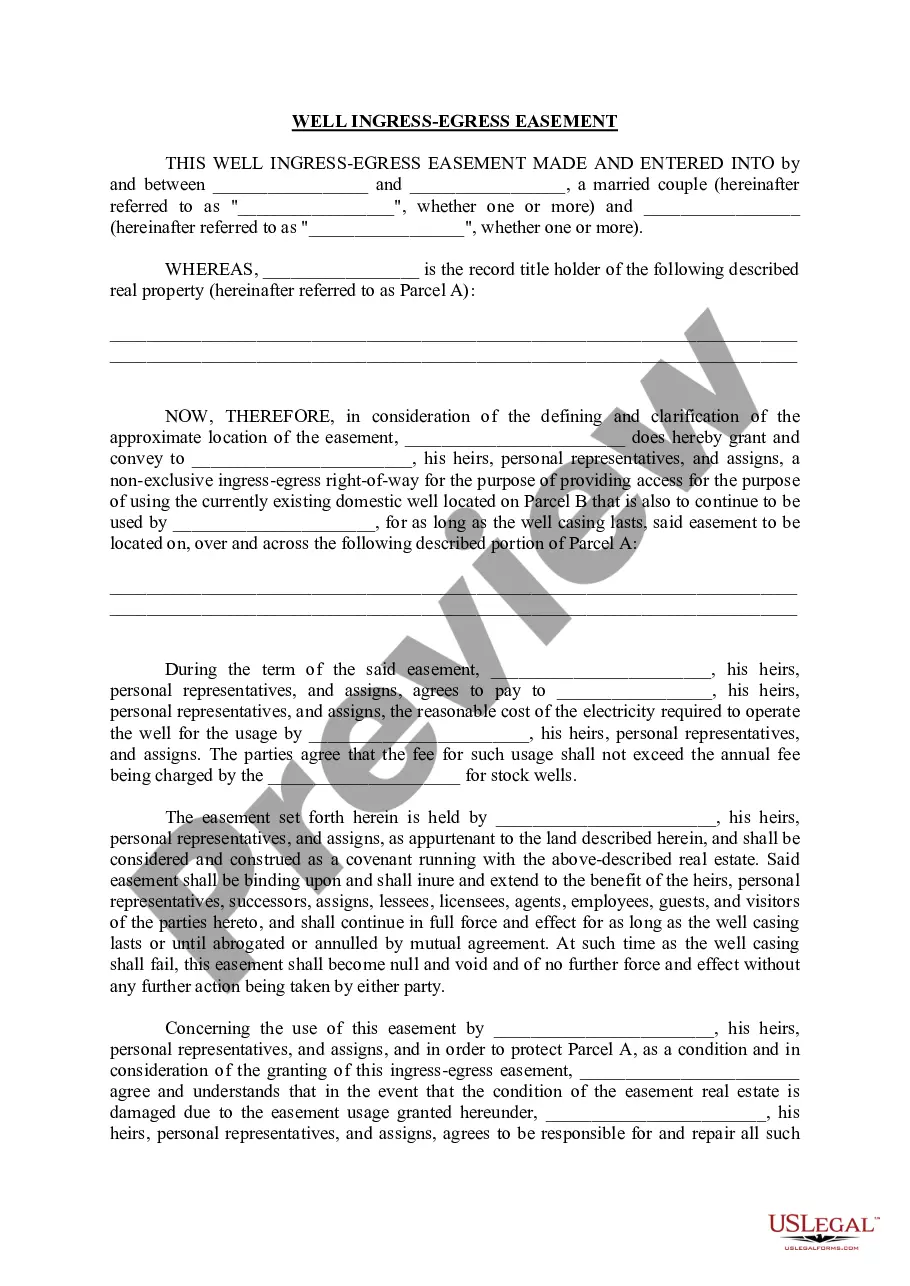
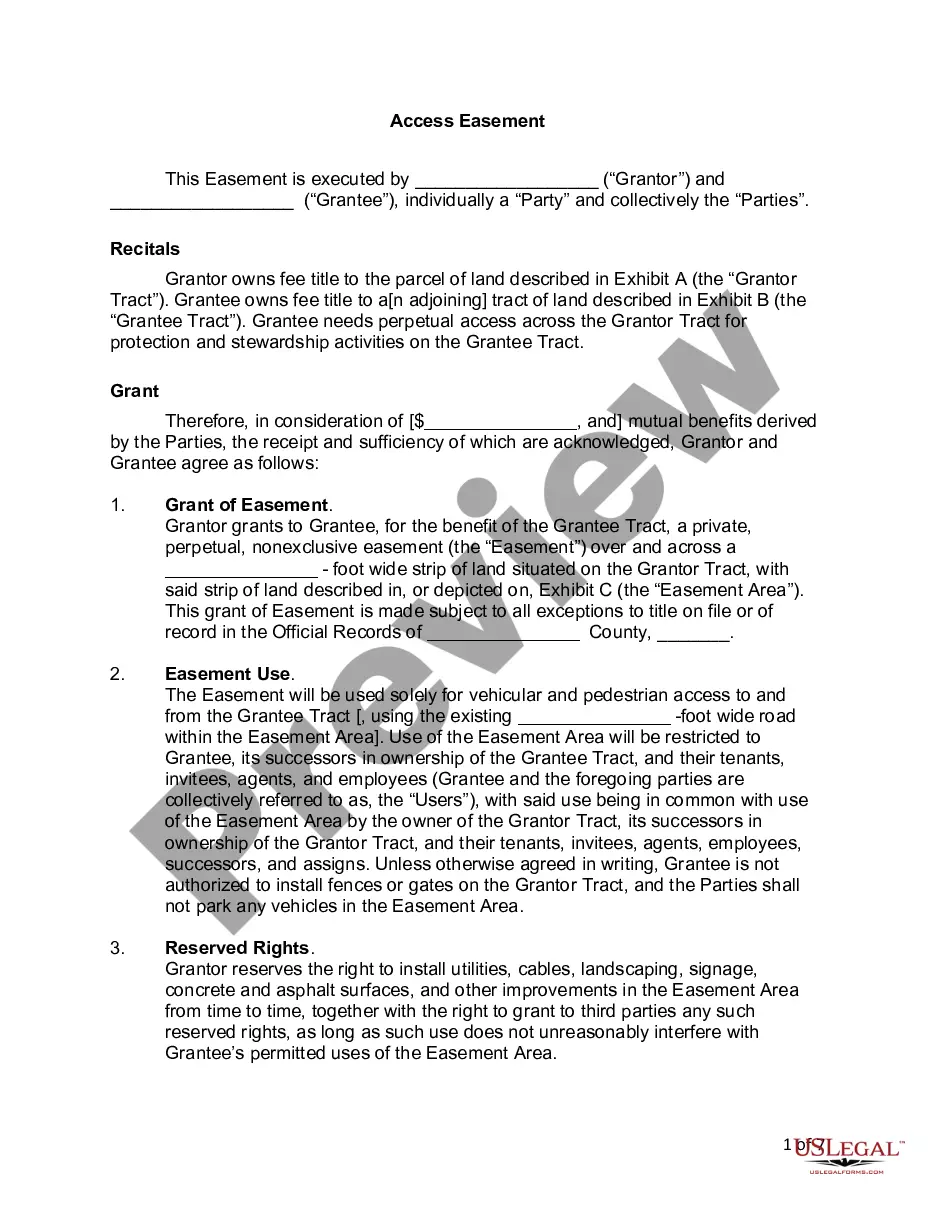
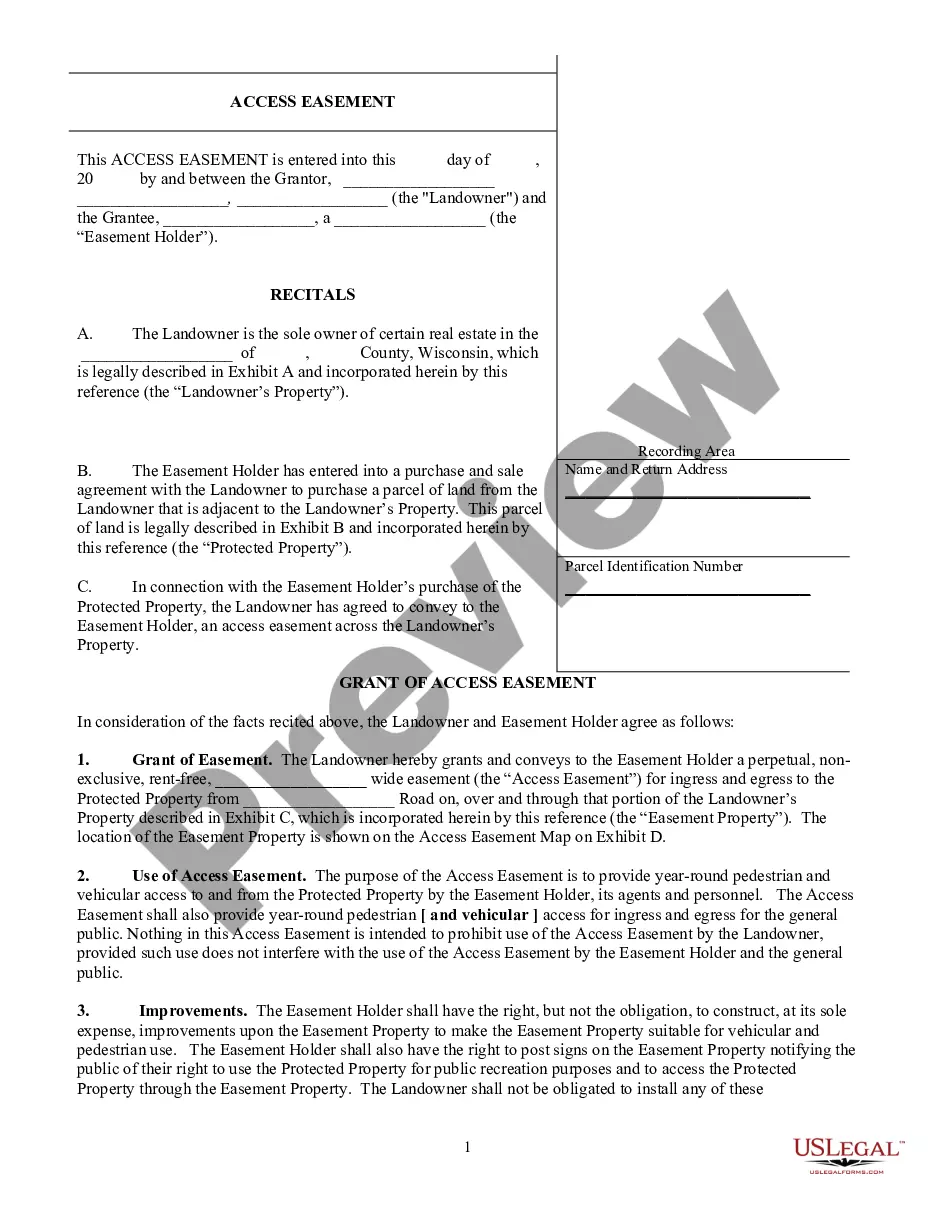
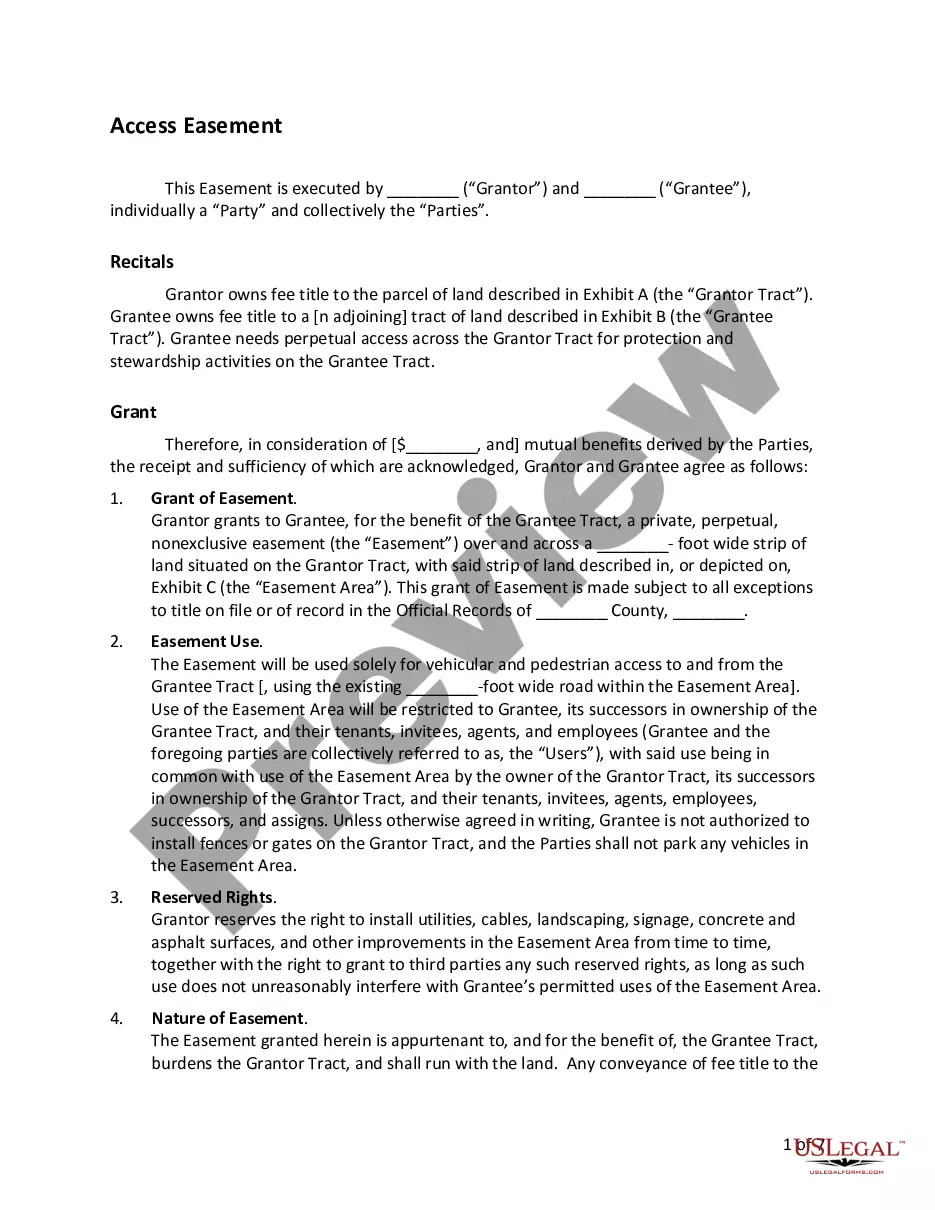
The Well Ingress-Egress Easement is a legal document that grants a non-exclusive right-of-way for accessing a well located on another person's property. This form clarifies the easement's location and outlines the terms under which the well can be maintained and used. It's essential for property owners who need to ensure they have legal access to wells for various purposes while protecting the integrity of the easement area.
Form components explained
- The names of the parties involved in the easement.
- A description of the properties involved, including Parcel A and Parcel B.
- Details about the rights granted, including ingress and egress access.
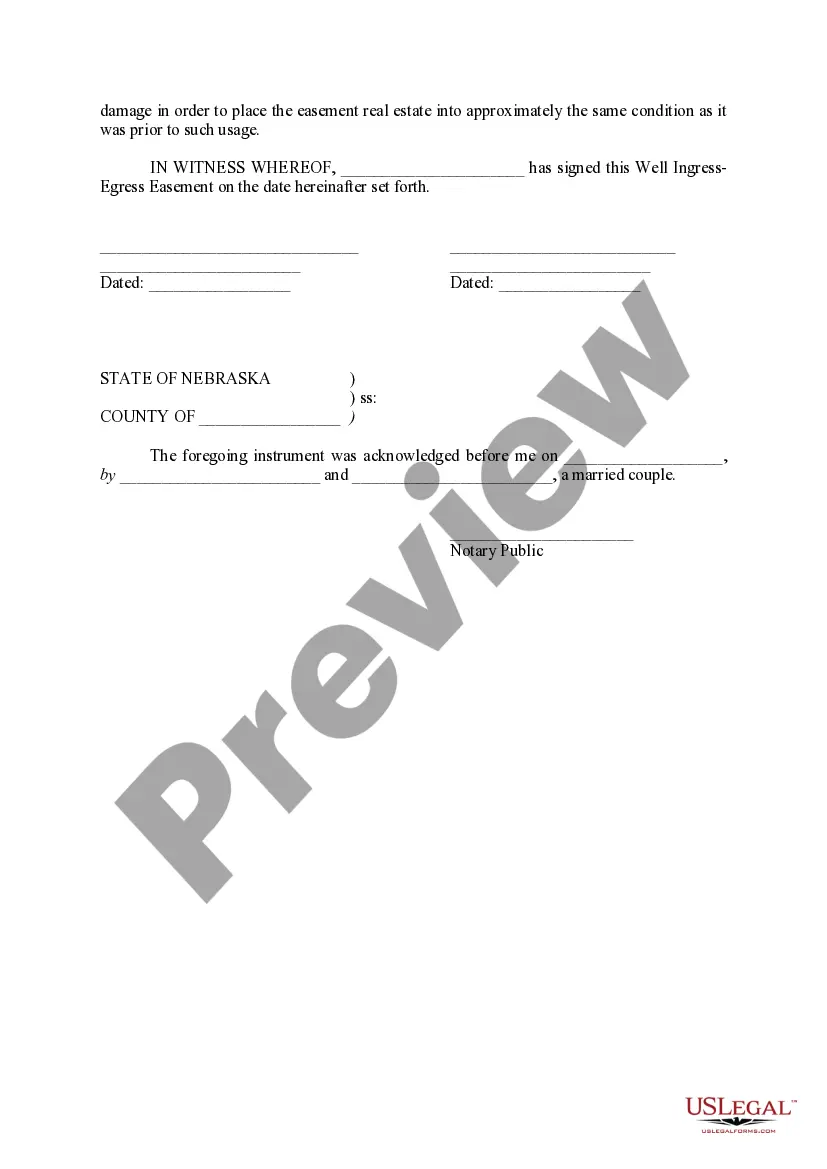
- Responsibilities regarding maintenance costs and damage repairs.
- Conditions under which the easement is valid and can be terminated.
When this form is needed
This form is useful when a property owner needs to establish a legal right to access a well located on an adjacent property, especially for maintenance, service, or repair. It can be used in situations where the well is actively producing and requires regular access to ensure functionality.
Intended users of this form
- Property owners who need access to a well located on another's property.
- Individuals who are part of a married couple planning to share wells between properties.
- Lessees and tenants who require legal access to wells for their residential or commercial needs.
How to prepare this document
- Identify the parties involved, including full names and roles.
- Describe the properties accurately, providing Parcel A and Parcel B details.
- Specify the exact location of the easement on Parcel A.
- Agree on cost-sharing terms for maintenance and usage of the well.
- Have both parties sign the document and arrange for notarization if required.
Does this document require notarization?
This form does not typically require notarization unless specified by local law. However, it is often advisable to have such documents notarized to ensure their validity and enforceability in legal matters.
Get your form ready online
Our built-in tools help you complete, sign, share, and store your documents in one place.
Make edits, fill in missing information, and update formatting in US Legal Forms—just like you would in MS Word.
Download a copy, print it, send it by email, or mail it via USPS—whatever works best for your next step.
Sign and collect signatures with our SignNow integration. Send to multiple recipients, set reminders, and more. Go Premium to unlock E-Sign.
If this form requires notarization, complete it online through a secure video call—no need to meet a notary in person or wait for an appointment.
We protect your documents and personal data by following strict security and privacy standards.

Make edits, fill in missing information, and update formatting in US Legal Forms—just like you would in MS Word.

Download a copy, print it, send it by email, or mail it via USPS—whatever works best for your next step.

Sign and collect signatures with our SignNow integration. Send to multiple recipients, set reminders, and more. Go Premium to unlock E-Sign.

If this form requires notarization, complete it online through a secure video call—no need to meet a notary in person or wait for an appointment.

We protect your documents and personal data by following strict security and privacy standards.
Typical mistakes to avoid
- Failing to adequately describe the properties involved.
- Not specifying the exact location of the easement.
- Ignoring the obligation to repair damages caused during use of the easement.
- Not having the document notarized when necessary.
- Omitting signatures or dates from the document.
Benefits of using this form online
- Convenient access to legally vetted templates created by licensed attorneys.
- Easy to edit and customize to fit specific needs and circumstances.
- Quick download and immediate availability for use after completion.
- Legal forms designed to comply with multiple states, ensuring broader applicability.
Looking for another form?

Form popularity
FAQ
The right of egress is the legal right to exit or leave a property. The right of egress is usually used in conjunction with the right of ingress, which means the legal right to enter a property. Ingress and egress rights are important to homeowners since they allow access to their property.
Ingress refers to the right to enter a property, while egress refers to the right to exit a property.
A property easement is a legal situation in which the title to a specific piece land remains with the landowner, but another person or organization is given the right to use that land for a distinct purpose.
Ingress/egress rights are generally obtained via an easement, which is the right to use someone else's property for a specific purpose. For example, ingress and egress easements may govern the use of a shared driveway or the use of a private road to reach one's property.
An easement would give you, and any subsequent buyers, the right to have your well on the neighbor's property and to access the property in order to maintain the well. An easement can be created without the need to involve surveyors and the county.
Easement for ingress and egress is a fancy way of saying that an easement allows someone to travel to and from the land. For example, let's say Alice can't get to her property from a public road without crossing over her neighbor Bill's property.
A non-exclusive easement just means that the easement will run with the land (future owners are subject to the easement). It does not mean that anyone and everyone can use the easement. The only properties that get rights to the easement would be those set forth in the grant of easement.
On appeal, the Court held that an easement for ingress and egress confers only the right to pass over the land, not the right to park on the land. The plain meaning of the terms ingress and egress do not include parking.