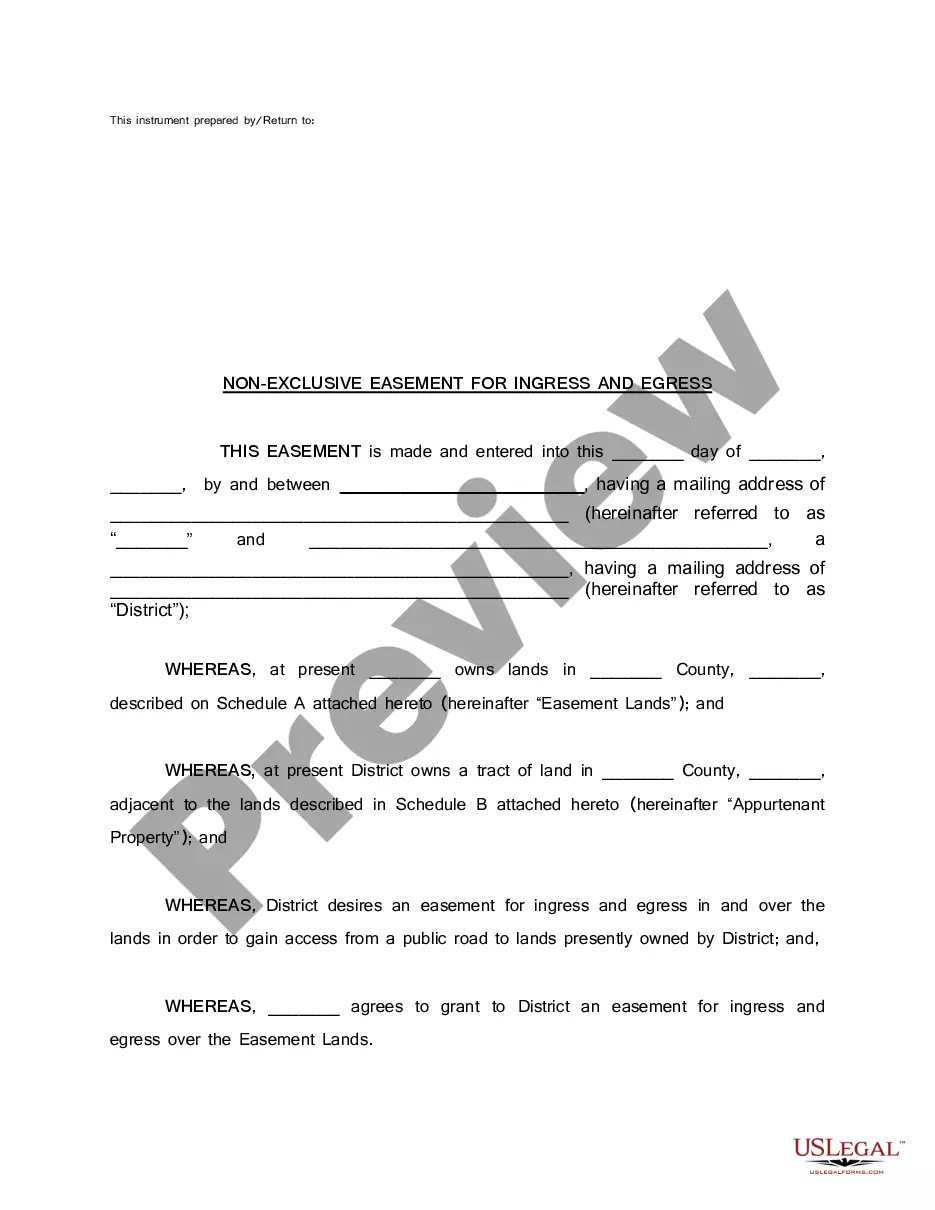
non-Exclusive for Ingress and Egress
Understanding this form
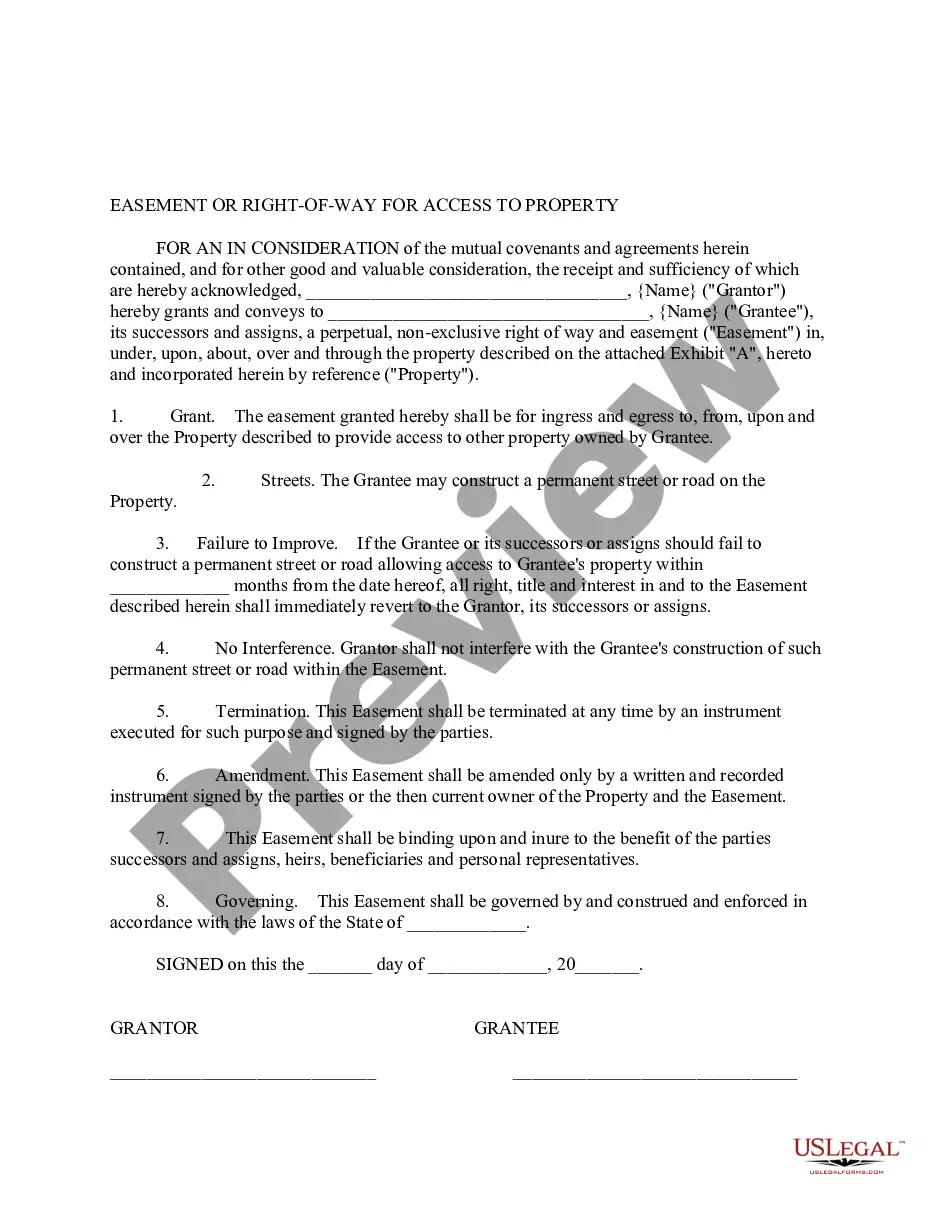
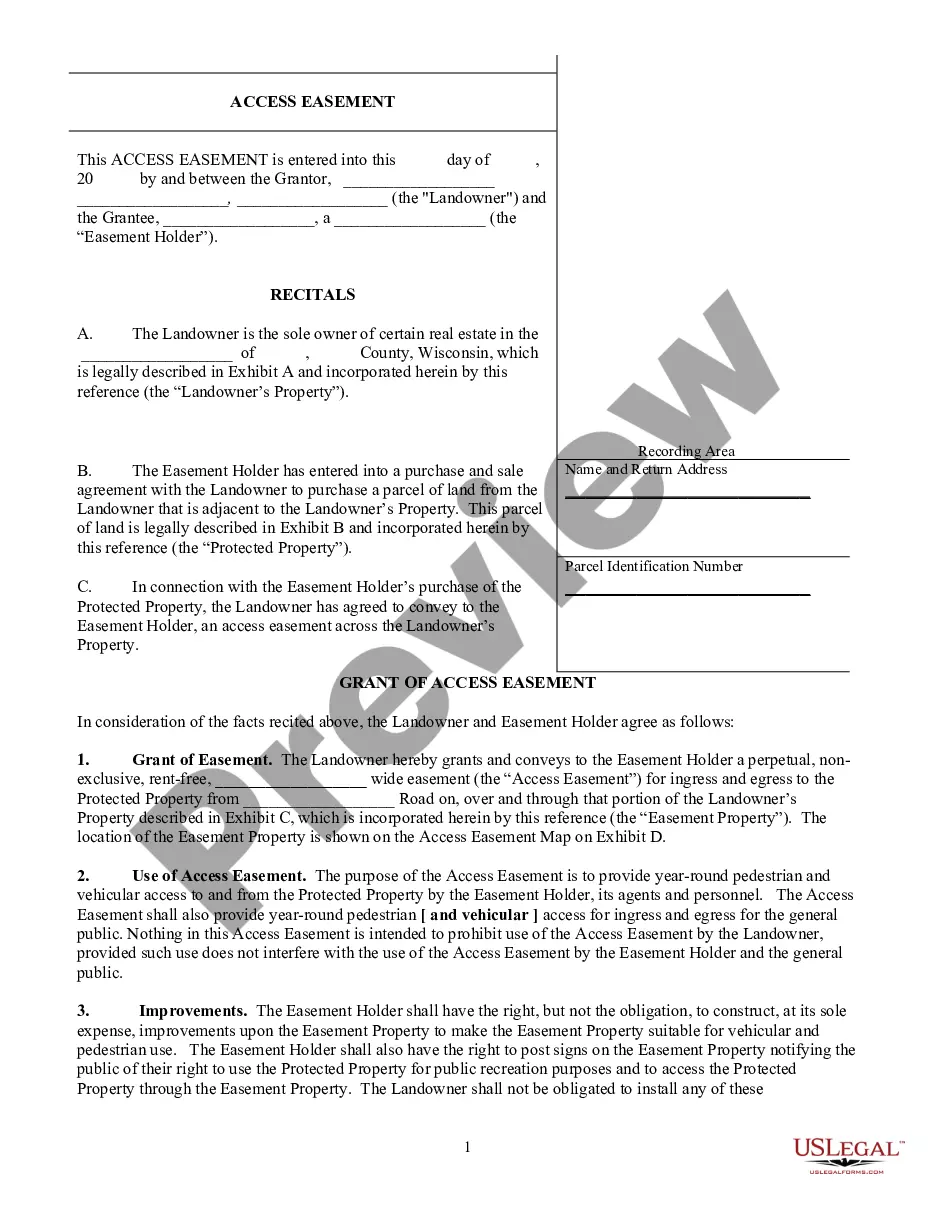
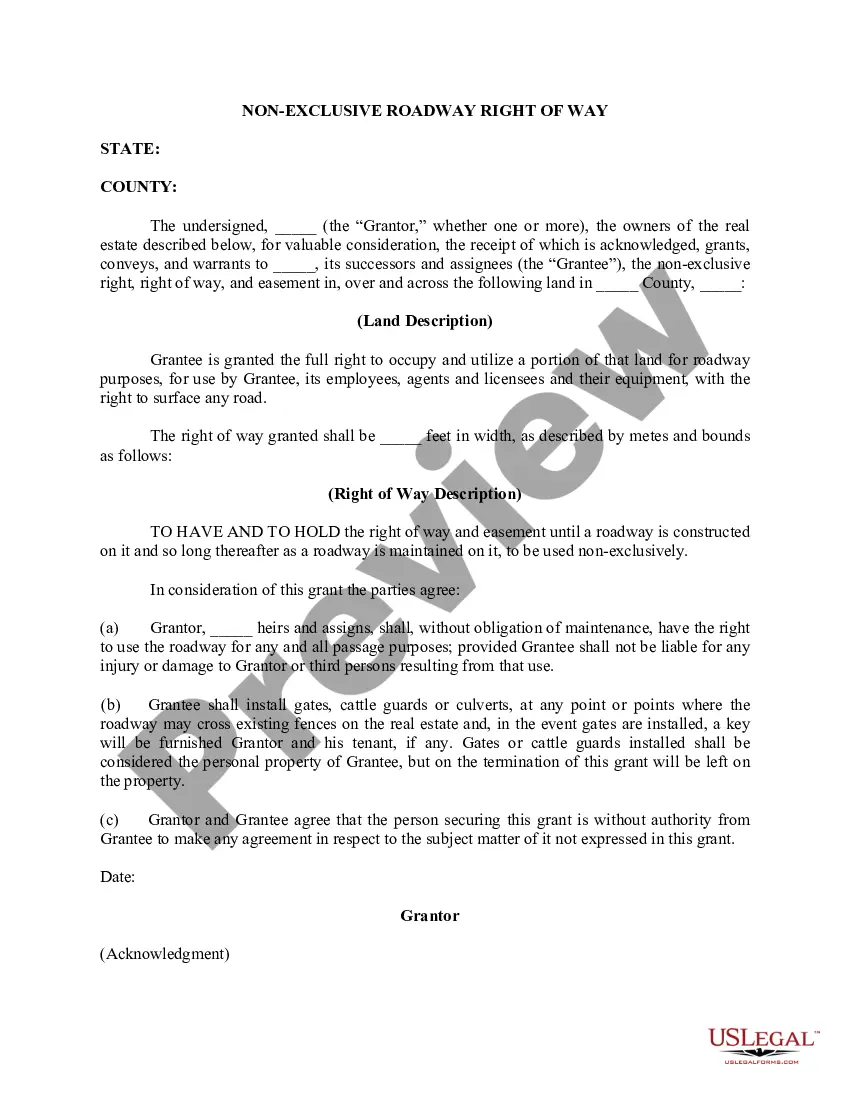
The non-exclusive easement for ingress and egress is a legal agreement that allows one party to use another's land for specific purposes, such as accessing a public road. Unlike exclusive easements, this form does not give the other party ownership or full control over the land, making it suitable for shared access situations where multiple parties may need to use the same pathway. This form is essential for establishing a clear understanding between parties regarding land use rights while protecting each party's interests.
Key parts of this document
- Identification of parties involved: Names and addresses of the Grantor and Grantee.
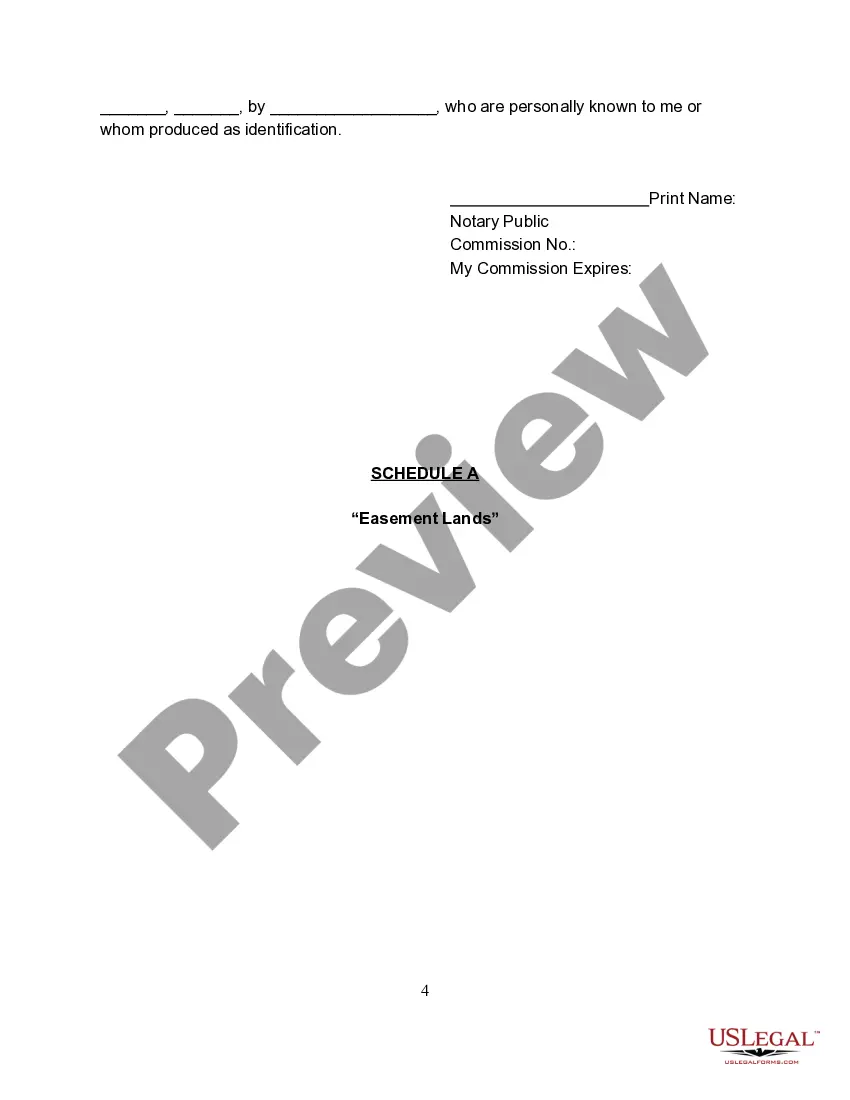
- Description of the Easement Lands: Specific land areas covered under the easement.
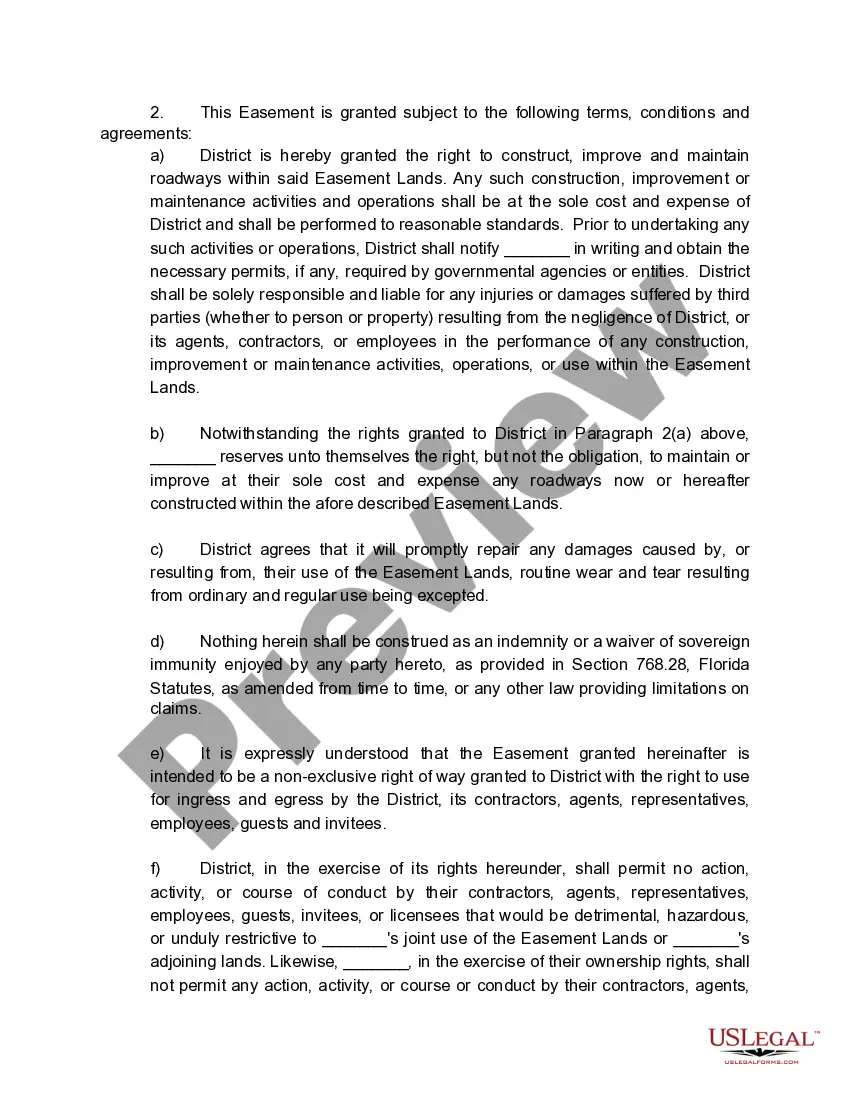
- Terms of use: Provisions outlining rights and responsibilities related to the easement.
- Construction and maintenance rights: Details on the responsibilities for roadways and other infrastructure.
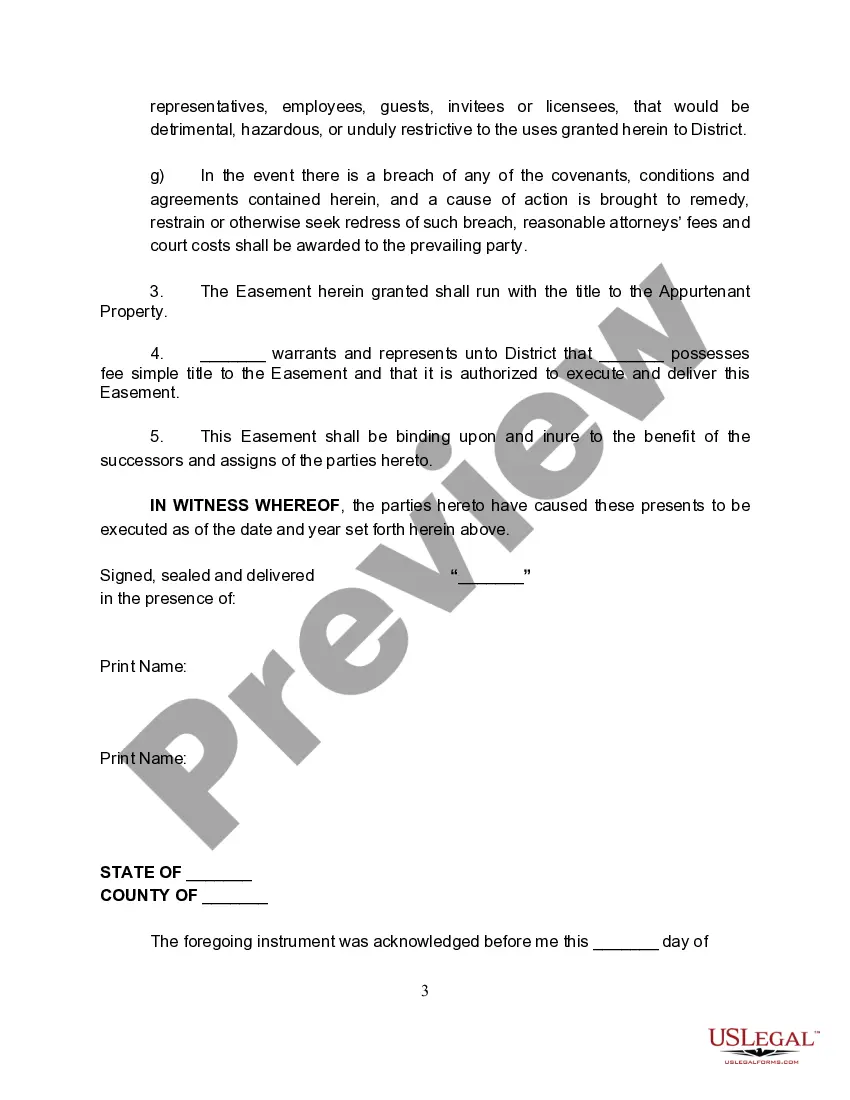
- Indemnity clauses: Stipulations regarding liability and damages.
- Transferability: Provisions that explain how the easement applies to successors and assigns.


Situations where this form applies
This form is typically used in situations where a property owner needs to grant access to a neighboring property for purposes such as construction or upkeep. It is ideal for scenarios where access to roads, utilities, or other facilities is necessary without transferring ownership of the land. Examples include properties that are landlocked or when a property needs a pathway to reach public infrastructure.
Intended users of this form
- Property owners who need to grant access to another party.
- Developers seeking to establish rights of way for construction projects.
- Landowners whose property is surrounded by other parcels and lack direct access to public roads.
- Individuals or entities managing shared access points, such as shared driveways or paths.
Steps to complete this form
- Identify the parties: Clearly list the names and addresses of the Grantor and Grantee.
- Specify the property: Describe the Easement Lands and Appurtenant Property in detail.
- Enter the terms: Fill in the agreed-upon terms regarding usage and responsibilities.
- Obtain necessary permits: Ensure any construction or maintenance activities comply with local regulations.
- Sign and date the document: Both parties must sign in front of a notary public.
Notarization requirements for this form
Yes, this form must be notarized to be legally valid. US Legal Forms offers integrated online notarization services available 24/7 through a secure video call, ensuring that the process is both efficient and legally recognized without the need for travel.
Get your form ready online
Our built-in tools help you complete, sign, share, and store your documents in one place.
Make edits, fill in missing information, and update formatting in US Legal Forms—just like you would in MS Word.
Download a copy, print it, send it by email, or mail it via USPS—whatever works best for your next step.
Sign and collect signatures with our SignNow integration. Send to multiple recipients, set reminders, and more. Go Premium to unlock E-Sign.
If this form requires notarization, complete it online through a secure video call—no need to meet a notary in person or wait for an appointment.
We protect your documents and personal data by following strict security and privacy standards.

Make edits, fill in missing information, and update formatting in US Legal Forms—just like you would in MS Word.

Download a copy, print it, send it by email, or mail it via USPS—whatever works best for your next step.

Sign and collect signatures with our SignNow integration. Send to multiple recipients, set reminders, and more. Go Premium to unlock E-Sign.

If this form requires notarization, complete it online through a secure video call—no need to meet a notary in person or wait for an appointment.

We protect your documents and personal data by following strict security and privacy standards.
Common mistakes
- Failing to include proper descriptions of Easement and Appurtenant Properties.
- Not obtaining required permits before construction or improvements.
- Leaving out essential terms and conditions in the agreement.
Why use this form online
- Convenience of instant access and download from anywhere.
- Easily editable to ensure all specific terms meet user needs.
- Reliability, as forms are drafted by licensed attorneys ensuring legal compliance.
Looking for another form?
Form popularity
FAQ
A means of egress is an unobstructed path to leave buildings, structures, and spaces. A means of egress is comprised of exit access, exit, and exit discharge.
In this case, ingress refers to having the right to enter a property, while egress refers to the right to exit a property. An example of this type of easement is a shared driveway where your neighbor may own the property but you have the right to drive on your neighbor's property to access your home.
Ingress can refer to both the act of entering or to an entryway (an entrance) itself. Egress refers to both the act of exiting or to an exit itself. In astronomy, they're used in a more specific way relating to heavenly bodies (like planets) entering into or emerging from an eclipse.
Ingress means entrance, or the right to enter, or the act of entering. The word is often used together with egress in a combination ?ingress and egress,? which means entering and leaving.
A ?non-exclusive easement? exists when one party has an easement on or over real estate, but the landowner can grant additional easements to other parties on or over the same real estate.
Non-exclusive means that a number of different parties can use the easement. Non-exclusive can also mean that additional parties could be granted the right to use that same easement in the future. A common example of a non-exclusive easement is an access or roadway easement in a shopping center.
Key Takeaways. The right of egress is the legal right to exit or leave a property while the right of ingress is the legal right to enter a property. Ingress and egress rights are important to homeowners since they allow access to their property.
Ingress means to enter, and egress means to exit. In terms of easements, this typically pertains to entering and exiting a property parcel.