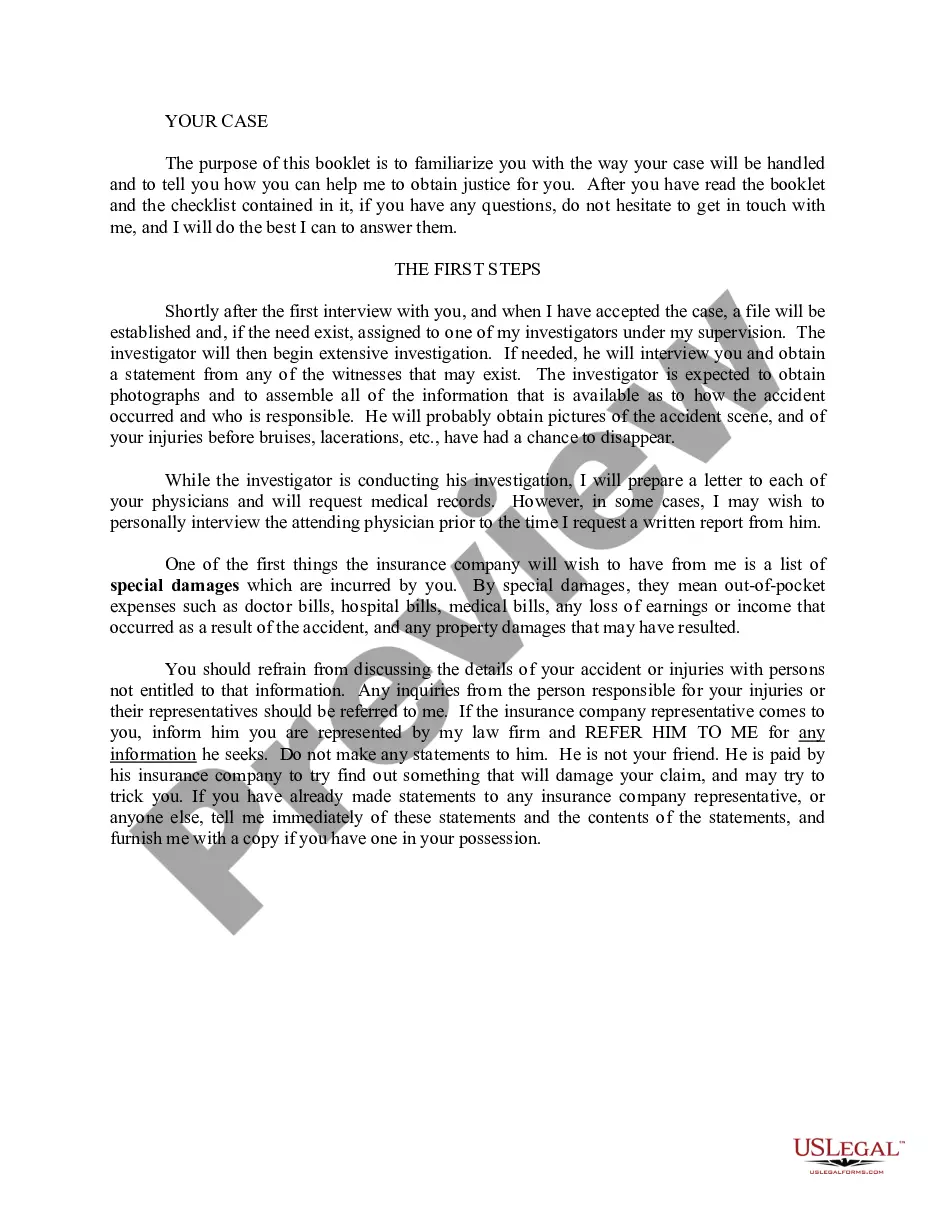
North Dakota Agreement for Delayed or Partial Rent Payments
What is this form?
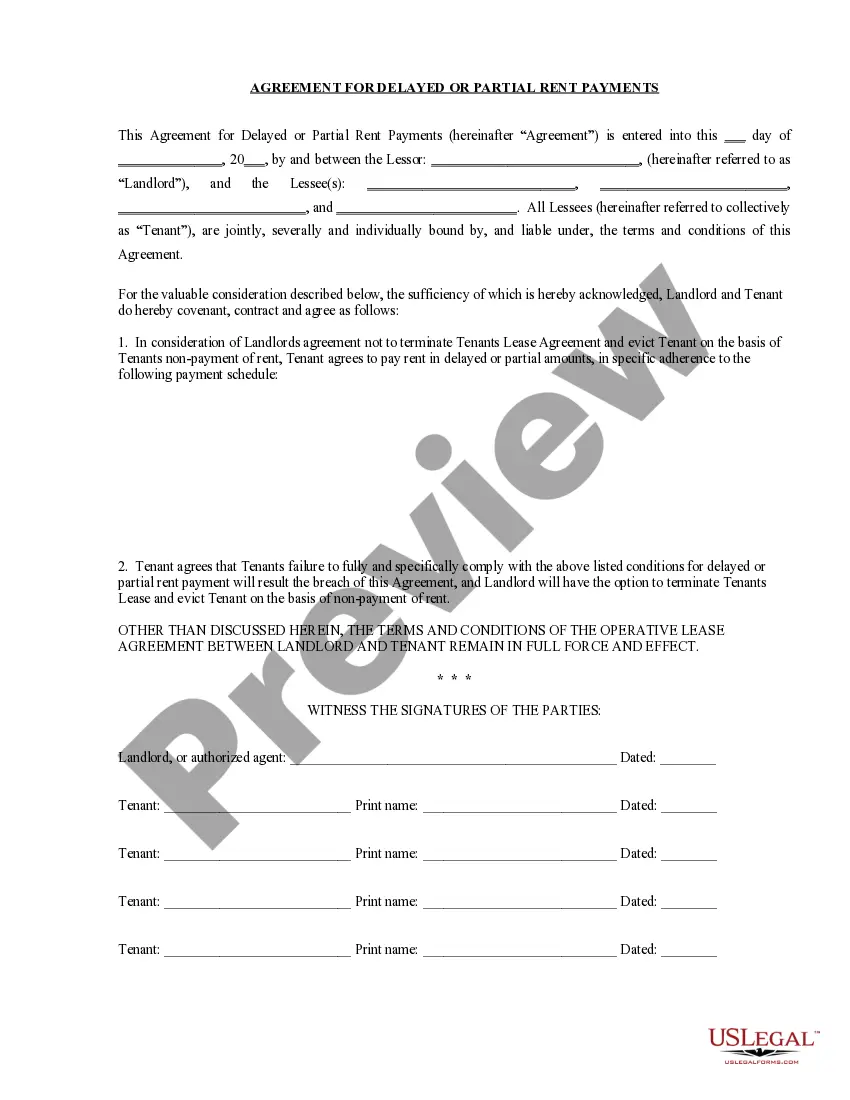
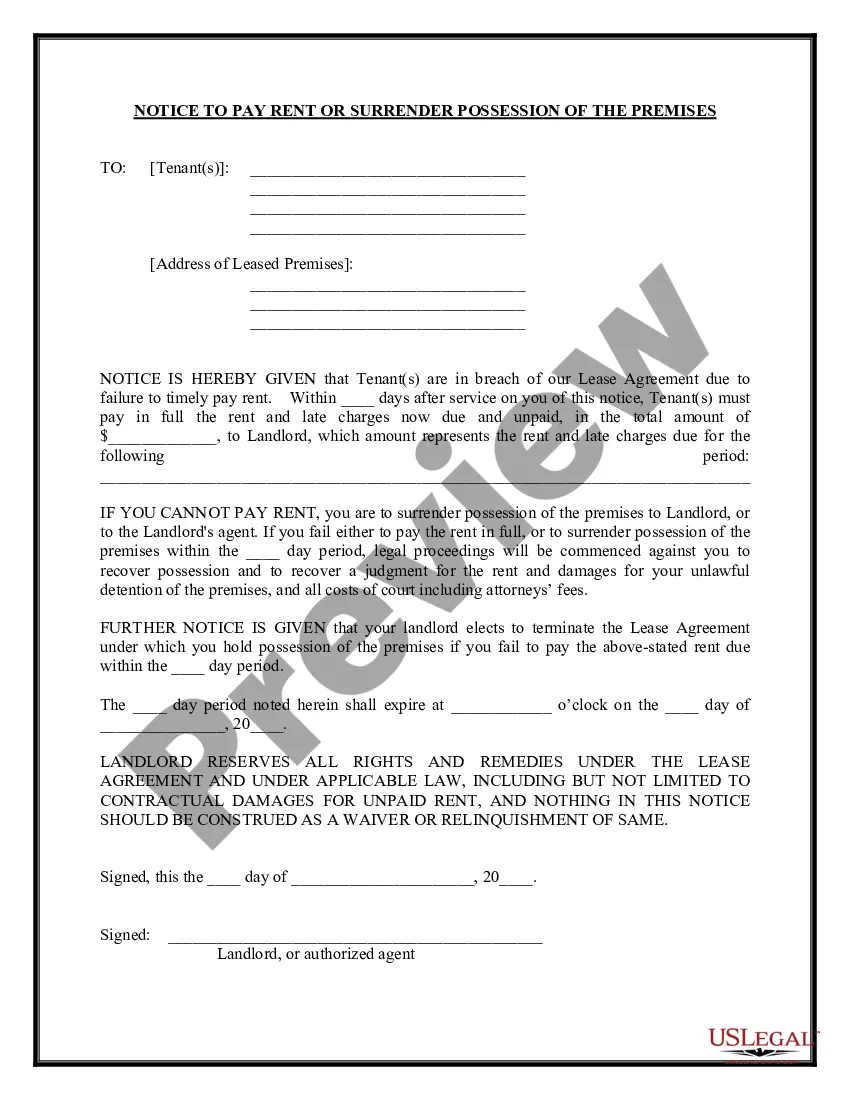
The Agreement for Delayed or Partial Rent Payments is a legal document that establishes the terms under which a tenant can pay rent in delayed or partial amounts. This agreement is made between the landlord and the tenant, detailing specific deadlines and conditions to avoid eviction due to non-payment. It differentiates itself from standard rental agreements by providing flexibility for tenants facing financial difficulties while ensuring landlords retain their rights under the original lease agreement.
Key parts of this document
- Identification of the parties involved: landlord and tenants.
- Specific dates for delayed or partial rent payment schedules.
- Conditions under which the landlord agrees not to evict the tenant for non-payment.
- A clause stating that all other terms of the original lease agreement remain in effect.
- Signature lines for both the landlord and tenant(s).
When to use this form
This agreement is useful in situations where a tenant is experiencing financial hardship and cannot pay full rent on time. It serves to formalize an arrangement between the landlord and tenant for delayed or partial payments, preventing possible eviction while establishing a clear plan for rent repayment.
Who should use this form
- Landlords who want to provide tenants with the flexibility to make delayed or partial rent payments.
- Tenants who are facing financial difficulties and need to arrange for alternative rent payment solutions.
- Property managers operating under a rental agreement where tenants are struggling to meet payment deadlines.
Instructions for completing this form
- Identify and fill in the names of the landlord and all tenants involved in the agreement.
- Specify the detailed payment schedule, including the amounts and due dates for the delayed or partial rent payments.
- Clearly state any conditions that may affect the payment arrangement.
- Sign and date the agreement by both the landlord and tenant(s).
- Keep a copy of the signed agreement for all parties involved.
Notarization requirements for this form
Notarization is not commonly needed for this form. However, certain documents or local rules may make it necessary. Our notarization service, powered by Notarize, allows you to finalize it securely online anytime, day or night.
Get your form ready online
Our built-in tools help you complete, sign, share, and store your documents in one place.
Make edits, fill in missing information, and update formatting in US Legal Forms—just like you would in MS Word.
Download a copy, print it, send it by email, or mail it via USPS—whatever works best for your next step.
Sign and collect signatures with our SignNow integration. Send to multiple recipients, set reminders, and more. Go Premium to unlock E-Sign.
If this form requires notarization, complete it online through a secure video call—no need to meet a notary in person or wait for an appointment.
We protect your documents and personal data by following strict security and privacy standards.

Make edits, fill in missing information, and update formatting in US Legal Forms—just like you would in MS Word.

Download a copy, print it, send it by email, or mail it via USPS—whatever works best for your next step.

Sign and collect signatures with our SignNow integration. Send to multiple recipients, set reminders, and more. Go Premium to unlock E-Sign.

If this form requires notarization, complete it online through a secure video call—no need to meet a notary in person or wait for an appointment.

We protect your documents and personal data by following strict security and privacy standards.
Common mistakes to avoid
- Failing to clearly specify the payment amounts and due dates.
- Not obtaining signatures from all parties involved, which may render the agreement unenforceable.
- Neglecting to mention any conditions that could affect the payment schedule.
Benefits of using this form online
- Convenience of completing and downloading the form from home.
- Editable format allows users to customize the agreement to fit their specific situation.
- Access to templates created by licensed attorneys ensures legal compliance.
Quick recap
- The Agreement for Delayed or Partial Rent Payments formalizes a payment plan between landlord and tenant.
- It is specifically designed for situations of financial hardship affecting tenants.
- All parties must sign the agreement to ensure its enforceability.
Looking for another form?


Form popularity
FAQ
Although landlords won't fine tenants during 'grace periods', the payment of the rent is still considered legally delinquent. Normally, rent should be paid on or before the established due date. This is a clause that is included in all lease agreements.
Late fees add up and missing a rent payment can significantly impact your credit score. By law, your rent is due on the date that's specified in your lease. There's usually a grace period of five days, so if you pay your bill just a few days late, you probably don't need to worry about it.
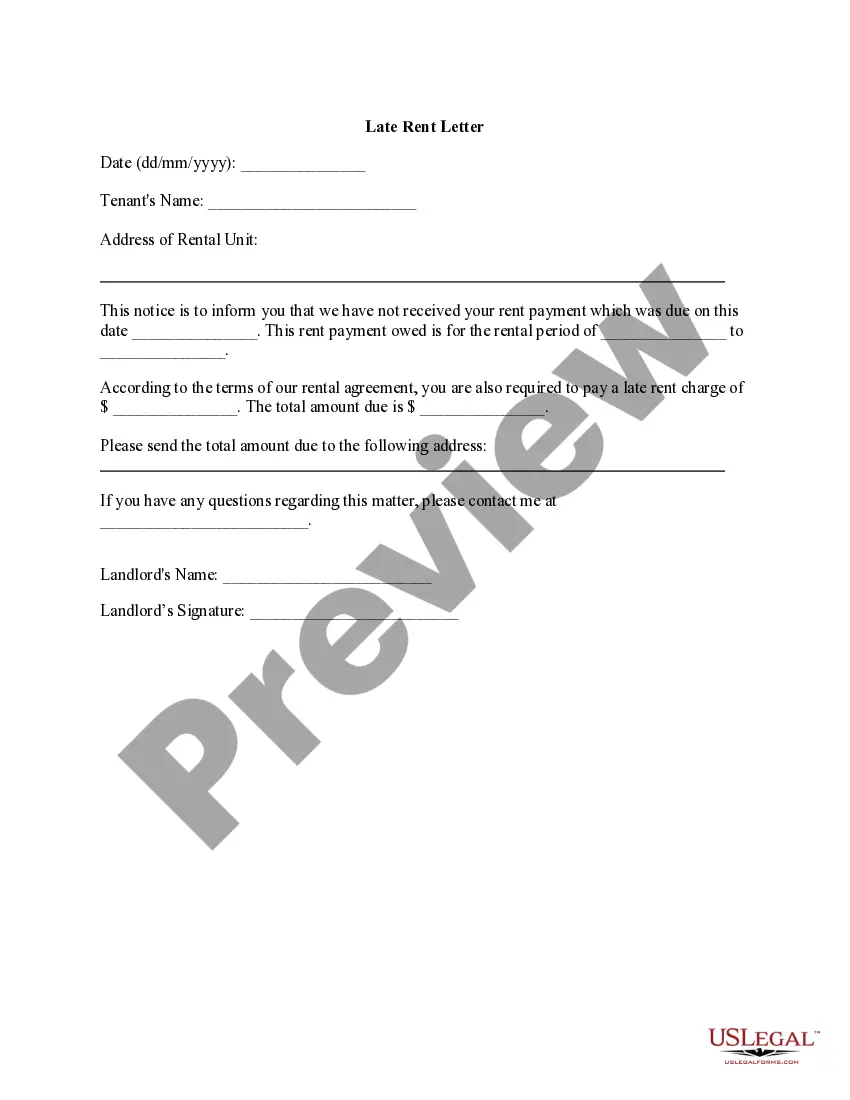
Step 1: Check Your Lease Documents and Payment Records. Step 2: Send a Late Rent Notice. Step 3: Make a Phone Call. Step 4: Send a Pay or Quit Notice. Step 5: Take Legal Action.
Under California law, a late fee will be enforced only if the fee is a reasonable estimate of the amount that the lateness of the payment will cost the landlord, and if specified language is include in a written lease or rental agreement.
Dear Landlord's Name, I'm writing to inform you that my rent payment will be late this month. I was recently laid off from my job and won't be able to make the payment on time. I have applied for unemployment benefits, but it may take up to 2 weeks before I receive my first payment.
Clearly Outline Your Late Rent Procedure in the Lease. Late Rent Fees. Find Out Why Your Tenant's Rent is Late. Refer Your Tenant to Rent Assistance Programs. Make Rent Easier by Having Tenants Pay Rent Online.
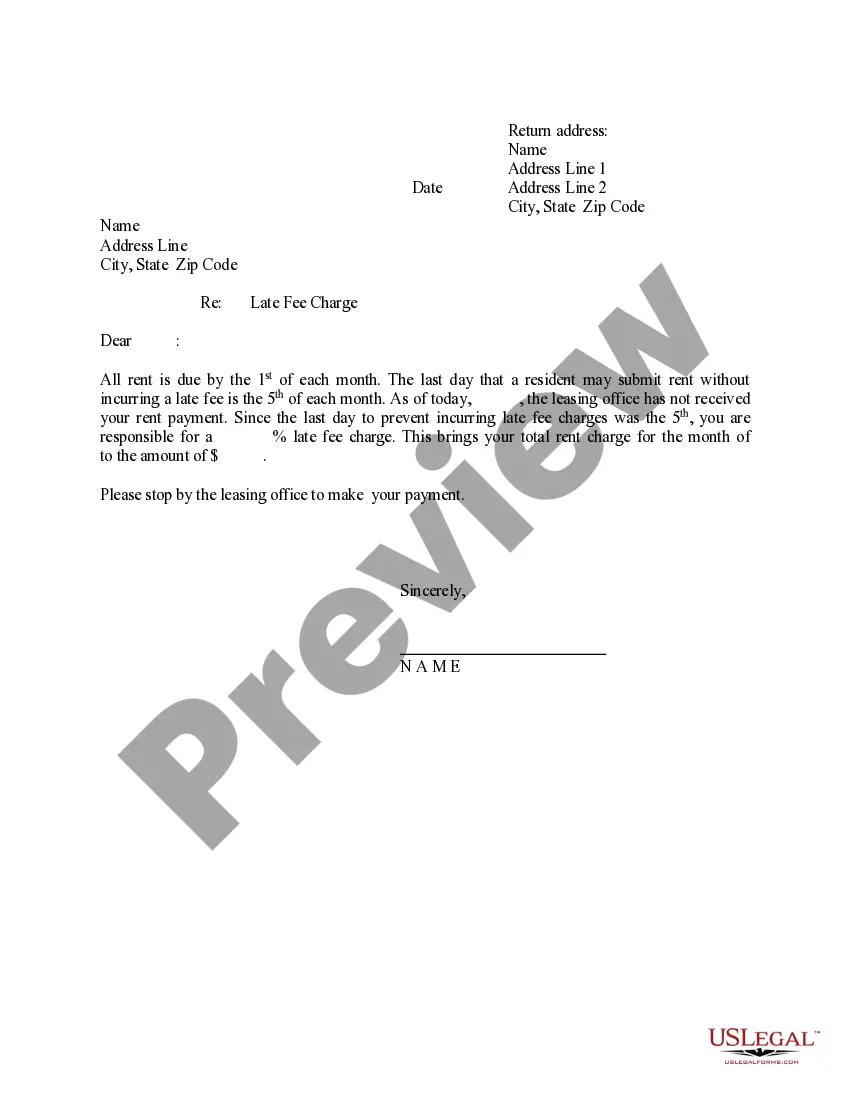
The most your landlord can charge as a late fee is 5% of your monthly rent. For example, if your monthly rent is $1,000, the landlord can charge you up to $50 as a late fee. If you receive a rent subsidy, you may not pay all of your rent yourself.
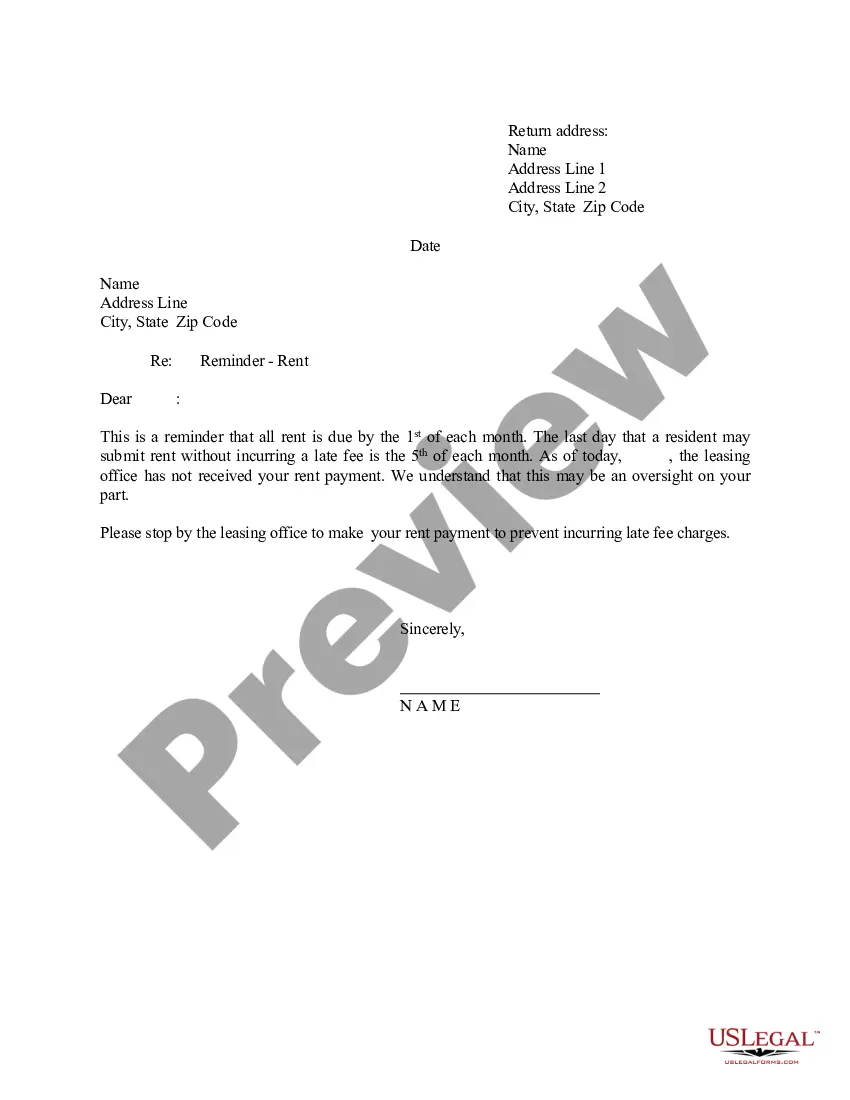
Grace periods are quite common, usually varying between three and five days. Grace periods provide tenants extra time to pay rent before the landlord can legally charge a late fee.