Mississippi Verified Complaint for Injunctive Relief
What is this form?
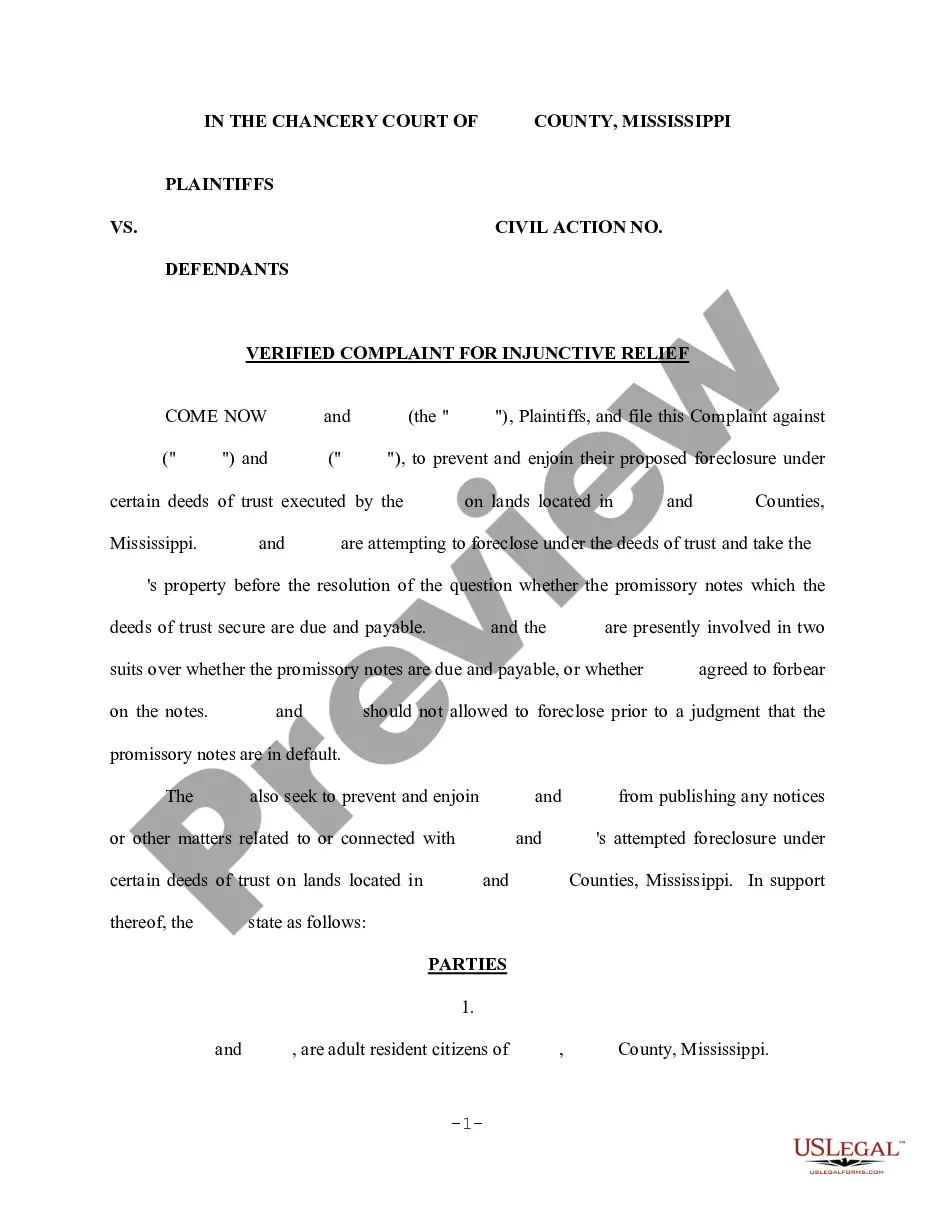
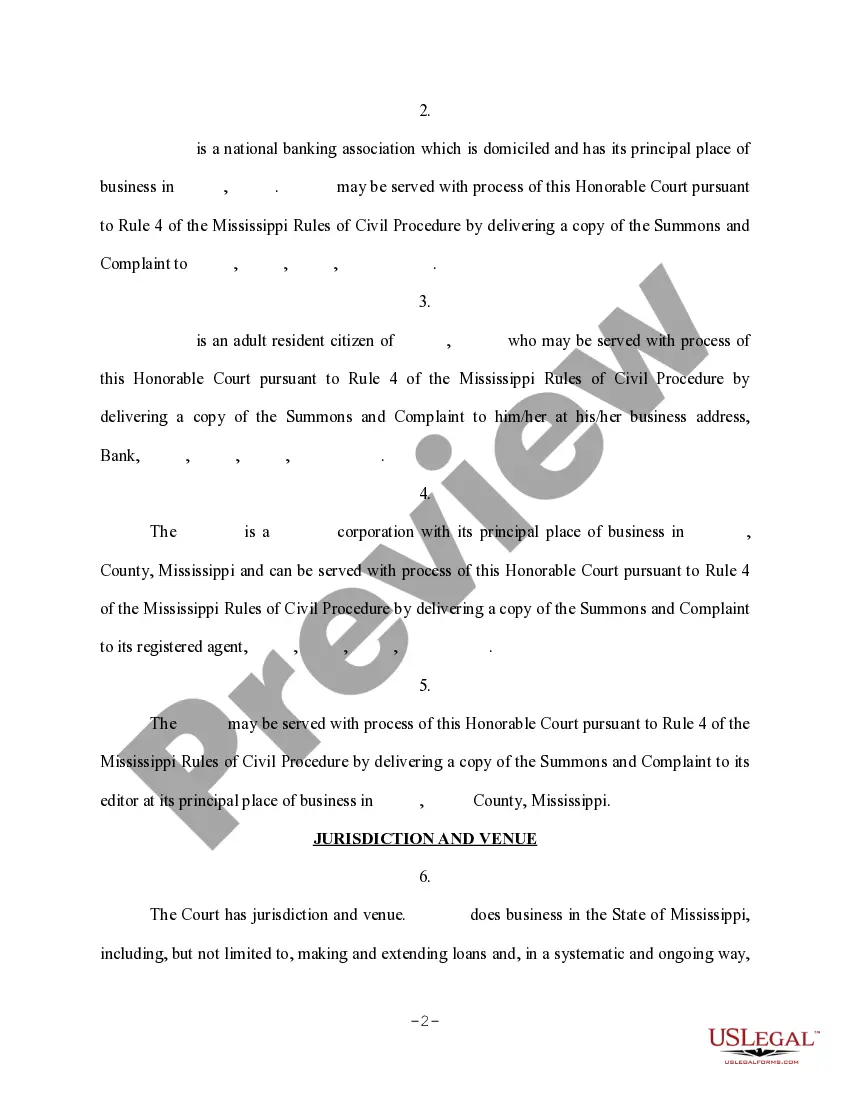
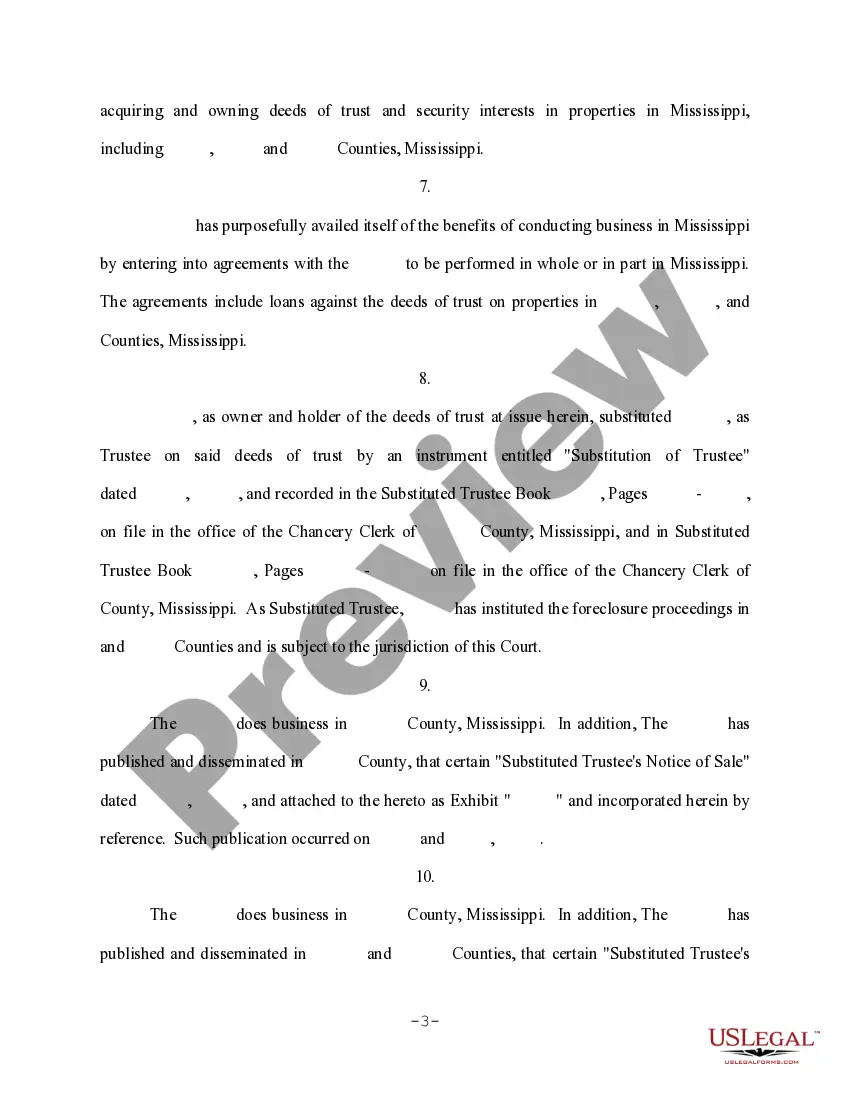
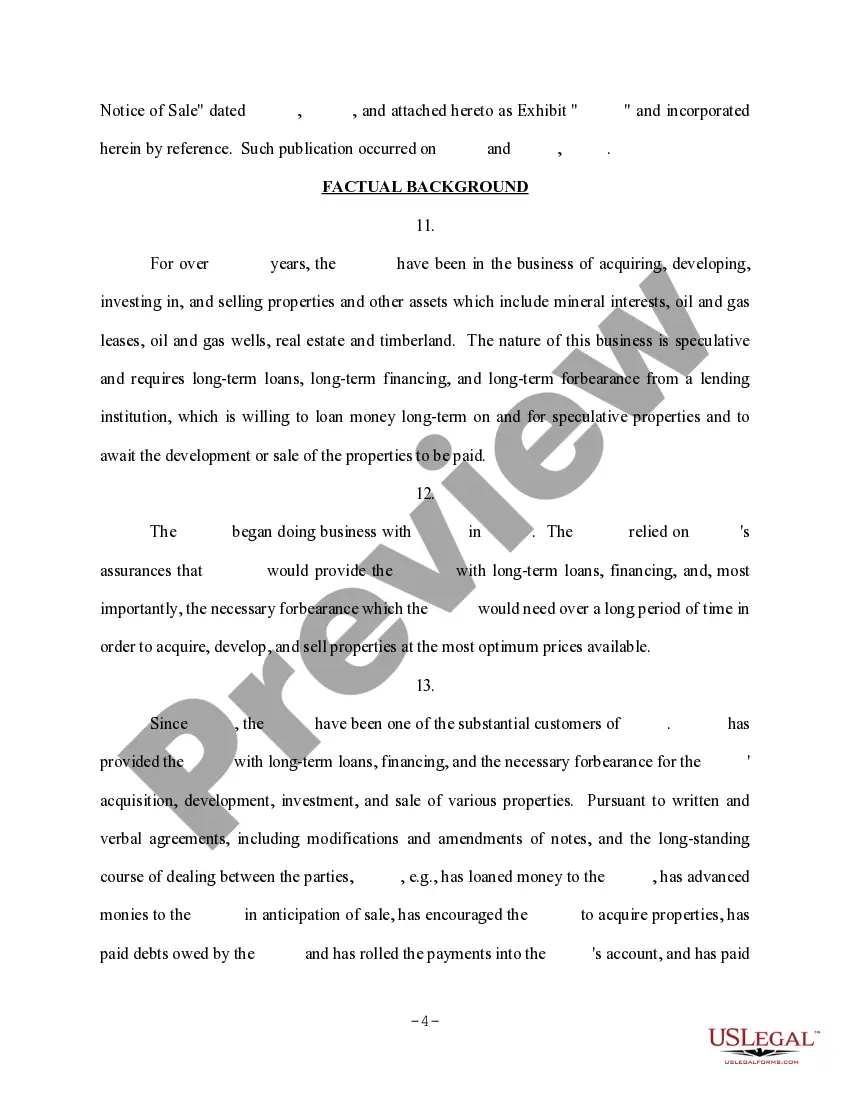
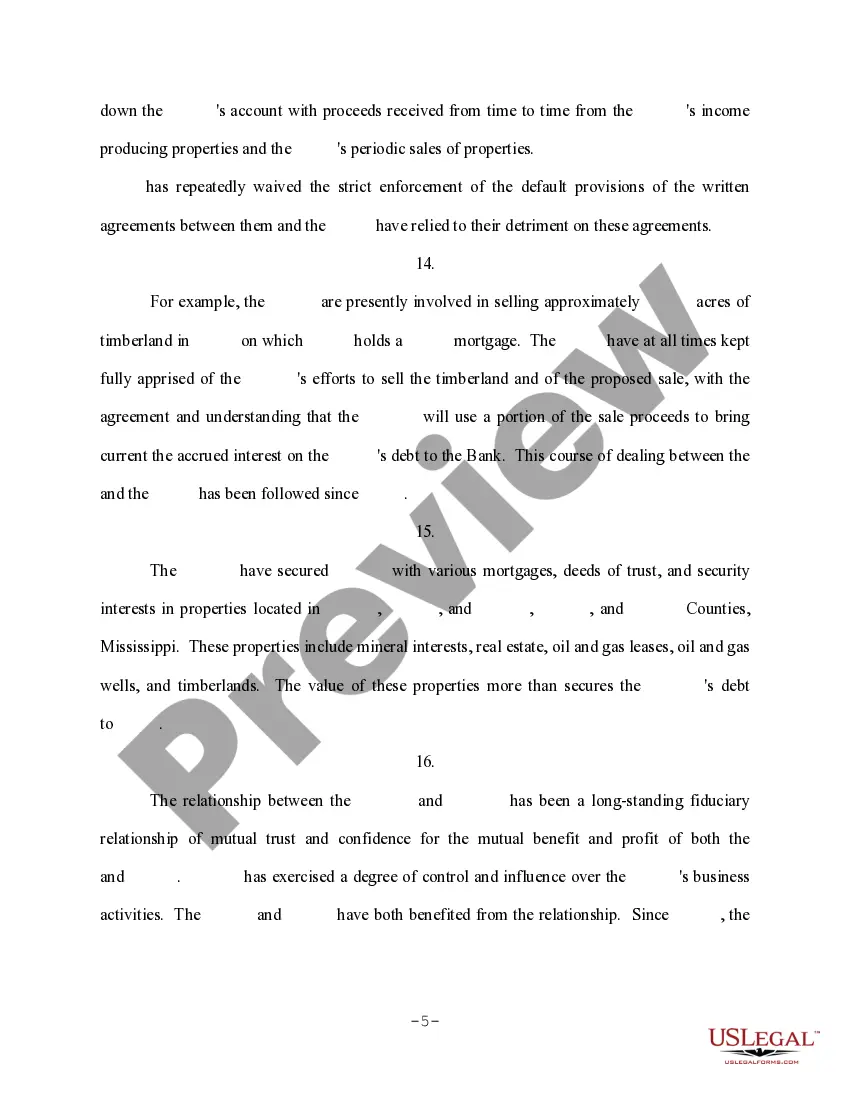
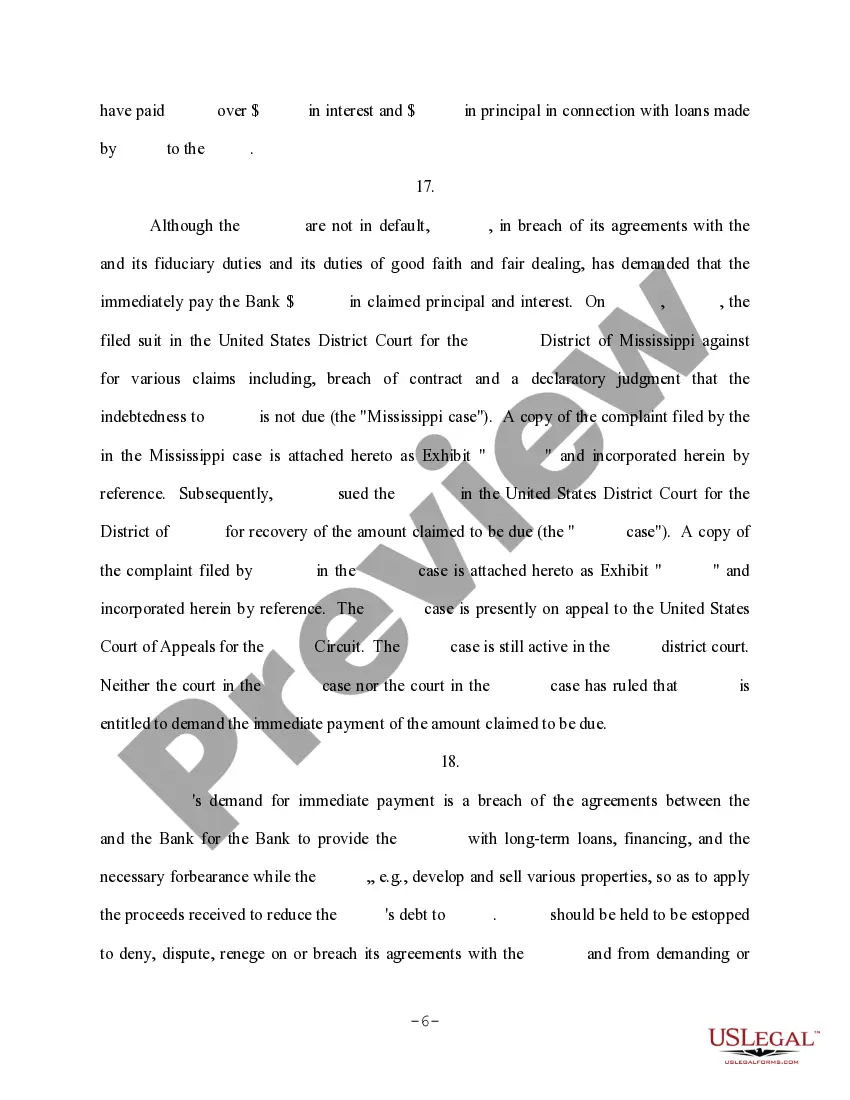
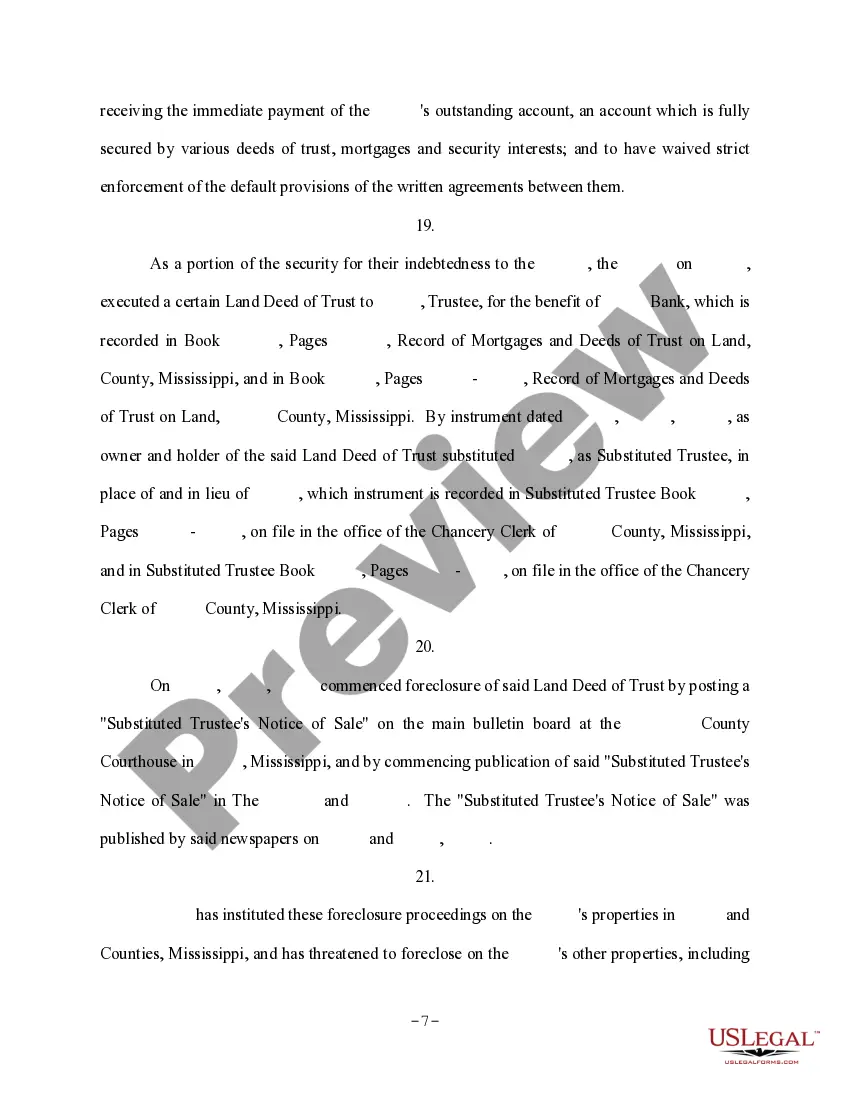
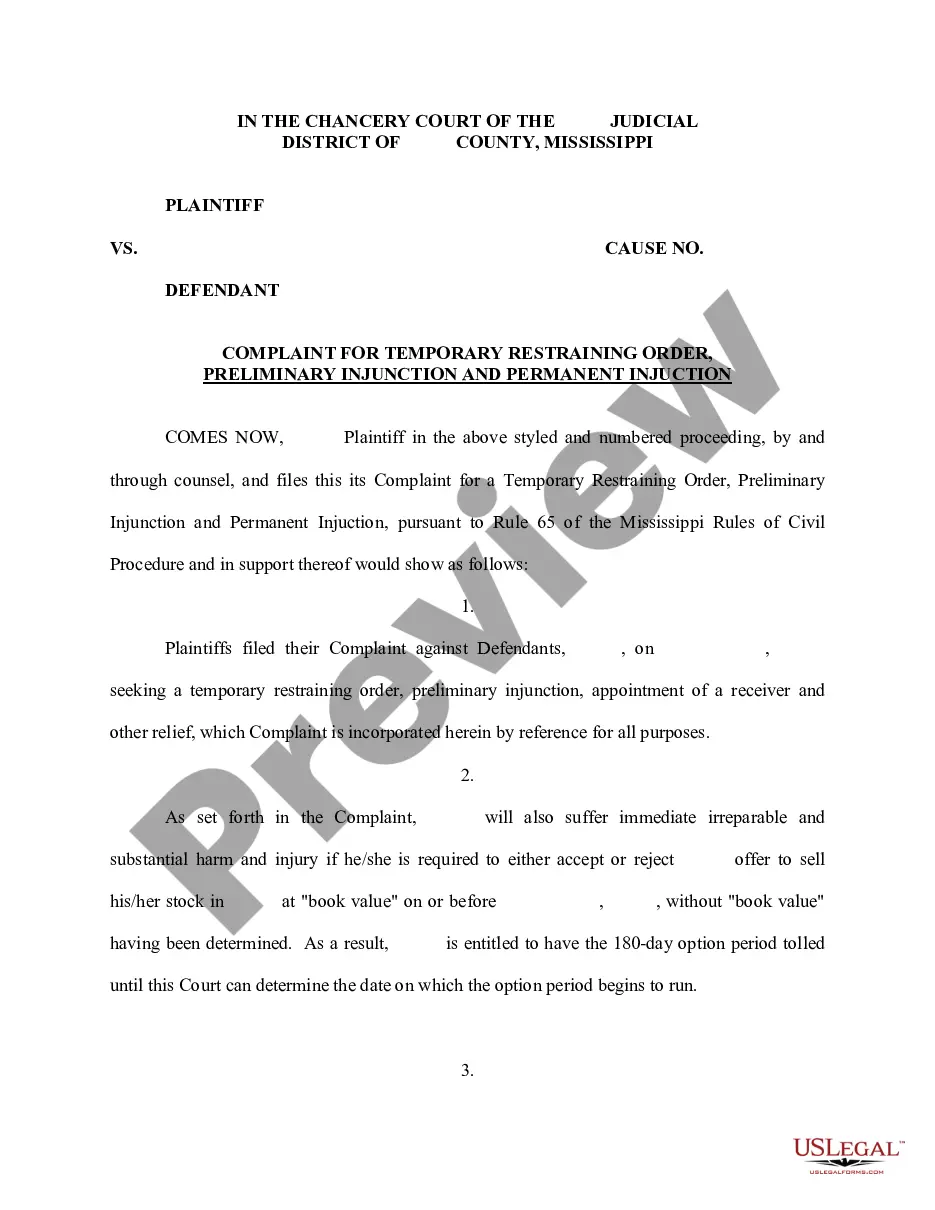
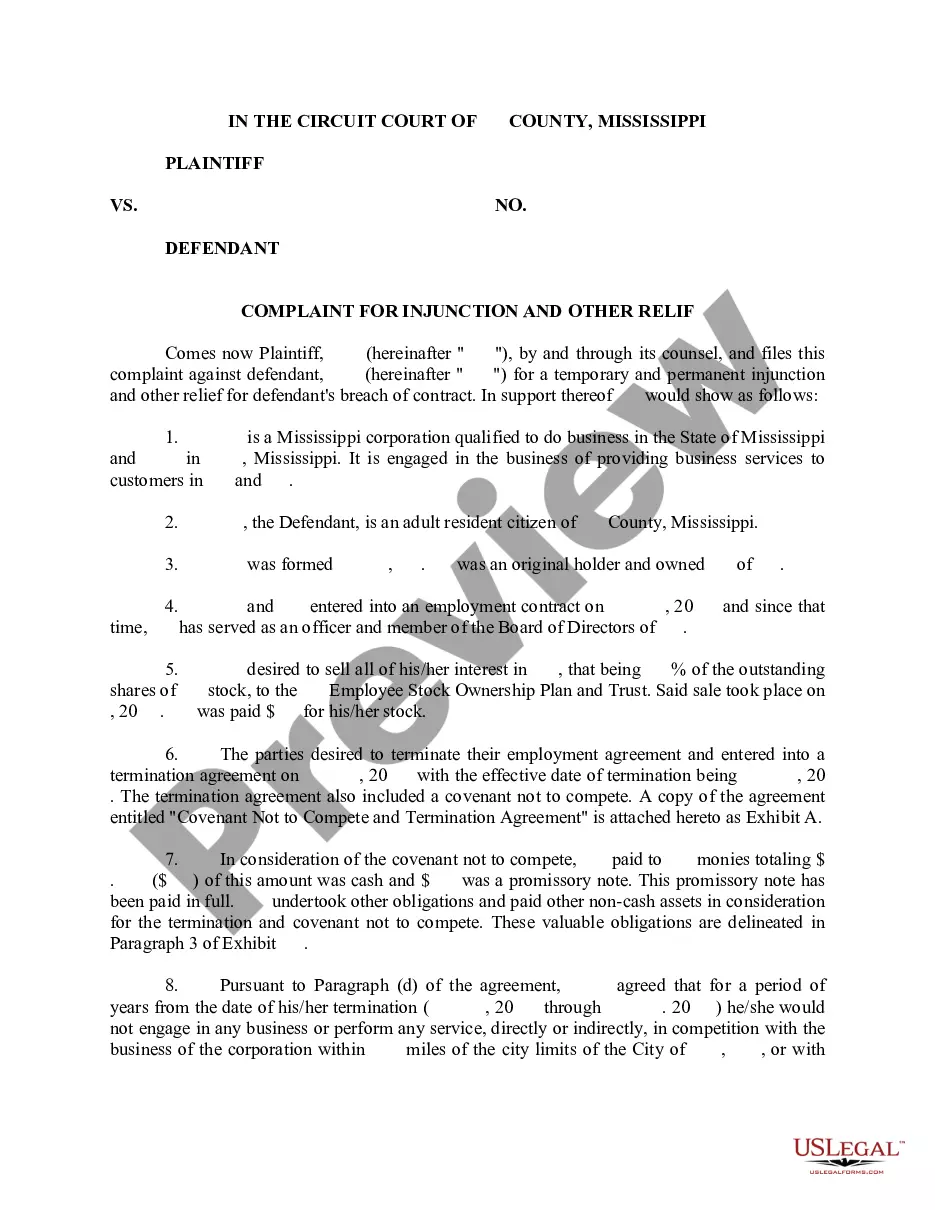
The Verified Complaint for Injunctive Relief is a legal document filed by plaintiffs in order to seek a court order that prevents a defendant from taking action that could harm the plaintiffs' property rights. This form specifically addresses situations of foreclosure, allowing plaintiffs to halt the proceedings until the underlying issues regarding the promissory notes are resolved. Unlike other complaint forms, this one is verified, meaning it includes a sworn statement confirming the facts are true to the best of the plaintiff's knowledge.
What’s included in this form
- Title and caption identifying the parties involved.
- Statement of jurisdiction to establish where the case is filed.
- Factual allegations detailing the circumstances leading to the complaint.
- Request for relief outlining what the plaintiffs seek to achieve.
- Verification clause affirming the truthfulness of the information provided.



When to use this document
This form is typically used when a property owner is facing foreclosure proceedings and seeks to halt these actions due to unresolved issues with promissory notes associated with the deeds of trust. It is crucial to file this complaint if you believe the foreclosure is unjust or premature and wish to protect your rights to the property in question while the matter is litigated in court.
Who can use this document
- Property owners (plaintiffs) who are facing foreclosure.
- Individuals or entities seeking to protect their property rights during legal disputes.
- Legal representatives or attorneys acting on behalf of plaintiffs in foreclosure cases.
Steps to complete this form
- Identify the parties involved by entering the plaintiffs and defendant information in the appropriate sections.
- Provide a detailed description of the factual allegations surrounding the foreclosure.
- Clearly outline the relief you are seeking from the court.
- Include any pertinent dates relevant to the foreclosure process within the document.
- Sign and date the verification clause to affirm the accuracy of the information.
Does this form need to be notarized?
Notarization is generally not required for this form. However, certain states or situations might demand it. You can complete notarization online through US Legal Forms, powered by Notarize, using a verified video call available anytime.
Get your form ready online
Our built-in tools help you complete, sign, share, and store your documents in one place.
Make edits, fill in missing information, and update formatting in US Legal Forms—just like you would in MS Word.
Download a copy, print it, send it by email, or mail it via USPS—whatever works best for your next step.
Sign and collect signatures with our SignNow integration. Send to multiple recipients, set reminders, and more. Go Premium to unlock E-Sign.
If this form requires notarization, complete it online through a secure video call—no need to meet a notary in person or wait for an appointment.
We protect your documents and personal data by following strict security and privacy standards.

Make edits, fill in missing information, and update formatting in US Legal Forms—just like you would in MS Word.

Download a copy, print it, send it by email, or mail it via USPS—whatever works best for your next step.

Sign and collect signatures with our SignNow integration. Send to multiple recipients, set reminders, and more. Go Premium to unlock E-Sign.

If this form requires notarization, complete it online through a secure video call—no need to meet a notary in person or wait for an appointment.

We protect your documents and personal data by following strict security and privacy standards.
Avoid these common issues
- Failing to provide complete and accurate details of the parties involved.
- Omitting key factual information that supports the claims made in the complaint.
- Not verifying the complaint with an appropriate signature, which can invalidate the document.
- Neglecting to file the complaint within the required time frame for foreclosure actions.
Advantages of online completion
- Instant access to a professionally drafted form tailored for Mississippi law.
- Conveniently editable format that allows you to fill in your specific information quickly.
- Time-saving option compared to traditional methods of obtaining legal documents.
Summary of main points
- The Verified Complaint for Injunctive Relief protects property owners from premature foreclosure.
- Ensure all parties and property details are accurately identified to avoid delays.
- File the complaint promptly to seek immediate court intervention.
Looking for another form?

Form popularity
FAQ
Injunction or Temporary Restraining Order: An injunction or temporary restraining order is an order from the court prohibiting a party from performing or ordering a specified act, either temporarily or permanently.
To get an injunction order, you must file an application, including a written statement of the aggrieved, through a civil lawyer at the appropriate court. The process might take a while as parties are required to show evidence before the court, and the court will have to ultimately decide on the matter.
The party seeking a preliminary injunctive relief must demonstrate: (1) irreparable injury in the absence of such an order; (2) that the threatened injury to the moving party outweighs the harm to the opposing party resulting from the order; (3) that the injunction is not adverse to public interest; and (4) that the
The party seeking a preliminary injunctive relief must demonstrate: (1) irreparable injury in the absence of such an order; (2) that the threatened injury to the moving party outweighs the harm to the opposing party resulting from the order; (3) that the injunction is not adverse to public interest; and (4) that the
An injunction can last any amount of time. A temporary injunction can last as long as it takes to get the other party served. Until the final hearing, the temporary injunction will be in force. Usually a final hearing date is set within a few days or weeks of a person getting served with a temporary injunction.
An injunction is a legal and equitable remedy in the form of a special court order that compels a party to do or refrain from specific acts.They can also be charged with contempt of court. Counterinjunctions are injunctions that stop or reverse the enforcement of another injunction.
Most lawyers are familiar with some basic ways to enforce money judgments. But what about injunctions? One of the most flexible ways to enforce an injunction is with the contempt power of the court. It permits a variety of different remedies that are available to creative lawyers and judges.
Step 1: Research and Write Your Complaint and Accompanying Papers. Step 3: File the Lawsuit (if Needed) and Motion, and Pay the Filing Fee. Step 4: Have the Motion and Related Papers Served on All Parties. Step 5: Review Any Opposition to the Preliminary Injunction.
It is also important that you do not take any steps which might breach the terms of the injunction in any way, as a breach of an injunction is generally punishable as a contempt of Court which in some circumstances can lead to imprisonment.