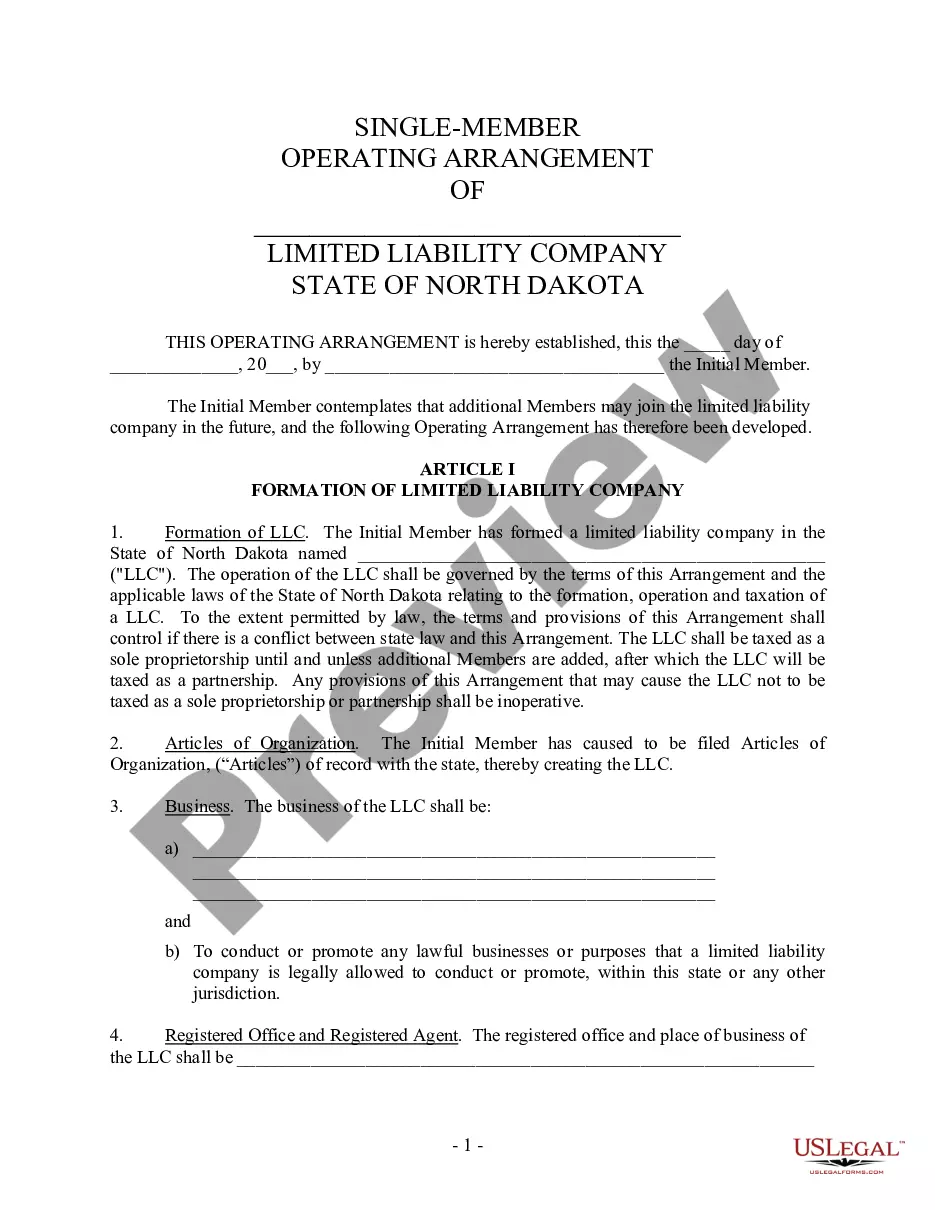
Nebraska Permanent Utility Easement
Understanding this form
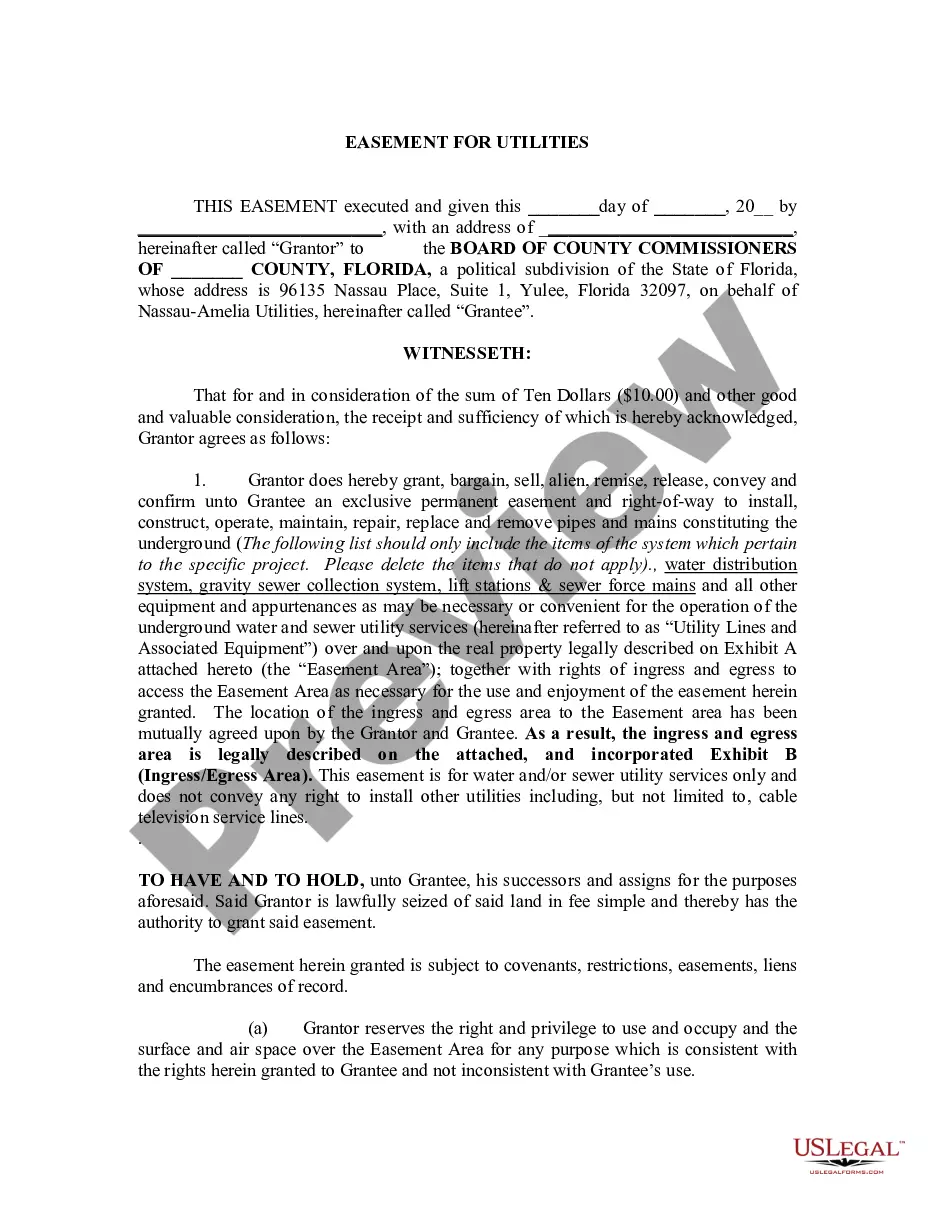
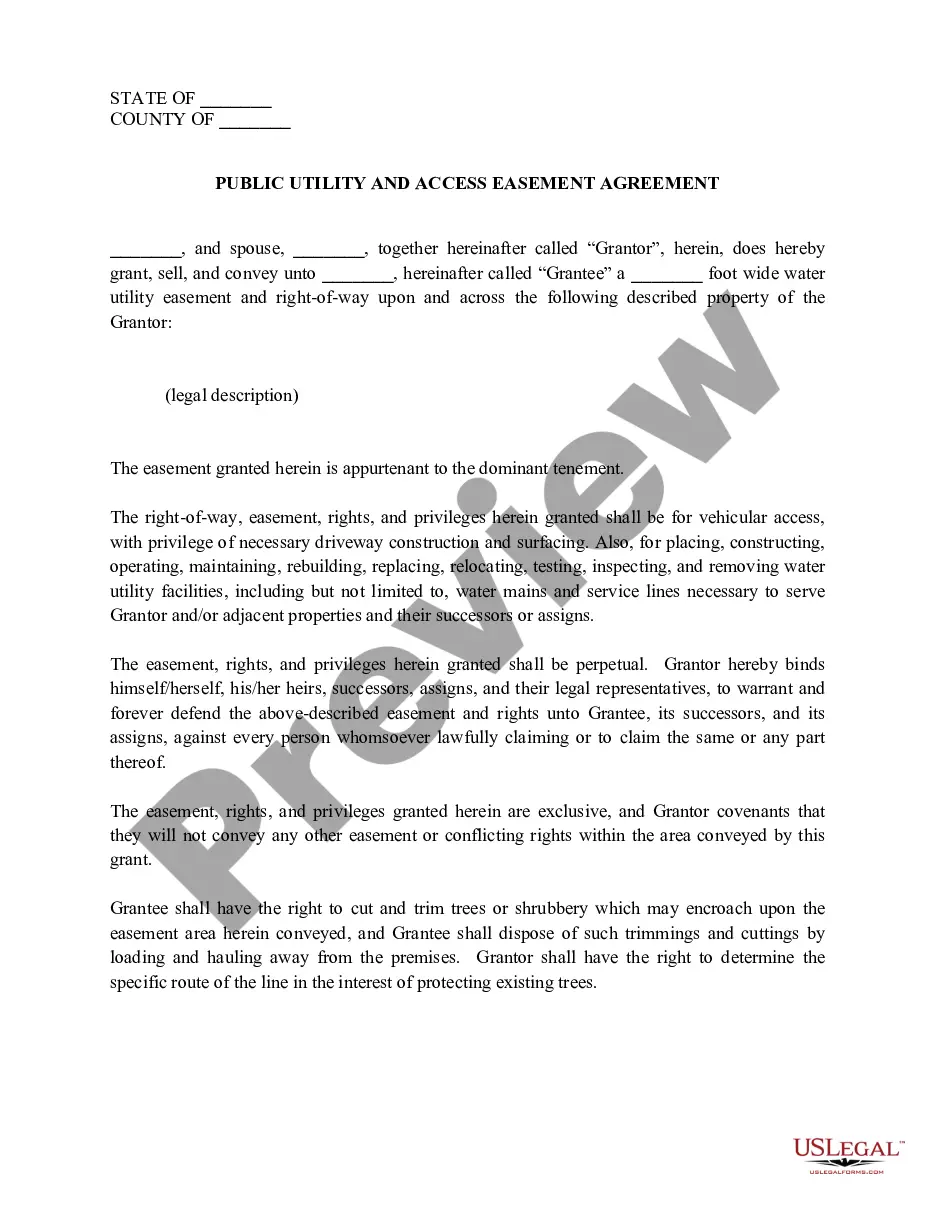
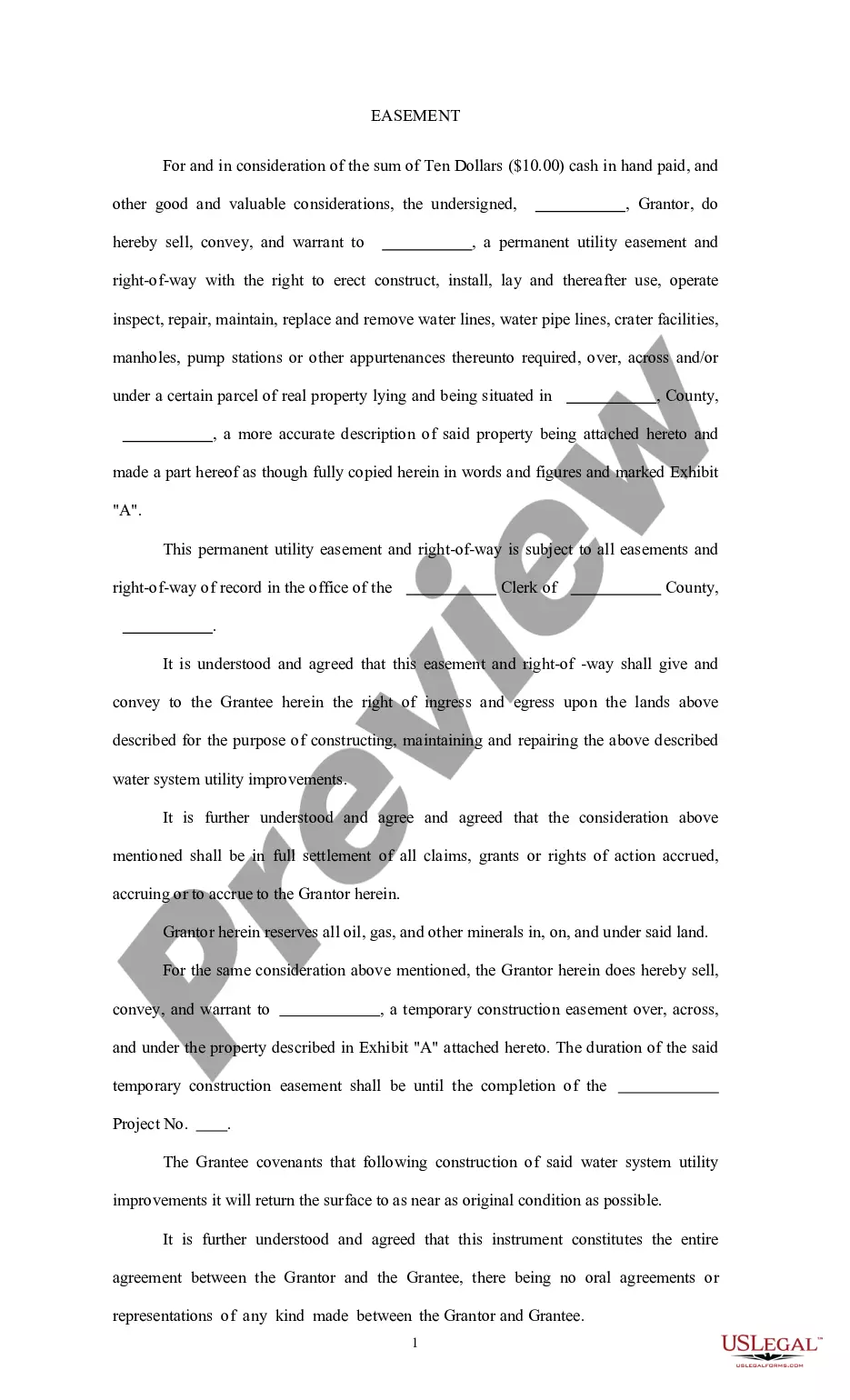
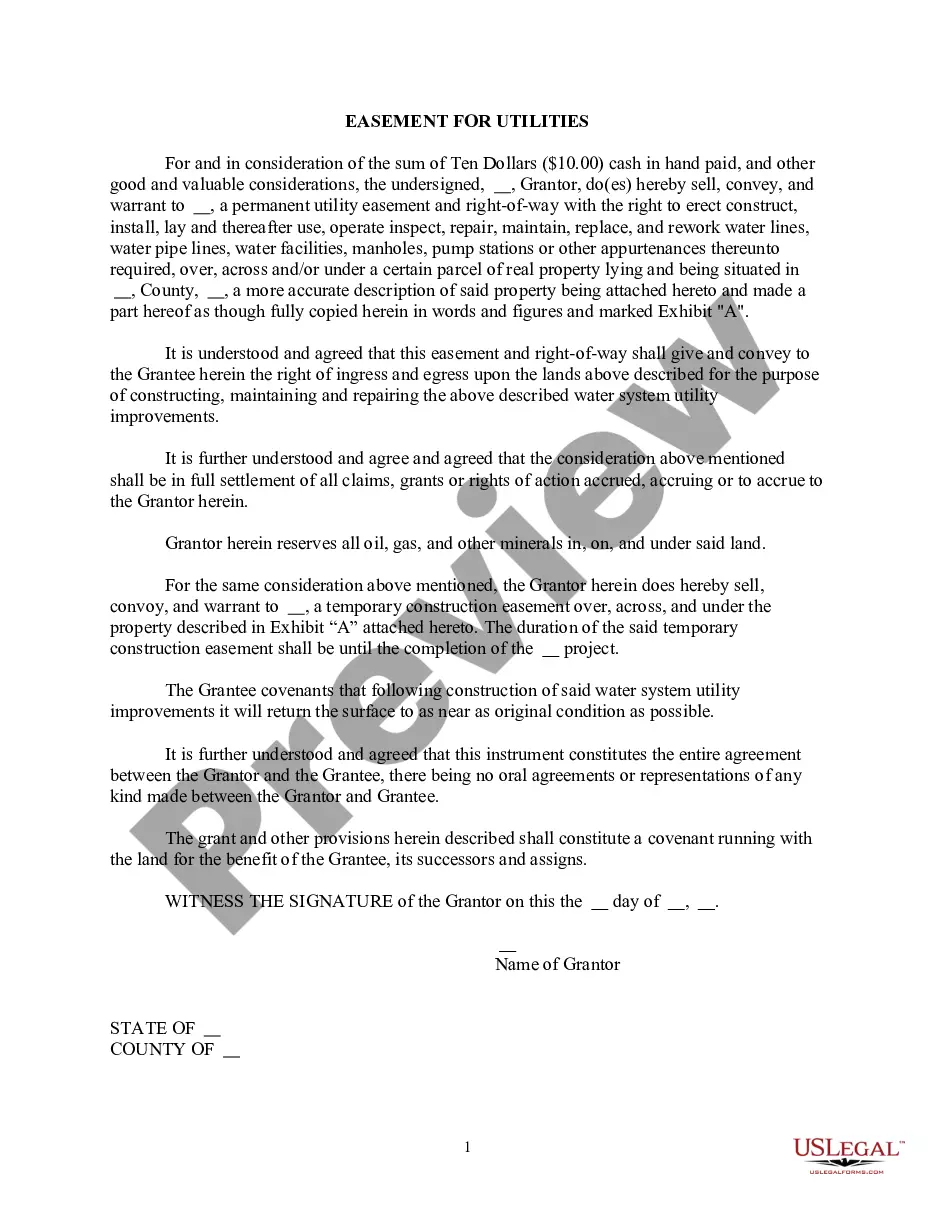
The Permanent Utility Easement form grants permission for a utility company to construct, operate, and maintain utility lines on a specified tract of land. Unlike temporary easements, this form provides a long-lasting right that persists with the property, ensuring utility access for necessary infrastructure improvements and maintenance. It is particularly useful for municipalities or utility providers needing to establish ongoing utility access without acquiring full ownership of the land.
What’s included in this form
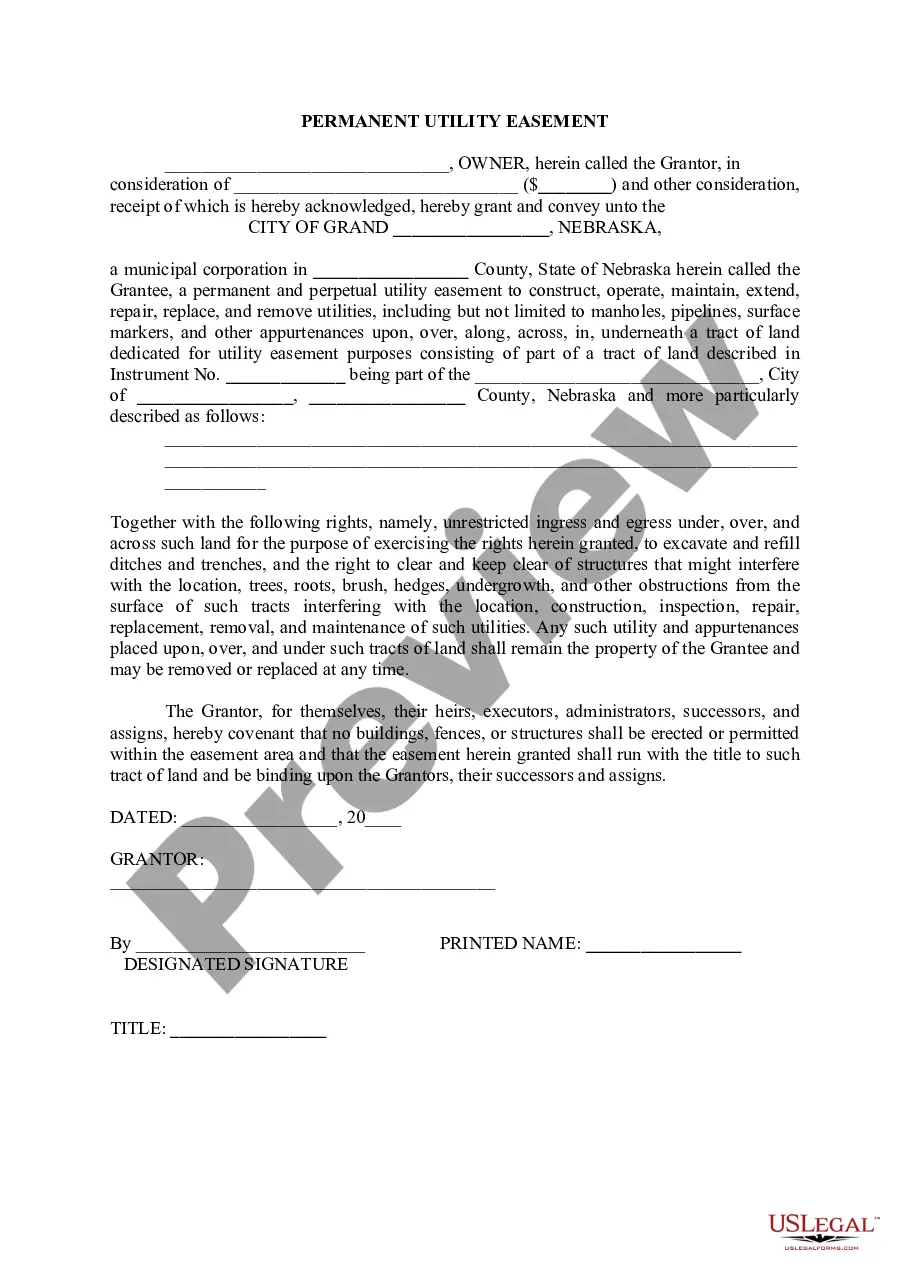
- Identification of the grantor (landowner) and grantee (utility company).
- Consideration amount, specifying any compensation for the easement.
- Description of the land on which the easement is granted.
- Rights granted to the utility, including access for maintenance and clearances.
- Covenants restricting the grantor from constructing structures within the easement area.
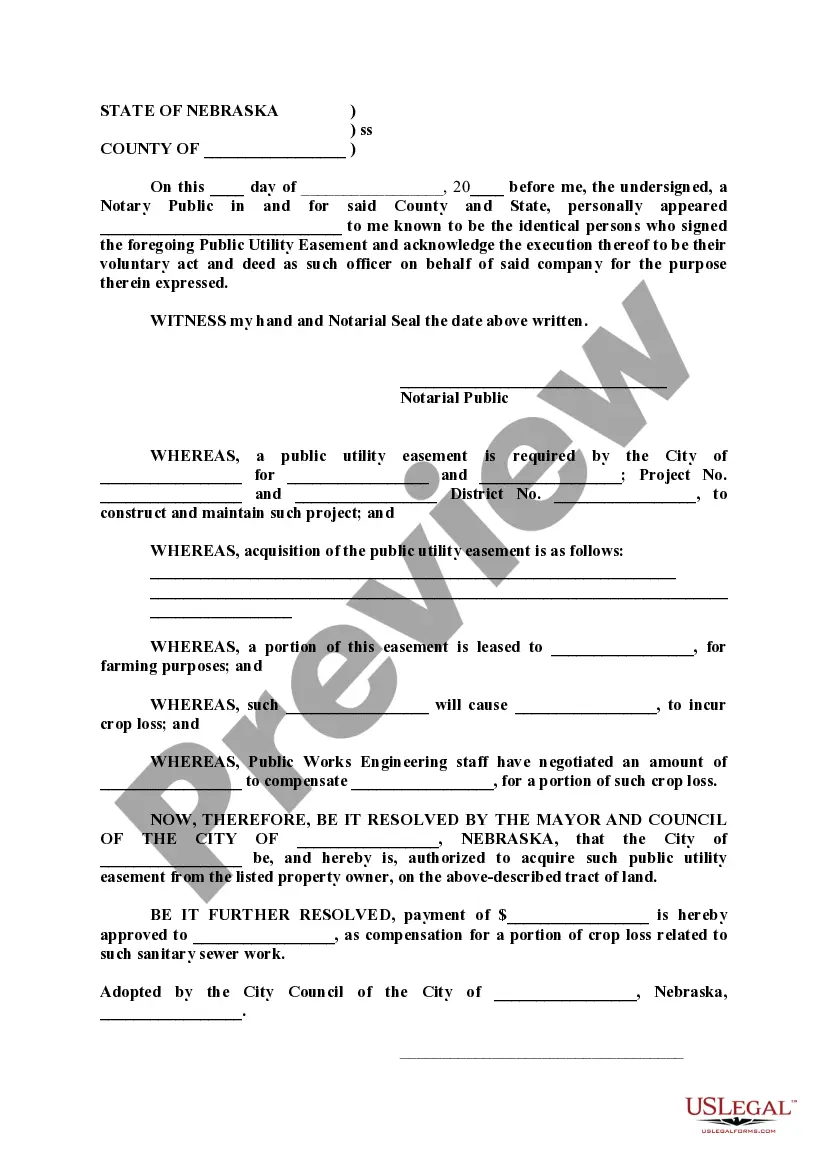
- Notarization section for acknowledging the agreement.

Situations where this form applies
This form is needed when a utility company requires a permanent easement on private property to install or maintain utility lines such as water, gas, or electricity. It is applicable when local governments or utility providers plan infrastructure projects that necessitate access to land for construction and ongoing maintenance, especially if there are concerns about crop loss or property use restrictions.
Who needs this form
- Property owners granting rights to utility companies.
- Municipalities or government entities overseeing utility projects.
- Utility companies needing legal access for installations and maintenance.
- Farmers or landowners affected by utility projects who need to formally document easement agreements.
How to prepare this document
- Identify the parties involved, including the property owner (Grantor) and the utility company (Grantee).
- Specify the consideration amount for the easement rights granted.
- Provide a detailed description of the property where the easement is established.
- List any specific rights granted to the Grantee, such as the right to access, maintain, and clear pathways.
- Review and sign the document in front of a Notary Public to validate the agreement.
Notarization requirements for this form
Yes, this form must be notarized to be legally valid. Notarization ensures the authenticity of the signatures and the voluntary nature of the agreement. US Legal Forms offers integrated online notarization services, available 24/7, allowing you to complete this process securely and conveniently via a video call without traveling.
Get your form ready online
Our built-in tools help you complete, sign, share, and store your documents in one place.
Make edits, fill in missing information, and update formatting in US Legal Forms—just like you would in MS Word.
Download a copy, print it, send it by email, or mail it via USPS—whatever works best for your next step.
Sign and collect signatures with our SignNow integration. Send to multiple recipients, set reminders, and more. Go Premium to unlock E-Sign.
If this form requires notarization, complete it online through a secure video call—no need to meet a notary in person or wait for an appointment.
We protect your documents and personal data by following strict security and privacy standards.

Make edits, fill in missing information, and update formatting in US Legal Forms—just like you would in MS Word.

Download a copy, print it, send it by email, or mail it via USPS—whatever works best for your next step.

Sign and collect signatures with our SignNow integration. Send to multiple recipients, set reminders, and more. Go Premium to unlock E-Sign.

If this form requires notarization, complete it online through a secure video call—no need to meet a notary in person or wait for an appointment.

We protect your documents and personal data by following strict security and privacy standards.
Common mistakes to avoid
- Failing to accurately describe the property involved.
- Not specifying the consideration amount clearly.
- Omitting signatures or notarial acknowledgments required for validity.
- Allowing constructions such as buildings within the easement area.
Benefits of completing this form online
- Easy access to professionally drafted legal documents, saving time and effort.
- Ability to edit the form digitally to fit specific needs before downloading.
- Secure storage of files for future reference and updates as regulations change.
Looking for another form?
Form popularity
FAQ
An easement usually is written so that it lasts forever. This is known as a perpetual easement. Where state law allows, an easement may be written for a specified period of years; this is known as a term easement. Only gifts of perpetual easement, however, can qualify a donor for income- and estate-tax benefits.
Permanent easement means an easement that lasts in perpetuity.
When termed as a utility easement, it means a utility company's right to access and control the portion of another person's land that is located near utility facilities and structures (i.e. utility poles, transformers, overhead or underground electrical lines).
The bottom line is that developers and builders who are presented with utility company easement forms should not just sign them, but think about the kinds of issues they can present. It is easier to negotiate these concessions up front before the lines go in, than to ask the utility company to amend its easement later.
When termed as a utility easement, it means a utility company's right to access and control the portion of another person's land that is located near utility facilities and structures (i.e. utility poles, transformers, overhead or underground electrical lines).
An easement holder is not allowed to occupy or exclude others from using the land unless they interfere with the easement holder's use.The owner of the land may continue to use it, according to . Easements are usually held to be permanent unless the agreement states otherwise.
Types of Easements An easement may be classified as either an easement appurtenant or an easement in gross. Easement Appurtenant. An easement appurtenant is an easement that benefits one parcel of land, known as the dominant tenement, to the detriment of another parcel of land, known as the servient tenement.
So, having an easement on a property may have a permanent outcome on the property with rights of the home owner. But not all easements are bad.If you live in a rural area, you run into bad easement issues more often, typically where the easement was created by a parcel owner next to your land.