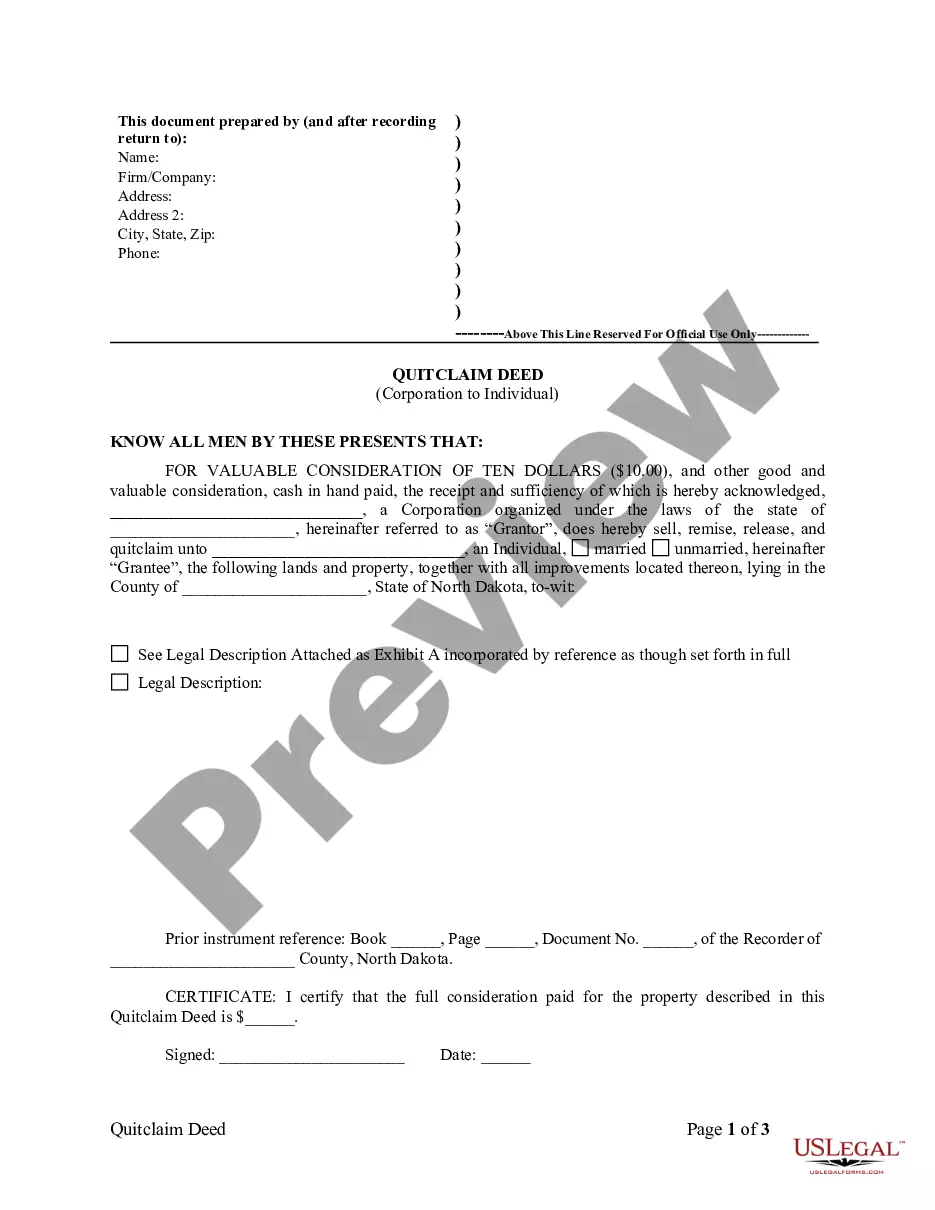
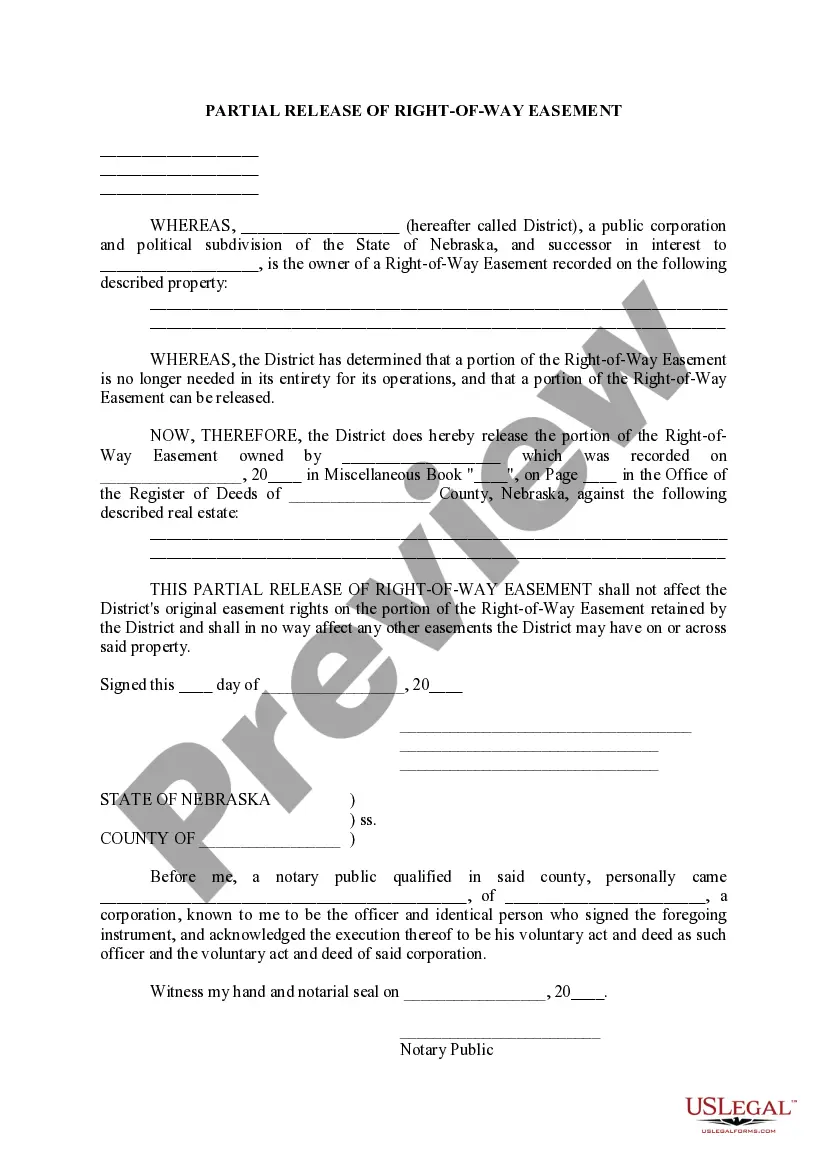
Nebraska Partial Release of Right of Way Easement
About this form
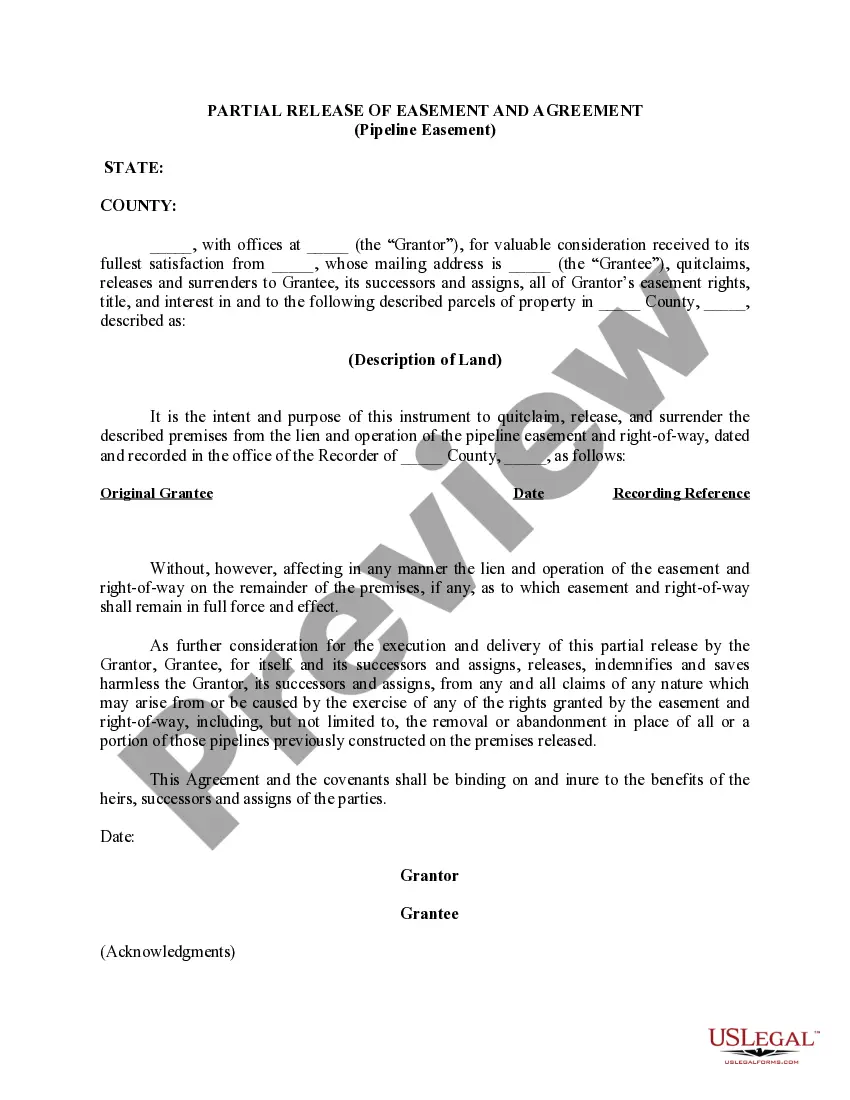
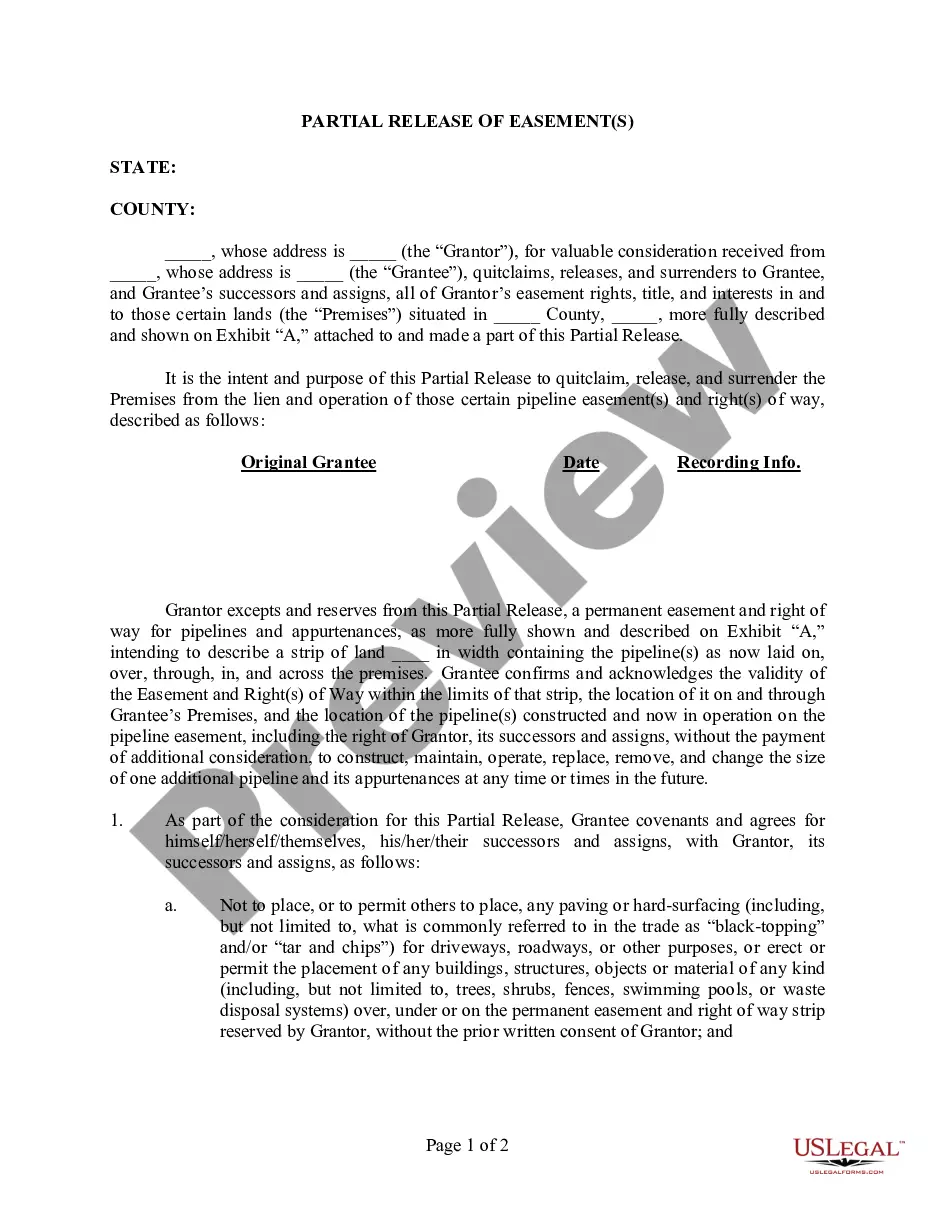
A Partial Release of Right of Way Easement is a legal document that allows a government entity to release part of a right of way that it no longer requires. This form is essential when a public corporation determines that specific portions of an easement no longer serve its operational needs. Unlike a complete easement termination, this partial release retains other easement rights, making it a distinct document that meets specific administrative needs regarding land use and access.
Key components of this form
- Identification of the District, the government entity releasing the easement.
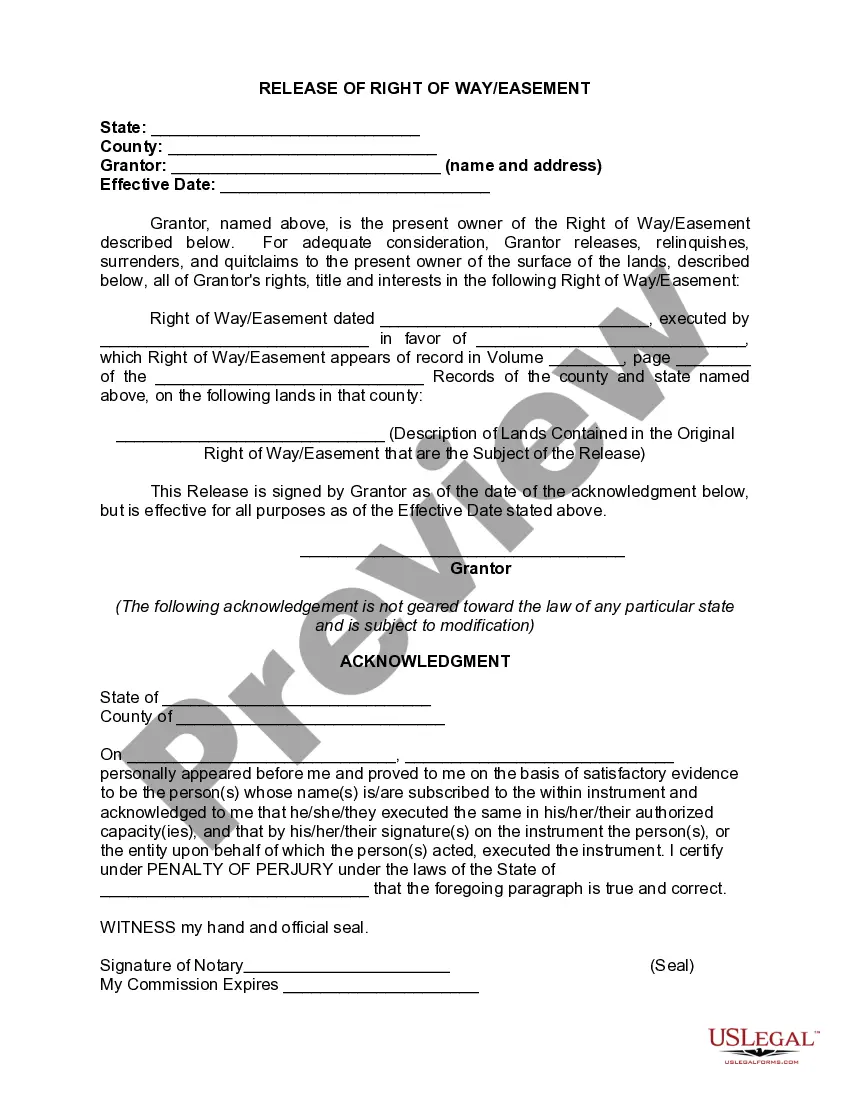
- Details of the right of way easement, including property description and recording information.
- A declaration stating the portion of the easement being released.
- A confirmation that the remaining easement rights are not affected by the release.
- Signature lines for the authorized officer and notary public acknowledgment.
Common use cases
This form is used when a government entity determines it no longer needs a specific part of a right of way easement on a property. This can occur during urban development, infrastructure changes, or any scenario where land access requirements evolve, enabling the property owner to regain some land rights while still complying with existing easement agreements.
Who this form is for
- Government entities that hold right of way easements.
- Property owners seeking to reclaim land previously subject to easements, now partially released.
- Legal professionals assisting public corporations in managing property rights.
How to complete this form
- Identify the District and its successor in interest responsible for the easement.
- Clearly specify the property description where the right of way easement exists.
- State the specific portion of the easement being released.
- Enter the date of recording and the relevant official documentation details.
- Have the authorized officer sign the document in the presence of a notary public.
Is notarization required?
Yes, this form must be notarized to be legally valid. The notarization process ensures that the signatures are authentic, providing an additional layer of credibility. US Legal Forms offers integrated online notarization through secure video calls, making the process convenient and compliant with legal standards.
Get your form ready online
Our built-in tools help you complete, sign, share, and store your documents in one place.
Make edits, fill in missing information, and update formatting in US Legal Forms—just like you would in MS Word.
Download a copy, print it, send it by email, or mail it via USPS—whatever works best for your next step.
Sign and collect signatures with our SignNow integration. Send to multiple recipients, set reminders, and more. Go Premium to unlock E-Sign.
If this form requires notarization, complete it online through a secure video call—no need to meet a notary in person or wait for an appointment.
We protect your documents and personal data by following strict security and privacy standards.

Make edits, fill in missing information, and update formatting in US Legal Forms—just like you would in MS Word.

Download a copy, print it, send it by email, or mail it via USPS—whatever works best for your next step.

Sign and collect signatures with our SignNow integration. Send to multiple recipients, set reminders, and more. Go Premium to unlock E-Sign.

If this form requires notarization, complete it online through a secure video call—no need to meet a notary in person or wait for an appointment.

We protect your documents and personal data by following strict security and privacy standards.
Typical mistakes to avoid
- Failing to include complete property descriptions can lead to confusion and legal challenges.
- Not obtaining an official signature or notarization, which may invalidate the form.
- Leaving out the recording details, which are essential for legal recognition of the release.
Benefits of using this form online
- Convenience: Easily download and fill out the form from anywhere.
- Editability: Customize the form to suit specific needs without unnecessary hassle.
- Reliability: Access professionally drafted templates that ensure legal compliance.
Looking for another form?

Form popularity
FAQ
A: Firstly you should establish whether there is any legal right of way to the property.With an easement your mother may insist your neighbour removes the fence obstructing her right of way. That access has been blocked for two years is likely to be irrelevant. Easements can also be abandoned.
A Right of Way Easement is a form of Easement annexed to land which grants a right to travel over a part of the landowner's property. This right of way is usually granted to neighbouring landowners. The legal rights of the attached landowners to use and maintain the right of way may not always be clear.
More simply, an easement is the right to use another's property for a specific purpose. Rights-of-way are easements that specifically grant the holder the right to travel over another's property. Therefore, all rights-of-way are easements, but not all easements are rights-of-way.
What are Easements and Rights-of-Way? Easements are nonpossessory interests in real property. More simply, an easement is the right to use another's property for a specific purpose. Rights-of-way are easements that specifically grant the holder the right to travel over another's property.
In short, it allows another to use and/or enter into the property of another without possessing it, e.g. a landowner may enjoy the right of way over the land of another to access their property.
A property easement is a legal situation in which the title to a specific piece land remains with the landowner, but another person or organization is given the right to use that land for a distinct purpose.
Right of Way. An easement is the right to use another person's land for a stated purpose. It can involve a general area of the property or a specific portion. A right of way is an easement that allows someone to travel through your property to get to another location.
An easement, right of way or profit can be expressly released by deed. Once this has been done then it is extinguished and cannot be revived. An easement, right of way or profit can be sometimes impliedly released by the owner's actions or in rare cases by the owner's inaction.
A private right of way is an easement, which is the right to use part of another's property in a particular way even though they do not own it.