Nebraska Loan Modification Agreement
Understanding this form
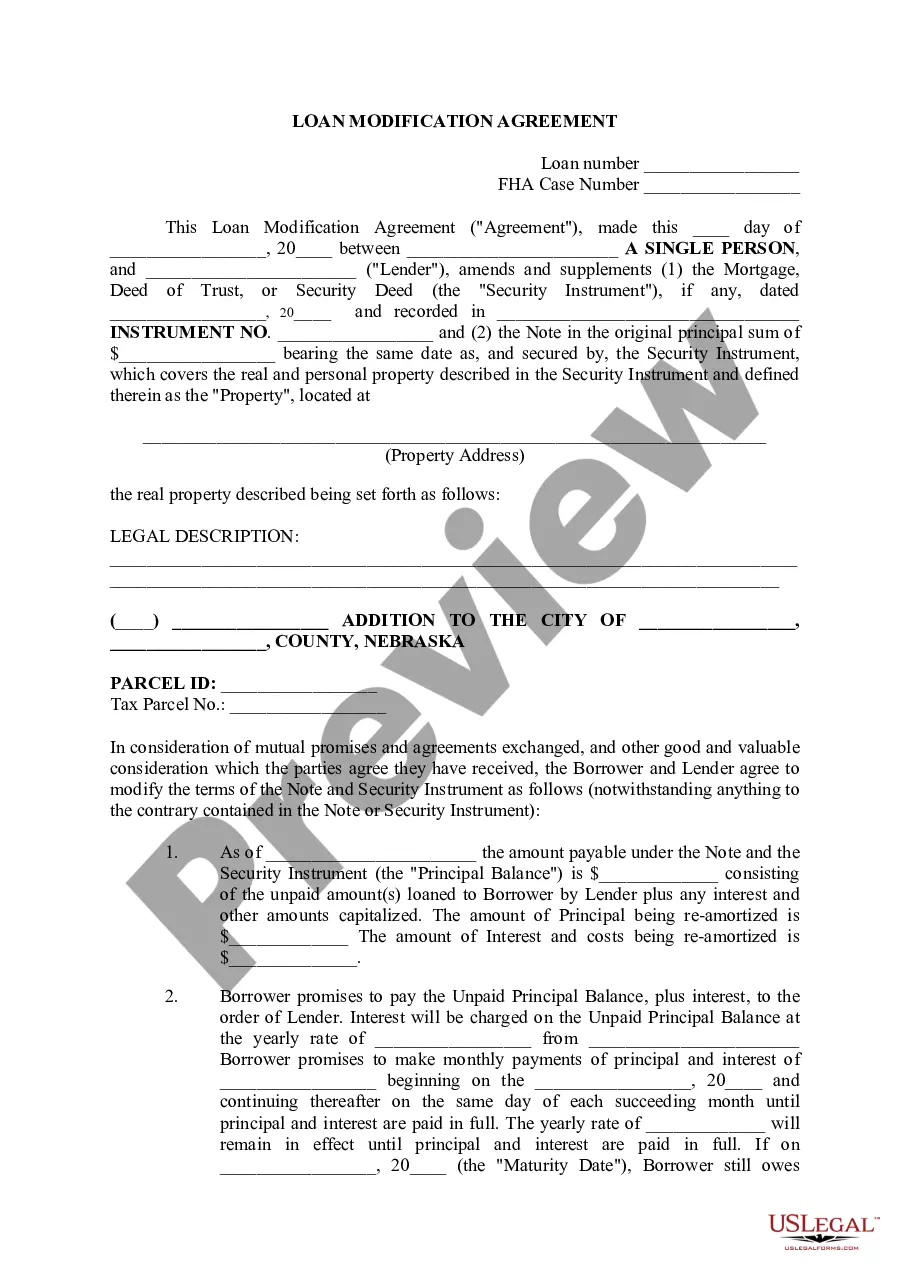
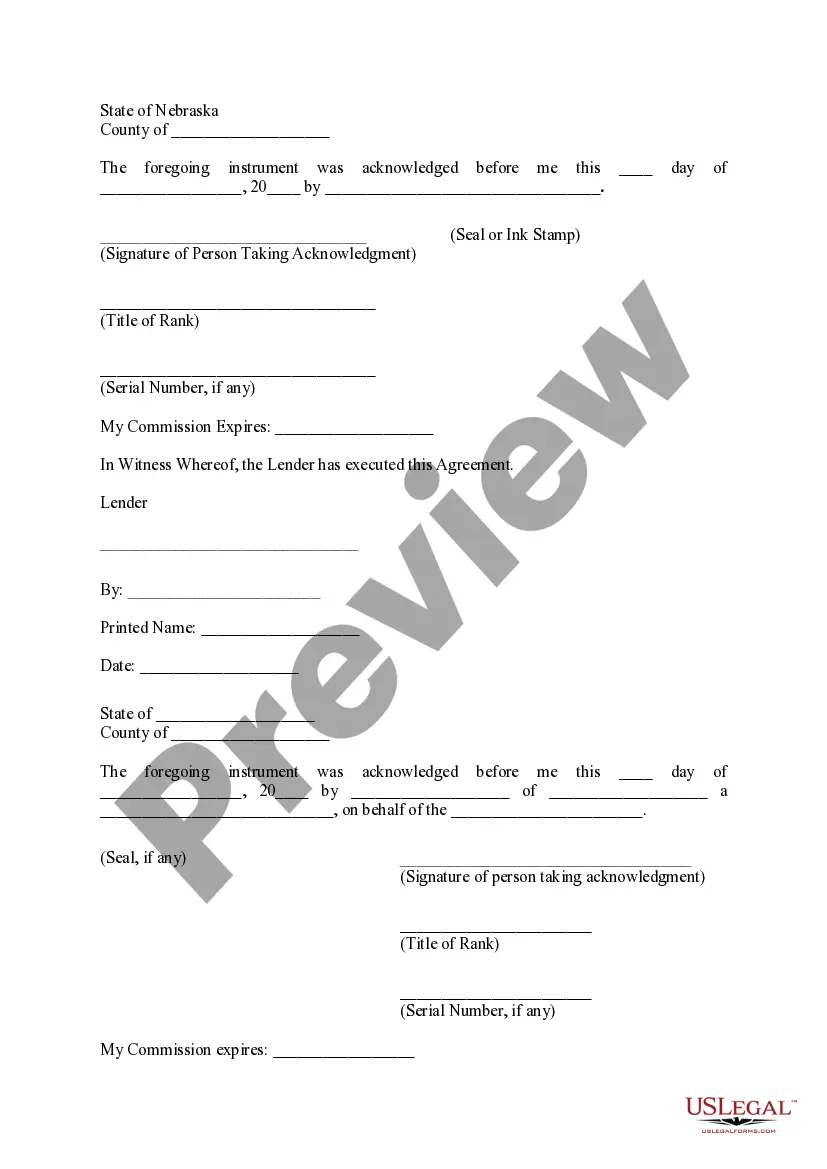
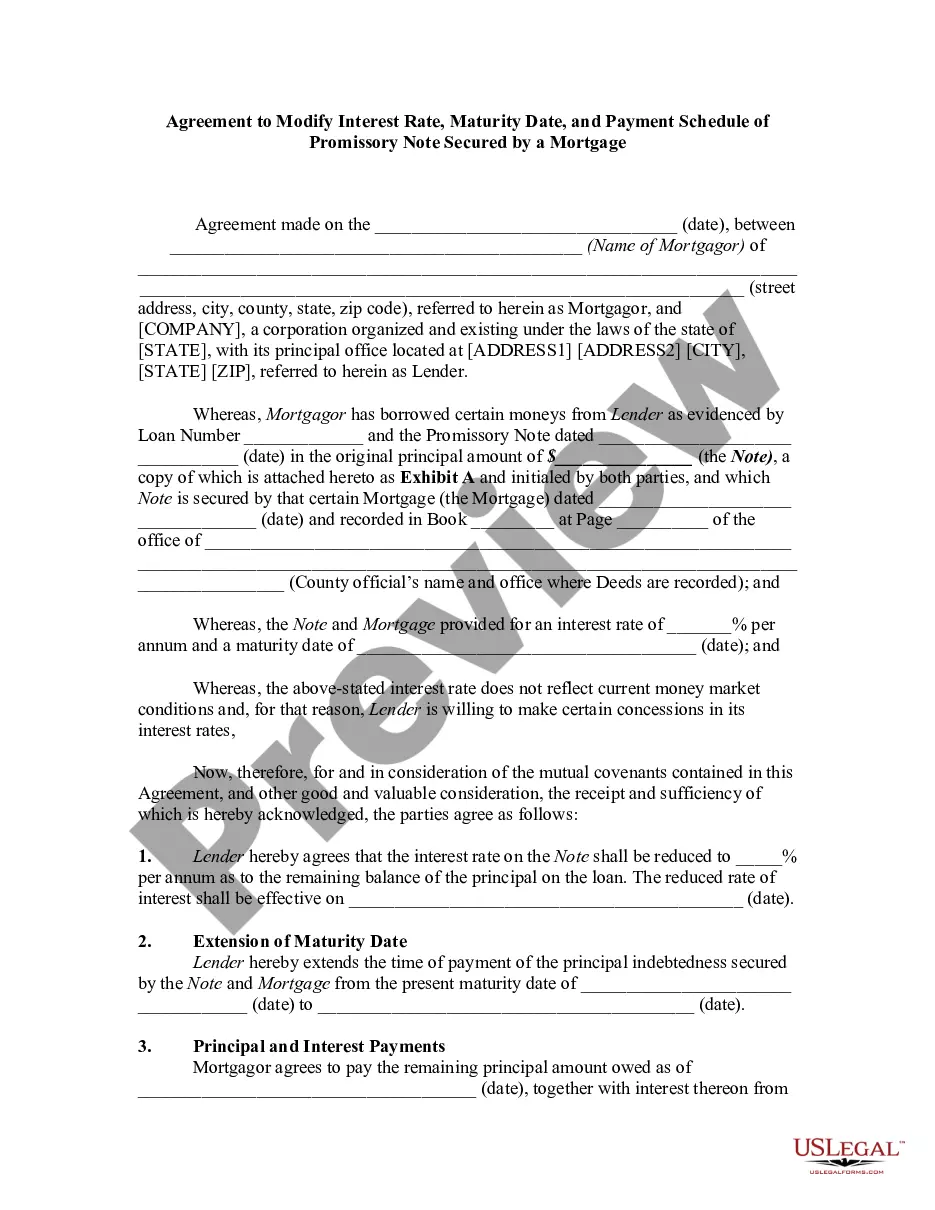
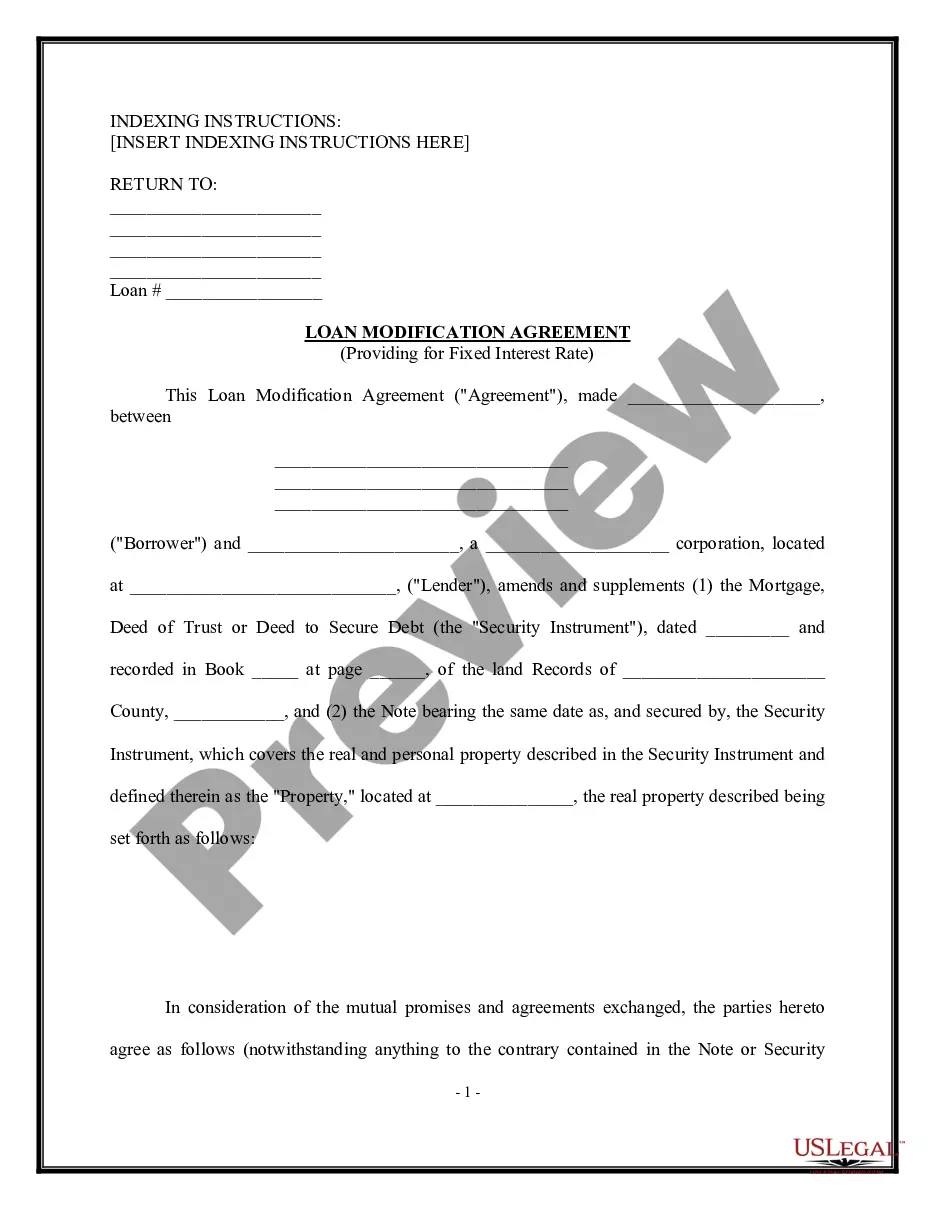
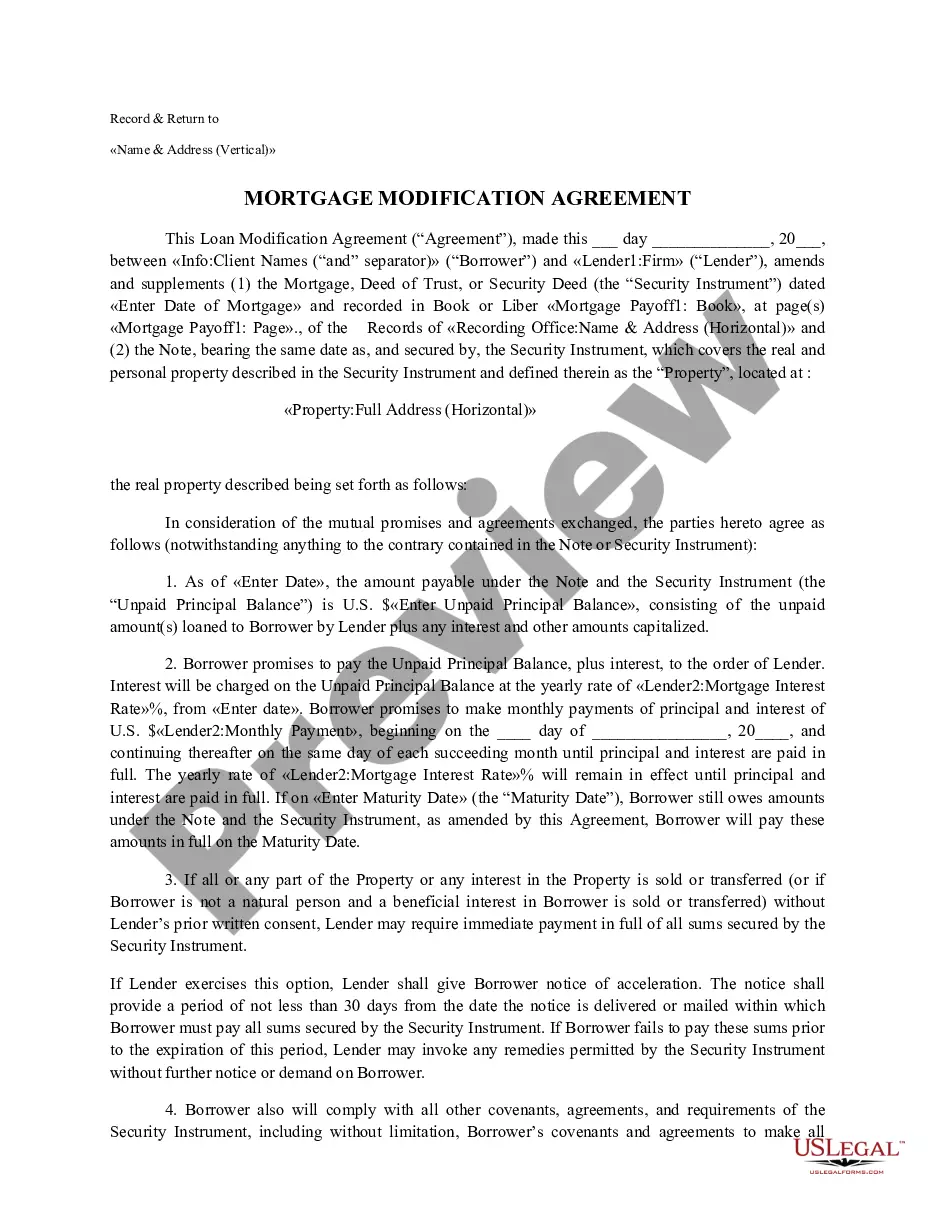
The Loan Modification Agreement is a legal document that allows borrowers and lenders to amend existing mortgage terms. This agreement is essential when a borrower needs to change the repayment schedule or interest rate of their loan due to financial difficulties or changes in circumstance. Unlike a new loan, this modification alters the existing agreement to reflect new terms without requiring a full refinancing process.
Key components of this form
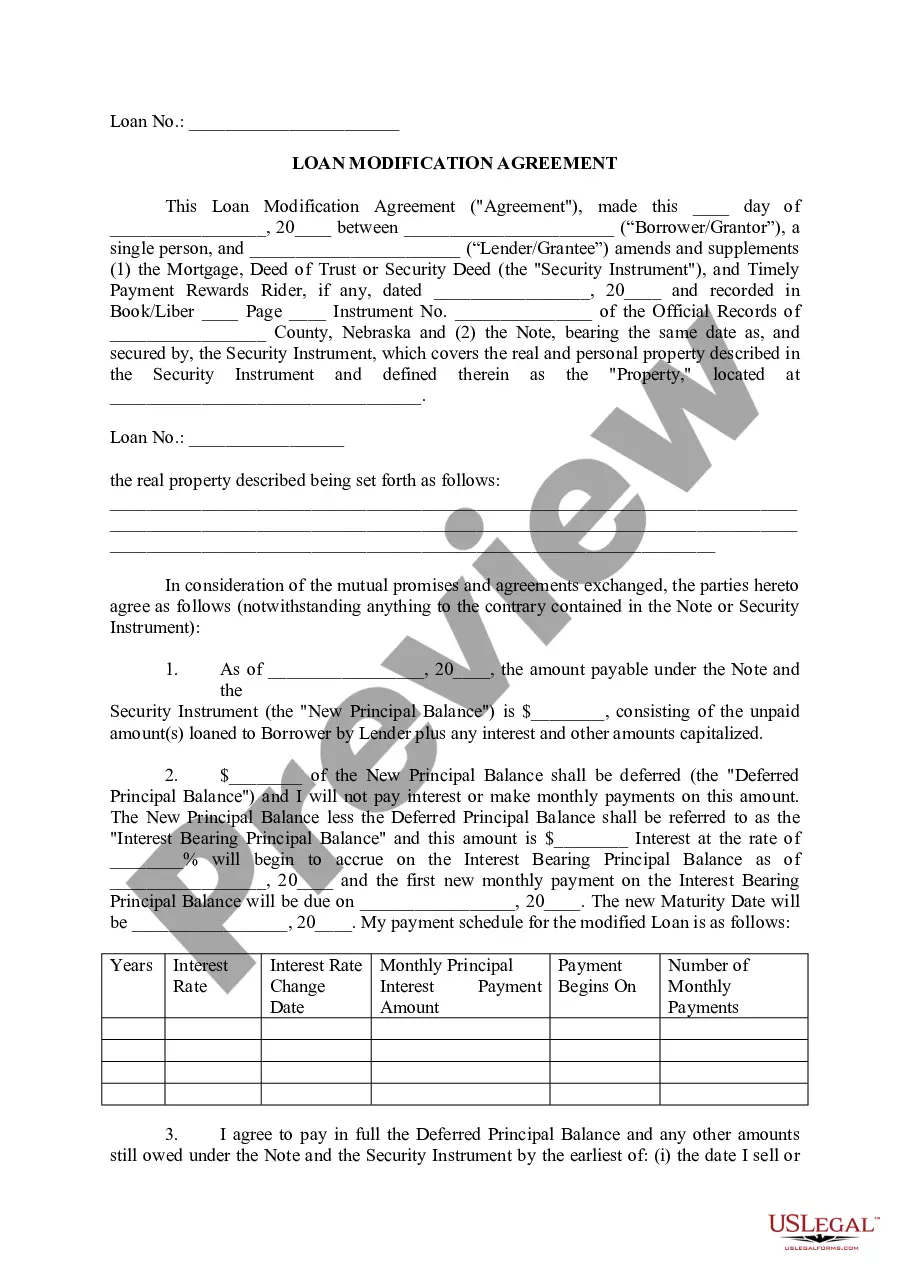
- Loan number and FHA case number fields to identify the mortgage.
- Parties involved in the agreement: borrower(s) and lender.
- Details of the property being financed, including legal description and parcel ID.
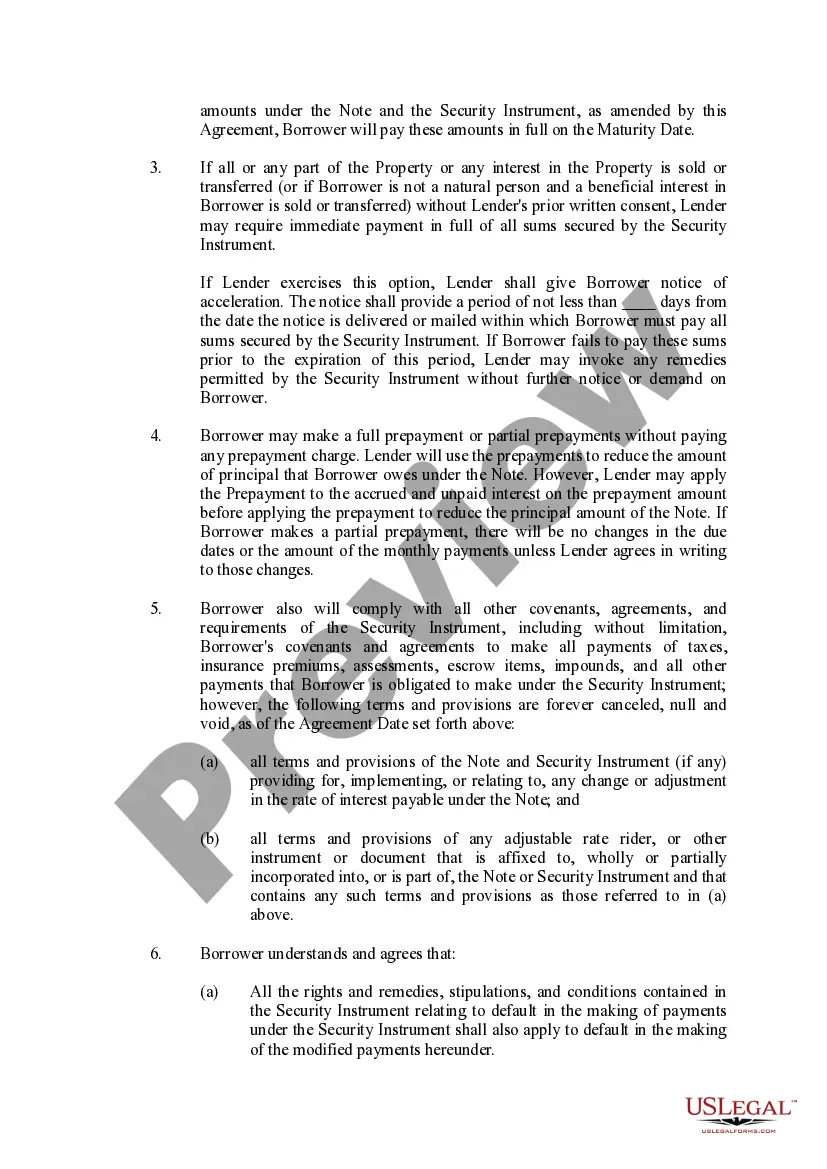
- Modification of the principal balance, interest rate, and payment schedule.
- Terms regarding prepayment of the loan and consequences of property sale.
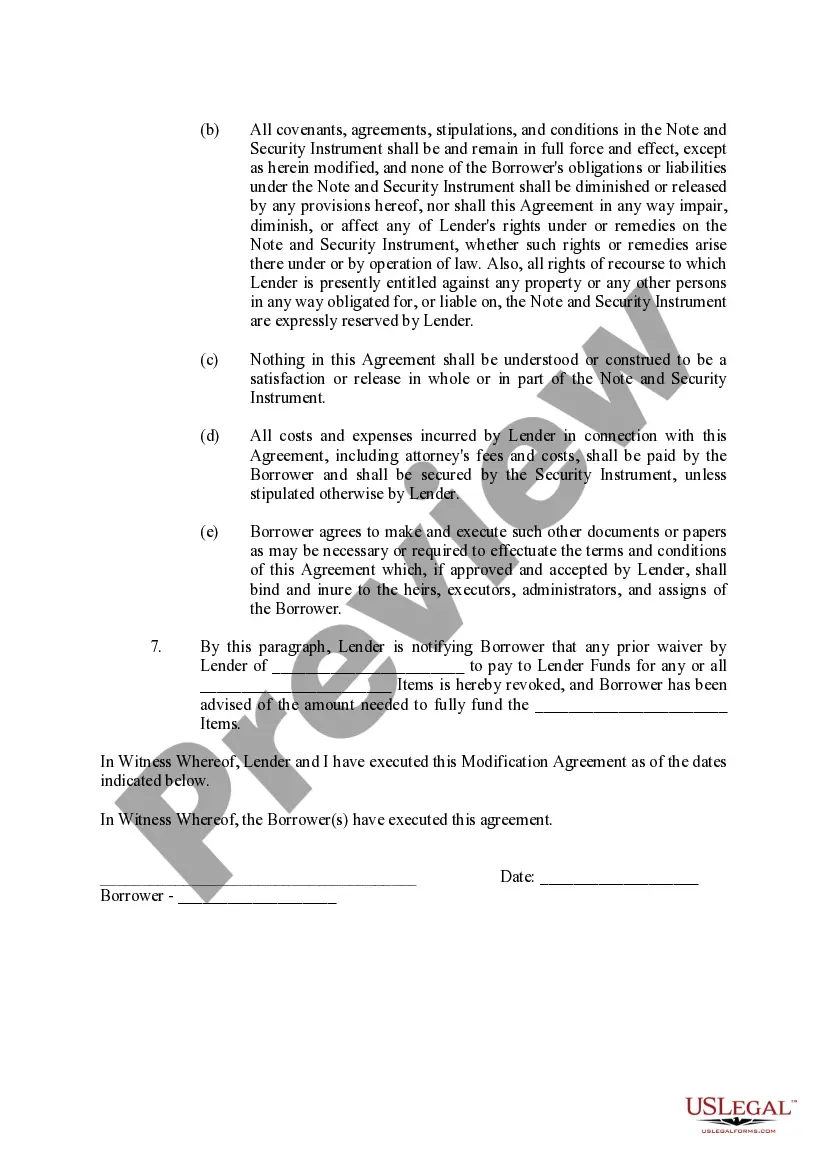
- Agreement clauses reaffirming lender's rights and borrower's obligations under modified terms.

When to use this document
This form is typically used when a borrower is facing financial challenges and is unable to meet the existing terms of their mortgage. By entering into a Loan Modification Agreement, borrowers can negotiate more manageable terms with their lender, potentially lowering monthly payments or extending the loan period. This is especially useful for homeowners seeking to avoid foreclosure or maintain their property.
Who this form is for
- Borrowers who are struggling to meet their mortgage payments.
- Lenders looking to offer adjusted terms to maintain borrower relationships.
- Homeowners seeking financial relief while retaining their property.
- Anyone involved in a mortgage agreement who needs to negotiate terms without starting a new loan.
How to prepare this document
- Identify the parties involved, including their names and roles (borrower and lender).
- Provide the loan number and FHA case number for tracking.
- Enter the property details, including the legal description and address.
- Specify the principal balance, interest rate, and the new payment agreement.
- Ensure all parties sign and date the document where indicated.
Notarization requirements for this form
Yes, this form must be notarized to be legally valid. This ensures that the identities of the borrower and lender are verified, adding an extra layer of protection for all parties involved. US Legal Forms offers integrated online notarization services, available 24/7, allowing you to complete the process securely via a video call without needing to travel.
Get your form ready online
Our built-in tools help you complete, sign, share, and store your documents in one place.
Make edits, fill in missing information, and update formatting in US Legal Forms—just like you would in MS Word.
Download a copy, print it, send it by email, or mail it via USPS—whatever works best for your next step.
Sign and collect signatures with our SignNow integration. Send to multiple recipients, set reminders, and more. Go Premium to unlock E-Sign.
If this form requires notarization, complete it online through a secure video call—no need to meet a notary in person or wait for an appointment.
We protect your documents and personal data by following strict security and privacy standards.

Make edits, fill in missing information, and update formatting in US Legal Forms—just like you would in MS Word.

Download a copy, print it, send it by email, or mail it via USPS—whatever works best for your next step.

Sign and collect signatures with our SignNow integration. Send to multiple recipients, set reminders, and more. Go Premium to unlock E-Sign.

If this form requires notarization, complete it online through a secure video call—no need to meet a notary in person or wait for an appointment.

We protect your documents and personal data by following strict security and privacy standards.
Common mistakes
- Not accurately identifying all parties involved in the loan.
- Failing to include current loan details, like loan number and amounts.
- Not specifying the property's legal description clearly.
- Overlooking signature requirements, which can invalidate the agreement.
- Incomplete fields, which could lead to misunderstandings between borrower and lender.
Why use this form online
- Convenience of accessing and completing the form from anywhere.
- Editability allows for easy adjustments before finalizing.
- Ensures compliance with legal standards through templates prepared by licensed attorneys.
- Time-saving, as it expedites the process compared to traditional paperwork.
- Secure storage of documents for easy future reference.
What to keep in mind
- The Loan Modification Agreement allows borrowers to renegotiate their mortgage terms.
- It is critical for borrowers facing financial difficulties who want to keep their homes.
- The form requires notarization to ensure its validity.
- Completing the form online offers convenience and ensures compliance.
- Accurate and complete information is essential to avoid common pitfalls.
Looking for another form?

Form popularity
FAQ
Be at least one regular mortgage payment behind or show that missing a payment is imminent. Provide evidence of significant financial hardship, for reasons such as:
Some of the most common types of hardship are: job loss, pay reduction, underemployment, declining business revenue, death of a coborrower, illness, injury, and divorce.
A lender may agree to a loan modification during a settlement procedure or in the case of a potential foreclosure.A loan modification agreement is a long-term solution. A loan modification may involve a reduced interest rate, a longer period to repay, a different type of loan, or any combination of these.
You should contact the lender's loss and mitigation department to discuss the reason of you loan modification rejection. Possible reasons for a modification rejection include insufficient income, high debt-to-income ratio, missing documents, or delinquent credit history.
Yes, probably. In California, a law called the Homeowner Bill of Rights (HBOR) generally gives borrowers the right to appeal a modification denial. Under HBOR, in most cases, if the servicer denies a borrower's application to modify a first lien loan, the borrower can appeal.