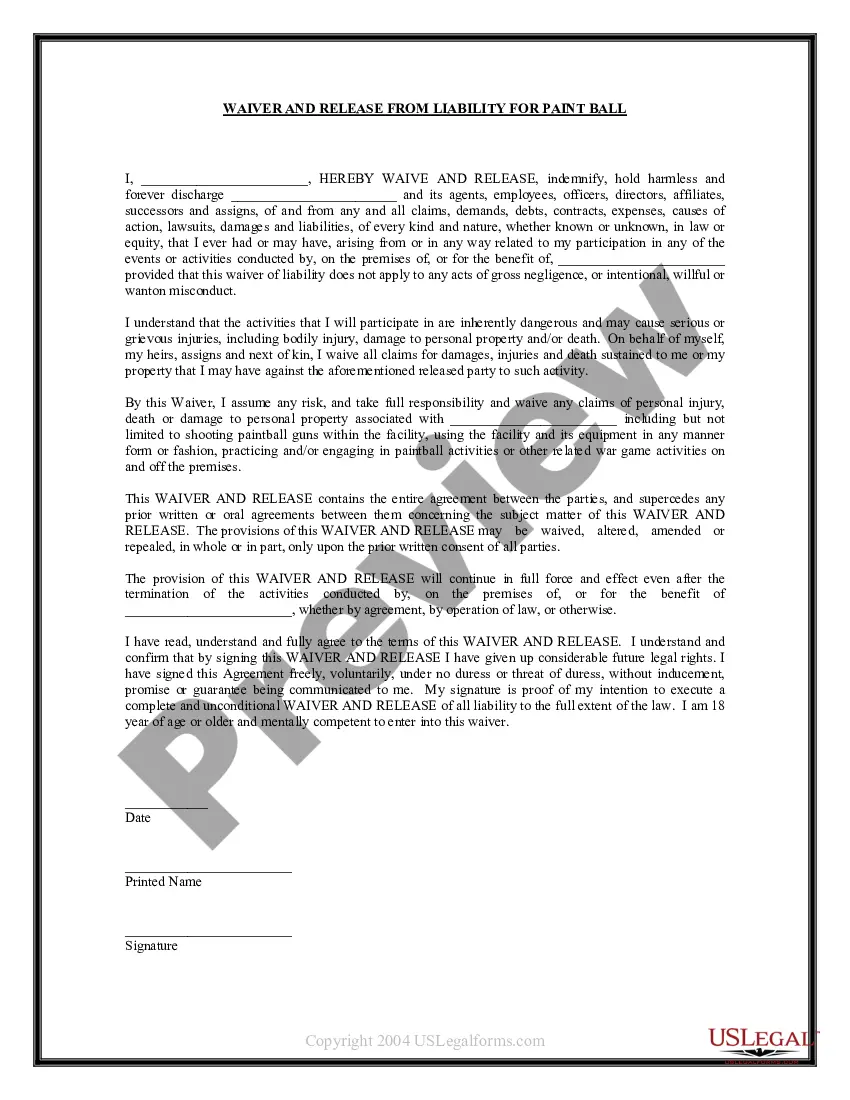
This form allows a parent or guardian to release a paintball facility from liability for injuries which may be incurred by a minor child while on the premises, taking part in activities, etc.
North Dakota Waiver and Release From Liability For Minor - Paint Ball
Category:
State:
Multi-State
Control #:
US-WAV-03M
Format:
Word;
Rich Text
Instant download
Description
Free preview
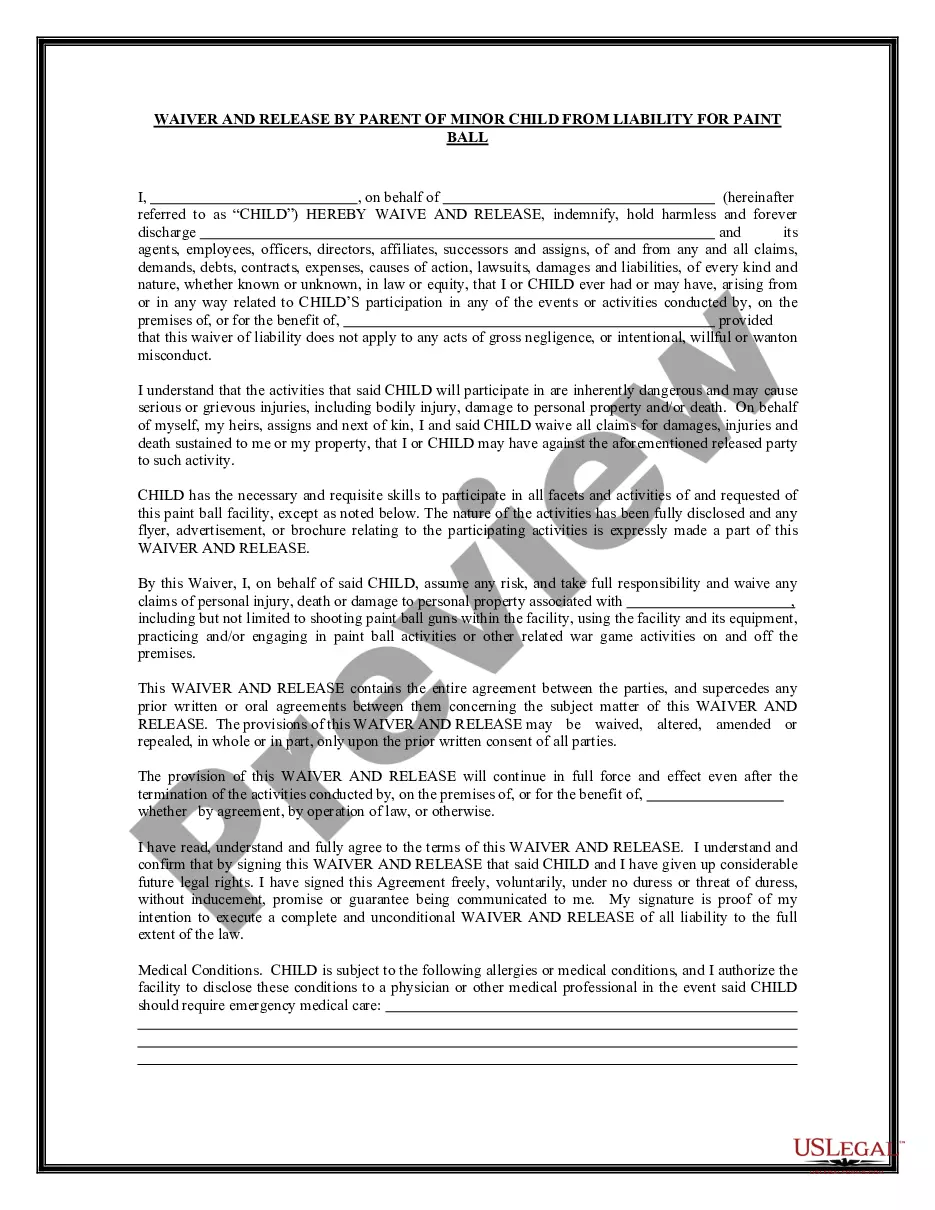
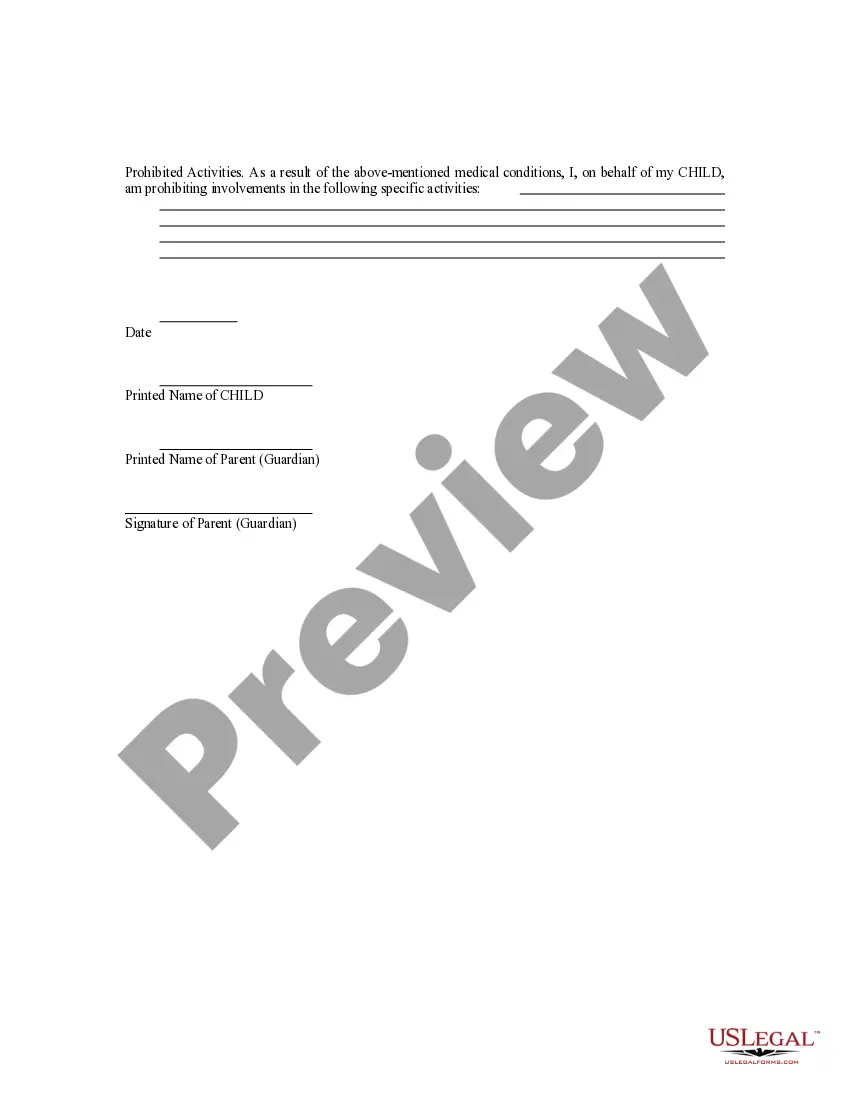
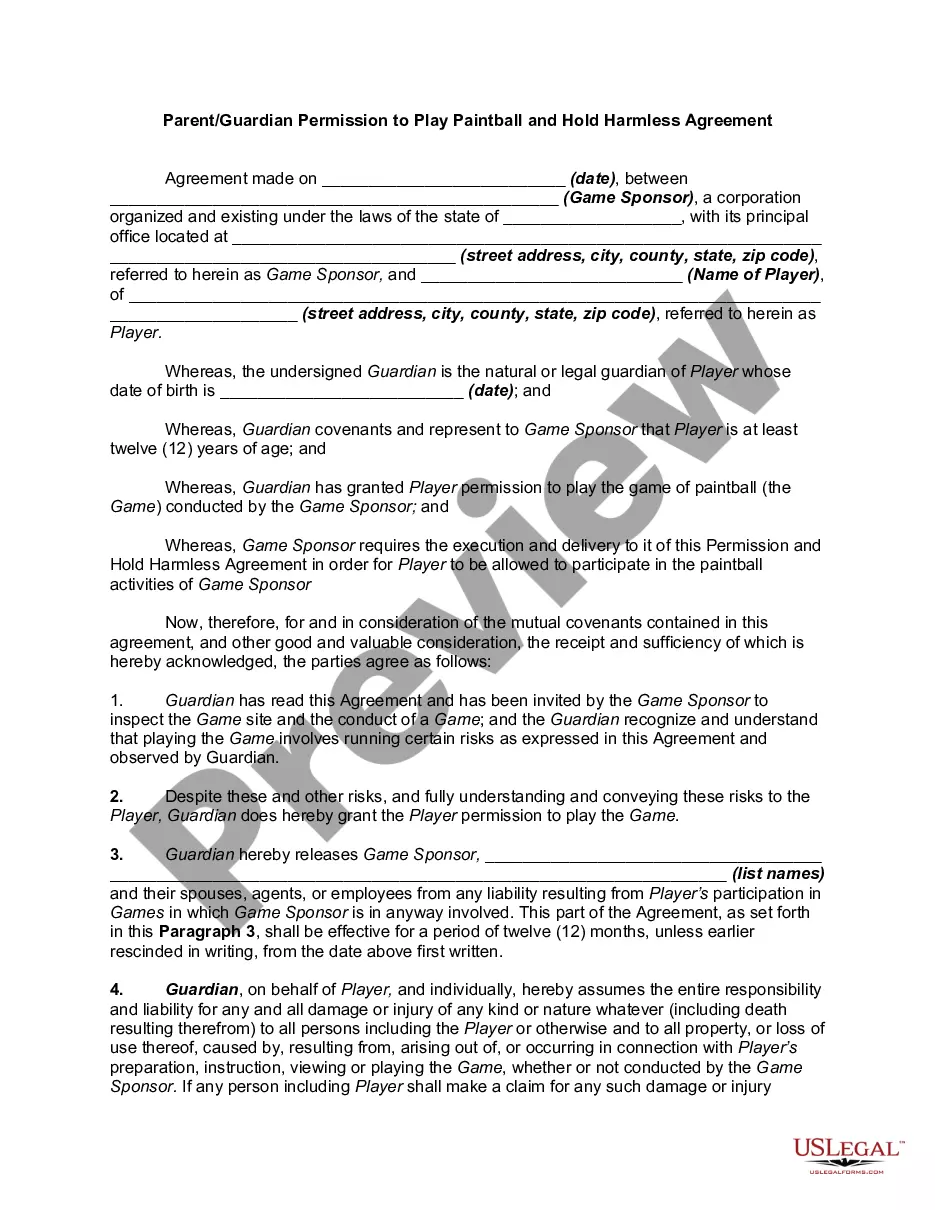

How to fill out Waiver And Release From Liability For Minor - Paint Ball?
Selecting the appropriate valid document format can be quite a challenge. Of course, there are numerous templates available online, but how can you find the valid type you require? Utilize the US Legal Forms website. The platform offers thousands of templates, including the North Dakota Waiver and Release From Liability For Minor - Paint Ball, that you can utilize for business and personal purposes. All the forms are reviewed by experts and comply with state and federal regulations.
If you are already registered, Log In to your account and click the Obtain button to acquire the North Dakota Waiver and Release From Liability For Minor - Paint Ball. Use your account to review the legal forms you have purchased previously. Visit the My documents tab of your account and download another copy of the document you require.
If you are a new user of US Legal Forms, here are simple instructions for you to follow: First, ensure you have selected the correct form for your city/region. You can examine the document using the Preview button and read the document description to confirm this is suitable for you. If the form does not meet your needs, utilize the Search area to find the appropriate form. Once you are confident that the document is suitable, click the Buy now button to acquire the form. Choose the payment method you prefer and enter the necessary information. Create your account and place an order using your PayPal account or Visa or Mastercard. Select the file format and download the legal document format to your device. Complete, modify, print, and sign the acquired North Dakota Waiver and Release From Liability For Minor - Paint Ball.
- US Legal Forms is the largest repository of legal forms where you can find a variety of document templates.
- Utilize the service to obtain professionally crafted documents that adhere to state requirements.
Form popularity
FAQ
The main difference between releases and waivers is the transferring of ownership. When rights are released, they are transferred to another party. When rights are waived, they are gone altogether.
A waiver is a legal agreement the primary purpose of which is to let you or another party modify or relinquish a right, privilege, or claim. The agreement can be a separate document on its own, such as if you sign a waiver form, or added to a contract as a waiver clause.
Waiver and release refers to the waiving of rights or privileges and the release of a party from their obligations or rights.
Examples of waivers include the waiving of parental rights, waiving liability, tangible goods waivers, and waivers for grounds of inadmissibility. Waivers are common when finalizing lawsuits, as one party does not want the other pursuing them after a settlement is transferred.
A waiver is a formal statement giving up a right. If you go on a school trip, your mom might sign a waiver saying that the school is not responsible if you get hurt on the trip. When you sign a waiver, you're voluntarily giving up a privilege or legal right.
A waiver is a document that obtains written confirmation from an individual that they are relinquishing a right or privilege. Businesses often use a waiver toward customers to minimize the risk of legal implications if a customer or client gets injured, however, waivers can be used in a variety of situations.
The Waiver must be clearly worded and unambiguous in its intent to relieve any and all legal liability, even liability for negligence. The Waiver should be prominent and not hidden in the fine print of a long contract. The Waiver must be signed by the person who it is being used against.
A liability waiver, or release of liability, is a legal document that a company or organization has you sign in order to protect them from being sued in the event that you are injured.
There are two main reasons a company will have you sign a liability waiver: 1) to document in writing that you have been warned of potential risks and 2) to remove their responsibility for injuries that arise from ordinary negligence.
Liability waiver form protects your business against any lawsuit if someone is injured during a business-hosted event....Elements of a Liability waiverFormal structure.Risk involved section.Assumption of risk section.Choice of law provision section.Confirmation.Signature.