North Dakota Mineral Deed - Individual to Individual - Grantor Acting Through Attorney in Fact
About this form
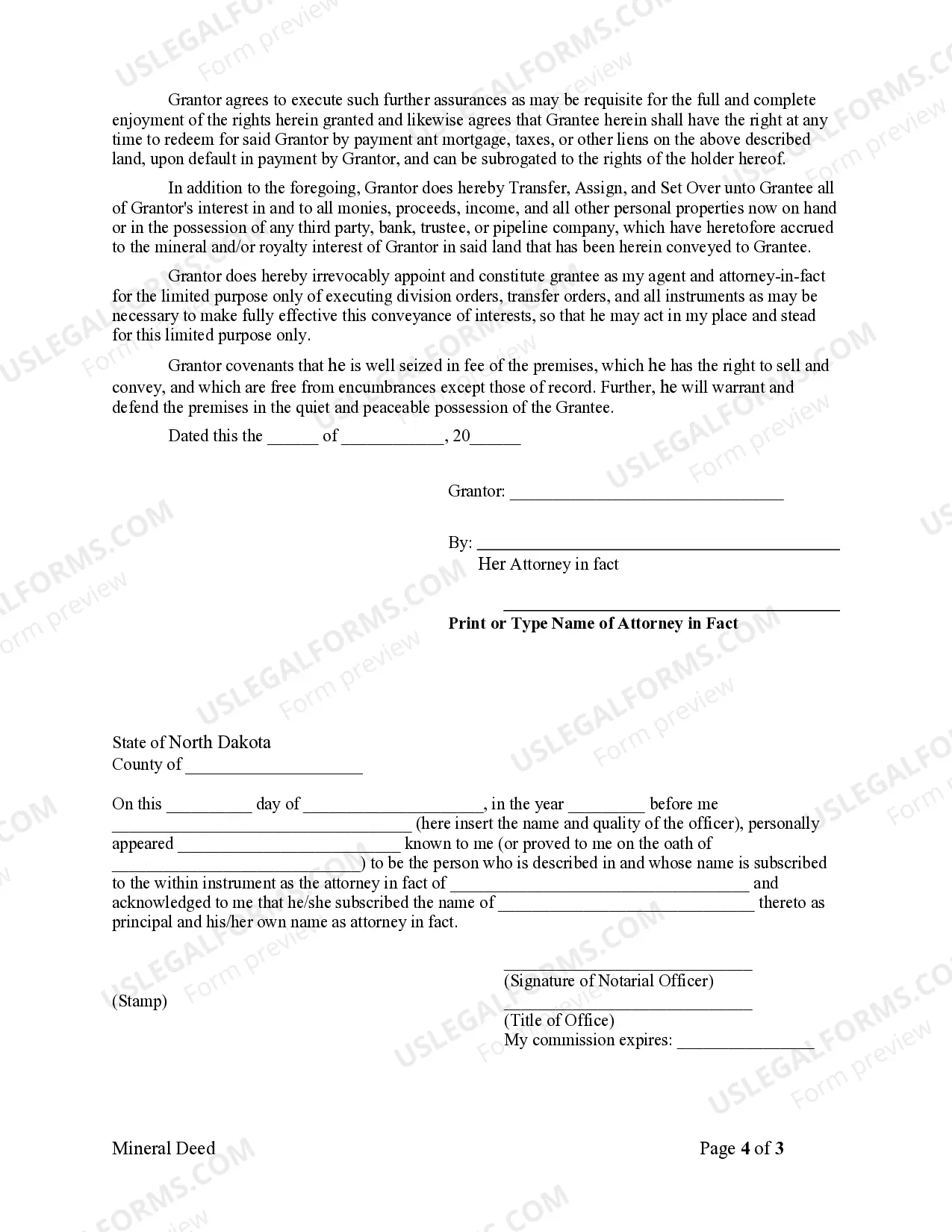
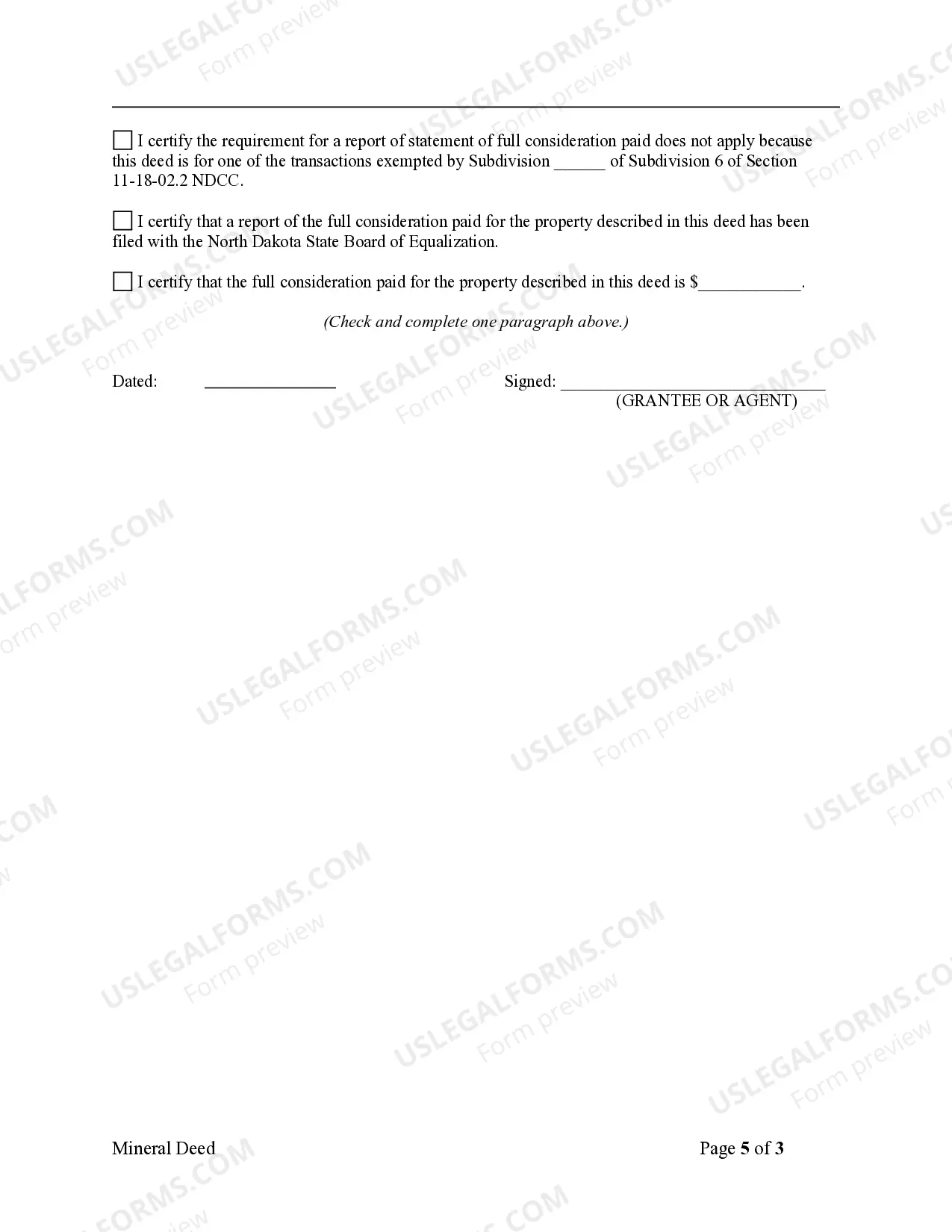
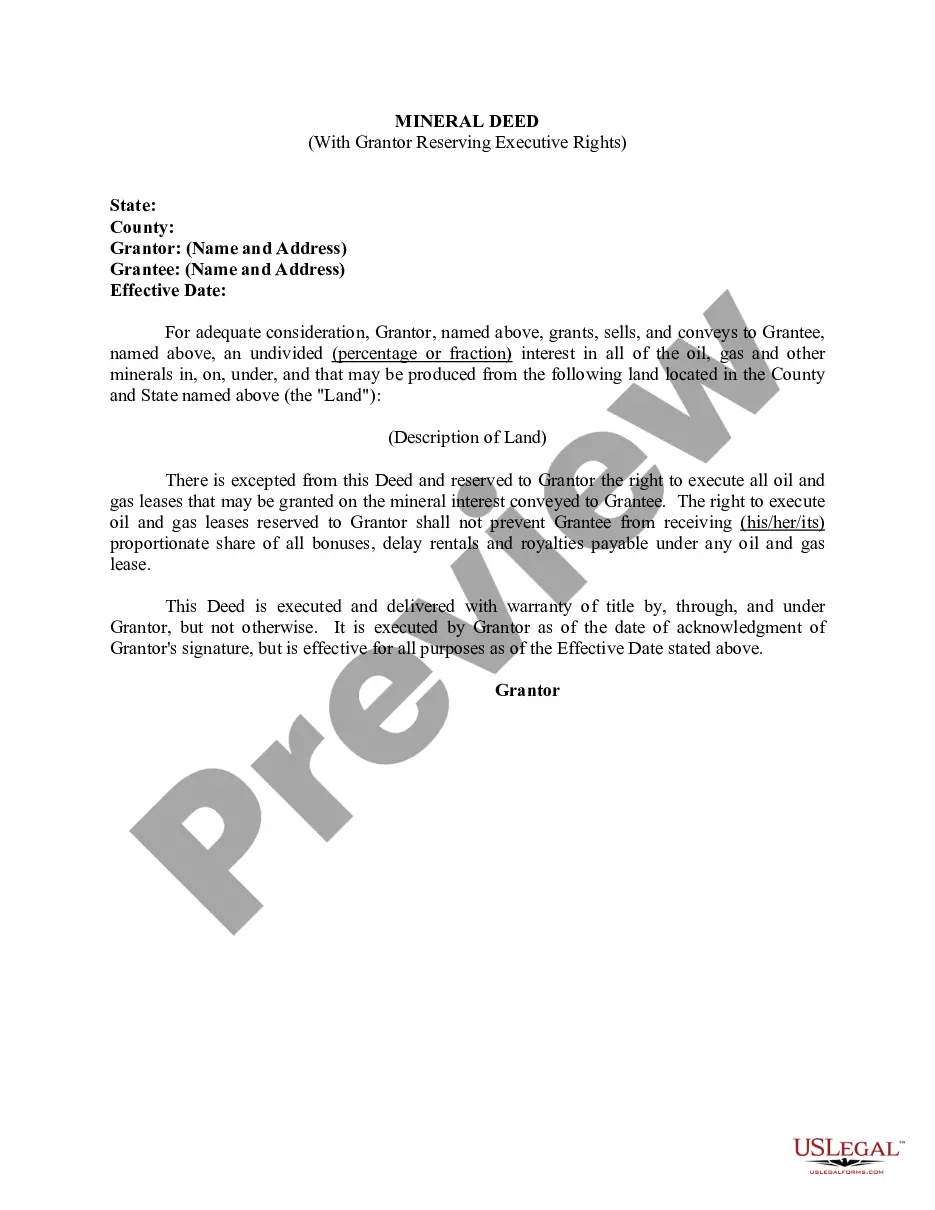
The Mineral Deed - Individual to Individual - Grantor Acting Through Attorney in Fact is a legal document used to transfer mineral rights from one individual (the grantor) to another (the grantee) when the grantor is represented by an attorney in fact. This form ensures that the transaction is compliant with state laws, specifically those of North Dakota, and specifies the granted interests in minerals such as oil and gas. Unlike other property deeds, this form focuses specifically on mineral rights and includes provisions for the representation through an attorney, ensuring clarity and legality in the transfer process.
Key components of this form
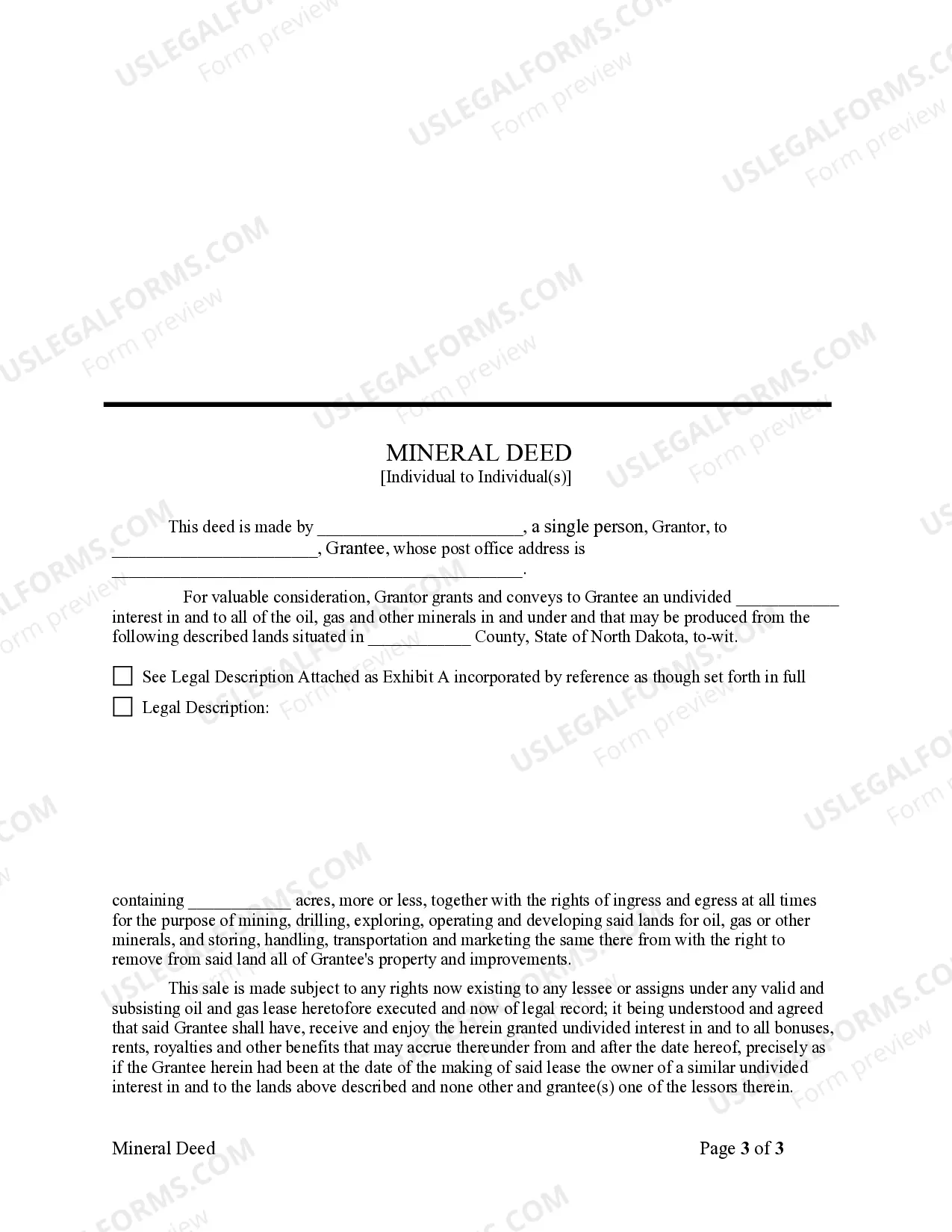
- Identification of the grantor and grantee, including addresses.
- Clear statement of the mineral interests being conveyed.
- Reference to the legal description of the property where the minerals are located.
- Provisions regarding existing rights under any oil and gas leases.
- Appointment of the grantee as attorney-in-fact for specific actions.
- Warranties and covenants regarding the grantor's title to the property.



Situations where this form applies
This form is necessary when an individual wishes to transfer their mineral rights to another individual but is unable to do so personally. Common scenarios for its use include inheritance situations, property sales involving mineral interests, or when the grantor is incapacitated and needs an attorney to act on their behalf. It clarifies the responsibilities and rights of both parties in the transaction.
Who can use this document
- Individuals looking to convey their mineral rights to another person.
- Grantors who cannot personally execute the deed and have appointed an attorney in fact.
- People involved in estate planning where mineral rights are included.
- Anyone wanting to ensure compliance with North Dakota's statutory requirements for mineral deed transfers.
How to complete this form
- Identify the parties involved by entering the names and addresses of both the grantor and grantee.
- Specify the exact undivided interest in the mineral rights being conveyed.
- Attach a legal description of the property, clearly defining its location.
- Review existing obligations to oil and gas leases to ensure proper disclosures.
- Have the grantor sign the deed, ensuring the attorney in fact is indicated properly.
Is notarization required?
This form does not typically require notarization unless specified by local law. However, including a notary signature may enhance the document's authenticity and protect against future disputes. It is advisable to consult local regulations or legal counsel if unsure about notary requirements.
Get your form ready online
Our built-in tools help you complete, sign, share, and store your documents in one place.
Make edits, fill in missing information, and update formatting in US Legal Forms—just like you would in MS Word.
Download a copy, print it, send it by email, or mail it via USPS—whatever works best for your next step.
Sign and collect signatures with our SignNow integration. Send to multiple recipients, set reminders, and more. Go Premium to unlock E-Sign.
If this form requires notarization, complete it online through a secure video call—no need to meet a notary in person or wait for an appointment.
We protect your documents and personal data by following strict security and privacy standards.

Make edits, fill in missing information, and update formatting in US Legal Forms—just like you would in MS Word.

Download a copy, print it, send it by email, or mail it via USPS—whatever works best for your next step.

Sign and collect signatures with our SignNow integration. Send to multiple recipients, set reminders, and more. Go Premium to unlock E-Sign.

If this form requires notarization, complete it online through a secure video call—no need to meet a notary in person or wait for an appointment.

We protect your documents and personal data by following strict security and privacy standards.
Common mistakes to avoid
- Failing to include a clear legal description of the property.
- Not properly signing or notarizing the document where required.
- Neglecting to specify the extent of the mineral rights being conveyed.
- Using outdated forms that do not comply with current state laws.
Why complete this form online
- Convenient access to professionally drafted forms from any location.
- Editable format allows for customization according to specific needs.
- Ability to complete the form quickly without the need for legal counsel at the initial stage.
- Instant downloadable versions ensure you can begin the process immediately.
Legal use & context
- This form is legally binding and enforceable under North Dakota law when completed correctly.
- Proper execution ensures that the grantee obtains clear and undisputed title to the mineral rights.
- It protects the interests of both parties through clearly defined terms and obligations.
Quick recap
- The Mineral Deed allows for the transfer of minerals from one individual to another.
- It can be executed through an attorney-in-fact for convenience.
- Ensure all fields are completed accurately for the deed to be valid.
- Checking state-specific regulations is critical for compliance.
Looking for another form?
Form popularity
FAQ
A power of attorney enables an agent (also called the attorney-in-fact) to conduct transactions on another person's behalf.If so, a spouse, relative or friend with POA can sign a deed or other real estate documents.
A deed that names the seller/donor and the purchaser/donee. It states and describes the rights being sold or given. Filing of the notarized conveyance in the county government office which is generally the county clerk's office.
Mineral rights are often sold separately from the land they are on. You may have title to the mineral rights on a property you own, or a previous owner may have sold or leased them in which case, they may not be yours to sell. But there is no need to abandon the idea of monetizing your mineral reserves!
A mineral deed form is a legal document, regarding the ownership of the minerals below the surface of the earth.Mineral owners have legal rights to extract and sell their minerals, with or without use of third party companies.
Oklahoma law allows for certain mineral interests to be transferred by filing an affidavit in the county real estate records.